
INTRODUCTION
Globally, the adoption of farm technology is considered an important strategy for enhancing productivity and alleviating poverty (FAO, 2017; Donkoh et al., 2019). Over the past several decades, adoption levels have remained consistently low in Africa, where yields of major crops such as rice have lagged behind those in other parts of the world, such as Asia (FAO et al., 2023). Smallholder farmers, who form the backbone of agricultural production worldwide, account for approximately 80% of global food production (FAO et al., 2015). At the same time, they represent the largest proportion of the poor in many developing countries (UN, 2015; Fan and Rue, 2020). To date, smallholders have faced numerous constraints and risks that threaten their livelihoods, food security, and nutrition (Fan and Rue, 2020). These constraints have contributed to low levels of farm technology adoptions – especially for fertilizers, improved varieties, water management, and mechanization services – resulting in low productivity (Donkoh et al., 2019; Langyintuo, 2020). As indicated by Sharma et al. (2015), most of the challenges faced by smallholders relate to institutional, social, economic, political, technological, and environmental factors. These challenges limit farmers’ production capabilities and their use of farming technologies.
In Ghana, rice production is managed by smallholder farmers who operate on farms smaller than two hectares (MoFA, 2021). These farmers rely heavily on traditional farming practices, which have contributed to limited productivity gains (MoFA, 2016; GSS, 2019). In recent years, the government of Ghana has pursued agricultural modernization as a means of boosting crop productivity, improving livelihoods, and enhancing the overall performance of the agricultural sector. Several rice farming technologies, including improved seed varieties, fertilizers, soil bunding, line sowing, herbicide use, and seed priming, have been introduced and demonstrated to farmers (MoFA, 2018). However, these promising technologies have not translated into substantial output gains, as adoption among smallholders remains low (Ragasa et al., 2013; Addison et al., 2023; Jizorkuwie et al., 2025). This low adoption rate makes it difficult to attain Ghana’s potential rice yield of 6 t/ha (MoFA, 2021). Angelucci et al. (2013) observed that a large proportion of smallholder farmers continue to depend on low-yielding varieties and poor farm management practices. Furthermore, only 7.5 percent of smallholder rice farmers in Ghana use irrigation on their rice plots (GSS, 2019). This raises a fundamental question as to why smallholders find it difficult to adopt such transformative interventions, despite their importance in enhancing farm-level productivity. Nonetheless, adoption of recommended packages of improved technologies can enhance yields and increase the real income of smallholder-farming households. Sharma et al. (2015) reported that adoption has the potential to boost food security, improve nutrition, and support sustainable development.
Previous studies have demonstrated that several constraints affect the adoption of improved technology. In India, for example, the high cost of labor and inputs, as well as limited access to credit facilities, are considered major socioeconomic constraints that limit the adoption of recommended paddy technologies (Oinam and Sudhakar, 2014; Sharma et al., 2015). Lack of access to market information and technical knowledge can further limit the adoption of farm technologies (Alarima et al., 2011; Ghimire and Suvedi, 2018). Matto et al. (2017) reported that inadequate skills in seed treatment, limited knowledge of improved seeds, and irregular extension visits were key technical constraints affecting adoption. Guerin and Guerin (1994) attributed adoption constraints to situations in which farmers perceived new technologies as difficult or complex. Fan and Rue (2020) noted that such constraints affect farmers’ participation in potentially profitable farm practices, thereby preventing engagement in commercially oriented agriculture. As a result, farmers are unable to increase productivity and income (Ghimire and Suvedi, 2018). In most developing countries, only a small proportion of farmers can afford costly agricultural inputs due to constraints that restrict access to essential farming resources (UN, 2015).
Although extensive research has been conducted on agricultural technologies, a critical gap remains in understanding the constraints associated with adopting different technologies within smallholder rice-farming systems. This gap affects the effective adoption of specific technologies as part of a complete technological package. In this study, we focus on multiple technologies, including fertilizer use, line sowing, soil bunding, improved seed varieties, and machinery. Accordingly, this study examines the constraints that affect the adoption of different technologies in smallholder rice farming. Our study contributes to the literature by providing a comprehensive understanding of the barriers that limit the adoption of individual rice-farming technologies, while also highlighting variations in adoption rates. We categorize these constraints into three dimensions: socioeconomic, institutional, and technical. Understanding these constraints is crucial for designing effective strategies and policies aimed at enhancing technology adoption among smallholder farmers.
METHODOLOGY
The study areas
This study was conducted in the Bono and Volta regions of Ghana (Fig. 1). Similar to other regions in the country, these areas contribute significantly to the national food basket and are endowed with considerable agricultural potential. Agriculture is a major source of livelihood for most households in these regions (GSS, 2013a; 2013b). The main farming activities include crop farming, poultry rearing, vegetable production, and livestock rearing. Among these activities, crop farming remains the dominant agricultural practice, engaging over 90% of rural households (GSS, 2013a; 2013b). Common crops grown in the study area include maize, rice, plantain, cassava, and cocoyam. Agriculture in the Bono region is entirely rain-fed, whereas in the Volta region, available water resources, such as the Volta and Tordzi Rivers, provide considerable potential for irrigation. Seasonal rainfall patterns vary across the two regions. The Bono region experiences mean annual rainfall ranging from 1,200 to 1,750 mm, with major rainy seasons occurring between April and July and a minor season between September and October (GSS, 2013a). In contrast, the Volta region receives mean annual rainfall ranging from 1,168 to 2,102 mm (GSS, 2013b). The major rainy season in the Volta region occurs from March to July, while the minor season spans from mid-August to October. Rice production in both regions represents a significant source of employment for many rural households (MoFA, 2019).
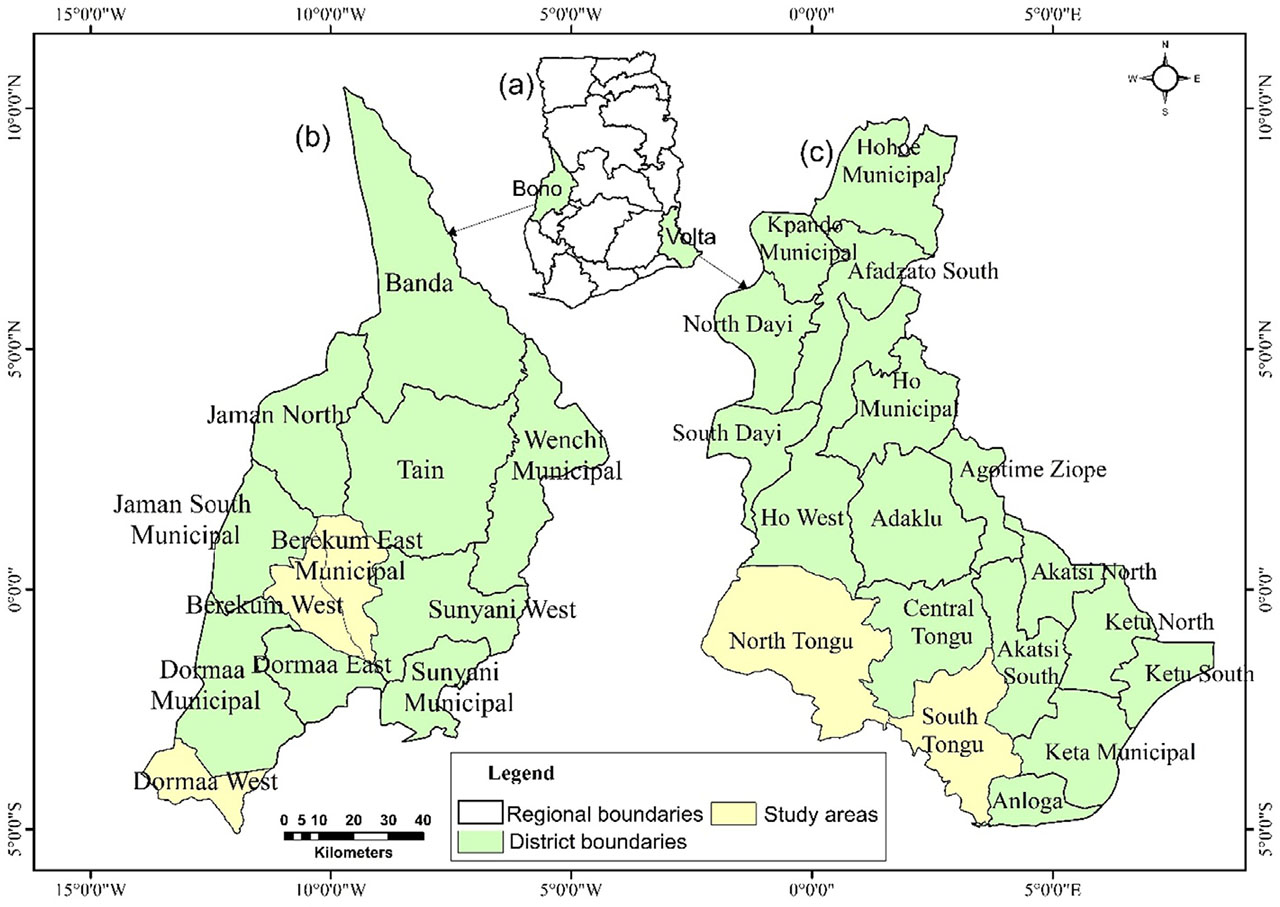
Fig. 1.
Map of study locations showing Regional administrative boundaries of Ghana (a), Bono Region (b) and Volta Region (c)
Source: own elaboration.
Sampling procedure, data collection, and analysis
The Bono and Volta regions were purposively selected for this study for two main reasons. First, they make a significant contribution to national rice output. Second, these regions have benefited from government policies aimed at promoting the adoption of agricultural technologies, both locally and across Ghana. Subsequently, simple random sampling was employed to select rice-growing districts, communities, and respondents. Four rice-growing districts were selected across the two regions: Berekum Municipal and Dormaa West District in the Bono region, and North Tongu and South Tongu Districts in the Volta region. Sixteen rice-growing communities were selected for data collection. In the Bono region, the selected communities were Nsapor, Oforikrom, Senase-Kato, and Jinijini in Berekum Municipal, and Mmirega, Kwakuanya, Amponsahkrom, and Nkrankwanta in Dormaa West District. In the Volta region, the selected communities were Aveyime, Torgome, Battor, and Alabonu in North Tongu District, and Dordoekope, Tordzimu, Kpenu, and Fievie in South Tongu District.
The Cochran (1977) formula was used to estimate the sample size, as it is appropriate for large populations with unknown population size and proportion (Uakarn et al., 2021). Based on this formula, a total sample size of 385 participants was targeted. Out of this number, 344 valid questionnaires were obtained – 160 from the Bono region and 184 from the Volta region – representing a response rate of 89.4%. The remaining questionnaires were excluded from the final analysis due to incomplete information.
The questionnaire consisted of two main sections. The first captured respondents’ socio-demographic characteristics, while the second focused on constraints affecting technology adoption. Prior to the main survey, the questionnaire was pre-tested with approximately 20 farmers to assess reliability and identify potential inconsistencies in the instrument. Feedback from the pre-test was used to refine the questionnaire before final data collection. The questionnaire items were organized into three constraint dimensions – socioeconomic, institutional, and technical – for each technology. Reliability analysis of the constraint sub-scales was conducted using Cronbach’s alpha. The resulting alpha values for the socioeconomic, institutional, and technical constraint dimensions were 0.741, 0.699, and 0.714, respectively, indicating acceptable internal consistency for all constructs (Hair et al., 2013).
Regarding data collection, verbal informed consent was obtained from all respondents in accordance with ethical research guidelines. Participants were informed about the purpose of the study and assured that all information provided would be treated confidentially and used solely for research purposes. Data were collected between November 2023 and January 2024 by three trained agricultural extension officers who work closely with farmers and were familiar with the study communities. To minimize potential interviewer bias, the extension officers participated in a two-day training workshop covering the study objectives, ethical protocols, and strict adherence to the questionnaire wording to ensure consistency and neutrality. Random spot-checks were conducted during the survey period to further ensure data quality.
Questionnaire data were coded and analyzed using Microsoft Excel and STATA version 17. Descriptive statistical techniques – including frequencies, percentages, and means – were used to summarize respondents’ socio-demographic characteristics and technology adoption rates. Constraints to technology adoption were measured using a five-point Likert scale, ranging from 1 (Strongly Disagree) to 5 (Strongly Agree). The frequency of responses for each constraint was computed and expressed as percentages.
The Cochran sample size formula is expressed as follows:
where n is the sample size, e is the margin of error (0.05), P is the population proportion (0.5), and Z denotes (Z-value at a reliability level of 95%; Z = 1.96).Conceptual framework
Smallholder farmers face numerous constraints in agricultural production that ultimately affect their productivity and livelihoods. These constraints may be technical, social, economic, environmental, or institutional in nature (Alarima et al., 2011; Sharma et al., 2015). In most developing countries, smallholder farmers reside in rural areas, where remoteness often limits access to essential agricultural resources. As a result, farming activities in these areas are frequently characterized by low productivity (Fan and Rue, 2020). According to economic constraint theory, limitations in fixed inputs in the short run – such as access to credit, land, or labor – restrict production flexibility and influence technology adoption decisions (Adesina and Zinnah, 1993; Negatu and Parikh, 1999). These constraints make it difficult for smallholder farmers to compete with medium- and large-scale farmers, who often demonstrate superior performance due to economies of scale, reduced transaction costs, and better access to agricultural inputs, markets, and credit facilities (Louhichi et al., 2020). The inherent nature of smallholder farming systems further limits farmers’ access to financial opportunities and other productive resources at the local level. Consequently, many smallholders are unable to adopt new farm technologies, particularly when faced with challenges that lie beyond their control (Fig. 2). In addition to resource constraints, the characteristics of agricultural technologies themselves can influence adoption decisions. Technologies perceived as complex or difficult to understand are less likely to be adopted, leading farmers to rely instead on indigenous knowledge and traditional practices (Rogers, 2003). Moreover, limited awareness of the benefits associated with new technologies further discourages adoption (Lamptey et al., 2023). Rogers’ diffusion of innovation theory emphasizes that knowledge acquisition or awareness represents the first stage of the adoption process (Rogers, 2003). This suggests that farmers must first obtain relevant and reliable information about a technology before making informed decisions regarding its adoption.
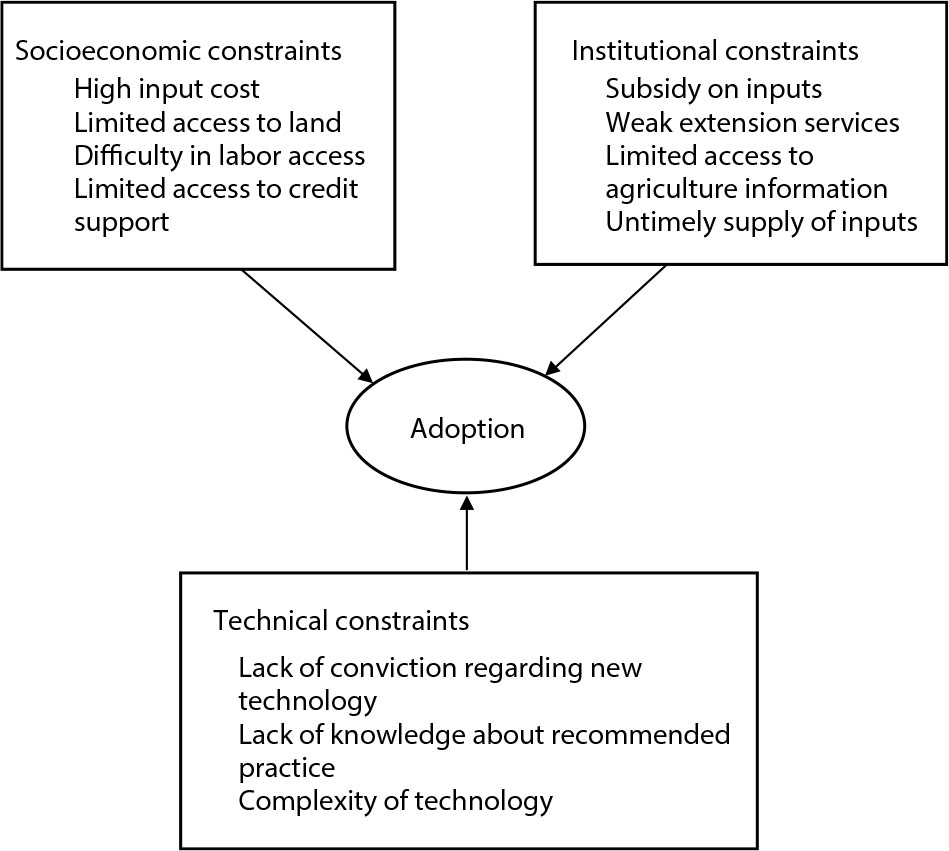
Fig. 2.
Conceptual framework of the study
Source: own elaboration.
RESULTS AND DISCUSSION
Demographic profile of respondents
The results presented in Table 1 show that 65.4% of respondents were male. This distribution is consistent with the gender composition of farmers engaged in agriculture in Ghana, where male farmers generally outnumber their female counterparts, particularly in labor-intensive farming activities. Most respondents were within the age range of 41–55 years of age, indicating that rice farming in the study areas is predominantly undertaken by older individuals. According to Obayelu et al. (2020), inadequate incentives within the agricultural sector have discouraged youth participation, prompting many young people to migrate to urban areas in search of better employment opportunities. The average household size of respondents ranged between four and five members, which is higher than the national average household size of 3.4 persons. This relatively larger household size suggests that respondents may rely on family labor to support farm production, thereby reducing expenditure on hired labor. Savings from reduced labor costs can then be redirected toward other farming investments, particularly the purchase of agricultural inputs. Regarding educational attainment, most respondents (42.7%) had completed only primary education, indicating relatively low levels of formal education. Limited education can affect farmers’ awareness, understanding, and adoption of new farming technologies. Previous studies have emphasized that awareness is fundamental to farmers’ adoption of new technologies (Rogers, 2003; Ajwang et al., 2024). Furthermore, language barriers may limit farmers’ understanding of agricultural information disseminated in languages other than their local dialects, potentially hindering effective decision-making and leading to suboptimal choices. Access to land remains a critical resource for smallholder farmers, as it enables them to expand production and allocate portions of their farmland for testing innovations. The findings indicate that 63.7% of the respondents cultivated rice on land sizes ranging from one to four acres (less than two hectares), which is consistent with the average farm size of smallholder farmers in Ghana (MoFA, 2021). Agricultural land in the study areas, as in much of Ghana, is largely owned by individuals and traditional authorities, with access typically obtained through renting, purchasing, or sharecropping arrangements. However, the nature of the land tenure system can make land acquisition difficult, thereby limiting opportunities for farm expansion and crop diversification. In terms of farming experience, the majority of respondents (52.6%) reported having more than ten years of experience in rice farming. This suggests that farmers possess substantial practical knowledge of rice production. Such experience can facilitate the integration of indigenous knowledge with newly adopted technologies, which is essential for improving productivity and enhancing farm performance.
Table 1.
Demographic characteristics of respondents (%)
| Variables | Category | Bono (n = 160) | Volta (n = 184) | Pooled (n = 344) |
|---|---|---|---|---|
| Gender | Male | 61.9 | 68.5 | 65.4 |
| Female | 38.1 | 31.5 | 34.6 | |
| Age | 25–40 | 23.8 | 35.9 | 30.2 |
| 41–55 | 58.7 | 45.1 | 51.5 | |
| ≥ 56 | 17.5 | 19.0 | 18.3 | |
| Education | No formal | 27.5 | 23.4 | 25.3 |
| Primary | 49.4 | 49.5 | 42.7 | |
| Secondary | 21.9 | 20.6 | 26.5 | |
| Tertiary | 1.2 | 6.5 | 5.5 | |
| Household size | 1–3 | 55.6 | 33.7 | 43.9 |
| 4–5 | 44.4 | 66.3 | 56.1 | |
| Farm size (acres) | <1 | 18.7 | 24 | 21.5 |
| 1–4 | 74.4 | 54.3 | 63.7 | |
| ≥ 5 | 6.9 | 21.7 | 14.8 | |
| Experience | 1–10 | 66.3 | 31.0 | 47.4 |
| 11–20 | 10 | 41.8 | 27.0 | |
| ≥ 21 | 23.8 | 27.2 | 25.6 |
Rate of adoption among different technologies
In agricultural production, higher rates of technology adoption are generally associated with increased productivity. In this context, the study examined the adoption rates of various improved rice-farming technologies that had been demonstrated to farmers in the study regions. The technologies considered were machinery use, improved seed varieties, soil bunding, line sowing, and fertilizer application. The results show that improved seed varieties recorded the highest adoption rate, with 74% of respondents reporting adoption. This was followed by fertilizer use (56%), machinery use (48.8%), line sowing (46.2%), and soil bunding (38%) (Fig. 3). The observed variation in adoption rates suggests that smallholder farmers face multiple challenges in adopting different farm technologies. Although recent government subsidy programs in Ghana appear to have contributed positively to technology adoption, the overall adoption levels remain relatively low. According to Holden and Lunduka (2014), delayed input supply and high input costs often constrain farmers’ ability to adopt improved technologies. These constraints imply that, at current adoption levels, many smallholder farmers may struggle to achieve significant productivity gains. The adoption patterns observed in this study are consistent with findings from other developing countries, including Nigeria and India (Matto et al., 2017; Bello et al., 2021).
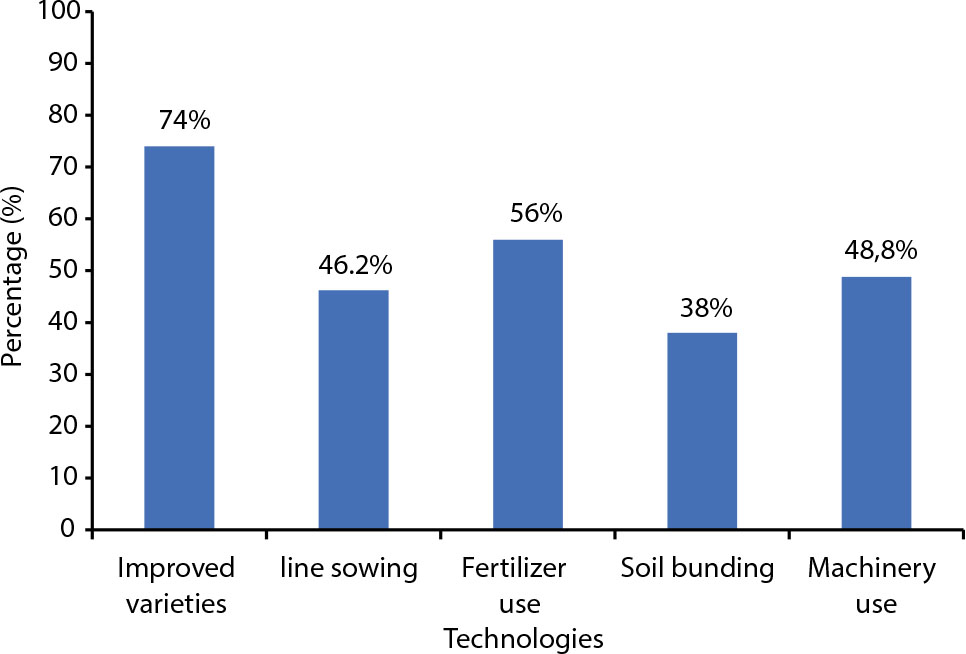
Fig. 3.
Adoption rates of different technologies by the respondents
Source: survey data, 2025.
Constraints affecting adoption of different improved technologies
Previous studies have shown that the limited adoption of improved agricultural technologies among smallholder farmers is a major contributor to low productivity in Africa (Gebru et al., 2021; Addison et al., 2023). Against this backdrop, the present study sought to understand the reasons why many farmers find it difficult to adopt productivity-enhancing technologies. As discussed earlier, respondents were asked to identify the major constraints they face in adopting improved rice-production technologies on their farms. The constraints were broadly categorized into three dimensions: socioeconomic, institutional, and technical. The technologies examined included improved seed varieties, fertilizers, line sowing, bunding, and machinery. Overall, the results demonstrate that the challenges smallholder farmers face in adopting improved technologies are driven by several interconnected factors that vary across individual technologies.
Socioeconomic constraints
The results presented in Table 2 show that limited access to credit significantly constrained the adoption of several rice-farming technologies. Specifically, limited credit access affected the adoption of fertilizers (86.3%), improved seed varieties (84.3%), machinery (80.2%), and soil bunding (78.2%). Access to credit is widely regarded as a key incentive for promoting agricultural productivity, as it enables farmers to manage farm operations more effectively and purchase essential inputs throughout the production season. However, in Ghana, the cumbersome procedures involved in obtaining financial assistance make it difficult for smallholder farmers to access formal credit. Consequently, most smallholder farmers have to rely on personal savings or support from family members to finance their farming activities, which is often insufficient to support the adoption of new technologies. As noted by Awunyo-Victor (2018), access to financial services influences farmers’ technology choices, with subsequent effects on productivity and income.
Table 2.
Constraints affecting adopting of different technologies among respondents (n = 344)
| Constraints | Technologies (%) | ||||
|---|---|---|---|---|---|
| improved seed varieties | fertilizer | line sowing | soil bunding | machinery | |
| Socioeconomic | |||||
| High cost of inputs | 77.3 | 89.2 | 6.7 | 24.4 | 75.0 |
| Difficulty in land access | 68.3 | 70.0 | 45.6 | 21.7 | 18.9 |
| Limited financial support options | 84.3 | 86.3 | 68.3 | 78.2 | 80.2 |
| Difficulty in labor access | 50.0 | 64.5 | 80.5 | 65.4 | 45.6 |
| Institutional | |||||
| Limited subsidy for inputs | 52.3 | 50.6 | 22.7 | 13.7 | 73.8 |
| Untimely supply of inputs | 79.4 | 68.3 | 8.7 | 6.6 | 28.3 |
| Limited information supply on inputs | 83.4 | 79.4 | 38.3 | 46.8 | 75.6 |
| Weak extension services at community level | 50.6 | 64.2 | 56.7 | 70.6 | 47.7 |
| Limited access to training programs | 88.4 | 84.3 | 68.3 | 73.3 | 50.0 |
| Distance to input market | 66.6 | 80.2 | 7.8 | 22.7 | 68.6 |
| Technical | |||||
| Lack of awareness of certain technology | 50.6 | 34.6 | 0 | 18.9 | 51.7 |
| Lack of conviction in new technology | 66.5 | 38.3 | 23.3 | 55.8 | 17.2 |
| Complexity of technology | 48.8 | 46.5 | 55.5 | 74.4 | 76.5 |
| Limited knowledge about pest control | 43.0 | 15.1 | 0 | 0 | 0 |
High input costs were also identified as a major socioeconomic constraint to technology adoption. Limited adoption of fertilizers, improved seed varieties, and machinery was associated with the high input costs, as reported by 89.4%, 77.5%, and 74.4% respondents, respectively. In most developing countries, particularly in rural areas, smallholder farmers are often resource-poor due to their low income levels and the subsistence nature of their farming systems. Given their limited access to credit and institutional support, increases in input prices discourage sufficient farm investment. As a result, farmers may resort to traditional practices rather than adopt new technologies. Such financial constraints limit farmers’ ability to invest in essential inputs, thereby contributing to low technology adoption and reduced farm output.
Difficulty in accessing labor also constrained the adoption of certain technologies, particularly row planting (80.5%), soil bunding (65.4%), and fertilizer use (64.5%). Rice farming is labor-intensive and involves multiple activities that require timely and adequate labor, including land preparation, transplanting, bund construction, fertilizer application, and harvesting. Labor availability is especially constrained at the onset of the major planting season, when demand for agricultural labor is high. Migration patterns further influence labor availability in Ghana and other African countries, as agricultural households often migrate to areas with greater agricultural potential. This reduces the availability of labor in some rural communities, forcing farmers to rely heavily on family labor. Delays or shortages in labor supply can negatively affect farm operations and productivity, thereby reducing farmers’ willingness and ability to adopt improved technologies.
Institutional constraints
The study further reveals that limited access to government subsidies was perceived as a significant constraint to the adoption of several technologies, including machinery, high-yielding varieties, and fertilizer usage. Specifically, 73.8% of respondents indicated that limited subsidies affected machinery adoption, while 52.3% and 50.6% respondents reported similar effects for improved seed varieties and fertilizers, respectively. Subsidies are generally intended to reduce production costs and alleviate financial burdens for smallholder farmers. However, delays in the distribution of subsidized inputs often undermine their effectiveness in promoting the timely adoption of new technologies. In addition, government subsidy programs typically cover only selected inputs, such as improved varieties and fertilizers. When subsidized inputs fail to meet farmers’ preferences or are unavailable, farmers are compelled to purchase inputs from private agro-dealers at higher prices. This suggests that subsidies targeting a limited range of inputs may be insufficient to substantially promote widespread technology adoption.
Limited access to training programs also emerged as a major institutional constraint. More than 70% of the respondents reported that inadequate access to training programs affected their adoption of fertilizers, improved seed varieties, and soil bunding practices. This indicates that many smallholder farmers face challenges in acquiring the technical knowledge required to adopt improved technologies. Without adequate training, farmers are more likely to rely on indigenous knowledge and traditional practices, thereby limiting potential productivity gains. Access to training enhances farmers’ understanding of improved technologies, builds confidence, and improves their ability to implement innovations effectively. For instance, training on improved seed varieties can enhance farmers’ ability to select appropriate seeds and manage them efficiently.
Respondents further indicated that delays in the supply of inputs constrained adoption, particularly for improved seed varieties (79.4%) and fertilizers (68.3%). While the availability of inputs is essential for enhancing production, delayed supply to the market often prevents timely adoption. In Ghana, where agriculture is largely rain-fed, farmers require timely access to inputs to align with seasonal rainfall patterns. Delays in the supply of improved seed varieties may compel farmers to revert to local varieties, which may not achieve the desired yield potential.
Limited access to information on agricultural inputs was also identified as a major barrier to adoption. Respondents reported that insufficient information constrained the adoption of improved seed varieties (83.4%), fertilizers (79.4%), and machinery (75.6%). Without adequate and timely information, farmers may remain unaware of available technologies or the appropriate timing for their use. Language barriers further exacerbate these challenges, as information disseminated in languages other than farmers’ local dialects may hinder comprehension and lead to poor decision-making. Improving farmers’ access to frequent and relevant agricultural information can enhance awareness and support informed adoption decisions. For example, timely information on machinery services, such as tractor availability for land preparation, is critical for farm operations. These findings highlight the need to strengthen information dissemination systems in rural areas.
Weak extension services at the community level were also perceived as a constraint to technology adoption. Respondents indicated that inadequate extension support affected the adoption of soil bunding (70.6%), fertilizer application (64.2%), and line sowing (56.7%). Agricultural extension agents play a vital role in providing technical advice, training, and information that facilitate technology adoption among smallholder farmers. However, limited extension capacity restricts farmers’ access to these services. In Ghana, the extension agent-to-farmer ratio is 1:700, which falls short of the international standard of 1:500 (Atengdem et al., 2022). This suggests that most farmers in rural areas are less likely to receive extension services.
Furthermore, distance to the input markets was reported as a significant barrier to the adoption of fertilizers (80.2%), machinery (68.6%), and improved seed varieties (66.6%). This finding is consistent with Daniso (2022), who observed that greater distances to markets limit farmers’ access to information and essential agricultural inputs. Since most smallholder farmers reside in remote rural areas, longer distances to markets can discourage investment in farm inputs due to additional transportation costs.
Technical constraints
Lack of awareness of improved technologies emerged as a major technical constraint to adoption. The results indicate that insufficient awareness hindered the adoption of improved seed varieties (50.6%) and machinery (51.7%). This suggests that many respondents did not receive adequate information to develop awareness of specific farm innovations and their potential benefits. Similar findings have been reported in other contexts, such as India, where limited exposure to media and extension services has constrained farmers’ awareness of agricultural technologies (Oinam and Sudhakar, 2014). Inadequate access to information reduces farmers’ ability to fully harness the potential of farm technologies, whereas timely and relevant information can enhance awareness and help address knowledge gaps.
Respondents also perceived a lack of conviction about new technologies as a barrier to adoption, particularly for improved seed varieties (66.5%) and soil bunding (55.8%). Another key technical constraint identified was the perceived complexity of technologies. This factor constrained the adoption of machinery (76.5%), soil bunding (74.4%), and line sowing (55.5%). The adoption of new farming practices often requires specific knowledge and skills, suggesting that farmers who do not receive sufficient training may find it difficult to implement these technologies effectively. As noted by Alarima et al. (2011), farmers are generally reluctant to adopt technologies that are difficult to learn or apply under their local conditions. Conversely, farmers are more likely to adopt innovations that align with their needs, capacities, and farming environments.
CONCLUSION
This study provides a multidimensional analysis of the constraints affecting smallholder farmers’ adoption of different rice farming technologies. Overall, the findings demonstrate that technology adoption is a complex process shaped by multiple, interconnected, and technology-specific barriers. The study reveals clear differences in adoption rates, with higher adoption observed for input-based technologies such as improved seed varieties and fertilizers. In contrast, management- and capital-intensive practices – such as soil bunding and machinery use – exhibited significantly lower adoption rates. The results indicate that capital-intensive technologies (e.g., machinery) are primarily constrained by socioeconomic factors, such as high input costs and limited access to credit. Management-intensive practices, such as line sowing and soil bunding, are more strongly affected by institutional and technical constraints, including difficulties in accessing labor, weak extension services, and the perceived complexity of the technologies. Notably, even widely adopted technologies such as improved seed varieties and fertilizers are severely constrained by institutional challenges, particularly the untimely supply of inputs and limited access to information and training programs. These constraints may discourage the adoption of complete technology packages and limit productivity gains, ultimately affecting farmers’ livelihoods. The findings underscore that a one-size-fits-all policy approach is ineffective for promoting technology adoption among smallholder farmers. Instead, targeted and technology-specific interventions are required to address the diverse barriers identified. Overcoming these challenges has the potential not only to enhance technology adoption and productivity but also to improve the overall socioeconomic well-being of smallholder farmers.
Based on these findings, several important policy and practical implications emerge. First, there is a need to develop tailored credit schemes that address the specific cost barriers associated with machinery rental or purchase. Second, strengthening institutional capacity by enhancing extension services and input supply chains is crucial for ensuring the timely delivery of information and inputs. Finally, the provision of regular training programs, including on-farm demonstrations, can help farmers build practical skills and confidence, thereby reducing uncertainty surrounding technologies perceived as complex.
LIMITATIONS OF THE STUDY
This study has some limitations that should be acknowledged. The analysis relied primarily on descriptive statistical methods to identify and categorize adoption constraints. While this approach is valuable for exploratory analysis and pattern identification, it does not allow for the estimation of statistical significance or the relative causal influence of the factors examined. In addition, the findings are based on farmers’ perceptions and cross-sectional data, which limits the ability to draw definitive causal conclusions. As such, the results should be interpreted as indicative of potential barriers to adoption rather than confirmed causal relationships. Future research could build on this work by employing multivariate econometric models to quantify the magnitude and statistical significance of the identified constraints and to better understand their causal effects on technology adoption.