
INTRODUCTION
Agriculture plays a crucial role in rural development and in sustaining rural livelihoods. It serves as the backbone of food security in South Africa, particularly in rural areas, where it significantly contributes to economic growth and employment. A large proportion of the population, especially in rural areas, relies on small-scale farming as their main source of income (Mbatha and Masuku, 2018). The agricultural sector in South Africa contributes approximately 3% to the national GDP, accounting for 40% of export revenues, and 4.6% of employment (KZN-DARD, 2020). The Food and Agriculture Organization notes that 1.3 billion people around the world are engaged in various forms of agriculture, with 97% of these people being from developing countries (WHO, 2022). Among them, around 400 million individuals depend on small-scale farming for their livelihoods.
Small-scale agriculture in KwaZulu-Natal forms a foundational element of rural economic activity, especially in regions such as the Jozini Local Municipality, where livelihoods are deeply entwined with land-based practices. Located in the northernmost part of the province, within the UMkhanyakude District, Jozini is classified as one of South Africa’s poorest municipalities, with over 70% of the population living below the national poverty line and youth unemployment rates exceeding 55% (Simelane, 2017; Stats SA, 2022). The municipality is predominantly rural, and approximately 80% of households engage in some form of agriculture, either for subsistence or income generation (Buthelezi, 2023).
In the absence of widespread formal employment opportunities, small-scale farming has become a vital coping mechanism for food insecurity and chronic poverty (Simelane, 2017). Households typically engage in a mix of crop cultivation (such as maize, beans, and amadumbe) and livestock farming (goats, cattle, and chickens), using largely traditional and labour-intensive methods. These agricultural activities are often the only source of regular income for women-headed households, elderly residents, and unemployed youth who are excluded from formal labour markets (Wale and Mkuna, 2025). Moreover, informal trade in agricultural produce plays a significant role in the local economy, with farmers selling surplus crops at roadside stalls or community markets, creating limited but essential economic circulation in otherwise marginalised areas.
Despite its significant role in rural livelihoods, small-scale farming in South Africa remains constrained by numerous market access challenges. Key challenges include limited availability of markets in rural areas, restricted access to financial resources, stringent agro-food market regulations, and inadequate infrastructure. Additionally, technological barriers, information asymmetry, irrigation challenges, high transaction costs, and the inefficacy of market access interventions further exacerbate their vulnerability to market exclusion (Ncube, 2020; Ndlovu and Masuku, 2021; Dhillon and Moncur, 2023). In rural areas such as Jozini, these barriers are particularly pronounced due to poor road infrastructure, high transportation costs, and the absence of well-structured value chains that facilitate small-scale farmers’ integration into formal markets.
However, the capacity of small-scale farmers in Jozini to scale production or access formal agricultural markets is severely constrained by a combination of infrastructural, institutional, social, and environmental challenges (Wale et al., 2021). Firstly, physical infrastructure remains chronically underdeveloped. Many of the access roads connecting homesteads and farming areas to market centres, such as Mkhuze and Jozini town, are unpaved, eroded, and often inaccessible during the rainy season. This not only increases the time and cost of transporting goods but also contributes to high post-harvest losses, particularly for perishable produce. Moreover, the region’s irrigation systems, for example, those originally established through the Makhathini Flats Irrigation Scheme, are only partially operational (Ndwamato, 2022). While Jozini is home to one of South Africa’s largest water reservoirs – the Pongolapoort (Jozini) Dam – the distribution infrastructure required to deliver irrigation water to small-scale farmers is fragmented, poorly maintained, and largely dysfunctional (Zegeye and Chipfupa, 2018).
Institutionally, support services available to rural farmers remain insufficient. While the KwaZulu-Natal Department of Agriculture and Rural Development deploys extension officers in the district, these officials often lack reliable transport, cover overly large catchment areas, and are under-resourced in terms of training and materials (KZN-DARD, 2022). As a result, their contact with farmers is sporadic and largely limited to project-based engagements. Farmer cooperatives, which in theory should help aggregate production and access funding, often operate without formal registration, business training, or clear governance mechanisms, which undermines their credibility with input suppliers and financial institutions (Grashuis and Su, 2019).
From a social perspective, the demographic structure of rural households shapes farming outcomes in critical ways. Due to the continued outmigration of working-age adults to urban areas in search of employment, much of the agricultural work is carried out by elderly women and unemployed young people (Mkhize, 2018). This affects both the labour capacity and knowledge transfer within communities, as younger people often lack formal agricultural training, while older farmers struggle to adopt new technologies. Moreover, farming takes place on communal land under traditional authority, meaning land tenure is informal and cannot be leveraged for credit or investment. This tenure arrangement remains one of the most significant barriers to accessing long-term financing and mechanisation (Mngomezulu, 2023).
The environmental conditions in Jozini further compound farmers’ vulnerability. The area lies in a semi-arid climatic zone, with increasingly erratic rainfall patterns, frequent droughts, and prolonged dry spells, which severely affect crop yields and livestock health (Nxumalo, 2014). The impacts of climate change – especially temperature rises and reduced water availability – are already being felt, with observable declines in staple food production (KZN-DARD, 2022). Small-scale farmers, most of whom lack irrigation, insurance, or climate-resilient infrastructure, are disproportionately exposed to these risks and have limited adaptive capacity due to poverty and low asset ownership (Maziya, 2023).
To address these challenges, various policy interventions and programmes have been introduced within South Africa’s agricultural sector. Government-led initiatives, private sector interventions, and programmes spearheaded by non-governmental organizations (NGOs) have sought to address these challenges. Notable among these are the Comprehensive Agricultural Support Programme (CASP) and the Agri-Parks initiative, which aim to enhance small-scale farmers’ productivity and integration into agricultural value chains by providing essential infrastructure, extension services, and market access support (De Satgé and Phuhlisani, 2020). Similarly, policy frameworks such as the Integrated Rural Development Strategy (IRDS) and the National Development Plan (NDP) have been introduced to facilitate market access through infrastructure development, capacity building, and market inclusivity. However, the effectiveness of these interventions remains limited due to challenges related to inadequate implementation, bureaucratic inefficiencies, and the insufficient provision of financial and technical support. Moreover, both the long-term sustainability and impact of these initiatives are uncertain, as many small-scale farmers continue to face structural barriers, logistical constraints, and exclusion from high-value agricultural markets. These shortcomings highlight the need for a more integrated and adaptive approach to market access interventions that adequately address the systemic vulnerabilities within the smallholder farming sector.
Although efforts to improve market access exist, significant gaps remain in addressing the realities faced by rural, small-scale farmers. One of the most glaring gaps is the insufficient focus on infrastructure development, particularly in areas where small-scale farmers are most vulnerable. Additionally, most of these policies and programmes have failed to achieve their intended goals. The CASP, for instance, faced a wide range of challenges that contributed to its limited effectiveness. The implementation of CASP was hindered by administrative inefficiencies resulting in slow distribution of funds and delayed project execution (Pelser and Meintjes, 2023).
The Agri-Parks Initiative encountered similar operational challenges that directly impacted small-scale farmers’ ability to participate in markets. These challenges included cumbersome administrative procedures, the absence of clear operational guidelines, delays in implementation, suboptimal infrastructure, insufficient community and stakeholder engagement, limited financial and human resources, and inadequate training opportunities for beneficiaries (Maruli, 2023). Similarly, key policy frameworks designed to enhance market access, such as the Integrated Rural Development Strategy (IRDS) and the National Development Plan (NDP), have faced significant shortcomings that have weakened their effectiveness. These include insufficient funding, slow bureaucratic processes, inadequate stakeholder participation, poor inter-departmental coordination, and the absence of robust monitoring and evaluation mechanisms, all of which have hindered their ability to facilitate meaningful market participation for small-scale farmers (Hall and Cousins, 2018; Khoza et al., 2019). Furthermore, while financial assistance initiatives exist, the lack of tailored financial products limits their accessibility and effectiveness, leaving many small-scale farmers without adequate credit support. These challenges illustrate the broader structural and institutional barriers that constrain market participation, diminish the effectiveness of interventions, and reinforce existing disparities in market access, particularly for farmers in remote and rural areas.
The primary aim of this study is therefore to investigate the impact of market access hindrances on small-scale farmers in Jozini, with a focus on their market participation, the perceived effectiveness of market access interventions, and the interrelationships between key barriers. By identifying and analysing these constraints, the study seeks to provide a comprehensive understanding of the factors limiting small-scale farmers’ engagement in formal markets. To achieve this aim, the research is guided by two key objectives. Firstly, it examines the interconnections among physical, financial, human, social, and natural assets to determine how these factors collectively influence small-scale farmers’ ability to access and sustain participation in markets. Understanding these relationships is essential for identifying the underlying causes of market exclusion and informing the development of more effective interventions. Secondly, the study assesses the extent to which existing market access interventions address the specific constraints faced by small-scale farmers. By evaluating the perceived effectiveness of these interventions, the research highlights the strengths and weaknesses of current strategies, particularly in mitigating challenges such as inadequate infrastructure, financial barriers, and inconsistent market linkages. The findings provide critical insights into areas where policy adjustments or new approaches may be required to enhance market access support mechanisms.
THEORETICAL FRAMEWORK
This study employs Caroline Moser’s Asset Vulnerability Analytical Framework (AVAF) to critically examine the factors contributing to small-scale farmers’ challenges in accessing markets and assess how these challenges affect the effectiveness of market access interventions. The AVAF is a widely recognized framework that emphasizes the importance of asset ownership and management in determining the resilience of individuals and communities to external shocks and stresses (Moser, 1998). In the context of small-scale farming, the AVAF is particularly relevant, as it offers a comprehensive perspective on how access to and control over key assets – specifically physical, natural, financial, social, and human assets – shape farmers’ capacity to engage in formal markets and address market-related vulnerabilities (Moser, 1998).
The AVAF conceptualizes vulnerability as influenced by three interconnected components: assets, the vulnerability context (shocks and stresses), and the role of policies, institutions, and processes in shaping livelihood strategies (Moser, 2021). The study employs (see Fig. 1) AVAF to facilitate an in-depth analysis of the structural and institutional barriers that restrict farmers’ access to essential assets. These barriers include limited access to financial capital, inadequate infrastructure, restricted land tenure rights, and insufficient social networks. By identifying these asset-related constraints, the framework allows for the recognition of the underlying factors that exacerbate market access difficulties for small-scale farmers.
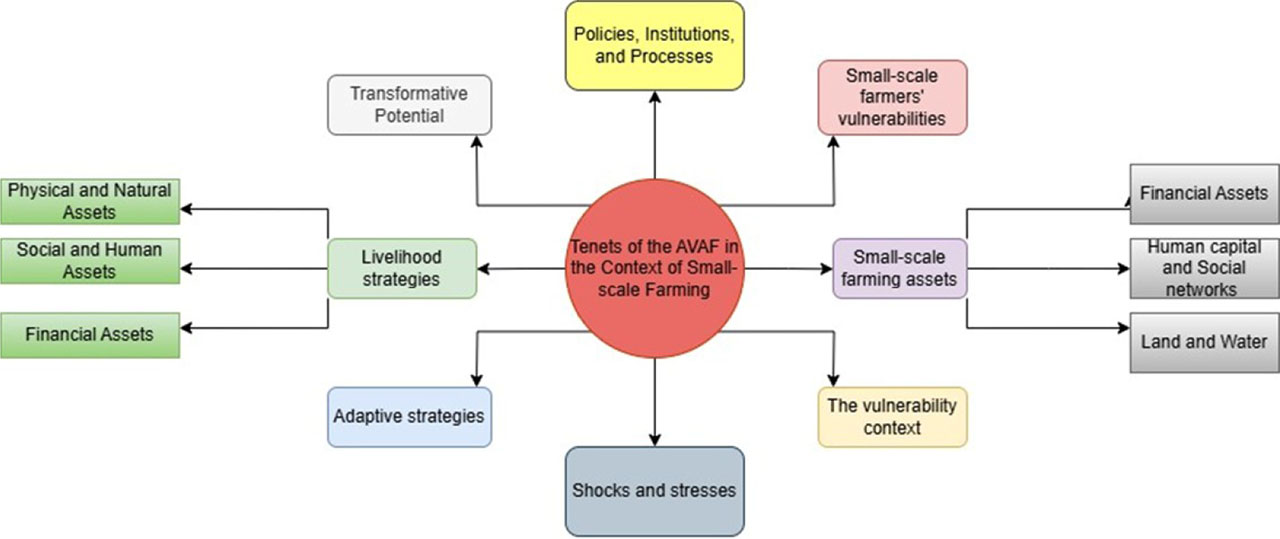
Fig. 1.
The AVAF in the context of small-scale farming
Source: own elaboration.
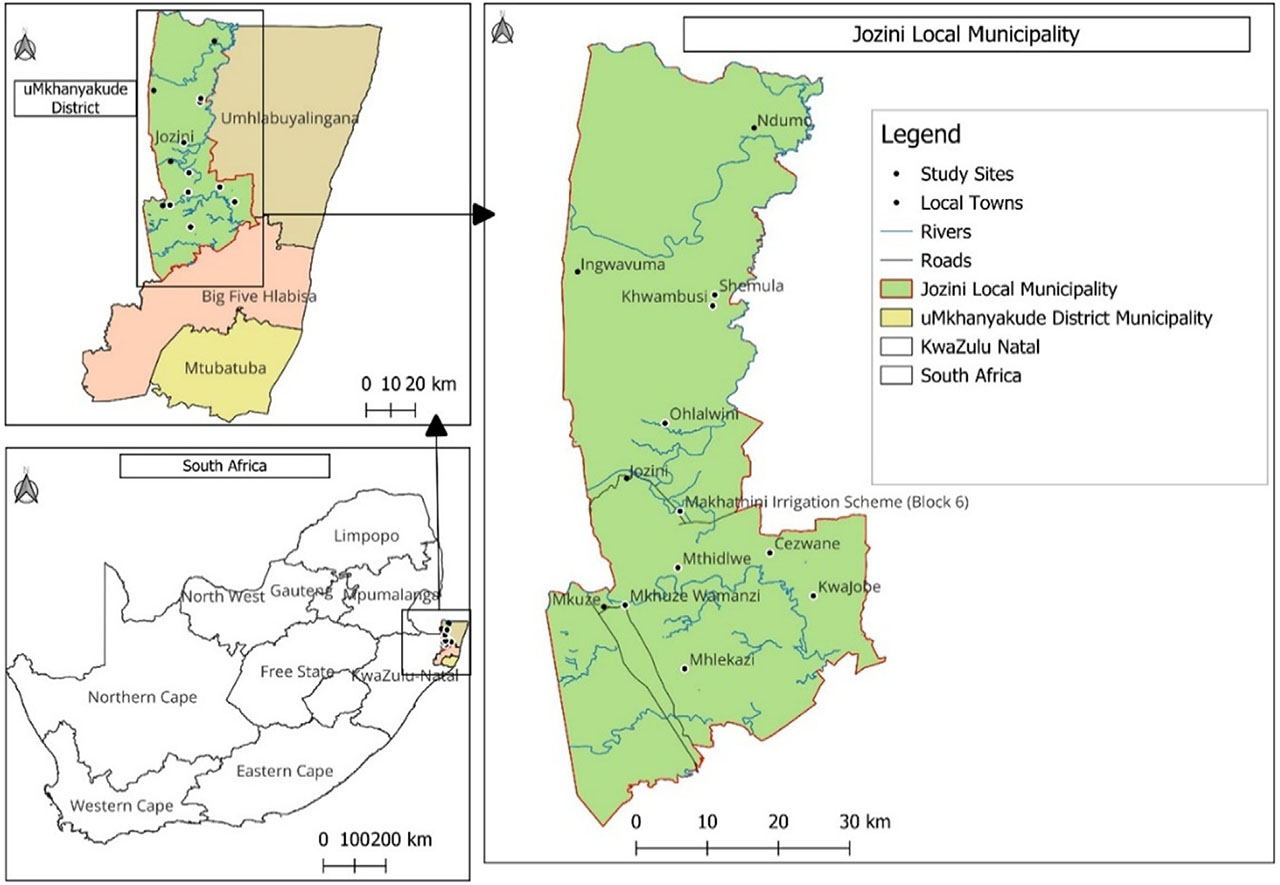
Fig. 2.
Study Area Map
Source: own elaboration.
The Asset Vulnerability Analytical Framework (AVAF) provides a structured approach to examining the vulnerability of small-scale farmers to market access constraints by situating them within a broader vulnerability context. This includes external shocks and stresses such as climate variability, price fluctuations, and policy changes, all of which exacerbate barriers to formal market participation and reinforce reliance on informal trading systems (Gaillard, 2021). By applying the AVAF, this study systematically analyses the interrelationships between key market access barriers – such as inadequate infrastructure, limited financial resources, and weak institutional support – and assesses their impact on small-scale farmers’ ability to sustain market engagement.
A central component of the AVAF is its focus on policies, institutions, and processes, making it a valuable tool for evaluating the effectiveness of market access interventions (Müller et al., 2020). This study utilizes the framework to assess how government support programmes, cooperatives, and infrastructure development initiatives interact with farmers’ asset base, determining whether these interventions mitigate or exacerbate market access challenges. For instance, while input subsidies and financial assistance programmes may enhance productivity, their effectiveness is often undermined by persistent logistical constraints, such as limited access to transportation, storage facilities, and reliable market information systems. Through this analysis, the study generates evidence-based recommendations for strengthening market access strategies.
Moreover, the AVAF serves as an analytical bridge between asset ownership and market participation, enabling an examination of how physical, financial, social, and human assets influence farmers’ capacity to navigate market systems and adapt to external shocks. Its emphasis on livelihood strategies and transformative potential allows for the identification of targeted policy interventions that enhance resilience and promote sustainable economic growth in rural areas. By integrating the AVAF into this study, the research advances a nuanced understanding of how market access constraints shape small-scale farmers’ economic opportunities and evaluates the extent to which existing interventions effectively address these vulnerabilities.
METHODS
Study data and participants
This study was conducted in Jozini Local Municipality, located within the uMkhanyakude District Municipality in northern KwaZulu-Natal, South Africa. Jozini shares international borders with Mozambique to the northeast and Eswatini to the northwest, positioning it within a region influenced by cross-border economic activities such as informal trade and seasonal labour migration (KZN-DARD, 2020). However, despite this strategic location, small-scale farmers face significant challenges in accessing formal cross-border markets, which is due to stringent customs regulations, poor transport infrastructure linking rural areas to border posts, and weak integration into formal trade networks. These geopolitical factors, combined with local infrastructural deficits and institutional weaknesses, make Jozini a compelling site for studying the complexities of market access among rural farmers.
The municipality is characterized by high levels of poverty and food insecurity, with many residents reliant on small-scale agriculture for subsistence and income. While the presence of major water resources like the Pongolapoort (Jozini) Dam and the historical Makhathini Irrigation Scheme might suggest agricultural potential, in practice, most small-scale farmers depend on rain-fed agriculture due to the poor maintenance and limited operational capacity of irrigation infrastructure (Nxumalo, 2014). Additionally, the communal land tenure system, administered by traditional leaders, restricts farmers’ ability to secure credit or investment, as land cannot be used as collateral. These constraints are exacerbated by inadequate road infrastructure, which frequently becomes impassable during the rainy season, increasing transportation costs and causing post-harvest losses (Maziya, 2023). Agricultural extension services, while available, are often irregular and under-resourced, limiting their effectiveness in supporting farmers.
The region’s geographical remoteness, inadequate infrastructure, and high levels of socio-economic vulnerability make it a particularly relevant case for analysing the constraints that hinder small-scale farmers’ participation in formal markets and evaluating the effectiveness of existing market access interventions.
To systematically explore these issues, this study employed a cross-sectional quantitative survey design using a structured questionnaire (Questionnaire is available as “Additional file 1: Research Questionnaire”). This approach facilitated the collection of consistent data on farmers’ experiences with market access barriers, the availability of infrastructure and institutional support, and perceptions of government and NGO interventions. The design allowed for comparison across diverse farming contexts and provided quantitative evidence to complement qualitative insights from previous research.
The sample size was informed by an estimated population of approximately 300 small-scale farmers (ref). Using Yamane’s (1967) formula, the required sample was calculated to be 171 farmers. This was increased to 191 to accommodate a projected 10% non-response rate. Agricultural advisers from the Department of Agriculture and Rural Development assisted in identifying eligible small-scale farmers as the list of these farmers is not openly accessible. A simple random sample of 191 farmers was then drawn. However, due to logistical challenges, including geographic inaccessibility, miscommunication, local strikes, and reluctance to participate, the final sample included 53 farmers. While the smaller sample size is a limitation, the use of stratified sampling and data triangulation enhances the credibility and richness of the study’s findings. Data collection took place from 12 August 2024 to 26 August 2024. The questionnaire was translated into isiZulu, the predominant local language, and administered verbally by the researcher to overcome literacy challenges and ensure participant comprehension. The survey focused on infrastructure availability (roads, irrigation, storage), institutional support (extension services, cooperatives), market participation practices, perceptions of market access interventions, and socio-economic characteristics. The questionnaire, consisting of closed-ended questions, ensured consistency in responses and facilitated statistical analysis of key variables, including infrastructure availability, financial resources, and government interventions. Due to the low level of participation, a total of 65 questionnaires were distributed, with 53 completed.
Participants were recruited with the assistance of agricultural extension officers from the KwaZulu-Natal Department of Agriculture and Rural Development (DARD), who leveraged both WhatsApp communication and in-person visits to reach farmers. This dual recruitment strategy was essential given the rural setting and variable connectivity.
Conceptualization and Operationalization of Constructs
This study investigated complex theoretical constructs such as market access, transaction costs, information asymmetry, asset vulnerability, and the perceived effectiveness of market access interventions. To ensure construct validity, these abstract economic and institutional concepts were translated into concrete, measurable survey items appropriate for small-scale farmers in a rural South African context. The questionnaire consisted of eight questions, combining binary responses, asset listings, and scaled assessments. Each question was carefully designed to reflect specific theoretical dimensions in an accessible manner.
Market access was operationalized in Question 1, which asked respondents to indicate the proportion of their produce sold in formal versus informal markets. This distinction allowed for a practical assessment of farmers’ integration into regulated value chains. In addition, Question 2 asked farmers whether a range of specific barriers – including “inadequate rural markets,” “infrastructure,” “agro-food market requirements,” and “market access initiatives” – hindered their participation in formal markets. These items captured structural and institutional constraints that align with broader definitions of market access in the development economics literature.
Transaction costs were addressed in Question 2 through the inclusion of “transaction costs” as a predefined constraint. Although not broken into subcomponents (e.g., search, negotiation, enforcement costs), this item directly reflected the farmers’ perception of the cost-related burdens involved in reaching formal markets. Similarly, information asymmetry and technological barriers were assessed under a combined item in Question 2, labelled “technological barriers and asymmetry of market information.” This formulation reflects an understanding of the overlap between digital exclusion, limited access to price and buyer information, and technological capacity gaps.
Asset vulnerability was explored in Questions 3, 4, and 5. In Question 3, farmers were asked to list the assets they believed were necessary to overcome market access challenges. Question 4 collected data on the assets they currently use in production, and Question 5 differentiated between assets that were owned versus leased. Together, these questions made it possible to identify both resource endowments and asset gaps, which are key dimensions of vulnerability under the Asset Vulnerability Analytical Framework (AVAF). To evaluate the effectiveness of public and NGO interventions, Questions 7 and 8 asked respondents to list the interventions they had encountered and to indicate what percentage of these were perceived to be effective. Response options in Question 8 were presented in 10% intervals (ranging from 10 to 100%), allowing for basic quantification of perceived intervention impact while keeping the format simple and intuitive.
A five-point Likert-type scale was used in Question 6 to gauge how significantly market access challenges affect small-scale farmers in Jozini, ranging from “Not Significant” to “Very Significant”. This question served as an integrative item to measure the perceived burden of market-related constraints on livelihoods.
Prior to implementation, the questionnaire was pre-tested with five small-scale farmers to assess comprehension and cultural fit. Several terms – such as “intervention,” “formal market,” and “transaction costs” – were found to be conceptually distant from the everyday vocabulary of participants. As a result, these terms were explained during interviews using localized examples. For instance, “intervention” was explained as “help from government or NGOs,” and “formal markets” were described as “places like auctions, shops, or big buyers who have conditions.” All interviews were conducted verbally in isiZulu, the participants’ home language, to mitigate literacy-related challenges. The researcher consistently provided clarification and examples across interviews to enhance reliability and reduce response bias. While simplification was necessary to ensure comprehension, this process was conducted carefully to preserve the conceptual intent of each item.
MEASURES
Dependent variable
To create the outcome variable for this study, Multiple Correspondence Analysis (MCA) was used to create a composite hinder index variable, combining the following binary variables: Inadequate markets in rural areas (Hinder~1), Availability and accessibility of adequate infrastructure (Hinder~2), Irrigation (Hinder~3), Technological barriers and asymmetry of market information (Hinder~4), Agro-food market requirements (Hinder~5), Transaction costs (Hinder~6), Investment (Hinder~7), and Market access initiatives (Hinder~8). MCA was used to reduce the dimensionality and improved data interpretability of these categorical variables, with the normalized principal coordinates serving as a continuous measure of market access hindrances. To create a binary outcome variable, the MCA scores were split into two equal quantiles using the median as a cut-off point, classifying farmers into two groups based on the extent of the market access challenges they faced.
Independent variable
This study explores some key variables which include: How much does the market access challenge affect small-scale farmers in Jozini? (not significant, slightly significant, moderately significant, significant, and very significant); How many interventions have been implemented to tackle the market access challenges? (one, two, three, and four); How much of your produce do you sell on the informal market? (0–100); What percentage of these interventions have been effective? (0–100).
Statistical analysis
The study used statistical techniques to examine the significance of various factors such as infrastructure and access to information in determining access. Stata Standard Edition 18.0 (Stata Corporation, Collage Station, Texas, USA) was used for all statistical analysis. The descriptive statistics were used to summarise sample characteristics using mean, standard deviation (SD), proportion and percentages. To examine the associations between the eight identified market access hindrances faced by small-scale farmers, Fisher’s Exact Test was used due to the low expected frequency. Homoscedasticity was tested for using Levene’s test to determine the most applicable test to examine the relationship between the hinder index and effectiveness of market intervention. Thereafter, a t-test was employed to determine the association between the hindrances index and the effectiveness of market access interventions for small-scale farmers. All results were evaluated using p-values, with p ≤ 0.05 indicating statistical significance.
RESULTS
Distribution of sample characteristics
Table 1 provides a comprehensive distribution of the sample characteristics of small-scale farmers in Jozini. This table indicates that the majority of farmers perceive several factors as significant impediments to market participation. The sample consisted of 53 participants. A substantial 94.3% of farmers identified inadequate markets in rural areas as a primary challenge. Similarly, 92.5% of farmers emphasized the lack of adequate infrastructure as a major constraint, while the inadequacy of irrigation systems was further noted as a major challenge, with 86.8% of small-scale farmers reporting this as a hindrance to market access. 88.7% of farmers indicated technological barriers and asymmetry of market information as significant factors affecting their ability to engage in formal markets, 60.4% of farmers perceiving agro-food market requirements as an obstacle, and 92.5% of them citing high transaction costs as another contributing factor to market access constraints. Moreover, 90.6% of small-scale farmers viewed investment as another factor contributing to market access constraints, and 92.5% of participants believed that the availability of market access initiatives was another factor contributing to these market access constraints.
Table 1.
The distribution of sample characteristics of Jozini’s small-scale farmers
| Characteristics | Summary N (%) |
|---|---|
| 1 | 2 |
| N | 53 |
| Inadequate markets in rural areas (Hinder~1) | |
| No | 3 (5.70) |
| Yes | 50 (94.30) |
| Availability and accessibility of adequate infrastructure (Hinder~2) | |
| No | 4 (7.50) |
| Yes | 49 (92.50) |
| Irrigation (Hinder~3) | |
| No | 7 (13.20) |
| Yes | 46 (86.80) |
| Technological barriers and asymmetry of market information (Hinder~4) | |
| No | 6 (11.30) |
| Yes | 47 (88.70) |
| Agro-food market requirements (Hinder~5) | |
| No | 21 (39.60) |
| Yes | 32 (60.40) |
| Transaction costs (Hinder~6) | |
| No | 4 (7.50) |
| Yes | 49 (92.50) |
| Investment (Hinder~7) | |
| No | 5 (9.40) |
| Yes | 48 (90.60) |
| Market access initiatives (Hinder~8) | |
| No | 4 (7.50) |
| Yes | 49 (92.50) |
| How much does the market access challenge affect small-scale farmers in Jozini? | |
| Not significant | 0 (0.0) |
| Slightly significant | 0 (0.0) |
| Moderately significant | 1 (2.0) |
| Significant | 1 (2.0) |
| Very significant | 48 (96.0) |
| How many interventions have been implemented to tackle the market access challenges? | |
| One | 11 (22.0) |
| Two | 19 (38.0) |
| Three | 19 (38.0) |
| Four | 1 (2.0) |
| How much of your produce do you sell on the informal market? (mean, SD) | 85.1 (22.8) |
| What percent of these interventions have been effective (mean, SD) | 29.4 (11.7) |
Regarding the perceived impact of market access challenges, of the 53 participants, 96.0% indicated that the impact of these challenges was “very significant”, while only 2% reported that they were “significantly” affected by the market access challenge, and another 2.0% responded that they were “moderately significantly” affected by the market access challenges faced by small-scale farmers in Jozini.
When reporting back on available interventions to tackle the market access challenges, 22.0% reported that they were only aware of one such initiative, while 38.0% reported that they were aware of at least two such initiatives, another 38.0% responded that they were aware of at least three initiatives, and only 2.0% reported that they knew of at least four such initiatives. Regarding the effectiveness of these interventions, the farmers rated them with an average effectiveness score of 29.4 (SD = 11.7). Finally, the data revealed that farmers sell an average of 85.1 (SD = 22.8) of their produce on the informal market.
Association of barriers to market access for small-scale farmers
Table 2 below provides insights into the pairwise associations between the eight identified hindrances to market access for small-scale farmers. The analysis revealed that all hindrances were significantly associated with each other, except Hindrance 1 (Inadequate markets in rural areas) and Hindrance 5 (Agro-food market requirements). This pair exhibited a p-value of 0.057, which indicates marginal non-significance. While this suggests that these two factors are not completely independent, their relationship is comparatively weaker when compared to the other hindrance pairings.
Table 2.
Association between hindrances affecting small-scale farmers’ access
| Variables | Hindrance | |||||||
|---|---|---|---|---|---|---|---|---|
| ~1 | ~2 | ~3 | ~4 | ~5 | ~6 | ~7 | ~8 | |
| Hindrance~1 | Ref | |||||||
| Hindrance~2 | <0.001 | Ref | ||||||
| Hindrance~3 | 0.001 | 0.006 | Ref | |||||
| Hindrance~4 | 0.001 | <0.001 | 0.025 | Ref | ||||
| Hindrance~5 | 0.057 | 0.020 | 0.001 | 0.031 | Ref | |||
| Hindrance~6 | <0.001 | 0.001 | 0.006 | 0.003 | 0.020 | Ref | ||
| Hindrance~7 | <0.001 | <0.001 | 0.001 | <0.001 | 0.007 | 0.002 | Ref | |
| Hindrance~8 | <0.001 | <0.001 | 0.006 | <0.001 | 0.020 | 0.002 | <0.001 | Ref |
Hindrance 2 (Availability and accessibility of market access infrastructure) showed significant associations with all other hindrances, with p-values ranging from <0.001 to 0.020, which is well below the 0.05 threshold in most comparisons. This suggests that market access infrastructure is a key contributing factor closely connected to other barriers. Hindrance 3 (Irrigation) exhibited similarly strong associations, with Hindrance 2 (p = 0.006), Hindrance 4 (p = 0.025), Hindrance 5 (p = 0.001), Hindrance 6 (p = 0.006), Hindrance 7 (p = 0.001), and Hindrance 8 (p = 0.006), highlighting the interconnectedness between irrigation and other market access barriers.
Similarly, Hindrance 4 (Technological barriers and asymmetry of market information) was significantly associated with Hindrance 2 (p < 0.001), Hindrance 3 (p = 0.025), and Hindrance 7 (p < 0.001), showing that technological limitations and information gaps are related to issues like infrastructure and investment barriers. Hindrance 5 (Agro-food market requirements) exhibited significant associations with Hindrance 2 (p = 0.020), Hindrance 3 (p = 0.001), Hindrance 4 (p = 0.031), and Hindrance 6 (p = 0.020), though the relationship with Hindrance 1 (p = 0.057) was marginally non-significant. Hindrance 6 (Transaction costs) was significantly associated with all other hindrances, with p-values ranging from <0.001 to 0.020, underscoring its central role in the market access framework.
Moreover, Hindrance 7 (Investment) demonstrated significant associations with Hindrance 1 (p < 0.001), Hindrance 2 (p < 0.001), Hindrance 3 (p = 0.001), Hindrance 4 (p < 0.001), Hindrance 5 (p = 0.007), Hindrance 6 (p = 0.002), and Hindrance 8 (p < 0.001), indicating that investment barriers are linked to several other factors. Finally, Hindrance 8 (Market access initiatives) was significantly associated with Hindrance 1 (p < 0.001), Hindrance 2 (p < 0.001), Hindrance 3 (p = 0.006), Hindrance 4 (p < 0.001), Hindrance 5 (p = 0.020), Hindrance 6 (p = 0.002), and Hindrance 7 (p < 0.001), highlighting the relevance of market access initiatives in addressing various barriers.
Impact of market access hindrances on small-scale farmers’ market outcomes
Figure 3 below presents a distribution of the hindrance index among small-scale farmers, broken down by market access type. The figure compares the mean levels of produce sold in informal markets when hindrances were present (88.70%) versus when they were absent (79.20%). The figure suggests that the presence of market access hindrances facilitates a higher percentage of produce being sold in informal markets.
Error bars indicate a 95% confidence interval.
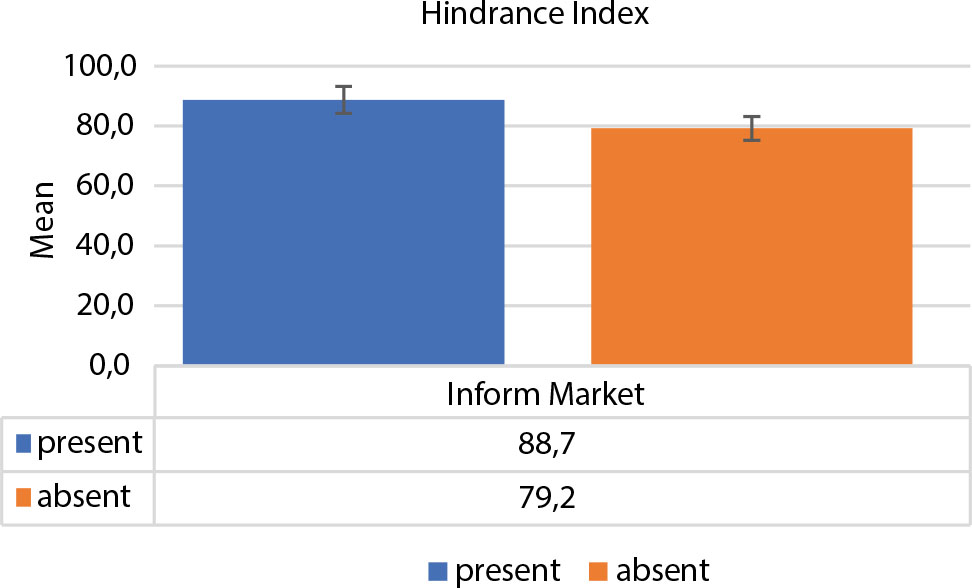
Fig. 3.
Distribution of hindrance index by market access type in small-scale farmers
Source: own elaboration.
Association of hindrance index on the effectiveness of market access interventions
Table 3 below presents the association between the market access hindrance index and the perceived effectiveness of market access interventions. The proportion of farmers classified as having market access hindrances was 31 compared to 19 participants classified as hinders absent. For the group with hindrances, the mean effectiveness rating of interventions was 26.4, with a standard deviation of 12.5. In contrast, farmers without hindrances reported a higher mean rating of 34.2, with a lower standard deviation of 8.4. The 95.0% confidence intervals for the two groups are 21.8–31.0 and 30.2–38.2, respectively, suggesting a significant difference in the perceived effectiveness of interventions between these two groups.
Table 3.
The Association of hindrance index on the rating of market access interventions effectiveness
| Group | Observations | Mean | 95% confidence interval | Standard deviation | Levene’s test | |
|---|---|---|---|---|---|---|
| Hindrance presence | 31 | 26.4 | 21.8 | 31.0 | 12.5 | p = 0.077 |
| Hindrance absent | 19 | 34.2 | 30.2 | 38.2 | 8.4 | |
| Combined | 50 | 29.4 | 26.0 | 32.7 | 11.7 | T-test |
| Difference | −7.8 | −14.4 | −1.3 | p = 0.020 | ||
Levene’s test for equality of variances yielded a p-value of 0.077, indicating no significant difference in the variances between the two groups, which justifies the use of the t-test. The t-test results, with a p-value of 0.020, confirm that the difference in mean effectiveness ratings between the two groups is statistically significant. The mean difference between the two groups was −7.8, with a 95.0% confidence interval ranging from −14.4 to −1.3. The results show that farmers who reported experiencing market access hindrances (mean = 26.4) rated the interventions significantly lower than those who did not experience such hindrances (mean = 34.2).
DISCUSSION
The findings of this study contribute to ongoing efforts aimed at improving small-scale farmers’ market participation, economic sustainability, and overall food security. By offering a nuanced understanding of market access barriers and evaluating the success of implemented interventions, the research provides evidence-based recommendations that can inform policymakers, development practitioners, and other stakeholders working to support small-scale farmers. Effectively addressing these challenges is critical for promoting inclusive agricultural development and ensuring that smallholder farmers benefit from market opportunities, thereby strengthening rural livelihoods and enhancing food security at both the household and national levels.
This study found that, on average, small-scale farmers in Jozini face significant challenges in farming, with obstacles ranging from the least severe – meeting agro-food market requirements – to the most severe – limited market access in rural areas. The findings align with the broader literature, which has consistently identified poor infrastructure, high transaction costs, limited financial investment, and information asymmetry as primary obstacles to smallholder integration into formal markets (Changalima et al., 2022; Tuni et al., 2022; KC et al., 2023). Notably, over 85% of farmers in Jozini rely on informal markets for their produce, a trend also observed in other rural regions of Africa (Davies et al., 2022). This reliance on informal markets is a direct result of the inaccessibility of formal market systems, with small-scale farmers lacking critical market information, buyer preferences, and demand trends. This information deficit often leads to lower prices negotiated through intermediaries, which in turn perpetuates low returns and limiting farmers’ ability to invest in their operations. The prevalence of informal market reliance significantly exacerbates the vulnerability of these farmers, both economically and in terms of food security, as the volatility of informal markets can undermine stable income generation and hinder long-term planning for food production.
Furthermore, the study emphasises the significant role of irrigation systems in enabling small-scale farmers to meet market demands. In Jozini, the limited irrigation coverage substantially affects production consistency, thus compromising both market access and food security. The lack of reliable irrigation infrastructure in Jozini mirrors the findings of Umer et al. (2024), who demonstrate that inadequate irrigation infrastructure in arid and semi-arid regions impedes farmers’ competitiveness with larger producers. This limitation not only restricts market participation but also heightens food insecurity, as farmers face unpredictable crop yields and lower productivity, impacting their ability to provide for both household consumption and external market demands.
High transaction costs, identified in this study, represent a significant barrier to market participation, as they reduce farmers’ earnings and hinder their ability to compete effectively in the market. This issue is also discussed in Hoang and Nguyen’s (2023) research on market inefficiencies, which highlights how transportation fees and intermediary commissions consume a large portion of farmers’ profits, limiting their capacity to engage in formal market channels. Unlike earlier studies that typically analysed barriers such as infrastructure, irrigation, and transaction costs in isolation (Alao, 2021; Foster and Rosenzweig, 2022), this study examines the interrelationships among these factors and demonstrates how their combined effects exacerbate small-scale farmers’ vulnerabilities. The high transaction costs compound the barriers to entry for farmers, reducing their capacity to participate in markets that could lead to greater income stability and food security.
The statistical analysis in this study reveals a strong interdependence between key barriers to market access, demonstrating that experiencing one constraint significantly increases the likelihood of encountering another. Touch et al. (2024) highlight the interconnected nature of these constraints, emphasizing that constraints such as poor infrastructure exacerbates logistical inefficiencies, increases transportation costs, and restricts access to critical resources. Market access infrastructure (Hindrance 2) and transaction costs (Hindrance 6) emerge as central constraints, given their strong associations with multiple other hindrances. Poor infrastructure amplifies logistical challenges, increases costs, and limits access to critical resources, while high transaction costs restrict farmers’ ability to engage in formal markets (Iles et al., 2021). Addressing these two barriers could have a cascading effect on alleviating related challenges. For instance, improving rural infrastructure and reducing transportation costs could lead to a direct reduction in transaction costs, improving farmers’ competitiveness and market access.
The strong link between irrigation (Hindrance 3) and other barriers highlights the role of water access in market participation, particularly in ensuring consistent supply. Umer et al. (2024) and Gebru et al. (2025) indicate that reliable irrigation systems enhance productivity, stabilize yields, and enable farmers to meet market demand, thereby improving their market participation. Similarly, technological barriers and market information asymmetry (Hindrance 4) are closely tied to infrastructure and investment limitations, indicating that improving access to technology could help mitigate multiple constraints. Nugroho (2021) shows that restricted access to agricultural technology and market information constrains farmers’ decision-making, reduces productivity, and limits their ability to negotiate fair prices. This technology gap perpetuates the cycle of informal market reliance, as farmers are unable to access timely, accurate market information that could otherwise enable them to access higher-value formal markets.
While most hindrances are strongly correlated, the weaker relationship between inadequate rural markets (Hindrance 1) and agro-food market requirements (Hindrance 5) suggests that rural market availability and formal market compliance may require distinct intervention strategies. Akiri et al. (2024) highlight the fact that while rural markets provide an accessible outlet for small-scale farmers, they often operate outside formal regulatory frameworks, reducing the immediate impact of compliance barriers. Conversely, formal market entry is heavily constrained by stringent quality and safety regulations, which necessitate targeted interventions such as certification support, training, and financial assistance to meet compliance requirements (Akiri et al., 2024). This distinction underscores the need for tailored policies that separately address local market development and formal market integration.
The available research further emphasizes that market access barriers are interlinked rather than isolated challenges. Kaiser and Barstow (2022) find that poor transportation infrastructure is strongly associated with high transaction costs, as long travel distances and poor road conditions increase the cost of moving goods to market. Similarly, Dimitri and Gardner (2019) establish a link between inadequate storage facilities and market information asymmetry, showing that farmers without proper storage are more likely to sell their produce at lower prices due to limited access to price trends and buyer networks. Furthermore, Bridle et al. (2020) highlight how investment barriers often coincide with technological constraints, as farmers with limited financial resources struggle to adopt modern farming technologies, further restricting their competitiveness in formal markets. These studies reinforce the argument that market access barriers do not operate in isolation but rather compound one another, exacerbating small-scale farmers’ vulnerability. This technology gap perpetuates the cycle of informal market reliance, as farmers are unable to access timely, accurate market information that could otherwise enable them to access higher-value formal markets.
The significant interconnections among the hindrances suggest that policy responses should adopt a holistic and multi-dimensional approach rather than addressing each barrier in isolation (Ma et al., 2024). Given the centrality of market access infrastructure and transaction costs, interventions should prioritize rural road improvements, affordable transport solutions, and financial support mechanisms that lower market entry costs for small-scale farmers (Touch et al., 2024). Additionally, targeted investments in irrigation, digital platforms for market information dissemination, and farmer training programmes could further alleviate constraints related to production, market asymmetry, and compliance with agro-food market standards. By addressing these interconnected hindrances through an integrated strategy, policymakers and development agencies can create a more enabling environment for small-scale farmers, enhancing their resilience and fostering sustainable market access. A notable finding of the study is that 85.1% of participants rely on informal markets, a result consistent with previous studies (Davies et al., 2022; Agholor et al., 2023), further underscoring the systemic nature of these market access barriers. This finding highlights the structural challenges that limit formal market participation, reinforcing the need for targeted policy interventions.
However, the widespread policy emphasis on formal market integration as the ideal route for small-scale farmers requires greater critical scrutiny. While formal markets offer potential benefits such as predictable pricing, access to broader value chains, and quality assurance, these advantages are often inaccessible to rural producers due to structural and institutional barriers (Bogale, 2021). Small-scale farmers in regions like Jozini frequently face scale-based exclusion: their limited production volumes, lack of aggregation infrastructure, and inconsistent supply make them unattractive to formal buyers who prefer bulk, standardized procurement (Mekonnen et al., 2022). Furthermore, contract farming schemes and structured value chains tend to require compliance with rigid quality and safety standards, post-harvest handling protocols, and timely delivery schedules, all of which are difficult for resource-constrained producers to meet (Narayanan, 2025). These constraints reinforce a power asymmetry in formal market participation, where farmers have little control over pricing, delivery terms, or dispute resolution, placing them in precarious contractual positions.
Conversely, informal and semi-formal markets often serve as more viable, flexible, and farmer-centred alternatives. Direct sales to consumers, local trading networks, and participation in community-based or niche markets allow smallholders to negotiate prices, bypass intermediaries, and sell produce in smaller quantities without meeting stringent certification or grading requirements (Connolly et al., 2022). In Jozini, several farmers reported success in selling livestock or vegetables directly to local traders, butcheries, or informal wholesalers operating across the nearby Eswatini and Mozambique borders. These informal channels provided faster cash turnover, lower entry barriers, and greater autonomy over decision-making, factors which are critical for farmer resilience in uncertain environments. While these markets are sometimes viewed as less stable or less regulated, they often represent strategic adaptations to systemic exclusion rather than mere fallback positions (Woodhill et al., 2020).
Thus, market access interventions should avoid privileging formal systems to the exclusion of more adaptive and contextually appropriate alternatives. A more effective policy approach would be to adopt a pluralistic and inclusive market development framework that strengthens both formal and informal trading systems. This would involve supporting local aggregation points, informal trader networks, and cross-border market infrastructure, alongside capacity-building for farmers who do wish to graduate into formal channels. Recognizing the functional value of informal markets is essential to crafting realistic, equitable, and sustainable strategies for smallholder commercialization in underdeveloped rural economies.
This study suggests that the perceived effectiveness of market access interventions is closely linked to the level of hindrances experienced by farmers. Specifically, farmers who report multiple market access barriers tend to view interventions as less effective compared to those who face fewer or no barriers. This reinforces the idea that the presence of several compounding constraints, such as poor infrastructure, high transaction costs, and limited access to market information, can hinder the successful implementation of market access solutions. Chandler (2022) suggests that interventions are less likely to be effective when they do not account for the complexity and interdependence of these barriers. As such, policymakers and practitioners must carefully consider these complexities when designing interventions to avoid ineffective solutions.
This underscores a significant limitation in existing intervention strategies – the absence of context-specific approaches that account for the complex and interrelated challenges faced by small-scale farmers. Empirical research highlights that interventions are most effective when they are designed to address the distinct constraints experienced by farmers within their specific socio-economic and geographic contexts. Therefore, to enhance both the efficacy and sustainability of market access interventions, policymakers and practitioners must adopt a more integrative and adaptive approach that acknowledges the multifaceted nature of these barriers.
The findings of this study underscore the necessity of designing and implementing market access interventions that are sensitive to spatial, infrastructural, and institutional realities, particularly in under-resourced rural municipalities such as Jozini. Interventions must address the structural constraints that restrict small-scale farmers’ ability to participate meaningfully in formal agricultural markets, while also recognizing the importance of informal and alternative market systems in sustaining rural livelihoods.
Infrastructure development should be conceptualized not as a general improvement measure but as a strategic enabler of market connectivity. In regions like Jozini, where many farming communities remain geographically isolated and disconnected from formal trading corridors, the development of all-weather feeder roads and accessible farm-to-market routes is central to overcoming logistical barriers. Complementing this, investments in localized storage facilities, including cooling infrastructure and processing units, would enhance the capacity of small-scale producers to preserve quality, reduce post-harvest losses, and meet market timing and compliance demands. These infrastructure priorities can be supported through integrated funding mechanisms involving the Municipal Infrastructure Grant, provincial rural development allocations, and value chain co-investment from private agro-processors operating in the region.
Improved access to market information and extension services is equally critical. Current extension support is often intermittent, overly generalised, and poorly aligned with the realities of smallholder production systems. In Jozini, where literacy and digital inclusion levels vary, extension approaches should be redesigned to centre around farmer field demonstrations, peer-to-peer knowledge sharing, and isiZulu-language training tailored to the crops and livestock systems most prevalent in the area. Extension services must also incorporate modules on contract farming requirements, quality standards, and negotiation practices in both formal and informal markets. Strengthening these services through mobile communication platforms such as SMS alerts, WhatsApp broadcasts, and community radio programmes can help bridge the information gap in a cost-effective and context-relevant manner.
Addressing the financial exclusion of small-scale farmers demands targeted mechanisms that reduce risk while expanding access to productive capital. The introduction of input voucher schemes redeemable at local agro-dealers, co-financing arrangements for shared infrastructure, and subsidized access to small-scale irrigation technologies represent viable pathways for expanding on-farm investment. These financial interventions should be supported by partnerships with development finance institutions, agricultural cooperatives, and non-bank intermediaries to ensure broader geographic reach and local legitimacy. Importantly, financial literacy and institutional trust-building must accompany any subsidy or loan scheme to mitigate misuse, default, and elite capture.
Efforts to integrate smallholders into formal markets must also be tempered with a pragmatic recognition of the persistent role of informal trade channels in places like Jozini. Informal markets often represent the most immediate and culturally embedded avenues for smallholder producers to sell their goods, particularly when formal systems are inaccessible due to high compliance costs or rigid quality standards. Rather than displacing these systems, policy should aim to support and stabilize them. Upgrading local trading spaces, formalizing vendor associations, and improving sanitation and logistics infrastructure in informal markets can enhance the safety, reliability, and efficiency of these exchanges. Furthermore, Jozini’s geographical location along the borders of Eswatini and Mozambique provides an opportunity to develop regulated cross-border trade routes that accommodate smallholder transactions without imposing burdensome formal requirements. Such regional integration strategies can expand market opportunities while preserving the flexibility on which many rural producers depend.
Overall, the study points to the importance of multi-scalar, institutionally coordinated, and contextually informed interventions. Policies aimed at improving smallholder market access must go beyond technical fixes and instead engage with the socio-economic and spatial dimensions of marginalization. Only by embracing the complexity of rural livelihoods and the plurality of market systems can interventions truly enhance the resilience and agency of small-scale farmers within South Africa’s evolving agricultural economy.
Limitations
The cross-sectional nature of this study limits the ability to infer causal relationship. This study used self-reported measures, which may be subject to recall or desirability bias. The use of MCA to combine the hindrances assumes each hindrance contributes equally to the new composite variable. While the initial sample size calculation indicated a target of 190 participants, only 53 individuals were successfully recruited. This lower-than-expected response rate may impact the generalizability of the findings and increase the risk of selection bias.
CONCLUSION
This study investigates the impact of market access hindrances on small-scale farmers in Jozini, focusing on their participation in formal markets, the perceived effectiveness of interventions, and the interrelationships between key barriers. The findings reveal that small-scale farmers in Jozini face a range of interconnected challenges that hinder their ability to access formal markets. These challenges include inadequate infrastructure, limited irrigation systems, high transaction costs, and financial constraints. Such barriers not only restrict farmers’ participation in formal markets but also exacerbate their vulnerability, with significant implications for their economic stability and food security.
The research underscores the importance of addressing these barriers in a holistic manner. The interdependence of challenges, such as poor infrastructure exacerbating transaction costs and the lack of reliable irrigation limiting production consistency, demands a multi-dimensional approach to intervention. In line with these findings, the study suggests that effective interventions should prioritize improving market access infrastructure, including rural road development and transportation systems. Additionally, investing in water-efficient irrigation technologies and providing digital platforms for market information dissemination could empower farmers by improving both productivity and market knowledge.
Furthermore, the study highlights that small-scale farmers’ perceived effectiveness of market access interventions is closely linked to the number and severity of hindrances they face. This suggests that interventions need to be context-specific, taking into account the complexity and interrelationship of the barriers. Tailored strategies that address the unique socio-economic and geographical constraints of farmers in Jozini are crucial for the success and sustainability of these interventions. Moreover, strengthening social networks and promoting sustainable resource management practices can help mitigate some of the infrastructure- and resource-related challenges identified in the study, such as limited access to water-efficient irrigation systems and high transaction costs. Additionally, bolstering farmer training is crucial for equipping small-scale farmers with the skills and knowledge needed to navigate the complexities of market access, better utilize available resources, and reduce reliance on informal markets.
In conclusion, addressing the interrelated barriers to market access is vital for promoting small-scale farmers’ integration into formal markets. Policymakers and development practitioners must adopt an integrated approach that tackles these challenges comprehensively, ultimately improving market access, economic sustainability, and food security for small-scale farmers in Jozini. By implementing these targeted, integrated strategies, policymakers and development practitioners can help small-scale farmers overcome the identified barriers, thus improving market access, economic stability, and food security.
Notes
[4] Ethical Clearance
The Humanities and Social Sciences Research Ethic Committee (HSSREC) at the University of KwaZulu Natal oversaw the ethical review processes for this study, as it involved human participants. Having met all the ethical requirements, the study received an Ethical Clearance Certificate, which authorized the commencement of data collection (Reference number: HSSREC/00007136/2024). The study ensured that participants voluntarily consented to participate in the study before the study began and that the participants were informed that they are free to withdraw from the study whenever they please.