
INTRODUCTION
The 2016 election of Donald Trump as President of the United States significantly influenced global financial markets. His policy stances, public communications, and unpredictable governance style introduced considerable uncertainty (Brans and Scholtens, 2020). According to Brans and Scholtens (2020), Trump’s tweets and announcements affected firm valuations, with negative tweets in particular reducing company market capitalizations. On the other hand, sectoral reactions to his presidency were mixed: while heavy industry and banking stocks gained, healthcare and pharmaceuticals declined in value (Wagner et al., 2018). Internationally orientated firms were especially vulnerable compared to domestically focused ones, with the BRICS markets, particularly China and Brazil, experiencing pronounced negative shocks (Bouoiyour and Selmi, 2018). Trump’s trade war with China further exacerbated risks, affecting both targeted and non-targeted domestic sectors (Egger and Zghu, 2020). European markets were not insulated from his influence either; the Volfefe Index, which tracks the market impact of Trump’s tweets, was found to predict European stock movements (Klaus and Koser, 2021). Trump’s return to office following his re-election in 2025 has sparked renewed market volatility. In many ways, the early signs of his second term mirror the uncertainty and global spillovers witnessed during his first administration.
Notably, on the 2nd of April 2025 (so-called “Liberation Day”), President Trump signed Executive Order 14257, ushering in a new wave of reciprocal tariffs ranging from 10% to 50% on various goods, including agro-based products (Fig. 1) (Trump, 2025b). Although partially softened by a 90-day reprieve announced on April 10th, 2025, a baseline 10% tariff remained in place (Trump, 2025a). Financial markets reacted with alarm, with J.P. Morgan forecasting a potential global recession (Siddarth, 2025). Globally, financial markets fell, largely on fears that tariffs would dampen economic growth, which was also hampered by the prospect of retaliation and risk-averse investors, exacerbated by weaker corporate earnings (Coatsworth, 2025).
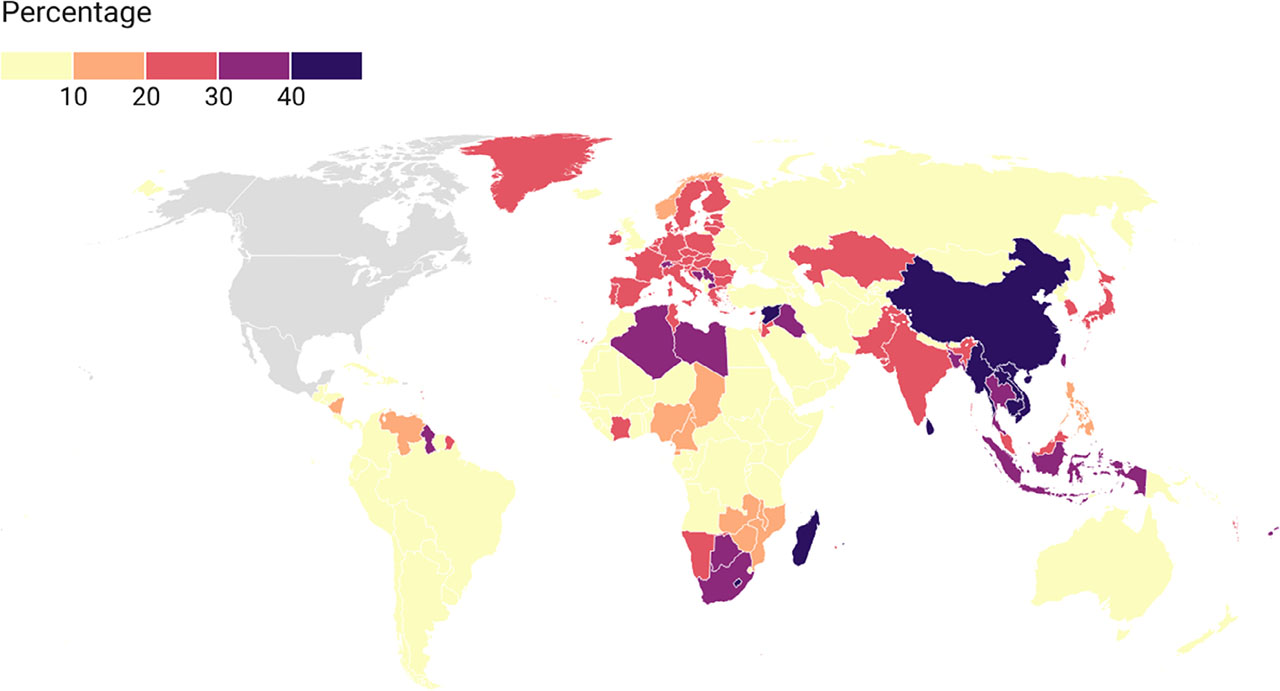
Fig. 1.
US reciprocal tariff rates
Source: Glauber et al., 2025.
The tariff war initiated by President Trump has led to a notable expansion in the United States’ legal influence extraterritoriality (Criddle, 2024; Huld, 2025). This has subsequently given rise to Bilateral Investment Treaty disputes, sanctions compliance challenges, and intricate securities reporting complexities for firms listed on the Johannesburg Stock Exchange (JSE), London Stock Exchange (LSE), and Euronext Amsterdam (Euronext). This emphasizes the increasing tension between the United States’ unilateralism and multilateral trade and securities frameworks. Furthermore, the tariffs have necessitated more stringent governance controls and proactive litigation risk management in these markets (Huld, 2025). The legal debates encompassed a range of issues, including the legitimacy of national security justifications under the General Agreement on Tariffs and Trade 1 (Lindsay, 2003), Article XXI; the proper procedures for imposing trade remedies, whether these tariffs comply with World Trade Organization obligations (McElwee et al., 2025), and retaliatory measures from other countries (Juszycyk, 2018).
The technology sector was the most affected by these tariffs, with retail and transport likely to be affected due to the low profit margins (Jones, 2025). In the agricultural sector, the tariffs could reduce agricultural trade by 3.3% to 4.7%, reducing global GDP by 0.3% to 0.4% (Glauber et al., 2025). According to Glauber et al. (2025), tariffs will lead to increased import costs and market diversification, including domestic markets. There is a general agreement amongst economists that tariffs only benefit specific domestic industries in the short run, whilst in the medium to long run they often lead to higher prices for consumers (Furceri et al., 2018). A study by the Tax Foundation estimates that a 10% tariff on all imports could reduce the USA’s long-term GDP by 0.75% and eliminate 589,000 full-time-equivalent jobs (Saussay, 2024; York and Durante, 2025).
South America and Canada are important agricultural markets, with a large export market share to the US (Fig. 2) (Glauber et al., 2025). These new tariffs also threatened key export sectors in countries such as South Africa, the United Kingdom and the Netherlands, nations that export agricultural goods like citrus fruits, wine, grapes, tobacco, and beer to the United States. Around 4% of South Africa’s agricultural exports go to the US. These include citrus fruits, wine, grapes, and nuts (Sihlobo, 2025). In the UK, 5.2% of the food and live animals exports and 15.9% of the beverage and tobacco exports are destined for the US market (Office for National Statistics, 2025b). For UK agri-food products exports, the USA remains a high value and high-volume market. For example, in 2022 the UK exported approximately 150,000 tonnes of agri-food to the USA, worth £858 million (National Farmers Union, 2022). Overall, in 2023, the UK exported £60.4bn of goods to the US, equivalent to 2.2% of UK GDP (Office for National Statistics, 2025a).
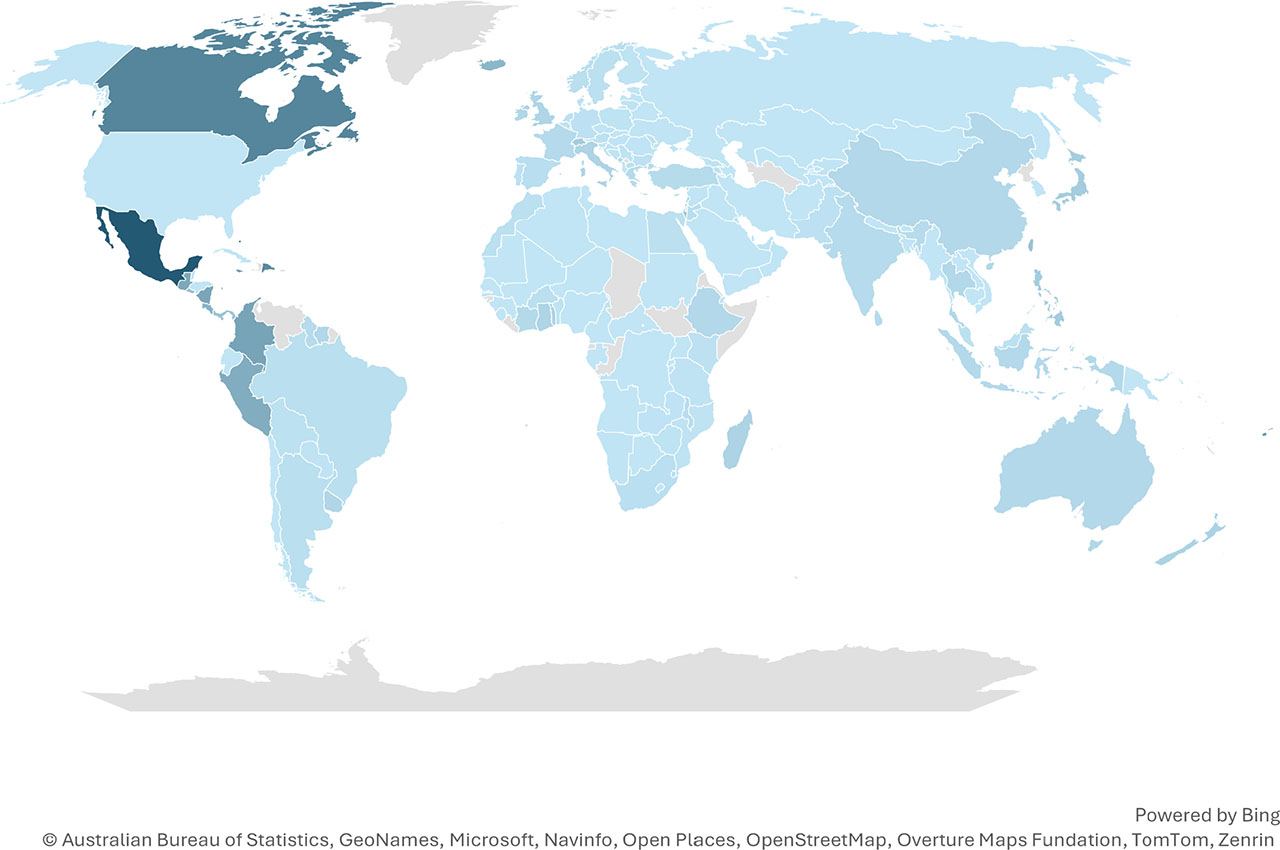
Fig. 2.
Share of agricultural exports to the US in 2023
Source: Glauber et al., 2025.
Fig. 3 shows the trend in exports of selected agricultural products from South Africa, the United Kingdom, and the Netherlands to the US. There has been a gradual increase in exports of the selected commodities to US markets. However, the new tariff regime is likely to affect these exports. This will have a knock-on effect on exporting companies, some of which are listed on the stock exchanges. The study investigates the immediate market response to Trump’s 2025 tariff regime by analysing the stock performance of four agro-industrial firms with significant exposure to U.S. markets: Naked Wines, British American Tobacco, Heineken, and Premier Group Limited. The aim is to provide initial insights into how political trade shocks, especially from major economies, can reverberate through equity markets in export-dependent economies. The analysis contributes to the growing body of literature on political uncertainty and market dynamics, with a unique focus on agro-based firms listed across diverse international exchanges.
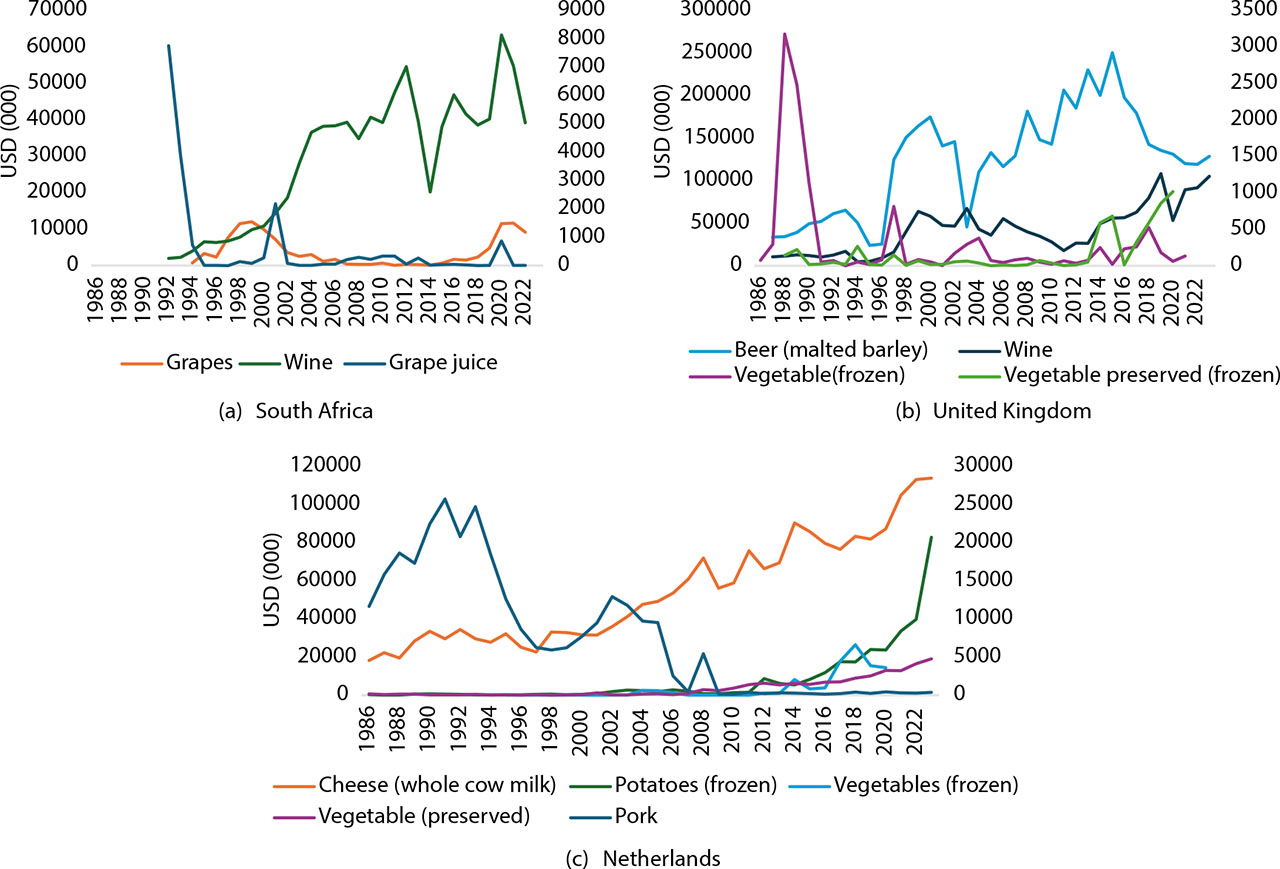
Fig. 3.
Export value of selected agricultural products from (a) South Africa, (b) United Kingdom and (c) Netherlands to the US (1986–2023)
Source: FAOSTAT, 2025.
METHODS
A Chow Test for structural breaks was applied on the daily closing share price of British American Tobacco (BAT), Heineken, Naked Wines (NakW) and Premier Group Limited (PGL) data that was collected from Yahoo Finance for the period between 11 October 2024 and 11 April 2025 (BAT, 2025; Heineken, 2025; Naked Wines, 2025; Premier Group Limited, 2025). A Chow test can be used to test whether different regression lines best fit a split set of data (Chow, 1960; Sun and Wang, 2022). Pooling the regressions is a result of representing this split regression line. Assume there are two parts of a data set, resulting in 2 linear regression fit equations:
The Chow test is used to determine whether β1 = β2 and μ1 = μ2. A single regression line can be used to represent both data sets if they are equal. The test is used to test the null hypothesis of no structural break (i.e., a single regression line) relative to the alternative hypothesis of a structural break. Exchange rates have been included in the model because of their impacts on share prices. The exchange rates were obtained from (Fxtop, 2025a, 2025b, 2025c). Inflation and interest rates could not be added to the model due to the short length of the time series and were thus constant. The short period under consideration also offered a limitation in including other variables that could affect the stock exchange prices. These variables include economic growth outlook, balance of payments, company performance (financial results, reputation), supply and demand, and market sentiments. The short period, however, had global news and events relating to the US market, which is a major trade market. This justifies the inclusion of the tariff policy structural break analysis.
RESULTS
Descriptive results
The average share prices for NakW and BAT for the study period were £55.29 (US$72.28) and £2983.53 (US$3900.09), respectively. The average share price for Heineken was €72.90 (US$82.73), while for PGL’s share price was R12129.50 (US$635.37). 2 The exchange rates also averaged 1.32, 1.13 and 0.06 for £/$, €/$ and R/$, respectively.
Fig. 4 shows the closing share prices of Naked Wine, BAT (LSE), Heineken (Euronext), and PGL (JSE). The shaded area is the period between the inauguration of Donald Trump as the 47th President of the United States (20 January 2025) and the effective date of the tariffs (2 April 2025). The figure shows that NakW had the most volatile shares. British American Tobacco (BAT) was not affected by the new tariffs, as it has defensive qualities due to the highly addictive nature of tobacco products (Coatsworth, 2025). The addictive nature of BAT products contributes to its stocks’ defensive qualities during market downturns (Richey, 2020).
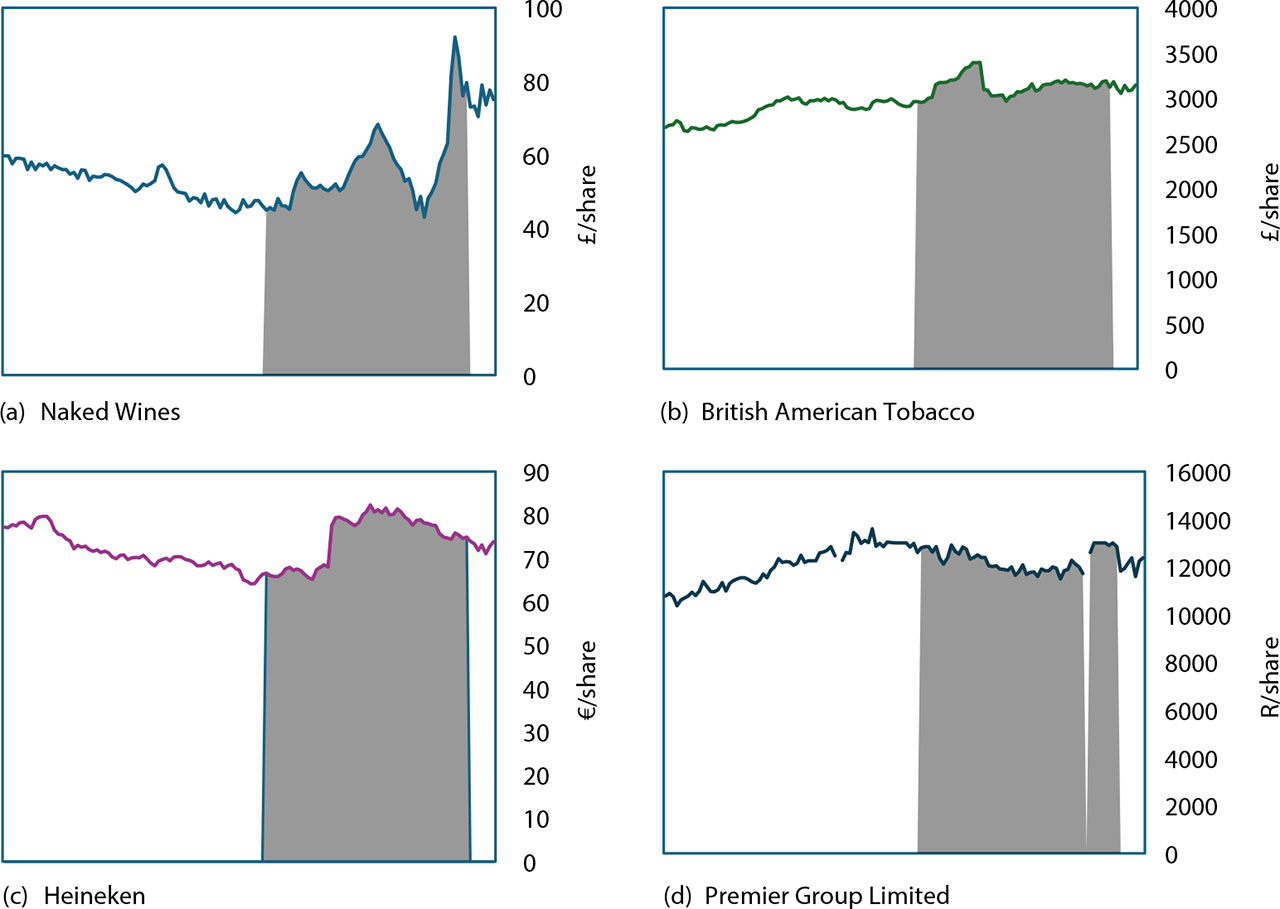
Fig. 4.
Daily closing stock prices for (a) Naked Wines, (b) British American Tobacco, (c) Heineken, and (d) Premier Group Limited (The shaded area represents the time between President Donald Trump’s inauguration on the 20th of January 2025 and the tariff-effective day on the 2nd of April 2025.
Source: BAT, 2025; Heineken, 2025; Naked Wines, 2025; Premier Group Limited, 2025.
Fig. 5 shows the exchange rates of the respective countries against the US dollar. The EUR and GBP were relatively stable against the USD. The ZAR showed high volatility and depreciation against the USD during this period.
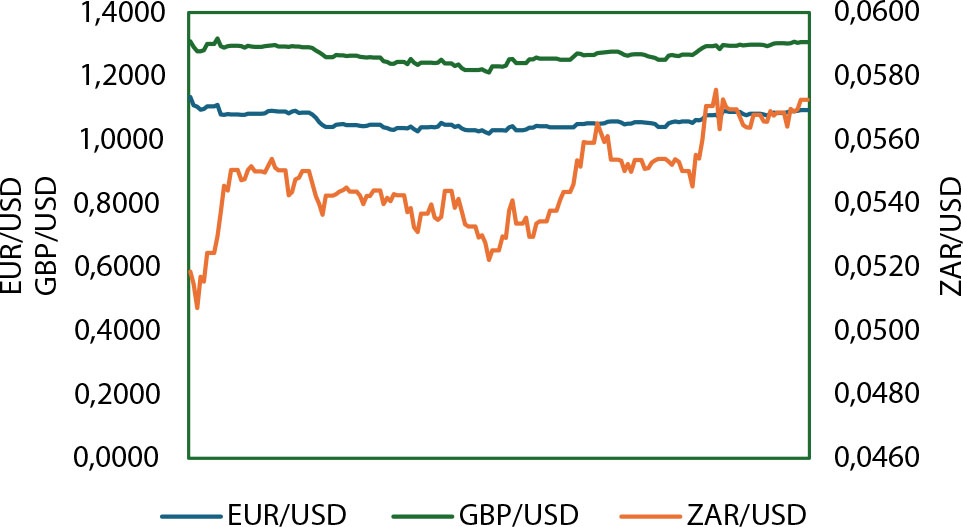
Fig. 5.
Daily exchange rates against the US Dollar
Source: Fxtop, 2025a, 2025b, 2025c.
Empirical results
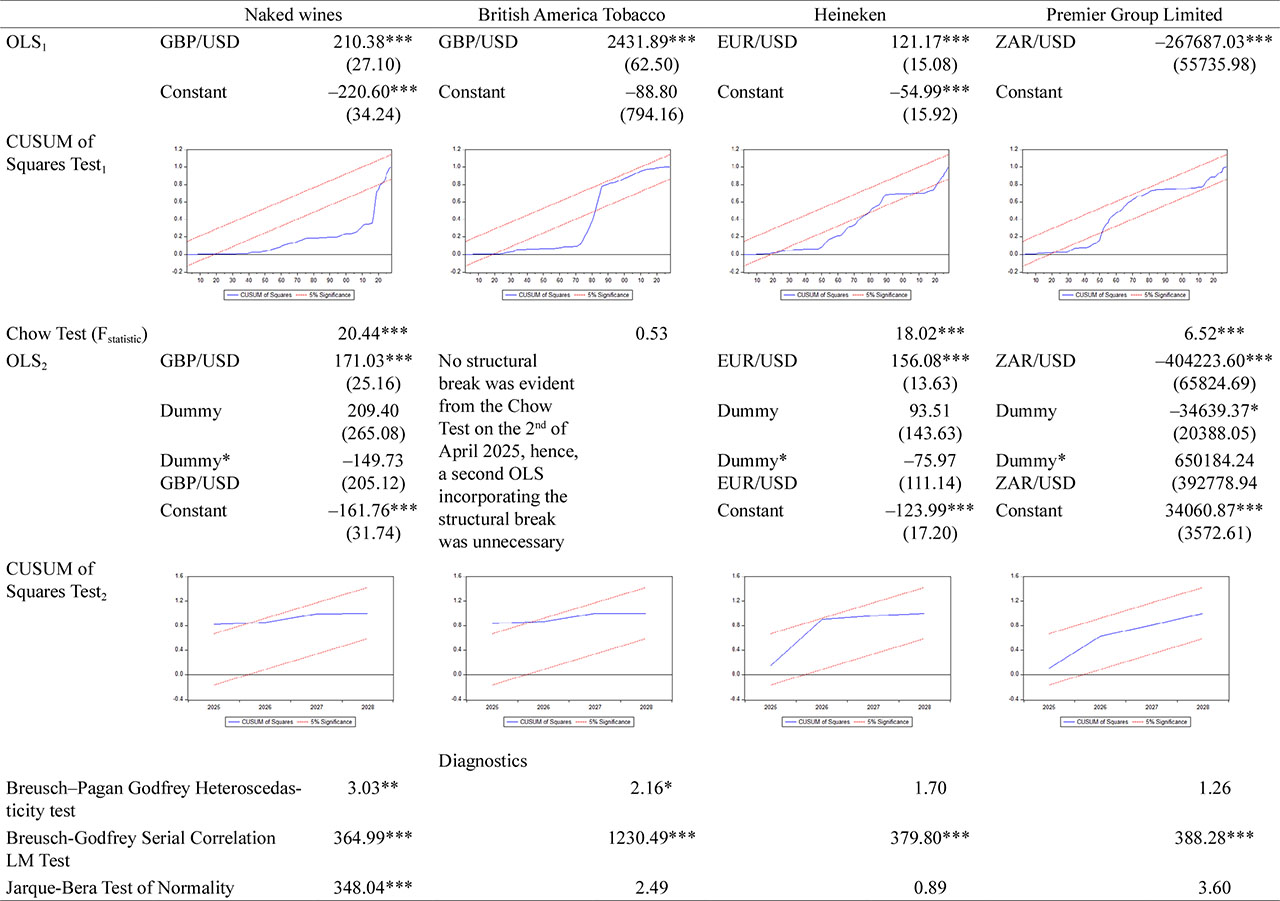
The results in Table 2 show that there were structural breaks in all the models due to the CUSUM of Squares Test1, which were beyond the 5% significance level boundary. The structural breaks were confirmed by the Chow Test for a structural break on the 2nd of April 2025 for the NakW, Heineken and PGL share prices. The Chow Test for the BAT share price was not significant, and we failed to reject the null hypothesis of no structural break induced on “Liberation Day”. This shows that even though there was a structural break in the BAT share price, it was not due to the tariffs effected on the 2nd of April 2025. The OLS2 results show that an appreciation of the GBP and EUR led to an increase in the share price of NakW, Heineken, and BAT. However, a depreciation of the ZAR led to an increase in the PGL share price. In fact, the dummy variable was significant, cementing the effect of the tariffs on the PGL share price. The CUSUM of Squares Test2, which accounts for the structural break on the 2nd of April 2025, shows that the models were stable for the Heineken and PGL share price. The NakW share price still exhibited some level of instability indicating that besides the 2nd of April structural break, there is another structural break. Studies by Chang et al. (2024), El-Diftar (2023), and Bhargava and Konku (2023) confirm the relationship between exchange rates and stock market prices.
Table 1.
Descriptive statistics
| Minimum | Maximum | Mean | Std. Deviation | Skewness | Kurtosis | |
|---|---|---|---|---|---|---|
| Naked Wines (GBP) | 43 | 92 | 55.29 | 9.12 | 1.64 | 3.06 |
| British American Tobacco (GBP) | 2631 | 3394 | 2983.53 | 181.84 | −0.15 | −0.46 |
| Heineken (EUR) | 64.08 | 82.28 | 72.90 | 5.00 | 0.12 | −1.28 |
| Premier Group Limited (ZAR) | 10376 | 13600 | 12127.50 | 709.21 | −0.37 | −0.58 |
| EUR/USD | 1.02 | 1.13 | 1.06 | 0.02 | 0.47 | −0.78 |
| ZAR/USD | 0.05 | 0.06 | 0.05 | 0.00 | −0.04 | −0.25 |
| GBP/USD | 1.21 | 1.32 | 1.27 | 0.02 | −0.24 | −0.89 |
CONCLUSION
The study assessed the impact of the US tariffs on selected companies on the London, Johannesburg and Euronext stock exchanges, a Chow test and share price data between 11 October 2024 and 11 April 2025 was used. The results showed structural breaks for the Naked Wines, Heineken and Premier Group Limited share prices. However, there was no structural break for British America Tobacco share prices. In conclusion, the tariffs effected by the US on the 2nd of April 2025 resulted in the structural break of the share prices of selected agro-based companies. This indicates that, ceteris paribus, the tariffs effected by the US had an impact on agro-based companies. The structural break had more of an impact on the JSE-listed PGL and, compounded with the depreciation of the ZAR, led to a fall in share prices. A market diversification strategy can hedge against risks posed by tariffs imposed by the US.