
INTRODUCTION
Agricultural commercialization is a cornerstone of economic and structural transformation (Pender and Alemu, 2007; Moti et al., 2009). The primary aim of agricultural commercialization is to increase productivity and profitability by optimizing input and output markets, along with decision-making processes at the farm level (von Braun and Kennedy, 1994; Pingali, 1997). According to Ogutu et al. (2020), commercialization increases income, which in turn improves food security and nutritional outcomes for rural households. The productivity gains achieved through commercialization raise household incomes, leading to improvements in welfare, increased purchasing power, and shifts in food consumption patterns (Dorsey, 1999; Moti et al., 2009; Kirimi et al., 2013).
Agricultural policy plays a central role in achieving commercialization goals, with technical advancements considered key to productivity growth (Morris, 2007). A range of agricultural policies and strategies have been proposed in the literature to boost agricultural output, drive economic development, enhance rural social welfare, and improve food security, as the process of agricultural economic growth is heavily influenced by these policies and strategies (Bowler, 2014; Koning, 2017; Swinnen, 2018; Shikur, 2020; Hinderink and Sterkenburg, 2022; Toledo et al., 2023).
Similar to many African countries, Ethiopia’s agricultural sector plays a crucial role in the economy, contributing around 44% of GDP, 80% of employment, and 90% of export revenue (Neme and Tefera, 2021). Smallholder farmers, who make up the majority of the rural poor, primarily engage in subsistence farming, which excludes them from the formal market system and its income generating opportunities (CSA, 2015). Despite progress in other sectors, the livelihoods of smallholder farmers remain constrained by numerous challenges. Compared to commercial farming, smallholder farmers face barriers such as insecure property rights, limited access to financing for inputs like seeds, irrigation, and extension services, poor rural infrastructure, inadequate storage facilities, and volatile food prices (Adisu, 2018; Ahmed, 2017). Additionally, factors such as rapid population growth, limited land tenure, lack of capital and collateral, poor market access, high transaction costs, inadequate infrastructure, and weak institutions all contribute to rising transaction costs, which impede decision-making related to production and market participation in the commercialization of smallholder farming (Ayana et al., 2014).
Recognizing the need for structural transformation, the Ethiopian government has prioritized capacity building, including substantial shifts in human capacity, input supply, technological adoption, and infrastructure provision (MoARD, 2010). To enhance agricultural productivity, the government has implemented several policies, such as structural adjustments, market liberalization, Agricultural Development Led Industrialization, the Sustainable Development and Poverty Reduction Program, the Participatory and Accelerated Sustainable Development to Eradicate Poverty, and successive Growth and Transformation Plans I and II (Welteji, 2018). Among these, agricultural commercialization has emerged as a key policy priority to shift smallholder production from subsistence-based to market-oriented systems. The policy aims to drive rural development by ensuring that all the necessary conditions are met to foster the growth of commercial opportunities in smallholder agriculture (MoARD, 2010). Numerous studies indicate that commercialization significantly enhances household food security, creates job opportunities for rural smallholders, drives income growth, alleviates poverty, promotes socioeconomic development, and supports environmental sustainability (Gosa et al. 2024b; Beyene and Gashu, 2022; Ayele, 2022; Hailu et al., 2015; Ogutu, 2018; Ahmed, 2017; Mudege et al., 2018; Ogutu and Qaim, 2019; Kissoly et al., 2020; Nasir et al., 2017; Misgan, 2021).
As part of the agricultural commercialization initiative, the Ethiopian government has prioritized the development of the vegetable sub-sector in its agricultural strategy. Vegetable production has become a key business activity within the sector, driven by the expansion of small-scale irrigation and the government’s focus on commercializing smallholder farmers (Desalegn, 2021). In Ethiopia’s economy, vegetable production plays a crucial role in fostering economic development and ensuring food security, with smallholder vegetable farming recognized as a significant economic activity (Emana et al., 2015). The country boasts high potential and favourable environmental and edaphic conditions for vegetable production (EHDA, 2012; Emana et al., 2015), with a wide variety of crops cultivated through both irrigation and rain-fed techniques (Gosa et al., 2023). Vegetables also can offer substantial foreign exchange earnings and have considerable export potential (Gebru et al., 2019). The intensive production methods and growth of the processing sector contribute to job creation (Hunde, 2017). Additionally, research by Joosten et al. (2015) has highlighted the positive impacts of vegetable production on food security for both those employed in the sector and urban and rural consumers. Furthermore, vegetables play an important role in increasing household income, improving nutrition, and preventing hidden hunger – micronutrient deficiencies caused by a lack of essential vitamins and minerals like iodine, zinc, iron, and vitamin A (Adish, 2012). In recognition of the importance of vegetables as high-value crops, the government has implemented various agricultural policies, strategies, and guidelines.
Despite the increasing importance of vegetables in Ethiopia’s economy and ongoing efforts towards their commercialization, there is a lack of comprehensive research on the agricultural policies and programs that support this process. While several studies have focused on agricultural and vegetable commercialization, examining its extent, determinants, and impacts on household food security (Hagos and Geta, 2016; Carletto et al., 2017; Nasir et al., 2017; Gebru et al., 2019; Linderhof et al., 2019; Ogutu and Qaim, 2019; Kissoly et al., 2020; Tafesse et al., 2020; Bolarinwa et al., 2021; Madududu et al., 2021; Gosa et al., 2024b), such studies alone are insufficient unless the existing institutional and policy frameworks are also considered. Therefore, to enhance the role of vegetable commercialization in economic development and improve food security, it is crucial to assess the policies and programs that support this commercialization. Hence, this study seeks to explore the existing policies and programs that facilitate vegetable commercialization.
METHODOLOGY
The study context
This study builds on previous research conducted in Sabbata Hawas Woreda, Oromia region, Ethiopia (Gosa et al., 2023; 2024a; 2024b). The Woreda is situated 25 kilometers from Addis Ababa, the capital of Ethiopia. According to the 2022 Population Projection 2022, the total population of the Woreda is 186,803, comprising 94,356 males (50.51%) and 92,447 females (49.49%). The area experiences an average annual temperature of approximately 21.5°C and has an elevation of 1,033 meters above sea level.
Agriculture is the primary economic activity in Sabata Hawas Woreda, with most households engaged in farming. Farmers grow a diverse range of crops, including carrots, onions, tomatoes, cabbage, potatoes, lettuce, beetroots, and habesha gomen (kale). Additionally, sweet potatoes and taro are grown in smaller quantities on limited plots of land (Gosa et al., 2023). These vegetables are produced for both domestic consumption and export to international markets.
Previous studies (Gosa et al., 2023; 2024a; 2024b) have highlighted that commercial vegetable production in the Woreda holds significant economic and nutritional value for producers. Increased vegetable commercialization has been shown to enhance household incomes and improve food security among smallholder farmers. Given these benefits, strengthening the commercialization process through well-designed and effectively implemented policies is essential.
To further support vegetable commercialization, this study aims to analyze the existing policy and institutional environment, identify key opportunities and challenges, and propose strategic interventions for improving the commercialization of vegetable production in the region.
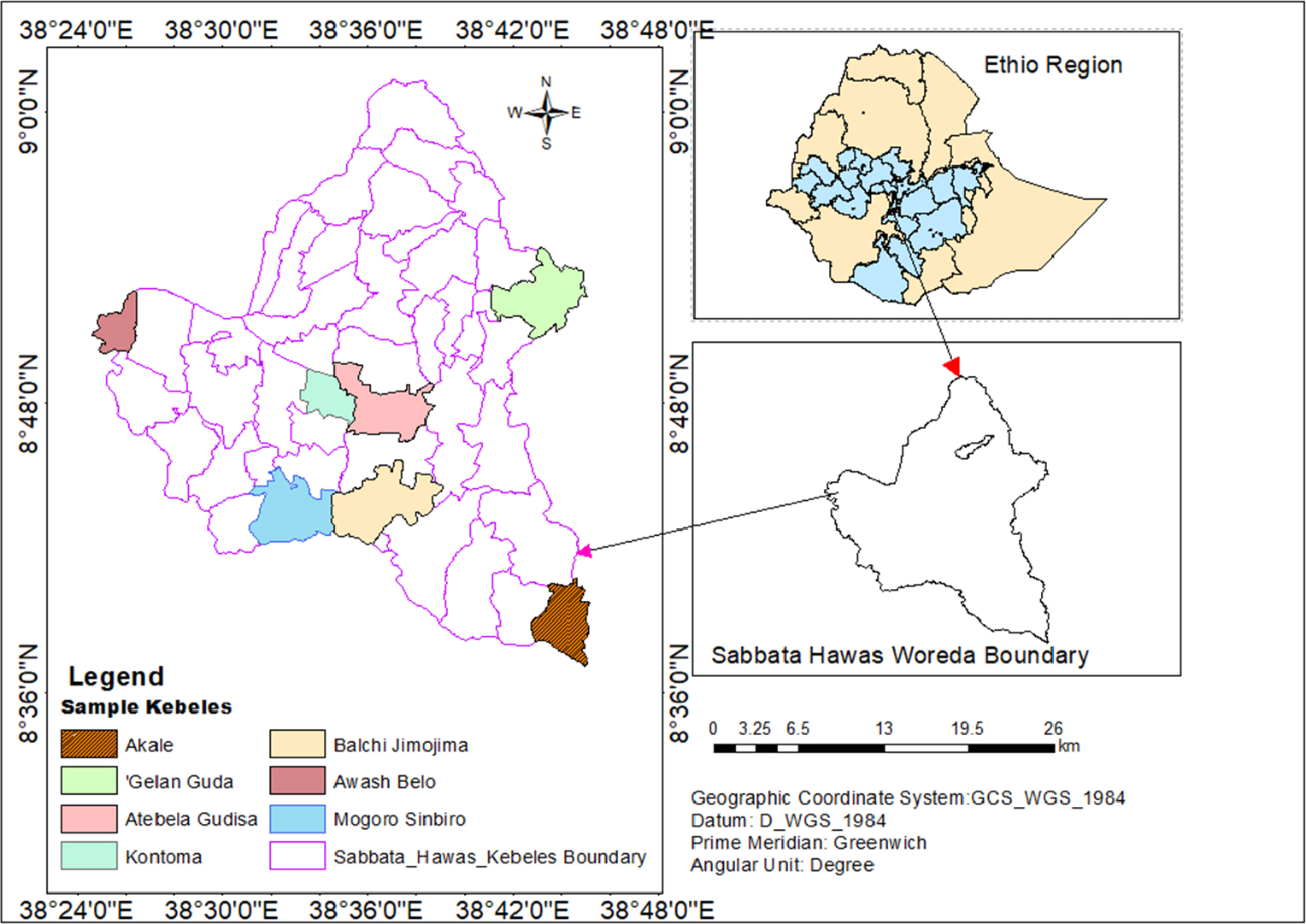
Fig. 1.
Locational map of the study area
Source: developed based on the Ethio-GSI.
Materials and methods
This exploratory policy analysis relied on both primary and secondary data sources. A comprehensive review of key national policy documents was undertaken, including Ethiopia’s Agricultural Sector Policy and Investment Framework (PIF) (2010–2020), the Federal Democratic Republic of Ethiopia Rural Land Administration and Land Use Proclamation 456/2005, the National Horticulture Development and Marketing Strategy (NHDMS), the Ethiopian 10-Year Master Plan for the Agricultural Sector, the Rural Development Policy and Strategies (2003), the Agricultural Extension Strategy of Ethiopia (2017), the Small Scale Irrigation Development strategy, the Horticultural Research and Development Roadmap, and other pertinent documents.
In addition to official policy documents, both published and unpublished materials – such as reports, journal articles, technical books and agricultural commercialization-related policies – were reviewed. Discussions with relevant stakeholders also provided valuable insights.
To supplement the desk review, key informant interviews (KIIs) were conducted with representatives from national, regional, and local institutions. These interviews were designed to address gaps identified during the document review (phase 1) and to gather primary data. A total of thirty-two key informants were selected: nine from national institutions, five from regional institutions, and eighteen from local institutions. The interviews focused on two main topics: (1) existing policies supporting vegetable commercialization and (2) challenges hindering the commercialization process.
An overview of the key informants and the organizations they represent is provided in Table 1.
Table 1.
Description of key informants by institutional levels
| No. | Federal level | Sample size |
|---|---|---|
| 1 | Ministry Of Agriculture, Rural Land Administration, and Use | 1 |
| 2 | Ministry Of Agriculture, Agricultural Investment, and Product Marketing | 1 |
| 3 | Ministry Of Agriculture, Vegetables and Herbs Development Desk | 2 |
| 4 | Ministry Of Agriculture, Input Supply Executive Lead | 2 |
| 5 | Ministry Of Agriculture, Irrigation Design and Construction | 2 |
| 6 | Ministry Of Agriculture, Extension Service Executive Lead | 1 |
| 7 | Oromia Bureau Of Agriculture, Crop Development Director | 2 |
| 8 | Oromia Trade and Market Development Bureau | 1 |
| 9 | Oromia Bureau of Agriculture, Vegetable Production Experts | 2 |
| 10 | Officials From the Sabbata Hawas Woreda Agriculture Office | 2 |
| 11 | Expert From the Woreda Vegetable Development Section | 2 |
| 12 | Expert From The Irrigation Development Office | 1 |
| 13 | Expert From the Trade and Market Development Office | 2 |
| 14 | Representatives From Farmers’ Cooperatives | 3 |
| 15 | Kebele Administrators | 4 |
| 16 | Development Agents | 4 |
| Total | 32 |
Method of data analysis
The data collected from key informant interviews (KIIs), document reviews (including policies, strategies, programs, and reports) and published articles were analyzed using qualitative content analysis. According to Mwangi & Bettencourt (2017) and Nigussie et al. (2018), this approach is particularly effective for analysing qualitative data within the context of policy and institutional analysis.
The analysis focused on three primary areas: (1) existing potential policy opportunities, including strategies, programs, and proclamations; (2) assessing challenges in the design and implementation of policies, such as institutional arrangements, policy formulation and execution, and the capacities of both individuals and institutions; and (3) recommending potential improvements to the policy and institutional framework.
Data from policy document reviews were categorized into policies, strategies, programs, and proclamations, then analyzed to evaluate the current policy environment in relation to vegetable commercialization.
For the data collected through KIIs and focus group discussions (FGDs), two qualitative analysis techniques were employed: narrative analysis and content analysis. Narrative analysis was used to interpret and extract insights from the KIIs, while content analysis was applied to transcribed FGD data to identify key themes and present significant findings.
RESULTS AND DISCUSSIONS
Potential Enabling Environment for Vegetable Commercialization in Ethiopia
Enabling Policies, Strategies, Programs and Proclamations
Over the past two decades, Ethiopia has developed and implemented a variety of policies, strategies, and programs aimed at creating a favourable environment for vegetable commercialization. These initiatives have had a direct and positive impact on advancing the commercialization of vegetable commodities. In recent years, the Ethiopian government has introduced an array of strategies, programs, and proclamations designed to enhance the commercialization of horticultural crops, thereby encouraging the adoption of market-oriented production practices.
The key policies, strategies, programs and proclamations that contribute to the enabling environment for vegetable commercialization are outlined in Table 2.
Table 2.
Enabling policies, strategies, programs, and proclamations for vegetable commercialization in Ethiopia
| Major enabling policies and strategies | Major policy and strategies content |
|---|---|
| 1 | 2 |
| Rural Development policy and strategy (2003) |
|
| National Horticulture Development and Marketing Strategies (2017) |
|
| Agricultural extension strategy of Ethiopia (2017) |
|
| National Food and Nutrition Strategy (2019) |
|
| National Smallholder Irrigation and Drainage Strategy (2019) |
|
| Ethiopia’s ten years master plan (2021) |
|
| Ten in ten programs (2021) |
|
| Rural lands administration and use proclamation (2024) |
|
Enabling Institutional Settings
Research and Development Activities
The content analysis revealed that various research initiatives have been conducted to enhance vegetable production and foster market-oriented production practices in Ethiopia. The research efforts focus on critical areas such as germplasm enhancement, variety development and improvement, agronomic practices, protection practices, postharvest handling, marketing, and value chain management (Hunde, 2017; Milkias and Degefu, 2024). The Government’s prioritization of vegetable research and development has spurred technological innovations that enhance the production and productivity of vegetable crops. These innovations enable smallholder farmers to meet market demands by producing sufficient quantities of vegetables and facilitate the transition to a market-oriented, commercial vegetable production system.
A study by Akililu et al. (2019) recommended focusing on research that supports the establishment of vegetable seed systems, strengthens linkages between governmental and non-governmental organizations in financing and supporting research activities, and promotes awareness of vegetable technologies and their importance among producers and consumers. Such efforts would contribute significantly to enhancing the vegetable sector. Similarly, a study conducted by Mariyono et al. (2017) in East Java, Bali, and across Indonesia found that national research organizations, in collaboration with international agricultural research centers, played a pivotal role in sharing vegetable-related technologies and advancing vegetable commercialization in the country.
Investments in research and innovation infrastructure are crucial for fostering long-term growth and improving competitiveness (Pascal et al., 2021). Enhancing research and demonstration facilities will enable smallholder farmers to increase both their production and productivity, thereby allowing them to meet the demands of local, regional, national, and national markets.
Infrastructure Development
Infrastructure plays a critical role in enhancing vegetable production and marketing and is essential for turning vegetable agriculture into a successful venture (Bisht, 2013). Rachmina et al. (2014) argue that improved infrastructure creates a more favorable business climate, which in turn encourages private capital investment at the farming level. Therefore, enhancing infrastructure is vital as it directly contributes to increased agricultural productivity and overall production. In Ethiopia, the government has made efforts to improve infrastructure and promote the development of the vegetable sector. These efforts are crucial because they not only boost output and productivity but also help smallholder farmers operate in a more sustainable and organized manner.
Government initiatives aimed at expanding rural roads, facilitating smallholder farmers’ access to local and urban markets through direct marketing centers, developing telecommunication networks in rural areas, and promoting small-scale irrigation, are all vital components of an enabling environment for vegetable commercialization. Additionally, the government’s initiatives to enhance smallholder farmers’ access to credit services further support these efforts.
Research shows that between 30 and 40 percent of vegetable production is wasted, with 48 percent of this loss attributed to inefficient distribution and transportation systems (Weerasinghe and Priyadarshan, 2017). This highlights the importance of the Ethiopian government’s efforts to expand rural roads and maintain existing ones, enabling smallholders to access potential markets and secure fair returns from their investments. Issa et al. (2019) suggest that establishing an integrated vegetable chain – covering cooling, transportation, sorting, grading, storage, packaging, and marketing – is crucial to mitigating postharvest losses.
Interviews with officials and experts, as well as content analysis, revealed that policymakers and planners in Ethiopia have consistently prioritized the development of irrigation facilities. Research from various countries indicates that irrigation development has a positive impact on production, income, and food security for smallholder farmers. Jambo et al. (2021) report that irrigation can be a key component of agricultural intensification strategies, boosting both production and productivity.
Compaore et al. (2023) emphasized that an effective information system strategy is essential for the sustainable growth of rural communities throughout the vegetable market, from production to marketing. Strengthening communication systems, expanding networks, and improving infrastructure enhance smallholder farmers’ ability to exchange information, ultimately increasing their bargaining power in negotiating input costs and vegetable prices. Furthermore, in areas with limited electricity access, efforts are being made to promote and expand the use of solar energy to support improved communication.
Challenges to the Promotion of Vegetable Commercialization
Policy Challenges
Policy Design and Implementation Approach
Ethiopia has a long history of policy formulation, dating back to the three successive five-year plans (1957–1961) and the ten-year plan (1984/1985–1993/1994). In principle, the country’s policy-making and implementation processes follow a structured and inclusive approach, aligning with widely accepted policy-making stages (Kaso et al., 2017). However, interviews with officials and experts at various administration levels suggest that, in practice, policy formulation and implementation are predominantly top-down, with limited participation from key stakeholders and beneficiaries.
Research on agricultural policy confirms this trend. Veldkamp et al. (2009) highlight that Ethiopia’s agricultural policy framework remains highly centralized, particularly regarding sustainable development. Other scholars, including Heide et al. (2007), Meerburg et al. (2009), and Runhaar et al. (2017), echo this finding. Veldkamp et al. (2009) further argue that in such a centralized system, policymakers and scientists at the national level dictate policies with little input from regional and local stakeholders.
Key informants from the Ministry of Agriculture (MoA) and regional agriculture bureaus corroborate these findings, stating that many agricultural policies are drafted at the national level before being passed down to regional and local administrative bodies. While there are efforts to involve regional stakeholders in policy formulation, their level of participation remains minimal. Interviewees noted that this exclusion results in awareness and knowledge gaps, weakening policy implementation and reducing the likelihood of achieving intended outcomes.
A study by Ariti et al. (2018) found that top-down policy approaches complicate efforts to improve natural resource management and food security. Similarly, Abi et al. (2021) reported that the formulation and implementation of Sustainable Land Management (SLM) policies follow a top-down model, restricting engagement from key actors and beneficiaries and limiting the scalability of SLM practices.
The lack of inclusivity extends to the regional and local levels. Interviews with experts from the Woreda Office of Agriculture and Development Agents (DAs) reveal that many are unfamiliar with policies and strategies related to vegetable production and marketing. This suggests that lower administrative bodies are tasked with implementing directives without a clear understanding of policy frameworks, objectives or rationale. The limited involvement of local administrators and experts undermines the successful execution of policies, restricting their impact on smallholder farmers and rural communities.
A key informant interview (KII-29, Appendix, Table A1) further illustrates this disconnect:
“Individually, we prepare our activities plan every year, but we never perform our tasks based on our plans. All our responsibility is to accept the order and directions from the administration hierarchies and translate them to work. There are situations when smallholder farmers request involvement and participation in issues related to new programs or practices to adjust them to their actual conditions. However, the opportunity to integrate the ideas or comments of the smallholder farmers’ bottom-up to the programs of higher administration bodies or structures is ineffective”. (KII-29, 7 December 2022).
The challenges associated with Ethiopia’s policy-making approach reflect broader issues in governance. Research suggests that one of the key barriers to effective policy implementation is the lack of collaborative decision-making and the inability to leverage diverse perspectives for problem-solving (Hudson et al., 2019). Ansell et al. (2017) argue that successful policy development requires strong vertical and horizontal linkages, ensuring meaningful collaboration across different levels of government and among various stakeholders. Hudson et al. (2019) further emphasize that policy design should involve continuous engagement with end-users, frontline workers, and various local service agencies to ensure that policies are not only well-informed but also practical and effective in real-world implementation.
The Government Policy Initiatives and the Community Interests
The Federal Democratic Republic of Ethiopia recently introduced the Home-grown Economic Reform, a national policy initiative aimed at addressing both domestic and international challenges (Effa et al., 2023). As part of this reform, the “Ten in Ten” program was launched to accelerate vegetable crop production and marketing, with a specific focus on onions and tomatoes. However, despite its prominence within the initiative, vegetable commercialization lacks clear strategic prioritization in policy, which limits its potential impact.
Key informant interviews (KIIs) with vegetable experts and focus group discussions (FGDs) with smallholder farmers revealed a disconnect between government-led initiatives and farmers’ actual needs. One respondent (KII-18, Table A1) explained:
“As an agriculture expert, I work closely with smallholder farmers to provide farmers with various technologies and practices that increase their production and productivity. In their behavior, farmers are slow to accept new ideas, and they show resistance in the initial period of programs or initiatives’ commencement. This underscores the need to create adequate awareness to match the needs of farmers and government initiatives and to make these farmers understand the benefits of government programs and build trust for further program promotion. However, there are gaps in considering and integrating the interests of the community into government initiatives to minimize the resistance and increase the success rate of intended programs or initiatives.” (KII-18, 5 January 2022)
During focus group discussions, farmers further expressed concerns that government officials prioritize implementing predesigned without fully considering their specific needs. Research supports this observation, showing that Ethiopia’s public agricultural advisory and extension system is predominantly supply-driven rather than demand-driven, meaning it is shaped by institutional priorities rather than the farmers’ actual requirements (Agitew et al., 2018).
A fundamental issue is the lack of trust and collaboration between policymakers and farmers. While trust is essential for effective knowledge-sharing and the adoption of new practices, it is often overlooked by publicsector decision-makers (Rivera et al., 2017). Additionally, Askenazy (2018) argue that rural policies often fail to consider the time and spatial scales needed for their effects to materialize, sometimes leading to unintended or even counterproductive outcomes. Jambo et al. (2021) further emphasize that reducing the gap between farmers’ needs and available farm management practices—while allowing them greater autonomy in decision-making— could enhance their engagement in farming. Ultimately, the failure to incorporate farmers’ perspectives into policy design weakens the alignment between policy tools and real-world outcomes (Knickel et al., 2017).
Institutional Settings Challenges
Periodic Organizational Reforms
Findings from document reviews and key informant interviews with officials and experts reveal that organizational reforms in Ethiopia are recurrent. These reforms may involve structural changes or be more targeted, focusing on specific sectors with distinct legal structures or responsibilities.
For example, several reforms have been implemented to establish agencies and authorities responsible for leading horticulture development. The Ethiopian Horticulture Development Agency (EHDA) was established by regulation no.152/2008 and was mandated, under article 4(2), to facilitate the supply of horticultural products that meet international food safety standards for export. Initially, EHDA was designated to lead horticulture development exclusively. However, in 2017, it was replaced by the Ethiopian Horticulture and Agricultural Investment Authority under Regulation No. 396/2017. Article 6(1) of this regulation granted the authority the mandate to develop policies, strategies, and laws aimed at enhancing horticulture and large-scale agricultural investment activities for market-oriented production.
The reform process continued, and in less than two years, the responsibility for horticulture development and investment was transferred to the Ethiopian Investment Commission under Proclamation No. 1097/2018, Article 32(7). Shortly thereafter, in 2019, the mandate for horticulture sector development and marketing was reassigned to the Ministry of Agriculture under Regulation No. 457/2019. These frequent transitions indicate that the mandates for horticulture development and marketing have been repeatedly reassigned among different government organizations, creating an unstructured and unstable working environment for the responsible bodies.
Key informant interviews (KII-2, Table A1) highlighted persistent issues regarding responsibility and ownership within the sector. Ministry officials noted a lack of clarity in sectoral duties and responsibilities for horticulture development, exacerbated by the absence of cross-sector reporting systems. Interviewees expressed concerns that ongoing organizational reforms have significantly impacted horticulture development and marketing. One official explained:
“Horticulture development and marketing is the key issue that is under the Ethiopian government’s consideration. The government is trying all possible options to transform the sector. Many reforms have been undertaken in the last five years to establish agency and authority and even merge the sectors to enable the sector to perform well. The problem is that as much as the reforms took place, there were changes in structure, sector leaders, and department, which dismantled a lot of activities designed. For instance, when the mandate is given to a certain agency, ministry, commission, or authority by proclamation or regulation, the mandate holder makes a lot of preparation and investment to undertake the given responsibilities effectively. However, if the mandate or structural changes are made regularly within a short period, all the efforts made and motivation face challenges without delivering the required changes, and this significantly affects the process of horticulture development and marketing.” (KII-2, 25 October, 2022).
Based on the findings from the document reviews and key informant interviews, it is evident that incoherent institutional reforms pose a major challenge to horticulture development and marketing, particularly in the commercialization of vegetables. Existing literature supports this observation, indicating that structural reforms can affect an organization’s ability to assume or relinquish responsibilities, merge with or separate from other entities, alter its legal structure, and modify its level of autonomy and ministerial control (MacCarthaigh and Roness, 2012; Laegreid et al., 2010). Similarly, research in organizational psychology suggests that structural reforms in public organizations can have negative consequences, such as stress and anxiety, regardless of the intentions behind the reforms (De Vries, 2015; Marks and Mirvis, 1997; Pollitt, 2007; Murray, 2008; Amiot et al., 2006; Seo and Hill, 2005).
Therefore, it is crucial to evaluate the long-term implications of reform trajectories within public-sector organizations, particularly considering their possible unintended side effects (Wynen et al., 2017).
Coordination and Integration Among Sectors
The Ethiopian government has established various multisectoral institutional arrangements to enhance horticulture development and marketing, aiming to promote vegetable commercialization. However, key informant interviewees emphasized that weak coordination among sectors remains a critical challenge in achieving better vegetable development outcomes. They noted a lack of integrated planning and implementation efforts, with competition arising even over shared goals. Despite recognizing the benefits of cross-sector collaboration for market-oriented vegetable production, structural inconsistencies persist.
For instance, KII-3 (Table A1) highlighted that national-level departmental structures do not align with regional sectoral and departmental arrangements:
“Departmental structures at the Ministry of Agriculture and the regional Bureau of Agriculture are completely different. This makes the process of support services, monitoring, and evaluation inefficient. To enhance vegetable commercialization, it is advisable to devise consistent departmental structures at regions and even at woreda levels. This can mitigate the coordination and integration problems at all levels of activities.” (KII-3, 25 October 2022).
Coordination challenges also extend to regional bureaus, experts, and administrations. KII-10 (Table A1) described poor collaboration among different sections, departments, and offices, limiting their ability to achieve shared objectives:
“It is clear that we work for common objectives in different departments or sections. However, the information exchange systems and the culture of working together are very low. For example, yield improvement cannot be achieved without soil fertility improvements, but the natural resource management section and crop department interaction and co-involvement are weak. These affect the cumulative outcomes of individual departments or sections.” (KII-10, 06 November 2022).
Similar issues are evident at the local administration level, where offices plan and implement independently despite the need for synergy in agricultural activities. KII-30 (Table A1) reported that Woreda Agriculture Offices and kebeles (peasant associations) lack coordination in planning and supervision. This fragmentation hinders peer learning and experience sharing among woredas and smallholder farmers.
A key example is the implementation of Ethiopia’s recent Ten in Ten program, designed to advance onion and tomato production and marketing. However, officials and experts at the woreda and kebele levels remain largely unaware of this initiative, instead focusing solely on the irrigated wheat program. This disconnect underscores weak coordination among institutions, policymakers, and program implementers.
Research supports these findings. Bantider and Desta (2020) reported inadequate cross-sectoral and inter-institutional collaboration, particularly in broader landscapes compared to small watershed management in Ethiopia. Similarly, Jona and Terblanche (2018) found that strong organizational coordination leads to consistent programs, information sharing, efficient service delivery, and optimal resource utilization. Jonas et al. (2016) further observed a lack of planning and coordination among organizations assisting farmers, with multiple organizations promoting similar programs in the same area without awareness of one another. Garrett and Natalicchio (2011) reinforced the importance of coordination in helping organizations understand their roles within a larger system and how they contribute to both challenges and solutions (Garrett and Natalicchio 2011).
Input Supply Systems
The availability and use of quality agricultural inputs – such as hybrid seeds, pesticides, insecticides, herbicides, fungicides, and inorganic fertilizers – are fundamental drivers of agricultural growth. These inputs play a key role in reducing poverty and promoting sustainable development (Jilito and Wedajo, 2020; Ajah and Nmadu, 2012). The widespread adoption of modern agricultural inputs, coupled with improved practices, is essential for agricultural intensification and ensuring long-term food security (Assefa et al., 2021; Holden, 2018).
However, key informant interviews with regional and national officials and experts revealed that the agricultural input supply system, especially for improved vegetable seeds, is a significant barrier to vegetable commercialization. The challenge stems largely from the reliance on imported agricultural inputs, which require foreign currency for timely procurement and delivery to smallholder farmers. Experts from the Ministry of Agriculture (MoA) noted that inefficiencies in the input supply system have become a critical issue at the national level over the past three years, hindering the smooth functioning of the sector.
Improved Seeds Supply
The availability of improved vegetable seeds is a significant challenge in vegetable commercialization. Improved seeds are among the most crucial inputs for increasing crop productivity and output. Smallholder farmers’ ability to enhance agricultural productivity, ensure food security, and improve livelihoods is largely dependent on their access to and use of these seeds (Mihretu, 2019).
KII-6 (Table A1) highlighted that smallholder farmers face considerable barriers to accessing adequate and quality vegetable seeds:
“Vegetable crops require intensive capital, precision, improved technologies, and sufficient inputs. If we take the issue of improved vegetable seeds, private companies are not willing to be involved in seed production because, when seeds are produced and processed, the marketable quantity of seeds is small. Besides, vegetable seed production requires capital, skills, infrastructure, high-tech equipment, adequate power supply, and modern storage. Thus, private companies prefer to import seeds and sell them to smallholder farmers. Since the importation of agricultural inputs requires foreign currencies, private companies are facing the challenges of getting enough amount of foreign currency to import and supply the inputs at the right time for the users’ needs. There is no subsidy for seeds and input costs are a burden to smallholder farmers due to inflation in global markets. The situation is worse for smallholder farmers and those who are economically vulnerable.” (KII-6, 25 October 2022).
A study by Schreinemachers et al. (2021) found that small seed companies face significant challenges in launching their breeding operations and producing hybrid seeds. These companies must overcome obstacles such as the high cost of initial investments, difficulties in acquiring loans, a shortage of skilled experts in hybrid seed production and breeding, and limited access to diverse germplasm.
In Ethiopia, proponents of formalizing a private-led seed system have worked to increase private sector involvement in plant breeding, commercial seed production, and marketing (Mulesa, 2021). However, these activities are not yet firmly embedded in the country’s official seed system. Few new private enterprises in Africa have invested in research and development to create locally adapted varieties; instead, most focus on marketing and distributing seeds (Afari-Sefa et al., 2012). Despite the presence of numerous international seed corporations, there is little breeding of vegetables or other crops for the regional market in sub-Saharan Africa (Access to Seeds Index 2019a, 2019b). Consequently, a large portion of vegetable seed is still imported from outside the continent, although local businesses continue to produce open-pollinated seed (Schreinemachers et al., 2021).
Focus group discussions with smallholder farmers revealed that hybrid seeds are not only expensive but also difficult to obtain in the required quantities from reliable sources. Farmers reported that they pay up to 60,000 ETB for 1 kilogram of hybrid tomato seed and up to 24000 ETB for a kilogram of onion seed. These high seed costs contribute to elevated production expenses, which can lead to higher retail prices for vegetables, ultimately making them less affordable for consumers. This situation highlights the need for promoting a formal seed system in the country to address the seed supply challenges.
Literature suggests that formal seed systems can help bridge the yield gap in several ways: (i) by enhancing the affordability, reliability, and credibility of certified seed, thus improving farming profitability (Haug et al., 2016); (ii) by addressing issues related to land access and the reduction of farm sizes; (iii) by building the capacity to meet diverse seed demands instead of focusing on only a few crops (Mausch et al., 2021); and (iv) by ensuring farmers’ rights and promoting social inclusion, particularly regarding seed access (Andersen et al., 2023; Mausch et al., 2021).
Chemical Fertilizer Supply
Chemical fertilizer plays a key role in improving soil fertility and enhancing agricultural productivity. Studies have shown significant growth in Ethiopia’s fertilizer sector, with the volume rising from 350,000 tons in 2004 to 1.1 million tonnes in 2017. According to the second Growth and Transformation Plan (GTP 2), it was projected that the fertilizer sector would reach 2 million tonnes by 2020 (NPC, 2016). Between 2012 and 2017, the market expanded with the addition of 11 new fertilizer products beyond the traditional DAP and urea (IFAP and IFDC, 2017). The national fertilizer sector is governed by the Fertilizer Manufacturing and Trade Proclamation No. 137/1998 (currently under revision), with oversight provided by the National Fertilizer Industry Agency (NFIA).
Document reviews revealed that several federal ministries are involved in overseeing various aspects of fertilizer law and regulation. The Ministry of Agriculture (MoA) serves as the primary national regulatory body responsible for the registration, production, importation, distribution, and use of fertilizers, including inspections of imported products. Other ministries, such as the Ministry of Transport and Logistics, the Ministry of Trade and Regional Integration, and port authorities, also play key roles in transportation, distribution standards, and trade licencing.
Despite the involvement of several institutions, key informant interviews (KIIs) with MoA officials, regional experts and Woreda Bureau of Agriculture representatives revealed significant disruptions in the supply of chemical fertilizers to smallholder farmers in recent years. According to MoA officials, the global fertilizer trade has been heavily impacted by the ongoing Ukraine-Russia conflict, as these two countries are major global suppliers of fertilizers. The Ethiopian Agricultural Business Corporation (EABC), which is the sole importer of chemical fertilizers, bears the full risk and responsibility for imports. However, EABC faces numerous challenges, including foreign exchange shortages, delays in transit and customs clearance, and labor issues during loading and unloading operations. To reach farmers, EABC established a nationwide marketing network of service cooperatives and marketing centers.
Interviews with MoA officials, regional agriculture bureau leaders, Woreda agriculture office officials, and cooperative heads highlighted ongoing problems with the fertilizer supply system. Fertilizer distribution to smallholders has been insufficient, with delays in delivery and prices becoming increasingly unaffordable.
According to KII-5 (Table A1), the fertilizer policy and regulations are outlined as follows:
“…[The] Ethiopian government has been working to revise the Fertilizer Policy and Fertilizer Production and Trade Proclamation to facilitate the governance of fertilizer production, trade, import processes, and distribution mechanisms in the country. The regulation under use is strict in its content concerning the quantity (only package of 50 kg sacks allowed) and types of fertilizers to be imported without considering the possibility of importing small quantities of fertilizers using small packaging materials less than the recommended quantity. Besides, the involvement of different ministries and government institutions makes the issues of fertilizer due to that their roles are not well defined, where tasks and responsibilities of the respective institutions overlap or are sometimes duplicated. Furthermore, private companies are limited to actively involved in fertilizer trade due to lack of foreign currency, and it is challenging to satisfy the fertilizer needs of smallholder farmers and other users without the participation of private companies.” (KII-5, 27 October 2022).
During focus group discussions (FGDs) with smallholder vegetable producers, they reported difficulties in obtaining sufficient quantities of chemical fertilizers when needed. They explained that chemical fertilizers often arrive late and the distribution process is slow. Moreover, they noted that fertilizer sometimes ends up in the hands of illegal traders, making it difficult to purchase at the recommended fair price. As a result, the price of a 50 kg sack of fertilizer can increase by two to three times, adding to the financial burden on smallholder farmers.
Studies show that although Ethiopia has emphasized smallholder commercialization through better agricultural inputs, particularly inorganic fertilizers, the country’s rate of agricultural input utilization remains lower than that of many other African countries (Jilito and Wedajo, 2020). Despite the importance of fertilizers in improving productivity, both supply-side (fertilizer unavailability) and demand-side (high prices, lack of knowledge regarding recommended application rates, and limited understanding of the benefits of optimal fertilizer use) constraints hinder their effective utilization (Simtowe, 2015). A more effective policy and regulatory framework that promotes both the supply and adoption of fertilizers is necessary to address these challenges (Jilito and Wedajo, 2020). Furthermore, Sineshaw and Chekol (2018) emphasize the need for all stakeholders in the fertilizer supply chain – including importers, retailers, logistics providers, financial and regulatory bodies, and farmers – to develop a shared understanding of existing obstacles and potential solutions for better supply chain integration.
Capacity of Officials, Extension Workers, and Stakeholders to Promote Vegetable Commercialization
The role of effective policies, institutions and human capacity—including both soft skills and hard skills— is widely recognized as a key driver of agricultural growth. Transforming agriculture and enhancing rural development requires integrating individual capacity investments with strong policy environments and institutions (Babu et al., 2014). The Ethiopian government has made efforts to build the capacities of agricultural development agents, experts, and officials to strengthen agricultural skills and knowledge in alignment with national development policies and programs (Anage, 2009; Tefera, 2014; Buehren et al., 2017).
However, key informant interviews revealed significant capacity limitations among officials at various institutional levels. Rather than integrating policies and strategies related to vegetable commercialization into regular extension activities, officials mainly focus on initiating and managing routine tasks. The study findings indicate that there are no dedicated capacity-building programs tailored to vegetable production and marketing. Instead, most training sessions focus on political topics. Several studies have highlighted the managerial capacity gaps among agricultural officials and extension workers as a major barrier to decentralizing reforms and implementing agricultural transformation initiatives in developing countries (Cristóvão et al., 1997; Garforth, 2004; Swanson and Samy, 2004; United Nations, 2005). Okorley et al. (2009) similarly noted that the effectiveness of agricultural extension services in many developing nations is constrained by the knowledge and capabilities of extension workers.
Another issue raised by horticulture experts and smallholder farmers during interviews and focus group discussions was the quality of extension services provided. At the kebele (local administration) level, three extension staff members are assigned, specializing in plant science (crop production), natural resource management, and animal sciences. However, a critical gap in the system is the absence of a horticulture specialist. Consequently, agricultural planning and implementation are predominantly focused on cereal crops, oilseeds, and pulses, as determined by crop specialists. Similarly, natural resource specialists focus on soil fertility management, forest management, water conservation, and other natural resource restoration activities, with limited emphasis on agro-forestry practices.
Interview findings further revealed that extension workers lack the necessary expertise to provide guidance on vegetable production and marketing. According to KII-31(Table A1), Development Agents (DAs) are not sufficiently motivated to upgrade their skills or provide the expected level of support to smallholder farmers.
The challenge was further emphasised in (KII-31):
“We are working with smallholders, devoting all our time to help them improve their production and marketing practices. However, the lack of incentives and other capacity-building programs directly affects our work motivation and capacity development. There are limited training opportunities to upgrade our capacity, and most of the training is more general that does not offer us specific skills and knowledge related to vegetable production.” (KII-31, 11 January 2022)
The study findings indicate that the limited capacity of extension workers and officials—resulting from budget constraints, insufficient technical knowledge, and inadequate training facilities—hinders their ability to effectively support smallholder vegetable producers. This gap also restricts the transfer of knowledge and skills necessary for vegetable commercialization.
Previous research reinforces these findings. Debelo et al. (2020) identified critical challenges in Ethiopia’s agricultural extension system, including limited access to essential services for extension workers, such as residential land, capacity-building training, and opportunities for further education. Furthermore, inadequate financial incentives in extension systems, particularly low salary scales, remain a significant concern (Leta, 2018; Berhane et al., 2018; Debele et al., 2019). Similar trends were observed in Pakistan’s Sargodha district, where Ejaz Ashraf et al. (2018) found that insufficient budget allocation, a lack of training facilities, and excessive workloads were key weaknesses in the agricultural extension system.
Networking and Information Sharing between Farmers and Stakeholders
Studies have shown that social networking can increase the likelihood of addressing various social, economic, and environmental concerns by promoting active participation (Murray et al., 2010). Poudel et al. (2015) define a social network as a specific type of social innovation that strengthens the bonds between individuals who share common interests and are connected through the exchange of commodities, services, information, or cooperative efforts toward a shared objective. However, it has only recently become clear how crucial farmers’ social networks are for the advancement of agriculture (de Bruin and Ensor, 2018; Jenson and Harrisson, 2013). This is particularly important in developing countries, where rural education, extension services, and agricultural dissemination are often lacking (Ma et al., 2014).
Research by Geleta et al. (2023) found that farmers with a higher number of social network connections showed a positive correlation between their network position and the adoption of agricultural technologies compared to farmers with fewer connections. Key informant interviews with officials and experts at national, regional, and local levels, as well as focus group discussions, revealed weak networking and limited information sharing among smallholder farmers and other stakeholders in the vegetable sector. For example, focus group discussions with smallholder vegetable producers highlighted a lack of adequate information exchange on agricultural inputs, production techniques, and marketing.
In Namibia, Kumba (2003) found that farmers can receive and utilize information more effectively when they have established relationships with the organizations and networks that disseminate it. These relationships help smallholder farmers feel more invested in the extension activities and projects. However, a significant gap exists in the ability of farmers to build strong networks that enable them to receive timely and reliable information.
Although farmers who are members of cooperatives typically have better access to information and greater connectivity, there is still a lack of structured strategies to disseminate information transparently through their networks. Previous studies have demonstrated that such interactions promote the adoption of advanced techniques and best practices, leading to improved farmer incomes and production (Jack et al., 2020) while ensuring that development processes are more efficient and meet participants’ technology-related needs (Turner et al., 2013). Furthermore, interactions with extension agents and other agricultural actors improve smallholder farmers’ access to information, knowledge, and farming inputs, thereby fostering agricultural innovation (Amankwah et al., 2015; Charles et al., 2020).
However, due to weak networks between smallholders and other stakeholders, farmers often receive insufficient information from the regional Bureau of Agriculture, zonal and woreda agriculture offices, Development Agents (DAs), and private traders.
During focus group discussions, smallholder farmers expressed frustration with the difficulty of obtaining sufficient and reliable information on improved inputs, financial access, market conditions, and new technologies. Traders and brokers often prioritize their own interests, which can hinder the process of information sharing and input supply. According to Barrett et al. (2007), access to clear and reliable information is essential for improving rural livelihoods and empowering communities. Access to information also plays a crucial role in farmers’ decisions regarding the adoption of agricultural technologies (Ali, 2012).
Although smallholder farmers utilize various social networks, such as idir, equib, and local religious gatherings, to obtain information, their bargaining power remains weak due to limited institutional capacity to influence vegetable prices. This highlights the need for collective action to empower farmers to share knowledge, build stronger networks, and access critical market information from all stakeholders in the vegetable value chain. Such action is essential for enhancing commercial vegetable production and improving the marketing of vegetable products.
Suggested Improvements to Promote Vegetable Commercialization
Policies
Based on the findings presented in sections 3.2.1 and 3.2.2., several policy improvements are recommended to promote vegetable commercialization. A key recommendation is the adoption of bottom-up approaches in the design, implementation, and motoring of vegetable development policies. This approach ensures the active participation of smallholder farmers and other stakeholders throughout the policy process. Engaging farmers and stakeholders in policy planning not only fosters a sense of ownership but also increases the likelihood of success.
Boonstra and Van den Brink (2007) argue that all stakeholders should have an equal opportunity to shape policy goals, but often, agricultural planning does not reflect this. Policies rooted in the real-world experience of subsistence communities are more likely to succeed and meet the needs of these communities (Viswanathan et al., 2012). Similarly, Adenew et al. (2018) highlight that bottom-up policymaking allows smallholder farmers to participate in identifying problems and selecting appropriate technologies. This participatory approach can create an enabling environment for the implementation of effective extension systems, inclusive infrastructure development, and enhanced capacity-building mechanisms (Kuyvenhoven, 2004; Abi et al., 2021).
Gatdet (2022) emphasizes that the primary goal of extension services is to enhance the commercialization of agricultural products, which helps meet the needs of a diverse range of stakeholders. Studies by Debelo et al. (2020) and Asfaw (2018) further show that extension services are crucial for market orientation. Therefore, Ethiopia’s agricultural strategy must incorporate extension services into the planning and implementation of vegetable commercialization efforts.
Given that vegetable crops require intensive technology use in production, processing, distribution, and marketing, it is critical to design training programs with extension services that are both inclusive and effective. Additionally, the national seed policy should be integrated into the broader extension strategy to support commercialization efforts. In countries like Ethiopia, where agricultural productivity is often constrained, extension services tailored to the varying needs and capacities of farmers can make a significant difference.
Improving the regulatory framework that governs extension services is also essential. Institutional reforms should create an environment that encourages private sector participation and promotes pluralistic approaches. This shift is necessary to support the transition toward more efficient and sustainable vegetable commercialization (Leta et al., 2017).
Institutions
Strengthening Collaborations and Networking
Promoting vegetable commercialization requires collaboration among all stakeholders, both within institutions and across various sectors. Strengthening collaboration between smallholder farmers and other key stakeholders is widely recognized as a crucial strategy for achieving sustainable agriculture (Beus and Dunlap, 1990; Pretty, 1996; Warner, 2007; Velten et al., 2015). It is essential to foster cooperation among farmers, Development Agents, officials at different administrative levels, agricultural professionals, researchers, and policymakers. Such collaboration can help reduce duplication of efforts and resource wastage while enhancing synergy between individuals and institutions (Meskerem et al., 2021).
Research consistently confirms that collaboration enhances knowledge exchange, fosters healthy competition (Lin and Beyerlein, 2006), and promotes the sharing of risks, resources, responsibilities, and information— elements that build mutual trust and commitment to shared goals (Dean, 2010). Furthermore, collaboration across institutions integrates diverse capabilities and financial goals, reducing unnecessary competition and increasing effectiveness (Alimohammad et al., 2022). The collaborations between institutions involved in vegetable commercialization can have a positive impact if they are based on clearly defined goals, approaches, and responsibilities (Young and Freytag, 2021).
In our previous studies, we highlighted that collaboration between regional agricultural bureaus, research institutions, NGOs, private companies, and farmers’ cooperatives is fundamental for improving the supply of inputs and the delivery of advanced agricultural technologies to smallholder farmers (Gosa et al., 2023).
It is also crucial to establish systems that facilitate effective communication between individual smallholder farmers and institutions to support vegetable commercialization. Guzman et al. (2017), in their analysis of the social network approach promoting organic agriculture, found that inter-institutional networking and communication enhance the institutional capacity, improve access to information and resources, foster cooperation, and ultimately help achieve common goals. Similarly, a study by Lin et al. (2016) examining the relationship between political networking and firm performance found that networking had a positive effect on various levels of activity. Husain et al. (2016) also emphasized that institutional networks drive competitiveness through organizational learning and innovation.
Therefore, governments are expected to establish supportive policies, regulations, and institutional frameworks that foster collaboration and networking between individuals and institutions in the promotion of vegetable commercialization.
Strengthening Farmers’ Organizations
Market-oriented vegetable farming requires collective action that brings together smallholder farmers with varying resources, knowledge, and skills. Strengthening producer organizations can address challenges such as accessing inputs and potential markets, enhancing economic capacity, and increasing the bargaining power of smallholder farmers. Farmers’ cooperatives are one mechanism to unite smallholder farmers under common goals, improving their vegetable production and marketing practices. According to Fischer and Qaim (2012), cooperatives facilitate information exchange and improve collaboration, innovation, and market access for smallholder farmers.
Focus group discussions (FGDs) revealed that smallholder farmers are willing to join cooperatives, but they expressed dissatisfaction with the lack of effective functioning to meet their needs. Specifically, the farmers noted that cooperatives often lack warehouses and storage facilities to collect agricultural products from members. This exacerbates challenges for vegetable producers, particularly during times of market glut. Although farmers seek the opportunity to sell their vegetables through cooperatives, these organizations are not equipped to collect and link smallholder farmers to potential buyers or markets.
Similarly, interviews with Woreda agriculture experts and cooperative leaders indicated that cooperatives primarily focus on purchasing cereals, pulse, and oils crops, with insufficient facilities for collecting vegetable crops from smallholders. This highlights the need to empower cooperatives by enabling them to invest in warehouses and cold storage facilities across various locations to meet the needs of smallholder farmers.
Lessons from Ghana and Nigeria show that farmer groups and cooperatives have played a key role in the success of smallholder vegetable producers (Larbi et al., 2014). Research also shows that cooperatives assist their members in managing market transactions at both upstream and downstream levels in many developing countries (Abate, 2018).
Farmers’ cooperatives manage market exchanges between producers, credit institutions, and suppliers of agricultural inputs upstream. On the downstream side, cooperatives enable formal communication between buyers and producers regarding contracts, grading, and standard requirements (Abate, 2018). Asante et al. (2011) further reported that smallholder farmers can more easily access credit, market knowledge, and inputs for processing, marketing, and production by joining farmer-based organizations. Similarly, strengthening institutional arrangements such as self-help groups, common interest groups, and producer organizations is crucial for promoting vegetable commercialization (Deka et al., 2020).
Building Capacity
Enhancing the capacity of key stakeholders – including officials leading vegetable development, experts, extension workers, smallholder farmers, traders, and agribusiness firms – is essential for promoting vegetable commercialization. Any initiative aimed at advancing commercialization must assess the existing capabilities of individuals and institutions while fostering an enabling environment for capacity building (Carlisle et al., 2013; Cramer and Toff, 2017).
Capacity-building efforts should focus on raising awareness among smallholder farmers about the economic and health benefits of vegetable production through formal training and social learning. Additionally, training in production planning, agronomic practices, harvesting and postharvest management, record keeping, information utilization, and marketing skills is crucial. According to Ann and Olaitan (2021), capacity building strengthens farmers’ – particularly women farmers’ – knowledge, abilities, systems, attitudes, and resources, enabling them to process their produce efficiently, adapt to technological advancements, and thrive in competitive markets.
Developing the capacity of farmer organizations, such as cooperatives, is also critical for vegetable commercialization. Poole et al. (2021) suggest that strengthening these groups enhances their market linkages and value chain integration, improving access to global markets through agro-enterprise growth. Similarly, equipping vegetable traders and agribusiness firms with technical, managerial, and entrepreneurial skills allows them to respond to market dynamics and seize growth opportunities (Mabaya et al., 2010). Providing training on vegetable transportation, storage, handling, and compliance with food safety standards can further enhance commercialization.
Moreover, strengthening the capacity of officials and extension workers is vital, as they play a key role in policy development, implementation, and support for vegetable commercialization. Improving their communication, teamwork, and learning capabilities is essential (Carter and Currie-Alder, 2006; Tukahirwa et al., 2013b). Babu et al. (2014) emphasizes that diverse competencies are required at the system level to effectively formulate and implement agricultural policies in sub-Saharan Africa. Interviews with Woreda agriculture officers reveal that extension workers often lack the necessary knowledge and skills to support vegetable commercialization, highlighting the need for targeted capacity-building programs (Abi et al., 2021; Imperial, 1999).
Ongoing capacity-building efforts should focus on equipping extension workers with the skills needed to design, implement, and oversee vegetable production, harvesting, postharvest management, and marketing processes (Abi et al., 2021; Mulema et al., 2017). Strengthening their expertise will ensure they can effectively support smallholder farmers and drive sustainable commercialization efforts.
CONCLUSIONS
The study found that although various policies, strategies, programs, and proclamations support vegetable commercialization, significant gaps exist in their design and implementation. These gaps include a top-down decision-making approach that limits the participation of smallholder farmers and other stakeholders, a misalignment between government policy initiatives and community needs, weak institutional coordination, and fragmented institutional reforms. Additionally, the absence of a well-structured input supply system hinders efforts to enhance vegetable commercialization.
To address these challenges, it is essential to implement mechanisms that promote the active participation of smallholder farmers and stakeholders through bottom-up approaches. Decentralizing decision-making is also crucial to strengthening local governments by enhancing their access to trained personnel, financial resources, and technology. Furthermore, building the capacity of individuals and institutions responsible for policy design and implementation through continuous, need-based training is a key intervention area for improving vegetable commercialization.
ACKNOWLEDGEMENTS
We also thank Sheger City Administration and Sebeta Hawas Woreda for supporting us in the process of data collection
APPENDIX
APPENDIX
| Description | Sample size | Code |
|---|---|---|
| 1 | 2 | 3 |
| Ministry of Agriculture, Rural Land Administration, And Use | 1 | 1 |
| Ministry of Agriculture, Agricultural Investment, and Product Marketing | 1 | 2 |
| Ministry of Agriculture, Vegetables & Herbs Development Desk Head | 1 | 3 |
| Ministry of Agriculture, Vegetables & Herbs Development Expert | 1 | 4 |
| Ministry of Agriculture, Input Supply Executive Lead Head | 1 | 5 |
| Ministry of Agriculture, Input Supply Expert | 1 | 6 |
| Ministry of Agriculture, Irrigation Design & Construction Expert | 1 | 7 |
| Ministry of Agriculture, Water Management and Scheme Administration | 1 | 8 |
| Ministry of Agriculture, Extension Service Executive Lead | 1 | 9 |
| Oromia Bureau of Agriculture, Crop Development Director | 1 | 10 |
| Oromia Bureau of Agriculture, Irrigated Vegetable Production Expert | 1 | 11 |
| Oromia Bureau of Agriculture, Rain-fed Vegetable Production Expert | 1 | 12 |
| Oromia Bureau of Agriculture, Trade and Market Development Bureau | 1 | 13 |
| Oromia bureau of agriculture, Irrigation and pastoralist development bureau | 1 | 14 |
| Woreda Agriculture Office Head | 1 | 15 |
| Woreda Agriculture Office Vice Head | 1 | 16 |
| Woreda Vegetable Development Head | 1 | 17 |
| Woreda Vegetable Development Expert | 1 | 18 |
| Woreda Irrigation Development Expert | 1 | 19 |
| Woreda Trade and Market Development Office Head | 1 | 20 |
| Woreda Market Linkage Expert | 1 | 21 |
| Representatives From Farmers’ Cooperatives | 1 | 22 |
| Representatives From Farmers’ Cooperatives | 1 | 23 |
| Representatives From Farmers’ Cooperatives | 1 | 24 |
| Representative from Gelan Guda Kebele Administration | 1 | 25 |
| Representative from Balchi Jimjima Kebele Administration | 1 | 26 |
| Representative from Mogoro Simbiro Kebele Administration | 1 | 27 |
| Representative from Awash Balo Kebele Administration | 1 | 28 |
| Crop Production exper (DA) From Gelan Guda Kebele | 1 | 29 |
| Crop Production expert (DA) From Bal-chi Jimjima Kebele | 1 | 30 |
| Crop Production expert (DA) From Mogoro Simbiro Kebele | 1 | 31 |
| Crop Production expert (DA) From Awash Balo Kebele | 1 | 32 |
| Total | 32 |