
INTRODUCTION
Farm managers are tasked with optimizing the use of limited resources among competing demands to achieve sustainable yields and profitability. In this study, female farm managers refer to women who fully or jointly own and manage their farms. A significant gender gap exists between male and female farm managers in the agricultural sector (Fashogbon et al., 2023). Studies suggest that reducing gender disparities in key economic sectors could unlock substantial potential previously overlooked due to the sidelining of women. The World Bank (2017) asserts that the full involvement of women in farm management can enhance productivity, food security, and overall livelihoods, potentially doubling per capita income growth, particularly in Africa. Women constitute a critical and indispensable portion of the agricultural labor force (World Bank, 2015), engaging in diverse activities ranging from crop cultivation and livestock management to agribusinesses. Their contributions are vital to household food and nutrition security, income generation, and rural development (Adenugba and Raji-Mustapha, 2013).
While women play a central role in many aspects of agriculture, the sector is equally vital to female farmers, serving as a primary source of livelihood and sustenance (Osabohien et al., 2021; Agarwal, 2022; Owoicho et al., 2023). In Nigeria, the majority of women in agriculture work in processing units (Baba et al., 2015). Only a small proportion contribute as farm managers, and most of these are involved in small-scale farming, as observed in Borgu Local Government Area of Niger State (Umunna et al., 2021; Gebre et al., 2021).
This pattern is rooted in cultural norms, where processing is viewed as a feminine role, while farm management is traditionally considered masculine. These customs have constrained the potential contributions of women, limiting opportunities to add value to the sector (Ugwu, 2019; Silong and Gadanakis, 2020; Bolarinwa et al., 2022). Recognizing the achievements of the few successful female farm managers highlights the untapped potential within the agricultural sector. This suggests that the sector is not fully utilizing its human resources, leaving significant opportunities for growth unrealized.
While some women have built careers in agriculture, many face constraints that hinder their participation or performance. These constraints stem from a complex interaction of societal norms, economic factors, and institutional barriers (Baba et al., 2015; Ugwu, 2019). Prominent challenges include gender stereotypes (Fabiyi and Akande, 2015; Hamid et al., 2016), limited access to land (Owoicho et al., 2023), restricted access to agricultural inputs like fertilizer, and modern technology (Ajadi et al., 2015, Uduji et al., 2019), limited access to credit and financial services (Silong and Gadanakis, 2020), and inadequate extension services and training opportunities (Adekunle, 2013). These barriers not only discourage women from assuming leadership roles in farm management but may also deter younger generations of women from pursuing such roles.
An analysis of studies conducted across Local Government Areas of Niger State (2007- 2023) revealed low female participation in farm management. The lowest levels of participation included 7% in cowpea farming in Mashagu (Coker et al., 2014), 0% in maize production in Rijau (Suleiman and Balaraba, 2019), and 8.3% in fish farming in Borgu (Uyamasi et al., 2023). Conversely, higher participation levels were observed in a Fadama program in Mokwa (20%; Mohammed et al., 2015), broiler production in Bida (33%; Baba et al., 2016), and groundnut farming in Suleja (25%; Ajayi et al., 2020).
Bridging the gender gap in the agricultural sector requires motivating the younger generation of women to take on leadership roles as farm managers. Motivation, as defined by Reeve (2018), is “a process that energizes, guides, and sustains behavior. It involves the biological, emotional, social, and cognitive forces that activate behavior.” In this context, motivating factors include the intrinsic and external factors that drive women’s engagement in agriculture as farm managers. Motivation is a key driver of human behavior and performance (Kian et al., 2014) and can both encourage women’s participation in farm management and enhance their performance in the sector.
The main objective of this research is to investigate factors that motivate female farm managers despite the challenges they face. These factors encompass the biological, emotional, social, cognitive, and external components of motivation as described by Reeve (2018). The ultimate goal is to identify motivations that can inspire more women to become farm managers.
The Federal Ministry of Agriculture and Rural Development (FMARD) aligns its initiatives with the goals set out in the Economic Sustainability Plan, Agricultural Gender Policy, National Gender Action Plan for Agriculture, Agricultural Sector Food Security, and Nutritional Strategy Documents aimed at increasing opportunities for women (FMARD, 2016). In 2018, the National Gender Action Plan for Agriculture was launched to support the transition of female farmers from subsistence to commercial farming. This research is timely and relevant, as it provides additional insights and strategies to encourage more women to take on farm management roles and improve their performance in the agricultural sector.
MATERIALS AND METHODS
Study Area
The study was conducted in Niger State, Nigeria, located between latitudes 8°11’ and 11°20’N and longitudes 4°39’ and 7°15’E. The state covers an approximate land area of 76,363 km2. Administratively, it consists of 25 Local Government Areas (LGAs), but ecologically, it is divided into three zones: Zone 1, Zone 2 & Zone 3 (Fig. 1).
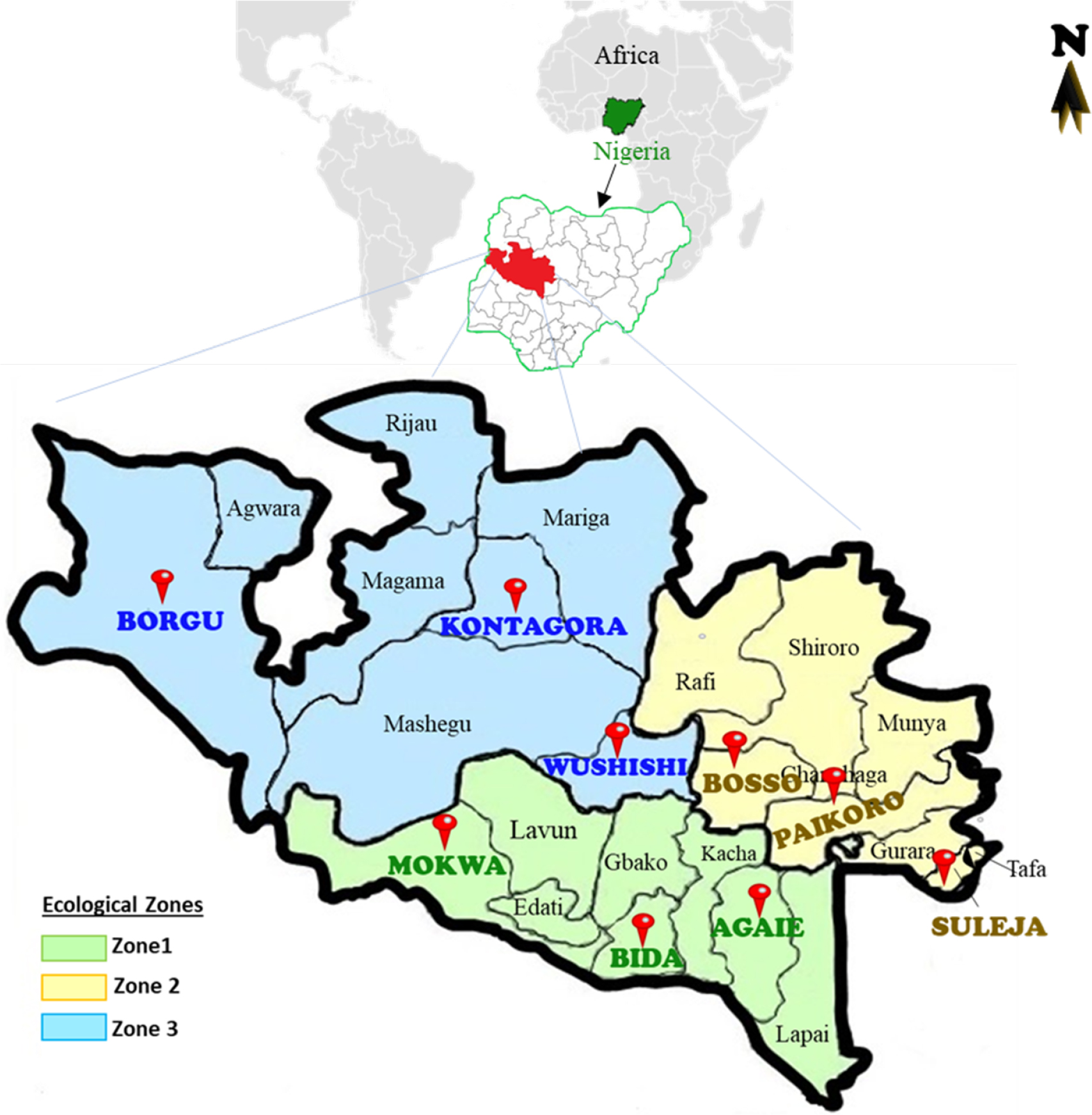
Fig. 1.
Map of Niger State showing study areas
Source: own design based on field work.
Niger State is predominantly agrarian, with most of the populace engaged in farming activities, including crop cultivation, livestock rearing, and the production of various agricultural commodities. The population of Niger State was approximately 2,421,581 in 2006. With an annual growth rate of 3.5%, it was projected to reach 5,556,200 by 2016. Males accounted for about 50.7% of the population, while females comprised 49.3% (NBS, 2006). Given the nature of its economy and the significant representation of females in the population, the contributions of female farmers in Niger State are critical and warrant focused study.
Data Collection and Analysis
A multi-stage sampling technique was adopted for this research. In the first stage, the three ecological zones of Niger State were purposively selected. In the second stage, three LGAs were randomly chosen from each zone, resulting in a total of nine LGAs. Due to the limited number of female farm managers, a purposive sampling technique was used to select female managers involved in crop, fish, and livestock farming within these LGAs.
The sample included 20 female farmers each from Kontagora and Suleja LGAs; 19 each from Agaie, Bida, Bosso, Mokwa, and Paikoro LGAs; 15 from Borgu LGA; and 4 from Wushishi, bringing the total to 154 female farm managers. Zone 3 had the lowest representation of female farm managers (25.3%) among respondents, compared to Zone 1 (37%) and Zone 2 (37.7%).
Data were collected through structured interviews using a questionnaire. The questionnaire addressed three main areas: (1) socioeconomic characteristics, (2) farm management activities, and (3) motivation factors. Motivational elements were categorized into biological, emotional, social, cognitive, and external elements which were later grouped into intrinsic and external categories.
Descriptive statistics, including frequency distributions, percentages, and charts were used to categorize and analyze the socioeconomic characteristics, farm management activities, and motivation factors of respondents. The motivation factors were measured using a Likert psychometric scale. For Inferential statistics, two analytical tools—Principal Component Analysis (PCA) and Principal Component Regression (PCR)— were employed to identify the key factors motivating female farmers.
Likert Psychometric Scale
Table 1 presents the motivation statements that female farmers were asked to score using a five-point Likert psychometric scale. The scale is as follows: 1 represents “Never”, 2 represents “Rarely”, 3 represents “Sometimes”, 4 represents “Often”, and 5 represents “Always”. The intrinsic statements refer to traits or qualities that are inherent to the female farmers (i.e., self-motivation), while the external statements reflect forms of motivation that are influenced by external agents, such as community support, incentives, and government policies.
Table 1.
Motivation statements
| Code | Statements/factors | Contextual |
|---|---|---|
| _f1 | My Farm outputs (yield) have been increasing | Intrinsic |
| _f2 | Farmers association has been supportive | External |
| _f3 | Farming is interesting | Intrinsic |
| _f4 | I can put more effort into my farm | Intrinsic |
| _f5 | I can speak comfortably about the challenges in public | Intrinsic |
| _f6 | Farming is profitable | Intrinsic |
| _f7 | My community has been supportive | External |
| _f8 | I learn from other farmers | Intrinsic |
| _f9 | My family has been supportive (morally/financially) | External |
| _f10 | I think of expanding the farm scale | Intrinsic |
| _f11 | I am confident I can do better than most farmers | Intrinsic |
| _f12 | I farm based on the demand in my community | External |
| _f13 | I farm according to the profit I can get | Intrinsic |
| _f14 | I farm based on the needs of my family | Intrinsic |
| _f15 | Household chores impedes optimal farm management | External |
| _f16 | My husband helps me in my farming activities | External |
| _f17 | The females in the family help me in some farming activities | External |
| _f18 | I farm for social recognition | External |
| _f19 | Government policy and Programs encourages me to farm | External |
| _f20 | I am into farming for the Need for additional family income | Intrinsic |
Principal Component Analysis (PCA)
The responses to the motivation statements were recast and coded for use in Principal Component Analysis (PCA). PCA was applied to reduce the dimensionality of the Likert scale response of female farmers on the motivational factors (Table 1) while retaining as much variation as possible in the dataset. Pearson and Hotelling were the pioneers of this statistical technique, now known as PCA (Jolliffe, 2002). PCA generates a small set of uncorrelated linear combinations of the covariates, addressing multicollinearity and ensuring that the linear combinations capture the maximal variance. The new set of variables generated are called Principal Components (PCs), and the first few PCs retain most of the variation present in the original variables.
The expected outcomes of this analysis include newly generated variables, referred to as Principal Components (PCs), along with their Eigenvalues. PCA also reduces the data set by explaining the variance with fewer PCs, provides the coefficients of the variables in the linear combinations that form the PCs, and enables clustering of the observations and components. The steps to achieve this are as follows:
Step 1: Standardization: standardization is performed to avoid biased results and suboptimal principal components that may arise due to variables with large ranges. The formula for standardization is as follows:
Where: z = standardized value, x = value, μ = mean, σ = standard deviationStep 2: Covariance matrix computation: The covariance matrix is computed to obtain the correlation matrix, determining whether the data are highly correlated using the Pearson product-moment correlation coefficient. The estimate of the correlation coefficient (P) is:
Where: wi = weights, if specified, or wi – 1 if not specified, = the mean of x, and – is defined similarlyOnce the standardization is completed, all variables are transformed to the same scale.
Step 3: Computation of Eigenvectors and Eigenvalues: The eigenvectors of the covariance matrix represent the directions of maximal variance (i.e., the directions that contain the most information), known as Principal Components (PCs). The eigenvalues are the coefficients associated with these eigenvectors, indicating the amount of variance each PC accounts for. Using linear algebra, the eigenvectors and eigenvalues of the covariance matrix are calculated to identify the Principal Components (PCs) in the data set. Geometrically, the PCs represent the directions in which the data vary most, essentially the axes that capture the greatest amount of information from the raw data.
Step 4: Constructing the PCs: the eigenvectors are ranked in descending order according to their eigenvalues, with the vector that explains the most variance coming first, followed by the next highest variance, and so on. The first PC accounts for the most variance in the dataset, retaining the majority of information. The second PC accounts for the next largest variance and is uncorrelated (i.e., perpendicular) to the first PC. Subsequent PCs follow the same pattern.
Step 5: Recasting data along PC axes: In this step, the data are reoriented from the original axes to those represented by the PCs. This is achieved by multiplying the transpose of the original dataset by the transpose of the feature vector:
Principal Component Regression (PCR)
The use of Principal Component Analysis (PCA) in regression, as variables, was introduced by Kendall (1957) and later termed Principal Component Regression (PCR). This study measures the engagement of female farmers through their investment in farm scale (i.e., crop, fish, and livestock farms). In this research, PCR (Kovac-Andric et al., 2009), as cited in UI-Saufie (2011), was modified to include socioeconomic factors and farm management activities.
The PCR model, therefore, includes dependent variables (farm-scale) and independent variables (socioeconomic factors, farm management activities, and the PCs), assuming the error term follows a normal distribution with a mean of zero and constant variance. The model is specified as:
Where: Z is the dependent variable (farm scale), β0 – is constant, βI, βII, βIII … βh, are coefficients for socioeconomic and farm management activities (x1, x2 …… xhj), β1, β2, β3 … βk – are the coefficients for Principal Components PC1, PC2, PC3 … PCki, ε – is the error term.Here, j = I, …, n (socioeconomic and farm management activities) and i = 1, …, n (PCs). The error term is the error associated with the regression. The R-square value is used to measure the goodness of fit and the significance of the model applied.
Farm scale, in this study, is measured by production output, which is considered a critical factor for the success of a farm. It is assumed that, ceteris paribus, larger farm scales correspond to greater success in farming.
Figure 2 depicts the process of determining the key motivating factors for female farm managers. PCA was applied to the Likert scale responses regarding motivation factors, which were then used to construct a set of Principle Components (PCs). These PCs were included in the regression model, along with other factors such as socioeconomic and farm management activities, to be estimated in the analysis.
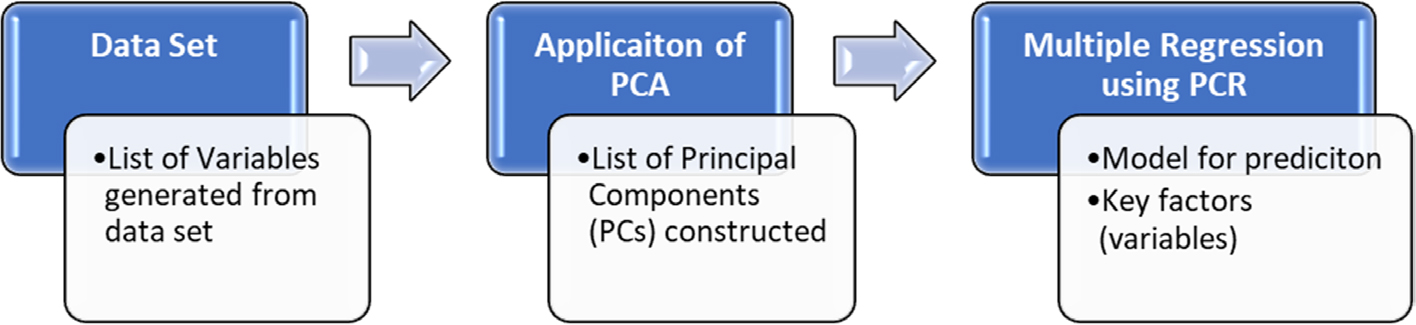
Fig. 2.
Process determining key motivating factors for female farmers using the PCR model
Source: own elaboration.
RESULTS AND DISCUSSION
Socioeconomic Characteristics of the Farmers
Table 2 presents the socioeconomic characteristics of female farmers in the study area. The table reveals that the majority (64.3%) of the farmers are under the age of 40. This suggests that most of the female farm managers are in their prime working age, which has the potential to boost productivity. The findings also indicate that, on average, female farmers in the study have a substantial amount of formal education (9 years), enabling them to read and write. Research has suggested that the level of formal education among female farmers in Nigeria is generally low (Ayinde et al., 2018; Obayulu et al., 2020). However, the results of this study align with findings from 2010, where most female farm managers had attained over 8 years of formal education (Enete and Amusa, 2010). This level of education is expected to facilitate easier adoption of new technologies, which can translate to higher productivity for female farmers (Fidelugwuwo and Omekwu, 2023).
Table 2.
Socioeconomics characteristics of the female farmers
| Category | Frequency | Percentage | Mean | |
|---|---|---|---|---|
| Age | > 40 | 55 | 35.7 | 38.3 |
| ≤ 40 | 99 | 64.3 | ||
| Education (years) | > 9 | 74 | 48 | 9.4 |
| ≤ 9 | 80 | 52 | ||
| Household size | > 10 | 19 | 12.3 | 7.2 |
| ≤ 10 | 156 | 87.7 | ||
| Females in family | ≥ 3 | 71 | 46 | 2.8 |
| < 3 | 83 | 54 | ||
| Marital status | single | 8 | 5.2 | |
| married | 133 | 86.4 | ||
| divorced | 3 | 1.9 | ||
| widow | 10 | 6.5 | ||
| Main occupation | daily wage | 80 | 52 | |
| pensioner | 5 | 3.2 | ||
| salary employee | 19 | 12.3 | ||
| farming only | 50 | 32.5 |
Table 2 also shows that, on average, female farmers in the study area live in households with fewer than 10 members, with approximately 3 females in the household. The study further revealed various livelihood sources for the female farmers. A significant proportion (52%) rely on daily income, while 32.5% earn exclusively from farming, indicating that most female farmers are self-employed. Other sources of income include salaried employment (12.3%) and pensioner (3.2%).
Farm Management Farms and Farm Products
The sunburst diagram (Fig. 3) illustrates the different types of farms and their major products. Each ring in the diagram represents the distribution of respondents in percentage. The first ring (the central circle of the sunburst) represents the primary category of farms, which include crop farming, fish farming, and livestock farming. According to the results, the majority of female farmers (58.4%) are involved in crop farming, followed by livestock farming (31.2%) and fish farming (10.4%).
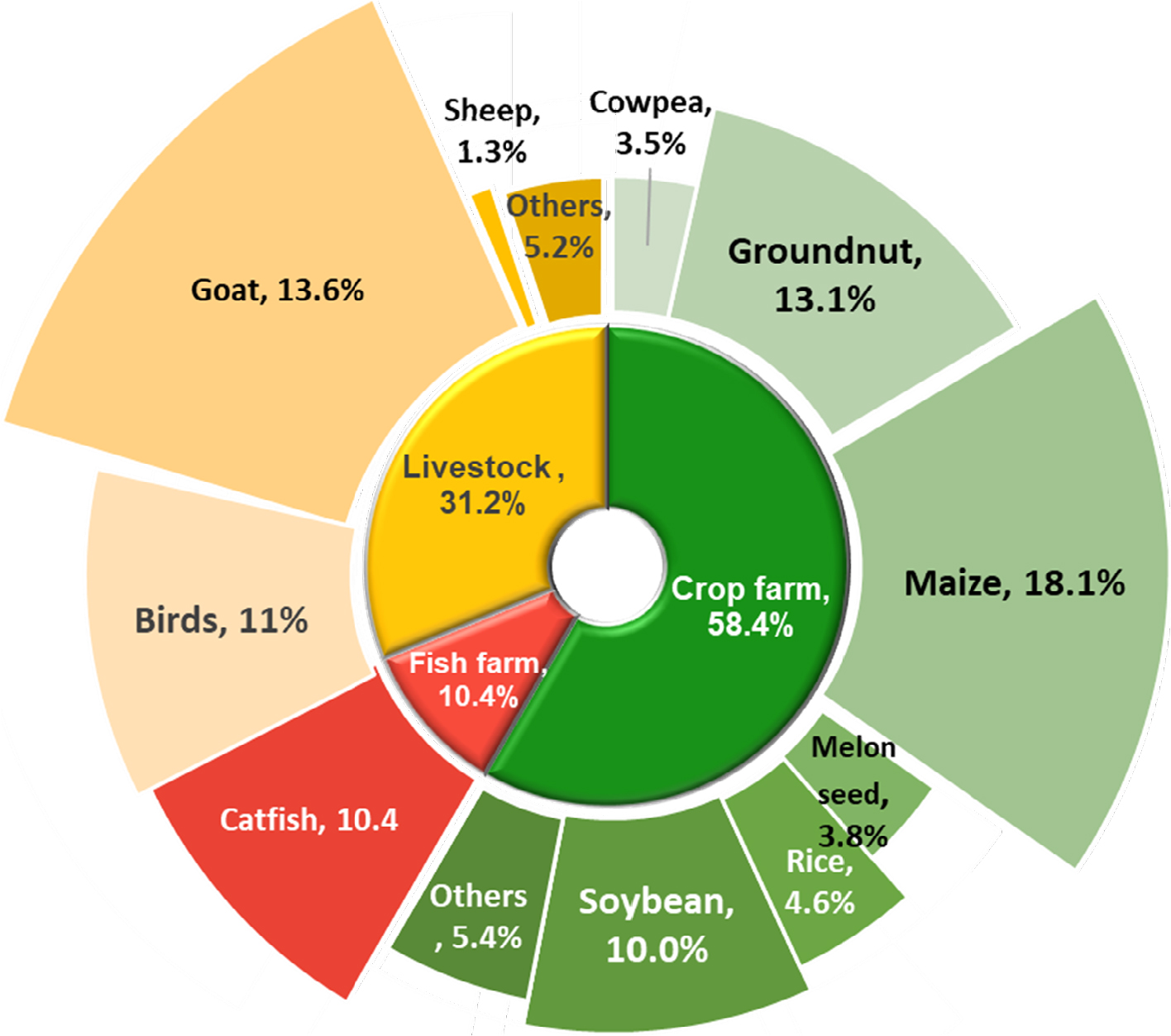
Fig. 3.
Farms and major farm products
Source: field survey, 2023.
This result suggests that most female farmers contribute to food security through the production of staple crops and vegetables. Their agricultural diversification also supports the supply of meat and other animal products. The second ring of the sunburst specifies the distribution of the major types of crops, fish, and livestock products. The crops with the highest levels of participation among female farmers include maize (18.1%), groundnut (13.1%), soybean (10%), rice (4.6%), melon seed (3.8%), and cowpea (3.5%), with others making up 5.4%. Maize is one of the most widely consumed grains in Nigeria, used by households, industries, and livestock farms (NAN, 2021). Groundnut and soybean are also in demand by industries and the livestock sector, which encourages farmers to cultivate these crops.
In terms of livestock, female farmers are most involved in goat farming (13.6%), followed by poultry (11%), and sheep farming (13.6%), with other livestock farms making up 5.2%. The preference for goat farming in rural households is attributed to goats’ adaptability, resilience, low cost, and ability to produce offspring (Abd-Allah, 2019). Notably, goat farming had the highest level of participation among livestock farms in the study area.
Regarding fish farming, while catfish, tilapia, and fingerlings are farmed in the region, female fish farmers were only engaged in catfish farming. This suggests that male farmers dominate the production of tilapia and fingerlings, as indicated in Figure 3.
Farm Ownership Status
Farm ownership and management by the female farmers in the study area are depicted in Figure 4. The data shows that the majority (about 60%) of female farmers exclusively own and manage their farms. This implies that most of the farmers have full autonomy in making decisions related to their farm operations.
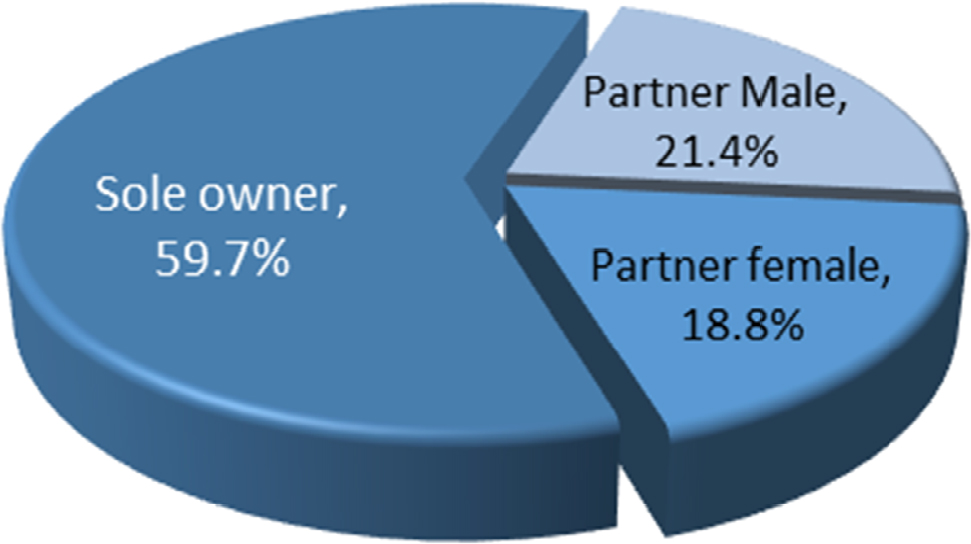
Fig. 4.
Farm ownership status
Source: field survey, 2023.
In contrast to sole ownership, gender partnerships in farm ownership were also observed. Some female farmers co-own farms with male partners (investors), while others co-own farms with fellow females. Approximately 18.8% of the female farmers were found to be coowning farms with other women. Additionally, 21.4% of the female farmers co-own farms with male investors. This suggests that gender stereotypes may be less prevalent in the study area, as male investors are trusting and investing in farms owned by female farmers. This finding aligns with a study by Gebre et al. (2019) who noted that fewer female farmers in Ethiopia are involved in co-ownership or joint decision-making on farming activities.
Other Farm and Farming Information
Table 3 shows that the majority of female farmers (68.8%) owned less than 2 hectares of farmland in the study area, with an average landholding of about 1.6 hectares. The study also found that the average distance between the homes and farms of female farmers is approximately 3 kilometers, with 72% of farmers reporting that their farms are less than 3 kilometers away from their homes. Ibrahim et al. (2019) highlighted the importance of farm proximity for female farmers, particularly considering their household responsibilities and farming activities.
Table 3.
Farm-related information
| Category | Frequency | Percentage | Mean | |
|---|---|---|---|---|
| Land (ha) | ≥ 2 | 48 | 31.2 | 1.6 ha |
| < 2 | 106 | 68.8 | ||
| Distance to farm | ≥ 3 km | 43 | 28 | 3 km |
| < 3 km | 111 | 72 | ||
| Participation in farmers association | no | 123 | 80 | |
| yes | 31 | 20 | ||
| Received training | no | 109 | 70.8 | |
| yes | 45 | 29.2 | ||
| Contacted extension agent | no | 45 | 29.2 | |
| yes | 109 | 70.8 |
Furthermore, Table 3 indicates that only 20% of female farmers are involved in farmer associations, despite the potential benefits these groups offer for their empowerment (Lecoutere, 2017). This suggests that the majority of female farmers (80%) in the study may be missing out on these valuable opportunities. Additionally, only 29.2% of female farmers reported receiving agricultural training, indicating that there is potential to provide training for more female farmers. Moreover, around 29% of female farmers reported having no contact with an extension agent, suggesting that many farmers may not be fully utilizing extension services.
Farm Management Constraints
The constraints faced by female farmers in managing their farms are significant and cannot be overstated, as they strongly influence their engagement in farming. Figure 5 depicts the major farm management constraints faced by female farm managers involved in crop, fish, and livestock farming. Six constraints were examined for each type of farming, including capital, diseases/pests/weeds, input cost/scarcity, insecurity, poor amenities, and weather.
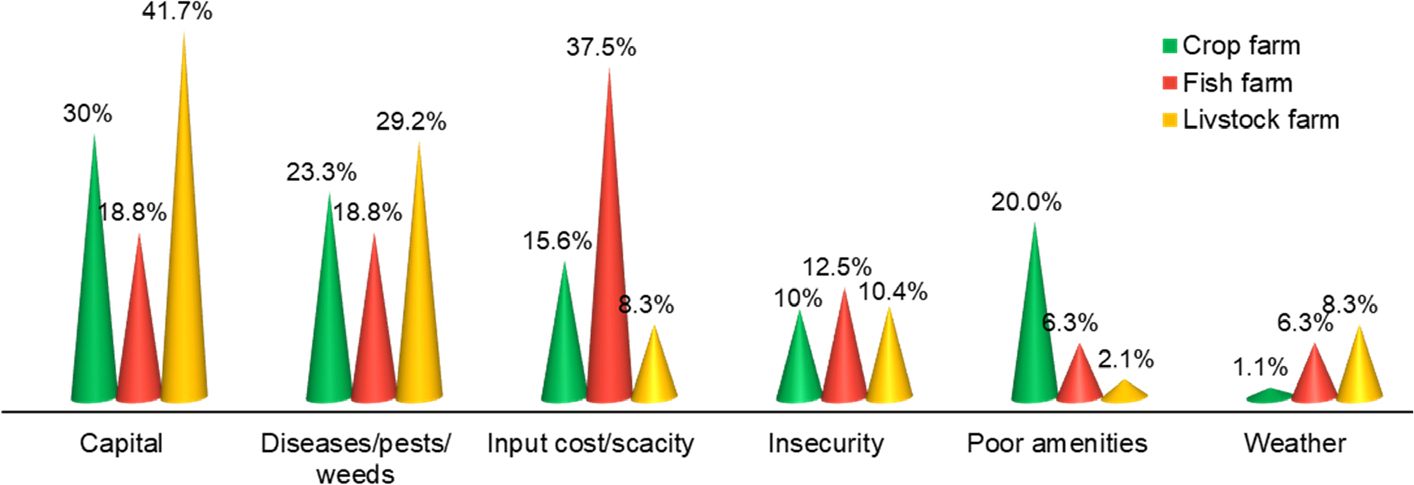
Fig. 5.
Major farm management constraints faced by the female farmers
Source: field survey, 2023.
The primary constraint reported by female crop and livestock farmers is capital (30% and 41.7%, respectively). This suggests that a large proportion of female farmers may face financial difficulties in managing their farms. Limited capital could also hinder the adoption of innovative farming practices and technologies, as noted by Pwaveno (2013). On the other hand, female fish farmers identified input cost and scarcity as their major challenges in managing fish farms. The scarcity or high cost of inputs such as feed and medication can lead to low productivity, poor output or increased mortality rates. Adedeji et al. (2016) similarly highlighted that the cost of inputs is the most challenging constraint in fish farming.
Approximately 23.3% of crop farmers and 29.2% of the livestock farmers reported diseases/pests/weeds as the next major constraint to farm management. In contrast, 18.8% of fish farmers cited capital as a challenge, with another 18.8% reporting diseases. The third most common constraints reported by farmers include poor amenities (20%) for crop farmers, and insecurity (10.4%) for livestock farmers. The fourth and fifthranked constraints varied by type of farm. For crop farms, input cost/scarcity (15.6%) and insecurity (10%) were the most common, while livestock farms reported input cost/scarcity (8.3%) and weather (8.3%) as significant issues. For fish farms, insecurity (12.5%), and both poor amenities and weather (6.3% each) were ranked next.
Additionally, female fish and livestock farmers reported harsh weather conditions as a major constraint compared to female crop farmers. This difference may be due to the immediate impact that harsh weather has on farm products such as fish and poultry, which are more sensitive to weather conditions than crops, which typically require a longer growth period before being affected.
Motivations
The complex array of motivations driving the decisions and efforts of female farm managers was analyzed. These motivations stem from a variety of sources, reflecting the unique goals and objectives of farming for each individual. Female farm managers may be inspired by intrinsic factors such as their passion for cultivating land, raising livestock, or fish farming. Alternatively, external factors like family and community support, government incentives, and policies can play a significant role. The State’s three ecological zones, each distinct in cultural practices and agricultural specializations, further influence the extent of female participation in farming activities across these zones.
Using a five-point Likert psychometric scale – ranging from one, denoting “Never”, to five denoting “Always” – Figure 6 illustrates the mean scores of intrinsic and external motivations as rated by female farm managers in each zone. The results reveal that intrinsic factors are the primary drivers of female participation in agriculture in the study area, highlighting an inherent passion for the sector. External motivators, while present, are less influential, indicating an opportunity to engage more female farmers through targeted policies, programs and orientations.
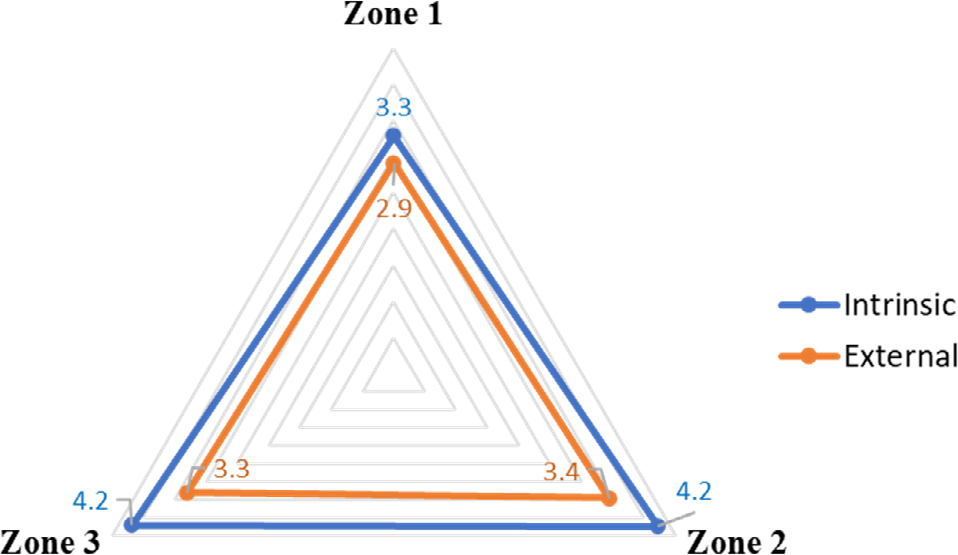
Fig. 6.
Intrinsic and external motivation scores according to Zones
Source: field survey, 2023.
Zone 1 female farmers reported the lowest motivations for both intrinsic and external motivations, with mean scores of 3.3 and 2.9, respectively. In contrast, Zones 2 and 3 displayed higher levels of motivation. Both Zones 2 and 3 reported intrinsic motivation scores of 4.2, although Zone 2 slightly outperformed Zone 3 in external motivation, with scores of 3.4 and 3.3, respectively. The role of intrinsic and external motivational factors in determining farm scale is further analyzed through the Principal Component Regression (PCR) model.
PCA on Motivations
Principal Component Analysis (PCA) was applied to the original twenty (20) variables listed in Table 1. The analysis retained six principal components (Comp1 Comp2 … Comp6) with eigenvalues ≥1. These components represent uncorrelated linear combinations of the covariates, effectively addressing multicollinearity and capturing maximum variance. The scree plot in Figure 7 depicts the eigenvalues of the retained components.
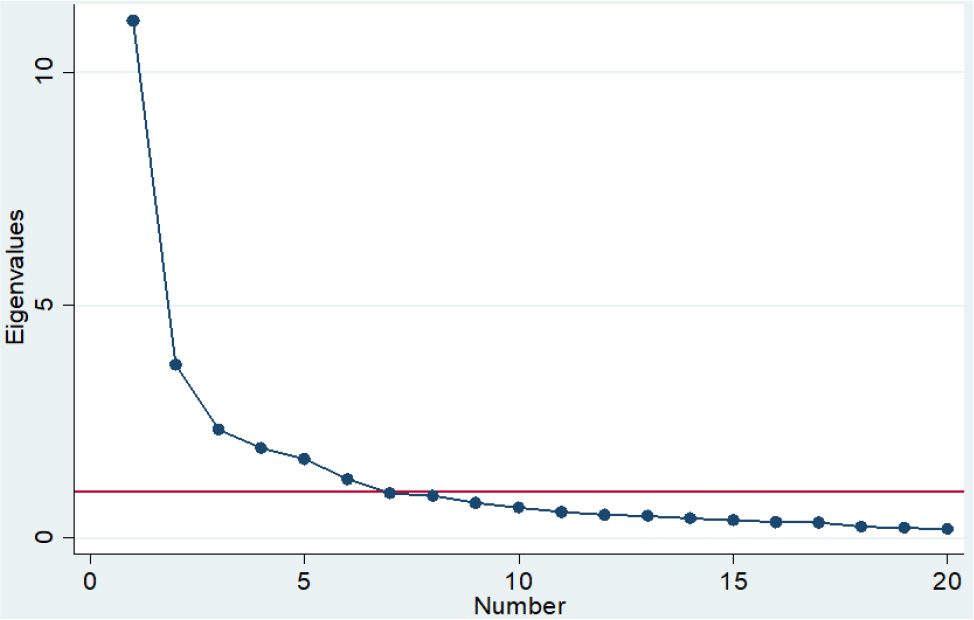
Fig. 7.
Scree plot of eigenvalues after PCA
Source: field survey, 2023.
Together, these six components account for 76.05% of the total variation in the data. To enhance the interpretability of the components, an orthogonal varimax rotation was performed. This rotation maximizes the variance explained by each principal component, with only variables having eigenvectors ≥ 0.3 or ≤ –0.3 considered significant.
Figures 8a and 8b depict the rotated loadings (varimax rotation) and score variables, respectively. The component loadings offer a visual interpretation of how the original variables align with the first two components. The score plot identifies clusters, trends, and outliers based on the first two components.
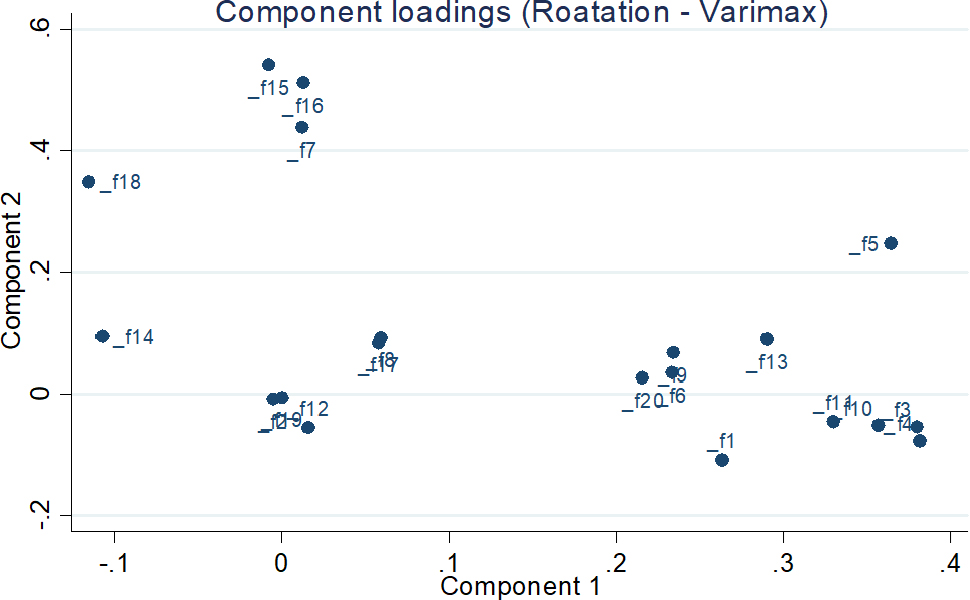
Fig. 8a
Loadings (varimax rotation)
Source: field survey, 2023.
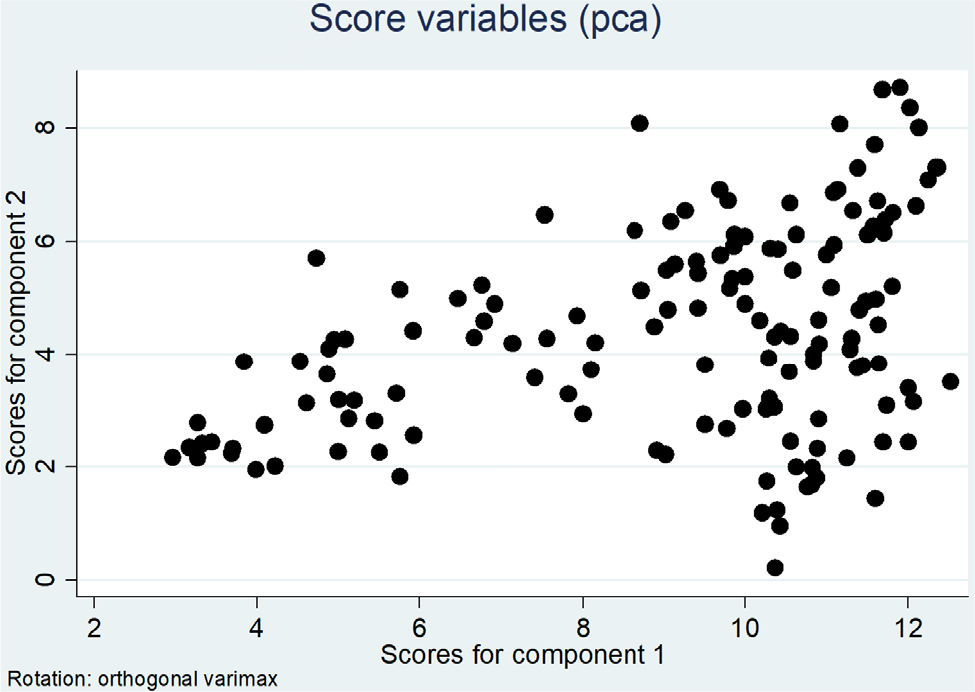
Fig. 8b
Score variables (PCA)
Source: field survey, 2023.
Figure 9 summarizes the six retained components from the PCA. Each component was given a representative name based on the variables with high loadings:
Sociable (Comp1)
High loadings on variables such as f3 (farming is interesting), f4 (more effort), f5 (speak-out challenges), f10 (expand farm), and f11 (better than most). These variables predominantly represent intrinsic motivations.
Family & Community Support (Comp2)
High loadings on f7 (community support), f15 (household chores), f16 (husband support), and f18 (social recognition). These variables represent external motivations.
Subsistence (Comp3)
High loadings on f14 (family needs), f17 (female family support), and f18 (social recognition). This component encompasses both external and intrinsic motivations.
Recognition (Comp4)
High loadings on f12 (community demand), and f18 (social recognition), indicating external motivations.
Government Programs (Comp5)
Represents external motivations tied to policy and programmatic support.
Association support (Comp6)
Another component rooted in external motivations, emphasizing support from agricultural associations.
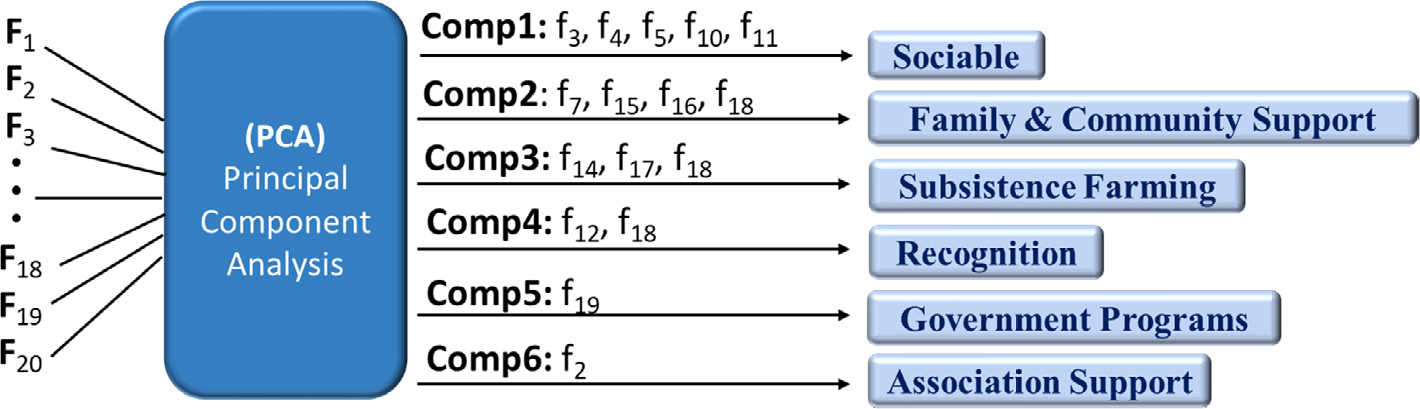
Fig. 9.
PCA output
Source: field survey, 2023.
A prediction for each principal component was generated and subsequently included in the regression model (PCR).
Influencing Factors Motivating Female Farm Managers
The results of the Principal Component Regression PCR are summarized in Table 4, which highlights the statistically significant factors motivating female farmers. To facilitate interpretation, natural logarithms of both continuous dependent and independent variables were utilized in the model. Additionally, stepwise regression was applied to refine the extensive list of independent variables, selecting the most impactful ones for inclusion in the model. The model yielded an R-Square of 0.4223 indicating that approximately 42.2% of the variance in farm scale is explained by the variables.
Table 4.
Regression analysis of factors motivating female farmers
| Farm scale | Coef. | SE | t | p>|t| | [95% Confidence | Interval] |
|---|---|---|---|---|---|---|
| Age | 2.8667 | 0. 3833 | 7.48 | 0.000 | 2.1092 | 3.6242 |
| Education | 0.0517 | 0.0231 | 2.24 | 0.027 | 0. 0061 | 0.0974 |
| Off-farm jobs | –0.4641 | 0.2186 | –2.12 | 0.035 | –0.8961 | –0.0321 |
| Extension | 0.3810 | 0.2260 | 1.69 | 0.094 | –0.0656 | 0.8267 |
| Land size | 0.1035 | 0.0602 | 1.72 | 0.088 | –0.0155 | 0. 2226 |
| Sociable (comp1) | 0.1447 | 0.0374 | 3.87 | 0.000 | 0.0707 | 0.2187 |
| Subsistence (comp3) | –0.2109 | 0. 0613 | –3.44 | 0.001 | –0.3321 | –0.0898 |
| Association support (comp6) | –0.2150 | 0.0721 | –2.98 | 0.003 | –0.3575 | –0.0725 |
| _constant | 2.6178 | 1.4508 | 1.80 | 0.073 | –0.2496 | 5.4852 |
| Number of observations = 154, F(8,145) = 13.25, R2 = 0.4223 | ||||||
The regression analysis revealed key socioeconomic and principal component factors influencing female farmers’ motivations:
Socioeconomic factors
Age: Positively significant at the 1% level, indicating that older female farmers tend to have more experience and diligence in farm management. This enhances their motivation to increase their farm scale.
Education: Positively significant at the 10% level, suggesting that each additional year of education is associated with a 5.4% increase in farm scale. This aligns with the notion that education fosters better decision-making and greater investment in agricultural activities.
Off-farm jobs: Negatively significant at the 10% level, implying that female farmers with off-farm jobs are less inclined to invest in and expand their agricultural enterprises.
Principal components
Comp1 (sociability): Positively significant at the 1% level. This component, associated with intrinsic sociability, suggests that female farmers who are more engaged in networking, asking questions, and exerting extra effort are more likely to expand their farm scale. Encouraging sociability among female farmers could be a key strategy to enhance their motivation and farm scale.
Comp3 (subsistence farming): Negatively significant at the 5% level. This result underscores the need to shift focus from subsistence farming to commercial farming to motivate female farmers effectively.
Comp6 (association support): Negatively significant at the 5% level. The negative relationship suggests that current support from farmers’ associations, which are predominantly male-dominated, may not be sufficient to motivate female farmers in the study area.
Additional findings
Contact with extension agents: Positively related to farm scale, supporting findings by Quisumbing et al. (2014) that extension services play a crucial role in encouraging female farmers to scale up their operations.
Land size: Positively related to farm scale, where a 1% increase in land size corresponds to a 10% increase in farm scale. However, it was noted that not all land owned by female farmers is actively utilized due to capital constraints.
Notably, variables that did not meet the statistical significance threshold in the model are not inherently unimportant but may require further investigation to assess their motivational impact on female farm managers.
CONCLUSION
The study reveals that female farm managers are actively engaged in crop, fish, and livestock farming. Among these, crop farming is the predominant activity, followed by livestock farming, with fish farming being the least practiced. Most farms are solely owned and managed by female farmers, though some operate under gender partnerships in ownership. The primary constraints affecting female farmers include capital, diseases/pests/weeds, input costs/scarcity, insecurity, poor amenities, and adverse weather conditions. For crop and livestock farmers, capital, pests, and disease issues are the most critical challenges, while fish farmers face significant hurdles due to input costs/scarcity and disease outbreaks.
The findings highlight that intrinsic motivations, as reflected by higher Likert scale scores, play a dominant role in driving female farmers’ participation in agriculture, indicating that their passion for farming stems from internal commitment rather than external factors. Nevertheless, external motivations present opportunities for further engagement. Key factors positively influencing farm scale expansion include age, education, land size, and sociability. Conversely, offfarm jobs, subsistence farming, and insufficient support from farmer associations negatively impact farm scale expansion. While positive motivators provide pathways for empowering female farm managers, addressing the negative motivators through targeted strategies could unlock further potential for agricultural growth.
Recommendations
To address these findings, this research recommends:
Community-based agricultural training programs: Establish programs focused on equipping female farmers with skills and knowledge tailored to their needs, including techniques for pest and disease management, financial planning, and modern agricultural practices.
Enhanced access to extension services: Increase female farmers’ interactions with extension agents to provide tailored advice and support, fostering informed decision-making and improved farm productivity.
Recognition and motivation programs: Develop initiatives that celebrate and reward the achievements of female farmers to boost their morale and intrinsic motivation.
Strengthened farmer associations: Encourage farmer associations to actively include female farmers in leadership roles, ensuring their interests are represented and enhancing their influence in decision-making processes.
Financial and input support: Prioritize addressing capital constraints and improving access to affordable inputs for crop, livestock, and fish farmers. These measures could significantly alleviate the primary challenges faced by the farmers.
Future Research
Further studies could explore male farmers’ perceptions of female farm managers to identify areas for collaborative support. Additional investigations could also assess the long-term impacts of financial and technical support programs on the productivity and resilience of female-managed farms.
By addressing these recommendations, the potential for female farmers to contribute to agricultural productivity and food security in the region can be greatly enhanced.
ACKNOWLEDGEMENT
Authors acknowledged funding (Batch-8.2022) from the Tertiary Education Trust Fund (TetFund) and the Institutional Base Research (IBR) of Ibrahim Badamasi Babangida University (IBBU), Lapai, Niger State Nigeria.