
INTRODUCTION
One of the key strategies for achieving sustainable food systems and ensuring food security is the implementation of post-harvest loss reduction techniques in agriculture (Kikulwe et al., 2018). Current estimates suggest that pests destroy enough crops to feed over one billion people, thus highlighting the urgent need for effective pest control strategies (Birch et al., 2011). Following the Green Revolution, the widespread use of chemical pesticides was promoted to manage agricultural pests. While this approach successfully increased yields, it also introduced numerous challenges (Deguine et al., 2021). Climate change is caused by the use of chemical pesticides as an unsustainable pest control method. (Shah et al., 2021).
The excessive and often improper use of chemical pesticides across the entire agricultural value chain – from production to post-harvest storage – has not only led to the emergence of pesticide-resistant pest species but has also contributed significantly to environmental degradation (Karuppuchamy and Venugopal, 2016; Kopacki et al., 2021; Şirin et al., 2010). Furthermore, the persistence of toxic chemical residues in agricultural and horticultural products directly contradicts food safety protocols that emphasize the production of healthy and contaminant-free food (FAO, 2003). This issue has sparked increasing concerns about food-related health risks, particularly regarding pesticide residues and environmental impacts, and has become a central topic in international trade policy debates (Wilson and Tsunehiro, 2001).
In response to the growing concerns over the environmental and health impacts of chemical pesticide overuse, Integrated Pest Management (IPM) was introduced in the 1970s as a more sustainable, ecosystem-based solution (Sandler, 2010). IPM integrates knowledge of pest biology with cultural and agronomic practices to manage pest populations in an environmentally responsible and economically viable manner (Kogan, 1998; Prokopy and Kogan, 2009). This approach not only reduces dependence on chemical inputs but also lowers pest control costs, boosts profitability, and supports the development of a safer and more equitable food system (Bueno et al., 2021; Karuppuchamy and Venugopal, 2016).
One of the promising physical pest control methods within the IPM framework is Thermal Treatment Technology (TTT), which is particularly effective in reducing post-harvest losses (FAO, 2013). TTT offers a chemical-free alternative for pest control and aligns well with the principles of organic agriculture (Escribano and Mitcham, 2014). Despite its potential, the implementation of IPM practices – including TTT – presents multiple challenges, such as the need for supportive policies, updated regulations, institutional coordination, and sensitivity to local socio-cultural contexts (Prokopy and Kogan, 2009).
Acknowledging these complexities, many countries, including OECD members, have formally endorsed IPM as a core strategy for promoting sustainable agricultural development. These strategies prioritize non-chemical pest control methods and aim to protect human health and ecosystems while contributing to economic and social resilience (OECD, 2014). However, successful IPM adoption demands significant investment in infrastructure, knowledge dissemination, and stakeholder training tailored to regional needs (Muriithi et al., 2021; Richardson, 2011).
Moreover, adopting innovative agricultural technologies like IPM and TTT requires taking multi-level dynamics into consideration across institutional, social, and policy domains. As Andrew and Van de Ven (1991) argue, effective innovation adoption necessitates attention to more than one system level. Similarly, Rogers (2003) defines the diffusion of innovation as a process shaped by time, communication channels, and the structure of the social system, highlighting the importance of broader systemic factors in the adoption process. In this context, the present study aims to analyze the factors influencing the adoption of Thermal Treatment Technology (TTT) as a component of IPM among fig farmers and processors in Aydin, Turkey.
RESEARCH PROBLEM
The dried fruit industry, known for its high added value, is a profitable sector and a significant source of income for national economies (Vukoje et al., 2018). Among these products, dried figs hold a prominent position globally, due to their rich nutritional profile, including essential minerals and vitamins (Al-Dmoor, 2021). Thanks to their high fiber, calcium, and iron content – as well as low sugar – dried figs are especially favored by the elderly, diabetics, and athletes as a healthy snack and functional food (Chang et al., 2016).
Botanically classified as Ficus carica, the fig is a species native to the Middle East and Western Asia and belonging to the Moraceae family (Falistocco, 2020). The leading fig-producing countries include Turkey, Egypt, Morocco, Algeria, and Iran (Tanriver, 2019), with Turkey, which benefits from optimal ecological conditions, standing out as the world’s largest fig producer. Of the global production of approximately 1.15 million tons of figs, Turkey accounts for 305,700 tons, contributing around 51% of fresh and 53% of dried figs to the world market. According to recent data from the Turkish Statistical Institute, the country exports 27,800 out of 29,900 tons of its dried fig production annually (Yilmaz et al., 2017).
Figs are cultivated in 60 of Turkey’s 81 provinces. However, the bulk of this production is concentrated in five key provinces: Aydin, Izmir, Bursa, Mersin, and Hatay, which together account for nearly 86% of the country’s total fig yield (Uzundumlu et al., 2018). Dried fig production primarily centers on the western Aegean region, particularly Aydin and Izmir (Cobanoglu et al., 2007). The dominant variety cultivated here is SARILOP (Ficus carica L.), and about 90% of the dried fig output from these provinces is exported to international markets (Nakilcioğlu and Hışıl, 2013).
Despite its economic importance, dried fig production and trade face challenges due to pest-related post-harvest damage. Storage pests – both in larval and adult stages – attack the figs, reducing their quality and market value (Jones et al., 2018). The most common and destructive pests are the fig moth (Ephestia cautella) and the fig mite, which infest the fruit during drying and storage. Their presence and waste residue contaminates the product, adversely affecting its appearance, safety, and export potential (Galván et al., 2021; Turanlı, 2003).
Historically, methyl bromide (CH3Br) was widely used as a fumigant to control storage pests in dried fruits, nuts, and cereals (Meyvacõ et al., 2003). However, due to its ozone-depleting effects, its use came to be restricted under the Montreal Protocol. This international treaty mandated the gradual phase-out of methyl bromide, with developed countries ceasing its use by 2005 and developing countries by 2015 (UN, 2004; Reed and Lim, 2014).
After the ban on methyl bromide, Turkey adopted phosphine fumigation and ethyl formate as alternative methods for controlling storage pests (Koçak et al., 2018). However, these alternatives proved less effective, with pests gradually developing resistance. This resulted in an increased risk of dried fruits becoming infested with insects (Koçak et al., 2018; Choi et al., 2017).
For the first time, frequent contamination of dried fruits imported from Turkey to Europe by Carpoglyphus lactis L. (Acarina: Carpoglyphidae) was reported. The ban on methyl bromide in 2005 was identified as a potential contributing factor. Out of 180 samples collected from supermarkets, 13% were found to be contaminated. The infestation was observed in apricots, figs, plums, and raisins. This mite poses a significant health risk to consumers, as it is both an allergen producer and a carrier of mycotoxin-producing fungi. It also spreads rapidly, moving between packages in retail environments (Bal, 2012; Hubert et al., 2011).
Furthermore, in an analysis of 4,917 dried fig samples exported from Turkey to the European Union, 32% tested positive for aflatoxins. In 9.8% of these samples, aflatoxin levels exceeded the permissible limits set by the EU (Bircan et al., 2008). This has negatively impacted Turkish dried fig exports. According to a 2021 commodity board report, exports to countries including the United States, France, Germany, Italy, New Zealand, and Canada fell by 2% compared to 2020 (Dried Figs: Leading Import Markets, 2021). The International Nut and Dried Fruit Council (INC) also reported a 12% decrease in Turkish dried fig production (INC, 2021). While Turkey remains the leading exporter due to its production capacity, a further decline is projected by 2025 if the current trend continues (Uzundumlu et al., 2018).
Meanwhile, the growing global emphasis on food safety has heightened consumer awareness and demand for healthier food options (FAO/WHO, 1991). A shift toward organic food consumption has become evident as consumers seek products with fewer chemical residues (Fesseha and Aliye, 2020).
Turkey’s average annual pesticide usage is reported at 33,000 tons, raising concerns about chemical residues in agricultural products and posing challenges for exports (Gun and Kan, 2009). Given that EU countries are the primary importers of Turkish dried figs, ensuring the production of safe, high-quality figs is critical (Bal, 2012).
This concern intensified after a European Commission meeting on February 4, 2002, which led to the introduction of special conditions for importing figs, hazelnuts, pistachios, and related products from Turkey (European Communities, OJ L 034, 2002). These regulations aimed to protect human health, ensure food safety, and maintain high standards for imported products (European Communities, OJ L 031, 2002).
The tightening of legal regulations, growing public concern over chemical pesticides and fungicides, and the expansion of the organic food market have collectively shifted market preferences toward more sustainable production methods. If Turkey wishes to retain its leadership in dried fig exports, it must reform its pest control practices. Currently, there is a clear management crisis in Turkey regarding dried fig pest control, which threatens both the industry and consumers. The solution lies in transitioning to sustainable pest management strategies.
To bolster the competitiveness of this sector, it is essential not only to monitor core indicators of production and trade but also to implement agricultural policy tools and sustainable production technologies aligned with global GAP principles (environmental, economic, and social sustainability). Sustainable technologies offer multiple advantages: they are environmentally friendly, user-oriented, economically viable, and yield safe, high-quality products for international markets.
Among these, TTT stands out as a safe and competitive alternative to chemical-based quarantine methods. It effectively eliminates storage pests, precluding food safety concerns, and avoiding environmental contamination (Sharp, 1993). This method offers several advantages, including efficacy across all pest life stages, a lack of chemical residue, low environmental impact, and resistance prevention. Additionally, it is relatively easy to apply and has fungicidal properties (Escribano and Mitcham, 2014).
However, the adoption of such technology is not purely a technical matter: it is a complex social and developmental process. Successful adoption requires the participation of all stakeholders involved in production. The collective decision-making of producers plays a crucial role in technology uptake. As Röling and Pretty (1997) point out, success in sustainable agriculture depends not only on individual motivations, skills, and knowledge but also on community-wide engagement.
Implementing new technology necessitates a multi-level approach. All social, political, and institutional complexities within the production system must be considered (Andrew and Van de Ven, 1991). The adoption process should encompass actors at all levels, from individual farmers to industry stakeholders, so that they can jointly contribute to decision-making (Wisdom et al., 2014).
Unfortunately, pest management policies in Turkey largely disregard participatory mechanisms. Farmers are typically not empowered to select or apply appropriate pest control measures (Isin and Yildirim, 2007). Encouraging the adoption of new skills and reorganizing local mindsets is not simply a technical challenge, it is a socio-behavioral one. Cognitive, emotional, and contextual factors, alongside organizational and policy frameworks, must be addressed.
Therefore, the central research question of this study is: How can the adoption and implementation of new pest management techniques be facilitated effectively?
This study aims to identify the key behavioral and social indicators influencing the adoption of thermal treatment technology for controlling dried fig pests. It takes a holistic approach that considers both individual and collective dimensions within the agricultural sector.
AGROECOTECH
AgroEcoTech refers to the integration of advanced ecological technologies in agriculture to enhance the sustainability and resilience of farming systems (Vikas and Ranjan, 2024). It combines agroecological principles with technological innovations, aiming to optimize resource use, increase productivity, and reduce environmental impacts. AgroEcoTech encompasses various approaches, such as precision agriculture, renewable energy applications, and eco-friendly pest control methods, including thermal treatments. These technologies promote soil health, improve water-use efficiency, and support biodiversity conservation, thereby aligning agricultural practices with sustainable development goals and climate change mitigation strategies. Research shows that AgroEcoTech can play a significant role in achieving sustainable agricultural intensification, particularly in response to global challenges like food insecurity and climate change (Ewert et al., 2023).
Integrated Pest Management (IPM), as an environmentally sound and ecologically based approach, is considered one of the core strategies within AgroEcoTech. IPM aims to minimize negative environmental impacts while ensuring effective pest control, representing a critical step toward producing healthy and sustainable food for a growing global population (Kabir and Rainis, 2015). Recognized as a key method for sustainable agriculture, IPM offers an effective solution to the dual challenge of global food security and environmental stability (Pretty and Bharucha, 2015). The concept of IPM emerged in the late 1950s in response to a crisis caused by the overuse of synthetic pesticides, and its principles are deeply rooted in ecological science (Chávez et al., 2017).
Among the IPM techniques, physical control is vital role for making the environment less suitable for pests and preventing their access to food sources. These methods adversely affect key biological parameters of pests such as feeding, reproduction, dispersal, and survival (Hill, 2008). One of the most effective physical control strategies is thermal treatment technology, which is especially suitable for post-harvest and stored products, including dried fruits (Hallman, 2001).
Thermal treatment is a safe and competitive alternative to conventional chemical-based quarantine methods. It effectively eliminates storage pests, mitigates food safety concerns, and minimizes environmental pollution (Sharp, 1993). This method has several merits, including the ability to control all developmental stages of pests, the absence of chemical residues on treated products, and minimal environmental impact. Moreover, pests are unlikely to develop resistance to heat-based treatments. The method is relatively simple to apply and also exhibits fungicidal properties (Escribano and Mitcham, 2014).
Due to the demonstrated success of IPM strategies, organizations such as the OECD have recommended IPM as an efficient, safe, and cost-effective solution for pest control (OECD, 2014). However, it is important to acknowledge that the adoption of new innovations in agriculture, including IPM, can face significant challenges (Richardson, 2011). Effective implementation requires long-term investment in infrastructure, awareness-raising campaigns, and regional-level training to ensure acceptance and sustained application (Muriithi et al., 2021).
MATERIAL AND METHODS
Description of the study area
Aydın Province covers an area of 8,007 km2 (3,092 sq mi) and is one of the most fertile regions in Turkey. It is located in the southwestern part of the country, in the Aegean Sea region, an expansive area covering approximately 78 million hectares. The province comprises 17 districts (Soyer and Yilmaz, 2020). Aydın experiences mild, rainy winters and hot summers, with temperatures ranging from 30°C to 40°C, particularly between July and September. With relative humidity ranging between 45% and 50%, the presence of alluvial and clay-loam soils, and an average annual rainfall of around 650 mm, Aydın provides ideal climatic and soil conditions for the cultivation of dried figs (Ozen et al., 2007).
Aydın is the largest producer and exporter of dried figs in both Turkey and the world. Turkey accounts for 60% of global dried fig production (approximately 120,000 tons), of which Aydın contributes 55,000 to 60,000 tons, representing around 85% of the country’s output (Kösoğlu, 2015). This production comes from approximately 30,000 fig orchards, managed predominantly by small-scale family farmers (Kösoğlu, 2015). In total, 50,000 hectares of land in Aydın are dedicated to fig cultivation, comprising around 10 million fig trees (Kösoğlu, 2015).
The main dried fig variety cultivated in the region is the local Sarılop cultivar, historically known as the Smyrna fig (named after the ancient city of İzmir). This variety has been grown in the Aegean region for thousands of years (Polat, 2017). Recognizing its importance, Aydın figs were registered by the European Commission under the Protected Designation of Origin (PDO) as Aydın Inciri in 2016 (Michail, 2016; INC, 2016).
The geographical location of Aydın Province, which serves as the study area, is illustrated in Fig. 1.
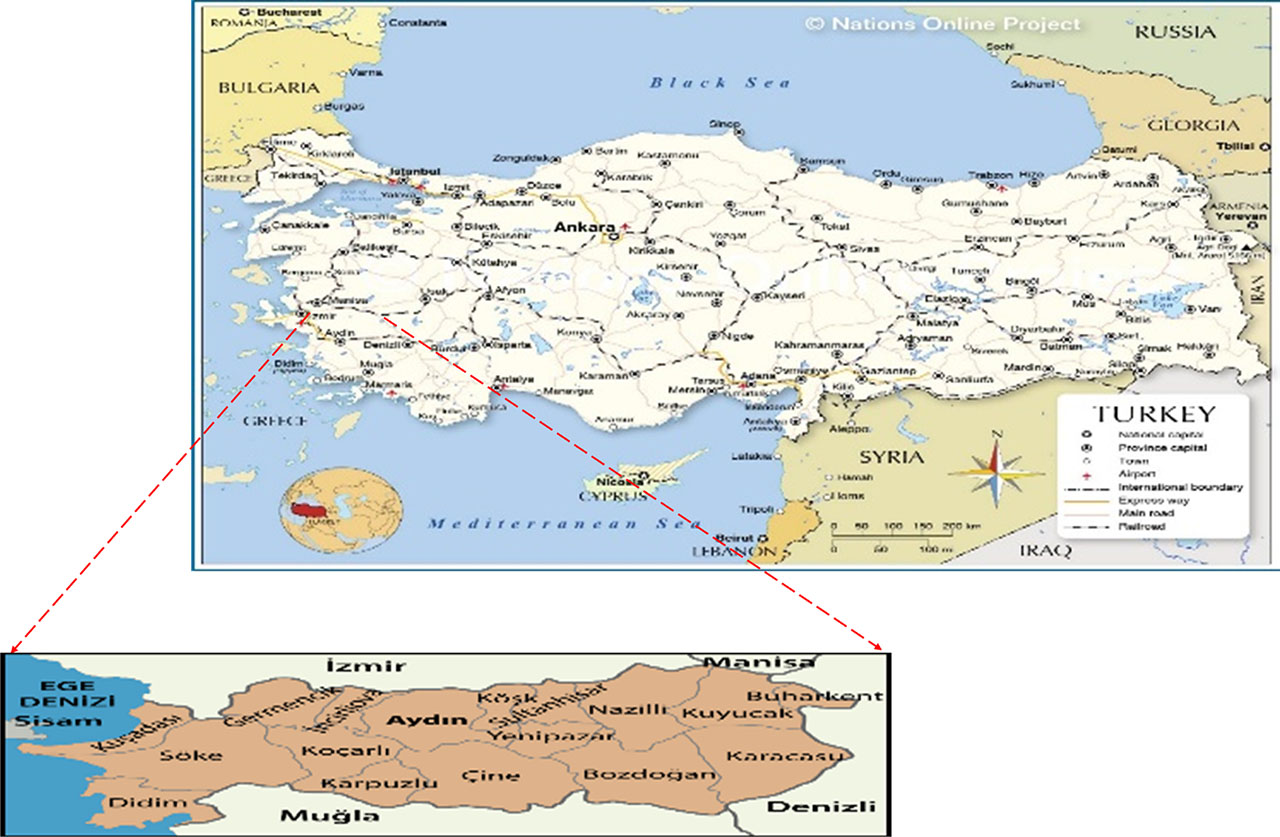
Fig. 1.
Geographical location of Turkey and Aydın province (World Map, accessed on 4 May 2022)
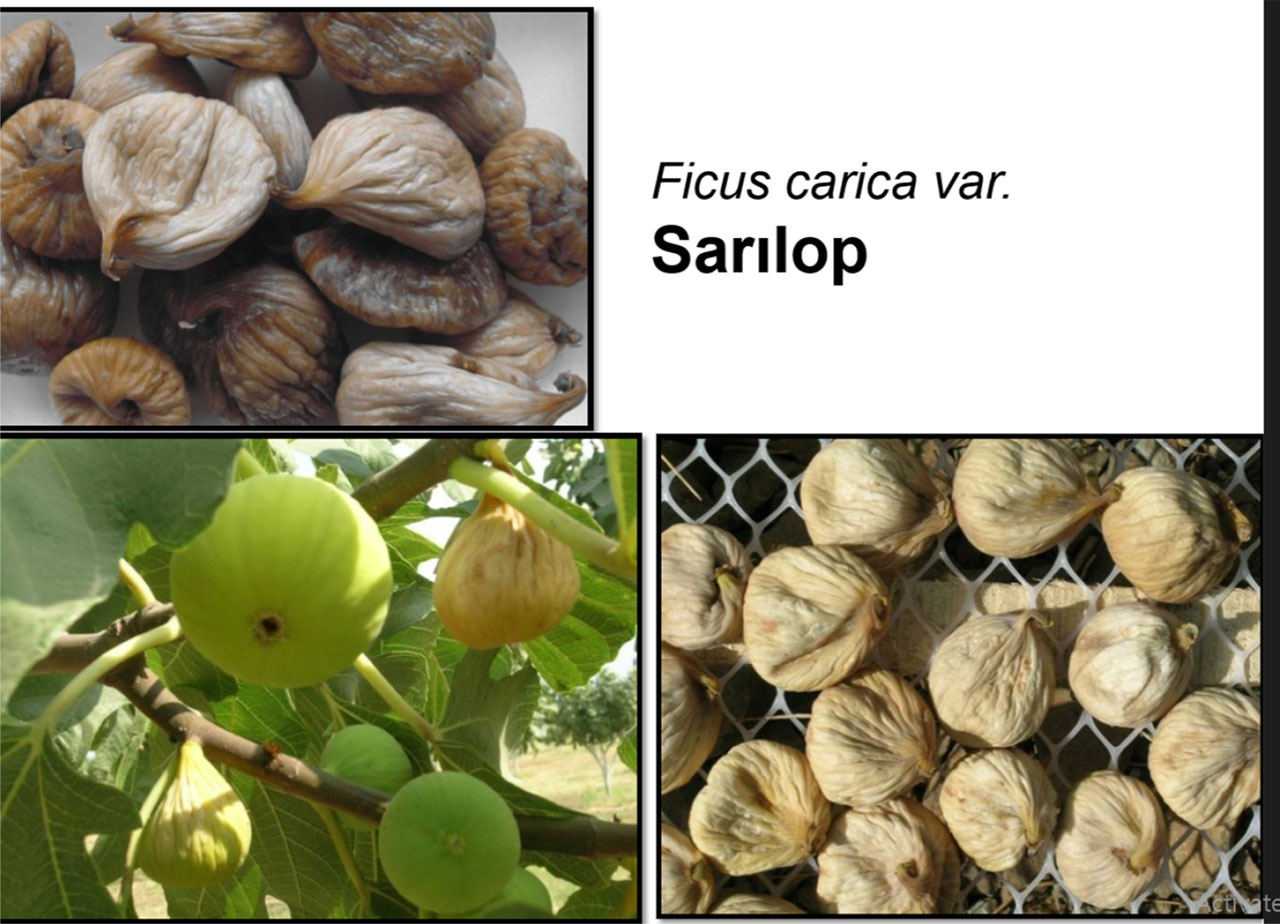
Fig. 2.
Ficus carica var.
Source: Kösoğlu, 2015.
Fig characteristics
The fig (Ficus carica L.) is a species of flowering plant in the Moraceae family, native to Western Asia and the Middle East (Tan, 2017). It is cultivated both for its edible fruit and as an ornamental plant in various regions of the world (Falistocco, 2020; Satyagopal et al., 2012).
Fig trees are gynodioecious (functionally dioecious) and deciduous, typically growing up to 10 meters in height. Their fragrant leaves are deeply lobed, usually with three to five segments. The fig’s unique reproductive structure, known as the syconium, is a hollow, fleshy inflorescence lined with multiple unisexual flowers.
Figs thrive in well-drained soils and grow best in dry, sunny climates with deep and fresh soils, at elevations up to 1,700 meters above sea level (Satyagopal et al., 2012).
Due to their excellent tolerance of high temperatures and low water availability, figs are cultivated extensively in Mediterranean countries (Arpaci, 2017). Among these, Turkey’s vast and varied terrain offers highly favorable climatic conditions for fig production. Turkey ranks first globally in both fig production and export (Klaver and Kamphuis, 2006; Tanriver et al., 2019). The majority of dried Turkish figs originate from Aydın Province in the Aegean region (Tanriver et al., 2019).
Data Collection Instruments and Sample size
To collect the data, a structured questionnaire was employed. The questionnaire included items related to training on the use of Thermal Treatment Technology (TTT), financial support such as loans and subsidies facilitating TTT adoption, and governmental support for marketing, as well as farm size, land ownership, and age.
A total of 170 farmers were interviewed using simple random sampling in Aydın Province, Turkey, between July 2023 and November 2024. The objective was to provide a comprehensive overview of the key drivers influencing the adoption of TTT among farmers and processors.
The collected data were coded and analyzed using SPSS version 26. To examine the effects of social, economic, and environmental factors on farmers’ willingness to adopt TTT, a multinomial logistic regression model was applied.
THEORETICAL FRAMEWORK TO ADOPT OF TTT
The Innovation-Decision Process Model provides a comprehensive framework for understanding how individuals and organizations decide whether to adopt new technologies. The five stages—knowledge, persuasion, decision, implementation, and confirmation—each represent critical phases in the adoption journey. Understanding these stages allows researchers, policymakers, and practitioners to design better strategies for encouraging innovation adoption in various fields, including agriculture, healthcare, and technology. The model emphasizes that adoption is not merely a one-time decision but a dynamic process influenced by individual perceptions, social influences, and contextual factors (Rogers, 2003). The innovation-decision-making stages are explained below.
Stages in Innovation-Decision Process
The Innovation-Decision Process Model describes how individuals or organizations adopt or reject an innovation through five stages: knowledge, persuasion, decision, implementation, and confirmation (Fig. 3). This process is influenced by prior conditions, communication channels, and the characteristics of both the decision-making unit and the innovation itself (Rogers, 2003).
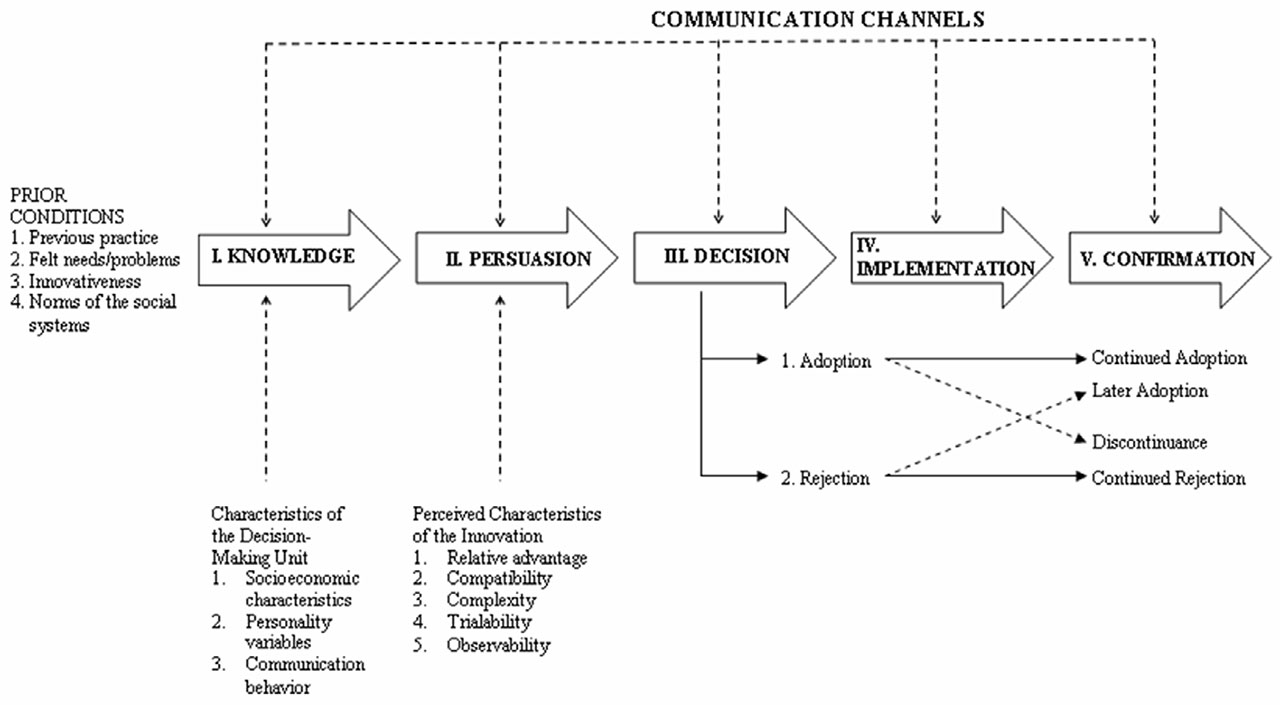
Fig. 3.
Five Stages in Innovation-Decision Process Model
Source: Rogers, 2003.
The process begins with the knowledge stage, where an individual or organization first becomes aware of an innovation. At this stage, exposure to the new idea does not necessarily lead to adoption, but it triggers interest and potential engagement. The way individuals acquire knowledge about an innovation is shaped by their prior conditions, such as previous practices, the presence of perceived needs or problems, levels of innovativeness, and the prevailing norms of the social system within which they operate. For example, a farmer who frequently experiences soil degradation may be more likely to seek out new soil management technologies. Additionally, socio-economic characteristics, such as education, financial resources, and access to information, play a significant role in determining how quickly and effectively knowledge is acquired (Rogers, 2003). Communication channels, whether through interpersonal networks, mass media, or expert recommendations, are essential in this stage, as they shape the individual’s exposure to and understanding of the innovation (Dearing and Cox, 2018).
Following knowledge acquisition, the persuasion stage involves forming an attitude toward the innovation. At this point, the individual actively seeks further information and evaluates the innovation based on five key perceived innovation characteristics: relative advantage, complexity, compatibility, trialability, and observability (Rogers, 2003). Relative advantage refers to the perceived benefits of the innovation over existing practices. If an innovation significantly boosts productivity, reduces costs, or enhances efficiency, it is more likely to be adopted (Marra et al., 2003). Complexity, on the other hand, represents how difficult the innovation is to understand and implement. If an innovation is perceived as too complicated, potential adopters may resist it, regardless of its benefits. Compatibility determines whether the innovation aligns with existing values, experiences, and needs. If an innovation fits well with current practices, it is more likely to be embraced. Trialability is another important factor; if individuals can experiment with the innovation before committing themselves to full adoption, they are more likely to take an interest in it. Lastly, observability refers to how visible the innovation’s benefits are to others. If individuals see that others have successfully adopted the innovation, they may be more inclined to follow suit (Davis, 1989).
Once an individual has formed an attitude toward the innovation, they move to the decision stage, in which they actively choose to adopt or reject the innovation. This decision is influenced by factors such as access to resources, cost-benefit analysis, and social influences (Pannell et al., 2006). Adoption occurs when the individual perceives the innovation as beneficial and viable, while rejection may result from doubts about its effectiveness, concerns about high costs, or social pressure against its use. Some individuals engage in active rejection, where they carefully evaluate the innovation before deciding not to adopt it, while others engage in passive rejection, where they do not even consider the innovation seriously (Rogers, 2003).
If the individual decides to adopt, they enter the implementation stage, where they begin to use the innovation actively. However, this stage is not necessarily straightforward, as adopters may face technical difficulties, lack of support, or the need to modify the innovation to match their specific circumstances. The degree to which individuals successfully integrate the innovation into their practices depends on the availability of technical assistance and training, as well as their ability to adapt to new challenges (Dearing, 2009). At this stage, some individuals might discontinue use due to unforeseen difficulties, while others persist and refine their approach over time.
Finally, the confirmation stage involves the adopter seeking reinforcement for their decision. If their experience with the innovation meets or exceeds expectations, they will likely continue its use, leading to continued adoption. In some cases, adopters may re-evaluate their decision due to new information, changing circumstances, or dissatisfaction with the innovation, resulting in discontinuance. Late adoption can also occur when individuals initially reject the innovation but later decide to adopt it after observing its success among peers (Rogers, 2003). Additionally, some individuals who reject the innovation may continue to oppose its use, resulting in continued rejection. The confirmation stage highlights the dynamic nature of the adoption process, where decisions are not always final and may evolve over time as individuals interact with their social environment and new knowledge emerges (Rogers, 2003).
Adoption Models
The adoption of new technologies in agriculture is essential for improving productivity, sustainability, and environmental resilience. One such innovation is Thermal Treatment Technology (TTT), which has the potential to enhance agricultural processes by reducing waste, improving soil health, and promoting eco-friendly farming practices. However, the adoption of TTT depends on multiple factors, including farmers’ perceptions, economic feasibility, policy support, and socio-behavioral influences (Pretty, 2008). In his Diffusion of Innovations Theory (DOI), Rogers (2003) explains that the adoption of an innovation depends on its relative advantage, compatibility with existing practices, complexity, trialability, and observability (Fig. 4). These elements help determine whether a new technology like TTT will be embraced or resisted by the farming community.
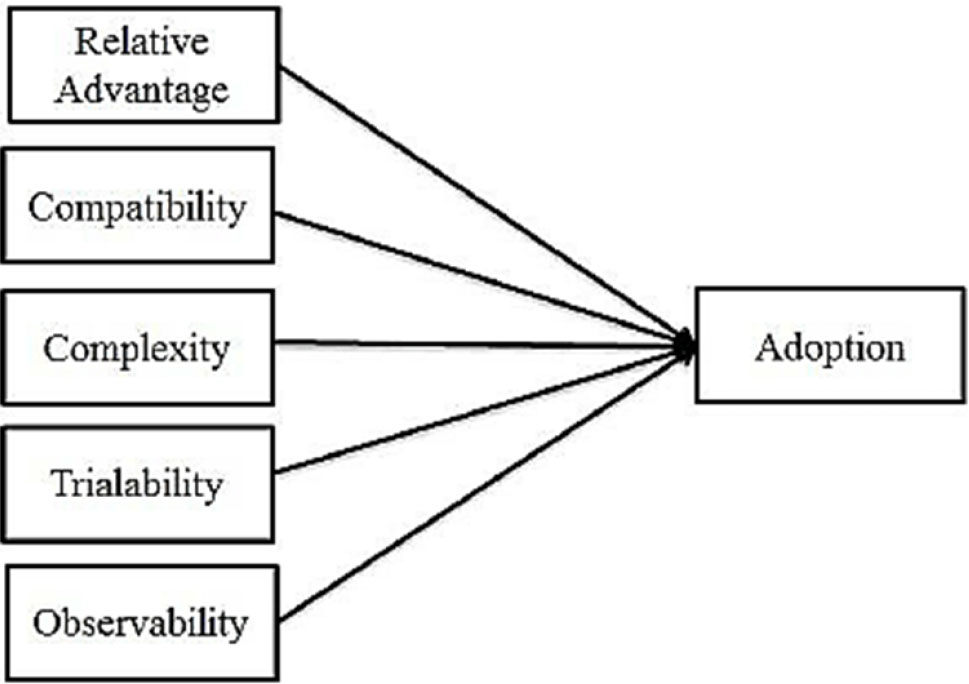
Fig. 4.
DOI Theory
Source: Roger, 2003.
Technology adoption follows a structured process that begins with awareness, where farmers first learn about the new technology through extension services, research publications, or peer networks (Leeuwis and Aarts, 2011). This is followed by an interest and evaluation phase, in which they assess the benefits, risks, and feasibility of implementing TTT in their farming practices. Some farmers may then engage in a trial phase, experimenting with the technology on a small scale before deciding whether to fully integrate it into their operations. Ultimately, they either adopt the technology or reject it, based on their assessment and external influences. This progression aligns with the Unified Theory of Acceptance and Use of Technology (UTAUT; Fig. 5), which emphasizes performance expectancy, effort expectancy, social influence, and facilitating conditions as key determinants of technology adoption (Venkatesh et al., 2003).
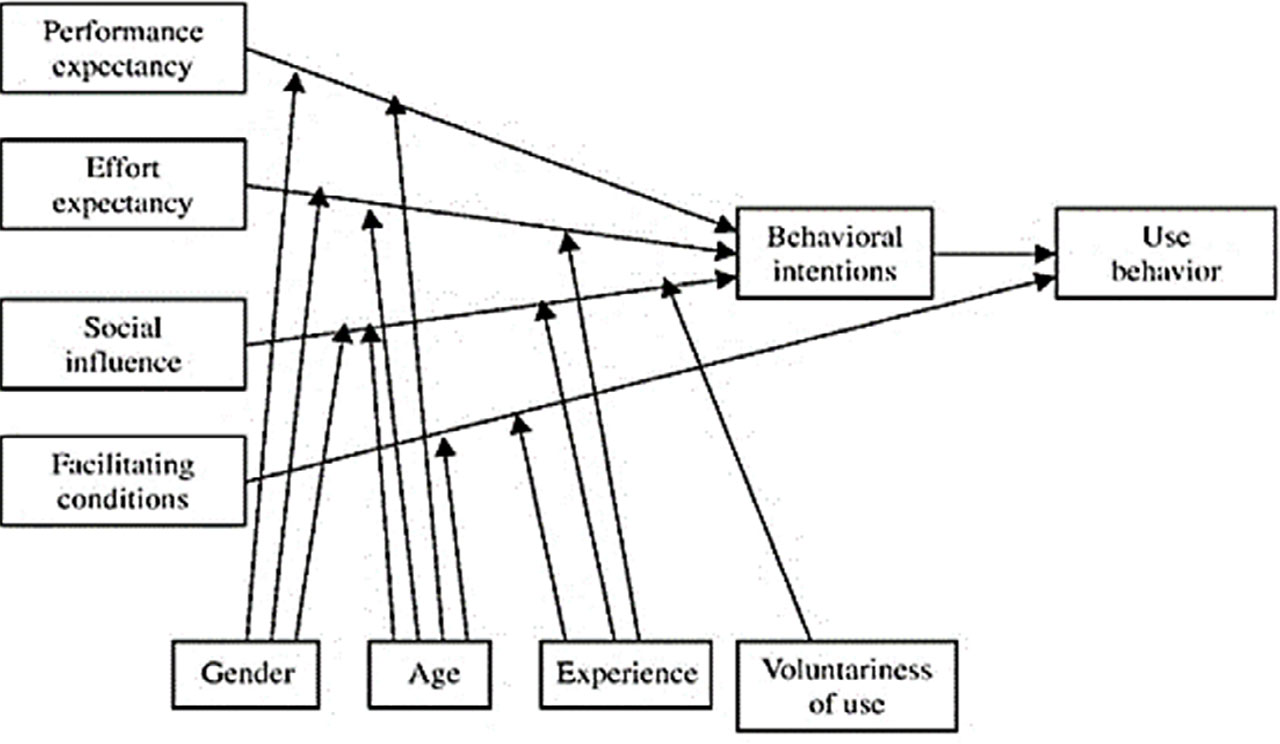
Fig. 5.
UTAUT model
Source: Venkatesh et al., 2003.
Beyond DOI and UTAUT, the Technology Acceptance Model (TAM; Fig. 6) developed by Davis (1989) suggests that the perceived usefulness and ease of use of a technology significantly influence its adoption. If farmers believe that TTT will bring tangible benefits to their agricultural activities while being easy to implement, they are more likely to embrace it. Additionally, the Theory of Planned Behavior (TPB; Fig. 7) developed by Ajzen (1991) highlights that behavioral intentions are shaped by attitudes, subjective norms, and perceived behavioral control. This means that if farmers perceive TTT as beneficial, if they experience social pressure to adopt it, and if they feel capable of implementing it, they are more likely to do so.
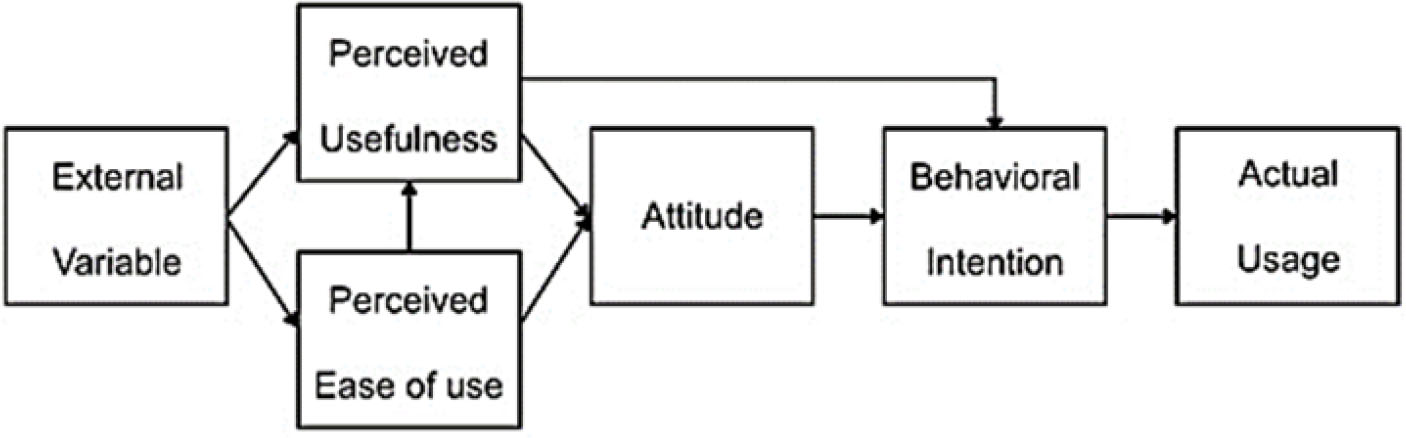
Fig. 6.
Technology Acceptance Model
Source: Davis, 1989.
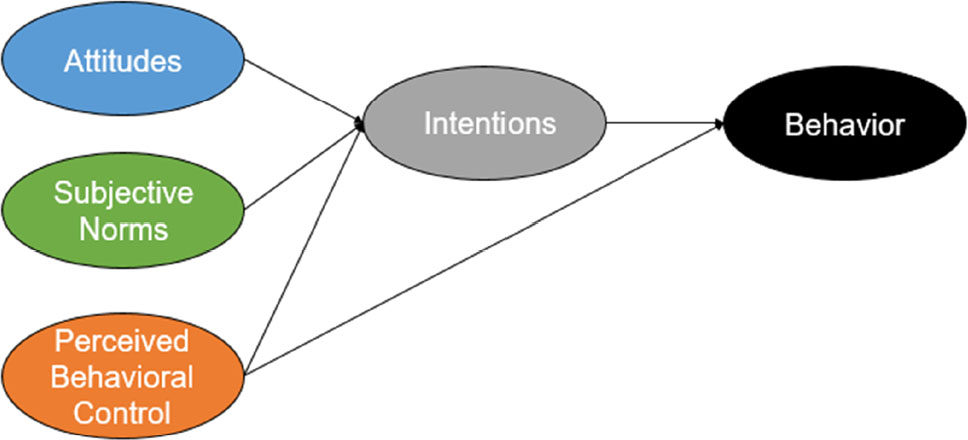
Fig. 7.
Theory of Planned Behavior
Source: Ajzen, 1991.
Various socio-economic and behavioral factors also play a role in technology adoption. Education level is a crucial determinant, as higher education often correlates with a greater openness to new technologies (Feder et al., 1985). Economic incentives such as subsidies, financial support, and market demand also impact adoption rates, as seen in studies on agricultural technology diffusion (Pannell et al., 2006). Extension services and training programs enhance awareness and provide technical assistance, facilitating smoother implementation of TTT. Additionally, the way farmers perceive risk plays a major role, as adoption decisions are often influenced by an assessment of the potential benefits versus the perceived risks (Marra et al., 2003). Peer influence further reinforces adoption, as farmers are more likely to integrate a new technology if they observe its successful implementation by others within their community (Bandura, 1986).
To enhance the adoption of TTT, policymakers and agricultural organizations must develop strategies that address these influencing factors. Providing financial incentives such as grants or low-interest loans can support initial investment, making the transition more accessible for farmers (Guerin, 1999). Educational programs and extension services should be strengthened to increase farmers’ knowledge and confidence in using TTT. Demonstration projects showcasing the practical benefits of TTT can serve as powerful tools in influencing adoption decisions. Moreover, research and innovation should continue to refine the technology to ensure its efficiency, affordability, and ease of use (Hall and Khan, 2003).
The adoption of TTT in agriculture is a multifaceted process shaped by a combination of theoretical frameworks, behavioral dynamics, and socio-economic conditions. Utilizing well-established models, such as DOI, TAM, UTAUT, and the TPB, enables stakeholders to better understand the factors influencing farmers’ decision-making. Effectively addressing adoption barriers through targeted policies, financial incentives, educational initiatives, and community involvement can significantly enhance the uptake of TTT, fostering a transition toward more sustainable agricultural practices and promoting its widespread integration within the farming sector.
RESULT
Analysis of Multinomial Logistic Regression Model
In this study, a multinomial logistic regression model was used to analyze farmers’ behaviors in adopting TTT. The goal of this analysis was to predict the impact of social and economic factors on the adoption of agricultural TTT by farmers.
Table 1 presents the results of the multinomial logistic regression for predicting the adoption of TTT by farmers, considering social and economic variables. In this model, non-essential variables were excluded, and only statistically significant variables remain.
Table 1.
Multinomial Logistic Regression Results (Predicting Adoption of TTT)
| Variable | Coefficient (β) | Standard Error (SE) | z-value | p-value |
|---|---|---|---|---|
| Access to services (training, repairing) | 0.85 | 0.25 | 3.40 | 0.0007 |
| Financial support | 1.12 | 0.31 | 3.61 | 0.0003 |
| Farm size | 0.54 | 0.19 | 2.84 | 0.0045 |
| Marketing support | 0.73 | 0.22 | 3.32 | 0.0009 |
| Farm ownership | 0.67 | 0.21 | 3.19 | 0.0014 |
| Age | −0.36 | 0.14 | −2.57 | 0.0102 |
The results of the multinomial logistic regression model indicate that both institutional support (training, finance, marketing) and structural characteristics (farm size, ownership, age) have a statistically significant effect on the likelihood of farmers adopting Thermal Treatment Technology (TTT). Access to education resources (β = 0.85, p = 0.0007) has a strong positive and statistically significant effect on adoption. Farmers with better access to educational resources are more likely to adopt TTT, possibly due to increased awareness and better understanding of the technology (Feder et al., 1985; Asfaw and Admassie, 2004). Financial support (β = 1.12, p = 0.0003) is also a key determinant. A high coefficient suggests that access to loan or subsidies greatly increases the probability of adopting TTT (Abdulai and Huffman, 2005; Kassie et al., 2011). Based on the results regarding farm size (β = 0.54, p = 0.0045), larger farms are more likely to adopt the technology. This could be because larger operations have more resources and greater incentives to invest in innovative solutions (Doss and Morris, 2000; Pannell et al., 2006).
Farmers receiving marketing assistance are more likely to adopt TTT (β = 0.73, p = 0.0009), likely due to better access to markets or more confidence in selling treated products (Moser and Barrett, 2006; Teklewold et al., 2013). Ownership of the farm, as opposed to renting or sharecropping, positively influences adoption (β = 0.67, p = 0.0014). Owners may be more willing to invest in long-term improvements (Soule et al., 2000; Gebremedhin and Swinton, 2003). Regarding age (β = −0.36, p = 0.0102), a negative coefficient indicates that older farmers are less likely to adopt TTT. This may be due to lower risk tolerance, resistance to change, or limited planning horizons compared to younger farmers (Adesina and Baidu-Forson, 1995; Tey and Brindal, 2012).
Significance of model and Fit Statistics for Multinomial Logistic Regression
Table 2 provides an overall assessment of the fit and explanatory power of the multinomial logistic regression model used to predict farmers’ adoption of Thermal Treatment Technology (TTT).
Table 2.
Multinomial Logistic Regression Model Fitting Information and Case Processing Summary
| Criteria | Value | Statistical Test | Value |
|---|---|---|---|
| −2 Log Likelihood | 486.723 | Chi-Square | 118.564 |
| Model (Final) | — | df | 18 |
| Significance (p-value) | — | Sig. | 0.000 |
| Cox and Snell R2 | 0.432 | Nagelkerke R2 | 0.587 |
| McFadden R2 | 0.294 | Subpopulation (Valid) | 170 |
The −2 Log Likelihood value of 486.723 indicates the model’s deviance from a perfect fit. While lower values are generally preferred, interpretation should be in conjunction with other fit indices. The Chi-Square value of 118.564 with 18 degrees of freedom is statistically significant (p = 0.000). This means that the model significantly improves prediction over the null model (i.e., a model with no predictors), confirming that the social and economic variables included in it collectively contribute to explaining the outcome. Cox and Snell R2 = 0.432 and Nagelkerke R2 = 0.587 suggest that the model explains between 43.2% to 58.7% of the variance in TTT adoption behavior. These values indicate a moderate to strong model fit, especially in social science research contexts. McFadden R2 = 0.294 also supports a relatively good fit, as values above 0.2 in logistic regression models are considered acceptable and above 0.3 as very good (according to McFadden’s guideline). The model used data from a valid subpopulation of 170 cases, indicating that the analysis was conducted on a sufficient and complete dataset, thus increasing the reliability of the model.
DISCUSSION AND CONCLUSION
This study aimed to examine the impact of adopting innovative agricultural technologies, specifically thermal treatment technology for pest control in dried figs, analyzing various dimensions of this technology in line with sustainable development goals and reducing the negative effects of climate change. In this context, using alternative and environmentally friendly methods such as thermal treatment technology can significantly decrease reliance on chemical pesticides, thereby preserving environmental health and reducing pollution.
Within the framework of the Green Deal of the European Union, these technologies are emphasized as tools for promoting sustainable agriculture and reducing carbon emissions and greenhouse gases. Thermal treatment technologies, as a non-chemical and effective method for pest control, not only help reduce the consumption of chemical pesticides and preserve soil and water health, but also align with carbon reduction objectives and Green Deal policies by decreasing the need for fossil fuel-based resources and mitigating related pollution.
Additionally, regarding food security, the adoption of these technologies can serve as an effective tool for ensuring the sustainability of agricultural production and enhancing the quality of agricultural products. Given the growing global demand for healthy and organic products and the pressures resulting from climate change, using novel and effective methods in agriculture to maintain high-quality production while being sustainable is essential. These methods can help farmers become more resilient to the challenges posed by climate change and preserve their outputs under unstable climatic conditions.
The results of the multinomial logistic regression model underscore the pivotal role of both institutional support mechanisms and farm-level socio-economic characteristics in influencing the adoption of Thermal Treatment Technology (TTT) among farmers. Statistically significant relationships were found between the likelihood of TTT adoption and six variables: access to educational resources, financial support, farm size, marketing support, farm ownership, and farmer age. These findings align with previous studies on agricultural innovation adoption (Feder et al., 1985; Doss and Morris, 2000; Kassie et al., 2011), confirming that resource access and farm structure significantly shape farmer behavior.
Institutional factors such as access to education and financial and marketing support had strong and significant positive effects. These variables reflect a farmer’s capacity to comprehend, afford, and implement new technology confidently. For instance, the availability of educational resources may enhance farmers’ knowledge and risk management skills, thereby reducing uncertainty around technology use. Similarly, financial support, including credit access or subsidies, lowers adoption barriers by reducing initial investment risks – an observation echoed by Abdulai and Huffman (2005) and Pannell et al. (2006).
Structural farm characteristics, including farm size and ownership status, were also positively associated with adoption, suggesting that larger and self-owned farms are more capable and willing to invest in long-term innovations. This supports the notion that both scale and tenure security provide a conducive environment for sustainable investments (Soule et al., 2000). Notably, age was negatively associated with adoption, implying that younger farmers may be more open to change and have longer planning horizons, a trend well documented in innovation diffusion literature (Tey and Brindal, 2012; Adesina and Baidu-Forson, 1995).
Model diagnostics further reinforce these findings. The significant Chi-square test (p = 0.000) confirms that the model significantly improves upon the null model. Additionally, the fit indices – Nagelkerke R2 = 0.587 and McFadden R2 = 0.294 – indicate a moderate-to-strong predictive capacity, which is considered acceptable within behavioral and social science research. The model’s reliance on a valid subpopulation of 170 observations further ensures the credibility and generalizability of the results.
In conclusion, this analysis highlights that targeted policy interventions focusing on capacity-building, access to financial instruments, and market development could significantly enhance the diffusion of TTT in agricultural communities. Moreover, recognizing the heterogeneity among farmers – particularly in age, landholding size, and tenure status – is essential for designing inclusive and effective agricultural innovation programs. Future research may benefit from incorporating environmental or psychological variables to further deepen the understanding of adoption behavior in sustainable agriculture contexts.
Adoption Pathway of TTT adoption in the Fig Sector
Based on the empirical findings from fig farmers and processors in Aydın, as well as the integrated use of theoretical models (Diffusion of Innovation, TAM, TPB, and UTAUT), we propose a contextual framework titled “Adoption Pathway of Thermal Treatment Technology (TTT)” specifically for the dried fig sector. This model captures the sequential and dynamic process through which farmers move from initial exposure to TTT to eventual adoption, highlighting the enabling and inhibiting factors at each stage.
The adoption process of TTT in the dried fig sector can be conceptualized through four sequential stages, each shaped by distinct drivers, barriers, and corresponding theoretical constructs.
In the first stage, referred to as Awareness and Knowledge Formation, key drivers include extension services, demonstration activities organized by cooperatives, and peer influence among farmers. However, the absence of technical outreach, limited access to credible information, and the low visibility of successful pilot cases act as significant barriers. This stage aligns with the “Knowledge” element of the Diffusion of Innovation (DOI) model and the “Facilitating Conditions” component in the Unified Theory of Acceptance and Use of Technology (UTAUT).
The second stage, Evaluation and Perceived Usefulness, is characterized by farmers’ perception of reduced post-harvest losses, decreased chemical residues, and compliance with export market standards as motivating factors. However, uncertainty regarding long-term benefits and a lack of comparative cost data hinder progression. This stage corresponds with “Relative Advantage” in the DOI model and “Perceived Usefulness” in the Technology Acceptance Model (TAM).
The third stage, Trial and Experimentation, involves practical engagement with the technology. Supportive cooperatives that provide shared access to equipment, short-term rental schemes, and technical training serve as important enablers. On the other hand, the limited availability of trial units and the high cost of temporary installation represent major constraints. Theoretical connections here include “Trialability” in the DOI model and “Behavioral Intention” as presented in the Theory of Planned Behavior (TPB) and UTAUT.
Finally, the fourth stage, Adoption and Institutional Integration, marks the point at which TTT becomes embedded in local agricultural systems. This phase is driven by policy incentives, cooperative investments, and market pressure to meet export quality standards. Nevertheless, insufficient credit facilities and the absence of a formal certification mechanism for TTT-compliant products remain obstacles. This stage aligns with the “Adoption” stage in the DOI framework, “Use Behavior” in UTAUT, and both “Attitude” and “Perceived Behavioral Control” in TPB.
This framework not only offers a structured pathway to understand the dynamics of TTT adoption in the fig sector but also provides actionable insights for policy design and further empirical exploration in similar agro-ecological contexts.
This framework emphasizes that TTT adoption is not a one-time decision but a process influenced by the interaction between personal beliefs, social systems, economic rationality, and institutional infrastructure. Importantly, it is not technology-centric but user- and context-centric, recognizing the role of community organizations (e.g., cooperatives) and institutional support as mediators of adoption.
This framework can serve both as a conceptual contribution to adoption theory in postharvest agroecotechnologies and as a practical guide for policymakers aiming to accelerate green transitions in smallholder agricultural systems.