
INTRODUCTION
Rice is the world’s most important food crop (Matsumoto et al., 2005) and, after maize, the second most widely consumed crop by humans in most countries (Nasrin et al., 2015). Asian countries dominate rice production, contributing more than 75 percent of the world’s annual rice output (Fahad et al., 2018). China and India are the largest consumers of rice (Chauhan et al., 2017; Fahad et al., 2018; Peng et al., 2009). Rice is not only a vital staple food in Asia, Africa, and South America, but also a key source of income and employment in these regions (Oli et al., 2014). In Africa, rice production and consumption have grown significantly (Arouna et al., 2021), particularly in sub-Saharan Africa where rice demand now exceeds production, surpassing that of any other staple crop (Arouna et al., 2021; Nasrin et al., 2015). Despite this increasing demand, local production has not kept pace, leaving the continent reliant on imports (Yarnell, 2008). Studies have highlighted Africa’s ongoing reliance on food imports (Bjornlund et al., 2020; 2022; Morris and Fessehaie, 2014; Seck et al., 2010, 2012; Taylor, 2016; Zhou and Staatz, 2016).
In Namibia, rice production is still in its infancy, and the country remains largely dependent on imports to meet its consumption needs, with nearly all consumed rice being imported (Republic of Namibia Ministry of Agriculture, 2017). There are small-scale farming projects in Kalimbeza (Zambezi region) and at the University of Namibia Ogongo campus (Omusati region), where water from the Zambezi and Kunene rivers is utilized. This initiative, which began in 2007, is a collaboration between the University of Namibia (UNAM) and Japanese agencies (Japan International Cooperation Agency and Japan Science and Technology Agency) under the Science and Technology Research Partnership for Sustainable Development (SATREPS). However, rice varieties produced through this project are not yet widely available in retail and wholesale outlets, with the exception of the Ogongo campus and Agriculture Marketing and Trade Agency (AMTA) fresh produce hubs. The project’s primary goal has been to strengthen food security and diversify crop production.
Although Namibia has a small population of about 2.5 million (Namibia Statistics Agency, 2016), rice consumption is notably high, while local production is still limited. The Namibian rice market features a variety of brands with varying price points. However, newer brands are gradually replacing those traditionally preferred by consumers. Over the past few years, the rice supply in the country has increased, reflecting a response to growing demand. Key drivers of this demand include a rising population, urbanisation, and shifts in employment patterns. These factors also contribute to the increase in rice consumption across Africa (Yarnell, 2008). Figure 1 shows the trend in Namibia’s rice imports by quantity and value over the past two decades.
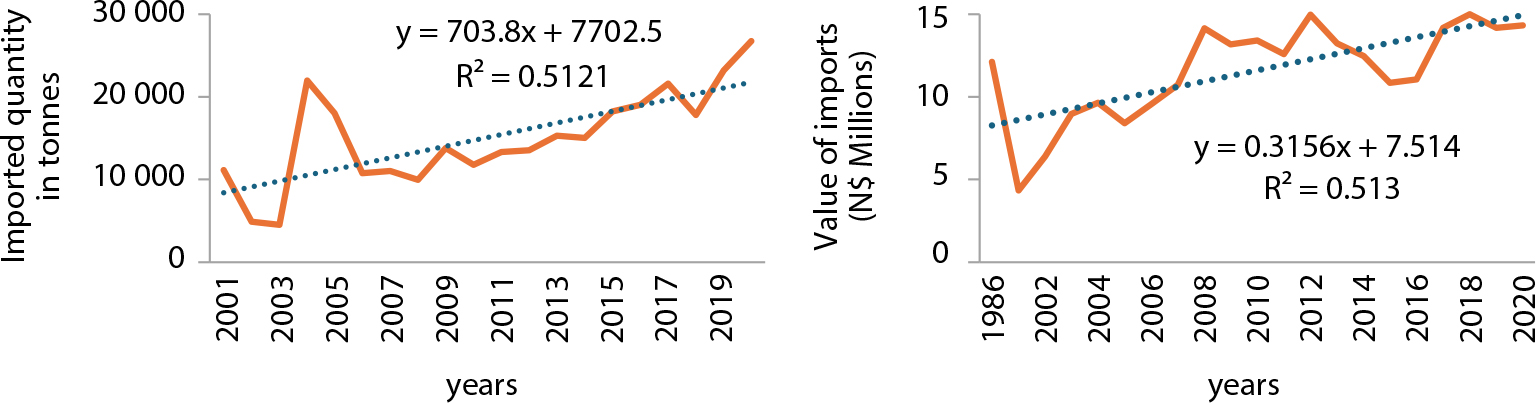
Fig. 1.
Namibia’s rice imports in quantity (left) and value (right)
Source: Own computations with data from: https://www.fao.org/faostat/en/#data/TCL
Understanding consumer preferences and willingness to pay (WTP) is crucial for introducing new products into the market (Obih and Baiyegunhi, 2017). However, there is currently limited information on consumer preferences and WTP for locally produced rice in Namibia, as it has yet to be widely available. To ensure the success of new rice products, it is essential to understand their attributes and the key factors that influence consumer decision-making when purchasing rice. This study aims to assess the competitiveness of locally produced rice by examining consumer preferences and WTP, ultimately supporting the introduction of local rice to the Namibian market. It also seeks to explore potential interventions and policies to promote the purchase of locally produced products, while contributing to the wider literature on market analysis, consumer behaviour, food security, and climate change adaptation. Given the lack of research on market analysis, consumer behaviour, and the acceptability of locally produced rice in Namibia, this study addresses a critical gap.
THEORETICAL FRAMEWORK
Consumer choice behaviour regarding food products is extensively discussed by Ginon et al. (2014). WTP refers to the maximum price or additional amount a consumer is willing to pay to express a preference for one product over another (Obih and Baiyegunhi, 2017). WTP is commonly used by economists, while sensory scientists often rely on hedonic ratings, where consumers rank how much they like a product based on its attributes. Experimental auctions offer an advantage over hypothetical techniques because they involve real monetary transactions for actual goods in an active market (Demont et al., 2012).
Experimental auctions are a revealed preference method used to elicit WTP (Naseem et al., 2013; Breidert et al., 2006) (Fig. 2). In an experimental auction, consumers participate in a bidding environment with specific rules and begin offering real money for items. The prices they offer serve as indicators of the highest amount they are willing to pay for a specific good being auctioned (Demont et al., 2012). According to Ginon et al. (2014), participants must be aware of the potential outcomes of their choices, including the possibility of purchasing auctioned products. This awareness enhances the reliability of experimental auctions in revealing true consumer preferences, as participants face real economic consequences from their decisions.
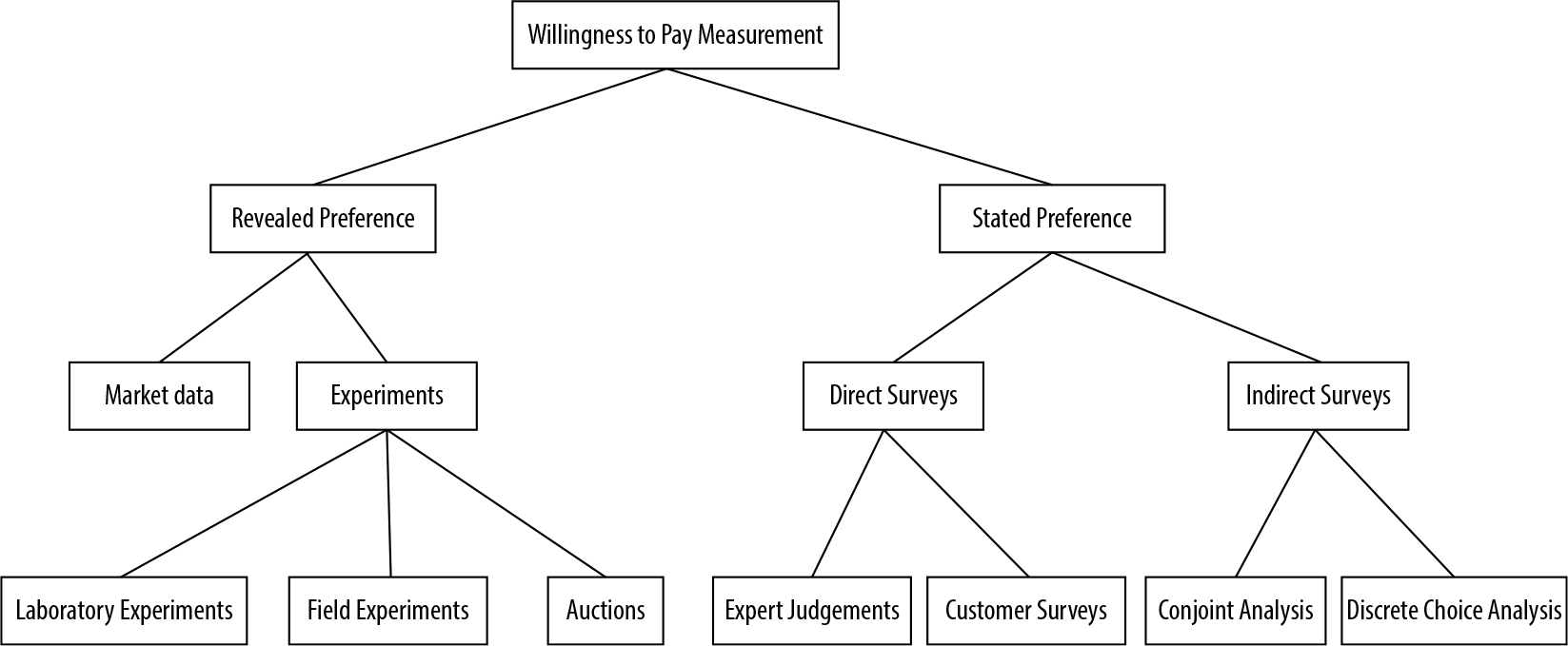
Fig. 2.
Classification framework for methods used to measure willingness to pay
Source: Breidert et al., 2006.
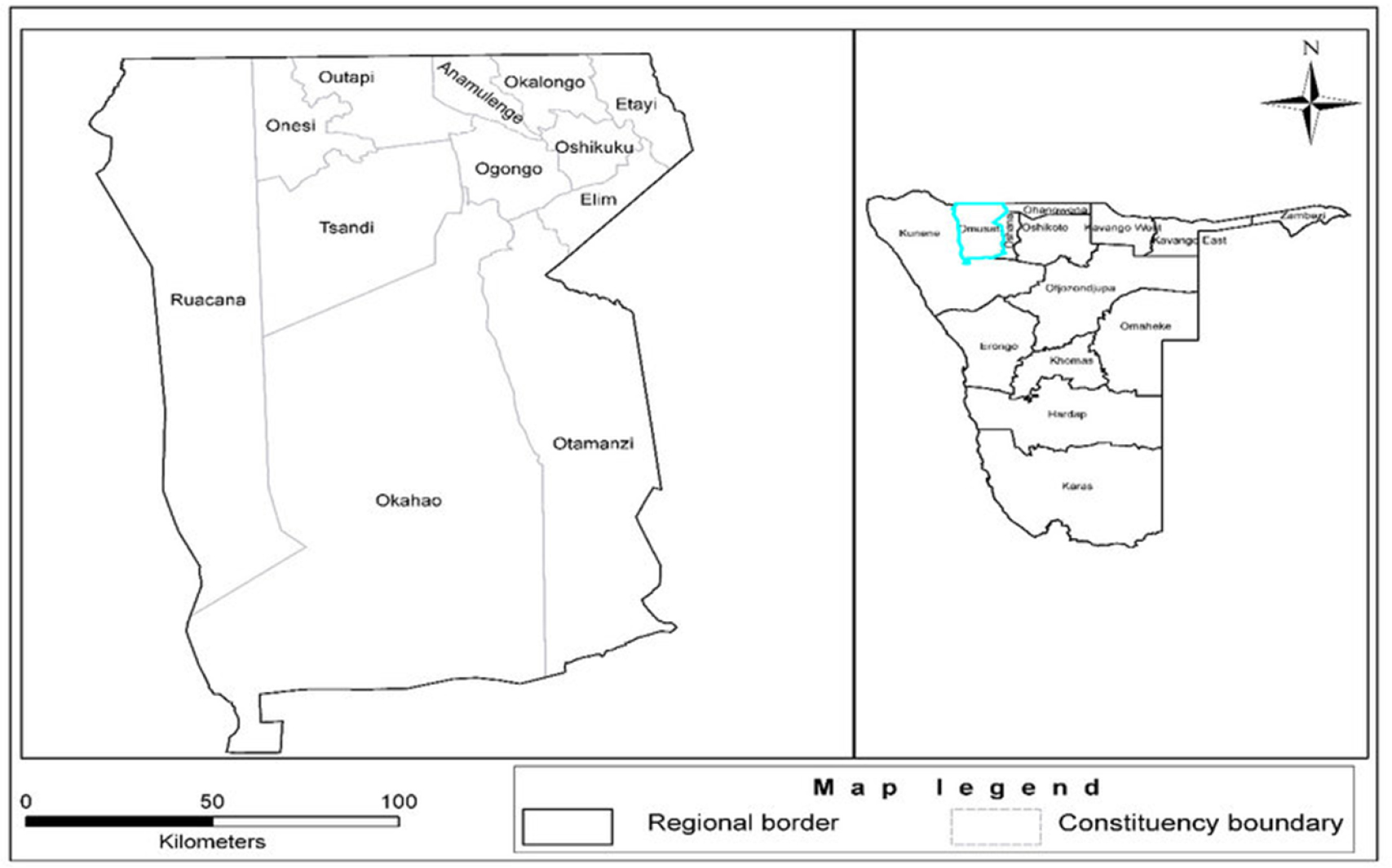
Fig. 3.
Map of Omusati region
Sensory evaluation, on the other hand, is a method used to evoke, measure, analyse, and interpret responses to food products based on the five senses: sight, touch, smell, taste, and hearing (Stone and Sidel, 2004). Sensory science plays a crucial role in evaluating various aspects of consumer preference. Hedonic scales are commonly used to measure preferences. According to Gallardo et al. (2018), the 9-point hedonic scale – ranging from 1 (low preference) and 9 (high preference) – is the most widely used due to its simplicity, making it accessible for both researchers and participants. Understanding consumer preferences is crucial for suppliers, as it helps guide the development of product features and attributes that meet market demand (Agbas and Ceballos, 2019; Symmank, 2019).
Product attributes can be broadly categorized into two types: intrinsic and extrinsic (Symmank, 2019). Extrinsic attributes refer to features of food that do not directly affect its sensory outcome when consumed, such as brands, labels, packaging, claims, and prices. These attributes influence consumer decisions, often due to fear of the unknown or a lack of sensory information (Akdeniz et al., 2013). In contrast, Intrinsic attributes refer to the inherent physical characteristics of food itself (Enneking, 2004).
Rice is characterized by a combination of extrinsic attributes (such as labelling, branding, and packaging) and intrinsic attributes (such as aroma, grain size, shape, softness, purity, colour, uniformity of size and shape, and cleanliness), all of which contribute to the perception of its quality (Demont, 2013). Naseem et al. (2013) identified three primary categories of rice quality attributes that impact price: (i) physical attributes (such as grain shape, colour, impurities, and rate of breakage), (ii) cooking attributes (such as ease of cooking, grain size after cooking, grain cohesion, and swelling capacity), and (iii) eating attributes (such as texture, aroma, and taste). However, Agbas and Ceballos (2019) continue to follow the two common methods of categorizing rice quality attributes and report that, in terms of intrinsic qualities, most consumers prefer plain white rice that is tasty, aromatic, and sticky. On the other hand, consumers concerned with extrinsic quality attributes tend to favour local rice packaged in sacks (Agbas and Ceballos, 2019). Regardless of how they are categorized, rice quality attributes play a key role in shaping consumer preference. For instance, in Senegal, consumers prefer broken rice, associating its breakage with lower prices (Demont et al., 2013).
Several studies have employed different approaches to elicit WTP as a representation of the monetary value consumers assign to food quality attributes. These methods include survey rankings, ratings and experimental auctions (Demont et al., 2012), discrete choice modelling, stated choice experiments, travel costs (Gonzalez-Chica et al., 2015), conjoint analysis, choice experiments, and contingent valuation (Goldberg and Roosen, 2005). Methods for determining WTP can be divided into two main categories: revealed and stated preferences (Hahsler, 2015). The key difference between the two is that the stated preference methods are hypothetical, while revealed preference methods are non-hypothetical. A major disadvantage of stated preference methods is that participants may not reveal their true preferences, as they are aware of the hypothetical nature of these methods (Hahsler, 2015). Conjoint analysis, discrete choice modelling, choice experiments, and surveys are examples of stated preference methods (Torres-Ortega et al., 2018). However, a notable advantage of stated preference methods is that they are generally less expensive than non-hypothetical studies, such as experimental auctions.
Consumer choice behaviour towards food products is complex (Gallardo et al., 2018) due to the various factors influencing decisions. In the case of rice, social demographics and quality attributes have been identified as key determinants of WTP (Putri et al., 2019). Gallardo et al. (2018) further suggest that combining experimental economics with sensory science is a viable approach to determining preferences and WTP, as these concepts effectively explain consumer choice behaviour. This is because they allow for the measurement of the impact of quality attributes on preferences and WTP (Gallardo et al., 2018). Evidence from experimental auctions suggests that this method can provide valuable insights, which can be used to enhance the local rice value chain, particularly in terms of assessing the quality attributes of imported rice (Demont et al., 2012). Other studies have found that experimental auctions are a compelling method for obtaining reliable results when measuring consumer preferences. In fact, experimental auctions are considered one of the most suitable tools for measuring consumer preferences as they tend to overstate consumers’ willingness to pay for a product (Lusk et al., 2004).
Market research tools are often insufficient for fully understanding consumer behaviour (Alvino et al., 2018). Consequently, sensory evaluation methods, when combined with experimental auctions, have proven to be effective in generating more accurate results (Agronomic, 2015). A key advantage of auctions is their ability to determine the price of goods that are novel to a particular society (Grebitus et al., 2013; Lusk et al., 2004; Lusk and Weaver, 2017). In the context of rice, the focus of this study, experimental auctions have been recognized as a successful method for determining consumers’ WTP based on both intrinsic and extrinsic quality characteristics (Agronomic, 2015).
MATERIALS AND METHODS
Study Area and Population
This study was conducted in two towns and one settlement in the Omusati region of northern Namibia: Outapi, Oshikuku, and Ogongo. The target population for this research comprised residents of the area with purchasing power.
Research Design
This study employed a mixed-methods approach, integrating qualitative and quantitative data collection techniques. Experimental auctioning, combined with sensory evaluation, was used to elicit preferences and WTP. The experimental sessions were conducted over two weeks, during which questionnaires were administered. These questionnaires collected qualitative data (e.g., ranking likelihood using a hedonic scale), quantitative (e.g., bids), and sociodemographic data.
Following the methodology of Demont et al. (2012), this study focused on two locally grown rice varieties, Irriga and Supa. Additionally, Tastic Rice, a type already available on the Namibian market, was used as a reference point for comparison with the two local varieties.
The second-price auction was selected for its ability to ensure that participants revealed their true valuation of goods through their bids. This approach was employed alongside the endow-and-upgrade method, where participants were endowed with a certain quantity of the benchmark rice and asked to indicate the premium price they were willing to pay to upgrade to one of the two local varieties.
All rice types were presented to participants as specimens. The details of the two local varieties (such as their names and origins) were not disclosed. Instead, the varieties were distinguished based solely on their attributes. Participants assessed the rice attributes visually (e.g., purity level and uniformity) and sensorially (e.g., tasting, aroma, swelling capacity). Using a 9-point hedonic scale, participants rated how much they liked each rice variety’s attributes.
Sampling Design
A quantitative sampling technique, specifically simple random sampling, was employed to minimise personal bias. Samples were drawn from two towns and one settlement in the Omusati region of northern Namibia: Outapi, Oshikuku, and Ogongo.
Since the size of the study population was unknown, the Cochrane method was used to calculate the optimum sample size for use in this study.
The Cochran formula is expressed as:
Where: no – is the sample size, e – is the desired level of precision, which was set to 0.08 for a confidence level of 92%, z – is the z-value corresponding to the given confidence level, p – is the estimated proportion of the population with the given attribute; if the population proportion is unknown, we assume it to be 50% for estimation purposes, q – is 1 – p.
Using this formula, the target sample size was calculated to be 118 respondents. However, the final sample size for the study consisted of 105 respondents.
Research Instruments
The questionnaire was designed to collect both qualitative and quantitative data, including participant demographics. Qualitative data were recorded using a 9-point hedonic scale, while quantitative data were obtained from the WTP values derived from auction bids.
Procedure
Recruitment of participants
Participants were recruited from the UNAM Ogongo campus, as well as from the malls in Oshikuku and Outapi. Upon recruitment, participants were informed that they would take part in a 30 minutes market test.
Introduction to auction procedures
The sessions were conducted in English, with translations to local languages, such as Afrikaans, Oshiwambo, and Otjiherero. The three types of rice were presented in a quadrangular arrangement on differently coloured plates at each participant’s table. Auctioneers were instructed to collect WTP figures randomly to avoid any perceptions of a linear relationship or ranking among the rice types.
Participants were informed that they would engage in a sensory evaluation of both cooked and uncooked rice and then rate their likelihood of preferring each type using a 9-point hedonic scale. The auction procedures were explained, with a focus on the endow-and-upgrade and second-price auction methods. The first part of the questionnaire was administered to capture participants’ sociodemographic information.
Sensory evaluation of uncooked rice
After completing the first part of the questionnaire, participants were presented with three different types of rice in their uncooked form. They were able to compare the attributes of the rice physically and visually. A 9-point hedonic scale questionnaire was provided for participants to rate their preference for each type. The identities of rice types were not disclosed; instead, they were presented as follows:
Tastic rice = A
Irriga = B
Supa = C
First auction round
Following the sensory evaluation of uncooked rice, participants were endowed with 1 kg of the benchmark rice (Tastic) and asked how much they were willing to pay to upgrade to one of the local rice varieties.
Sensory evaluation of cooked rice
The same procedure from the previous step was followed but with cooked rice instead of uncooked rice. Participants evaluated the cooked rice using the same sensory methods.
Second bidding round
In the second bidding round, the same procedure as in the first auction round was followed. This round aimed to determine the participants’ post-sensory WTP for the different rice types.
Survey
The remaining part of the survey was administered after the second and final bidding round. This section aimed to gather information on consumer preferences and awareness of the rice types used in the experimental auctions.
Closing ceremony
The winner of the auction was determined based on the second-price auction criteria. The winners were awarded a plate of cooked rice (of their preference) containing meat and soup.
Empirical Model Specification
The data collected for this study were analysed using the Statistical Package for the Social Sciences (SPSS). Kendall’s Coefficient of Concordance was employed to rank the quality attributes that consumers considered important when buying rice. This statistical measure helps identify and rank a given set of attributes from the most influential to the least influential and assesses the degree of agreement or concordance among respondents regarding their perceived importance (Al-Hassan et al., 2009).
Kendall’s Coefficient of Concordance was used to rank the identified quality attributes, with ranks assigned from 1 to n, where 1 represents the most important attribute and n represents the least important. The model is specified as follows:
Where: T – sum of ranks for attributes being ranked, m – number of respondents (consumers), n – number of attributes being ranked, W – coefficient of concordance.
The multinomial logistic regression is specified as:
Where:
Dependent variable: Y – rice A, rice B, rice C.
The independent variables were as follows: X1 – smell, X2 – texture, X3 – taste, X4 – shape, X5 – stickiness, X6 – swelling capacity, X7 – packaging, X8 – brand, X9 – label, X10 – price, X11 – promotion
Other terms: e – confounding variance, Ln – Natural logarithm, P – probability of consumer WTP for a specific rice based on an attribute, βo – regression constant or intercept, β1,2,3…n – independent variable coefficients
RESULTS
In this study, only one rice brand, other than the Tastic rice brand, was available in the same quantity as the prominent brand. However, this alternative brand was available in only a limited number of shops, making Tastic Rice the most prominent, as it was available in all retail and wholesale shops. Four common retail shops – Shoprite, Checkers, Woermann Brock, and Pick n Pay – were targeted for primary data collection to determine the average price of rice per kilogram and the most prominent rice brand. Only prices for the most prominent brands were collected to ensure consistency in brand availability across all listed shops. Table 1 shows the average price of rice per kilogram (at the time) in the Omusati region, which was computed and found to be N$/Kg 22.98, equivalent to 1.23 USD.
Table 1.
Tastic rice prices from different shops in Northern Namibia
| Shop name | Price (N$/kg) | Average price (N$/kg) |
|---|---|---|
| Woermann Brock | 24.49 | 22.98 |
| Shoprite | 22.99 | |
| Choppies | 22.95 | |
| Pick N Pay | 21.49 |
Descriptive Statistics
A total of 105 participants were included in this study, representing the total number of participants in the five experimental sessions conducted in the Omusati region. Sociodemographic characteristics of rice consumers are important for conducting marketing studies, such as WTP, and for assessing consumers’ consumption patterns (Campiche et al., 2004). A summary of the demographic characteristics of the participants, including age, sex, level of education, and employment status, is shown in Table 2.
Table 2.
Socioeconomic and demographic characteristics
| Variable | Characteristics | Consumer (%) n=105 |
|---|---|---|
| Gender | female | 66.7 |
| male | 33.3 | |
| Age | 26-35 | 24.8 |
| 36-45 | 8.6 | |
| 46-55 | 9.5 | |
| 56 and above | 1.0 | |
| below 25 | 56.2 | |
| Marital status | divorced | 1.0 |
| married | 15.2 | |
| single | 83.8 | |
| Level of education | none | 2.9 |
| primary | 1.0 | |
| secondary | 25.7 | |
| tertiary | 67.6 | |
| vocational | 2.9 | |
| Working status | student | 63.8 |
| unemployed | 13.3 | |
| working full-time | 20.0 | |
| working part-time | 2.9 | |
| Range of monthly income (N$) | less than 2,500 | 83.8 |
| more than 17,500 | 3.8 | |
| 10,001–17,500 | 3.8 | |
| 2,501–10,000 | 8.6 | |
| Rice consumption pattern | 2–4 times a month | 14.3 |
| 2–4 times a week | 36.2 | |
| daily | 12.4 | |
| once a month | 6.7 | |
| once a week | 23.8 | |
| rarely | 6.7 | |
| Knowledge of any locally produced rice | no | 52.4 |
| yes | 47.6 |
In this study, there were more female participants (66.7%) than male participants (33.3%). The majority (56.2%) of the sample were aged 25 years or younger, followed by 25.0% in the 26 to 35 years age range. Among the participants, 15.2% were married, 83.8% were single, and 1% were divorced. The majority (63.8%) of consumers were students, followed by those (22.9%) with a source of income from either full-time (20%) or part-time (2.9%) work. Table 2 also shows that a minority (3.8%) of consumers earned a monthly income greater than N$17,500 and another 3.8% earned between N$10,001 and N$17,500. Most consumers (83.8%) earned less than N$2,500, followed by 8.6% who earned between N$2,501 and N$10,000. More than half (52.4%) of the respondents were unaware of any locally grown rice, while 47.6% indicated that they were aware of some local rice varieties grown within the country.
Consumer’s general preference for local and imported uncooked rice from visual observation
The mean preferences for the rice types are presented in Table 3, showing that consumers had a high preference for Tastic rice (mean = 6.80), followed by Irriga (mean = 5.54), and Supa (mean = 5.04), with a statistically significant difference among the preference means (p < 0.001).
Table 3.
Descriptive summaries of consumer’s general preference for local rice and imported rice
| Groups | Count | Sum | Mean | Variance |
|---|---|---|---|---|
| Tastic (A) | 105 | 713.8 | 6.798095238 | 3.91807326 |
| Irriga (B) | 105 | 582.2 | 5.544761905 | 5.38884249 |
| Supa (C) | 105 | 528.8 | 5.036190476 | 5.47290842 |
| ANOVA | ||||||
|---|---|---|---|---|---|---|
| Source of variation | SS | df | MS | F | P-value | F crit |
| Between groups | 172.6829206 | 2 | 86.34146032 | 17.5255387 | 0.00000006 | 3.02468142 |
| Within groups | 1537.101714 | 312 | 4.926608059 | |||
| Total | 1709.784635 | 314 | ||||
The mean preferences for Tastic, Irriga, and Supa are shown in Figure 4. The results indicated that the mean for Tastic rice was higher than that for Irriga and Supa. However, Supa rice was the least preferred due to its stickiness and fragrance/aroma. Most respondents also reported that they did not know how to cook Supa rice using methods for other parboiled rice, such as boiling the rice and draining the water. Supa rice requires minimal water that must be completely absorbed during cooking, necessitating careful measurements of water and, in some cases, special rice cooking pots.
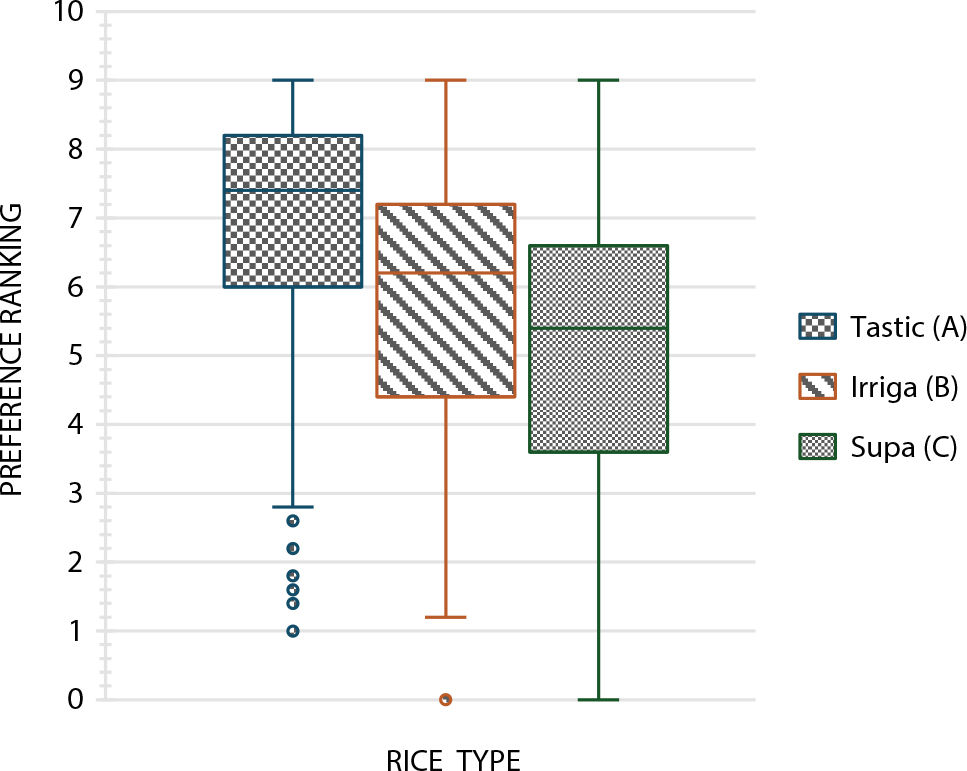
Fig. 4.
Mean preference ranking comparison of the various uncooked rice types
Source: survey data.
The descriptive statistics for the rice attributes rated by consumers for the three rice varieties are summarised in Table 4. The most preferred uncooked attribute was the grain size of Tastic rice (7.10), followed by Irriga (5.59), and Supa (5.45). Other preferred attributes of uncooked Tastic rice included texture (6.98) and shape of the kernels (6.76). For cooked rice, Irriga was preferred for its aroma (6.61) and colour (7.11). All attributes for both uncooked and cooked rice were statistically different between rice types (p < 0.05). Supa rice was the least preferred in both categories.
Table 4.
Consumer’s preference for intrinsic attributes of cooked and uncooked local and imported rice
| Uncooked rice | ||||
|---|---|---|---|---|
| Attribute | Tastic A | Irriga B | Supa C | p-value |
| Smell/fragrance/aroma | 6.52 | 6.09 | 5.05 | 0.000046 |
| Size of grain | 7.10 | 5.59 | 5.45 | 0.0000000939392 |
| Shape of kernel | 6.76 | 5.79 | 5.45 | 0.0001 |
| Colour of rice | 6.67 | 6.29 | 5.56 | 0.0052 |
| Texture/feel | 6.98 | 6.25 | 5.74 | 0.000315623 |
| Cooked Rice | ||||
|---|---|---|---|---|
| Attribute | Tastic A | Irriga B | Supa C | p-value |
| Smell/fragrance/aroma | 6.51 | 6.61 | 5.42 | 0.00459 |
| Taste | 6.85 | 6.61 | 5.08 | 0.000000751259 |
| Shape of kernels | 6.93 | 6.12 | 5.24 | 0.000 |
| Stickiness | 6.76 | 6.46 | 4.81 | 0.000 |
| Swelling capacity | 6.97 | 6.46 | 5.64 | 0.000585688 |
| Colour of rice | 6.89 | 7.11 | 6.38 | 0.00342 |
Rice Attributes That Consumers Consider Important When Buying Rice
Kendall’s coefficient of concordance analysis for both extrinsic and intrinsic quality attributes that consumers considered important when buying rice was conducted (Table 5). Kendall’s W measures the level of agreement in rankings among respondents, with a lower coefficient (closer to zero), indicating a low level of agreement, and a higher coefficient (closer to one), indicating a high level of agreement (Danso-Abbeam et al., 2014). A high mean indicates greater importance, whereas a low mean indicates lesser importance (Al-Hassan et al., 2009). The Kendall’s W for this study was 0.061, or 6.1% agreement, despite being statistically significant (p < 0.001).
Table 5.
Extrinsic quality attributes that consumers consider important when buying rice and Kendall’s W
| Rice attributes (N = 105) | Mean Rank | Rank |
|---|---|---|
| Taste | 7.5 | 1 |
| Price | 7.46 | 2 |
| Swelling capacity | 6.9 | 3 |
| Promotion | 6.82 | 4 |
| Stickiness | 6.75 | 5 |
| Brand | 6.6 | 6 |
| Shape | 6.5 | 7 |
| Label | 6.4 | 8 |
| Packaging | 6.38 | 9 |
| Texture | 6.32 | 10 |
| Smell/aroma/fragrance | 6.18 | 11 |
The results showed that taste was ranked first with the highest mean rank (7.5), followed by price (7.46), and swelling capacity (6.9). The least important attributes were smell/aroma/fragrance, texture, and packaging, which were ranked 11th, 10th, and 9th, respectively.
Determinants of WTP for Local Rice and Imported Rice
Table 6 presents a descriptive summary of the means and standard deviations of WTP for local and imported rice. The results show that respondents were ready to pay more (N$28.68 ±24.42) per kilogram for imported rice (Tastic) compared to locally grown rice (N$25.98 ±18.06 for Irriga and N$20.05 ±10.11 for Supa). However, after sensory evaluation of cooked rice, consumers’ WTP decreased for all rice types, but the pattern and order of prices remained the same as uncooked rice. Additionally, there was a statistically significant difference between the prices of the three types of uncooked rice (p = 0.0054) and cooked rice (p = 0.00037).
Table 6.
Descriptive statistics for WTP for local and imported rice
| Sample of rice type | M ± SD | F-statistic | P-value | |
|---|---|---|---|---|
| Uncooked rice | A (Tastic) | 28.68 ±24.42 | ||
| B (Irriga) | 25.98 ±18.06 | 5.32 | 0.0054 | |
| C (Supa) | 20.05 ±10.11 | |||
| Cooked rice | A (Tastic) | 25.45 ±18.47 | ||
| B (Irriga) | 23.70 ±11.11 | 8.32 | 0.00037 | |
| C (Supa) | 18.03 ±9.56 |
The post hoc test revealed statistically significant differences in WTP between Tastic (A) and Supa (C) for uncooked rice (p=0.0043). For cooked rice, there were statistically significant differences in WTP between Tastic (A) and Supa (C) (p = 0.0004), and between Irriga (B) and Supa (C) (p = 0.0108) (Table 7).
Table 7.
Multiple comparisons of means for WTP – Tukey HSD
| Group1 | Group2 | Mean diff | p-adj | Lower | Upper | Reject | |
|---|---|---|---|---|---|---|---|
| Uncooked rice | A | B | –2.7007 | 0.5635 | –8.9252 | 3.5237 | False |
| A | C | –8.6275 | 0.0043 | –14.9691 | –2.2859 | True | |
| B | C | –5.9268 | 0.0744 | –12.2986 | 0.445 | False | |
| Cooked rice | A | B | –1.7445 | 0.6452 | –6.3468 | 2.8579 | False |
| A | C | –7.4201 | 0.0004 | –11.9522 | –2.8876 | True | |
| B | C | –5.6756 | 0.0108 | –10.2669 | –1.0842 | True |
A multinomial logistic regression analysis was conducted to determine the effect of extrinsic and intrinsic quality attributes on WTP for the different rice types, using Tastic rice as the reference category (Table 8). The model showed a good fit, although it was not statistically significant. The explanatory variables accounted for less than 30% of the variance, indicating that 70% of the variance in the dependent outcome variable was explained by other variables not included in the model.
Table 8.
Model fitting information WTP
| Model | Model fitting criteria | ||
|---|---|---|---|
| -2 Log Likelihood | Chi-square | df | |
| Intercept only | 215.680 | ||
| Final | 186.128 | 29.552 | 22 |
| Goodness-of-Fit | ||||
|---|---|---|---|---|
| Chi-square | df | Sig. | Pseudo R-square | |
| Pearson | 189.750 | 178 | 0.260 | 0.279N |
| Deviance | 182.616 | 178 | 0.391 | |
Although the model was not significant, some of the predictor variables for the different rice types showed significant values (Table 9). For Irriga, promotion was the only significant attribute at the 10% confidence level. For Supa, swelling capacity, price, and promotion were the significant variables. Supa swelling capacity and promotion were both significant at the 10% confidence level, while price was significant at the 5% confidence level.
Table 9.
Parameter estimates for willingness to pay
| Predictor variables | B | Std. Error | Wald | p-value | Exp(B) | |
|---|---|---|---|---|---|---|
| Rice B | Intercept | 0.291 | 1.240 | 0.055 | 0.814 | |
| smell | –0.076 | 0.128 | 0.354 | 0.552 | 0.927 | |
| texture | 0.020 | 0.137 | 0.020 | 0.887 | 1.020 | |
| taste | –0.199 | 0.186 | 1.141 | 0.285 | 0.820 | |
| shape | –0.082 | 0.184 | 0.200 | 0.655 | 0.921 | |
| stickiness | –0.149 | 0.162 | 0.847 | 0.357 | 0.862 | |
| swelling capacity | 0.256 | 0.183 | 1.954 | 0.162 | 1.291 | |
| packaging | 0.084 | 0.155 | 0.297 | 0.586 | 1.088 | |
| brand | 0.126 | 0.172 | 0.531 | 0.466 | 1.134 | |
| label | –0.156 | 0.139 | 1.267 | 0.260 | 0.855 | |
| price | –0.148 | 0.175 | 0.716 | 0.398 | 0.862 | |
| promotion | 0.243 | 0.143 | 2.866 | 0.090 | 1.275 | |
| Rice C | Intercept | 2.041 | 1.172 | 3.032 | 0.082 | |
| smell | 0.001 | 0.168 | 0.000 | 0.997 | 1.001 | |
| texture | 0.122 | 0.176 | 0.479 | 0.489 | 1.129 | |
| taste | 0.020 | 0.187 | 0.012 | 0.914 | 1.020 | |
| shape | –0.029 | 0.215 | 0.018 | 0.893 | 0.971 | |
| stickiness | –0.033 | 0.191 | 0.031 | 0.861 | 0.967 | |
| swelling capacity | –0.329 | 0.177 | 3.472 | 0.062 | 0.719 | |
| packaging | –0.165 | 0.190 | 0.756 | 0.385 | 0.848 | |
| brand | 0.106 | 0.194 | 0.302 | 0.582 | 1.112 | |
| label | 0.092 | 0.180 | 0.263 | 0.608 | 1.096 | |
| price | –0.501 | 0.209 | 5.730 | 0.017 | 0.606 | |
| promotion | 0.329 | 0.190 | 2.986 | 0.084 | 1.389 |
DISCUSSION
Social Demographics
Owing to the demographic characteristics of the respondents in this study, a greater proportion of participants were female (66.7%) compared to male participants (33.3%). This is significant, as a higher proportion (75.7%) of female respondents (out of the total number of female respondents) stated that they consumed rice often, compared to 65% of male respondents, who reported frequent rice consumption. Only 3.8% of the consumers earned a monthly income of more than N$17,500, and another 3.8% earned within the range of N$10,001 to N$17,500. The largest proportion (83.8%) of consumers earned less than N$2,500, followed by those earning between N$2,501 and N$10,000 (8.6%). This is likely due to the presence of a University of Namibia campus within the study area, which leads to a high student participation rate. However, Ashraf and Merunka (2017a) found that students represent a userfriendly population that exhibits convenience. They also argued that rejecting data collected from students could hinder science development.
Consumer Preference for Local Rice and Imported Rice
The findings of this study reveal that consumers prefer imported rice (Tastic). This preference may stem from participants’ unfamiliarity with the two local rice varieties, particularly the unique attributes of stickiness and aroma that these varieties exhibited. Familiarity with food and cooking methods influences consumer preferences, as individuals tend to favour foods they recognize and know how to prepare. As familiarity increases, so does preference and WTP (Frez-Muñoz et al., 2024; Goulart et al., 2021; Manohar et al., 2021). Moreover, Supa rice, known for its stickiness and strong aroma, was unfamiliar to many respondents, making it less desirable. This finding aligns with Tuorila and Hartmann (2020), who suggested that foods perceived as unnatural are less desirable.
Consumers favoured the grain size and swelling capacity of Tastic rice over Irriga and Supa rice. The most disliked attributes of the local rice varieties were stickiness and aroma (see Table 4). A majority of respondents expressed a dislike for the stickiness of Supa rice, which many likened to pap, resulting in Supa being ranked lowest (4.81) compared to Irriga (6.12) and Tastic rice (6.76). This suggests that most respondents prefer less sticky rice, which may have implications for the development of local rice varieties—unless significant efforts are made to promote the benefits of sticky and aromatic rice and teach consumers how to prepare it effectively. Promotion plays a key role in introducing new products to the market and increasing consumer familiarity (Antriyandarti et al., 2023). Supa, in particular, differs from the preparation methods for the other two rice types, as it must be cooked at low heat until all the water is absorbed, posing challenges in terms of managing heat and water levels. Many respondents reported cooking Supa unsuccessfully, resulting in it becoming soggy and unappetizing, further explaining their dislike for it.
Imported rice, which shares characteristics with Supa (such as stickiness and aroma) is often quite expensive and out of reach of the average household income, possibly explaining consumers’ unfamiliarity with the properties of Supa. Similar types of rice such as Jasmine and Basmati, are typically aromatic and costly, making them accessible primarily to elites or high-income individuals who may have travelled and are familiar with these varieties.
The tastes of Irriga and Supa were also found to be less appealing to the consumers. Most respondents noted that these local varieties were not as flavourful as the imported rice used in this study. As shown in Table 4, the taste ratings for Irriga and Supa were lower (6.61 & 5.08, respectively) compared to Tastic rice (6.85). Additionally, the two local varieties were noted to have a stronger smell than the imported rice, further driving consumers’ preference for the latter. This suggests that consumers favour rice with a mild fragrance rather than one with a strong aroma, possibly due to the prevalence of imported rice types in the Namibian market, which have a milder scent.
However, Irriga’s whiteness – its pure, white colour – was the most preferred attribute among the three rice types. Cooked Irriga is visually appealing to consumers due to its pristine colour. These preferred attributes of locally grown rice should be emphasized to improve consumer preference. Additionally, these findings have breeding implications, as consumers seem to favour rice with large grains, good swelling capacity, and a white appearance accompanied by a mild fragrance.
A similar study conducted in Haiti by Pavilus (2018) found contrasting results, with consumers in Haiti preferring local rice over imported rice. However, some attributes of the local rice preferred by Haitians were similar to those identified by participants in this study, such as a preference for non-sticky rice with a mild aroma. This suggests that the quality attributes of rice play a crucial role in shaping consumer preferences for both imported and locally produced rice varieties.
Rice Attributes That Are Considered Important by Consumers When Buying Rice
The attributes that are considered important by consumers when buying rice include price, taste, promotion, swelling capacity, stickiness, and brand. These findings are consistent with the results of other studies, such as Sampson (2013) and Laizer et al. (2018), which also indicate that price and taste are among the most important attributes influencing consumers’ preferences of rice. According to Laizer et al. (2018), aroma is the most important rice attribute characterising consumer preferences. However, in this study, aroma was ranked as the second-least important attribute. This difference may be due to the Namibian market, which is characterised by an abundance of non-fragrant rice types. Additionally, consumer behaviour and preferences are influenced by sensory attributes, marketing factors, and psychological factors (Font-i-Furnols and Guerrero, 2014). These factors, which fall outside of the scope of this study, could have played a significant role in its findings.
Kendall’s coefficient of concordance (W) revealed that 6.1% of respondents provided similar rankings based on their preferences for different rice attributes. This suggests that their rankings varied in terms of how they prioritised the attributes. The model assumes a null hypothesis where the rankings disagree. Given that the analysis is significant at the 99.9% confidence level, we reject the null hypothesis and accept the alternative hypothesis that the rankings agree. Therefore, we conclude that consumers generally agree that the most important rice attribute is price, followed by taste, promotion, swelling capacity, stickiness, brand, and packaging. The shapes of the kernels, labels, smells, and textures were ranked as the least important characteristics.
However, the low percentage of agreement (6.1%) shown by Kendall’s coefficient is due to the variation in the data. This means that very few respondents gave the same responses. The variation in the rankings of importance contributed to the low percentage of agreement, as indicated by Kendall’s coefficient of concordance.
Determinants of WTP for Local Rice and Imported Rice
The study found that consumers were not willing to pay more for local rice varieties. Since this study was conducted near a rice production area, it was anticipated that respondents might be influenced by a social norm that devalues imported rice (Demont et al., 2012). However, this outcome was not surprising, as previous studies have shown that, in some cases, consumers consistently prefer imported rice to local varieties and are even willing to pay more for imported rice, despite local varieties often offering superior quality attributes (Obih and Baiyegunhi, 2017).
After a sensory evaluation of cooked rice, the average willingness to pay (WTP) decreased for all three rice types. Supa exhibited the most notable decrease in WTP, dropping by 8.4%, followed by Tastic with a 3.7% decrease, and Irriga with a smaller decline of 2%. This pattern suggests that respondents were less satisfied with the sensory attributes of cooked Supa rice compared to the other varieties. These results are consistent with Demont et al. (2012), who found that WTP typically decreases following a sensory evaluation of cooked rice attributes.
Al-Hassan et al. (2009) found that consumers are generally willing to pay more for aromatic rice. However, in this study, consumers did not show a willingness to pay more for rice varieties with familiar aromas. This indicates that consumers were unwilling to pay more for the two local rice varieties, possibly because they were not familiar with the specific quality attributes of these varieties.
This study also found that women in the study area dominate rice purchasing and consumption. Therefore, when improving the rice production system, researchers should consider women’s preferences and characteristics. This finding supports the idea that food purchasing decisions are primarily made by women, rather than men (Loginova and Mann, 2024).
The study revealed that knowledge and consumption of local rice are very limited in the area. Many consumers were more familiar with imported rice than with local rice, which influenced their preferences and WTP for imported rice. This could impact local rice production in the country if the population continues to prefer imported rice. The study concluded that rice products should be promoted, advertised, and packaged in a way that appeals to new buyers. This includes providing information about cooking, preparation, and incorporation into familiar dishes.
However, when asked if they would be willing to buy local rice if production increased, most respondents answered yes. This is a positive sign for potential future demand for local rice, as well as opportunities for the development of the Namibian rice industry. Additionally, land availability for rice production presents a significant opportunity for expansion.
The study also identified several reasons why consumers do not buy locally produced rice. These reasons include limited access, lack of awareness, lack of branding, no cooking instructions, and poor quality of locally produced rice. However, individuals who consume local rice do so because they consider it to have good nutritional quality and find it less expensive.
Consumers’ rice choices were influenced by certain quality characteristics, and they were willing to pay more for rice with desirable attributes. However, the study’s findings also showed that quality attributes and socio-demographic characteristics of the respondents do significantly affect WTP. This study assumed that the insignificant influence may have been due to the homogeneous nature of the data used. Therefore, further research is needed to obtain conclusive results on the determinants of WTP, particularly research that examines psychological, sensory, and marketing factors across a wider and more representative consumer sample. Given that rice grows well in areas prone to flooding, it could be a key crop for food security in north-central Namibia, where floods and droughts are common and climate change adaptation is necessary. This study provides valuable insights and contributes to the literature on market analyses, consumer behaviour, and sensory evaluation, climate change adaptation, food security, and local agricultural development.
CONCLUSIONS
The social demographic factors of consumers, as well as the quality attributes of the different types of rice, were found to have no significant influence on willingness to pay (WTP) for local and imported rice. This insignificant influence may be due to the homogeneous nature of the data used. Therefore, it can be concluded that consumers preferred imported rice and were not willing to pay more for locally produced rice.
The empirical findings of this study show that consumers generally prefer imported rice and are willing to pay more for it. Price, taste, and promotion were identified as the most important attributes for consumers when buying rice. Consumers showed a preference for rice with a mild aroma, long grains, and less stickiness, which were qualities typically found in imported rice. Despite this, the study also found that consumers are willing to pay for local rice, suggesting that there is strong support for local rice production. This indicates potential for reducing dependency on imports and boosting the local economy. However limited access to local rice, along with poor promotion and availability, hinders its consumption.
Raising awareness is crucial to changing consumer behaviour and improving knowledge about local rice. By promoting local rice varieties more effectively, offering better market access, and providing cooking information, local rice consumption can increase. There is also a need for the private sector to invest in the value addition of locally produced rice, such as processing facilities. Policies that support production and incentivize consumers to buy local products should be implemented. Furthermore, introducing tariffs on imported rice could make local rice more appealing and discourage the purchase of imported rice.
Consumers who already buy locally grown rice mentioned difficulties with cooking it, often overcooking it when prepared in the same way as imported rice. This suggests that packaging and labelling for local rice should include clear cooking instructions to help maintain the rice’s quality.
The main limitation of this study is that, due to the lack of a national consumption pattern for locally produced rice in Namibia, the survey was restricted to members of the community in the Omusati region, with a focus on those familiar with the locally produced rice varieties. To address this limitation, the study recommends that similar research be conducted in various towns across north-central and north-eastern Namibia, as well as in rural communities, to encompass a broader, more representative sample of society. This would help capture the influence of psychological, sensory, and marketing factors on consumers’ willingness to pay for locally produced rice.