
INTRODUCTION
Urban expansion and land expropriation have increasingly become pressing issues in the peri-urban areas of Addis Ababa, Ethiopia, resulting in the displacement of numerous farming communities (Debelo and Soboka, 2023). This article presents an in-depth analysis of the effects of urbanization-induced displacement on the livelihoods of peri-urban farmers, specifically examining land expropriation and the factors that influence sustainable livelihood security (SLS). The research aims to develop a comprehensive framework for understanding the interplay between displacement and livelihood security, with the ultimate goal of informing more inclusive, equitable, and sustainable urban development policies.
Urbanization trends in Ethiopia
Ethiopia has undergone rapid urbanization in recent decades, although it remains one of the least urbanized countries in Africa. The urban population grew significantly from 11.4% in 1984 to 16.2% in 2007, with an estimated annual growth rate exceeding 4.3% (Degu et al., 2014). This growth rate surpasses both Ethiopia's overall population growth rate of 2.5% and Africa's average urban growth rate of 3.5% (UNDESA, 2015). Projections made in 2011 indicated that by 2020, approximately 22 million people, or 30% of Ethiopia's total population, would be living in urban areas (Ministry of Urban Development and Construction, 2011). This milestone reflects ongoing urbanization trends, which continue to shape the country's urban landscape.
Looking ahead, Ethiopia's urbanization rate is expected to reach 38% by 2050. While this percentage remains relatively low compared to other sub-Saharan African nations, Ethiopia's current urbanization rate of 4.34% exceeds the sub-Saharan African average of 3.95% (Abeje, 2012). Urban areas in Ethiopia are defined as having a population of at least 2,000 people, with small towns accounting for over 85% of the urban population (Benti et al., 2022).
Several key factors are driving urban growth in Ethiopia, including improved transportation infrastructure, rural-to-urban migration, the expansion of secondary cities, industrialization, the creation of manufacturing jobs, and the development of religious sites, local markets, and administrative hubs (Schmidt et al., 2018; Benti et al., 2022). The effects of these drivers are particularly evident around major cities like Addis Ababa.
Impacts of Rapid Urbanization
The rapid urbanization in Ethiopia, particularly around Addis Ababa, has led to significant impacts on peri-urban areas and their inhabitants. A major consequence has been the extensive loss of agricultural land, with nearly 90% of farmland around Addis Ababa converted to urban use between 1986 and 2020, resulting in decreased crop and livestock production (Erasu Tufa et al., 2022; Ayele and Tarekegn, 2020). This land conversion has also contributed to the growth of informal settlements. However, their proportion in Addis Ababa decreased from 57% to 38% between 2006 and 2016, a period that coincided with an increase in high-rise condominiums (Abagissa, 2019; Larsen et al., 2019).
The environmental impact has been substantial, with the impervious surface area in Addis Ababa expanding from 81.49 km2 in 1987 to 591.85 km2 in 2019, while vegetation cover diminished from 217.66 km2 to 157.8 km2 over the same period (Balew, 2022). This loss of green infrastructure has contributed to urban heat island effects, intensifying temperatures in urban areas relative to surrounding peripheral regions (Feyisa et al., 2016).
Moreover, the social fabric of peri-urban areas has been severely disrupted, with indigenous inhabitants and farming communities frequently displaced, leading to the erosion of customary systems and practices. As a result, both poor urban dwellers and those in nearby communities face heightened instability and insecurity (Debelo and Soboka, 2022; Telila, 2020). These interconnected impacts underscore the complex challenges posed by rapid urbanization in Ethiopia, affecting land use, the environment, and social structures in peri-urban areas.
Land Tenure and Rights Issues
Ethiopia's land tenure system, which is characterized by state ownership of all land, has created significant challenges for peri-urban areas. As cities expand, peri-urban farmers increasingly experience a growing sense of insecurity regarding their land tenure, a phenomenon documented by Teklemariam and Cochrane (2021). This insecurity is further exacerbated by the fact that new urban land recipients typically hold stronger, more secure land rights compared to indigenous peri-urban landholders, as noted by Achamyeleh (2014). Moreover, the process of land expropriation for urban development has only intensified these concerns, fueling widespread fear of forced displacement and land loss among local communities (Adam, 2014).
Studies by Koroso et al. (2021), Admasu et al. (2019) and Mohammed et al. (2020), highlight the urgent need for a more inclusive, equitable, and sustainable approach to urban development in Ethiopia. Addressing these challenges is crucial for ensuring fair growth and maintaining social cohesion as the country continues to urbanize.
Impacts on Peri-Urban Communities
The expansion of Addis Ababa and other Ethiopian cities has had profound and wide-ranging effects on peri-urban farming communities. One of the most significant consequences has been the displacement of farmers from their agricultural land, which has disrupted traditional livelihoods and social structures that have been in place for generations (Kasa et al., 2011). This displacement has created a difficult and often painful transition for many farmers, who find themselves struggling to adapt to urban livelihoods. This struggle has often led to increased poverty, food insecurity, and a decline in overall well-being within these communities (Mezgebo and Porter, 2020).
Further compounding the challenges faced by displaced farmers is the issue of inadequate compensation for expropriated land. Research has shown that the compensation provided is frequently insufficient for farmers to rebuild or establish new, sustainable livelihoods in their changed circumstances (Tassie Wegedie, 2018). This insufficient compensation not only hampers the economic recovery of affected families but also perpetuates a cycle of poverty and marginalization in peri-urban areas.
Moreover, the ongoing urban expansion has generated a pervasive sense of fear and uncertainty among peri-urban communities regarding potential land loss. This psychological impact is substantial, as it affects not only those who have already been displaced but also those who live under the constant threat of future displacement (Kasa et al., 2011). The uncertainty surrounding land tenure and the possibility of forced relocation has created an atmosphere of heightened anxiety and instability, which further complicates efforts to maintain or improve livelihoods.
These interconnected impacts collectively paint a picture of significant social and economic disruption in peri-urban communities as a result of urban expansion. The challenges faced by these communities underscore the urgent need for more inclusive, equitable urban development policies that consider the long-term welfare of displaced and at-risk peri-urban residents.
MATERIALS AND METHODS
The study area
The study area focuses on the Lemmi Kura sub-cities of Addis Ababa, and Kura Jidda sub-city of Sheger City of Oromia, Ethiopia, with a particular emphasis on the impacts of urban expansion on local communities. Lemmi Kura, established in 2019/2020, is one of the city's designated expansion zones and comprises 10 Woredas, which represent the lowest level of government structure in Addis Ababa. The study specifically covers several localities within Lemmi Kura (Fig. 1), including Woreda 14 (Yeka Abbado), Woreda 2 (Ayat), and Woreda 6 (Bole Arabsa), all of which have been significantly impacted by urbanization. Kura Jidda Woreda, located in the Kura Jidda sub-city of the Sheger City in Oromia, was included for comparative purposes, offering a reference point from a different administrative region.
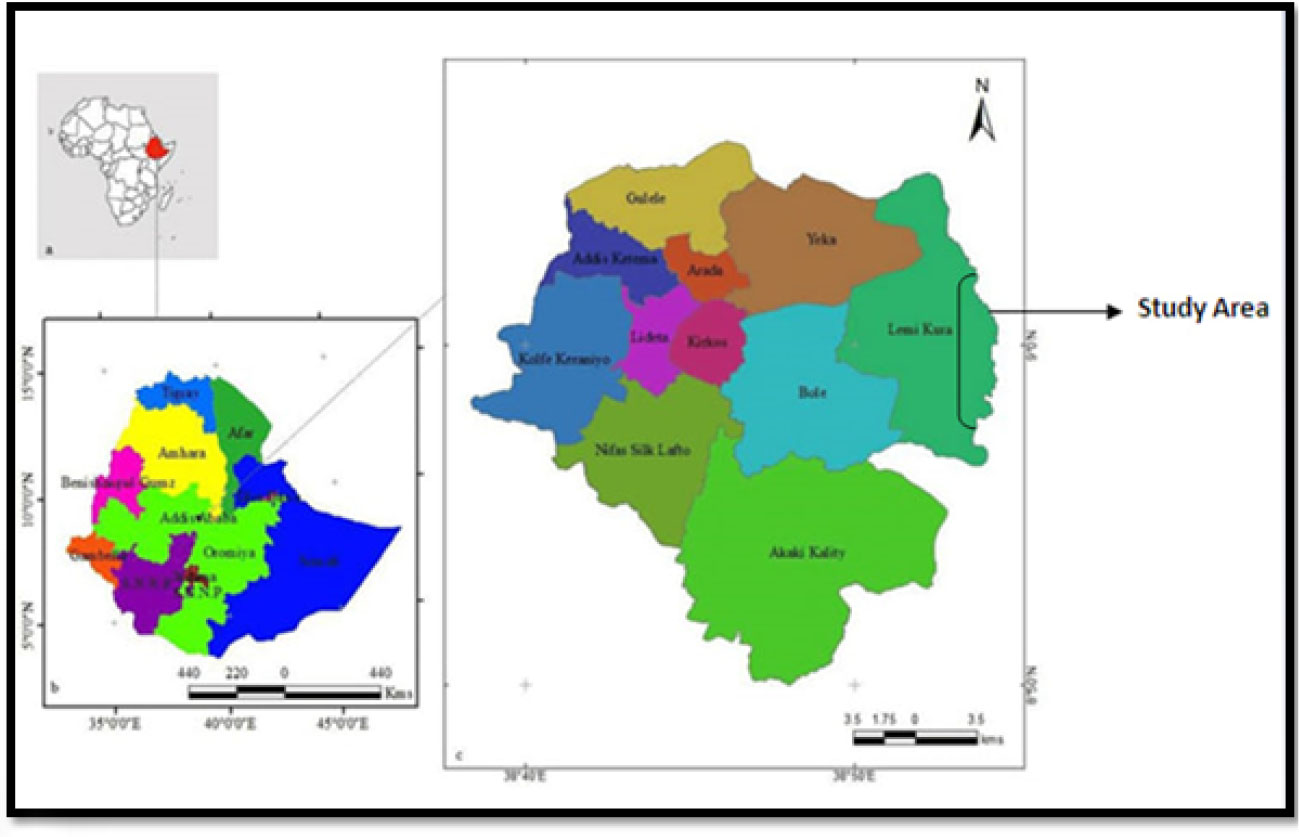
Fig. 1.
Map of the study area, Addis Ababa with sub-cities
Source: Ethio GIS, 2022.
Between 1997 and 2018, approximately 12,000 households in Lemmi Kura had their farms expropriated, primarily due to government-led condominium construction and private real estate development projects in Woredas 2, 3, 4, 5, 6, 13, and 14. Companies such as Ayat, Sunshine, Gift, Haile, and Addis Mender Real Estates have been involved in these projects, highlighting the role of both the public and private sectors in driving urban growth. Woredas 2, 6, and 14 of Lemmi Kura experienced the most displacement, with residents and farmers relocated to make way for new development.
Research design
The research employed a mixed-methods approach, combining a household survey with binary logistic regression analysis. Both quantitative and qualitative methods were essential for addressing the central research concerns. Based on the literature reviewed, the researcher chose to collect quantitative data from two sample groups of households: those that had been evicted and those that had not.
Sampling frame
The research includes two independent sample groups: the “treatment” and “comparison” groups, or the “displaced” and “non-displaced” groups of farming households. Therefore, the sampling frame consists of the complete list of displaced households from treatment villages and non-displaced households from comparison villages. The household lists were obtained from the Lemmi Kura Sub-City Urban Agriculture and Rehabilitation Office and the Kura Jidda Woreda Agriculture Office.
Target population
The study area has experienced significant displacement due to urban expansion, with over 12,000 households affected. However, the research specifically targeted a subset of 415 households that received direct monthly support from the City Administration. This purposive sampling approach allowed for a more focused examination of the impacts on households most directly affected by displacement and receiving government assistance.
Multi-stage random sampling procedure
A multi-stage random sampling technique was used to select sample households from both “treatment” and “comparison” villages:
Stage 1. Purposive selection of sample woredas
Three woredas (Woreda 2, 6, and 14) were purposively selected from the eight woredas in Lemmi Kura sub-city, Addis Ababa. This selection was based on the concentration of displaced households receiving direct support from the city administration.
Stage 2. Random selection of displaced households
A random sample of 223 displaced households was drawn from the list of households receiving monthly financial support from the city administration. The sample size was proportionally allocated across the selected woredas based on their respective populations.
Stage 3. Selection of comparison households
An equal number of control households (223) were selected from Kura Jidda Woreda in Sheger City, chosen for its proximity to Lemmi Kura and its status as the only nearby woreda with non-displaced households suitable for comparison.
Systematic random sampling
Within each selected woreda, systematic random sampling was used to select the final study samples. This method involved choosing every nth item from the population list, with n representing a predefined interval. This approach ensured a balanced representation of the population and minimized potential bias.
Sample size determination
The sample size was calculated using the Taro Yamane formula for known populations:
Where:n = sample size
N = population size (415 households receiving direct support)
e = margin of error (0.05)
Applying the formula:
To account for potential non-responses, a 10% contingency was added, increasing the sample size to 223 for the displaced group. An equal sample size was selected for the non-displaced comparison group, resulting in a total sample of 446 households.
Data collection
This study utilized a mixed-methods approach, combining quantitative and qualitative data collection techniques to provide a comprehensive analysis of the impacts of urban expansion on peri-urban livelihoods in Ethiopia. The data collection process was carefully designed to ensure reliability, validity, and triangulation of information from multiple sources.
Household durvey
Quantitative data were gathered through structured questionnaires administered to sample households in both treatment (displaced) and control (non-displaced) groups. The questionnaires addressed a broad range of household characteristics related to livelihood capital and outcomes.
To ensure the quality and consistency of data collection, several measures were implemented. Ten experienced data enumerators and two supervisors participated in a two-day intensive training program. Following the training, a pilot test of the questionnaire was conducted, leading to revisions and the removal of unsuitable or unnecessary questions. A pilot study involving 5% of the sample households was performed to ensure data reliability. The Cronbach Alpha test was used to assess reliability and validity, with a coefficient of 0.81 deemed satisfactory, falling within the acceptable range for internal consistency.
Data collection was conducted using Computer-Assisted Personal Interviewing (CAPI), with custom software designed for each question to minimize data entry errors and streamline the collection process. The survey was conducted from February 22 to April 15, 2024. Throughout the process, supervisors made regular field visits to monitor data quality and ensure adherence to ethical standards.
Focus Group Discussions (FGDs) and key informant interviews
Qualitative data were collected through Focus Group Discussions (FGDs) and Key Informant Interviews (KIIs) to complement and triangulate the quantitative data. FGDs were conducted in Woredas 2, 6, and 14 from Lemmi Kura Sub-City, with distinct semi-structured questionnaires developed for displaced and non-displaced groups. Over 12 FGDs were held, with four conducted in each sample Woreda, and separate groups for adult males and females from both displaced and non-displaced populations. Each FGD consisted of 6–12 participants.
With participants' consent, FGDs were recorded using a tape recorder to ensure accurate and comprehensive documentation of discussions. This approach allowed the interviewer to focus entirely on facilitating the conversation. By conducting FGDs with various demographic groups across multiple Woredas, the researcher ensured data triangulation, thereby enhancing the validity, reliability, and trustworthiness of the information gathered.
The sample size for the qualitative portion was determined based on established guidelines, with a minimum of 12–26 individuals included. At least 25 key informants, purposefully selected from both displaced and non-displaced groups, participated in in-depth interviews, each lasting approximately one hour. Recorded data were transcribed and entered into a computer for subsequent narrative, descriptive, and content analysis.
Data analysis
For data analysis, inferential statistics, including the Sustainable Livelihood Security Index (SLSI) and the binary logistic regression model, were employed.
Sustainable Livelihood Security Index (SLSI)
The Sustainable Livelihood Security Index (SLSI) was used as the primary analytical tool to quantify livelihood capitals and analyze variations in sustainable livelihood security parameters between displaced and non-displaced households. This approach builds on previous applications of the SLSI in assessing livelihood security, such as Singh and Hiremath's (2010) study in Gujarat, India, which examined the impacts of urban growth on living standards.
Each component was quantified using relevant indicators, which were then standardized and weighted to create individual security indices. The formula used for standardization was:
Where xi is the ith measurement of the variable, x is the average value, and S is the standard deviation.The composite SLSI was then calculated using the formula:
Where HLSi represents the Household Livelihood Security for each component, and Wi is the weight assigned to each component.This approach to quantifying livelihood security through a composite index allows for a comprehensive assessment of the multidimensional impacts of displacement on household well-being (Scoones, 1998). By incorporating multiple components, the SLSI provides a more holistic measure compared to single-factor assessments (DFID, 1999).
Binary Logistic Regression Model
The study employed binary logistic regression to analyze factors influencing the sustainability of livelihood security (SLS) in sample groups of households. Data for this analysis were collected through a survey of 446 households. The dependent variable, Sustainable Livelihood Security (SLS), was binary coded, with 0 representing “not secured” and 1 representing “secured”. The independent variables included various indicators of sustainable livelihood security, as well as demographic factors.
The logistic regression model is presented as follows:
Where:The subscript i is the ith observation in the sample
PX is the probability that an event occurs for an observed set of variables X1i
PX is the probability that the farmer is a victim of urban expansion.
β0 is the intercept term, and β1, β2…βk are the coefficients of the explanatory variables X1, X2... Xu.
This model facilitates the examination of how capital assets affect households' livelihood security, particularly in the context of displacement caused by urbanization.
Through these analytical methods, the study aims to provide a comprehensive understanding of the effects of urban expansion and forced eviction on sustainable livelihood security in peri-urban Ethiopia, specifically in the Lemmi Kura sub-city of Addis Ababa.
The livelihood security status of households is dichotomous, where a value of 1 indicates that the household has a secured sustainable livelihood and 0 indicates otherwise. The logistic regression model is expressed as follows:
Where:p – is the probability that a case belongs to category 1
p/(1 – p) is the odds ratio
a – is a constant
n – is the number of predictors
b1 to bn are the regression coefficients
x1 to xn are the independent variables (livelihood assets)
This model allows for a detailed examination of the impacts of capital assets on households' livelihood security, with a particular focus on urbanization-induced displacement.
RESULTS AND DISCUSSION
Descriptive statistics
The study sample consisted of 446 households, evenly split between evicted (223) and non-evicted (223) groups. Descriptive statistics revealed significant differences between these groups in terms of various socioeconomic and demographic characteristics.
Demographic characteristics
The mean age of household heads was 55.6 years for evicted households and 49.4 years for non-evicted households (Table 1). Male-headed households were predominant in both groups, comprising 61.5% of evicted households and 82.06% of non-evicted households (Table 2).
Table 1.
Age category of household members (numbers)
| old and unproductive age above 60 years | productive age 18–60 years | |||
|---|---|---|---|---|
| Non-evicted | 49.4 | 45 | 178 | 223 |
| Evicted | 55.6 | 86 | 137 | 223 |
| Total | 131 | 315 | 446 |
Table 2.
Gender of the household head
| female | male | |||
|---|---|---|---|---|
| Non-evicted HH | 40 | 183 | 223 | 0.8206 |
| Evicted HH | 86 | 137 | 223 | 0.6145 |
| Total | 126 | 320 | 446 |
Educational attainment was generally low across both groups. Notably, 88.79% of non-evicted and 83.86% of evicted households had wives having no formal education or education below secondary school level. However, evicted households exhibited slightly higher rates of secondary and tertiary education (Table 3).
Table 3.
Education level of the respondent's wife
| not educated (below secondary school) | secondary school and above | ||
|---|---|---|---|
| Non-evicted HH | 198 (88.79%) | 25 (11.21%) | 223 |
| Evicted HH | 187 (83.86%) | 36 (16.14%) | 223 |
| Total | 385 (86.32%) | 61 (13.68%) | 446 |
Evicted households had a larger average family size (4.71 members) compared to non-evicted households (4.94 members). The dependency ratio for family members of evicted households was 63%, higher than the 50% dependency ratio observed in non-evicted households (Table 4).
Economic characteristics
The average annual income for evicted households (82,187 ETB) was significantly lower than that of non-evicted households (201,117 ETB), highlighting a substantial economic impact of displacement.
The study also revealed notable differences in household employment patterns between evicted and non-evicted families. On average, 1.76 family members from evicted households participated in productive activities, compared to 2.45 members in non-evicted households (Table 4). A striking disparity was observed in households with multiple working members: 80% of non-evicted households had two or more family members engaged in income-generating activities, while only 51% of evicted households reached this threshold (Table 4). These findings suggest that displacement has significantly affected employment opportunities and the economic engagement of displaced families (Table 5).
Land ownership
The study reveals significant disparities in land ownership between evicted and non-evicted households, highlighting the profound impact of urban expansion on peri-urban communities.
Cropland and grazing land: prior to eviction, 92.4% of evicted households owned farmland, with an average of 2.45 hectares of cropland and 0.71 hectares of grazing land. This ownership was substantially reduced post-eviction, with only 12.6% retaining land, averaging just 0.34 hectares of cropland and 0.18 hectares of grazing land. In contrast, 89.7% of non-evicted households maintained consistent land ownership, with an average of 1.46 hectares of cropland and 0.44 hectares of grazing land (Table 6).
Table 6.
Land ownership by respondent category
| Status of eviction | Cropland owned post eviction | Cropland owned peri-eviction | Grazing land owned post eviction | Grazing land owned peri-eviction | Residential area owned post eviction | Residential area owned peri-eviction |
|---|---|---|---|---|---|---|
| (ha) | (m2) | |||||
| Evicted HHs | 0.34 | 2.45 | 0.1820 | 0.7109 | 583 | 923 |
| Non-evicted HHs | 1.46 | 1.46 | 0.4384 | 0.4384 | 928 | 928 |
Residential land: the impact of eviction is also evident in residential land ownership. Non-evicted households owned an average of 928 m2 of residential land throughout the study period. Evicted households, however, experienced a significant reduction in residential land, from an average of 923 m2 pre-eviction to 583 m2 post-eviction (Table 6).
These findings underline the substantial loss of land resources experienced by evicted households:
Cropland: An 86.1% reduction (from 2.45 ha to 0.34 ha)
Grazing land: A 74.4% reduction (from 0.71 ha to 0.18 ha)
Residential land: A 36.8% reduction (from 923 m2 to 583 m2).
The data clearly demonstrates the profound impact of urban expansion on the land resources of peri-urban farming communities, threatening their agricultural livelihoods and overall economic stability. The significant decline in land ownership among evicted households likely exacerbates their vulnerability and diminished livelihood security, underscoring the urgent need for more inclusive urban development policies and holistic support for displaced communities.
Sustainable Livelihood Security Index (SLSI) analysis
The SLSI analysis revealed notable disparities between evicted and non-evicted households across all eight components of livelihood security (see Table 7).
Table 7.
Comparison of SLSI components between evicted and non-evicted households
| SLS Components | Evicted HH (n = 223) | Non-evicted HHs (n = 223) | Difference (non-evicted – evicted) | Median (n = 446) |
|---|---|---|---|---|
| Economic security | 0.1255 | 0.2008 | −0.0753 | 0.1196 |
| Social security | 0.3467 | 0.4888 | −0.1420 | 0.3333 |
| Land security | 0.1678 | 0.2673 | −0.0995 | 0.1646 |
| Human capital security | 0.3760 | 0.4331 | −0.0570 | 0.4285 |
| Physical capital security | 0.4244 | 0.3110 | 0.1134 | 0.3416 |
| Infrastructural service security | 0.8670 | 0.6794 | 0.1876 | 0.8333 |
| ICT security | 0.3372 | 0.2058 | 0.1314 | 0.2 |
| Food security | 0.1166 | 0.6807 | −0.5641 | 0.2 |
| Composite SLSI | 0.3452 | 0.4084 | −0.0632 | 0.3695 |
The results demonstrate that evicted households consistently scored lower across all SLSI components. The most pronounced disparities were observed in food security (−0.5641), land security (−0.09947), and social capital security (−0.142). The composite SLSI score for evicted households (0.3452) was significantly lower than that of non-evicted households (0.4084), highlighting the overall negative impact of displacement on livelihood security.
Binary logistic regression results
The binary logistic regression analysis provided valuable insights into the factors influencing sustainable livelihood security among the sampled households (Table 8).
Table 8.
Binary logistic regression results for sustainable livelihood security
| lower | upper | |||||||
|---|---|---|---|---|---|---|---|---|
| Eviction category(1) | −2.563 | .625 | 16.810 | 1 | .000 | .077 | .023 | .262 |
| Gender household head | .375 | .428 | .768 | 1 | .381 | 1.455 | .629 | 3.365 |
| Age category | −.374 | .318 | 1.386 | 1 | .239 | .688 | .369 | 1.282 |
| Family size category | −.343 | .304 | 1.272 | 1 | .259 | .710 | .391 | 1.288 |
| Family member engaged | .123 | .317 | .150 | 1 | .698 | 1.131 | .608 | 2.103 |
| Marital status category | .130 | .444 | .086 | 1 | .769 | 1.139 | .477 | 2.721 |
| Wife education level | .495 | .445 | 1.239 | 1 | .266 | 1.641 | .686 | 3.924 |
| Household head education level | .235 | .395 | .354 | 1 | .552 | 1.265 | .583 | 2.743 |
| Economic security | .849 | .284 | 8.951 | 1 | .003 | 2.337 | 1.340 | 4.076 |
| Social security | 2.817 | .429 | 43.190 | 1 | .000 | 16.722 | 7.219 | 38.736 |
| Land security | 1.769 | .354 | 24.997 | 1 | .000 | 5.864 | 2.931 | 11.732 |
| Physical capital security | 1.541 | .353 | 19.017 | 1 | .000 | 4.669 | 2.336 | 9.333 |
| Human security | .800 | .283 | 7.992 | 1 | .005 | 2.226 | 1.278 | 3.877 |
| Infrastructural service access security | 1.878 | .386 | 23.678 | 1 | .000 | 6.538 | 3.069 | 13.927 |
| ICT security | 1.688 | .320 | 27.785 | 1 | .000 | 5.409 | 2.888 | 10.132 |
| Food security | 1.510 | .506 | 8.925 | 1 | .003 | 4.529 | 1.681 | 12.200 |
| Constant | −5.413 | .713 | 57.639 | 1 | .000 | .004 |
The regression results indicate that eviction status is the strongest predictor of sustainable livelihood security. Evicted households are 92.3% less likely to have secured sustainable livelihoods compared to non-evicted households (OR = 0.077, p < 0.001). Other significant factors positively influencing SLS include education level, land ownership, income, social capital, and physical asset ownership. In contrast, older age and larger family size were associated with a lower likelihood of SLS.
DISCUSSION
This study investigated the impact of urbanization-induced displacement on the sustainable livelihood security (SLS) of evicted households in peri-urban areas of Addis Ababa, Ethiopia. The findings underscore the significant and multifaceted negative consequences of forced eviction on various dimensions of livelihood security. This discussion explores the key results and situates them within the broader literature on forced eviction, urbanization, and sustainable livelihoods.
Overall impact on sustainable livelihood security
The study found that evicted households had significantly lower overall Sustainable Livelihood Security Index (SLSI) scores compared to non-evicted households (0.345166 vs. 0.408361). This finding aligns with a growing body of research highlighting the detrimental effects of forced eviction on livelihood security and well-being. For example, Vanclay (2017) reviewed multiple case studies globally and concluded that forced displacement consistently leads to impoverishment and a reduced quality of life for affected communities. Similarly, Cernea and McDowell's (2000) Impoverishment Risks and Reconstruction model identifies several risks associated with forced displacement, including landlessness, joblessness, homelessness, marginalization, food insecurity, loss of access to common property resources, and social disarticulation—many of which are reflected in the current study's findings.
The logistic regression analysis further emphasized the profound impact of eviction, with evicted households being 92.3% less likely to have secured sustainable livelihoods compared to non-evicted households. This stark disparity underscores the severe and long-lasting consequences of forced eviction on peri-urban farming communities. These findings align with research by Yntiso (2008) in Ethiopia, which found that displaced peri-urban farmers faced significant challenges in reestablishing their livelihoods and often experienced a decline in living standards.
Economic Security and Income
The study revealed a substantial income gap between evicted and non-evicted households, with average annual incomes of 82,187 ETB and 201,117 ETB, respectively. This economic disparity is reflected in the lower economic security scores for evicted households (0.125514 vs. 0.200814). The loss of agricultural livelihoods and inadequate compensation appear to be key factors contributing to this economic vulnerability.
These findings align with research by Adam (2014) in Bahir Dar, Ethiopia, which found that land expropriation led to significant income reductions for displaced peri-urban farmers. Similarly, Gebremeskel et al. (2020) documented substantial decreases in household income and asset ownership among displaced farmers in Addis Ababa. The economic challenges faced by evicted households often persist long after displacement, as noted by Admasu et al. (2019) in their study of land expropriation impacts in Bahir Dar.
The qualitative data from this study offer rich insights into the lived experiences of economic hardship following eviction. Participants described struggles to meet basic needs, adapt to new livelihoods, and maintain pre-displacement standards of living. These narratives echo findings from other qualitative studies in Ethiopia, such as Kasa et al. (2011), which documented the economic and social disruptions faced by peri-urban farmers displaced by urbanization.
Land Security and Agricultural Livelihoods
One of the most striking disparities observed was in land security, with evicted households scoring significantly lower (0.167836) compared to non-evicted households (0.267303). The study documented a dramatic reduction in land ownership among evicted households, with cropland decreasing by 86.1% and grazing land by 74.4%. This loss of land resources has profound implications for agricultural livelihoods and food security.
The importance of land for rural and peri-urban livelihoods in Ethiopia has been extensively documented in the literature. Bezu and Holden (2014) emphasize that land is not only an economic asset but also a source of social identity and security for rural households. Therefore, the loss of land through forced eviction represents a multifaceted form of dispossession. Tura (2018) argues that the current land tenure system in Ethiopia, which vests ownership in the state, leaves peri-urban farmers particularly vulnerable to displacement as cities expand.
The qualitative data from this study powerfully demonstrates the profound emotional and cultural significance of land loss. Participants described feeling ‘robbed’ not only of economic resources, but of their dignity, identity, and way of life. This finding aligns with the anthropological research by Pankhurst and Piguet (2009), which examines the cultural and psychological impacts of displacement in Ethiopia.
Food security
The study revealed a stark disparity in food security scores between evicted (0.116592) and non-evicted (0.680717) households. This indicates that forced eviction has significantly undermined the ability of displaced households to maintain food security, likely due to the loss of agricultural land and the disruption of established food production systems.
These findings are consistent with other research on the food security impacts of urbanization and displacement in Ethiopia. For instance, Eshetu and Beshir (2017) found that urban expansion in Addis Ababa led to reduced food production and increased food insecurity among peri-urban farming communities. Similarly, Gebremeskel et al. (2020) documented higher rates of food insecurity among households displaced by urban expansion compared to non-displaced households.
The qualitative data from this study provides poignant insights into the human face of food insecurity, with participants recounting their struggles to provide adequate nutrition for their families, including children going to bed hungry. These personal narratives underscore the urgent need for more comprehensive support and livelihood restoration programs for displaced communities.
Social capital and community disruption
The study found lower social capital security scores among evicted households (0.346786) compared to non-evicted households (0.488789), indicating a profound disruption of social networks and community support systems. This finding aligns with Cernea's (2003) concept of social disarticulation, which identifies the breakdown of social ties as a key risk of forced displacement.
The qualitative data provides valuable insights into the social and psychological impacts of community disruption. Participants described the loss of traditional support systems, the scattering of families, and a sense of isolation in new environments. These findings are consistent with research by Abebe and Hesselberg (2015), which documented the social fragmentation and loss of community cohesion experienced by displaced communities in Addis Ababa.
The erosion of social capital affects more than just immediate social support; it has broader implications for livelihood security. As Bebbington (1999) argues, social capital is essential for livelihood strategies and can facilitate access to other forms of capital. Therefore, the disruption of social networks may exacerbate the overall insecurity of livelihoods.
Human Capital and Education
The study found slightly lower human capital security scores for evicted households (0.376041) compared to non-evicted households (0.433056). While the disparity is less pronounced than in other areas, qualitative data suggests significant challenges in maintaining education and skills development following displacement.
Participants shared experiences of being unable to afford school fees and having to prioritize immediate survival over long-term investments in human capital. This aligns with findings from Gebremeskel et al. (2020), who found that displacement adversely impacted educational outcomes for children in affected households.
The long-term implications of reduced investment in human capital are concerning. As Becker (1994) argues, human capital is a key driver of economic growth and individual prosperity. Disruptions to education and skills development may, therefore, have intergenerational impacts on livelihood security and social mobility.
Physical capital and infrastructure
Interestingly, the study found higher physical capital security scores for evicted households (0.424375) compared to non-evicted households (0.311008). Similarly, evicted households showed higher scores for infrastructural service security (0.866966 vs. 0.679372) and ICT security (0.33722 vs. 0.20583).
These unexpected findings may reflect the relocation of evicted households to areas with superior infrastructure and better access to services. However, these results should be interpreted with caution. As Cernea (2003) argues, improved access to services does not necessarily offset the broader loss of livelihood security experienced by displaced communities.
The qualitative data provides critical perspectives, with participants describing difficulties in adapting to new urban environments despite potentially improved infrastructure. This underscores the need for a comprehensive perspective on livelihood security, one that goes beyond physical assets and considers the complex interplay of multiple forms of capital.
Compensation and resettlement
The study's findings highlight significant shortcomings in current compensation and resettlement practices. Participants reported receiving compensation that was inadequate and failed to reflect the true value of their lost land and livelihoods. This aligns with critiques by scholars such as Yntiso (2008) and Admasu et al. (2019), who argue that compensation schemes in Ethiopia often fail to fully address the long-term livelihood impacts of displacement.
The preference expressed by participants for land-based compensation over cash payments echoes findings from other contexts. For example, Cernea and McDowell (2000) argue that land-for-land compensation is often more effective in restoring livelihoods for agriculturally-based communities. The findings of the present study support calls for more flexible and context-sensitive compensation mechanisms that prioritize livelihood restoration over one-time cash payments.
Policy implications
The findings of this study have significant implications for urban development and displacement policies in Ethiopia and beyond. The stark disparities in livelihood security between evicted and non-evicted households underscore the urgent need for more equitable and sustainable approaches to urban expansion.
Several key policy recommendations emerge:
Improved compensation and resettlement strategies: There is a pressing need for more comprehensive support mechanisms that go beyond one-time cash payments. This could include skills training, alternative livelihood development programs, and long-term economic integration strategies. Compensation for displaced peri-urban farmers should reflect the true, intergenerational value of their land and livelihoods – not merely the crop yield for a limited period. Given the irreplaceable nature of farm-based livelihoods and their ancestral significance, compensation should take the form of substantial equity in commercial buildings and residential developments that generate significant profits at the cost of displaced farmers' land.
Land rights and tenure security: The critical role of land in livelihood security underscores the need for reforms in land tenure systems. These reforms should aim to provide greater security for peri-urban farmers and could include mechanisms such as partial land retention or equitable land-sharing arrangements in urbanizing areas.
Participatory planning: The study emphasizes the importance of involving affected communities in decision-making processes related to urban expansion and compensation. This aligns with growing calls for more participatory approaches to development-induced displacement (Penz et al., 2011).
Social capital preservation: Resettlement policies should prioritize maintaining community cohesion wherever possible, recognizing the pivotal role of social networks in livelihood security. Where cohesion cannot be preserved, policies should include support measures to help rebuild social capital in new environments.
Targeted support for vulnerable groups: The findings on age and family size highlight the need for tailored assistance programs for older household heads and larger families, who may face greater difficulties in adapting to urban livelihoods.
Food security interventions: The stark disparities in food security scores call for targeted nutrition support and agricultural livelihood restoration programs to assist displaced communities.
Human capital development: Policies should ensure sustained access to education and skills development opportunities for displaced households to enhance long-term livelihood security and social mobility.
CONCLUSION AND FUTURE RESEARCH DIRECTIONS
This study provides a comprehensive assessment of the impacts of urbanization-induced displacement on the sustainable livelihood security of peri-urban households in Addis Ababa, Ethiopia. The findings demonstrate profound and multifaceted negative effects of forced eviction, particularly in relation to land security, economic well-being, and food security.
The research makes significant contributions to the growing body of literature on urbanization and sustainable livelihood security by:
Quantifying the comprehensive impacts of displacement using a multidimensional Sustainable Livelihood Security Index (SLSI).
Identifying key factors that influence sustainable livelihood security in the context of urban expansion, particularly highlighting the pivotal role of land ownership, education, and social capital.
Demonstrating the long-term and systemic nature of displacement impacts, which extend beyond immediate economic losses to disrupt social structures, human capital, and overall well-being.
In conclusion, as Ethiopia and other developing countries undergoing rapid urbanization, addressing the challenges outlined in this study is essential for ensuring that urban growth contributes to sustainable and equitable development. Particular focus must be placed on peri-urban areas, where communities are often most vulnerable to the negative effects of swift urban expansion.