
Figure 1
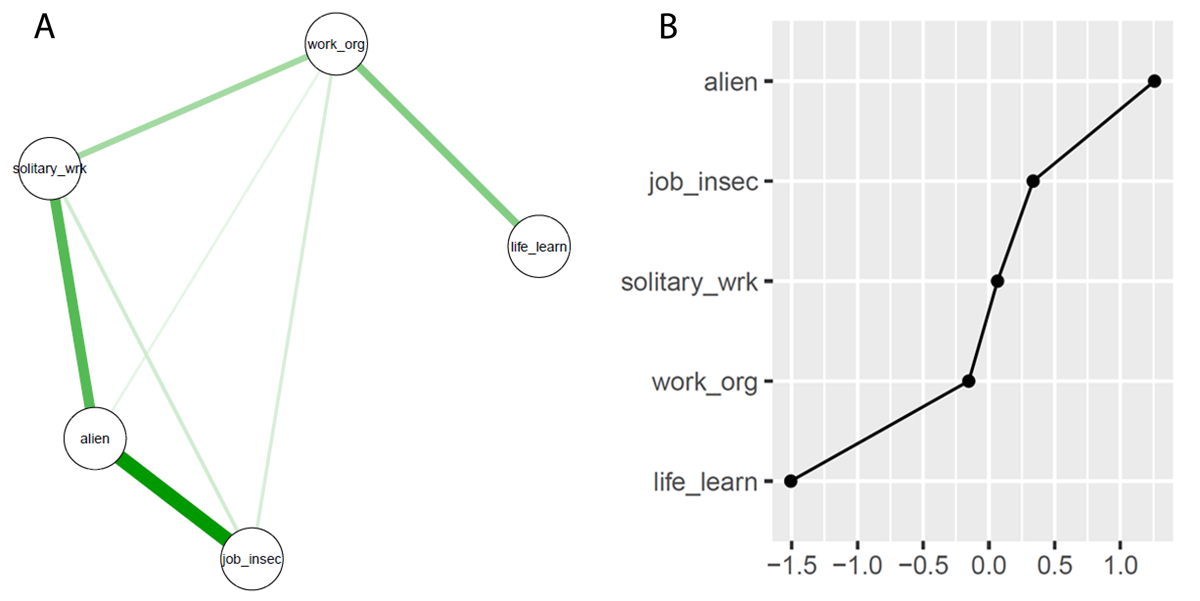
A: Regularized partial correlation network structure containing the five items of technological concerns for future work. Green lines represent positive partial correlations, while the thickness indicates strength of connection. B: Expected influence metrics for each item.
Work_org: Technology will, to a greater extent, determine the organization of work.
Life_learn: There will be a need for lifelong learning.
Job_insec: New technologies will lead job insecurity because tasks are taken over by machines and robots.
Alien: Employees will experience alienation from work because of automation and robotization.
Solitary_wrk: There will be more solitary work.
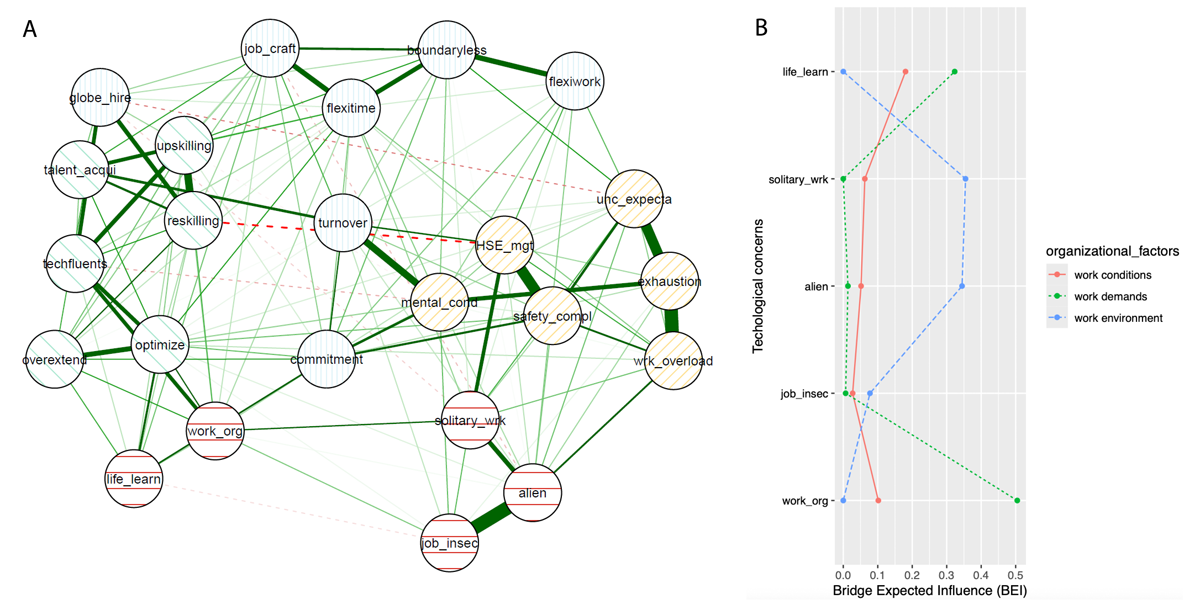
Figure 2
A: Regularized partial correlation network of technological concerns for future work, organizational work environment, conditions and demands. B: Bridge expected influence values for each item of technological concern for future work and their connections to organizational work environment, conditions, and demands. BEI = Bridge expected influence. Green and red lines in the network model represent positive and negative partial correlations, respectively, while the thickness indicates strength of connection. Solid and dotted lines represent significant and non-significant partial correlations.