
Table 1
Combinations of search terms.
| RECOVERY | AND | NON-STANDARD WORK | OR | NON-STANDARD WORK SCHEDULES |
|---|---|---|---|---|
| Recovery | Shift work | |||
| Psychological detachment | Telework | Non-standard schedules | ||
| Relaxation | Remote work* | Work* schedules | ||
| Mastery | Telecommuting | Rotating shifts | ||
| Flexible schedules | ||||
| Control | Work* from home | Night shift* | ||
| On-call work* |
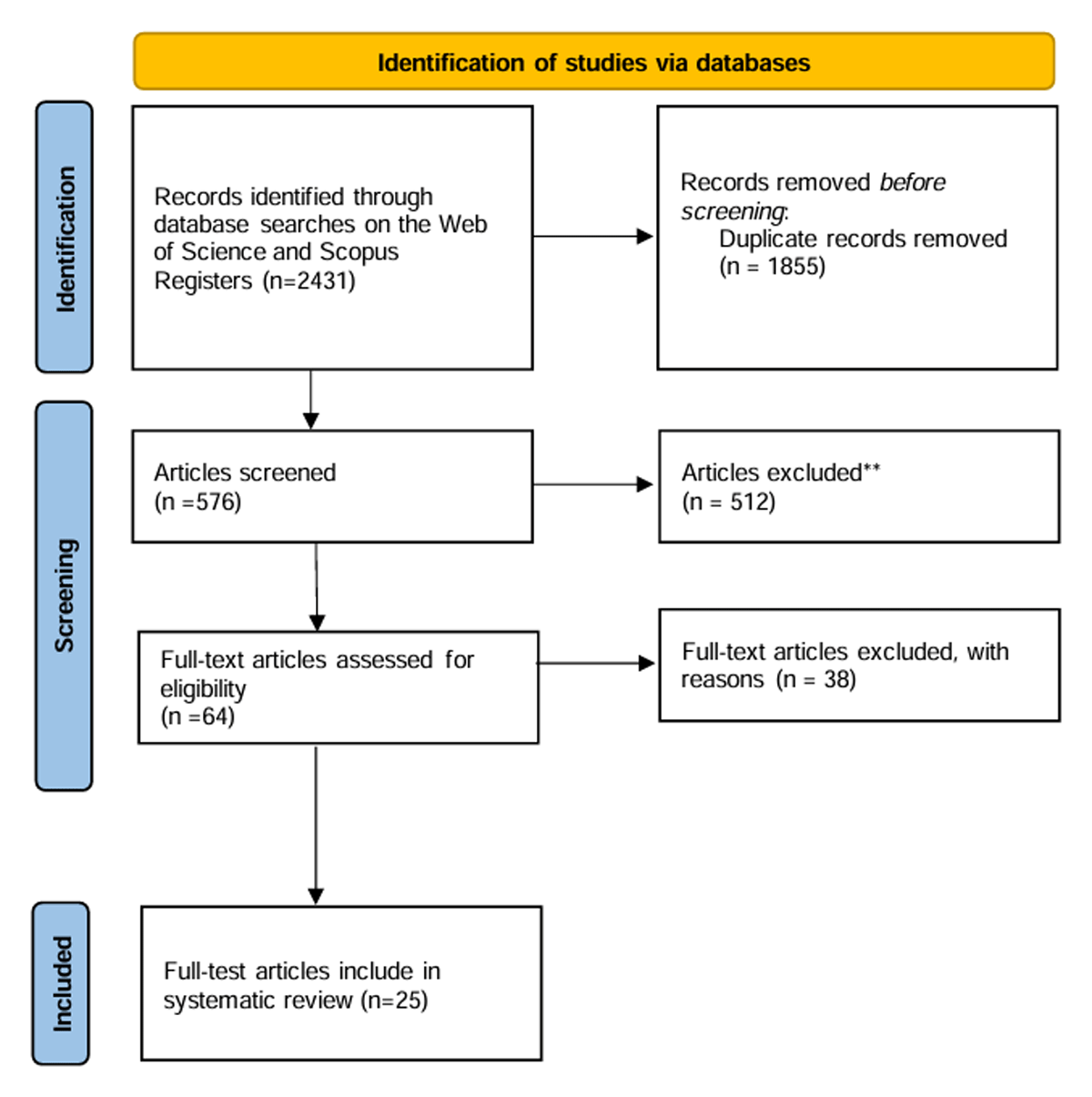
Figure 1
PRISMA flowchart (Moher et al. 2009).
Table 2
Key findings on the impact of non-standard working schedules on the recovery experience.
| AUTHOR AND YEAR | STUDY DESIGN | WORK CONTEXT | MEDIATOR | OUTCOME | RESULTS |
|---|---|---|---|---|---|
| Querstret & Cropley 2012 | Cross-sectional | Rotating shifts, night shifts and weekend work | — | Psychological detachment (PD) | Rotating shifts, night shifts and weekend work are not associated with PD. |
| Garraio et al. 2023 | Cross-sectional | Irregular standard schedules | — | PD | Irregular standard schedules negatively impact PD. |
| Combinations of NSWS | Number of hours worked per week | PD, relaxation, and control | A higher number of hours worked per week negatively impacts PD, relaxation and control. | ||
| Ziebertz et al. 2020 | Cross-sectional | On-call | — | PD, relaxation and control | On-call work negatively affects PD, relaxation and control. |
| Drach-Zahavy & Marzuq 2013 | Longitudinal | Two midweek days off | — | Relaxation, mastery and control | Taking two midweek days off negatively impacts relaxation, control and mastery. |
| Dettmers et al. 2016 | Diary study | On-call | Extended availability | PD and control | Extended availability during on-call shifts negatively affects PD and control. |
Table 3
Key findings on the impact of telework on the recovery experience.
| AUTHOR AND YEAR | STUDY DESIGN | WORK CONTEXT | MEDIATOR | EMPLOYEE CHARACTERISTICS | OUTCOME | RESULTS |
|---|---|---|---|---|---|---|
| Ghislieri et al. 2023 | Longitudinal | Telework | — | — | Overall recovery experience | Telework had a positive relationship with recovery before the pandemic. |
| Ghislieri et al. 2023 | Longitudinal | Telework | — | — | Overall recovery experience | Telework was not associated with recovery during the lockdown period. |
| Gillet et al. 2023 | Cross-sectional | Telework | — | — | Psychological detachment (PD), relaxation; mastery and control | Telework positively impacted PD but was not associated with relaxation, mastery or control. |
| Mache et al. 2020 | Longitudinal | Telework | — | — | PD | Telework had a positive relationship with PD. |
| Tejero et al. 2021 | Cross-sectional | Telework | — | — | PD | Telework had a negative relationship with PD. |
| Cheng & Zang 2022 | Longitudinal | Telework | Telework hours | — | PD | Longer telework hours negatively affected PD. |
| Cheng & Zang 2023 | Longitudinal | Telework | Telework hours | — | PD | Longer telework hours negatively affected PD. |
| Varga & Denniston 2022 | Cross-sectional | Telework | Telework hours | — | PD, relaxation, mastery and control | Telework hours were not associated with PD or mastery but negatively impacted relaxation and control. |
| Lazauskaitė-Zabielskė et al. 2023 | Longitudinal | Telework | Higher overwork climate | — | PD | A high overwork climate negatively affected PD, with stronger effects for full-time teleworkers. |
| Mascarenhas et al. 2024 | Cross-sectional | Telework | Work-family boundary violations | — | PD | Boundary violations between work and family negatively affected PD. |
| Dolce et al. 2020 | Cross-sectional | Telework | Job demands | — | Overall recovery experience | Job demands negatively impacted recovery. |
| Job resources | Destructive leadership | Overall recovery experience | Job resources positively influenced recovery, though their effects were weakened by destructive leadership. | |||
| — | Caring for family members | Overall recovery experience | Caring for family members negatively impacted recovery. | |||
| — | Gender | Overall recovery experience, psychological detachment, relaxation and mastery | Women teleworkers experienced poorer recovery outcomes, lower PD and lower mastery. | |||
| Molino et al. 2023 | Longitudinal | Telework | — | Caring for family members | Mastery | Caring for family members was not associated with mastery. |
| Ghislieri et al. 2021 | Cross-sectional | Telework | — | Caring for family members | Overall recovery experience | Caring for family members negatively impacted recovery. |
| Pérez-Nebra et al. 2022 | Cross-sectional | Telework | — | Gender | — | Women teleworkers had worse recovery and lower relaxation levels. |