
Crafting is a technique entailing proactively adjusting one’s work (i.e., job crafting) and non-work activities (i.e., off-job crafting) to meet one’s personal needs and goals (Berg et al., 2010; Petrou & Bakker, 2016; Tims & Bakker, 2010). Earlier crafting research has shown that job crafting efforts can be fostered with interventions (Gordon et al., 2018; van Wingerden et al., 2017b) and crafting one’s work activities to satisfy psychological needs can help employees to achieve better well-being at work (van Wingerden et al., 2017a). In the non-work domain, the importance of actively shaping one’s leisure and other off-job activities to enhance individuals’ psychological needs satisfaction and well-being has recently received more attention (Hu et al., 2020; Kujanpää et al., 2020; Newman et al., 2014). Yet only little research has been presented on the effectiveness of off-job crafting interventions, which is the focus of this paper.
As employees can exercise more control over their off-job time and there are no interfering job demands during non-work time, off-job time may offer more opportunities to engage in needs-satisfying activities than one’s working time (Ryan et al., 2010). We expect this, in turn, to yield enhanced well-being (i.e., subjective vitality) during non-work time. Moreover, we expect these processes not only to affect well-being during leisure time, but we also assume that spillover processes impact well-being at work (de Bloom et al., 2020).
In needs-based crafting, psychological needs form the key underlying mechanism of crafting (de Bloom et al., 2020). Psychological needs such as autonomy, competence and relatedness have been consistently recognized as fairly universal across all humans. Engagement in activities that satisfy these psychological needs is expected to lead to positive psychological outcomes such as optimal well-being (Deci & Ryan, 2000). More recently, Newman, Tay and Diener (2014) proposed the DRAMMA model to explain how engagement in leisure activities can lead to needs satisfaction and consequently to enhanced well-being. The model consists of six psychological needs: detachment, relaxation (referred to as “recovery” in the original model), autonomy, mastery, meaning, and affiliation. These six psychological needs formed the central framework of our hybrid needs-based off-job crafting intervention where employees were taught how to craft their off-job time in accordance with their needs.
Adapting the design of an existing job crafting intervention (van den Heuvel et al., 2015), we offered employees an intervention consisting of (1) two on-site training sessions, (2) following a self-composed off-job crafting plan and (3) using the Everydaily smartphone application to promote and support their off-job crafting efforts. Our main aim was to examine whether it is possible to enhance employees’ off-job crafting efforts, psychological needs satisfaction and well-being with a quasi-experimental design with multiple measurement points and a waitlist control comparison group.
Our study contributes to the crafting literature in three ways. First, interventions studying whether off-job crafting indeed yields positive effects in terms of needs satisfaction and well-being are so far rare, both in the non-work and the work domain. Our study design enables us to analyze the immediate and short-term effects of the intervention on people’s well-being. Moreover, the intervention enables us to analyze the data through growth modeling, through which we can examine both intra-individual and inter-individual effects of the intervention. Third, to understand participants’ intervention-related attitudes and behaviors, we conducted a process evaluation which provides in-depth insights in the liked and disliked features and mechanism of action of the off-job crafting intervention. Notably, we also hope to provide support for the idea of all six DRAMMA experiences being tailorable mechanisms that can be enhanced through our hybrid, four week off-job crafting intervention. Taken together, we contribute to the organizational intervention literature by offering a detailed effect- and process-driven evaluation of a new off-job crafting intervention.
Theory and Hypotheses
Psychological Recovery Processes during Off-Job Time
Off-job time is necessary for employees to mentally recover from excessive job demands (Geurts & Sonnentag, 2006). According to Sonnentag and Fritz (2007), there are four underlying mechanisms that promote employees’ recovery during off-job time: psychological detachment, relaxation, control, and mastery. More recently, Newman and colleagues (2014) complemented this model with two additional mechanisms: meaning and affiliation.
Detachment from work refers to mentally disengaging from all work-related matters, while relaxation describes low levels of mental, physical, and social activation and effort (Sonnentag & Fritz, 2007). In line with effort-recovery model, both experiences describe recovery processes during which no additional demands are placed on the same psychobiological systems that were utilized during work time, creating optimal conditions for recovery and preventing detrimental effects to one’s well-being (Meijman & Mulder, 1998). Contrasting the demands-reducing experiences, employees can also experience recovery by engaging in activities that may require some effort but will, in turn, help them to generate new resources (Hobfoll, 1989; Sonnentag & Fritz, 2007). For example, autonomy, one of the essential nutrients of human well-being proposed by the self-determination theory (SDT; Ryan & Deci, 2000) refers to the freedom to be in charge of one’s own decisions and behavior. Mastery entails learning opportunities and optimal challenges during one’s leisure time to experience feelings of achievement and competence (Sonnentag & Fritz, 2007). Mastery experiences can contribute positively to employees’ future resource accumulation, self-efficacy, and flow experiences (Bandura, 1977; Csikszentmihalyi, 1990; Hobfoll, 2002). Meaning describes engagement in off-job activities that add value and meaning to one’s life (Iwasaki, 2008). Affiliation refers to the need to experience relatedness and belongingness with other people, which is considered one of the basic psychological needs (Ryan & Deci, 2000).
A growing body of research shows that all six psychological experiences are important for promoting optimal functioning in the work and non-work domains (e.g., Kujanpää et al., 2020). For instance, all six DRAMMA experiences have been found to be associated with higher life satisfaction (Kujanpää et al., 2020; Sonnentag & Fritz, 2007; Virtanen et al., 2020). Therefore, we use the six positive DRAMMA experiences as the framework of our needs-based off-job crafting intervention.
Interventions to Promote Employees’ Needs-Based Crafting Efforts
While there is strong evidence in support of the positive relationships between all six DRAMMA dimensions and employees’ optimal well-being, relatively little is known so far about how employees themselves may proactively shape their non-work time to promote the satisfaction of these DRAMMA needs and whether these deliberate attempts can be supported with the help of a crafting intervention.
Drawing on SDT (Deci & Ryan, 2000), Parker and colleagues (2010) propose that proactive goal striving can present individuals with optimal challenges that can lead to the satisfaction of basic psychological needs. Furthermore, acting proactively can entail a feeling of being in charge of one’s own decisions and engaging in prosocial behaviors. Individual’s proactive strivings can therefore lead to enhanced needs satisfaction. Moreover, proactive individuals may be motivated to shape their environment to match their needs, which would consequently result in need satisfaction (Strauss & Parker, 2014; Tims & Bakker, 2010; Wrzesniewski & Dutton, 2001). The notions regarding proactive behaviors leading to needs satisfaction have already found empirical support in crafting research. For example, in their daily diary study, Bakker and Oerlemans (2019) showed that when employees crafted their work, they experienced higher autonomy and competence need satisfaction. Similarly, studies have found that employees’ job crafting efforts can lead to higher satisfaction needs for autonomy, competence, and relatedness (Slemp & Vella-Brodrick, 2014) and that weekly leisure crafting efforts were associated with relatedness and autonomy need satisfaction (Petrou & Bakker, 2016).
Drawing on the proactivity literature, we expect employees to be the proactive shapers of their off-job time in order to experience higher needs satisfaction. Leisure crafting was first proposed as a strategy to shape individuals’ leisure activities to experience more enjoyable and meaningful lives (Berg et al., 2010) and later defined as the “proactive pursuit and enactment of leisure activities targeted at goal setting, human connection, learning and personal development” (Petrou & Bakker, 2016). More recently, scholars have expanded the concept of leisure crafting to encompass both recreational leisure activities and other non-work activities that individuals may actively shape during their non-work time (e.g., “home crafting,” Demerouti, Hewett, et al., 2019). Furthermore, de Bloom and colleagues (2020) expanded the crafting concept by proposing that individuals engage in needs-based crafting efforts across various identity domains to satisfy their corresponding psychological needs. While earlier crafting concepts have focused on different crafting efforts to satisfy the basic needs, the identity-based integrative needs model of crafting proposes that employees specifically craft their activities to satisfy their corresponding psychological needs. This needs-based crafting concept is not bounded by specific behaviors that constitute as crafting but includes any activity that people engage in during their non-work time to satisfy their different needs (e.g., work breaks, leisure activities, house chores, volunteer work).
Overall, there is consistent evidence that job crafting behaviors in the work domain can be stimulated with interventions (for a meta-analysis, see Oprea et al., 2019). Within the non-work domain, it has been shown that participating in a training program designed to stimulate employees’ recovery experiences resulted in higher recovery experiences one and three weeks after the training program (Hahn et al., 2011). Consequently, we expected that our off-job crafting intervention could assist participants in shaping their own actions to facilitate higher psychological need satisfaction during non-work time. The intervention offered employees an opportunity to reflect on their current off-job crafting efforts and need satisfaction and to increase their knowledge and skills to engage in future off-job crafting efforts. Therefore, we proposed the following hypothesis:
Hypothesis 1. Employees in the intervention group will engage more in off-job crafting efforts during and after the intervention period compared to (a) baseline and (b) to the waitlist control group.
Off-Job Crafting to Enhance Psychological Needs Satisfaction and Well-Being
Empirical evidence from the work domain shows that job crafting can enhance psychological needs satisfaction (Slemp & Vella-Brodrick, 2014; Strauss & Parker, 2014). For instance, van Wingerden et al. (2017a) found that basic psychological needs satisfaction increased over time among participants in a job-crafting intervention.
Within the non-work domain, research has highlighted the importance of high-quality leisure that has the potential to fulfill individuals’ psychological needs and enhance well-being (Kuykendall et al., 2017). While crafting interventions in the non-work domain are still relatively rare, a recent intervention study by Hu et al. (2020) showed that a one-week online intervention where participants were daily instructed to engage in active leisure activities had the potential to enhance employees’ autonomy and competence need satisfaction, life satisfaction, and positive affect. Similarly, an intervention designed to promote engagement in activities that satisfy SDT needs during the COVID-19 pandemic yielded higher needs satisfaction and vitality in the intervention group compared to the control group (Behzadnia & FatahModares, 2020). Consistent with these findings, we hypothesized that:
Hypothesis 2. Participants will experience higher psychological need satisfaction during and after the intervention compared to (a) their own baseline (intra-individual effect) and (b) to the waitlist control group (inter-individual effect).
Interventions designed to promote employees’ active engagement in activities that support the enhancement of different DRAMMA experiences have resulted in well-being gains. For example, mindfulness-based interventions that supported employees in their attempts to experience more detachment and relaxation have been shown to enhance employee well-being by reducing stress (Burton et al., 2017; Khoury et al., 2015). Additionally, participation in an intervention that included park walks and relaxation exercises during employees’ lunchbreaks was shown to be related to feeling less fatigued the same afternoon (de Bloom, Sianoja, et al., 2017; Sianoja et al., 2018). Interventions where employees performed acts of kindness to help them to experience more meaning and affiliation have been found to have positive effects on well-being such as higher life satisfaction (Curry et al., 2018). As research has indicated that balanced need satisfaction could be important for optimal well-being, employees might benefit especially from crafting interventions where strategies to shape all six DRAMMA experiences are taught together (Kujanpää et al., 2020; Sheldon & Niemiec, 2006). In line with earlier findings, we expect that an off-job crafting intervention that integrates various DRAMMA elements has the potential to help employees in their off-job crafting efforts, resulting in improved well-being in the non-work domain.
Hypothesis 3. Participants will experience higher subjective vitality in the non-work domain during and after the intervention compared to (a) their own baseline (intra-individual effect) and (b) to the waitlist control group (inter-individual effect).
Moreover, we expect that participating in the off-job crafting intervention can also enhance employees’ well-being in the work domain via spillover processes (Edwards & Rothbard, 2000). As described by de Bloom and colleagues (2020) crafting outcomes in one life domain may lead to similar experiences in another domain. For example, employee’s off-job crafting efforts to experience more affiliation could result in better mood and higher well-being during non-work time, which, in turn, could enhance employee’s optimal functioning at work via positive spillover (Edwards & Rothbard, 2000; Greenhaus & Powell, 2006). Therefore, while an off-job crafting intervention should mainly result in higher well-being during off-job time, we propose that it may have additional positive effects on employees’ well-being in the work domain. Specifically, we expected the crafting intervention to yield higher work engagement. The needs-satisfying nature of off-job crafting during evenings, weekends, and work breaks creates positive emotions which can have an energizing effect on employees (Green et al., 2017), which is not limited to leisure domain but can transfer to the work domain. We thus expect off-job crafting to not only energize employees in the non-work domain, but due to the positive spillover processes of these positive emotional states, also in the work domain.
Hypothesis 4. Participants will experience higher work engagement during and after the intervention compared to (a) their own baseline (intra-individual effect) and (b) to the waitlist control group (inter-individual effect).
Methods
Procedure
The effectiveness of the hybrid off-job crafting intervention was evaluated in a quasi-experimental design with multiple measurement occasions comparing the intervention group to a waitlist control group.1 The study was carried out in Finland from October 2019 to December 2020. Before delivering the intervention, pilot testing of the program materials took place with employees from a target organization. The study design and procedures were approved by the Ethics Committee of the Tampere Region on September 6, 2019 (statement number 46/2019).
For each group, the study lasted approximately three months (see Figure 1 for the timeline). Two weeks before the start of the intervention, participants completed an online baseline questionnaire, concerning demographics (e.g., age, gender), basic job information (e.g., tenure), and all the study variables. Participants were also given a small task to complete before the first training session concerning their off-job time. A reminder about the questionnaire and the task was sent to participants a week before the first training session.
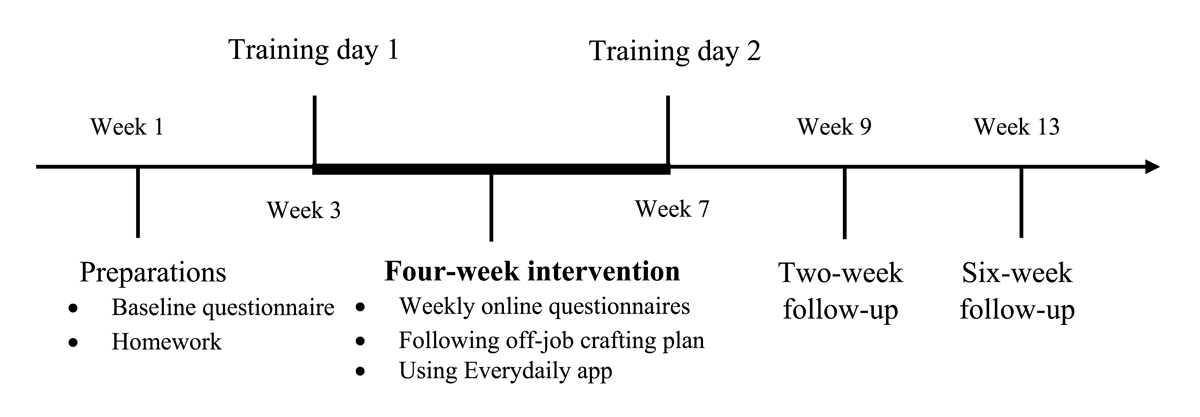
Figure 1
Off-job Crafting Intervention Timeline.
The four-week intervention period started with a half-day training session at participants’ workplaces. During the intervention period, every Tuesday, participants received an email with a link to a weekly online questionnaire. In case of non-response, reminders were sent on Wednesdays and Thursdays. After the intervention period, the intervention group took part in a half-day long reflection session at their workplace, followed by two online questionnaires during the post-intervention period (two and six weeks post-intervention). The waitlist control group completed four online questionnaires mirroring the intervention group measurement points: at baseline, immediately after the end of the intervention period of the intervention group and the two follow-up questionnaires. After the intervention, the waitlist control group could participate in the same training program.
The Off-Job Crafting Training
At the start of the first session, each participant received a personal feedback report containing their baseline scores on DRAMMA needs satisfaction and a comparison of their scores to reference values derived from other published scientific studies with Finnish and European knowledge workers as the reference group (Chen et al., 2015; Kinnunen et al., 2011). During the first training session, participants were introduced to the intervention and the DRAMMA framework, followed by individual and small-group reflection on their own personal feedback reports and homework tasks. The main part of the first training session consisted of six modules, each focusing on one of the DRAMMA needs. A brief theoretical introduction to each psychological need was followed by a practical exercise targeting that specific need. After the psychological needs training, participants were asked to choose one psychological need that they wanted to focus on during the four-week intervention period. We recommended that the participants worked with the psychological need on which they had scored the lowest to support more balanced needs satisfaction across different needs, which has been found to be associated with higher reported well-being (Sheldon & Niemiec, 2006). Each participant formulated their individual SMART off-job crafting goal and wrote it down in their personal training booklet. Participants were free to set goals to reduce certain behaviors (e.g., to limit social media use) or to focus on a new activity (e.g., start a new hobby).
During the second session, participants completed a study questionnaire and received their new needs satisfaction scores to reflect on their progress compared to the level at baseline. Participants identified and discussed enablers and barriers that affected their off-job crafting efforts during the intervention period and were able to modify their current crafting goals or set new ones. At the end of the session, participants completed an online process evaluation questionnaire. We present the detailed training content in Appendix A.
Everydaily Smartphone App
During the first training session, each participant was instructed to use the newly developed Everydaily smartphone app throughout the intervention period. We specifically developed the app content to present participants with brief daily activities (i.e., so called “Dailys”) to support their engagement in off-job crafting efforts.2
Participants created their personal four-week well-being project in the app. Each day, participants received three different activity suggestions (“Dailys”), each focusing on at least one of the DRAMMA needs. We encouraged participants to select the activities that were most in line with their individual needs and crafting goals. After completing a Daily, participants could use the app as a personal well-being diary by uploading a picture or writing a short reflection text about the “Daily”. After completing a Daily, participants were also asked to rate the level of their DRAMMA needs fulfillment. Participants could additionally record their daily well-being in the app. Screenshots showing the main features of the Everydaily app (e.g., gamification elements such as tailorable avatars, points, and special visual features for rewarding Daily completion, progress bars) are available in Appendix B.
Participants
The sample consisted of full-time employees with knowledge-intensive jobs from different public and private organizations in the Helsinki metropolitan area and central Finland. We contacted various organizations which had previously been interested in (blinded for peer-review) recovery studies or belonged to the network of the intervention trainers to offer their employees an off-job crafting training program. Organizations were requested to cover the material costs and the professional trainer fees. They were offered anonymized group feedback regarding the development of participants’ well-being and job performance across different measurement points.
Altogether, four organizations signed up for the study. Their employees were then invited to sign up for the study through the organization’s internal communication channels. In each participating organization, a person was appointed to facilitate communication between participants, trainers, and the research team. We requested the group size to be between eight and 14 participants. In two organizations, at least two groups were formed, allowing us to have an intervention and a waitlist control group within the same organization. Participants could choose their group on the basis of the proposed training schedules and without knowing whether the group was an intervention or a waitlist control group.
In total, 108 employees registered for the study with 74 signing up for the intervention group training dates and 34 for the waitlist control training group dates. Before their first training session, three participants requested a change of group due to work commitments and were reassigned to one of the control groups. Altogether, we formed seven intervention training groups. However, due to the COVID-19 pandemic starting in March 2020, we were unable to continue our data collection in one of the groups after their first intervention week. One intervention group consisting of 11 employees was therefore removed from the dataset, resulting in 60 intervention group participants. Out of these 60 participants, 51 employees (85%) attended the first training session and 39 employees (65%) attended both training sessions. On average, each training group consisted of eight to 12 participants. All training sessions were conducted by the same trainer assisted by one or two research team members.
The final dataset consisted of 86 employees from three different organizations from the education (n = 44), trade (n = 13), business management (n = 6) and public administration branches (n = 5). Most participants were women (83.7%) and the age of participants ranged from 27 to 64 years (M = 45.9, SD = 9.2). Most of the participants either lived with a partner (32.6%) or with a partner and at least one child (43%). The majority of the participants had a university degree (91.9%) and 93% of the participants had a permanent employment contract. On average, participants worked 40.3 hours a week (SD = 3.8). Employees’ tenure in the organization varied from less than one year up to 39 years (M = 10.2, SD = 8.0) and their tenure in their respective current positions varied from less than one year up to 32 years (M = 6.6, SD = 7.0).
Measures
The measurement occasions for both groups are outlined in Appendix C. All items were presented in Finnish language. Whenever available, we used translations of the scales validated in Finnish samples. For the scales without available translations, we hired professional translators to translate and back-translate the scale. Moreover, two native speakers and experts in the field checked the translations.
Off-job crafting efforts were measured with an 18-item needs-based off-job crafting scale at the baseline and with a shortened six-item version during and after the intervention (Kujanpää et al., 2022). Off-job crafting for each DRAMMA need was measured by three items at baseline and one item during and after the intervention period. Example items were “Over the past week, …” “… I’ve made sure to detach from work-related thoughts during off-job time” (detachment), “… I’ve arranged my off-job time so that I get some rest” (relaxation), “… I’ve organized my off-job activities so that I determine my own course of action” (autonomy), “… I’ve arranged my off-job time so that I experience proficiency in the things I undertake” (mastery), “… I’ve arranged my off-job time so that the things I do align with my personal values” (meaning), and “… I’ve made sure to experience close connections to the people around me during off-job time” (affiliation). The response scale for all items ranged from 1 (never) to 5 (very often).
DRAMMA needs satisfaction was measured with a 16-item scale. Detachment, relaxation, autonomy, and mastery dimensions were each measured with three items from the Recovery Experience Questionnaire (Sonnentag & Fritz, 2007). In addition, four items were added to measure meaning and affiliation. The items correspond to the previously validated six-factor structure of the DRAMMA model (de Bloom, Syrek, et al., 2017). Example items were “Over the past week, during time after work …” “… I forgot about work” (detachment), “… I kicked back and relaxed” (relaxation), “… I determined for myself how I will spend my time” (autonomy), “… I learned new things” (mastery), “… I experienced meaning in my life” (meaning), “… I experienced close connections to the people around me” (affiliation). Participants indicated their agreement with the statements on a scale from 1 (I do not agree at all) to 5 (I fully agree).
Well-Being
Subjective vitality was assessed with four items from the Subjective Vitality Scale (Hood et al., 2000; Ryan & Frederick, 1997). Participants were asked to indicate how often they had felt alive and vital, energetic, having energy and spirit, and looked forward to each new day over the past week. The response scale ranged from 1 (very rarely or never) to 5 (very often or all the time). Multilevel alphas for subjective vitality were 0.80 at the intra-individual level and 0.96 at the inter-individual level.
Work engagement. We used six items from the Utrecht Work Engagement Scale (UWES-9; Schaufeli et al., 2006) to assess participants’ vigor and dedication, which are considered the core dimensions of work engagement (González-Romá et al., 2006). We adapted the items to a one-week period. Example items are: “Over the past week at my work, I felt strong and vigorous” (vigor) and “Over the past week, my job inspired me” (dedication). Response options ranged from 0 (never) to 6 (always). Multilevel alphas for work engagement were 0.83 at the intra-individual level and 0.96 at the inter-individual level.
Process Evaluation
During the second training session, we conducted a written evaluation to better understand the intervention process and mechanisms possibly influencing the effectiveness of the intervention. We collected data on participants’ off-job crafting goal process attainment, their involvement, and experiences with the intervention. Besides quantitative data about the intervention processes, we provided participants opportunities to describe the most important thing that they had learned from the intervention and how they had received support from other participants during the intervention, and to provide any additional comments. The detailed process evaluation is described in the Results section and an overview of the main elements is provided in Table 3.
Everydaily App Use
Within the smartphone app, we collected data on how often participants saved a Daily in their activities lists (saved Dailys), planned a Daily (planned Dailys), and actually logged a completed Daily (done Dailys) in the app during the intervention period and during the six-week follow-up period. Additionally, we assessed how often participants rated their daily well-being (well-being ratings) and recovery experiences (recovery ratings) in the Everydaily app environment during and after the intervention.
Statistical Analysis
We first assessed the missingness of data. In the final sample of 86 participants, on the questionnaire level, the response rate varied between 64.7% and 100% across the seven measurements in the intervention group and between 71.4% and 100% across the four measurements in the control group. In the intervention group, 52.9% of the participants responded to all seven study questionnaires and in the control group, 51.4% responded to all four questionnaires. To understand the nature of missing data, we applied Little’s MCAR test to all outcome variables at all measurement points. Little’s MCAR test was not significant (χ2 (1759) = 82.84, p = 1.000) in the intervention group and in the control group (χ2 (616) = 304.03, p = 1.000), indicating that the missing data was randomly missing in both groups.
As the same employees completed the questionnaires on multiple occasions, the weekly measures (four in the control group, seven in the intervention group) were nested in employees. To account for the data nonindependence and time, we followed the approach outlined by Bliese and Ployhart (2002) to estimate the multilevel regression models in R, using the NLME library (Pinheiro & Bates, 2000). We used restricted maximum likelihood for estimation. To test our hypotheses 1-4, we specified separate multilevel regression models for predicting overall off-job crafting, overall psychological needs satisfaction, subjective vitality, and work engagement.
For each outcome variable, we first modeled the fixed relationship of linear time (i.e., week) predicting the dependent variable. We then included the random slopes. Next, we tested for autocorrelation and heteroscedasticity and, if necessary, included these specifications in the model (Bliese & Ployhart, 2002). Finally, we proceeded to test the cross-level interaction between linear time and group condition to test whether differences in change trajectories between participants in the intervention and the control group could be explained by their group membership.
We conducted additional multilevel analyses in the intervention group to understand how process variables (i.e., satisfaction with the intervention, app use during the intervention, goal progress, SMARTness of the goal, and focusing on the lowest-scoring psychological need) could affect participants’ off-job crafting efforts, needs satisfaction, and well-being. The level 2 process variables were grand-mean centered. We tested the cross-level interactions between time and process variables (Bliese & Ployhart, 2002).
Results
Descriptive Results
We present means, standard deviations, and intercorrelations for the focal outcome variables in Table 1 and for all outcome variables in Appendix D. The means for the focal variables in the intervention and control groups at each measurement occasion (T0 to T6) are shown in Figure 2.
Table 1
Means, Standard Deviations and Zero-Order Correlations Between Study Variables.
| VARIABLE | M | SD | 1. | 2. | 3. | 4. |
|---|---|---|---|---|---|---|
| 1. Off-job crafting | 3.54 | 0.56 | .68*** | .56*** | .36*** | |
| 2. Needs satisfaction | 3.60 | 0.48 | .68*** | .62*** | .45*** | |
| 3. Subjective vitality | 3.25 | 0.69 | .56*** | .64*** | .70*** | |
| 4. Work engagement | 3.57 | 0.97 | .38*** | .47*** | .79*** |
[i] Notes: Correlations below the diagonal are between-person level correlations (person means aggregated over the repeated observations; N = 85–86), correlations above the diagonal are within-person correlations (N = 399–408). * p < 0.05. ** p < 0.01. *** p < 0.001.
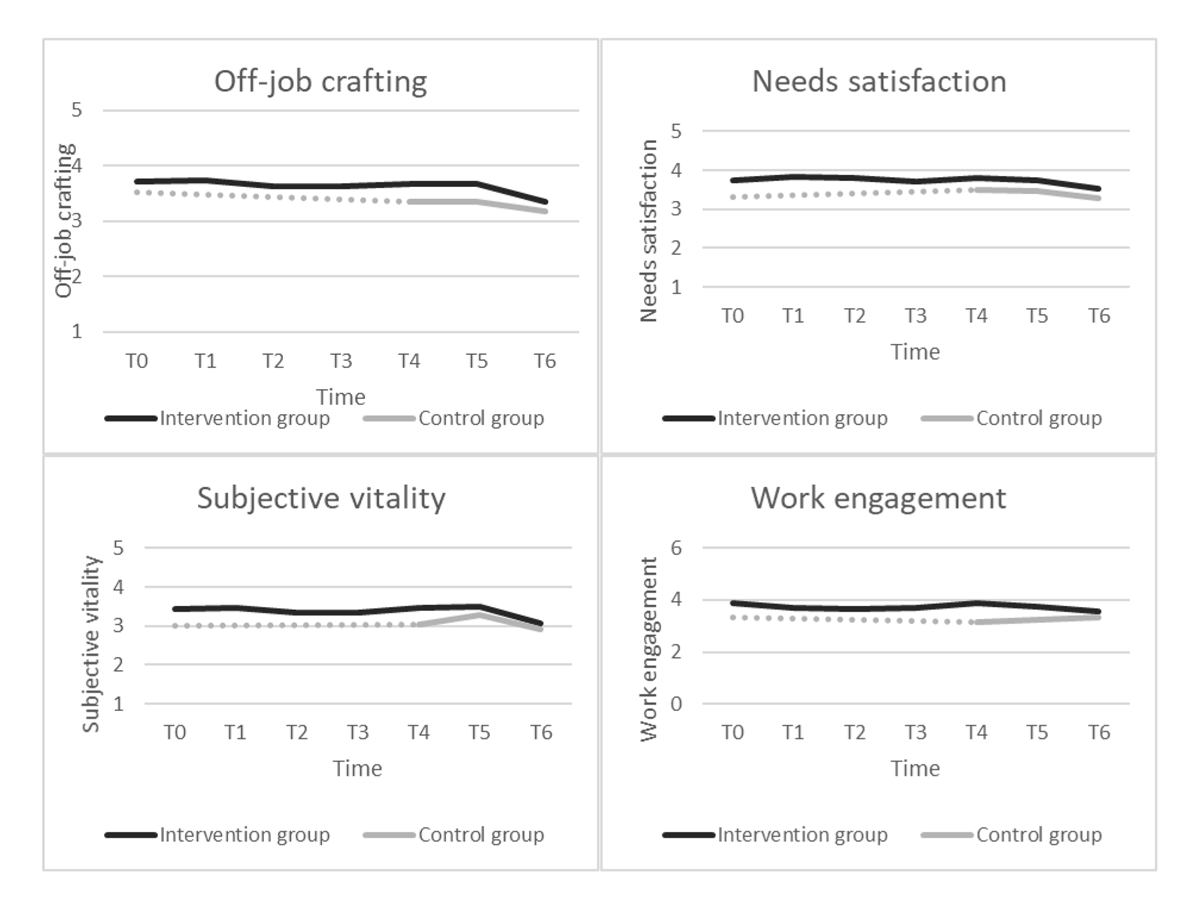
Figure 2
Changes in Focal Variables in Intervention and Control Groups across the Study Period (T0 to T6).
Notes: Intervention group n = 32–51, control group n = 21–33. T0: baseline, T1: week 1, T2: week 2, T3: week 3, T4: week 4/post-intervention, T5: two weeks after the intervention, T6: six weeks after the intervention. Control group did not participate in measurements at T1–T3.
Differences Between Intervention and Control Group in Background and Work Characteristics and Study Outcomes at Baseline
Of the 86 participants, 51 participated in the off-job crafting intervention and 35 were assigned to the waitlist control group. Because truly random allocation to groups was not possible, we conducted t-tests and chi-square tests to assess whether intervention and control group participants differed in background and work characteristics. As we show in Table 2, significant differences between the two groups were found in terms of participants’ ages and genders. Intervention group participants were younger and there were more women in the intervention group than in the control group.
Table 2
Background and Work Characteristics for the Intervention and Control Groups.
| VARIABLE | INTERVENTION GROUP | CONTROL GROUP | DIFFERENCE (X2/t) |
|---|---|---|---|
| Age in years | 44.1 (9.3) | 48.6 (8.5) | t (84) = 2.31, p = .012* |
| Women (%) | 90.2 | 74.3 | X2(1, 86) = 3.86, p = .050* |
| Education (%) | X2(3, 86) = 1.91, p = .590 | ||
| High school level | 5.9 | 11.4 | |
| Bachelor’s degree | 23.5 | 28.6 | |
| Master’s degree | 68.6 | 60.0 | |
| Doctoral degree | 2.0 | 0.0 | |
| Living arrangement (%) | X2(4, 86) = 4.78, p = .311 | ||
| Alone | 21.6 | 8.6 | |
| With a spouse | 29.4 | 37.1 | |
| With a spouse and children | 41.2 | 45.7 | |
| With children | 3.9 | 8.6 | |
| Permanent contract (%) | 94.1 | 91.4 | X2(2, 86) = 1.47, p = .478 |
| White collar position (%) | 98 | 100 | X2(3, 86) = 5.84, p = .120 |
| Weekly work hours | 40.0 (3.4) | 40.0 (4.3) | t (78) = 0.01, p = .990 |
| Tenure in organization in years | 9.5 (8.0) | 11.1 (8.1) | t (84) = 0.93, p = .357 |
| Tenure in current position in years | 6.5 (7.3) | 6.67(6.9) | t (83) = 0.08, p = .940 |
| Overall OJC | 3.7 (0.7) | 3.5 (0.6) | t (81) = –1.27, p = .208 |
| Overall NS | 3.7 (0.5) | 3.3 (0.6) | t (82) = –3.44, p < .001*** |
| Subjective vitality | 3.4 (0.9) | 3.0 (0.9) | t (82) = –2.17, p = .016* |
| Work engagement | 3.9 (1.1) | 3.3 (1.3) | t (82) = –2.20, p = .015* |
[i] Notes: OJC = off-job crafting, NS = need satisfaction. * p < 0.05. *** p < 0.001.
We also conducted t-tests to compare the groups in all study variables at baseline and found that the groups differed significantly in several variables before the intervention (see Table 2 and Appendix E). We found that at baseline, intervention group participants reported significantly higher DRAMMA needs satisfaction, subjective vitality, and work engagement than did the control group participants.
Descriptive Results Regarding Everydaily App Use
We defined app use as completing at least one activity out of planning, saving, or registering a completed Daily or rating one’s own well-being or recovery within the app. Out of the 52 intervention participants, 46 (90.2%) used the app at least once. There was considerable variation in app use during the intervention (M = 28.7, SD = 28.5, range 1–120). Two participants had used the app over 100 times. Closer inspection of their app use showed that both participants had consistently used different functions of the app, therefore we concluded that their scores were plausible and thus meaningful and retained them in our analyses. As expected, app use was less frequent during the six-week follow-up period (M = 4.0, SD = 11.4, range 0–54) than during the intervention period. We present more detailed information about the means of participants using the different app elements in Appendix F.
Descriptive Results Regarding Participant Experiences with the Intervention
At the end of the second training day, 39 intervention participants completed the online process evaluation questionnaire. We first asked participants to evaluate the extent of their participation in the intervention. All participants reported completing in at least one study questionnaire and setting a personal off-job crafting goal. Thirty-five participants reported completing the pre-training homework, 26 reported actively pursuing their off-job crafting goal during the intervention period, and 14 reported achieving their off-job crafting goal. Only 21 participants reported regularly using the Everydaily app and eight participants reported collaborating with their colleagues to make the intervention more effective. On average, participants reported being satisfied with the intervention, perceived the intervention content to be relevant for them and perceived the intervention to have been only slightly time consuming. We present an overview of all the means for process evaluation elements in Table 3.
Table 3
Overview of the Process Evaluation Elements.
| ELEMENT | ITEM | RESPONSE SCALE | N | M (SD) |
|---|---|---|---|---|
| Support from the app | Did you feel that Everydaily app supported you in satisfying your psychological needs? | 1 (completely disagree) – 5 (completely agree) | 39 | 2.9 (1.2) |
| Effort invested in participation | How much effort did you invest to follow the intervention? | 1 (none at all) – 5 (a great deal) | 39 | 2.7 (0.5) |
| Level of time-consumption | How time consuming did you perceive this intervention to be? | 1 (not at all time-consuming) – 5 (very time-consuming) | 39 | 2.1 (0.8) |
| Perceived levels of fun | How much fun was the intervention? | 1 (not fun at all) – 5 (a great deal of fun) | 39 | 3.3 (0.7) |
| Relevance of the intervention content | How relevant was the intervention content to you? | 1 (not relevant at all) – 5 (extremely relevant) | 39 | 3.5 (1.0) |
| New skills and knowledge | How much new knowledge and skills have you gained during the intervention period to enhance your well-being and performance? | 1 (none at all) – 5 (a great deal) | 39 | 3.1 (0.8) |
| Satisfaction with the trainers | How satisfied were you with the trainers? | 1 (extremely dissatisfied) – 5 (extremely satisfied) | 38 | 4.1 (1.1) |
| Overall satisfaction with the intervention | How satisfied were you with the intervention as a whole? | 1 (extremely dissatisfied) – 5 (extremely satisfied) | 39 | 4.0 (0.8) |
Descriptive Results Regarding Participants’ Off-Job Crafting Goals
During the process evaluation, we asked participants to write down their exact goals and provide information about their goal attainment on a scale from 0 to 100%. Out of the 51 intervention participants, 42 (82.4%) reported their off-job crafting goal and the psychological need that they set to focus on during the intervention period. An overview of the psychological needs selected by participants during the first training session and their average goal progress is shown in Table 4. The majority of participants who completed the questionnaire reported that they had chosen to work with either increasing detachment from work (40.5%) or relaxation (28.6%). Goal progress ranged from 7 to 100% (M = 55.0, SD = 27.7).
Table 4
Overview of Psychological Needs Selected by the Participants to Work with During the Intervention (N = 42).
| NEED SELECTED | n | % OF N | AVERAGE GOAL PROGRESS IN % |
|---|---|---|---|
| Detachment | 17 | 40.5 | 58.7 (9–100) |
| Relaxation | 12 | 28.6 | 59.3 (10–99) |
| Autonomy | 2 | 4.8 | 56.0 (30–82) |
| Mastery | 5 | 11.9 | 46.0 (19–71) |
| Meaning | 5 | 11.9 | 41.8 (7–91) |
| Affiliation | 1 | 2.4 | 50.0 |
As recommended, 27 participants (64.3% of the respondents) chose to work with the psychological need on which they scored lowest at baseline and which was thus least satisfied (labeled as goal congruence). While overall progress towards the goal was better among participants who had chosen to work with the psychological need on which they scored lowest than that among participants who worked with a different need (MLowest = 59.3, SDLowest = 26.8 vs MOther = 47.3, SDOther = 28.6), this difference was not statistically significant.
Additionally, we evaluated if participants had followed the guidelines of SMART goal setting. All five dimensions of the SMART approach were first rated separately (0 or 1) and the dimension scores were then summed to get the SMARTness score of a goal. The ratings were done by the first author and two additional evaluators (inter-rater reliability: .91). The ratings of three raters were averaged to get the mean goal SMARTness score for each participant (n = 42, M = 1.94, SD = 1.5, range 0–4.7). An example of a lowest-scoring goal is “Mindfulness,” and an example of a highest scoring goal is “For the following month, I will keep my work time regular between 9–17 to have more personal time in the evenings”. While the correlation between self-rated goal progress and goal SMARTness was positive, it was statistically non-significant (r = 0.18).
Preliminary Analyses
Before testing our hypotheses, we ascertained the strength of data non-independence and estimated a null model for each dependent variable (Bliese & Ployhart, 2002). The intra-class correlation coefficient (ICC) was 0.50 for off-job crafting, 0.51 for need satisfaction, 0.57 for subjective vitality, and 0.73 for work engagement. This indicates that approximately half of the variance in outcome variables was explained by the between-person differences and 27–50% of the variance could be attributed to the within-person differences across the measurement occasions.
Hypotheses Testing
We expected that off-job crafting (H1), psychological needs satisfaction (H2), subjective vitality (H3), and work engagement (H4) would increase over time in the intervention group while remaining stable in the control group. We present the results for our four focal multilevel models in Table 5. The specification of heteroscedasticity improved model fit for focal models with off-job crafting and need satisfaction as the outcomes and therefore the specifications were included in these models. There was a significant negative linear relationship between time and off-job crafting (γ = –0.03, SE = 0.01, t = –2.17, p = 0.031). This means that off-job crafting efforts decreased across all study participants. We found no significant relationship between time and needs satisfaction, subjective vitality, and work engagement. The results for off-job crafting and needs satisfaction on the six separate DRAMMA dimensions and for additional well-being and performance outcomes are presented in Appendix G.
Table 5
Multilevel Models Predicting Overall Off-Job Crafting, Overall Needs Satisfaction, Subjective Vitality and Work Engagement.
| OFF-JOB CRAFTING | NEEDS SATISFACTION | |||||||
|---|---|---|---|---|---|---|---|---|
| EST | SE | t | EST | SE | t | |||
| Level 2 (between person) | ||||||||
| Intercept | 3.39 | 0.10 | 35.40 | 3.39 | 0.08 | 42.35 | ||
| Group | 0.22 | 0.12 | 1.80 | † | 0.34 | 0.10 | 3.33 | ** |
| Level 1 (within person) | ||||||||
| Time linear | –0.03 | 0.01 | –2.17 | * | 0.01 | 0.01 | 0.68 | |
| Cross-level interaction | ||||||||
| Time linear x group | 0.00 | 0.02 | 0.04 | –0.02 | 0.01 | –1.66 | † | |
| Deviance (df) | –349.90 (9) | –274.64 (9) | ||||||
| AIC | 717.80 | 567.28 | ||||||
| BIC | 753.88 | 603.33 | ||||||
| SUBJECTIVE VITALITY | WORK ENGAGEMENT | |||||||
| EST | SE | t | EST | SE | t | |||
| Level 2 (between person) | ||||||||
| Intercept | 3.07 | 0.12 | 26.00 | 3.30 | 0.16 | 20.64 | ||
| Group | 0.27 | 0.15 | 1.76 | † | 0.42 | 0.21 | 2.05 | * |
| Level 1 (within person) | ||||||||
| Time linear | –0.00 | 0.01 | –0.27 | –0.01 | 0.01 | –0.76 | ||
| Cross-level interaction | ||||||||
| Time linear × group | –0.02 | 0.02 | –1.20 | –0.00 | 0.02 | –0.37 | ||
| Deviance (df) | –407.62 (8) | –430.21 (8) | ||||||
| AIC | 831.24 | 876.41 | ||||||
| BIC | 863.33 | 908.32 | ||||||
[i] Notes: SE = standard error. df = degrees of freedom. Deviance = (–2 Residual Log Likelihood). N = 399–408 observations nested in 85–86 persons. Group was coded as 0 = control group, 1 = intervention group. † p < 0.10. * p < 0.05. ** p < 0.01. *** p < 0.001.
We found a marginally significant negative cross-level interaction between time and group on needs satisfaction, showing that change patterns in needs satisfaction differed marginally between the control and the intervention groups (γ = –0.02, SE = 0.01, t = –1.66, p = 0.097). We conducted simple slope analysis to probe the interaction effect (see Figure 3). There was no significant change in needs satisfaction in the control group (B = 0.01, p = 0.494) but a marginal decrease in needs satisfaction in the intervention group (B = –0.01, p = 0.069). The other three cross-level interactions between time and group were not significant, indicating that change patterns in off-job crafting, subjective vitality, and work engagement were similar across groups. Taken together, hypotheses 1–4 were not supported.
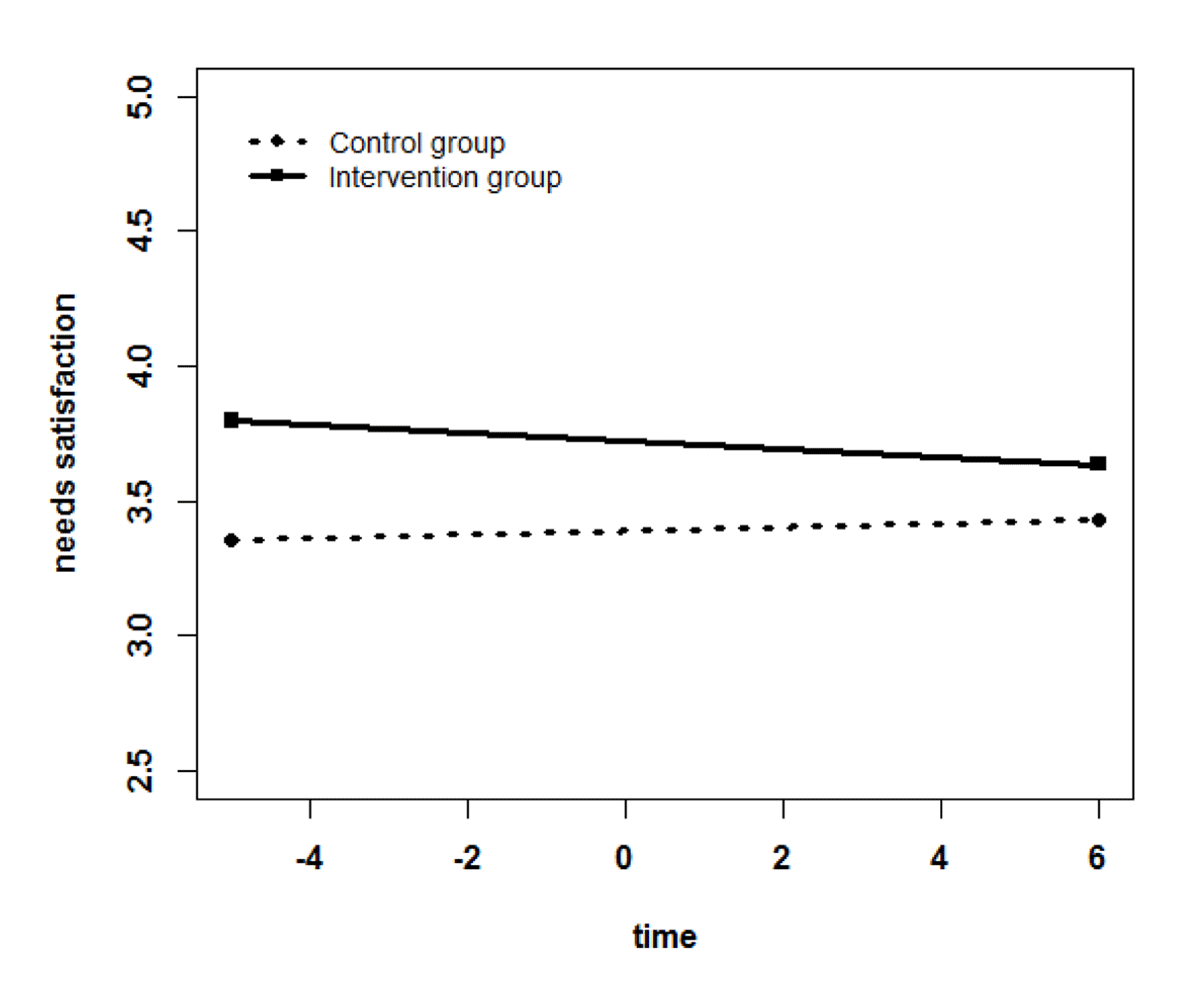
Figure 3
Interaction of Time and Group on Needs Satisfaction.
Note. Time was centered around T4 (post intervention), the x-bar indicates –4: before intervention, –2: intervention week 2, 0: post intervention, 2: two weeks post-intervention, 6: six weeks post-intervention.
Additional Analyses
We present in Table 6 the results of our analyses in the intervention group to show how process variables (i.e., satisfaction with the intervention, app use during the intervention, goal progress, SMARTness of the goal, and goal congruence) affected participants’ off-job crafting efforts, needs satisfaction, and well-being. The results for off-job crafting and needs satisfaction on the six separate DRAMMA dimensions and for additional well-being and performance outcomes are presented in Appendix H. The specification of heteroscedasticity improved model fit for focal model with needs satisfaction as the outcome and therefore the specification was included in this model. In the model with work engagement as the outcome, we excluded the interaction between time and goal congruence from the model as there the full model did not converge with the interaction.
Table 6
Multilevel Models Predicting Overall Off-job Crafting, Overall Needs Satisfaction, Subjective Vitality and Work Engagement in the Intervention Group.
| OFF-JOB CRAFTING | NEEDS SATISFACTION | |||||||
|---|---|---|---|---|---|---|---|---|
| EST | SE | t | EST | SE | t | |||
| Level 2 (between person) | ||||||||
| Intercept | 3.62 | 0.16 | 22.96 | 3.80 | 0.11 | 34.82 | ||
| Goal progress | 0.00 | 0.00 | 0.79 | 0.00 | 0.00 | 1.68 | ||
| App use | 0.00 | 0.00 | 0.73 | 0.00 | 0.00 | 0.19 | ||
| Intervention satisfaction | 0.07 | 0.14 | 0.49 | 0.11 | 0.10 | 1.04 | ||
| Goal SMARTness | 0.03 | 0.06 | 0.45 | –0.02 | 0.04 | –0.42 | ||
| Goal congruence | –0.07 | 0.20 | –0.37 | –0.14 | 0.14 | –1.01 | ||
| Level 1 (within person) | ||||||||
| Time linear | –0.04 | 0.02 | –2.05 | * | –0.03 | 0.01 | –1.96 | † |
| Cross-level interaction | ||||||||
| Time linear × goal progress | 0.00 | 0.00 | 1.81 | † | 0.00 | 0.00 | 2.60 | ** |
| Time linear × app use | –0.00 | 0.00 | –1.92 | † | –0.00 | 0.00 | –2.43 | * |
| Time linear × intervention satisfaction | 0.05 | 0.02 | 2.88 | ** | –0.01 | 0.01 | –0.66 | |
| Time linear × goal SMARTness | –0.00 | 0.01 | –1.19 | –0.01 | 0.01 | –2.19 | * | |
| Time linear × goal congruence | 0.01 | 0.02 | 0.29 | 0.02 | 0.02 | 0.98 | ||
| Deviance (df) | –183.21 (16) | –121.15 (17) | ||||||
| AIC | 398.42 | 276.15 | ||||||
| BIC | 453.84 | 335.10 | ||||||
| SUBJECTIVE VITALITY | WORK ENGAGEMENT | |||||||
| EST | SE | t | EST | SE | t | |||
| Level 2 (between person) | ||||||||
| Intercept | 3.51 | 0.18 | 19.29 | 3.91 | 0.20 | 19.31 | ||
| Goal progress | 0.01 | 0.00 | 1.98 | † | 0.01 | 0.00 | 2.31 | * |
| App use | 0.00 | 0.00 | 0.73 | 0.00 | 0.00 | 0.12 | ||
| Intervention satisfaction | 0.14 | 0.17 | 0.83 | –0.05 | 0.19 | –0.27 | ||
| Goal SMARTness | –0.03 | 0.07 | –0.39 | 0.06 | 0.08 | 0.69 | ||
| Goal congruence | –0.23 | 0.23 | –1.00 | –0.32 | 0.26 | –1.26 | ||
| Level 1 (within person) | ||||||||
| Time linear | –0.07 | 0.02 | –3.65 | *** | –0.02 | 0.01 | –1.76 | † |
| Cross-level interaction | ||||||||
| Time linear x goal progress | 0.00 | 0.00 | 0.37 | –0.00 | 0.00 | –0.11 | ||
| Time linear x app use | –0.00 | 0.00 | –2.37 | * | –0.00 | 0.00 | –1.03 | |
| Time linear x intervention satisfaction | –0.00 | 0.02 | –0.00 | 0.01 | 0.02 | 0.51 | ||
| Time linear x goal SMARTness | –0.01 | 0.01 | –1.91 | † | –0.02 | 0.01 | –2.19 | * |
| Time linear x goal congruence | 0.06 | 0.03 | 2.49 | * | ||||
| Deviance (df) | –212.80(16) | –228.13 (15) | ||||||
| AIC | 457.59 | 486.25 | ||||||
| BIC | 513.08 | 537.95 | ||||||
[i] Notes: SE = standard error. df = degrees of freedom. Deviance = (–2 Residual Log Likelihood). N = 232–237 observations nested in 36 persons. Goal progress, app use, intervention satisfaction, and goal SMARTness variables were grand mean centered. Goal congruence was coded as 0 = non-congruent, 1 = congruent. † p < 0.10. * p < 0.05. ** p < 0.01. *** p < 0.001.
We found significant positive cross-level interactions between time and goal progress on off-job crafting and needs satisfaction and between time and intervention satisfaction on off-job crafting. We found negative significant interactions between time and app use for off-job crafting, needs satisfaction, and subjective vitality and between time and SMARTness of participants’ goals for needs satisfaction, subjective vitality, and work engagement. There was also a significant positive interaction between time and goal congruence in subjective vitality. All cross-level interactions for the focal models are presented in Table 6.
We conducted simple slope analysis to ascertain the significant interaction effects. As Figure 4 (a-b) shows, participants who made less progress (-1 SD) with their crafting goal experienced significant decrease in off-job crafting efforts (B = –0.06, p = 0.004) and needs satisfaction (B = –0.05, p = 0.002), while off-job crafting efforts and needs satisfaction did not significantly change over time for the participants who reported higher goal progress (+1 SD). Figures showing other significant interactions are presented in Appendix I. Surprisingly, we found that participants who set a SMARTer goal (+1 SD) experienced a significant decrease in needs satisfaction (B = –0.05, p = 0.005), subjective vitality (B = –0.10, p < 0.001), and work engagement (B = –0.05, p = 0.004), while there was no significant change in needs satisfaction and work engagement and a significant but smaller decrease in vitality (B = –0.05, p = 0.019) for those who set less SMART goals (–1 SD). Participants who had set non-congruent goals experienced a significant decrease in subjective vitality (B = –0.07, p < 0.001), while the change was non-significant among those with congruent goals. In addition, we found that participants reporting less satisfaction with the intervention (–1 SD) experienced a decrease in off-job crafting efforts (B = –0.07, p < 0.001), while there was no significant change in off-job crafting efforts over time among the participants who reported higher satisfaction with the intervention (+1 SD). Finally, and unexpectedly, we found that participants who used the app more (+1 SD) experienced a significant decrease in off-job crafting efforts (B = –0.06, p = 0.008), needs satisfaction (B = –0.05, p = 0.005), and subjective vitality (B = –0.10, p < 0.001), while we found no significant change in off-job crafting efforts and needs satisfaction and a significant but smaller decrease in vitality (B = –0.05, p = 0.024) for participants who used the app less (–1 SD).
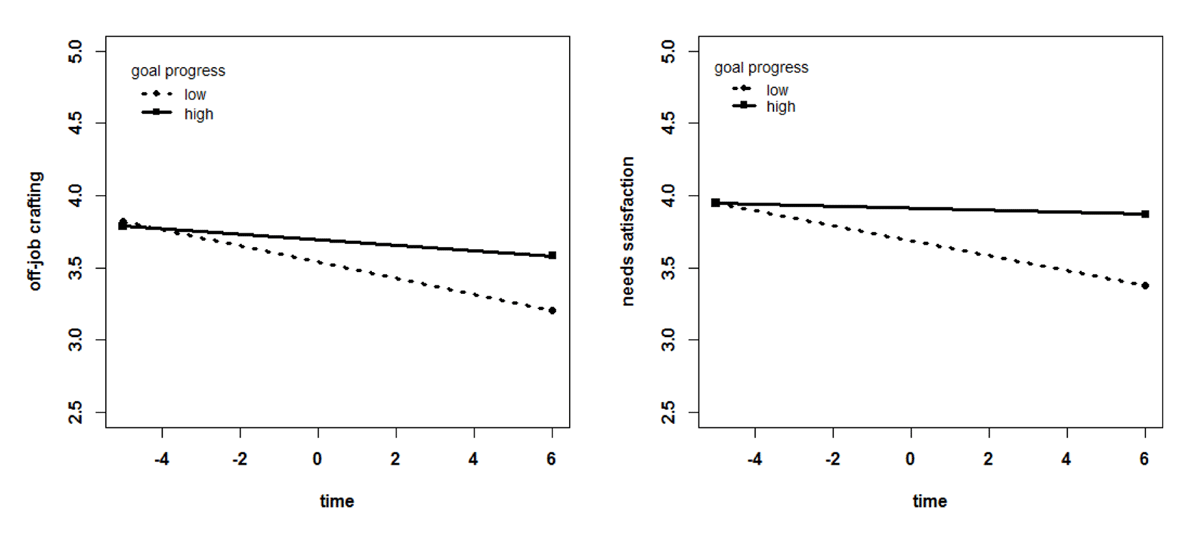
Figure 4
Significant Interaction of Time and Goal Progress on (a) Off-job Crafting and (b) Needs Satisfaction.
Note. Time was centered around T4 (post intervention), the x-bar indicates –4: before intervention, –2: intervention week 2, 0: post intervention, 2: two weeks post-intervention, 6: six weeks post-intervention.
Discussion
Given the increasing interest in sustaining and enhancing employees’ well-being through crafting interventions in various life domains (e.g., Abdel Hadi et al., 2021; Hu et al., 2020; van Wingerden et al., 2017a) we evaluated the effectiveness of a hybrid off-job crafting intervention among Finnish employees. Contrary to our expectations, the intervention did not enhance participants’ off-job crafting efforts, needs satisfaction, subjective vitality, and work engagement compared to both the baseline and the waitlist-control group. These findings are surprising, as earlier short-term on-site (e.g., Hahn et al., 2011) and online (e.g., Behzadnia & FatahModares, 2020; Hu et al., 2020) interventions to promote recovery and active leisure have yielded positive effects on employees’ needs satisfaction and well-being.
One potential explanation for not finding significant increases in the outcomes could be a ceiling effect. Participants with an already high level of well-being at baseline could have little to gain from such interventions (Goedendorp & Steverink, 2017). We found that the intervention group participants scored significantly higher on needs satisfaction, subjective vitality, and work engagement than did the control group at baseline. Employees with already better well-being were possibly more eager to participate in the intervention at earlier dates; however, the intervention may have had little additional value for them. Moreover, initial high scores more likely exhibit a regression to the mean when repeatedly assessed.
We also cannot rule out selective non-response: Highly stressed and exhausted employees need the intervention most, but they may not have sufficient cognitive resources to sign up for the intervention to begin with. Moreover, participants may have struggled to set and pursue effective off-job crafting goals. Despite their intentions to attain their goal, they may have experienced (unexpected) constraints in pursuing the goal in their daily lives (Gollwitzer, 2014). Consequently, if a person failed to keep up with their crafting goal early in the intervention, they may have stopped pursuing their goal and/or following the intervention altogether. In these cases, the weekly questionnaires and the smartphone app may even have been felt to be an unpleasant reminder of their failure and consequently impaired their well-being instead of improving it.
It is important to note that the intervention was highly tailorable, and participants could select the psychological need to focus on, set different crafting goals, and freely use the smartphone application. Participants’ choices and the wide variation in crafting goals and app use make it more difficult to disentangle the intervention effects. Requesting participants to focus on one psychological need and goal during their crafting efforts could have led for the participants to focus solely on one particular area in their life and decrease crafting efforts targeting other psychological needs and had brought them enjoyment before the intervention (Daudkhane, 2017). For example, if a participant focused on increasing relaxation during the intervention, they might have (unknowingly) decreased their crafting efforts for meaning or affiliation, which in consequence could have had negative effects on their needs satisfaction and well-being. As balanced needs satisfaction is important (Milyavskaya et al., 2009; Sheldon & Niemiec, 2006), these processes may have been detrimental to overall well-being.
Another potential explanation for not finding intervention effects could be the inadequate duration of the intervention period. While a four-week intervention period is common practice in job crafting interventions that utilize goal setting (see, for example, Knight et al., 2021; van den Heuvel et al., 2015), it may not be long enough for making meaningful goal-directed behavioral changes in one’s private life. Previous interventions focusing on need-congruent goal setting in one’s personal life to increase well-being have utilized longitudinal designs of even six to eight months (Lyubomirsky et al., 2011; Sheldon et al., 2010). Moreover, it is possible that participants set goals that were not achievable within the four-week time frame in their current life situation (Daudkhane, 2017). Lack of time was also mentioned in participants’ open comments. Participants described in the process evaluation that while they gained new knowledge about off-job crafting, psychological needs, and well-being, they felt that a longer period would have been needed to work on their crafting goals.
Process Evaluations and Intervention Mechanisms
In addition to our main hypotheses, we explored if participants’ perceptions of the intervention and their levels of participation had an effect on their crafting efforts, needs satisfaction, and well-being development across time. Additional analyses showed that participants’ satisfaction with the intervention seemed to have a protective effect on their off-job crafting efforts over time. While their crafting efforts remained similar across time, participants who were less satisfied with the intervention experienced significant decrease in their off-job crafting efforts. Examination of participants’ open comments showed that the intervention increased their awareness of the concepts of off-job crafting, goal setting, psychological needs, and well-being. Additionally, participants described having discovered that small daily activities could have a positive effect on their well-being. By learning about the off-job crafting concept in more detail, participants may have started to evaluate their crafting efforts more realistically than before the intervention, in which they may have overestimated their crafting levels (Arslan et al., 2021). Moreover, while raising awareness of off-job crafting possibilities and its effects on well-being should have inspired employees to make positive changes, there is a risk that employees became aware of the shortcomings and points for improvement in their daily well-being routines through various intervention elements. If participants were not able to act on this new knowledge to create a positive change, it may have decreased their crafting efforts and left them more dissatisfied with the intervention.
In addition, variables related to participants’ off-job crafting goals had a moderating effect on their crafting efforts, needs satisfaction, and well-being. Namely, we found that employees who made more progress with their crafting goals were able to maintain their off-job crafting efforts and needs satisfaction across time, while those making less progress experienced a significant decrease in crafting efforts and needs satisfaction. Making more progress with their crafting goal could indicate higher commitment and motivation throughout the intervention period, which has previously been associated with larger gains from a well-being intervention (Lyubomirsky et al., 2011).
Additionally, it appears that participants who had elected to focus on the psychological need on which they scored lowest before the intervention were able to maintain their subjective vitality levels while those with a goal not in line with their lowest psychological need experienced a significant decrease in subjective vitality across time. As goal attainment is an effortful process that requires energy and other resources, it can become especially taxing when the goal is not in line with one’s psychological needs and attaining the goal would not result in satisfaction of the psychological need that the person had scored low on. For example, a person in need of relaxation but starting to pursue a goal to satisfy their mastery need instead might further deplete the resources that they are already lacking.
The energy investment to attain one’s goals might also partially explain why participants whose goals were rated SMARTer by the research team experienced more decrease in their needs satisfaction, subjective vitality, and work engagement than did people whose goals were rated less SMART. Additionally, despite receiving training in SMART goal setting that focused on assessing goal’s achievability and relevance to the participants, it seems plausible that some participants may have been too ambitious in their goal setting and set unrealistic goals for the four-week intervention period (Daudkhane, 2017). Taken together, people who set very SMART goals on paper may have increased their stress levels and set themselves up to fail by not taking into account what was realistic in their prevailing life situations (Latham & Locke, 2006).
Surprisingly, participants who used the app more frequently experienced a significant decrease in off-job crafting efforts, need satisfaction, and subjective vitality, while there were fewer negative changes among participants who used the app less. While the app aimed to support participants’ crafting efforts, app use may have offered only short-term benefits that were not reflected on weekly measurements. Moreover, we do not know participants’ reasons for using the app during the intervention period. Participants may have been externally motivated to use the app because it was promoted as part of the intervention, even when they felt that the app did not support their crafting goal attainment nor promote their personal needs satisfaction and well-being. The descriptive results about app use do indeed show that app use decreased noticeably during the six-week follow-up period, indicating that participants did not develop a habit to continue using the app.
Strengths, Limitations, and Suggestions for Future Research
This study described a hybrid off-job crafting intervention for employees and evaluated its effectiveness on their off-job crafting efforts, needs satisfaction, and well-being. The study design with multiple measurement occasions before, during, and after the intervention period in both intervention and control groups sheds light on employees’ weekly off-job crafting efforts, needs satisfaction, and well-being across time. Our process evaluation provided new insights into the intervention processes and aimed to go beyond evaluating only the overall intervention effects (Nielsen & Abildgaard, 2013).
Despite these strengths of our research design, the study is not without its limitations. First, as participants had options to customize the intervention, it was not possible to disentangle the effects of specific intervention elements in the current sample. Future studies with larger sample sizes could create multiple intervention groups (e.g., onsite training with off-job crafting goal and a separate smartphone app intervention group) and a control group to determine the role of different intervention elements. Additionally, larger sample size would make it possible to investigate whether an off-job crafting intervention would yield more gains for people seeking to satisfy certain psychological needs than for others. Employees seeking to reduce their demands (by focusing on detachment and relaxation) might benefit from a different crafting intervention than employees looking to gain new resources (by crafting for autonomy, mastery, meaning, and affiliation).
Second, as behavioral change can take time and participants may have used the intervention period as a trial-and-error period to test whether their off-job crafting goals were actually meaningful and relevant for them, the intervention period could be extended in future interventions and mid-intervention evaluations could be incorporated into the intervention, allowing participants to modify their goals if needed and to re-activate participants to work on their goals. Moreover, the intense first training session itself might not have been sufficient for both learning about the concepts and setting actionable goals. Participants may need more time and assistance to reflect on the concepts to understand how these could be translated into goals that are relevant and meaningful in their daily life. On a related note, our choice for SMART goals can be debated. We chose for this goal setting strategy, because it is well-known in a business context and many participants were already familiar with it. However, our measure for goal SMARTness was a rather crude assessment of goal quality and factor analyses showed that a two-factor structure might actually fit the construct better. Future research could use different goal setting strategies (e.g., mental contrasting with implementation intentions; Oettingen & Gollwitzer, 2010) and/or study the impact of SMART goals in greater detail, focusing also on various dimensions of the construct and their distinct associations with relevant outcome variables.
Third, our crafting scale and measurement intervals may not be optimal for capturing the full spectrum of employees crafting behaviors and its effects on their well-being. Despite the limited benefits evident in the statistical results, participants often mentioned that the intervention taught them that small daily activities matter for their well-being and that overall, they were satisfied with the intervention. However, these positive perceptions did not translate into increased off-job crafting efforts among participants. In the job crafting intervention literature, it has been noted that crafting scales present people with rather abstract items that they often find difficult to relate to the things they did (Demerouti, Peeters, et al., 2019). In our off-job crafting intervention, a person might have had difficulties to evaluate if they had determined their course of action over the past week (i.e., crafting for autonomy), despite them potentially taking concrete actions to achieve autonomy, such as leaving work at a specific time or making time for hobbies. We also cannot rule out a potential response shift. As the intervention progressed, participants became more familiar with the crafting concept and more aware and critical of their own behaviors. Consequently, they may evaluate their behavior more strictly in terms of crafting (Müller et al., 2022). Additionally, different daily situational factors may have influenced the development of employees’ needs satisfaction and well-being across time instead of and/or in addition to employees’ single crafting episodes. For example, unexpected events such as a last-minute cancellation from a friend or a change in childcare plans may have prevented some people from crafting, which could translate into negative effects on their need satisfaction and well-being. Moreover, people may have succeeded in their crafting efforts and experienced an immediate increase in well-being, but these positive effects may have been short-lived due to other events following a given crafting episode (Bolger et al., 1989). For instance, a lunch date with a friend may have increased one’s affiliation, however, receiving bad news immediately after it could outweigh these well-being gains which a participant reports in the evening. In support of this notion, a recent systematic review (Coxen et al., 2021) showed that needs satisfaction is a highly dynamic state-like construct with even higher daily fluctuations than weekly variation. Research also shows that vitality and work engagement can fluctuate considerably on the day-level (for overview, see McCormick et al., 2020; Podsakoff et al., 2019), and our weekly measurements might not be sufficient to capture these highly dynamic changes. Research designs such as experience sampling methods and more proximal outcomes such as feeling energized immediately after having crafted or daily work-family balance might be more suitable methods for capturing dynamic changes in off-job crafting behaviors and its immediate effects on well-being. Furthermore, follow-up qualitative interviews with the participants might help to better understand the long-term implications of off-job crafting interventions.
Fourth, we did not have a randomized controlled trial, as random assignment proved impossible due to practical reasons. As the training sessions were held during working hours, participants themselves selected suitable training dates according to their availability and work schedules. While the intervention group did not differ from the control group in level of education, home situation, job characteristics, and off-job crafting scores at baseline, there were significant differences between the groups in age, gender, needs satisfaction, and different well-being and performance outcomes, indicating that the intervention group was younger, consisted of more females, and was already doing better before the intervention. Moreover, future studies should carefully consider the target group of such off-job crafting interventions. In our study, the participants had to be full-time employees of the target organization with no other exclusion criteria. Future studies should consider that some employees may feel too stressed and exhausted to participate, or conversely, are already feeling too well to gain any well-being benefits from such interventions.
Fifth, our sample of Finnish employees may reduce the generalizability of our findings. Finland is a Nordic welfare state with high level of unionization and work regulations that limit employees working hours, leaving employees time to engage in leisure and recovery activities. Finland also has an occupational health system providing preventive healthcare and has been the top EU country when it comes to organizations offering employees support in mental well-being (European Agency for Safety and Health at Work, 2014, 2020). Moreover, Finland is one of the top EU countries in having a health and safety representative at the workplace (Eurofound, 2017), at promoting physical activity outside working hours and preventing work-related stress (European Agency for Safety and Health at Work, 2014). Taken together, Finnish employees are already offered a variety of well-being services and may be more knowledgeable about these topics than employees in other countries Accordingly, the Finnish context could reduce the effectiveness of the intervention, as employees may already be doing a lot for their well-being. Future research should test the intervention in different working contexts to better understand the sociocultural variables that may contribute to intervention effectiveness.
Sixth, by testing variables such as satisfaction with the intervention, app use and goal-related variables, we shifted from the standard evaluation of whether the intervention worked towards a realist evaluation, attempting to explain “what works, for whom, in what respects, to what extent, in what contexts, and how?” (Pawson & Manzano-Santaella, 2012). This is in line with recent job crafting research showing how different elements such as intervention intensity and participants’ workload (Knight et al., 2021), and intervention objectives and participants’ occupational group (Oprea et al., 2019) can play a role in the success of job crafting interventions. While we identified some process variables acting as boundary conditions for the effectiveness of this individual-centered intervention, an even more advanced evaluation of potential context-mechanism-outcome configurations is needed to further understand how an intervention works (Lambert et al., 2022; Pawson & Manzano-Santaella, 2012) and how to promote longer-lasting effects of such crafting interventions (Roczniewska et al., 2022). Future crafting intervention research could thus benefit from using a mixed-methods realist evaluation approach (Pawson & Manzano-Santaella, 2012).
Finally, as this intervention was conducted in work organizations and focused solely on employees’ crafting efforts happening during their non-work time, we refer to this needs-based crafting in the non-work domain as “off-job crafting.” Besides capturing leisure and home activities, off-job crafting entails all other non-work activities, such as engaging in volunteer work, hobbies, or work break activities. However, we recognize that this type of crafting can also be carried out by people without formal work employments, such as university students, stay-at-home parents, job seekers, and retirees. In these contexts, “needs-based crafting” would be a better label referring to the nature of this type of crafting without limiting it to a specific context or life domain. Future crafting interventions should also focus on needs-based crafting efforts in persons without traditional employment relationships (for a relevant intervention, see Weinstein et al., 2016).
Practical Implications
Our work has several practical implications for today’s working life. As work has become more deregulated and more employees work remotely, requiring employees to proactively manage both their work and non-work time (Wheatley et al., 2021), it is important to ensure that employees have sufficient opportunities to recover and enhance their well-being during non-work time. Off-job crafting may be a strategy to ensure that employees engage in meaningful leisure activities in keeping with their psychological needs. The qualitative findings of the study show that the intervention raised people’s awareness of off-job crafting and its importance to their well-being and may have inspired people to improve the quality of their off-job time, even though we cannot (yet) see this reflected in the quantitative well-being measures we applied.
Our results suggest that the awareness created by the intervention may be a good starting point, but continuous support for off-job crafting may be needed to create persistent change among participants. Incorporating off-job crafting training into organizations’ well-being strategies may support employees in different life situations. This is especially important at times when access to certain leisure activities is limited (e.g., because of the COVID-19 restrictions) and employees have to come up with new ways to spend high-quality leisure time consonant with their psychological needs (Behzadnia & FatahModares, 2020).
Importantly, organizations can contribute to ensuring the sustainability of the intervention and crafting practices. Instead of viewing the intervention as a one-and-done process, it can be used to develop organizational learning capabilities. The intervention could serve as a platform in teams and organizations for continuing the discussion about these topics and for developing a toolbox and additional trainings about employees’ recovery and crafting. Moreover, in the future, a dialogue between researchers, the organization, and employees could help to identify areas where employees of a specific organization would need help (von Thiele Schwarz et al., 2021). Designing, implementing, and evaluating the intervention in line with these needs would allow to zoom in on more specific intervention components. For instance, discovering that employees have problems with detachment from work during their non-work time would allow both the participants and managers to suggest and implement solutions that could promote detachment during non-work hours also at the team level, such as agreeing to limit work-related communication outside of regular working hours. Additionally, the practices of needs-based crafting behaviors may be extended to work. For example, employees may organize their work in a way that allows them to collaborate with colleagues more to enhance their affiliation need. While needs-based crafting is an individual behavioral strategy, it happens in interaction with one’s environment. Therefore, it is also important to pay attention to crafting at the team- and organizational level.
Conclusions
We developed and evaluated the effects of a hybrid off-job intervention using a waitlist-control group study design. While the correlations between off-job crafting behaviors, need satisfaction, and well-being were in the expected direction (i.e., more OJC being associated with higher need satisfaction and well-being), our intervention did not improve participants’ crafting behaviors. Consequently, we likewise found no hypothesized beneficial downstream intervention effects on needs satisfaction and well-being. Our process evaluation points to aspects that may contribute to understanding the effectiveness of an off-job crafting intervention. However, our puzzling and somewhat disappointing results also exemplify the difficulty of conducting interventions in the field. The present intervention was not sufficient (in terms of content, timespan, or delivery methods) to bring about the behavioral change to make people craft their off-job time more, thereby satisfying their needs and improving their well-being. However, our findings emphasize the crucial importance of supporting participants in their efforts to achieve their training-related goals, since those who made progress on their goals, were able to maintain their off-job crafting efforts and needs satisfaction across time.
Data Accessibility Statement
The data that support the findings of this study are available from the corresponding author upon reasonable request.
Additional File
The additional file for this article can be found as follows:
Notes
[5] The study protocol describing the complete procedure and including all outcome measures has been published elsewhere (Kosenkranius et al., 2020). The training manual and booklets for participants are available in Finnish and English language on OSF (de Bloom et al., 2021).
[6] Before the intervention, we tested how people perceive these Dailys in an MTurk sample of 513 participants. Dailys are based on various techniques (e.g., mindfulness, meditation, goal setting) that target different DRAMMA needs, and these techniques have been previously shown to improve well-being (Bolier et al., 2013; Richardson & Rothstein, 2008; Sin & Lyubomirsky, 2009).
Ethics and consent
The Ethics Committee of the Tampere Region has approved the study (statement 46/2019).
Informed consent was obtained from all subjects involved in the study.
Funding Information
This work was supported by the Academy of Finland (grant number 308718).
Competing Interests
The authors have no competing interests to declare.