
Table 1
Characteristics of the children.
| AGE (YEARS) | N |
|---|---|
| 6 | 1 |
| 7 | 2 |
| 8 | 1 |
| 9 | 3 |
| 11 | 3 |
| 12 | 1 |
| Gender | |
| Female | 5 |
| Male | 6 |
| Type and grade of disability | |
| Congenital or acquired brain damage with little or no impact on intelligence (mild 1, moderate 2, and severe 2) | 5 |
| Congenital or acquired brain damage with intellectual disability (mild 1, moderate 2, and severe 3) | 6 |
Table 2
Characteristics of the informants.
| Mother | 9 |
| Father | 1 |
| Foster mother | 1 |
| Ethical origin | |
| Sweden | 11 |
| Family situation | |
| Cohabiting | 5 |
| Single parent | 6 |
| Living area | |
| Countryside | 3 |
| Smaller society | 4 |
| City | 4 |
| Level of education | |
| High school graduate | 4 |
| College or higher | 7 |
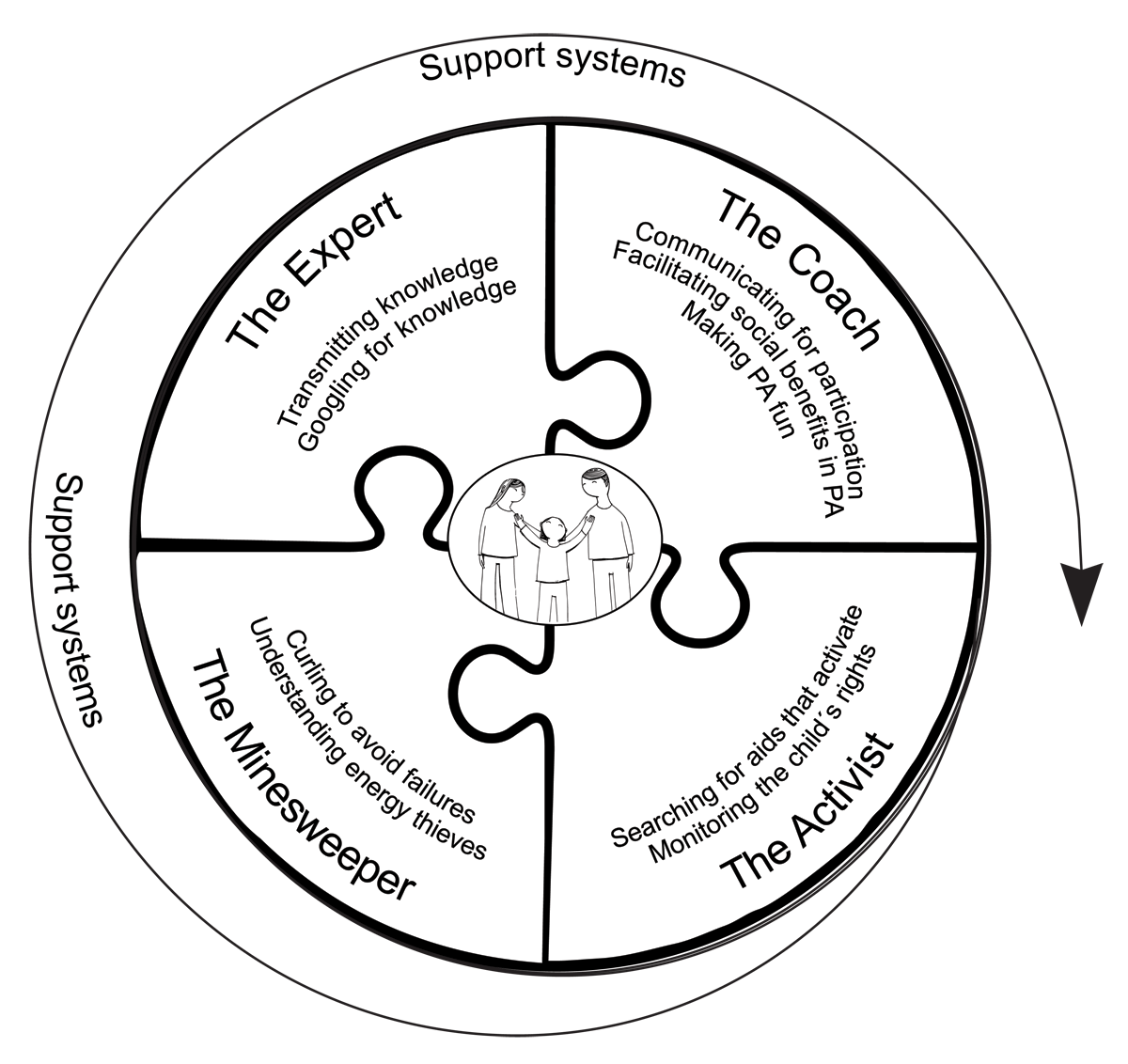
Figure 1
A narrative model illustrating how parents of disabled children struggle between roles to facilitate physical activity.