
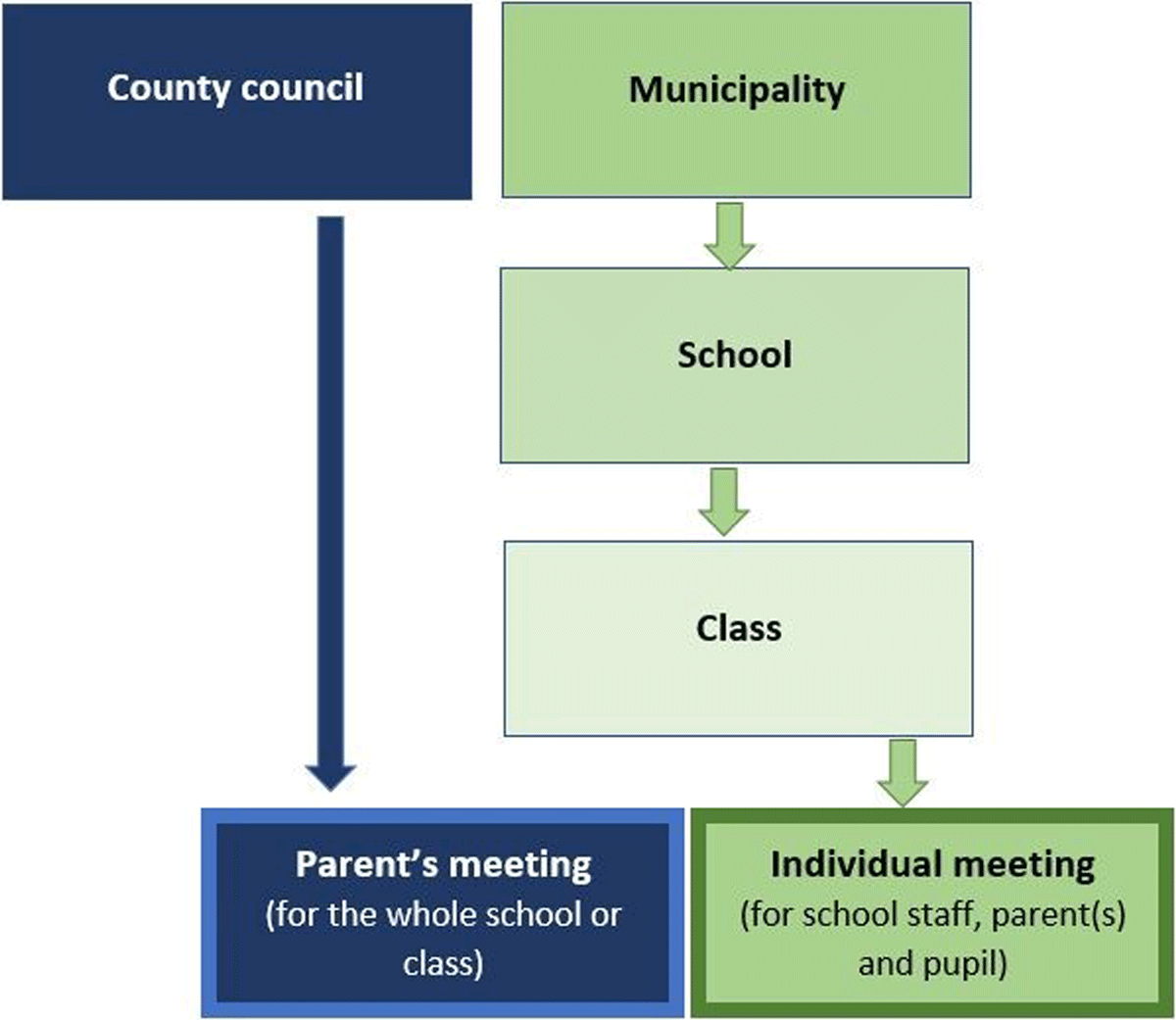
Figure 1
Distribution of responsibilities between county councils and municipalities for hiring interpreters for deaf parents.
Table 1
Demographic background of four cases focused upon in this study.
| Case | Kim | Alex | Lee | Drew |
|---|---|---|---|---|
| Age at project start | Late 20s | Mid-30s | Mid-20s | Mid-30s |
| Ethnicity | White ethnic Swede | White ethnic Swede | Pre-teen migrant from the Middle East | White ethnic Swede |
| Deafness | Since birth | Since birth | At 5 years of age due to meningitis | Since birth |
| Family background | All deaf family | Hearing family | Hearing family | All deaf family |
| Educational background | Signing pre-school Sign bilingual deaf school University professional degree | Signing pre-school Sign bilingual deaf school University professional degree | Sign bilingual deaf school (on arrival in Sweden) University professional degree | Sign bilingual deaf school |
| Employment | Permanent employment at a governmental agency, stable income | Permanent employment at a deaf school, stable income | Short-term project assignments, no stable income until recently | Temporary employment, no stable income; (unsuccessfully) tried to establish a private company |
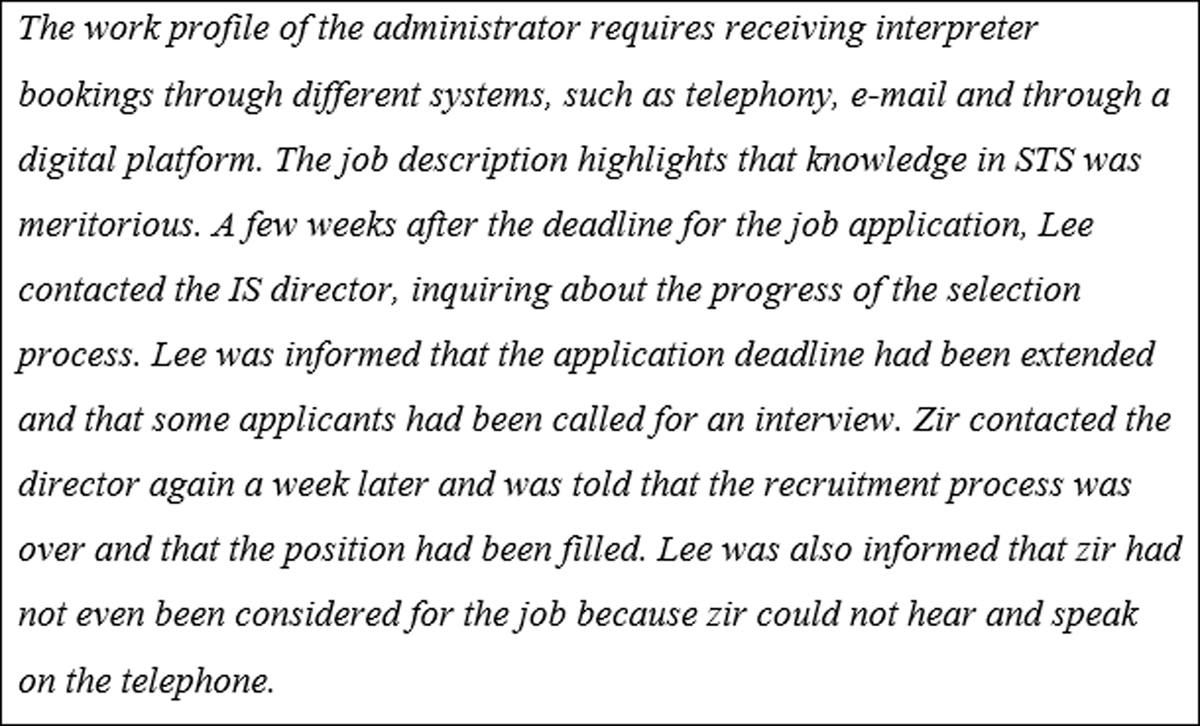
Vignette 1
Positioning deaf applicants as passive patients.
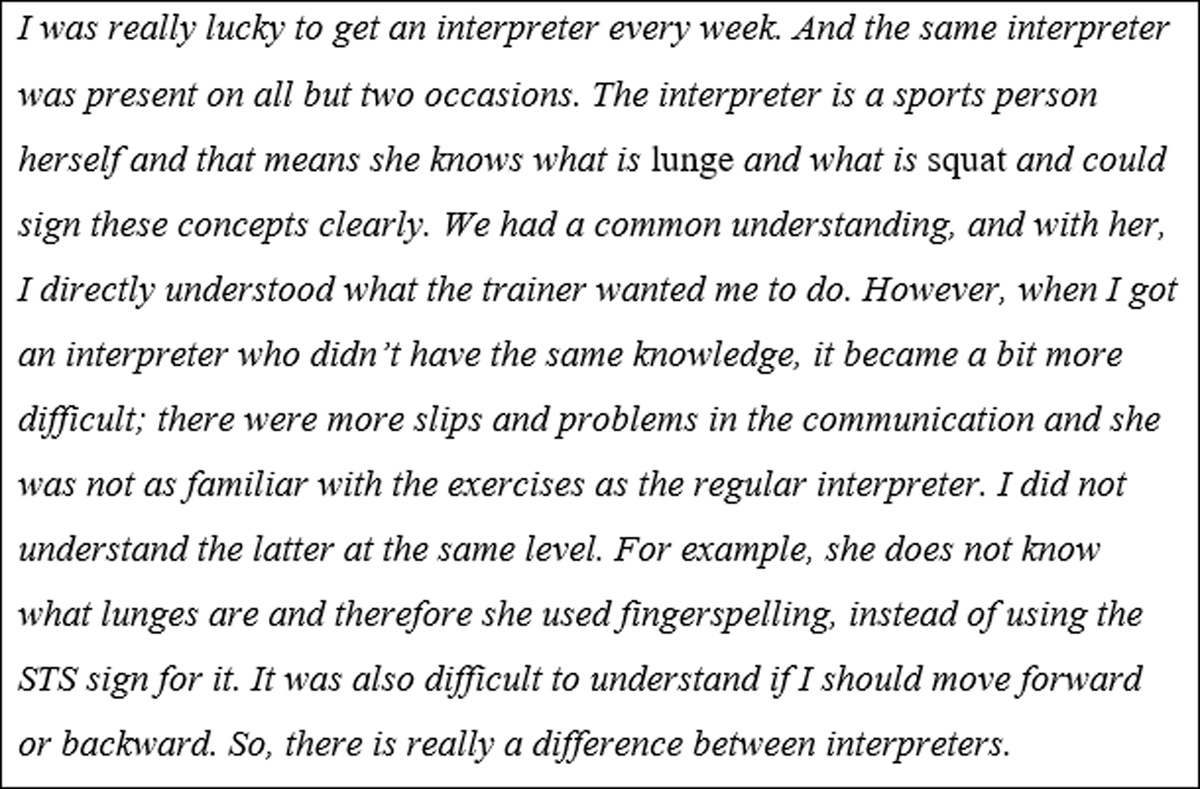
Vignette 2
Activity related skills—a facilitative dimension of STS-IS.
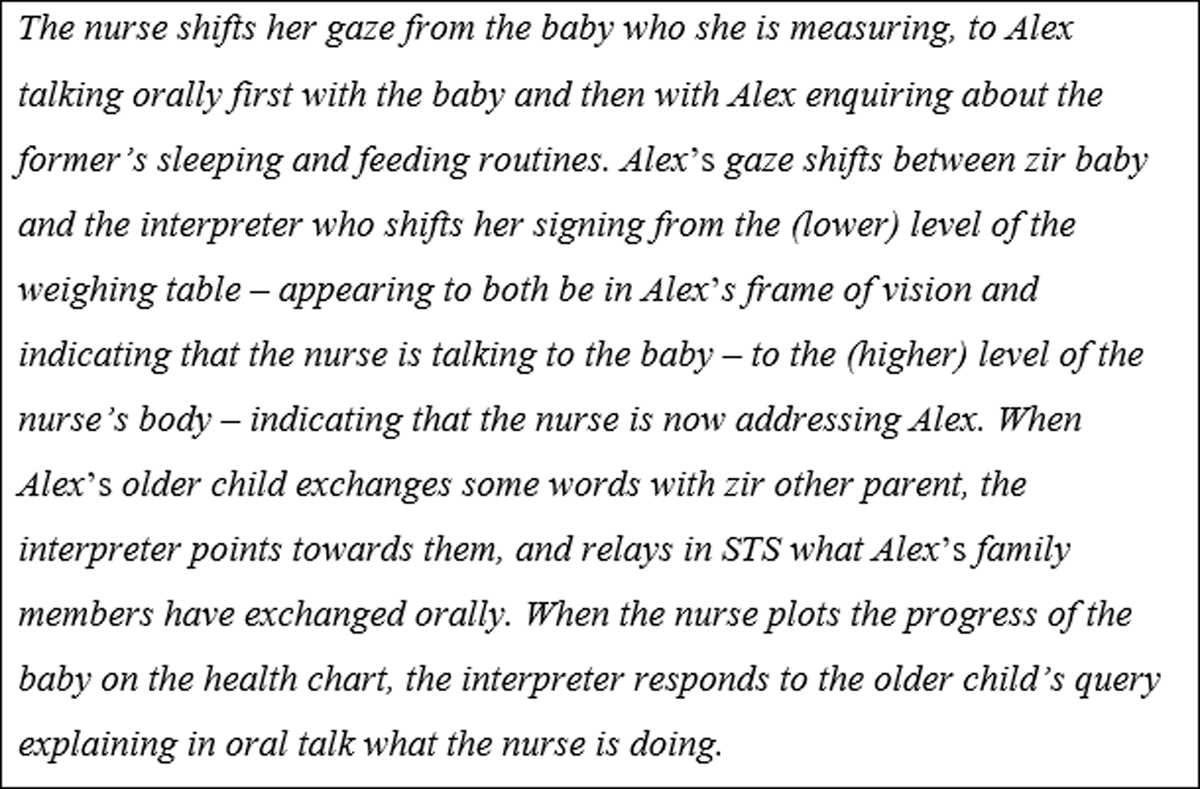
Vignette 3
Enabling multiparty communication—embodied positioning and engagements.
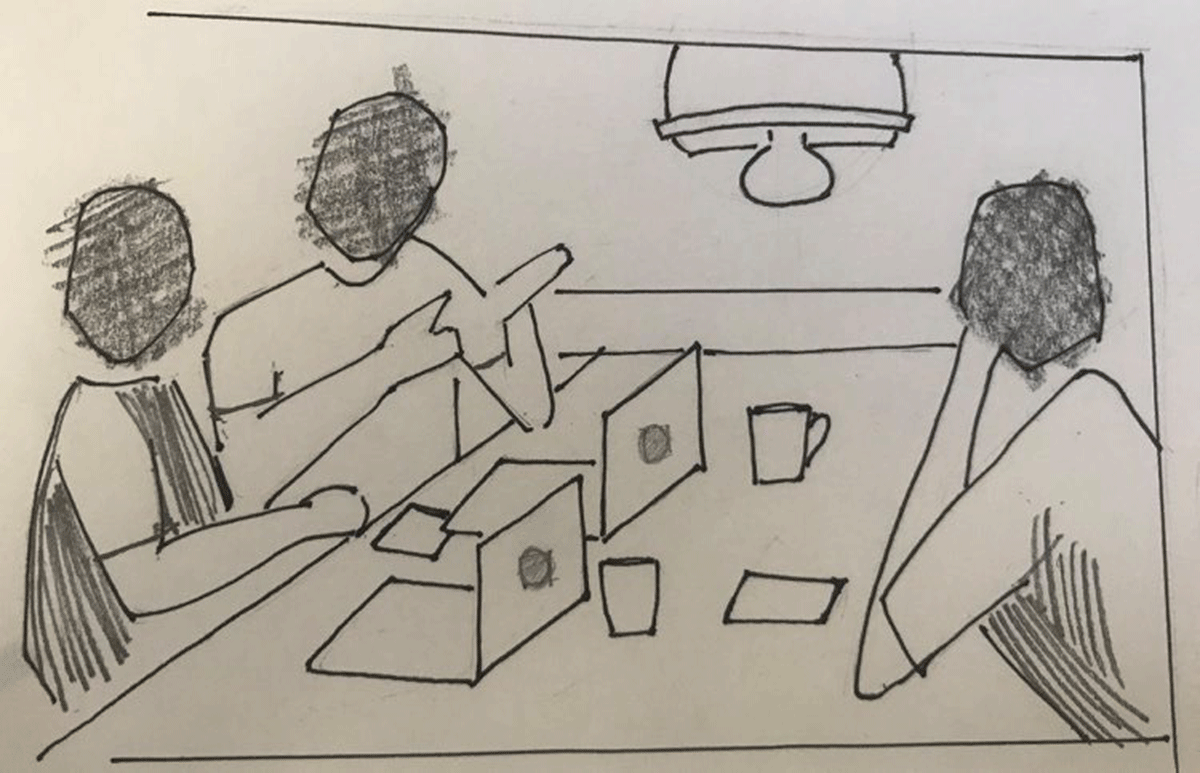
Figure 2
Negotiating interpretation schedules after dinner ‘as soon as possible’ “asap”.
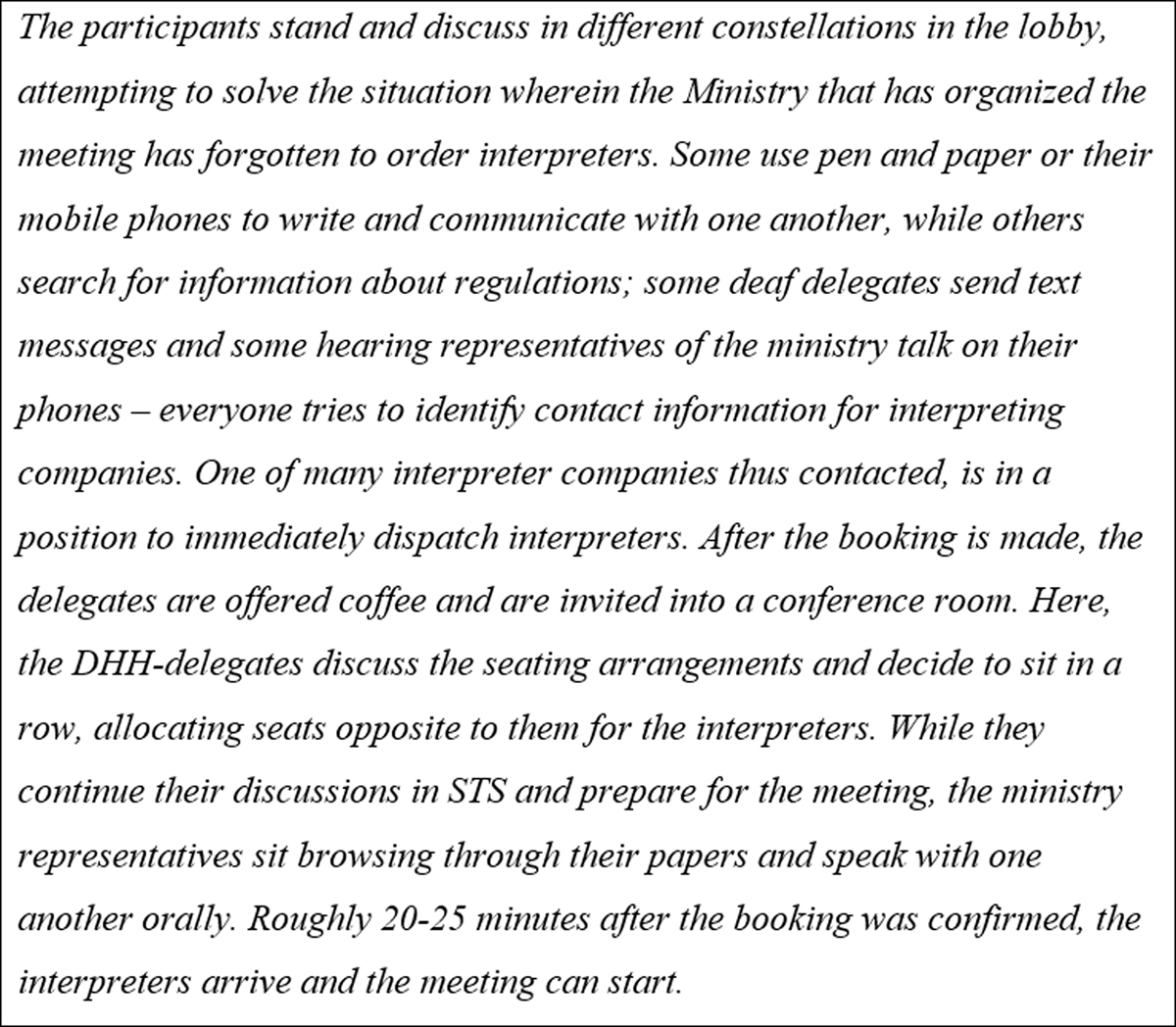
Vignette 4
Responsibilities for ordering interpreters—the circus of interpretation policies in action.
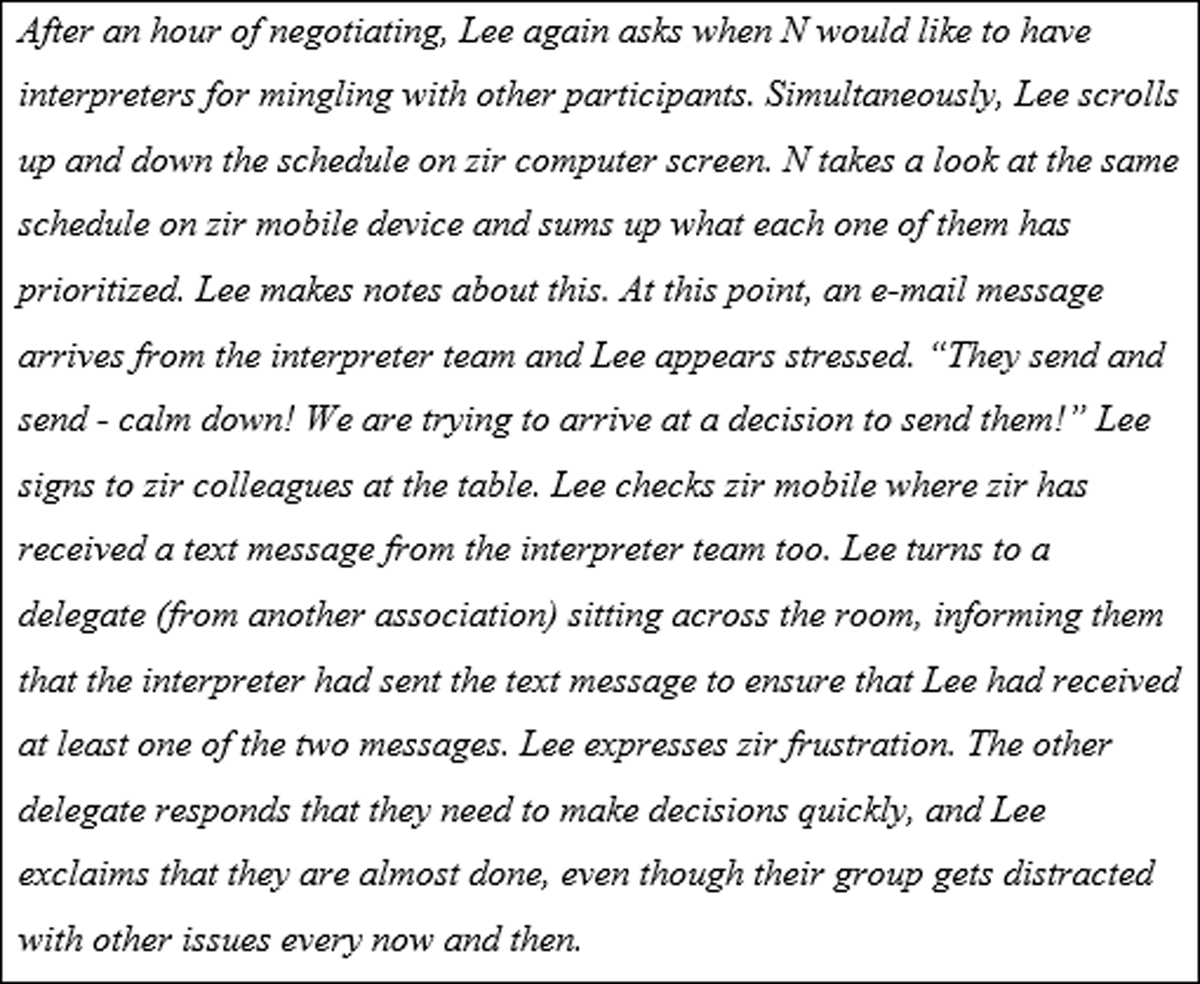
Vignette 5
Investing time for their own participation—Negotiating interpreter scheduling.
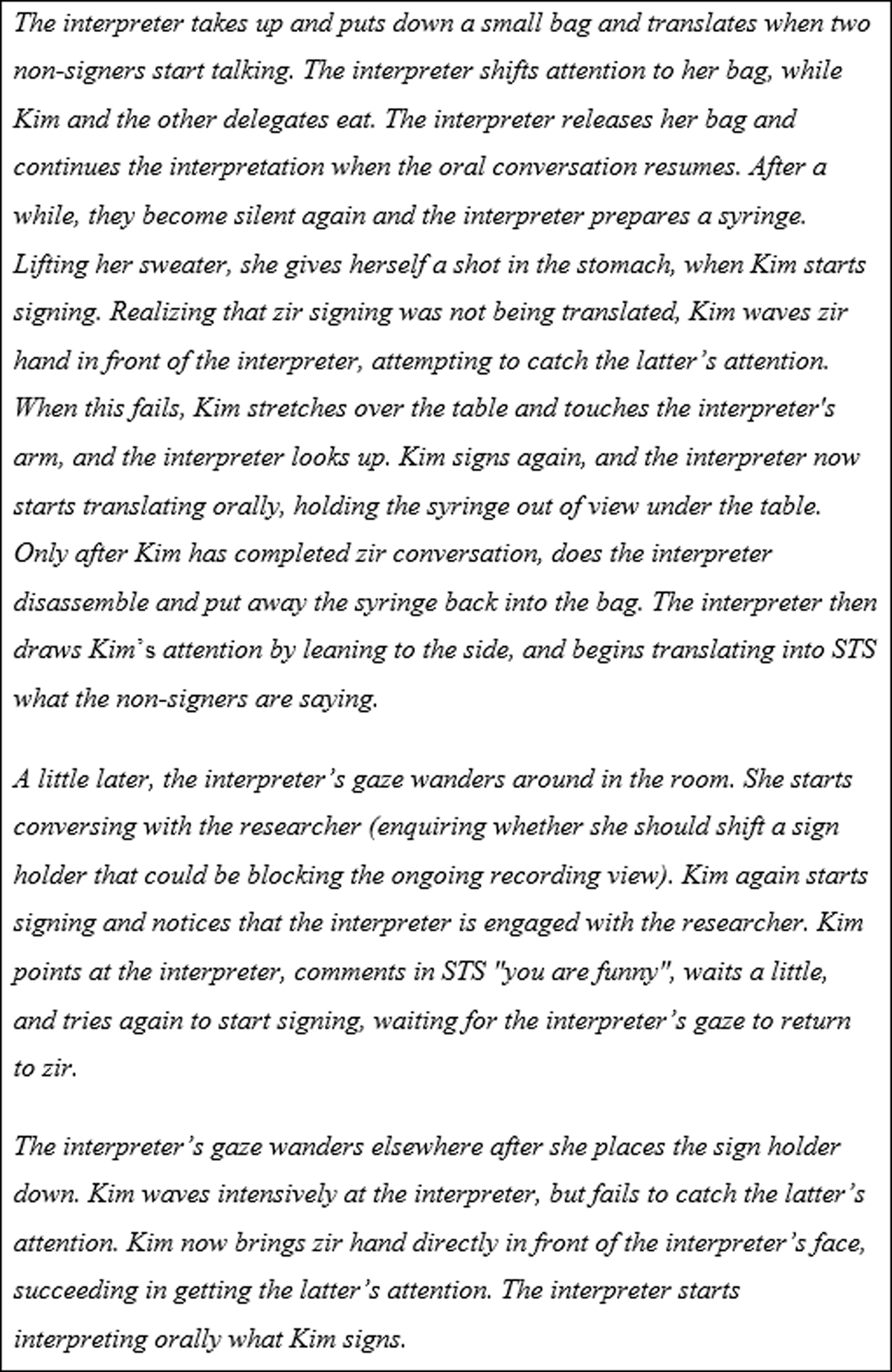
Vignette 6
Working to participate—getting the interpreter’s attention.