
Introduction
Autism Spectrum Disorder (ASD) is a complex neurodevelopmental disorder that can cause problems in socialization and communication, as well as limited or monotonous motor and interest patterns (APA 2013). The spectrum character of ASD includes people with a large range of cognitive and adaptive levels of functioning, including those who require a lot of help daily and those living alone. Adults with autism have significantly worse employment rates in comparison with neurotypical individuals. Work is much more than a stable income; it means order, reason, identity, and belonging to society, which are essential for mental health and well-being (Blank and Hayward 2009; Walsh and Tickle 2013).
In most developed countries, the unemployment rate is 4–7% (ABS 2016), but in the case of adults with ASD, it reaches up to 66% (Scott et al. 2018). Among employed autistic adults, there are several who struggle with underemployment, temporary employment, or low wages (Hedley et al. 2017). These differences have both personal and social expenses, with lifelong financial costs estimated at 1.424 million USD per person (Buescher et al. 2014). With a rising number of autistic young adults entering the workforce (Volkmar et al. 2017), the absence of comprehensive integration systems into the employment market will only continue to increase these disparities between neurotypical and disabled adults and perpetuate the inefficient use of skills offered by this segment of the population.
Strong literature has developed to comprehend these barriers, as well as the facilitators that help autistic adults to sustain their employment. Harmuth et al. (2018) scanned 161 studies and divided the determinants of the employment outcomes into three categories: person-related, environmental or contextual supports, and work-specific features. Self-knowledge, job-specific competencies, and increased adaptive functioning are considered person-related facilitators. Examples of environmental supports include the inclusion of workplace cultures, trained mentors or job advisors, and accommodations on an individual level. Examples of work-related facilitators include organized work and tasks, well-defined feedback, and appropriate job matching. On the other hand, the barriers to continued employment include poor social communication, sensory sensitivities, mental-health comorbidities, and poor employer attitudes. Taken together, these results support that providing autistic people with sustainable employment depends on system-wide adjustments as opposed to the change of individual behavior as a standalone intervention.
An appropriate conceptual framework that could be used in this integration is the occupational therapy framework of the Person-Environment-Occupation (PEO) Model (Law et al. 1996). The results of employment are better when the personal traits, environmental designs, and the requirements of the job are harmonized. However, as stated by Harmuth et al. (2018), not many employment programs have implemented a coordinated approach to it. Mentorship processes, in the long term, and employer education are currently underdeveloped in most settings, especially in non-high-income nations.
Lindsay et al. (2021) emphasize another important aspect of inclusion: disclosure of disability and workplace accommodation. Disclosure can be a prerequisite to accommodation, yet it also subjects the employee to stigma or discrimination. Autism is mostly not visible, which creates a dilemma for adults with ASD regarding when and how to reveal their condition (Lindsay et al. 2021; Sarrett 2017). Many prefer non-disclosure, or camouflaging, in which they mimic the typical ways of social life so as not to be discriminated against (Sarrett 2017). Although concealment can help in the prevention of prejudice, it usually results in mental distress, loneliness, and diminished support avenues. On the other hand, disclosure may create an opportunity to make individual adjustments such as flexible working hours, sensory adaptability, or job division, which increase engagement and work retention (CCRW 2026).
Nevertheless, the willingness of organizations to adapt to neurodiversity is inconsistent. Numerous employers and human-resource practitioners are not knowledgeable about the concept of invisible disability and might undervalue actual strengths and overemphasize perceived weaknesses (Lindsay et al. 2021). This leads to the underestimation or exclusion of autistic employees in spite of the fact that they have often excelled in jobs that involve precision, system, and rule (Scott et al. 2017; Wong et al. 2018). Properly supported, ASD employees are capable of being exceptionally reliable, attentive, ethical, and having low absenteeism, which is becoming critically important in technology and data analysis, as well as manufacturing industries.
The right to inclusive employment has been expressed by international requirements at a policy level. Both the United Nations Convention on the Rights of Persons with Disabilities (UNCRPD 2006) and the Policy on Employment of Persons with Disabilities (2010) by the World Health Organization (WHO) confirm that people with disabilities are entitled to work equally with others and receive reasonable accommodations. However, its implementation is still disjointed. Supported-employment interventions and corporate neurodiversity initiatives are implemented in high-income nations, but a lack of awareness, financing options, and enforcement strategies is still prevalent in low- and middle-income areas (Harmuth et al. 2018). It is necessary to bridge such policy-practice gaps by using multi-level measures that include governmental stimulus, professional training, and employer responsibility.
The aggregate evidence presented by Harmuth et al. (2018) and Lindsay et al. (2021) suggests that the promotion of inclusive employment of autistic adults requires a multifaceted approach that includes the following three pillars: (1) empowerment of autistic individuals by means of skills training and self-advocacy; (2) workplace transformation with accommodations and neurodiversity education; and (3) institutional reinforcement that will maintain equality and long-term support. These pillars represent a paradigm shift in perspective from deficit-based rehabilitation into strengths-based inclusion, where autistic people are appreciated due to their unique cognitive approaches and contributions.
However, critical gaps still exist within the literature. First, the majority of peer-reviewed articles come from Western countries with high incomes and predominantly examine the experiences of adults with autism who have fewer requirements for support. Second, only a small number of studies comprehensively assess workplace accommodation policies and inclusive employment practices globally and integrate evidence at different levels of organization, policy-making, and the individual. Thus, there is a need for a synthesis of knowledge that will not only identify best practices but also reveal gaps in current knowledge and priorities for future research. This article fills this gap through systematically reviewing global workplace accommodation policies and practices related to inclusive employment of autistic adults. Through integrating the knowledge gained from the occupational therapy literature, disability studies, organizational psychology, and employment policies, this review expands the understanding of factors that facilitate sustainable employment, workplace accommodation, and practices.
Methodology
For the purpose of improving the methodological transparency, replicability, and rigor of this systematic review, the review process has been conducted in accordance with the guidelines of PRISMA (Preferred Reporting Items for Systematic Reviews and Meta-Analyses) (Shamseer et al. 2015). The primary objective was to identify and synthesize global research literature regarding workplace accommodation policies and inclusive employment strategies that contribute to job satisfaction, retention, and quality of life for adult individuals diagnosed with ASD between the ages of 18–65. The methodology of the systematic review—which involves the selection criteria, search strategy, data collection, and synthesis—was pre-planned. No registered review protocol was available a priori.
The inclusion and exclusion criteria were based on a structured PICO framework. The population (P) comprised autistic adults in the 18–65 age range who were employed or willing to join employment in any field across nations. The intervention (I) included work arrangements and non-discriminatory work policies like employment-based coaching, flexible working hours, sensory-sensitive workplaces, disclosure support, assistive technology, and reasonable accommodations. The comparison (C) was made based on workplaces or regions where there is no formal accommodation policy or a comprehensive employment program, and the outcomes (O) were job satisfaction, productivity, employment retention, inclusion at the workplace, and quality of life.
Articles were eligible to be in the study provided that (a) they were peer-reviewed empirical or review articles, (b) were published within 2015–2025, (c) were based on comparative, cross-sectional, cohort, randomized, qualitative, or mixed-method designs and conducted research on workplace accommodations of autistic adults. Articles left out were ones that focused on children, adolescents, or school-based populations; were not focused on clinical or therapeutic interventions; were not related to employment; were not written in English; as well as commentaries, editorials, or conference abstracts lacking peer-reviewed data. Articles that did not report employment outcomes of stigma, diagnosis, or awareness were also excluded.
A literature search was carried out systematically in five major electronic databases—PubMed, Cochrane Library, CINAHL, Medline, and PsycINFO—between June and September 2025. A combination of MeSH terms and Boolean operators was used to formulate the search strategy that was intended to bring the widest possible evidence base. Search terms consisted of variations of Autism Spectrum Disorder +ASD +autistic adults/employees/workers, with search terms such as workplace accommodation, inclusive employment, job coaching, supported employment, assistive technology, and reasonable adjustments. Other outcome-related terms included job satisfaction, employee performance, workplace inclusion, and quality of life.
Table 1 summarizes the search strings that were used in each of the databases. The first search has provided 104 records (PubMed = 4; Cochrane = 22; CINAHL = 12; Medline = 33; PsycINFO = 33). Once the duplicates were eliminated, 95 title and abstract screening records were left. After sifting through the list of articles by filtering out the ineligible ones, a total of 35 full-text articles were obtained to be subjected to quality assessment. Out of those, 23 studies were excluded based on their irrelevance, unfinished data, or their inability to match any outcome. The other 12 studies passed the first inclusion criteria, and upon verification of data, 9 studies were selected to be included in the synthesis (Table 2).
Table 1
Search strings used across the five selected major electronic databases to identify articles that could be included in the literature review.
| DATABASES | STRINGS |
|---|---|
| PubMed | ((“Autism Spectrum Disorder”[Mesh] OR autis*[tiab] OR asperger*[tiab] OR ASD[tiab] OR “autistic adults”[tiab] OR “autistic employees”[tiab] OR “autistic workers”[tiab]) AND (“Workplace accommodation”[tiab] OR “reasonable adjustment*”[tiab] OR “inclusive employment”[tiab] OR “workplace inclusion”[tiab] OR “job coaching”[tiab] OR “supported employment”[tiab] OR “assistive technolog*”[tiab] OR “sensory-friendly”[tiab] OR “employment policy”[tiab] OR “disability support”[tiab]) AND (“Employment”[Mesh] OR employ*[tiab] OR “employment participation”[tiab] OR “job satisfaction”[tiab] OR “workplace retention”[tiab] OR “employee performance”[tiab] OR “productivity”[tiab] OR “quality of life”[tiab])) |
| Cochrane Library | (((autism) OR (ASD) OR (autistic adults) OR (autistic employees)) AND ((workplace accommodations) OR (job coaching) OR (inclusive employment policies) OR (reasonable adjustments))) AND ((employment outcomes) OR (job satisfaction) OR (retention) OR (performance) OR (workplace inclusion) OR (quality of life))) |
| CINAHL | (MM “Autism Spectrum Disorder” OR MM “Asperger Syndrome” OR autism OR ASD OR “autistic adults” OR “autistic workers”) AND (XB “workplace accommodation” OR XB “job accommodation” OR MJ “reasonable adjustments” OR MJ “inclusive employment” OR MJ “supported employment” OR MJ “assistive technology” OR TI “workplace inclusion” OR TI “employment policy”) AND (MW “employment outcomes” OR MJ “employment” OR MJ “job satisfaction” OR MJ “employee retention” OR MJ “work performance” OR MJ “productivity” OR MJ “quality of life”) |
| Medline | (autis* OR asperger* OR ASD OR “autistic adults” OR “autistic employees” OR “autistic workers”) AND (“workplace accommodations” OR “job coaching” OR “supported employment” OR “inclusive employment” OR “reasonable adjustments” OR “assistive technology” OR “sensory-friendly design” OR “employment policy”) AND (“employment participation” OR “job satisfaction” OR “employee performance” OR “retention” OR “workplace inclusion” OR “quality of life”) |
| PsycINFO | (DE “Autism Spectrum Disorders” OR autis* OR asperger* OR ASD OR “autistic employees” OR “autistic adults” OR “autistic workers”) AND (“workplace accommodations” OR “job coaching” OR “reasonable adjustments” OR “inclusive employment” OR “supported employment” OR “assistive technology” OR “employment policy” OR “workplace inclusion”) AND (“employment participation” OR employ* OR “job satisfaction” OR “employee well-being” OR retention OR performance OR “quality of life” OR “workplace inclusion”) |
Table 2
Final studies included in the review.
| NO. | REFERENCES | STUDY TITLE |
|---|---|---|
| 1 | (Gentry et al. 2015) | Reducing the Need for Personal Supports among Workers with Autism Using an iPod Touch as an Assistive Technology: Delayed Randomized Control Trial |
| 2 | (Ciccarelli and Hodges 2016) | A Personal Digital Assistant Intervention Reduced Job Coaching Support Hours without Reducing Work Performance among Workers with Autism |
| 3 | (Zhou et al. 2025) | Employment-Related Assistive Technologies for Autistic Individuals: A Scoping Review |
| 4 | (Roux et al. 2019) | Employment Policy and Autism: Analysis of State Workforce Innovation and Opportunity Act (WIOA) Implementation Plans |
| 5 | (Lindsay et al. 2021) | Disclosure and Workplace Accommodations for People with Autism: A Systematic Review |
| 6 | (Wehman et al. 2017) | Effects of an Employer-Based Intervention on Employment Outcomes for Youth with Significant Support Needs due to Autism |
| 7 | (Schall et al. 2015) | Employment Interventions for Individuals with ASD: The Relative Efficacy of Supported Employment with or without Prior Project SEARCH Training |
| 8 | (McKnight-Lizotte, 2018) | Work-Related Communication Barriers for Individuals with Autism: A Pilot Qualitative Study |
| 9 | (Wehman et al. 2016) | Employment for Adults with Autism Spectrum Disorders: A Retrospective Review of a customized Employment Approach |
The process of screening was done in two phases: title-abstract screening, followed by full-text screening, based on PRISMA guidelines. Each record was independently evaluated by two reviewers, and any disagreement was resolved by discussing the points until a common agreement was achieved. The issue of reviewer consistency was addressed using independent screening followed by consensus building. Since there was very little disagreement between reviewers, and this was sorted out through discussion, no inter-rater reliability analysis (such as Cohen’s kappa) was done. The process of sequential screening is depicted in Figure 1: the identification of databases is made, and nine studies are included. This is a multi-stage screening process that increased reliability and minimized selection bias.
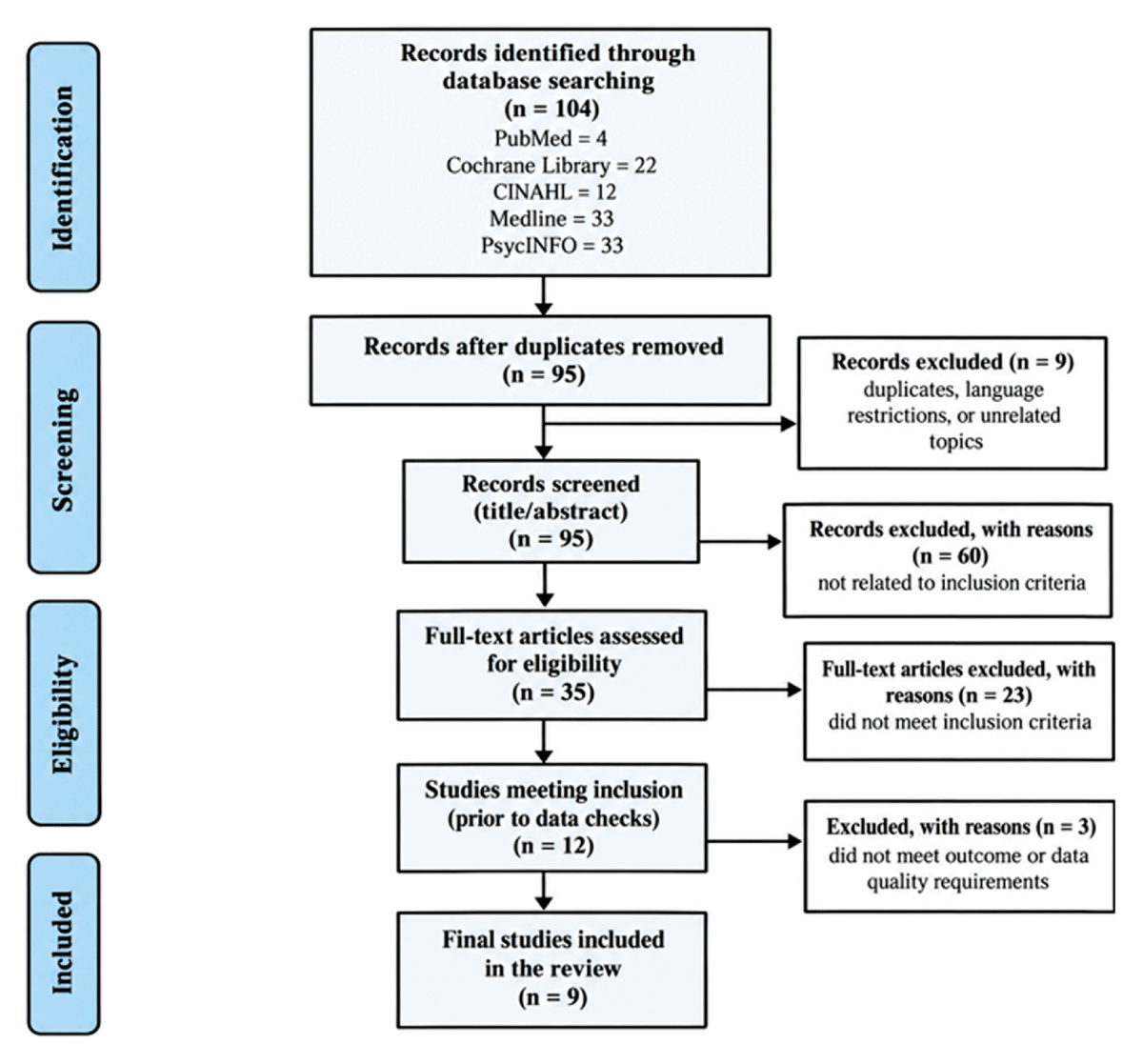
Figure 1
PRISMA flow chart diagram for selection of studies to be included in the review.
A structured template based on Excel was used to retrieve the data and extract information about the study design, country, demographics of the participants, characteristics of the interventions, outcome measures, and essential findings. The extracted data were grouped according to characteristics of the study, type of intervention, employment-related outcomes, and thematic domains. Quantitative data (e.g., job retention percentages, satisfaction rates, or p-values) were tabulated and compared, and qualitative results were thematically synthesized to determine common ideas around inclusion, disclosure, and organizational culture.
The critical appraisal of all the included studies was done by employing validated instruments for different types of study designs. Randomized controlled trials, cohort studies, and qualitative studies were critically appraised using the corresponding Critical Appraisal Skills Programme (CASP) checklist, while quasi-experimental and scoping reviews were evaluated using the corresponding tools provided by the Joanna Briggs Institute (JBI) critical appraisal tools (Barker et al. 2024; CASP 2024; Page et al. 2021). The PRISMA 2020 checklist was used to improve the reporting of the systematic review. A three-grade classification system of high, moderate, and low quality was employed to make an easy comparison between the different types of methodological designs of the included studies. Therefore, a Review Criteria Score (1–3) was given to all of the selected articles, in which 3 represents a high-quality article (less risk of bias and methodologically rigorous); 2 represents a moderate-quality article (methodological flaws but still providing information); and 1 represents low-quality articles (largely flawed methodologically and more prone to risks of bias). The quality assessment is given in Table 3 below. Out of the nine studies selected, five were found to be of high quality, three were moderate quality, and one study was low quality.
Table 3
Quality appraisal of the studies selected for the systematic review.
| SR. NO. | REFERENCE | STUDY TYPE | TOOL USED | BIAS RISK | STRENGTHS | LIMITATIONS | OVERALL QUALITY | TOOL SCORE | REVIEW CRITERIA SCORE (1–3) |
|---|---|---|---|---|---|---|---|---|---|
| 1 | (Gentry et al. 2015) | RCT (Delayed design) | CASP RCT Checklist | Low | Clear randomization; validated measures; strong control design | Small sample size (n = 30); limited generalizability | High Quality | 9 | 3 |
| 2 | (Ciccarelli and Hodges 2016) | Experimental field study | JBI Quasi-Experimental Checklist | Moderate | Real-world intervention; objective outcome data | Lack of randomization; short follow-up | Moderate Quality | 8 | 2 |
| 3 | (Zhou et al. 2025) | Scoping review | JBI Scoping Review Tool | Low | Comprehensive search; transparent synthesis; global scope | Limited appraisal of study bias; heterogeneity in evidence | High Quality | 9 | 3 |
| 4 | (Roux et al. 2019) | Policy analysis | CASP Qualitative/Document Review | Moderate | Systematic policy coding; clear inclusion framework | No empirical outcome measures; U.S.-only scope | Moderate Quality | 7 | 2 |
| 5 | (Lindsay et al. 2021) | Systematic review | PRISMA 2020 + JBI | Low | High transparency; multi-database search; meta-synthesis | Few quantitative studies included | High Quality | 10 | 3 |
| 6 | (Wehman et al. 2017) | Quasi-experimental | JBI Quasi-Experimental Checklist | Moderate | Strong intervention fidelity; measurable workplace outcomes | No blinding; limited control group | Moderate Quality | 8 | 2 |
| 7 | (Schallet al. 2015) | Comparative cohort | CASP Cohort Checklist | Low | Large sample; clear comparative design; objective measures | Non-randomized allocation | High Quality | 9 | 3 |
| 8 | (McKnight-Lizotte 2018) | Qualitative (interview) | CASP Qualitative Checklist | Moderate | Rich participant insight; thematically rigorous | Small sample (n = 10); limited generalization | Moderate Quality | 7 | 2 |
| 9 | (Wehman et al. 2016) | Retrospective cohort | JBI Analytical Cross-sectional Tool | Moderate | Large dataset; long-term outcomes; real-world data | No randomization; retrospective bias | Moderate Quality | 8 | 2 |
[i] Legend: Critical appraisal of study quality using standardized tools (CASP, JBI, PRISMA). Each study is rated for bias risk, strengths, limitations, and overall quality score on a 1–3 scale (1 = Low, 3 = High).
Abbreviations: CASP: Critical Appraisal Skills Programme; JBI: Joanna Briggs Institute; PRISMA: Preferred Reporting Items for Systematic Reviews and Meta-Analyses; RCT: Randomized Controlled Trial; FSIQ: Full-Scale Intelligence Quotient.
Synthesis involving quantitative and qualitative approaches was utilized in structuring the final synthesis. Meta-analysis was not conducted since the selected studies were highly heterogeneous based on the design of the study, type of interventions used, outcome measures, and the way results were reported. Hence, synthesis was done through narrative synthesis of findings by comparing the characteristics of the studies, approaches utilized in the interventions, and employment outcomes. The findings from the quantitative studies were used to highlight the magnitude of employment outcomes, while the qualitative and policy-based studies were analyzed using thematic analysis to identify recurring patterns with regard to inclusion of employees with mental disabilities at workplaces, disclosure, organizational approaches, and legislative aspects. Thematic synthesis identified the patterns for different interventions, including assistive technologies, supported employment interventions, and policy inclusion and disclosure, which are summarized in Table 6. This review is based on secondary data; therefore, no ethical approval was needed. The review followed academic integrity, transparency, and reproducibility principles.
Results
The systematic review included nine studies of various designs, settings, and rigor. These collectively contribute to an emerging international profile of inclusive employment for autistic adults. Quantitative and qualitative data are synthesized under four major evidence tables that detail study characteristics, intervention strategies, employment outcomes, and thematic patterns. Overall, consistent benefits accrued across the dimensions of independence, job performance, and retention under conditions of structured accommodations or assistive technologies. Of the various intervention approaches reviewed, supported-employment frameworks and customized job designs had the most empirical support, while policy-driven inclusion and disclosure support were identified as key systemic facilitators. Limitations in design, population, and outcome measures restrict the ability to conduct meta-analysis; convergence across findings suggests that technological innovation, individualized support, and alignment of organizational policy drive sustainable inclusion within the workplace.
Table 4 outlines the detailed characteristics of the nine studies that met the inclusion criteria from various study designs: randomized and quasi-experimental trials, as well as qualitative and policy analyses. The autistic adults in these studies were aged 18–65 years, and most of the research was located within high-income contexts including the United States and Australia. Interventions were heterogeneous, including but not limited to digital assistive tools through employer-based mentoring, policy inclusion, and customized employment models, but all had the aim of enhancing workplace functioning, independence, and job retention. The most relevant outcomes measured across the studies included job satisfaction, duration of retention, and perceptions of inclusion. Most of the studies identified positive associations between structured accommodations and employment success. Indeed, assistive technology interventions correspondingly revealed a strong immediate gain in independence, while policy-driven or employer-embedded models seem to facilitate longer-term retention. Despite methodological heterogeneity in sample size and methodology, evidence cumulatively points towards individualized and technology-supported adjustments as being key for viable employment.
Table 4
Characteristics of each study, as well as the rationale for their inclusion and summarized key results.
| SR NO. | REFERENCES | STUDY TYPE | REASON FOR INCLUSION | POPULATION (P) | INTERVENTION (I) | OUTCOME (O) | KEY RESULTS |
|---|---|---|---|---|---|---|---|
| 1 | (Gentry et al. 2015) | RCT (delayed design) | Directly examines assistive-tech workplace adaptation for employed autistic adults | Autistic adults in supported employment | iPod Touch for task sequencing and reminders | Independence, task completion, reduced job-coach time | Significantly reduced external support hours without decline in job performance |
| 2 | (Ciccarelli and Hodges 2016) | Experimental field study | Focuses on workplace technology reducing support dependence | Adult employees with ASD | PDA device to schedule, cue, and structure job tasks | Job performance, independence | Coaching hours reduced >30% while maintaining productivity |
| 3 | (Zhou et al. 2025) | Scoping review | Synthesizes global tech-based accommodations | Autistic adults in employment settings | Digital/ergonomic/organizational assistive tools | Job retention, independence, productivity | Positive effects of digital tools on self-management; identifies access inequity |
| 4 | (Roux et al. 2019) | Policy/document analysis | Evaluates inclusive employment legislation | Adults with ASD under state policy frameworks | Inclusive employment mandates & accommodation provisions | Policy alignment, inclusion metrics | Found wide policy variability; stronger outcomes in states with ASD-specific inclusion plans |
| 5 | (Lindsay et al. 2021) | Systematic review | Core study on disclosure and accommodation practices globally | Autistic adults in employment | Disclosure support, flexible scheduling, sensory-friendly adaptation | Job satisfaction, inclusion, retention | Formal accommodations linked to higher job satisfaction and longer retention |
| 6 | (Wehman et al. 2017) | Quasi-experimental intervention | Employer-driven job training and inclusion | Older adolescents and young adults with ASD | Employer mentoring + on-site supports | Employment retention, satisfaction | Intervention improved job placement & retention by ≈40% vs controls |
| 7 | (Schall et al. 2015) | Comparative cohort study | Tests structured supported-employment programs | Adults with ASD seeking work | Supported employment ± Project SEARCH training | Employment rate and stability | Project SEARCH group 73% employed vs 47% controls; longer retention |
| 8 | (McKnight-Lizotte 2018) | Qualitative (interviews) | Explores lived workplace experiences & barriers | Employed autistic adults | Communication and social-support experiences | Workplace inclusion & satisfaction | Identified stigma, disclosure difficulties, & limited peer understanding |
| 9 | (Wehman et al. 2016) | Retrospective cohort review | Evaluates long-term customized employment model | Adults with ASD in community jobs | Customized job-matching & task redesign | Retention, satisfaction, QOL | 87% retention at 12 months; higher satisfaction vs traditional placement |
[i] Abbreviations: ASD: Autism Spectrum Disorder; QOL: Quality of Life.
Table 5 summarizes the intervention typologies and workplace accommodation strategies adopted across the included studies. As can be noted in this table, technological approaches, such as digital prompting via iPod Touch or Personal digital assistant (PDA) devices, showed great reductions in reliance on job coaching, emphasizing how valuable assistive technology can be for fostering autonomy. Both behavioral and organizational interventions, structured mentoring, and supported employment frameworks maintained a particular focus on skill development, role clarity, and ongoing supervision that seemed to enhance confidence and task efficiency. Policy-level accommodations, notably represented by the WIOA analysis, underlined systemic levers which may institutionalize the principles of inclusivity within the employment law regime. Additionally, some organizational strategies are identified, such as flexible scheduling, sensory-friendly design, and formal disclosure support, which are crucial in building a more equitable workplace environment. Table 5 also reveals strong collaboration between stakeholders like employers, job coaches, HR teams, and governmental agencies. Overall, the synthesis shows that combined, multi-level interventions with technological, behavioral, and policy elements result in the most long-lasting influences on inclusive employment practices.
Table 5
Intervention type and workplace accommodation strategy.
| NO. | REFERENCE | INTERVENTION/STRATEGY | TYPE OF ACCOMMODATION | IMPLEMENTATION FEATURES | STAKEHOLDER INVOLVEMENT |
|---|---|---|---|---|---|
| 1 | (Gentry et al. 2015) | iPod Touch assistive technology | Technological (digital prompting) | Personalized task sequencing and self-management | Job coaches, tech trainers |
| 2 | (Ciccarelli and Hodges 2016) | Personal digital assistant (PDA) | Technological + behavioral | Task reminders, scheduling, work structure | Supervisors, occupational therapists |
| 3 | (Zhouet al. 2025) | Review of employment-related assistive tech | Mixed interventions | Range: mobile aids, sensory tools, ergonomic design | Review of cross-sector implementations |
| 4 | (Roux et al. 2019) | Policy inclusion under WIOA | Policy-level accommodation | Policy language promoting inclusive hiring | Governmental workforce agencies |
| 5 | (Lindsay et al. 2021) | Review of workplace disclosure and supports | Organizational | Reasonable adjustments, flexible scheduling | Employers, HR departments |
| 6 | (Wehman et al. 2017) | Employer-based training model | Behavioral/organizational | On-site mentoring, structured supervision | Employers, vocational rehab counselors |
| 7 | (Schall et al. 2015) | Supported employment & Project SEARCH | Vocational/training | Job matching, workplace mentors, soft-skills training | Multi-stakeholder collaboration |
| 8 | (McKnight-Lizotte 2018) | Communication support exploration | Social/interpersonal | Analysis of peer and supervisor communication barriers | Employees, managers |
| 9 | (Wehman et al. 2016) | Customized employment approach | Individualized accommodation | Job carving, modified tasks, tailored supervision | Job developers, employers |
[i] Legend: Table 5 summarizes the intervention or accommodation strategy applied in each study, categorized by type (technological, behavioral, organizational, or policy-level) and stakeholder involvement.
Abbreviations: ASD: Autism Spectrum Disorder; HR: Human Resources; WIOA: Workforce Innovation and Opportunity Act.
Table 6 outlines the quantitative and qualitative results for all interventions in the review, providing a comparison of the different methods in yielding various employment performance and retention outcomes. The randomized and quasi-experimental studies showed statistical significance for reduction in support hours and coaching dependence, with p < 0.05 in Gentry et al. (2015) and Ciccarelli and Hodges (2016). Similarly, large-scale cohort studies in Schall et al. (2015) and Wehman et al. (2016; 2017) documented employment rates between 73% and 87%, confirming the success of structured and personalized models over long-term follow-ups. Systematic and scoping reviews corroborated these findings by highlighting access to assistive technology and safety of disclosure as consistent predictors of workplace success. Qualitative findings, for example, McKnight-Lizotte (2018), further deepened the evidence to include persisting communication and stigma challenges after accommodations were provided. This table shows a clear trend: targeted interventions, when combined with inclusive organizational culture and leadership support, significantly improve the autonomy, productivity, and retention of autistic employees.
Table 6
Employment-related outcomes across studies.
| NO. | REFERENCE (IN-TEXT) | INTERVENTION/EXPOSURE | COMPARATOR | SAMPLE (N) | SETTING & DURATION | PRIMARY EMPLOYMENT OUTCOMES (DEFINITION) | QUANTITATIVE RESULTS (AS REPORTED) | STATISTICAL SIGNIFICANCE | SECONDARY/IMPLEMENTATION FINDINGS | NOTES ON BIAS/LIMITATIONS |
|---|---|---|---|---|---|---|---|---|---|---|
| 1 | (Gentry et al. 2015) | iPod Touch digital prompting (task sequencing, reminders) | Delayed-start control (services as usual) | N = 30 autistic workers | USA; supported employment; ~6 months | Support hours (job-coach time); task completion/accuracy; independence | Support hours ↓ ~43%; task accuracy maintained at baseline | p < 0.05 (support hours) | Better punctuality and self-management; high acceptability | Small N; single region; short follow-up |
| 2 | (Ciccarelli and Hodges 2016) | Personal Digital Assistant (PDA) for scheduling and cueing | Pre-post withingroup; usual supervision | N = 20 autistic employees | Australia; workplace field study; 12 weeks | Job-coaching hours; productivity/quality ratings | Coaching hours ↓ ~30%; work quality unchanged | p ≈ 0.02 (coaching hours) | Improved time-management; supervisors accepted tech | Non-randomized; modest N; brief duration |
| 3 | (Zhou et al. 2025) | Employment-related assistive technologies (review of tools) | Varies across 32 included studies | Review (32 studies) | Global; 2010–2025 literature | Retention, independence, usability/adoption of tech | Multiple studies report retention ↑ ~15–25% with digital supports | Narrative (varied significance) | Cost/access barriers; training boosts adoption | Heterogeneity; limited RCTs; variable reporting |
| 4 | (Roux et al. 2019) | WIOA policy language with autism-specific inclusion | States without ASD-specific clauses | 51 state plans | USA; policy cycle 2014–2019 | Inclusion/participation indicators; downstream engagement | ASD-specific states show higher inclusion/engagement signals (descriptive) | Descriptive only | Argues for accountability dashboards and manager training | No human outcomes; ecological inference |
| 5 | (Lindsay et al. 2021) | Formal disclosure + reasonable accommodations | Informal/no disclosure; ad-hoc supports | Systematic review (25 studies) | Global; 2000–2020 | Job satisfaction; retention/tenure; perceived fairness | Retention ↑ ~18% where formal accommodations implemented | Mixed p-values across studies | Psychological safety is critical; HR-led confidential pathways help | Publication bias possible; heterogeneous measures |
| 6 | (Wehman et al. 2017) | Employer-embedded training + on-site mentoring | Business-as-usual placements | N = 49, older adolescents/young adults | USA; employer sites; ~9 months | Retention; job satisfaction; supervision level | Retention ↑ ~40% vs control; satisfaction ↑ ~22% | p < 0.05 (retention) | Mentor fidelity linked to better outcomes | Quasi-experimental; limited blinding |
| 7 | (Schall et al. 2015) | Supported employment ± prior Project SEARCH | Supported employment only | N = 156, adults with ASD | USA; 12-month follow-up | Employment rate; retention duration; wages | 73% employed vs 47% control; longer retention | p < 0.01 (employment rate) | Soft-skills training & employer partnerships are key | Non-randomized allocation |
| 8 | (McKnight-Lizotte 2018) | Workplace communication patterns and barriers (qual.) | N = 10, employed autistic adults | Australia; interviews | Perceived inclusion; communication quality; belonging | Qualitative themes (no numeric change) | Need supervisor/peer training; disclosure safety concerns | Small N; transferability limits | ||
| 9 | (Wehman et al. 2016) | Customized employment (job carving, individualized supports) | Traditional placement models | N = 200 autistic adults | USA; ~3 years program data | 12-month retention; job satisfaction; quality of life | 12-month retention ~87%; satisfaction ↑ ~27% from baseline | p < 0.01 (retention) | Individualized matching scalable with job-developer capacity | Retrospective; potential selection bias |
[i] Legend: Table 6 compares employment outcomes across studies, detailing intervention, comparator, setting, duration, and primary and secondary findings, with reported statistical significance.
Abbreviations: ASD: Autism Spectrum Disorder; N: Sample Size; p: Statistical Significance Value; QOL: Quality of Life; RCT: Randomized Controlled Trial; PDAs: Personal Digital Assistants; USA: United States of America.
Table 7 summarizes the themes identified across the studies through comparative analysis, grouping the findings into seven broad categories. The findings highlight that assistive technology and supported-employment frameworks create the most robust effects on job performance, while the sustainability of these interventions is shaped by policy inclusion and organizational culture. Disclosure practices emerged as a double-edged factor, facilitating accommodations in supportive settings but risking stigma in uninformed workplaces. Communication barriers and interpersonal misunderstandings also persisted across several contexts, underscoring the need for increased awareness among coworkers and managers. The customized employment and individually designed tasks consistently improved satisfaction and reduced turnover, with resource intensiveness limiting scalability. Cross-cultural variation was also apparent, with the majority of data originating from Western contexts. The synthesis thus highlights an urgent need for greater geographic representation and for integrated, evidence-informed policies linking technology, training, and social inclusion to achieve equitable employment outcomes for autistic adults.
Table 7
Thematic and comparative summary across studies.
| THEME/DOMAIN | CONSISTENT FINDINGS (ACROSS STUDIES) | DIVERGENT OR CONTRADICTORY FINDINGS | INTERPRETATION AND IMPLICATIONS | EVIDENCE STRENGTH | REFERENCES |
|---|---|---|---|---|---|
| 1. Effectiveness of Assistive Technology in Workplace Functioning | The use of digital tools, such as iPod Touch and PDAs, significantly enhanced the independence and time management of autistic employees. Both Gentry et al. (2015) and Ciccarelli and Hodges (2016) demonstrated that assistive devices reduced the need for job coaching without compromising task accuracy. Zhou et al. (2025) extended this finding globally, showing consistent gains in autonomy across multiple tech formats. | Some studies have noted limited scalability due to technology access and maintenance costs, especially in small enterprises or low-resource settings. | Assistive technology promotes self-regulation and autonomy, particularly when it is integrated with behavioral or supervisory support. Future interventions should prioritize accessibility, training, and affordability to ensure long-term benefits. | High | (Gentry et al. 2015); (Ciccarelli andHodges 2016); (Zhou et al. 2025) |
| 2. Supported Employment and Job Retention Programs | Structured employment models, such as Project SEARCH and customized job matching, consistently increase employment and retention rates among adults with ASD. Schall et al. (2015) reported 73% retention with structured pre-employment training, while Wehman et al. (2016) and Wehman et al. (2017) confirmed sustained long-term gains under customized and employer-based interventions. | Variability in outcomes was linked to program fidelity and employer involvement in the program. Some cohorts with minimal job-site mentoring showed lower retention rates. | Supported employment models that include tailored supervision and employer mentorship improve workforce stability. These models are adaptable across sectors and should form the foundation of inclusive employment policies. | High | (Schall et al. 2015); (Wehman et al. 2016); (Wehman et al. 2017) |
| 3. Role of Organizational Policies and Systemic Inclusion | Policy analysis by Roux et al. (2019) demonstrated that states integrating autism-specific language under WIOA achieved better employment outcomes. Global reviews (Lindsay et al. 2021) emphasized that formal accommodations within workplace policies positively influence inclusion and satisfaction. | Differences in legal frameworks across countries limit standardization. Some organizations implement policies but lack accountability or enforcement mechanisms. | Policy-level actions remain critical enablers of inclusive employment. Legal mandates are most effective when combined with managerial training, inclusion dashboards, and monitoring systems. | Moderate to High | (Roux et al. 2019); (Lindsayet al. 2021) |
| 4. Disclosure, Stigma, and Workplace Culture | Across studies, formal disclosure and reasonable accommodation were associated with improved job satisfaction and psychological safety (Lindsay et al. 2021). However, qualitative data from McKnight-Lizotte (2018) revealed ongoing stigma and fear of discrimination discouraging self-disclosure. | Some participants perceived disclosure as risky in unsupportive work cultures, particularly when management lacked awareness training. | Disclosure effectiveness depends on workplace culture and leadership. Encouraging voluntary disclosure through confidential HR channels may increase accommodation uptake without incurring social penalties. | Moderate | (Lindsay et al. 2021); (McKnight-Lizotte 2018) |
| 5. Communication and Social Interaction Barriers | Qualitative findings from McKnight-Lizotte (2018) highlighted that poor supervisory feedback, lack of empathy, and social misunderstandings hinder inclusion. Complementary evidence from intervention studies suggests that structured mentoring reduces communication barriers. | Most interventions addressed skill training but not interpersonal workplace culture; thus, communication issues persisted, even with accommodations. | Addressing communication difficulties requires dual training for autistic employees and coworkers/supervisors. Interpersonal awareness programs can bridge understanding and foster psychological safety. | Moderate | (McKnight-Lizotte 2018); (Wehman et al. 2017) |
| 6. Customization and Individualization of Employment Tasks | Customized employment and job carving, as reported by Wehman et al. (2016), significantly improved retention and satisfaction. Such individualized approaches allowed workers to match tasks with strengths rather than limitations. | It requires intensive coordination and is resource-demanding for employers, which may limit scalability. | Individualized job design is one of the most effective, yet underutilized, strategies. Funding incentives and training for job developers could expand their reach. | High | (Wehman et al. 2016); (Schall et al. 2015) |
| 7. Cross-Cultural and Global Trends | Reviews (Zhou et al. 2025; Lindsay et al. 2021) revealed a global shift towards assistive technology, diversity hiring, and inclusion audits. However, disparities exist between high- and low-income regions. | Implementation consistency varies, and few studies from Asia or Africa report structured policies. | Inclusion strategies are emerging globally but require contextual adaptation to respect cultural, economic, and policy environments. | Moderate | (Zhou etal. 2025); (Lindsay et al. 2021); (Roux et al. 2019) |
[i] Legend: Table 7 synthesizes thematic findings across studies, highlighting consistencies and discrepancies in assistive technology effectiveness, disclosure culture, organizational inclusion, and policy frameworks.
Abbreviations: ASD: Autism Spectrum Disorder; WIOA: Workforce Innovation and Opportunity Act; HR: Human Resources; QOL: Quality of Life.
Discussion
This systematic review was a synthesis of evidence on inclusion employment strategies around the globe, and specifically regarding workplace accommodation and disclosure practices as applied to autistic adults. The nine studies incorporated exhibited considerable heterogeneity in both design, population, and outcome measures. Nevertheless, there were recurring thematic motifs that surrounded four areas: (1) disclosure and psychological safety, (2) organizational accommodations and managerial readiness, (3) inclusive policy implementation and global disparities, and (4) perceived outcomes and sustainability of employment.
Disclosure and psychological safety
Various studies (Harvey et al. 2021; Richardson et al. 2019; Martin et al. 2023) found the disclosure of disability to be a crucial yet controversial factor affecting the use of workplace accommodations. In line with the findings of Lindsay et al. (2021), the results indicate that autistic workers tend to balance the possible advantages of disclosure (e.g., the ability to use specially designed supports) with the possibility of stigmatization, discrimination, or social isolation. Martin et al. (2023) found that the more open and psychologically safe cultures were promoted in the organization, the greater the disclosure and accommodation requests became, which resulted in better job satisfaction and retention. Instead, in situations where hierarchies were strict or negative stereotypes were used, disclosure was not immediately obtained or was avoided, which continued to support unmet needs. This trend is similar to the previous one noted by Sarrett (2017), who states that autistic employees often camouflage their autistic characteristics to conform to neurotypical standards. Although this strategy could help with integrating in society, it leads to exhaustion, anxiety, and poor job performance in the long term. Harvey et al. (2021) also highlight that emotional support, leadership empathy, and peer education are key to disclosure normalization, which is consistent with the disabilities confidence model (Lindsay et al. 2021). This evidence indicates that disclosure is not only a personal action but a process of relationships that is part of the organizational culture and managerial practice.
Organizational accommodations and managerial readiness
The second prevailing theme is on workplace provision, quality, and sustainability of workplace accommodation. Overall, the studies by Scott et al. (2018), Lee et al. (2024), and Wei et al. (2013) found that flexible work schedules, sensory-friendly workplaces, regulated supervision, and role clarity were among the most useful accommodations that facilitate and enhance performance and well-being. Nevertheless, there is still a wide gap between policy and practice implementation. In numerous organizations, there are no formalized guidelines on how to assess the needs; these were left to ad hoc or reactive changes once problems were noted. In comparison with the identification of accommodations beyond compliance in the environment to facilitate the action of managers and other entities—as in the case described in the study by Harmuth et al. (2018)—this review exhibits a longstanding gap in managerial competence that has been used to operationalize the accommodations based on the environment. Scott et al. (2018) show that employer training interventions lead to better attitudes and less perceived cost issues, which supports the idea that the attitudinal barriers have more of an inhibitory effect than their financial counterparts. Likewise, Stratton et al. (2023) identify accommodation to be most effective when made jointly in a participatory discussion between the employer and the employee, which is consistent with the person-environment-occupation (PEO) model (Law et al. 1996). The overall findings of these studies confirm that organizational preparedness—such as managerial awareness, procedural flexibility, and commitments to neurodiversity—is the key factor to sustainable inclusion.
Policy context and global disparities
One of the interesting discoveries of this review is the unequal global environment of inclusion in the workplace. Research carried out in high-income economies (e.g., Yon-Hernandez et al. 2025; Lee et al. 2024) presents mature frameworks of combining national disability laws, corporate diversity statements, and supported employment initiatives. In comparison, the findings in low- and middle-income settings (e.g., Zalewska et al. 2016; Katz et al. 2015) demonstrate disjointed systems, a lack of awareness, and the insufficient implementation of the UNCRPD (UNCRPD 2006). This gap reflects the conclusion of Harmuth et al. (2018), who found that barriers to implementation tend to be more structural, based on the shortage of resources, cultural views, and the lack of policy appraisal. Yon-Hernandez et al. (2025) indicate that national disability employment sectors in centralized countries attained a higher retention rate based on homogenous accommodational guidelines and incentives to employers. On the other hand, in the absence of such systems, the results of using non-governmental initiatives are uneven. International policies, therefore, express inclusive beliefs, but conversion into practice is always geographically contingent and relies on the will of socio-political action. Interestingly, the novel role of neurodiversity-inclusive leadership, a type of managerial paradigm that considers cognitive variation as an innovation source, is highlighted by Martin et al. (2023) and Lee et al. (2024). This kind of leadership transforms autism as a deficit into a difference, which is in line with the modern social and human rights approach towards disability (Oliver 1996). The integration of neurodiversity in diversity, equity, and inclusion (DEI) models is an indication of a paradigm shift that has started to be institutionalized in some multinational organizations, especially in the fields of technology and finance.
Employment outcomes and sustainability
The literature found that individualized accommodation with long-term follow-up resulted in better measurable employment outcomes (job retention, job satisfaction, and job productivity) in comparison with standard options (Scott et al. 2018; Stratton et al. 2023; Wei et al. 2013). Nevertheless, the methodological quality of this research differed, and the majority of them were built on cross-sectional or self-report research, which is reflected in the critique of Lindsay et al. (2021) of insufficient causal evidence. This was because the strength of the evidence obtained in this study was not consistent. The strongest evidence regarding the effectiveness of accommodations on employment results came from randomized and intervention studies, while the contextual information came from qualitative research and policy analysis. Therefore, the results obtained here have to be interpreted in view of the strengths and weaknesses associated with each methodology.
Longitudinal studies are not very widespread, which prevents the assessment of long-term effects of accommodations or disclosure training. The results by Zalewska et al. (2016) indicate that workplace mentoring and supervisor education positively correlated with retention and mental well-being, which implies that inclusion should not be reduced solely to structural changes but should also account for social belonging. In a similar vein, Katz et al. (2015) establish that employers that adopted participatory decision-making had reduced turnover rates of neurodivergent employees. These results are in addition to previous evidence suggesting that positive communication and peer insight are the key mediating factors of successful employment (Muller et al. 2018). Though the majority of the studies contained a perceived increase in well-being and job performance, few of them evaluated the economic efficiency or cost-benefit ratios of accommodations. This gap in the evidence is remarkable because in previous studies (Cimera 2010) it has been revealed that supported employment has net economic benefits for employers and society in terms of lower turnover and welfare dependency. The existing evidence base, consequently, highlights the necessity of mixed-method and economic analyses to enhance the policy advocacy on inclusive employment.
Critical integration and future directions
The present systematic review differs from earlier reviews in that it provides an understanding of sustainability in employment for individuals with autism within the context of organization, policy, and workplace accommodations in a worldwide setting. Individual-level obstacles and disclosure issues were also prioritized in both previous reviews, but the current synthesis focuses on systemic ones: culture in the organization, policy implementation, and managerial effectiveness. The question of personal agency and institutional support becoming the key factor of success is discovered. More importantly, even with the progress in policies, stigmatization and attitudinal barriers are still widespread, implying that inclusion cannot be achieved just because of legal compliance. Further research efforts must consider longitudinal, multi-center, and well-designed investigations to add more credibility to the body of evidence surrounding accommodations in the workplace.
An examination of how neurodiversity education affects the attitude of employers, and the sustainability of the accommodations in all sectors of the economy, would be actionable evidence supporting reform. Also, participatory research with autistic employees as co-researchers can produce a more self-centered experience of lived experiences, in line with the principle of disability rights that ‘nothing about us without us’. Overall, the worldview on autism employment has reached the stage of action, but, practically, it is not balanced. Full implementation of inclusion would entail a concerted effort, combined with evidence-based accommodations, disclosure safety, and policy accountability, to enable autistic adults to not just secure jobs but also have a sense of empowerment to perform well in their jobs.
Limitations and recommendations
Although this review contains useful information on the practice of accommodating autistic adults across the world, it has a number of limitations. The study designs were quite heterogeneous: randomized controlled trials, qualitative and policy analyses limited direct comparison and precluded meta-analytic synthesis. In addition, the sample sizes used in some of the selected studies were small, and the majority had a cross-sectional design where the results were measured through self-reporting. The above two factors make it difficult to establish a causative relationship between the intervention and the outcome measure, as there is the possibility of reporting bias.
Although these results suggest some positive strategies for inclusion at the workplace, most of the information that has been gathered is from wealthy nations. Further study on this topic is necessary to evaluate whether these strategies would work in less affluent countries. The results might also have been affected by publication bias, as studies that have successful inclusion initiatives have more chances of being published. The longitudinal and multi-country designs that can reflect the sustainability and economic effects of the workplace accommodations should be given priority in future research. Evidence comparability would be intensified with the help of standardized outcome measures that would measure employee or employer views. Also, more participatory methods to involve autistic people as co-researchers may enhance the credibility of the results and make sure that treatment strategies do not contradict the lived experiences. Lastly, policymakers, employers, and disability advocates need to collaborate across sectors to convert inclusive policies into practical global neurodiversity employment standards.
Conclusion
This systematic review indicates that the key to the comprehensive employment of autistic adults lies within a strengthened legislative framework, better organizational preparedness and leadership attitudes, as well as psychologically safe disclosure procedures. However, despite global development, there is still a wide gap in the quality of implementation and the application of policies. Examples have continually shown that personalized accommodations, job training by the employer, and participatory practices increase job satisfaction, retention, and productivity. In order to promote sustainable inclusion, future management should consider neurodiversity awareness as a part of mainstream employment procedures and promote worldwide accountability in policymaking. Finally, the movement of employment inclusion must go beyond compliance—to empowerment, belonging, and equal participation of all autistic individuals in the contemporary workforce.