
Table 1
Gender, age and diagnosis of participants.
| PSEUDONYM | GENDER | AGE (YEARS) | DIAGNOSIS |
|---|---|---|---|
| Analysis step 1 | |||
| Kim | Boy | 14 | ADHD+ anxiety |
| Emma | Girl | 18 | ADHD, suspected autism |
| Linda | Girl | 14 | ADHD |
| Sanna | Girl | 10 | ADHD |
| Fatima | Girl | 10 | Anxiety, suspected autism |
| Mila | Girl | 14 | ADHD |
| Anton | Boy | 13 | ADHD |
| Jonas | Boy | 10 | ADHD |
| Ali | Boy | 16 | Suspected autism |
| Fred | Boy | 12 | ADHD |
| Analysis step 2 | |||
| Maria | Girl | 16 | Anxiety |
| Samuel | Boy | 10 | ADHD, tics |
| Dennis | Boy | 16 | No diagnosis |
| Henning | Boy | 13 | ADHD |
Table 2
Examples of coding in thematic analysis.
| QUOTATION | CODES | SUBTHEMES | THEME |
|---|---|---|---|
| ‘It felt very safe. She listened all the time so I felt it was good’ | Safe to talk to the psychologist; The psychologist listened; It was good | Feeling safe at the CAMHS | Thoughts and feelings about visiting the CAMHS |
| ‘That I didn’t know what to do and such. Eh – or whatever you would talk about.’ | I didn’t know what to do | Expectations and preparation | Information, expectations, and participation |
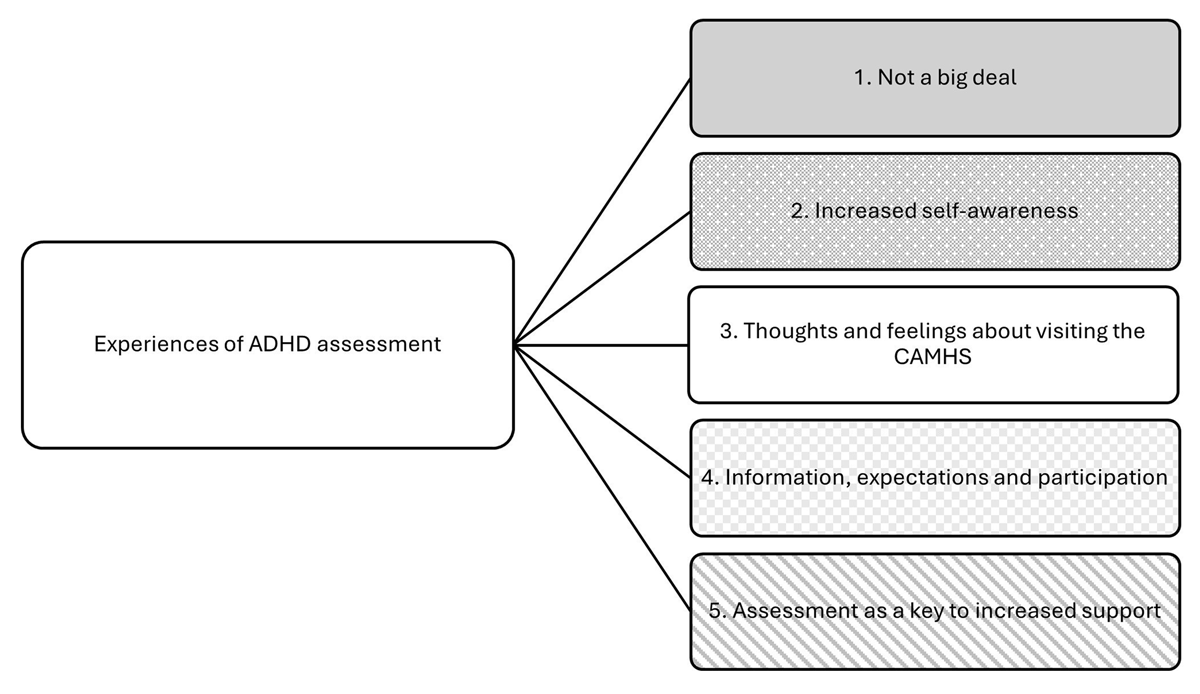
Figure 1
Map of themes.