
Introduction
Attention-deficit/hyperactivity disorder (ADHD) is a psychiatric condition characterized by persistent and impairing symptoms of inattention and/or hyperactivity/impulsivity (APA 2013). The global prevalence is estimated to approximately 5–7% (Polanczyk et al. 2014). In Sweden and elsewhere there has been a sharp increase over the past 20 years (Danielson et al. 2024), and currently, 10.5% of adolescent boys and 6% of adolescent girls have an ADHD diagnosis in Sweden (Engström 2025, NBHW 2023).
Based on international guidelines, an ADHD assessment should be initiated when the child/adolescent displays impairing symptoms that that warrant more support than general advice and psychosocial interventions (Kooij et al. 2019). The assessment should include symptom ratings and an in-depth medical and developmental history, preferably using structured assessment instruments. It is common to also evaluate the child’s cognitive functions as part of the assessment, to rule out difficulties due to intellectual deficits and to provide information that supplement the medical history (Pritchard et al. 2012).
The Convention on the Rights of the Child, states that children have the right to be involved in all matters that affect them (UNICEF 1989), and the Convention on the Rights of People with Disabilities articulates that children with disabilities are to speak freely in matters that affect them and that they should be informed of that right (UN 2006). According to the Swedish Patient Act, children and adolescents have the right to participate in their own health care (SFS 2014:821, Chapter 4, §3). Therefore, it is imperative to ensure that they are given the opportunity to describe their situation, talk privately with the clinician during the assessment, and understand what they consent to, for example that the assessment can result in a diagnosis. When a child is assessed for ADHD at the Child and Adolescent Mental Health Services (CAMHS), it is generally the parents or school that have initiated the contact (Klefsjö et al. 2021). Thus, it is important to ensure that the child does not feel overrun in the power imbalance that can exist between adults and children in a healthcare situation (Mårtenson and Fägerskiöld 2008). Further, findings suggest a positive association between children’s experience of participation in healthcare and engagement in it (Mårtenson and Fägerskiöld 2008), although children with disabilities overall experience restricted participation in healthcare situations (Karlsson et al. 2025), which can be strengthened by getting clear information (Coyne and Gallagher 2011). Smedler and Tideman (2009) further stresses that poor alliance between the child and the clinician can have a negative effect on the reliability of test results. Ensuring participation can be difficult when the child has symptoms of ADHD, as deficits in attention and working memory can affect information processing (Kofler et al. 2020; Ramos, Hamdan and Machado 2020).
Undergoing an assessment and receiving a diagnosis of ADHD can affect identity formation and self-image (Jones and Hesse 2018; Ringer 2020), increase self-understanding, and provide social and educational support (Bölte et al. 2020). However, stereotypical perceptions of ADHD risk having a negative impact on self-image (Barber, Grubbs and Cottrell 2005; Masuch et al. 2019). Identity formation concerns finding a direction in life and a sense of belonging (Syed and McLean 2016). Erikson (1968) argued that identity consists of biological, psychological, and social aspects, and is formed in interaction between the individual and society. The development of social identity during adolescence is highly centered around belonging to a peer group, which can be more difficult for adolescents with ADHD (Hallberg et al. 2010). Adolescents with ADHD can therefore avoid disclosing their diagnosis to peers in fear of being excluded (Frondelius, Ranjbar and Danielsson 2019; Hallberg et al. 2010). Research has tried to separate the stigma associated with symptoms and the stigma associated with the label ADHD. O’Connor et al. (2022) showed that the ADHD label seemed to entail more negative reactions from the environment than actual ADHD-related behaviors. In contrast, Ohan et al. (2013) examined parental reactions to ADHD symptoms and diagnosis and found that it was mainly the symptoms that provoked negative reactions. Relatedly, Frick et al. (2025) found that Swedish adolescents experienced low stigma regarding the diagnosis, but that the symptoms were perceived as stigmatizing. Numerous studies have examined children’s experiences of living with ADHD (e.g., Frick et al. 2025; Zetterqvist et al. 2025), but there is a lack of studies on the experience of the assessment process and how it contributes to identity formation.
Medicalization concerns societal processes where features that used to be considered typical human behaviors are interpreted as deviant or as symptoms of psychiatric conditions (Conrad et al. 2010). Frances (2014) argues that the line between ‘normal’ and deviant has become increasingly blurred, which risks leading to an ‘inflation’ of psychiatric diagnoses and increased drug use. Conrad and Bergey (2014) have elaborated on how medicalization of impulsivity and inattention are interpreted as ADHD, which may create a narrower definition of normality and a tendency to seek psychiatric care and diagnostic labels for everyday experiences (Conrad et al. 2010; Conrad and Bergey 2014). How medicalization processes are expressed in ADHD assessments have not been explored from a child/adolescent perspective.
The purpose of the current study was to examine children’s and adolescents’ experiences of ADHD assessments, with a specific focus on perceived participation, identity development and medicalization. A better understanding of lived experiences from ADHD assessments will inform the healthcare system to develop and maintain proper assessment procedures that ensure the best interests of children/adolescents.
Method
Study participants and recruitment
Participants were 14 children/adolescents (8 boys/6 girls), aged 10–18 years (M = 13 years), recruited from a randomized controlled trial at the CAMHS in Uppsala that investigates ADHD assessments. In the main study, 141 children and adolescents aged 8–17 years were randomized to two assessment procedures; standard and extended assessment. Standard assessment included medical history, a diagnostic interview, and various rating scales. Extended assessment added cognitive testing with the Wechsler Intelligence Scale for Children (WISC-V) and the Conner’s Continuous Performance Test (CPT). All participants were examined by licensed psychologists. Within six months of the assessment, a roughly equal number of boys/girls (n = 18) from the two assessment conditions, were asked about participation in the present study. Guardians received information about the study via e-mail and were asked for participation by phone. A total of 14 participants agreed to participate, of which 10 had received an ADHD diagnosis. See Table 1 for a descriptive overview of the participants (with pseudonyms). Of those who did not receive an ADHD diagnosis, two were offered further assessment for autism, one received an anxiety diagnosis, and one did not receive any diagnosis. The analysis was performed in two steps to check for qualitative saturation. The first part of Table 1 shows which interviews formed the basis for the first step of the analysis, the remaining four constituted the second step.
Table 1
Gender, age and diagnosis of participants.
| PSEUDONYM | GENDER | AGE (YEARS) | DIAGNOSIS |
|---|---|---|---|
| Analysis step 1 | |||
| Kim | Boy | 14 | ADHD+ anxiety |
| Emma | Girl | 18 | ADHD, suspected autism |
| Linda | Girl | 14 | ADHD |
| Sanna | Girl | 10 | ADHD |
| Fatima | Girl | 10 | Anxiety, suspected autism |
| Mila | Girl | 14 | ADHD |
| Anton | Boy | 13 | ADHD |
| Jonas | Boy | 10 | ADHD |
| Ali | Boy | 16 | Suspected autism |
| Fred | Boy | 12 | ADHD |
| Analysis step 2 | |||
| Maria | Girl | 16 | Anxiety |
| Samuel | Boy | 10 | ADHD, tics |
| Dennis | Boy | 16 | No diagnosis |
| Henning | Boy | 13 | ADHD |
All parents of the respondents worked full-time. Twelve participants had at least one parent with a university degree. All respondents were born in Sweden. Four participants had at least one parent born in a country outside Sweden, of which one was born outside of Europe. In total, 12 participants had cohabiting parents. The study was approved by the Swedish Ethical Review Authority (Dnr. 023–03236-02) 2023-03236-02.
Data collection
Semi-structured interviews were conducted by the first author, with nine questions following the phases of the assessment process (see Appendix A). For example: ‘Tell us about how you felt when you were told that you were going to CAMHS to do an ADHD assessment?’ and ‘Did you feel that you knew what the psychologist was investigating?’ Interviews (12 in person and two via Zoom) were conducted January to September 2024. The interviews were audio recorded, transcribed with the digital tool AmberScript, and thereafter pseudonymized.
Answering interview questions is not a natural way for children to communicate and might favor verbal children and children strong in abstract reasoning. To minimize this risk, the interview questions were adapted to the respondent’s age, maturity, and verbal ability. O’Reilly and Dogra (2016) believe that flexible interviews are a good method for research on children, as the children are allowed to give more nuanced answers than in surveys. The interviewer prioritized adherence to what the child said, to maintain interest and reduce pressure on the child to come up with ‘correct’ answers. The questions were therefore not always asked verbatim.
Analysis
The first author conducted the analysis. Coding and analyses were continuously discussed with the last author across the full analytic process, to reduce the risk of misinterpretations or personal biases (Ahmed 2024; Graneheim and Lundman 2004). Thematic analysis was used to identify themes and patterns in relation to the research question (Braun and Clarke 2013). Since the study aims to generate new empirical knowledge, we used an inductive analysis approach and to reduce subjectivity, a semantic approach was applied (Braun and Clarke 2013). Specifically, generated semantic codes were based on verbatim responses (in contrast to latent codes that are read between the lines). The analysis does not claim to demonstrate causal relationships but aims to highlight patterns in respondents’ descriptions of their experiences.
The thematic analysis followed the six steps proposed by Braun and Clarke (2006; 2013). First, the transcripts were reviewed manually and read through to gain familiarity with the material. Second, the material was systematized into codes; a segment of data that the researcher deems interesting based on the research question, and sorted into overarching themes (see Table 2); a central concept collecting similar codes. The codes were sorted in Excel and each interview was color-marked to clarify how often a code appeared in the material, and whether each theme covered codes from several interviews. Fourth, we evaluated whether identified themes were consistent with included codes and with the dataset and removed irrelevant themes. Fifth, we specified what characterized each theme and labelled them accordingly. Finally, the themes were described in text, with example quotes.
Table 2
Examples of coding in thematic analysis.
| QUOTATION | CODES | SUBTHEMES | THEME |
|---|---|---|---|
| ‘It felt very safe. She listened all the time so I felt it was good’ | Safe to talk to the psychologist; The psychologist listened; It was good | Feeling safe at the CAMHS | Thoughts and feelings about visiting the CAMHS |
| ‘That I didn’t know what to do and such. Eh – or whatever you would talk about.’ | I didn’t know what to do | Expectations and preparation | Information, expectations, and participation |
Qualitative studies are in general based on small samples, as the primary goal is to provide in-depth understanding of a particular subject rather than generalizability (Braun and Clarke 2013). One way to assess how much data is needed is to reach qualitative saturation (Bowen 2008), which refers to the point at which additional data does not provide new information. To estimate saturation, the analysis was conducted in two steps. First, we developed themes based on ten interviews. Secondly, the remaining four interviews were coded. These interviews did not add new information but confirmed existing themes. Thus, we estimated that qualitative saturation was obtained.
In qualitative research it is assumed that the researcher’s subjectivity, such as opinions and experiences, will influence the research process. Instead of trying to avoid biases, qualitative research tries to ask what biases exist, and how they contribute to the understanding of the material (Braun and Clarke 2013). All authors have a special interest in neuropsychiatry and have clinical experience of conducting ADHD assessments within CAMHS. This might have affected the choice of follow-up questions, and the identification of themes, but throughout the process we strived to have the children’s experiences in focus. The authors’ clinical knowledge is primarily a strength, as it facilitated the interview process and understanding the respondents’ experiences. In a qualitative study, it is not meaningful to calculate generalizability in a statistical sense, as qualitative studies are about going in depth in a certain context and not about finding universal patterns (Braun and Clarke 2013). At the same time, qualitative studies can also help us understand general phenomena. By clearly describing the approach, context, and analysis process, it is possible for other researchers to assess whether the results can be transferred to other contexts (Ahmed 2024). We have aimed to describe the respondents and the current context and strived to be transparent in the choice of method and analytical process. The transcripts were read repeatedly, and interviews were compared to make sure that interpretations are grounded in the data, to ensure credibility. Dependability was addressed by maintaining a transparent and systematic analytical process. We documented coding decisions, the development of themes, and revisions throughout the full analytical process. Taken together, methodological transparency and applying reflexivity support the trustworthiness of the findings.
Result
Five themes were identified, presented in Figure 1.
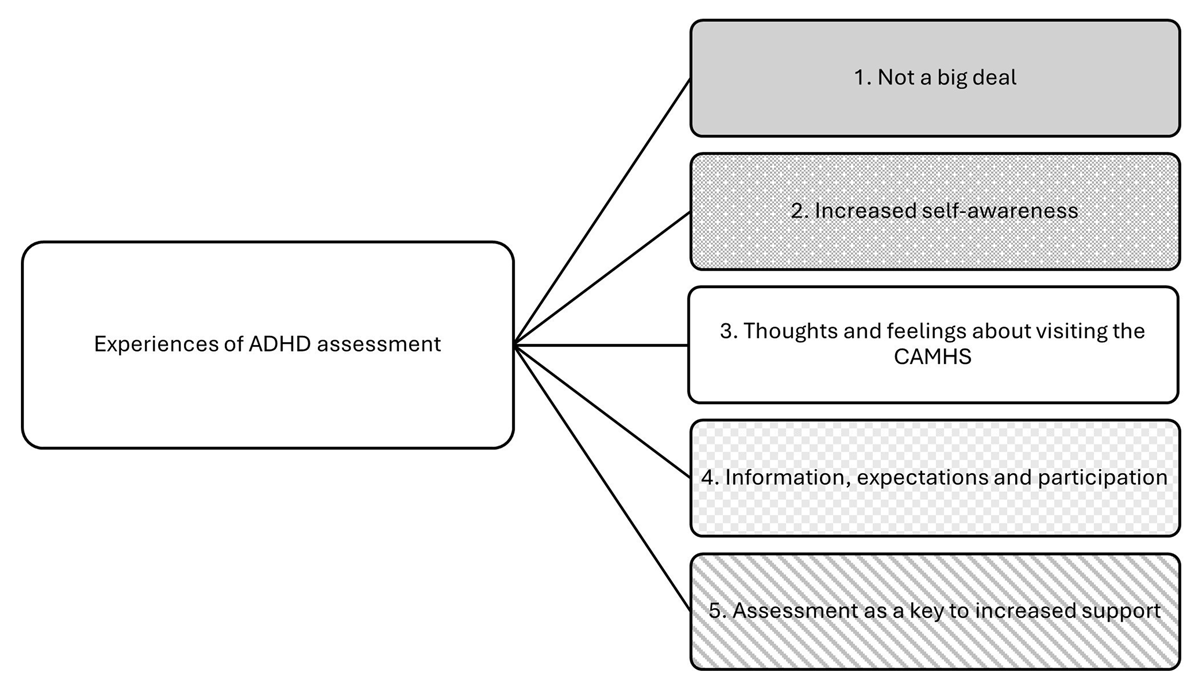
Figure 1
Map of themes.
1. Not a big deal
A consistent pattern in the interviews was that the respondents described that it was not a big deal to undergo an ADHD assessment, neither emotionally, cognitively, nor socially. The respondents described the assessment in neutral terms, and not as something they thought much about or that brought up specific feelings. The assessment did not occupy the respondents’ minds very much, apart from that it was good to get an answer to why they experience certain difficulties.
‘It just felt pretty normal.’ (Fatima)
‘Well, I thought that it was not a big deal. It was just a matter of coming here and answering a few questions. Then I kind of got an answer.’ (Linda)
‘I thought that yeah… it’s fun to know if you have a diagnosis.’ (Jonas)
Relatedly, the respondents said that they did not care that much about the results. When asked if they talked about the assessment at home, most answered that they did not talk much about it, and that if they did, it was mainly about planning
Another aspect of assessment not being ‘a big deal,’ is the respondents’ description of peer reactions. Undergoing assessment and receiving a diagnosis did not provoke any major reactions in the respondents’ peer groups. Respondents expressed that they had friends with diagnoses, and that it was not perceived as odd to undergo assessment. Some respondents said that they had not talked about the assessment with friends, because it felt unnecessary or because they did not want to talk about it until they knew the result. There were no indications of assessment as socially stigmatizing and none of the respondents described negative comments from peers. Rather, it was described that friends had been supportive and not reacted much:
‘They did not care that much. Like, I would not become another person.’ (Henning)
‘Well, they also thought it wasn’t, like nothing unexpected. I think they’ve kind of always seen that I kind of have it so they’ve thought that I have it even though I didn’t have it on paper. But they didn’t react that much.’ (Linda)
The respondents generally described that nothing has changed in relation to friends, as the diagnosis did not change who they are as a person. One respondent said that her friends had joked that she would be boring on medication, but at the same time had been supportive.
‘But then they said, “It’s going to be boring. But, we have to put up with it. We can’t really do anything about it. It’s good if you get help.” So that they thought it was good anyway. But still, like, “yes the medications, you’re going to be boring.”’ (Emma)
Taken together, assessments appear normalized and not perceived as something dramatic, neither emotionally nor socially in the respondents’ peer groups.
2. Increased self-awareness
Although the assessment was generally not perceived as a big deal, respondents described that it contributed to increased self-awareness.
‘They explain it as if there’s nothing wrong with you. It’s just like this that you might do certain things, but no one is exactly perfect.’ (Emma)
‘Before […] I was thinking about it a little more – Hm, do I have it? Yes, and then when I found out, it was like this; yay! Finally, I get to know, I don’t have to think about it.’ (Samuel)
Respondents were not surprised by the results but said that they had gained increased understanding of how the diagnosis manifests itself for them. Overall, respondents described that it was positive to get their challenges ‘on paper’ and that this was a driving force for assessment. Respondents reflected on that the assessment has not changed how they are as a person but created insight by describing and validating existing difficulties.
‘So, I will not become a new person just because I have ADHD on a piece of paper. I will still be the same.’ (Mila)
‘Well, it felt good to know that it was because of a diagnosis. That it wasn’t something else. Otherwise… My life – it should not change.’ (Henning)
To sum up, the assessment process was described as providing increased self-understanding, and the respondents expressed that they were relieved by getting an answer as to why they experience difficulties in school. Getting a diagnosis had helped respondents feel that there was nothing wrong with them.
3. Thoughts and feelings about visiting the CAMHS
The respondents described how they experienced coming to the CAMHS, which was an important part of the assessment experience. Despite initial nervosity, respondents overall expressed that it felt safe talking to the clinician and that they felt listened to.
‘She was very specific, she explained so that I understood everything. She’s not like my teacher. My teacher is a bit like this, so that I don’t understand, but my psychologist made me understand really well.’ (Sanna)
For the respondents who had undergone an assessment that included neuropsychological testing, the test appointments were described as a positive part. Respondents spontaneously described the testing as fun, although some subtests could be difficult.
‘That test was difficult, but it was, it’s also a bit fun […] That’s what makes it fun. That it’s hard.’ (Dennis)
Respondents described that the interview sessions were a bit boring, and that they had difficulties concentrating. The questions were perceived as repetitive, which made it hard to stay focused during the appointments, and respondents would have liked more variation and practical elements.
Respondents mentioned that they had nothing to occupy themselves with during the appointments, and that for example fidget toys could have helped to stay focused. Respondents suggested more breaks and expressed that it was difficult to ask for breaks even if needed. Respondents said they could feel scrutinized or uncomfortable being the center of attention.
‘I usually don’t like to talk to people like this myself if I don’t know who they are, and then I thought it was a bit scary. Or like this… It was very much just about me and it was just about me.’ (Linda)
Respondents who had been doing neuropsychological testing said that they felt concerned about making mistakes and described frustration during difficult subtests. In particular, the attention test was repeatedly described as difficult and frustrating.
In sum, the respondents quickly got used to the environment and felt that the clinician could explain things that were difficult, such as tricky words and that they gave comprehensible information. Long interview sessions were described as tedious, and respondents found it hard to concentrate. The questions were perceived as repetitive, and respondents would have liked longer breaks and more variation during the appointments.
4. Information, expectations, and participation
The fourth theme concerns how the respondents described their expectations and experience of information about the assessment, which is connected to perceived participation. Respondents knew why they were coming to CAMHS and understood the purpose of the assessment. Respondents described that they were nervous before the first appointment. ‘It felt a bit nervous of course.’ (Ali)
In some cases, the nervousness was connected to not knowing what they were about to do at CAMHS, and whether they would receive a diagnosis. Several respondents stated that the assessment was as they had imagined, but that the physical environment at CAMHS was less hospital-like than they thought.
One respondent described a concern about who would see the answers to the questions. Another expressed that she was disappointed that her assessment did not involve cognitive testing. Some respondents said that they would have liked to have more information about the assessment beforehand.
‘So, maybe know a little more about the meeting. Because I came here, I didn’t know where it would be, who it would be with, how it would be done or anything. I would have liked to know that you would sit at a table and answer some questions and stuff like that.’ (Emma).
‘Then you’re a little more prepared. Otherwise, it’s easy to… You might forget things you would like to say.’ (Maria)
Several respondents expressed that they were unsure whether the school had been involved in answering questions during the assessment and that it was mainly the parents who had been in contact with the school.
The assessment process was perceived as information-heavy and that it was difficult for some to process the information. This was particularly articulated when the respondents described the appointment where the psychologist presented the assessment results. Although there was a lot of information, most of it was perceived as easy to understand. Respondents described that they had good opportunities to ask questions and that the psychologist could explain in a clear way.
‘I understood that he was asking questions that can kind of mean if you answer – that then, then you can have –10 percent that you have ADHD. A bit like that.’ (Samuel)
Not all respondents found the purpose of the questions clear. For example, one respondent said that he thought there were too few questions about school, and more about his general well-being, which he found strange as his difficulties were mainly noticeable in school.
‘That is, that you should ask about school as well. […] Because it gets better in school, then it usually gets better on weekdays as well.’ (Fred)
In conclusion, the respondents understood the purpose of the assessment but would have liked more information prior to the assessment to be better prepared. It was not always clear to the participants what the purpose of the cognitive testing was.
5. Assessment as a key to increased support
Difficulties in school emerged as a key motivation for assessment and the consequences of assessment were mainly linked to the school situation. In many cases, the parents had initiated the assessment, most often because the respondent struggled in school.
‘But I didn’t know if I could get the help I needed because of that. But it’s been hard at school and so, because I haven’t known really, really what it is.’ (Kim)
Respondents described that during the assessment they had received advice on how to make it easier in school. They also described that they had received more help from the teachers after the assessment, and that the teachers had gotten a better understanding of their difficulties.
‘Yes, it is much better. My former teacher, before I had the diagnosis, she did not believe that I had it […] I get more help. So, I have begun to understand more.’ (Sanna)
‘I got an answer and I uh, knew that now that I have papers on it, I can change things in school that feels hard.’ (Anton)
Respondents said that the parents had a central role in the assessment process. The assessment gave the parents more knowledge about the diagnosis, which according to the respondents helped them better understand and support their child and communicate with the school. ‘At home my mom has done some research, watched some programs actually on TV about ADHD. […] So now she knows more about how I work.’ (Emma).
One respondent described that he himself did not care much about the result, but that his parents thought it was good to get an answer. Many respondents described the skills training they received after assessment as helpful, where they together with the parents’ received strategies for emotion regulation and everyday routines (Meyer et al. 2022).
In sum, the respondents’ own *motivation for assessment were clearly linked to school difficulties, for example wanting to get an answer to why things did not work out in school, being able to get more support, or getting medication to improve academic achievement. Respondents also described increased understanding from their parents.
Discussion
The purpose of this study was to examine children’s and adolescents’ experiences of undergoing ADHD assessment, through semi-structured interviews. Thematic analysis generated five themes. A consistent pattern was that the assessments were described as ‘not a big deal’, which indicates a normalization of ADHD assessment and diagnosis. The results show that the respondents’ experiences from ADHD assessments were generally positive and contributed to increased self-awareness and validation of their identity. A desire for support in school motivated the assessments in most cases. Increased information before the assessments and more stimulating appointments could improve participation. The results suggest that an ADHD assessment increased the respondents’ knowledge of ADHD, especially in combination with the skills training. We did not find any clear indices of medicalization in our results.
Participation in the assessment process
The respondents generally thought that the information was clear and understandable which facilitated participation (Mårtenson and Fägerskiöld 2008). Most respondents understood the purpose of the assessment and had prior knowledge about ADHD. However, respondents expressed a wish for more information about the assessment process beforehand. Clarifying the assessment process appears to be a possible area of improvement for facilitating participation. This may be particularly important for children with suspected ADHD, since the diagnosis is associated with difficulties in planning and information processing (Kofler et al. 2020; Ramos, Hamdan and Machado 2020).
That assessment is often initiated by adults and that some respondents said that they wanted more information, indicate a risk that the child is not fully involved in decisions about assessment (Mårtenson and Fägerskiöld 2008). Respondents described little discussion about the assessment at home, which can be a reminder for clinicians to encourage the family to explore thoughts and feelings around the assessment.
Research shows a positive effect of a secure relationship with the clinician on treatment outcomes and test performance (Ryan, Berry and Hartley 2023; Smedler and Tideman 2009). Respondents overall felt safe talking to the clinician and were positive about the clinical environment, which may strengthen validity of the assessments.
Respondents described interview sessions as tedious, which may decrease active participation and motivate having scheduled breaks during the appointments. Feeling restless and bored may affect the reliability of interview responses. Questions about school and well-being also require children to have insight into their own situation. Several respondents perceived the interview questions as repetitive, suggesting that subtle differences between interview questions may be difficult to distinguish, which in turn may affect response reliability. The use of cognitive testing could increase variation during assessment and allow psychologists to make behavioral observations that complement the medical history (Smedler and Tideman 2009).
Normalization of ADHD
The respondents expressed that it was not a big deal to undergo an ADHD assessment, which may reflect an increased public awareness of ADHD and a normalization of neurodevelopmental diagnoses in Sweden. Both media coverage of ADHD and the political debate have been aiming towards normalizing the condition. At the same time, ADHD is a neurodevelopmental, life-long condition (Faraone et al. 2021), and is as such per definition a deviation from typical development which makes the description of assessment and diagnosis as undramatic potentially problematic.
The literature on ADHD and identity highlights that having ADHD is associated with a sense of being different (Hallberg et al. 2010) and lower self-esteem (Barber, Grubbs and Cottrell 2005). Our results complicate this picture, as the respondents described assessment as no big deal, and feelings about the diagnosis were mainly neutral or positive and associated with increased support. In Sweden, an ADHD diagnosis entails certain limitations, such as limited opportunities to join the military and the risk of discrimination in working life. The respondents’ experiences that there is ‘nothing wrong’ with them hence become somewhat paradoxical. One possibility is that the respondents express that they are not to blame for their difficulties. Another explanation is that the low stigma (Frick et al. 2025) and high prevalence of ADHD contribute to the sense of normality, in line with the neurodiversity perspective (Sonuga-Barke and Thapar 2021).
Research on the normalization process of ADHD could help find ways to reduce stigma in other psychiatric diagnoses. One hypothesis is that the dissemination of knowledge about ADHD in media and the increased number of diagnoses have helped to reduce stigma. To compare the Swedish context with other countries is an interesting topic for further research. A related topic is negative effects of very low stigma, for example whether it can contribute to overdiagnosis.
Increased demands in school and medicalization of the traits associated with ADHD (Conrad and Bergey 2014) may lead to more assessment referrals, also for difficulties that have other causes, such as anxiety and depression, or societal norms emphasizing high academic achievement (Grimell, Ericson and Frick 2025). Together, this may blur the line between typical experiences and actual deficits, which might partly explain the increase in ADHD diagnoses. Even though our findings do not provide any clear indices of medicalization, perceiving ADHD as ‘not a big deal,’ may lower the threshold for interpreting typical experiences as ADHD symptoms.
It has been discussed that how the individual relates to their diagnosis will depend on how they view others with ADHD (Jones and Hesse 2018), and on the presence of stigma (Masuch et al. 2019; O’Connor et al. 2022). Respondents described little evidence of stigma or difficulties to accept their diagnosis and got support from others. The assessment increased both respondents’ and parents’ knowledge of ADHD, and the skills training (Meyer et al. 2022) following the assessment was helpful for managing everyday challenges.
The literature on stigma and psychiatric diagnoses has found that diagnoses that are relatively common are easier to take in (Hazell et al. 2022), indicating that higher prevalence tends to reduce stigma. Desired or expected results of an assessment are probably easier to take in than results you may not have expected or wanted (Finn 2020). Not getting a diagnosis and the help you hoped for could be a negative experience. The respondents that did not receive an ADHD diagnosis described a positive experience of the assessment process, even though they had hoped for a diagnosis to get more support in school. Hence, clinicians should not assume that an assessment is perceived as stigmatizing but be open to the perspective of the client.
Peer acceptance is important for social identity development during adolescence (Erikson 1968), and research shows that children with ADHD often experience difficulties with peer relationships (Ringer 2020; Wehmeier, Schacht, and Barkley 2010) and may be hesitant to tell peers about the diagnosis (Eccleston et al. 2019; Frondelius, Ranjbar and Danielsson 2019). We did not explore respondents’ peer relationships more broadly, but respondents overall described that their peers did not react negatively to the diagnosis and that it did not change their social identity. Some respondents had not told their friends because they did not find it interesting to talk about, rather than out of fear of negative reactions. The discrepancy between our results and previous research may reflect that our study did not differ between telling close friends and telling peers in general. This finding may also reflect the Swedish context where public awareness and acceptance of ADHD is high and might not be transferable to social contexts with more stigma around the diagnosis.
Educational aspects
In line with previous findings (Bölte et al. 2020; Frondelius, Ranjbar and Danielsson 2019), more support in school was a driving force for assessment. Assessments were in general initiated by parents or schools and were primarily motivated by school-related difficulties. This is consistent with previous research finding that children usually come to CAMHS through adult initiative (Klefsjö et al. 2021; Mårtenson and Fägerskiöld 2008). Support emerged as a more pronounced motivation for assessment than identity motives, but these two perspectives cannot be completely separated. Adolescents with ADHD often experience a discrepancy between how they are and how they are expected to be (Hallberg et al. 2010), and our results indicate that an assessment can reduce this discrepancy by adjusting expectations from others and increase self-awareness. Moreover, increased support at home and in school may contribute to improved self-understanding and there can be an interacting relationship between support and identity. Importantly, our interviews focused more on the experience of assessment than identity formation, which may explain that identity motives were less prominent.
Previous research has shown that an ADHD diagnosis can lead to negative treatment from teachers (Metzger and Hamilton 2021), but our findings point to improved understanding. The respondents were all assessed within six months before the interview and experienced positive consequences of it. It is, however, possible that some will experience negative consequences later on.
An ADHD diagnosis is often mentioned as a prerequisite for receiving adaptations in school, even though the Education Act states that support should not be dependent on a diagnosis (SFS 2010:800, Chapter 3, §5). The sharp increase in ADHD prevalence should be critically evaluated in the light of the school as a driving force for assessments, in opposition with legislation. A psychiatric diagnosis is always related to the surrounding society’s demands and expectations, and the context hence sets the framework for what is classified as a disability. If all children who deviate from the norm need a diagnosis to receive sufficient support, there is a risk of diagnosis inflation that narrows the concept of ‘normality.’ The reduced use of cognitive testing in ADHD assessments increase the risk that the diagnosis masks cognitive impairments that explain difficulties in school, and that the ADHD diagnosis captures difficulties outside the diagnostic criteria.
Representativeness of the sample
The sample was stratified based on assessment condition and gender. The material approached qualitative saturation and there was a broad representation of respondents within each theme, which increases the trustworthiness of the findings. There is always a risk that those who choose to participate in a research project are those who are most or least satisfied, enjoy participating in interviews or have a special commitment to research. However, most of the approached individuals agreed to participate and self-selection is assumed to be low. The respondents were asked to participate through their parents, which may have facilitated participation among children (i.e., the less talkative boys) who otherwise would have declined. The equal distribution of boys and girls is another strength, given the historical overrepresentation of boys in ADHD research (Klefsjö et al. 2021).
The sample was homogeneous regarding ethnicity and parental education. In future studies, a more diverse sample is desirable. Interviews with boys were on average shorter than with girls. One explanation may be that girls are generally more comfortable to talk about mental health symptoms (PHA Sweden 2019) and give more exhaustive answers. An analytical concern was that the interviews with the girls would be fuller and would bias the results. However, the longer interviews did not necessarily generate more codes, and the shorter interviews also helped answer the research question.
Conclusions
The study has elicited children’s and adolescents’ voices about their experiences, in line with the Conventions of the Rights of People with Disabilities (UN 2006). Overall, the results indicated positive assessment experiences and that an ADHD assessment was seen as an important way to get sufficient support in school. This finding should be critically evaluated in the light of current legislation proposing that a diagnosis should not be a requisite for getting support, and that a combination of increased pressure in school and low perceived stigma may contribute to overdiagnosis and medicalization. A consistent pattern was that the assessments were described as ‘not a big deal’, which points to a normalization of ADHD assessment and diagnosis, in line with the neurodiversity movement. More information before the visit and more stimulating visits could increase the feeling of participation in the assessment. Overall, doing an assessment seems to be motivated by the respondent’s desire for support, rather than by identity motives. However, results indicate that assessments lead to better self-awareness and that it confirmed identity rather than altering it.
Additional File
The additional file for this article can be found as follows:
Data Accessibility Statement
The data that supports the findings of this study are available on reasonable request from the corresponding author. The data is not publicly available due to privacy or ethical restrictions.
Author Contributions
EFW: Conceptualization, Data collection, Formal analysis, Writing – original draft.
LLA: Conceptualization, Validation, Writing – review and editing.
JI: Conceptualization, Validation, Writing – review and editing.
MF: Conceptualization, Methodology, Project administration, Resources, Supervision, Validation, Writing – review and editing.