
Table 1
Participant characteristics.
| PSEUDONYM | DISABILITY TYPE1 | GENDER2 | AGE GROUP3 | ONSET4 | MANIFESTATION5 | OBSERVABILITY | EDUCATIONAL LEVEL | SOCIAL ROLE |
|---|---|---|---|---|---|---|---|---|
| Chris | PD | Woman | MA | C | AC | Yes | High | Activist, board member, professional |
| Cornelia | ID | Woman | S | C | GU | No | Low | Activist, board member, professional |
| Dawn | CI | Woman | S | C | AC | No | High | Activist, board member, professional |
| Doesjka | PD | Woman | S | C | GU | Yes | High | Board member, (media) professional |
| Dymphna | SD | Woman | MA | C | GU | No | High | Professional |
| Elwood | PD | Man | MA | A | AC | Yes | High | Board member, politician |
| Frances | PD | Woman | MA | A | AC | Yes | Medium | Activist, board member |
| Garth | SD | Man | S | C | GU | Yes | High | Artist, professional |
| Gwen | PD | Woman | A | C | GU | Yes | High | Activist, influencer, professional |
| Herbert | PD | Man | A | C | GU | Yes | High | Board member, entrepreneur, (media) professional, politician |
| Hynke | SD | Woman | MA | C | GU | Yes | High | Influencer, professional |
| Jesse | ID | Man | A | C | GU | Yes | Low | Artist |
| Joyce | PD | Woman | A | C | GU | Yes | High | Activist, entrepreneur, influencer, professional |
| Lawrence | PD | Man | A | C | AC | Yes | High | Entrepreneur, professional |
| Lynn | PD | Woman | S | C | GU | Yes | High | Activist, board member, politician |
| Raven | AU | Woman | A | C | GU | No | High | Entrepreneur, influencer, professional |
| Saar | PD | Woman | MA | C | GU | Yes | High | Politician, professional |
| Sjors | PD | Man | S | C | GU | Yes | High | Activist, board member, entrepreneur, influencer, professional |
| Stanley | PD | Man | MA | C | GU | Yes | High | Professional |
| Stephan | PD | Man | S | A | AC | Yes | High | Activist, board member, entrepreneur |
| Tinus | PD | Man | A | C | GU | Yes | High | Activist, entrepreneur, (media) professional |
| Tjitske | SD | Woman | A | C | AC | Yes | High | Influencer, entrepreneur, politician |
| Tristan | PD | Man | MA | A | AC | No | High | Board member, entrepreneur, professional |
| Vink | PD | Woman | MA | C | AC | Yes | High | Activist, professional |
| Winny | PD | Woman | S | C | GU | Yes | High | Activist, professional |
[i] Note: The table omits political preferences to safeguard privacy. 1Disability type: PD = Physical disability; SD = Sensory disability; ID = Intellectual disability; AU = Autism; CI = Chronically ill; eight persons reported additional impairments, such as chronic illness, obesity, mental health problems, migraines, or stroke. 2Four persons identified as members of the LGBTIQ+ community. 3Age group: A = Adult, age 18–44 years; MA = Middle-aged adult, age 45–59 years; S = Senior, age 60–75 years. 4Onset: C = Congenital; A = Acquired. 5Manifestation: GU = Grew up with it; AC = Manifested after childhood.
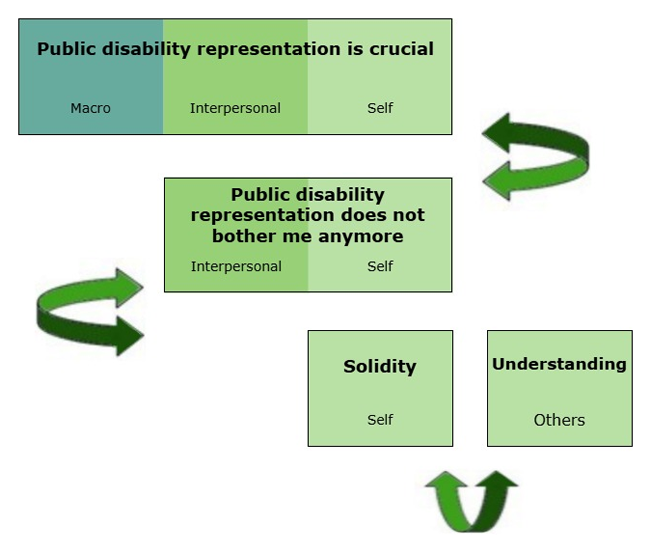
Figure 1
Experienced disability representation themes.
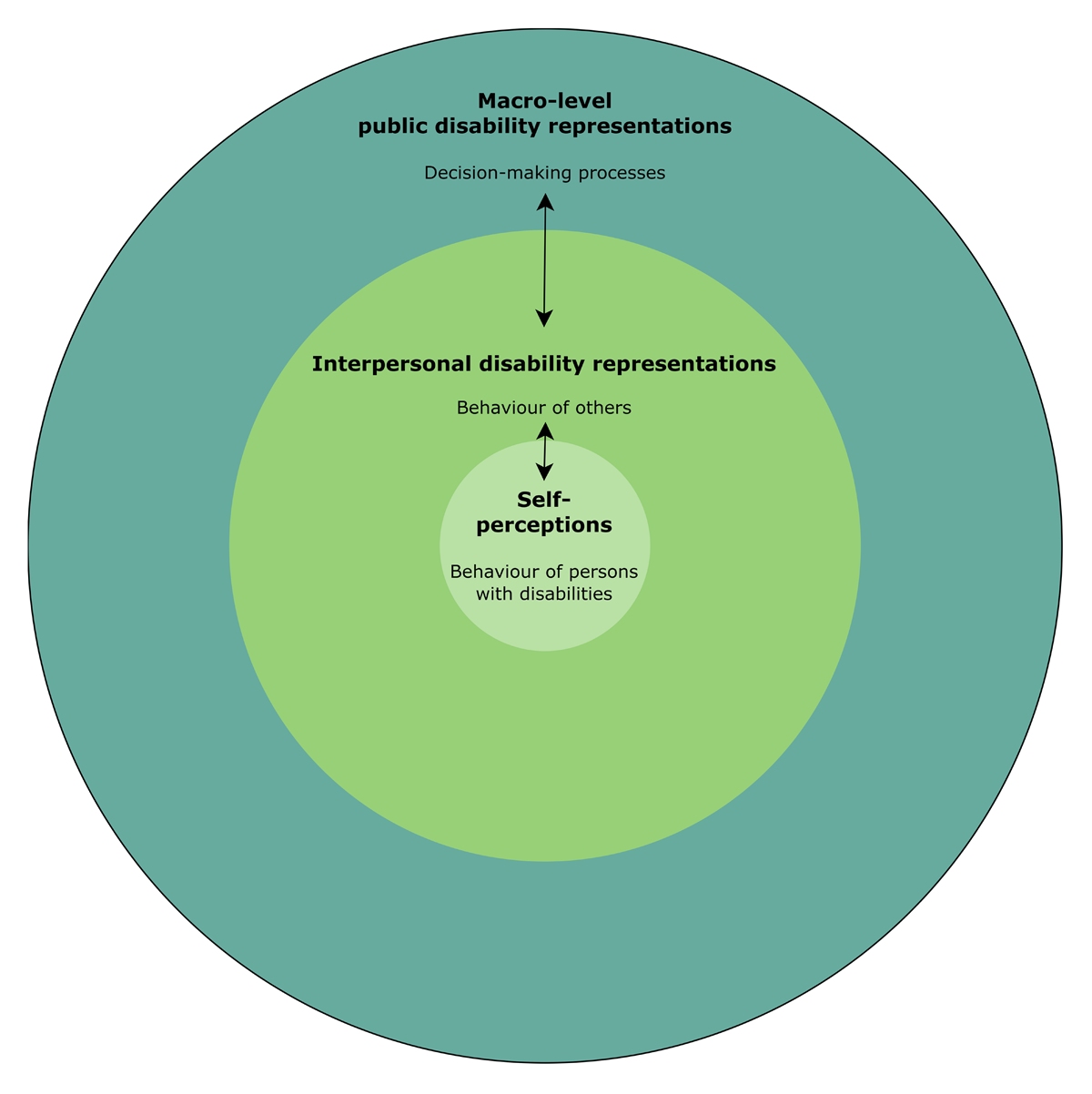
Figure 2
Experienced impact of public disability representations.
Appendix 1
Interview Topic List.
| TOPIC | DETAILS OF TOPIC | EXAMPLES OF PROMPTS |
|---|---|---|
| Introduction | Terminology | How would you like to be addressed? Which words do you prefer? |
| Introduction to research process, informed consent, and complaints procedure | Have you any questions? Please sign the consent form if you haven’t already. | |
| Public disability representation research | Many studies on media representations or public representations; few studies on lived experiences of people with disabilities. | |
| Icebreaker (to build rapport) | Public disability representation | Describe ‘public disability representation.’ Why is this relevant? |
| Types of public disability representations | Which representations have you experienced? | How did others see you? Where did these public disability representations happen? What was your first realisation that others saw you differently? |
| Navigating public disability representation | Which experiences have you had? | Did these representations bother you? In these situations, how did you feel? How do you handle disability representations? |
| Positive representations | Share some positive experiences. Did you have any role models? | |
| Negative representations | Share some negative experiences. Have you felt disability shame? | |
| Shaping public disability representation | Need for a change? | Does public disability representation need to be changed? Which representations? Why? |
| Roles of people with disabilities | Who is responsible for introducing changes? What is the role of people with disabilities? Do people with disabilities ever annoy you? | |
| Conclusion | Additional thoughts | Is there something I forgot to ask? Would you like to share any other thoughts or experiences? |
| Personal characteristics | Could you tell me your age, education, political views, and disability type, onset, and manifestation? | |
| Follow-up | About sending the interview summary | You can then verify if I got your points and note things you forgot to mention. |
| About sending the preliminary results and recommendations | You can then decide whether to reflect on the analysis and determine if there is anything you would like to add or discuss. |