
Introduction
Disability rights advocates emphasise the significance of public disability representations at the micro-, meso-, and macro-levels (e.g., Fleischer & Zames 2011). They influence debates around public disability representations by sharing their personal and professional insights. However, how these disabled advocates manage disability representations has remained largely unexamined. This paper explores the self-presentation strategies (i.e., impression management) employed by Dutch disabled advocates to navigate and influence public disability representation. The term ‘representation’ encompasses multiple meanings and interpretations. In this study, public disability representation is defined as the full spectrum of stigmas, prejudices, beliefs, stereotypes, attitudes, perceptions, and images associated with people with disabilities. Besides the singular ‘representation’, we use the plural ‘representations’ to denote specific images or depictions. Furthermore, this study employs the terms ‘disabled’ and ‘with disabilities’ interchangeably; however, we utilise ‘disabled advocates’ to align with the preferences of most participants. Research on public disability representation has primarily focused on societal perceptions of individuals with disabilities and their portrayal within various professional contexts (e.g., Bernat et al. 2025; Gilmore & Wotherspoon 2021) as well as in media and the arts (e.g., Holcomb & Latham-Mintus 2022; Quayson 2007).
Most studies regarding the experiences of individuals with disabilities in relation to these representations focus on stigma. Stigma is the possession of (an) (in)visible attribute(s) that make(s) a person different from others and therefore rejected and discriminated against by society. Such experiences are ‘deeply discrediting’ (Goffman 1963). These studies typically employ quantitative measures, providing insight into the extent and correlates of stigma experiences (e.g., Henning et al. 2021; Werner & Abergel 2018). However, unlike qualitative research, quantitative studies do not fully capture the lived experiences, perspectives, and actions of individuals with disabilities in navigating public disability representations. Moreover, while stigma research tends to emphasise the negative aspect of stigma (Goffman 1963), public disability representations can also include positive aspects. A scoping review identified 32 qualitative studies and found that, although negative experiences predominated, individuals with various disabilities also reported positive experiences (Ter Haar et al. 2025). Nonetheless, their review did not address how people with disabilities actively seek to influence these representations.
Impression management as an attempt to influence public disability representation
This study employs a combined social constructionist and individual constructivist approach to examine how people with disabilities navigate public disability representation. Both approaches intimate that any perceived reality is co-constructed through interpersonal interactions and shaped by lived experiences; however, social constructionists emphasise interpersonal interactions, while individual constructivists focus on the internal workings of the mind (Olsen & Pilson 2022).
As early as 1961, Davis examined how people with disabilities dealt with public disability representations that portrayed them as negatively deviant. In his research, Davis (1961) aligns with Goffman’s (1959) posit that individuals may employ impression management to conceal personal qualities that society perceives as less valued, thereby mitigating the stress associated with stigma. He employs the metaphor of a dramaturgical performance to illustrate how individuals selectively emphasise or downplay aspects of themselves. For instance, they may avoid certain situations, conceal visible signs of stigmas, or ease others’ discomfort by downplaying a learning disability.
People with disabilities employ impression management in various ways (Wechuli 2024). They often try to manage interactions with so-called ‘normals’ by presenting themselves as conventionally ‘normal’ as possible. When a disability is invisible, they may attempt ‘passing’ as non-disabled by not disclosing conditions such as autism (e.g., Brake 2024), epilepsy (e.g., Lee & Lee 2017), or physical and intellectual disabilities (e.g., Edgerton 1971; Santuzzi et al. 2019; Spirtos & Gilligan 2022). Impression management can include visually conforming to social expectations, for example, through clothing choices (e.g., Bailey et al. 2016; Romo et al. 2023). Conversely, some individuals with disabilities use impression management to challenge misconceptions and actively confront prejudices and stereotypes (e.g., Bantjes et al. 2015; Brake 2024).
Disabled advocates and impression management
Disabled advocates are individuals who publicly champion the rights and needs of people with disabilities. These advocates—including politicians, scholars, (social media) influencers, artists, and athletes—consistently stress the importance of public disability representations (e.g., Burns & Haller 2015; Fleischer & Zames 2011; Longmore 1987; Shakespeare 1994).
Research on the perspectives and experiences of disabled advocates has predominantly focused on the strategic use of representation within advocacy contexts. For example, Frank (1988) observed that some disabled advocates choose to openly present their severe multiple congenital limb deficiencies rather than conceal them, thereby rejecting the stigma attached to disability and challenging society to confront negative representations.
Paralympic athletes also engage in impression management, both within and outside the Paralympic context. They reported two key strategies to attract sponsors and promote their interests: 1) demonstrating athletic performance and 2) cultivating a media image that combines a friendly, approachable persona with a manageable disability, preferably with engaging aids (Beldame et al. 2023). Beyond the Paralympic context, these athletes reported having to simultaneously perform ‘ability’ to be recognised as elite athletes and to perform ‘disability’ to maintain solidarity with disability communities and disability politics. In this way, they strategically choose the identity they present (Haslett et al. 2020).
However, many disabled advocates critique these forms of representations, arguing that they can undermine broader advocacy goals, such as advancing disability rights and building more inclusive societies (e.g., Bitman 2023; Braye et al. 2013; Södergren & Vallström 2023). They argue that messages using excessively positive representations, such as ‘inspiration porn’ and ‘supercrips’, or excessively negative representations, such as victims deserving pity, do not sufficiently represent the complexities involved in living with a disability. Furthermore, these messages appear to regard success as achievable solely through determination. Despite the strategic use of impression management in their professional advocacy and careers, there remains limited research on how disabled advocates navigate public disability representation in their personal lives.
Research aim
Disabled advocates actively shape the debates around disability by sharing their perspectives and lived experiences. Thus, analysing their experiences and management of public disability representation is pertinent. This study aims to examine how disabled advocates seek to influence public disability representations both in their personal lives and in advocacy contexts, addressing a significant gap in existing research on this subject.
Methods
Design
We conducted interviews with 25 adult Dutch advocates representing various disability types. After obtaining informed consent, all interviews were audio recorded, verbatim transcribed, pseudonymised, and provided with a summary.
Participants and recruitment
Participants were eligible for inclusion if they self-identified as having a disability, were 18 years or older, and were engaged as disabled advocates in public debates on public disability representation, e.g., as board members and volunteers of non-governmental disability organisations (NGOs), as well as activists, politicians, artists, and social media influencers (e.g., Bitman 2023; Pettinicchio 2012).
The first author recruited participants using a combination of concurrent purposive and snowball sampling methods. Purposive sampling was utilised to enhance the diversity of the sample, while snowballing helped to identify participants beyond the authors’ networks. The first author compiled an initial list of eligible participants based on his contacts and recommendations from prominent figures in the Dutch disability community, which was then supplemented by the other authors. Throughout the interview phase we added suggestions from interviewed participants to the list. A diverse group of potential participants was approached, with attention to factors such as disability type, age, and gender. Each participant received a personalised recruitment email, including a summary of the study. After they agreed to participate, a consent form was sent.
Data collection
The interviews were conducted between February and September 2023, with an average duration of just over an hour (ranging from 30 to 100 minutes). Eighteen interviews were held face-to-face, and seven were conducted online.
A topic list guided the interviews, drawing on previous research on public disability representation (e.g., Lash & Helme 2020; Reber et al. 2022) (Appendix 1). A single pilot interview was conducted; as no adjustments were needed, it was included in the final dataset. Each interview began with an open question about the participant’s understanding of public disability representation. This was followed by questions exploring the perceived relevance of public representations and how participants navigate them, with particular attention to their use of impression management strategies.
Information was collected on the following personal characteristics: age group (adults: 18–44 years; middle-aged adults: 45–59 years; seniors: 60 years and above); disability type (autism, chronic illness, intellectual disability, physical disability, or sensory disability); disability onset (acquired or congenital); and manifestation (growing up with the disability or developed after childhood). Disabilities were also categorised based on their observability (observable or not observable). Educational attainment was grouped into three levels: low (no formal education), medium (secondary education), and high (higher vocational or university education). Additional characteristics included occupation and political preferences.
Analysis
The interview transcripts were analysed using inductive thematic analysis (Braun & Clarke 2006) with the support of qualitative data analysis software (ATLAS.ti, version 25.0.1.32924). Inductive thematic analysis is recommended when prior research on a phenomenon is limited or existing knowledge is fragmented (Elo & Kyngäs 2008). The six-stage inductive approach outlined by Terry et al. (2017) guided the analysis.
(1) The first author reviewed each verbatim transcript, documenting preliminary codes and themes. This process generated 851 quotations. Additionally, an interview summary was provided to each participant to verify its accuracy and to allow them to highlight any points they felt had not been sufficiently addressed during the interview.
(2) The first author employed open coding to develop and refine the codes throughout the analysis, resulting in a final set of 42 codes. Illustrative examples were added to clarify and supplement the code definitions.
(3) The first author subsequently constructed seven preliminary themes by clustering and combining codes into meaningful patterns. These themes were the concept of public disability representation, the relevance of disability representation, sources of disability representation (including other people with disabilities), experienced public representations, personal representations, self-perceptions, and strategies for dealing with representations. The first and third authors discussed these initial themes and the supporting quotations.
(4–5) All authors then engaged in collaborative discussions to further refine and define the themes and subthemes. This process drew on the initial codes, their interrelationships, and their insights into how advocates navigate public disability representation. A thematic map was developed to illustrate the three overarching, interrelated themes.
(6) The final stage involved creating a comprehensive report that included the final analysis and selected illustrative quotations, and the writing of the manuscript.
Trustworthiness
We adhered to Morse’s (2015) standards to ensure the rigour of this qualitative research. Throughout the data analysis process, an audit trail was maintained to document steps and decisions, enhancing reliability. Input on the research methodology and findings was obtained from four experts with disabilities. In a member check, seven participants provided recommendations for revising their summaries, and twelve provided comments on the manuscript draft in Dutch. The initial findings and conclusions were recognised, and their recommendations were integrated into the manuscript.
The authors acknowledge their professional roles. The first author has worked as a programme manager for several disability NGOs and is a PhD candidate at the University of Humanistic Studies, Utrecht, the Netherlands, while the second and third authors teach disability studies at the university level. The first author grew up in a family with (hidden) psychiatric issues and experienced two depressive episodes in early adulthood. The second author is the parent of a disabled child, and the third author has notable functional and speech impairments due to cerebral palsy.
Results
Participants’ demographic characteristics
Twenty-five disabled advocates participated in the study. The sample was heterogeneous, comprising diverse disability types: physical disabilities (n = 17), sensory disabilities (n = 4), and intellectual disabilities (n = 2). One other participant was autistic, and one other participant had chronic illnesses (Table 1). The sample included 10 men and 15 women; their mean age was 51 years (SD = 14; range = 25–72). Except for two women of colour, all participants were white. Most participants identified with leftist or liberal political views. Most held higher education at the vocational or university level. Nearly all participants were (or had been) employed in the (semi-)public sector, and many were or had been involved, either voluntarily or professionally, with organisations run by and for people with disabilities.
Table 1
Participant characteristics.
| PSEUDONYM | DISABILITY TYPE1 | GENDER2 | AGE GROUP3 | ONSET4 | MANIFESTATION5 | OBSERVABILITY | EDUCATIONAL LEVEL | SOCIAL ROLE |
|---|---|---|---|---|---|---|---|---|
| Chris | PD | Woman | MA | C | AC | Yes | High | Activist, board member, professional |
| Cornelia | ID | Woman | S | C | GU | No | Low | Activist, board member, professional |
| Dawn | CI | Woman | S | C | AC | No | High | Activist, board member, professional |
| Doesjka | PD | Woman | S | C | GU | Yes | High | Board member, (media) professional |
| Dymphna | SD | Woman | MA | C | GU | No | High | Professional |
| Elwood | PD | Man | MA | A | AC | Yes | High | Board member, politician |
| Frances | PD | Woman | MA | A | AC | Yes | Medium | Activist, board member |
| Garth | SD | Man | S | C | GU | Yes | High | Artist, professional |
| Gwen | PD | Woman | A | C | GU | Yes | High | Activist, influencer, professional |
| Herbert | PD | Man | A | C | GU | Yes | High | Board member, entrepreneur, (media) professional, politician |
| Hynke | SD | Woman | MA | C | GU | Yes | High | Influencer, professional |
| Jesse | ID | Man | A | C | GU | Yes | Low | Artist |
| Joyce | PD | Woman | A | C | GU | Yes | High | Activist, entrepreneur, influencer, professional |
| Lawrence | PD | Man | A | C | AC | Yes | High | Entrepreneur, professional |
| Lynn | PD | Woman | S | C | GU | Yes | High | Activist, board member, politician |
| Raven | AU | Woman | A | C | GU | No | High | Entrepreneur, influencer, professional |
| Saar | PD | Woman | MA | C | GU | Yes | High | Politician, professional |
| Sjors | PD | Man | S | C | GU | Yes | High | Activist, board member, entrepreneur, influencer, professional |
| Stanley | PD | Man | MA | C | GU | Yes | High | Professional |
| Stephan | PD | Man | S | A | AC | Yes | High | Activist, board member, entrepreneur |
| Tinus | PD | Man | A | C | GU | Yes | High | Activist, entrepreneur, (media) professional |
| Tjitske | SD | Woman | A | C | AC | Yes | High | Influencer, entrepreneur, politician |
| Tristan | PD | Man | MA | A | AC | No | High | Board member, entrepreneur, professional |
| Vink | PD | Woman | MA | C | AC | Yes | High | Activist, professional |
| Winny | PD | Woman | S | C | GU | Yes | High | Activist, professional |
[i] Note: The table omits political preferences to safeguard privacy. 1Disability type: PD = Physical disability; SD = Sensory disability; ID = Intellectual disability; AU = Autism; CI = Chronically ill; eight persons reported additional impairments, such as chronic illness, obesity, mental health problems, migraines, or stroke. 2Four persons identified as members of the LGBTIQ+ community. 3Age group: A = Adult, age 18–44 years; MA = Middle-aged adult, age 45–59 years; S = Senior, age 60–75 years. 4Onset: C = Congenital; A = Acquired. 5Manifestation: GU = Grew up with it; AC = Manifested after childhood.
Experienced disability representation
Three key themes could be constructed from the data: (1) public disability representation is crucial at the macro-, interpersonal, and individual levels; (2) public disability representation does not bother me anymore; and (3) effective impression management requires solidity (Figure 1).
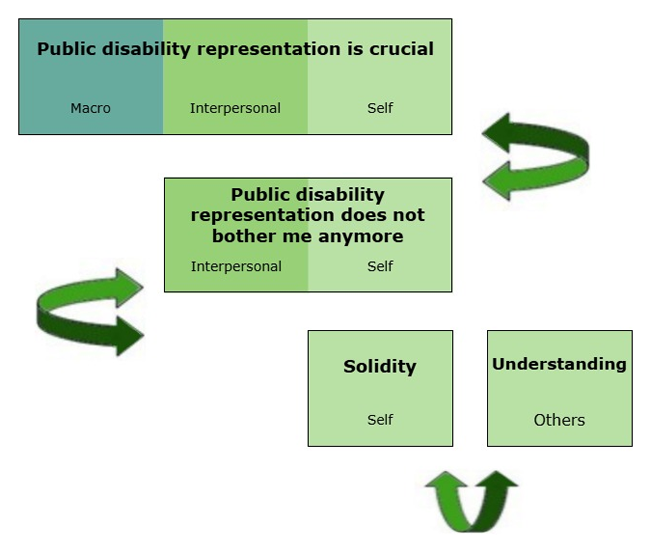
Figure 1
Experienced disability representation themes.
Public disability representation is crucial
Participants viewed public disability representation as reductive, confining them to a narrow set of traits. They reported numerous instances where these representations did not reflect their own self-perceptions. They identified common portrayals of disability as emphasising vulnerability, limited skills, diminished autonomy, a ‘pathetic’ nature, and reduced social status. Vink reported that ‘I feel that people reduce me to someone who is not worthy of envy simply because I use a wheelchair and, by definition, must be helped.’ And Jesse explained, ‘People think I can’t do well, but I can. You know, they don’t know my limitations; they don’t see that there’s more to it. What is in my mind, or whether I’m a crazy person.’
The participants highlighted how misleading public disability representations affected various aspects of their lives. First, such representations shaped decision-making processes at the macro-level. Second, they influenced how others treated them on an interpersonal level. Third, they affected participants’ self-perceptions, which in turn shaped their worldview and the opportunities they felt able to pursue (Figure 2).
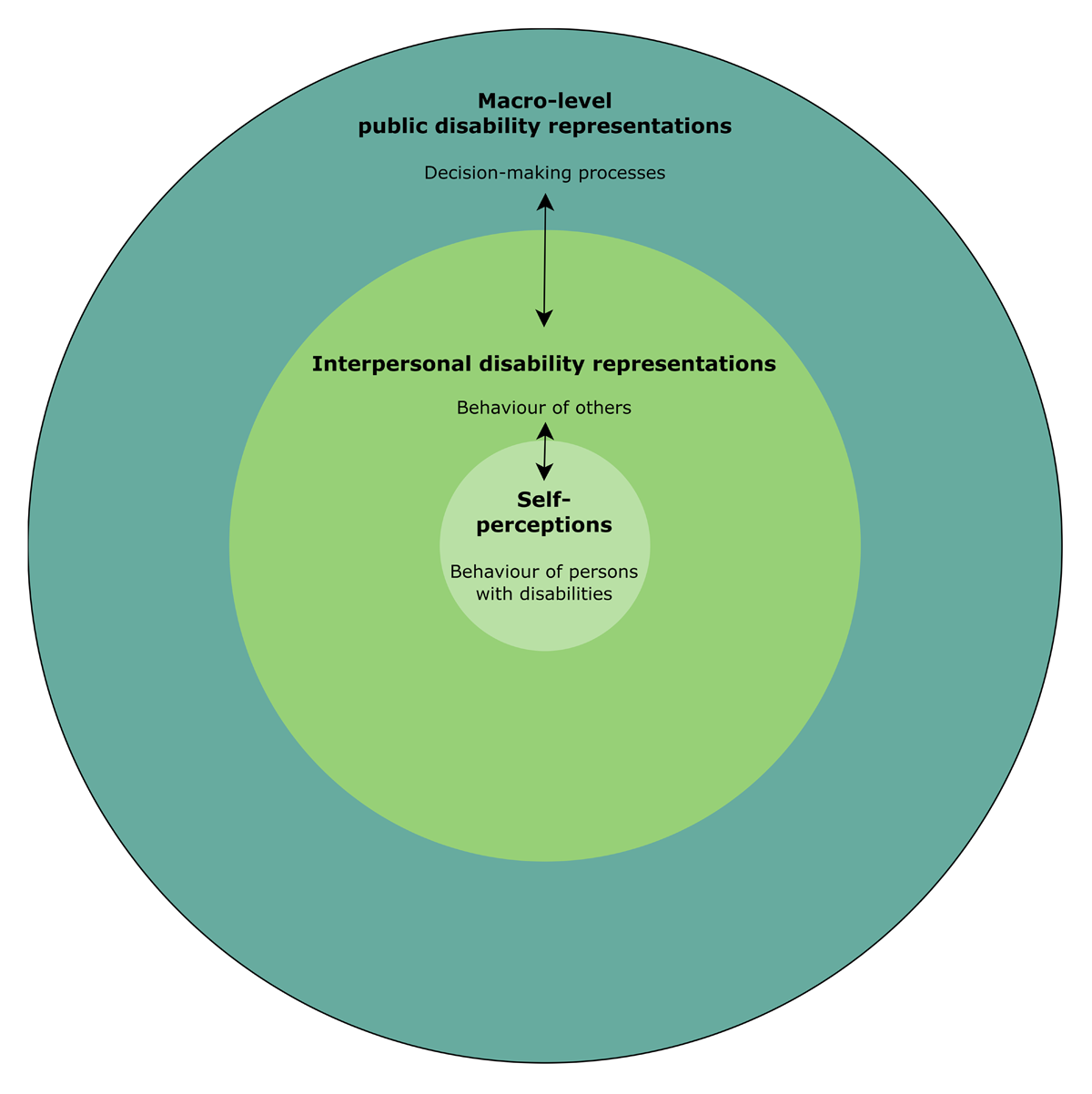
Figure 2
Experienced impact of public disability representations.
Some participants noted that public disability representations influence macro-level decision-making processes and policies, which in turn shape the barriers and opportunities available to individuals with disabilities. For example, portrayals that depict disabled individuals primarily as benefiting from specialised care tend to lead to different policy outcomes than those that depict the use of tailored solutions to support participation in an inclusive society. Elwood encountered an exclusionary mindset at the relevant agency while applying for travel accommodations as a disabled student: ‘A disability comes with a social benefit; a social benefit is a waste of money, so it’s a waste to invest in education for people with disabilities.’ Joyce faced a similar experience concerning housing allocation: ‘Policies do not consider diversity or unique circumstances.’
Conversely, most participants described firsthand experiences of how the behaviours of others were shaped by public disability representations. These behaviours encompassed paternalism and unsolicited assistance in everyday life, as well as implicit biases during job interviews. Frances mentioned experiencing this paternalism: ‘If you speak with a civil servant and they think you can’t do this, why should they help you? They decide how your life will be run and stop you from pursuing your goals.’
Moreover, many participants noted that public disability representations influenced the self-perception of individuals with disabilities. Others perceiving them as primarily sad or weak heightens their sense of vulnerability. Conversely, meeting with positive expectations and rising to the challenge increased their sense of self-worth. Lynn described this experience as, ‘You see me this way, so I look at myself this way as well.’
Public disability representation does not bother me anymore
Most participants explained that although public disability representation is crucial, over time, using impression management in their daily lives, they became less bothered by it—or not bothered at all. Raven stated, ‘I think it took me about ten years to get over other people’s representations.’
Participants engaged in impression management in two distinct ways. On the one hand, they deliberately shaped how they presented themselves in public life. Most acknowledged their agency, explaining that they intentionally constructed their self-presentations. Their primary objective was to show that individuals with disabilities are more than their disabilities alone. Or, as Stanley explained, ‘Because you want to influence public disability representation, you are constantly concerned with what other people think of you. You want the initial impression to favour you as quickly as possible.’ For example, several participants emphasised the importance of maintaining a well-groomed appearance:
Show yourself and make it known who you are and what you’re capable of. I’ve got coworkers showing up in baggy sweaters or hoodies at a pretty important meeting. I make sure to wear a neat shirt or sometimes a suit. That’s definitely something you put a lot of thought into, your presentation. (Stanley)
On the other hand, participants also described measures to correct misrepresentations. All reported instances where they actively sought to influence how they were perceived. Cornelia explained, ‘People should perceive you accurately, and so you must sometimes correct them.’ Winny concurred, noting that her approach was contingent upon the specific circumstances: ‘It really just depends on what’s going on. Sure, my choice to go against that totally depends on how safe I feel at the time.’ These efforts took place in both private and advocacy contexts, emphasising the importance of providing information, offering explanations, raising awareness, and correcting specific misrepresentations or language.
All participants highlighted that effective impression management relies on several specific strategies. They noted that these strategies are most effective when combined thoughtfully, making tactical action essential. Most participants identified diplomacy as a key strategy. As Chris explained, ‘You can also convey a negative message in such a way that the listener remains open and willing to listen.’
Most participants also recognised the importance of making genuine connections with others. Tinus’ assertion exemplifies this concept: ‘When you truly connect with someone, they understand what the circumstances require.’ Most participants highlighted the importance of speaking up and perseverance. According to Garth, ‘You just have to go for it. React; don’t let it get to you.’
Many participants highlighted the value of openness and transparency. Raven emphasised the significance of transparency in a professional setting by stating, ‘So I immediately say that I’m autistic and suffer from chronic migraines. These are my limitations, but I also have possibilities. And I immediately explain to the client the consequences of hiring me.’ Many participants employed the tactic of inducing discomfort by deliberately provoking challenging situations. Lynn remarked, ‘Occasionally, I become situationally angry on purpose. To heighten the others’ discomfort, I sometimes create a commotion around it.’ Some participants liked being in the spotlight, as this highlights their messages. As Elwood observed:
People recognise you in your wheelchair. Let’s acknowledge that politics thrives on the power of visibility and representation. Using my wheelchair and personal story to spread my political message did not put me off.
Effective impression management requires solidity
Decisions to actively influence how others perceived them were grounded in a sense of inner solidity. Most participants emphasised the importance of developing this internal solidity before engaging in external impression management. In the context of maturation with a disability, Doesjka stated, ‘My solidity has significantly increased. I no longer need to challenge or oppose the outside world.’
Almost all participants identified the ability to define their position as a key aspect of their solidity. They viewed positioning as crucial for effective impression management. Lawrence observed, ‘If you haven’t acknowledged your disability, you won’t go public with it.’ Most participants indicated that they had to learn to free themselves from the limiting representations they encountered. Lynn articulated her stance on the expectations of others as follows: ‘I refuse to consider someone else’s representations. They express something about how I am perceived, not who I am.’ Engaging with both public disability representations and their own self-perceptions was essential. Saar stated, ‘I wanted to show that I was normal when I was younger. Later, I realised that I didn’t quite consider myself normal. Although it was a painful discovery, it did help me.’ Many participants also highlighted the importance of recognising and valuing both their capabilities and their limitations. Elwood explained:
Look, I know life from both sides: when I was running and now that I am rolling. I will never be a top footballer because I am unable to run; that is simply the way it is. And if you can’t solve something, it’s not a problem; it’s a given. You will then have to adapt to the circumstances.
Many participants highlighted the need to learn how to manage ongoing questions and constant observation. Gwen observed, ‘When people ask me in a polite manner, “What does this mean, and how can this be done?” I’m now always willing to explain. But sometimes I think, “Pff, I don’t feel like explaining that again”.’ Some stressed the importance of adapting to the reality of being conspicuous. Stephan put the experience of being stared at into perspective: ‘I don’t mind whether people look at me or not. I don’t understand why others do. Does it really matter if someone is looking at you?’
Participants identified various personal traits that contributed to a heightened inner solidity. Some, particularly older participants, described this process as a form of ‘emancipation’. Many spoke about their ability to maintain a positive attitude rather than adopting a victim mentality, choosing to focus on opportunities rather than perceived limitations. Dymphna summarised her stance as, ‘Victim behaviour and attitudes—I could never identify with them.’
Many participants also expressed a desire to prove themselves, demonstrating their capabilities and distancing themselves from the unfavourable representations they encountered. Hynke noted, ‘What I’ve learnt from other people’s representations is that I still want to show my ability to accomplish things.’ And Dawn explained, ‘If you feel other people’s doubt about what you can do, about your performance, you want to prove it even more.’ Many participants also highlighted their ability to not take themselves too seriously, which was exemplified by Herbert’s remark: ‘Does it keep me up at night? No. Do I like it? No. Do I always see the bright side? Yes.’ Some, like Lynn, who had grown up alongside non-disabled children, emphasised the value of belonging and equality:
It was an excellent school. The kids came to play school when I was in the hospital or in plaster at home. When I was able to return to school, the kids in my class would lift me up and move me to a different location. I assumed that was how things worked. It showed me that I was different, but that this was not a problem.
Almost all participants reported that external support enhanced their solidity. Many participants, especially those with congenital disabilities, identified parents’ and teachers’ influence as crucial for the formation of their self-perceptions. Tjitske noted:
My parents thought that my independence was extremely important. I appreciate how they always let me go, whether it’s riding my bike to school or going camping. They were not anxiously saying, ‘Well, don’t do it.’ This approach enabled me to learn things for myself, even if their lessons were sometimes hard. Well, just basically the same as my sister’s, who can see normally.
Some participants, especially those with acquired disabilities, explained that their non-disabled friends urged them to stop perceiving themselves as pitiable and rather enjoy activities together, as they had done before. Elwood said:
They came to pick me up from the rehab centre after a few months, when I was still unable to do much at all. They shoved me into the car, drove me to the pub we used to frequent, gave me a glass of beer, and said, ‘Keep drinking beer so you don’t become a wimp.’
Many participants reported that engaging with disabled peers or witnessing positive role models with disabilities improved their solidity. Sjors stated, ‘When I found out that Roosevelt had been in a wheelchair, I was overjoyed and realised that anything was possible.’ Some reported feelings of regret because during their developmental years they had had no comparable peers. Frances discussed her experience of adapting to her disability, questioning, ‘What was it like for others? What kind of life is ahead of me? I was looking for role models, but I just couldn’t find one back then.’
Seeking to influence public disability representation is a shared responsibility, but some may struggle
Most participants expressed that individuals with disabilities should actively seek to influence how disability is represented. In Hynke’s opinion, ‘If we do nothing, things definitely won’t change. I honestly don’t think you can just force it from the top or anything like that.’ Some participants added that non-disabled people should also play an active role. Tinus acknowledged, ‘I believe it needs to come from both sides. (…) If you both stay in your trenches, nothing will change. You both must make a move.’ Others pointed to the role of politics and the government in shaping public representations. Gwen: ‘We’re all a part of it. It is experienced firsthand by people with disabilities. But politics has a significant impact on public disability representation.’ Importantly, several participants emphasised that individuals with disabilities, as those directly affected, should not bear sole responsibility for changing how disability is portrayed. Vink made this clear by saying, ‘I don’t think that people with disabilities have a specific role to play. In fact, I can imagine them saying, “Yes, I’m the one confronted with a problem; why do I have to solve it too?”.’
Most participants criticised individuals with disabilities who did not attempt to influence disability representations:
I’m affected by the representations that arise from assumptions about people with disabilities, which are often confirmed by people with disabilities themselves. It takes just one person to confirm this, and the assumptions are even further reinforced. (Tjitske)
Sjors disclosed engaging in open discussions with disabled peers during workshops and training sessions: ‘Yeah, if you present yourself in that manner, that is how you will be addressed.’ The participants’ critiques focused on issues such as chronic complaining, adopting a victim mentality, failing to take responsibility for one’s situation, and the tendency to hold societal factors responsible. Chris said, ‘If you’re constantly angry, let down, and demanding without trying to change things, it’s not going to help at all. Then the representation just keeps getting worse.’
Alongside criticism, there was also an understanding of the challenges faced by individuals with disabilities for whom impression management may not be feasible. Several participants rejected the notion that success can be achieved through willpower alone. For example, Gwen stated, ‘What also irritates me is the attitude of “I can do it, so you can too!”’ Many participants acknowledged that some individuals with disabilities are unable to take a proactive approach due to social circumstances, limited skills, or a lack of necessary competencies. Saar stated:
It’s also about whether you are capable of doing it. You can hardly blame someone who is cognitively incapable of reflecting on themselves. But it’s also about how you were raised. Did you grow up thinking that you couldn’t do anything and that everyone else sees you that way? Or did you grow up with the sense of ‘Hey, you belong here’?
Many participants emphasised the importance of inclusive education in developing impression management skills. Some suggested that individuals with disabilities should be taught these skills, arguing that part of the problem lies in the lack of focus on this aspect within educational and rehabilitation settings. Sjors explained:
The primary issue with rehabilitation is that the emphasis is on getting better. If you do not improve further, you will have to figure things out on your own outside of rehab. But only then do the problems with public disability representation surface.
Discussion and Conclusion
This paper examined how disabled advocates use impression management to influence public disability representations. The advocates argued that public disability representation is crucial, as individuals who lack personal connections with someone with a disability often form impressions based on limited information, which can lead to inaccurate assumptions. According to the advocates, their proactive efforts to manage how they are perceived—that is, impression management—help to reduce the risk of misinterpretation and inappropriate interactions. They emphasised that shaping public disability representations should be a shared responsibility among all people with disabilities. Nonetheless, they acknowledged that not everyone is capable of or willing to engage in impression management.
The finding that the participants regard positive public disability representation as crucial aligns with prior research on the impact of disability stigma, stereotypes, and prejudices (e.g., Chaney 2015; Silverman & Cohen 2014). The participants indeed stressed the importance of positive public disability representations—for example, through the visibility of disabled role models. They also argued that their impression management strategies can mitigate, or even eliminate, the harmful effects of representations in their personal lives. However, whether these shifts in representations are sustainable remains uncertain. The mere fact that an individual is no longer perceived as ‘typically disabled’ in a specific context does not necessarily indicate a lasting shift in societal attitudes toward disability. This insight underscores the need for further research.
The responses of participants made clear that they tended to concentrate efforts on influencing concrete interpersonal interactions. What explains this focus? Do they consider the macro-level to be less relevant than the interpersonal level? Do they anticipate that the macro-level—primarily related to policy measures, campaigns, or media visibility—will remain beyond their sphere of influence? A related question is whether participants might misjudge the impact of their actions due to their interpretation of public disability representations. Older studies suggest that individuals with disabilities may interpret the attitudes and behaviours of non-disabled people differently than intended (e.g., Fichten et al. 1991; Furnham & Thompson 1994). For example, non-disabled individuals thought positive attitudes meant being kind and helpful to disabled people, whereas disabled people wanted equal treatment (Makas 1988). Further research is required to determine the feasibility of correcting non-disabled individuals with positive attitudes in comparison to those with negative attitudes.
While Goffman’s (1959) concept of impression management can lessen the impact of stigma, it does not remove the stigma itself. Disabled advocates extend Goffman’s ideas by actively seeking to influence public disability representation. This strategy requires competencies such as solidity, a positive attitude, self-confidence, and social insight to choose the most effective approach in different contexts. It also involves recognising and exercising one’s agency to affect change. The participants argued that factors like parenting and education play a critical role in developing self-esteem and self-perception, but that the latter are often overlooked in education and rehabilitation contexts. We suggest that curricula and rehabilitation programmes focus on strengthening the solidity of disabled individuals, equipping them with impression management skills and a nuanced understanding of disability shaped by social forces—not merely individual deficits. Training should also prepare disabled individuals to safely and constructively respond to negative representations, microaggressions, bullying, and rights violations (Gill 2016). Importantly, addressing disability representation should not rest solely on disabled individuals; educational systems should integrate awareness of the consequences of representations and prejudices into the curricula for all students.
Competent disabled advocates are indispensable: they contribute to improving public disability representation and can serve as motivating role models within the disability movement. The advocates do not conceal their disabilities. Conversely, their disabilities constitute a fundamental aspect of their identity, with some advocates even actively employing them. Through impression management, the advocates demonstrate that their disabilities do not preclude, but rather coexist with, socially valued traits and abilities. As a consequence, the advocates feel relatively unaffected by disability representations. This perspective carries profound implications. While the advocates recognise that not everyone has the capacity to influence their representatives, they nonetheless argue that disabled individuals ought to participate in this process. This stance suggests a partial acceptance of dominant social values such as personal autonomy, individual responsibility, and self-determination—values that resonate with the idea of neoliberal citizenship (Hilberink & Cardol 2019). By presenting themselves as competent, in control, and capable of full participation, they risk limiting society’s ability to engage meaningfully with difference and relational autonomy. Thus, disabled advocates who emphasise the manageability of their representations may inadvertently conform to the expectations of an ableist society (e.g., Campbell 2008; Nario-Redmond et al. 2019). Their impression management may unintentionally result in the exclusion of individuals who are unable or unwilling to conform to the criteria of ‘liberal’ citizenship. Moreover, this duality of impression management resonates with the pursuit of empowerment, which, while aspirational, may misleadingly suggest that ‘disabled people are capable of anything’ (Grue 2016, 846). Thus, while recognising the value of impression management, we should also critically analyse the social norms that underpin public disability representations. Alongside the pursuit of inclusion, it is crucial to advocate for diversity, i.e., for the right to be ‘normally different’ (Winance 2007, 634).
Strengths and limitations
A key strength of this study is its focus on impression management in the context of public disability representation, rather than limiting the analysis to stigma-related experiences alone. Another strength lies in its focus on the lived experiences of disabled advocates and the role of disability representation in advancing advocacy goals such as disability rights and inclusive societies. This highlights how disabled advocates seek to influence public disability representation and public opinion through their perspectives and experiences.
However, this study also has limitations. Our cross-disability approach enabled us to engage with participants from various disability groups but resulted in small numbers within each category. For example, the autistic participant noted her sense of isolation compared to the larger group of participants with physical disabilities. Additionally, the study primarily examined disabled advocates with strong verbal self-expression skills, and by relying on interviews rather than incorporating non-verbal or art-based methods, we may have unintentionally excluded individuals with limited verbal abilities. Despite efforts to ensure diversity in gender, age, and cultural background, the sample included only two non-White individuals, and most participants had a high level of education. As a result, we may have overlooked the experiences of disabled adults from non-Western backgrounds or with lower educational attainment. We therefore recommend further research on how individuals with disabilities in less prominent roles use impression management.
A second limitation is that the use of our topic list may have resulted in the oversight of broader social or political dimensions. Moreover, while topic lists allow participants to raise their own issues, impression management involves selectively sharing information, and the emphasis on agency may have neglected the exhausting aspects of ongoing impression management. We partly addressed this by providing summary interviews and sharing preliminary findings, which led some participants to provide additional insights, which were incorporated into the manuscript. Nevertheless, the topic list approach may have introduced bias, as silence on a specific topic does not equate to irrelevancy or a lack of opinion or experience.
Conclusion
Disabled advocates employ impression management strategies to mitigate the adverse effects of public disability representations on their societal participation. According to them, shaping public disability representations is a collective obligation of all individuals with disabilities. This reveals a tension between disabled advocates’ perspectives regarding the negative impact of systemic public disability representations, as viewed through the social model, and their individual conviction that people with disabilities bear personal responsibility to refute these representations. Further research is required to examine the public disability representation experiences and the employment of impression management strategies by individuals with disabilities in less prominent roles.
Data Accessibility Statement
Due to privacy reasons, data associated with this study are not openly available.
Appendices
Appendix
Appendix 1
Interview Topic List.
| TOPIC | DETAILS OF TOPIC | EXAMPLES OF PROMPTS |
|---|---|---|
| Introduction | Terminology | How would you like to be addressed? Which words do you prefer? |
| Introduction to research process, informed consent, and complaints procedure | Have you any questions? Please sign the consent form if you haven’t already. | |
| Public disability representation research | Many studies on media representations or public representations; few studies on lived experiences of people with disabilities. | |
| Icebreaker (to build rapport) | Public disability representation | Describe ‘public disability representation.’ Why is this relevant? |
| Types of public disability representations | Which representations have you experienced? | How did others see you? Where did these public disability representations happen? What was your first realisation that others saw you differently? |
| Navigating public disability representation | Which experiences have you had? | Did these representations bother you? In these situations, how did you feel? How do you handle disability representations? |
| Positive representations | Share some positive experiences. Did you have any role models? | |
| Negative representations | Share some negative experiences. Have you felt disability shame? | |
| Shaping public disability representation | Need for a change? | Does public disability representation need to be changed? Which representations? Why? |
| Roles of people with disabilities | Who is responsible for introducing changes? What is the role of people with disabilities? Do people with disabilities ever annoy you? | |
| Conclusion | Additional thoughts | Is there something I forgot to ask? Would you like to share any other thoughts or experiences? |
| Personal characteristics | Could you tell me your age, education, political views, and disability type, onset, and manifestation? | |
| Follow-up | About sending the interview summary | You can then verify if I got your points and note things you forgot to mention. |
| About sending the preliminary results and recommendations | You can then decide whether to reflect on the analysis and determine if there is anything you would like to add or discuss. |
Ethics and Consent
The Ethics Review Committee of the University of Humanistic Studies in Utrecht, the Netherlands, granted ethical approval (reference 2022-05). All participants provided informed consent.
Acknowledgements
We appreciate the insightful comments and suggestions provided by Cindy Kranendonk, Karen Mogendorff, Lotte Siebesma, and Illya Soffer.
Competing Interests
The authors have no competing interests to declare.
Author Contributions
The first author conceptualised the study, and collected and analysed data. All authors contributed to the interpretation of findings. The first author drafted the manuscript with support from the third author. All authors reviewed and approved the final manuscript.