
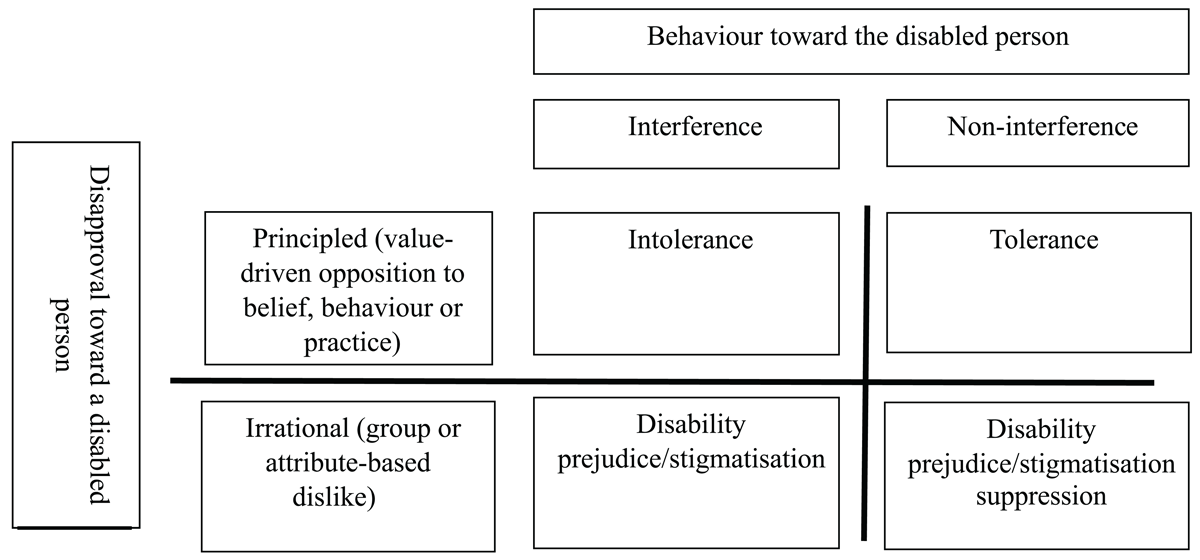
Figure 1
Distinction between tolerance and intolerance and stigma/prejudice.
Table 1
Examples of prejudiced beliefs and intolerant beliefs toward disability issues related to anticipated personal consequences of enabling the conduct.
| PERPETRATOR | PREJUDICED BELIEF | INTOLERANT BELIEF | SHARED BEHAVIOUR |
|---|---|---|---|
| Taxi driver | Disabled people are slow and troublesome passengers | Desire to avoid an allergic reaction from contact with a dog | Refusal to take passengers with assistance dogs |
| Parent | Disabled children disrupt the learning of their peers | Desire to avoid exposing one’s own child to violence or harm from a specific child with disruptive behavioural issues | Opposition to the inclusion of a disabled child in a mainstream classroom |
| Teacher | Disabled children should not mix with non-disabled children | Mainstream classrooms lack resources to facilitate disabled children’s learning and will increase workload | Opposition to the inclusion of a disabled child in a mainstream classroom |
Table 2
Examples of prejudiced beliefs and intolerant beliefs toward disability issues related to moral concerns about the conduct.
| PERPETRATOR | PREJUDICED BELIEF | INTOLERANT BELIEF | SHARED BEHAVIOUR |
|---|---|---|---|
| Religious person | Disabled people are morally responsible for the illness they experience | Life is inalienable -people must not interfere to hasten end of life | Opposition to assisted dying for the terminally ill |
| General public | Disabled people have no sexual needs | Sexual surrogates are vulnerable to exploitation and violence | Opposition to disabled people using sexual surrogates |
| General public | People who are mentally ill can get better if they try harder | People who use psychedelic drugs for therapy may become addicted | Opposition to the use of psychedelic drugs as therapy for mentally ill people |
| Religious person | Disabled people are morally responsible for the illness they experience | The body is sacred and should not be augmented | Opposition to brain implants for paralysed individuals |