
Table 1
PRISMA S Checklist.
| PRISMA S | IN THIS STUDY | |
|---|---|---|
| INFORMATION SOURCES AND METHODS | ||
| 1) | Name each individual database searched, stating the platform for each. | Database: Scopus. Platform: Elsevier Database: PsycINFO. Platform: EBSCOhost Database: SwePub. Platform: Libris |
| 2) | If databases were searched simultaneously on a single platform, state the name of the platform, listing all of the databases searched. | No databases were searched simultaneously on a single database. |
| 3) | List any study registries searched. | No study registries were searched. |
| 4) | Describe any online or print source purposefully searched or browsed (e.g., tables of contents, print conference proceedings, web sites), and how this was done. | No inline or print sources were searched. |
| 5) | Indicate whether cited references or citing references were examined, and describe any methods used for locating cited/citing references (e.g., browsing reference lists, using a citation index, setting up email alerts for references citing included studies). | Cited references were not searched. |
| 6) | Indicate whether additional studies or data were sought by contacting authors, experts, manufacturers, or others. | No experts, manufacturers or others were contacted. |
| 7) | Describe any additional information sources or search methods used. | No other information sources were used. |
| SEARCH STRATEGIES | ||
| 8) | Include the search strategies for each database and information source, copied and pasted exactly as run. | Three searches were conducted in the databases Scopus, PsycINFO and SwePub. The following keyword combination were used in the search: 1. ‘intellectual’ AND ‘disability’ AND ‘internet’ AND ‘Sweden’ 2. ‘intellektuell’ AND ‘funktionsnedsättning’ AND ‘internet’ 3. ‘learning’ AND ‘disability’ AND ‘internet’ + ‘Sweden’. |
| 9) | Specify that no limits were used, or describe any limits or restrictions applied to a search (e.g., date or time period, language, study design) and provide justification for their use. | The keywords could co-appear anywhere in the article. In Scopus the limitation to the country ‘Sweden’ was used. The limitation was used as one of the study’s exclusion criteria is that the articles are conducted in a Swedish context. No other limits were used. |
| 10) | Indicate whether published search filters were used (as originally designed or modified), and if so, cite the filter(s) used. | No search filters were used. |
| 11) | Indicate when search strategies from other literature reviews were adapted or reused for a substantive part or all of the search, citing the previous review(s). | No search strategies from other literature reviews were adapted or reused. |
| 12) | Report the methods used to update the search(es) (e.g., rerunning searches, email alerts). | As the searches were conducted during a limited amount of time no reruns were made. |
| 13) | For each search strategy, provide the date when the last search occurred. | Database search 1 was conducted 2023-04-23. Database search 2 was conducted 2023-04-24. Database search 3 was conducted 2023-05-18. |
| PEER REVIEW | ||
| 14) | Describe any search peer review process. | The first author (JS) conducted all database searches. The second author (MF) systematically and critically reviewed searches and search strategies used. Preliminary results were peer reviewed by a senior researcher well familiar with the research field of disability and digitalisation. |
| MANAGING RECORDS | ||
| 15) | Document the total number of records identified from each database and other information sources. | Total number of records from Scopus: 381 Total number of records from PsycINFO: 181 Total number of records from SwePub: 33 |
| 16) | Describe the processes and any software used to deduplicate records from multiple database searches and other information sources | No software was used to deduplicate records from multiple database searches. The first author (JS) manually reviewed every search result and removed duplicates. |
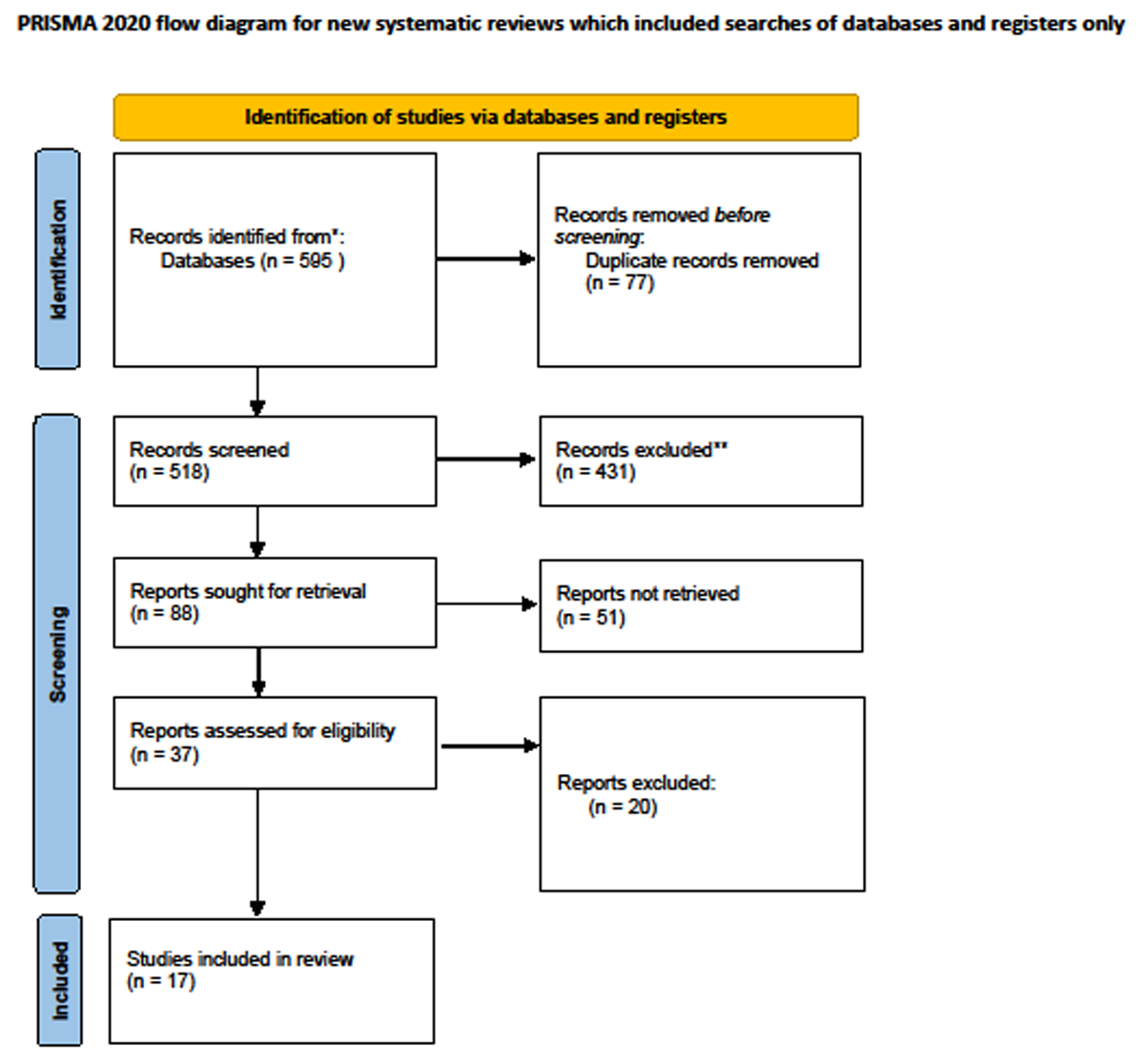
Figure 1
Prisma flow diagram.
Table 2
Descriptions of included studies in the final selection.
| AUTHOR(S) | AIM(S) | METHODS | PARTICIPANTS | RESEARCH METHOD |
|---|---|---|---|---|
| Alfredsson Ågren, Hemmingsson and Kjellberg. 2020a | Investigate digital participation of adolescents with ID by comparing aspects of Internet use among adolescents with and without ID. | Questionnaires and reference data from the Swedish Media Council | 114 individuals with ID. 1161 individuals in the reference group | Qualitative study |
| Alfredsson Ågren, Hemmingsson and Kjellberg. 2020b | To examine and describe internet access and usage among young adults with mild to moderate ID in their everyday lives. | Observations with followup, individual interviews | 15 individuals with ID | Qualitative study |
| Alfredsson Ågren, Hemmingsson and Kjellberg. 2020c | To investigate opportunities and risks of internet use as perceived by the parents of adolescents with ID in comparison with a national reference group of parents of adolescents. | Questionnaires and reference data from the Swedish Media Council | 99 parents of individuals with ID. 1561 individuals in the reference group | Qualitative study |
| Alfredsson Ågren, Hemmingsson and Kjellberg. 2023 | To explore environmental opportunities and challenges when performing internet activities and how internet use influences social and community participation for young people with ID from the perspectives of the target group. | Observations with followup, individual interviews | 15 individuals with ID | Qualitative study |
| Björquist and Tryggvason. 2022 | To examine how the use of ICT might promote social participation for youths with disabilities. | Focus group interviews | 8 individuals with ID. 5 personnel. | Qualitative study |
| Borgström. 2022 | To study how young women with ID experience self-presentations on the internet. | Individual interviews, couple interviews, and focus group interviews | 17 individuals with ID | Qualitative study |
| Borgström. 2023 | To investigates young people with ID and the relationship between online and offline vulnerability. | Individual interviews, couple interviews, and focus group interviews | 25 individuals with ID | Qualitative study |
| Engwall. 2022 | To analyse the digital process mobilised by day centre staff in the wake of covid 19 restrictions and day centre closure. | Individual interviews | 14 individuals working with support for people with ID. 4 managers | Qualitative study |
| Eriksson and Ineland. 2023 | To conceptualise officials understanding of ICT usage among persons with an ID, and to analyse how thisunderstanding might influence the provision of services for those with an ID. | Individual interviews | 9 municipal politicians | Qualitative study |
| Löfgren-Mårtenson. 2008 | To describe the perspective individuals with ID have on their internet usage and discuss how others perceive internet usage. | Individual interviews | 12 individuals with ID. 10 teachers/staff working with people with ID. 2 individuals working with ICT | Qualitative study |
| Löfgren-Mårtenson, Sorbring and Molin. 2015 | To investigate the perceptions of parents and professionals regarding the Internet as a social arena for love and sexuality among young people with ID. | Focus group interviews | 8 individuals working in special education. 5 parents of individuals with ID | Qualitative study |
| Molin, Sorbring and Löfgren-Mårtenson. 2017 | To describe and analyse how young people with ID view risks and opportunities on the Internet and how they reflect upon emancipative strategies and issues of online and offline identification processes. | Individual interviews | 27 individuals with ID | Qualitative study |
| Ramsten and Blomberg. 2019 | To investigate how staff members work with young adults with mild to moderate ID to foster their independence and participation through ICT. | Focus group interviews | 15 staff members working in supported housing | Qualitative study |
| Ramsten, Marmstål Hammar, Martin and Göransson. 2017 | To describe how municipal organisations in Sweden structure support in terms of policy and strategies to enable the use of ICT in social care for young adults with mild-to-moderate ID. | Questionnaire | 147 individuals from different municipalities | Quantitative study |
| Ramsten, Martin, Dag and Marmstål Hammar. 2019 | To describe staff perceptions of the role of ICT and its influences on daily life in young adults with mild to moderate ID living in residential homes. | Focus group interviews | 17 staff members working in supported housing | Qualitative study |
| Ramsten, Martin, Dag and Marmstål Hammar. 2020 | To describe the use of ICT from the perspective of young adults with mild-to-moderate ID in a municipal social care context. | Individual interviews | 11 individuals with ID, residing in supported housing | Qualitative study |
| Sorbring, Molin and Löfgren-Mårtenson. 2017 | Investigate how parents of young individuals with ID perceive opportunities and obstacles for their children’s internet usage, as well as how the parents themselves act to support their child in internet use. | Individual interviews and couple interviews | 22 parents of individuals with ID | Qualitative study |