
Introduction
Digital technology is integrated in several domains of today’s society (van Holstein et al. 2023). The access to welfare services, news and customer services are increasingly requiring the use of internet services (Seale and Chadwick 2017; van Holstein et al. 2023); consequently, requiring technological skills to gain access to several practical and social arenas of society (van Holstein et al. 2023). Individuals who lack access to digital technology are at risk of social exclusion (Tsatsou 2022).
There is a significant gap concerning internet use and internet access between people with and without disabilities (Dobransky and Hargittai 2016; Luissier-Desrocher et al. 2017; Seale and Chadwick 2017). Further, the fast pace of changes in technology obstructs the usage for many people with disabilities (Dobransky and Hargittai 2016). However, the variety among people living with disabilities of different kinds are multifaceted, and the need to find workarounds and adaptive technologies in order to make use of the internet could sometimes lead to an even deeper knowledge of technology (Dobransky and Hargittai 2021). Nevertheless, the general gap concerning internet usage between abled and disabled people is described as troublesome (Lussier-Desrocher et al. 2017). Differences in access to the internet have been identified when specifically comparing people with and without intellectual disability (ID) (Chadwick, Wesson and Fullwood 2013; Lussier-Desrocher et. al. 2017). The lack of access is caused by limited availability of internet connections, limited access to internet-connected devices, cognitive difficulties associated with ID, and protective but restraining actions taken by professionals and parents (Lussier-Desrochers et al. 2017; van Holstein et al. 2023). Furthermore, people with ID do not see that they can get the kind of everyday support needed to increase their skills in internet usage (Chadwick, Wesson and Fullwood 2013). Chadwick, Wesson and Fullwoodstate this as follows:
Although people with ID potentially stand to gain the most from thistechnology, they are traditionally the group within society least likely togain access to and receive the full benefits from the Internet (2013, 379).
The internet has the potential to reduce or eliminate several factors hindering people with ID from participating in everyday social activities (Chadwick, Wesson and Fullwood 2013; van Holstein et al. 2023). Online communities are often experienced by people with intellectual disabilities (ID) as freer and safer environments than offline environments (Hebblewhite, Hutchinson and Galvin 2020), and social media are used to establish friendship as well as romantic relationships (Darragh et al. 2017).
Sweden has been tasked with following the UN convention regarding the rights of disabled people (United Nations 2008), stating that convention states should take appropriate action to promote access to new information and communication technology (ICT) and new systems, including the internet, for people with disabilities.
A Swedish policy goal is that Sweden should be the best country in the world in providing the possibilities of digitalisation (Government of Sweden 2023). However, available studies show that, in Sweden, people with ID have less access to the internet than abled people (Alfredsson Ågren, Hemmingsson and Kjellberg 2020a). Historically, people with ID in Sweden have been excluded from extensive domains of society, such as the labour market, the housing market and adequate care (Ineland, Molin and Sauer 2019; Lövgren 2013). Given ambitious present policy goals and the history of exclusion, it is important to make an updated overview of access to and experience of the internet for people with ID in Sweden.
The aim of this scoping review was to map internet use among people with ID in Sweden, and to scrutinise the phenomenon from a critical perspective. The overarching research question posed was: How is internet usage among people with ID in Sweden described in existing research? From a critical perspective, how could internet use among people with ID be understood?
Background
Over the years, access to various areas of life has been highly restricted for people with ID (Lövgren 2013; van Holstein et al., 2023). In 2017, 78% of adults with ID in Sweden were unemployed (Tideman, Lövgren and Szönyi 2017). People with ID do not gain healthcare to the same extent as abled people, which has been suggested as one of the reasons for the generally shorter lifespan amongst people with ID (Hirvikoski et al. 2021). People with ID often have lower incomes, are more often victims of discrimination and crime, experience fewer and less satisfying social relationships and have more limited social networks—overall, people with ID thus have fewer possibilities to be successfully integrated in society than the population in general (Chadwick, Wesson and Fullwood 2013).
Concerning digitised domains of life, recent studies have shown that, in Sweden, people with ID more often report not feeling digitally included compared to the general population, and not using e-health services to the same extent as the general population does (Johansson, Gulliksen and Gustavsson 2021; Pettersson et al. 2023).
Internet and net-connected devices require economical investments. Since people with ID in general have less income than abled people, their internet access is economically limited. Sensory motoric difficulties hinder the use of small, technical devices that require fine-grained motoric skills. Websites are often designed in ways that are challenging for people with ID to understand. Technical devices require abilities that people with ID may lack, such as problem-solving skills, short -term memory, and deduction. Furthermore, there are challenges associated with social interaction on the net, in terms of not understanding unexpressed rules and norms, as well as not understanding risks of exploitation and scams (Lussier-Desrocher et al. 2017). The design of digital software and technology is rarely developed to be accessible for people with disabilities (Dobransky and Hargittai 2016). One explanation for this may be that people with ID seldom are in positions of power in companies designing internet policy and devices (Chadwick, Wesson and Fullwood 2013). There are cases where assistive technology is accessible. As digital media is developing at such a fast pace there is, however, a tendency for the assistive technology not developing at the same pace, making the tools outdated almost as soon as they are available (Dobransky and Hargittai 2016).
To increase internet use among people with ID, support is important. Lack of adequate support and training decreases the possibility to use the internet. Barriers to providing this support are often described as consisting in lack of time and technical knowledge (Chadwick, Wesson and Fullwood 2013). One study (Lines, Combes and Richards 2021) showed that social care professionals supporting people with ID in using the internet usually lack the education and training needed for success at support. Furthermore, the professionals often worry that people with ID do not understand the risks associated with internet use, and thus often feel the need to control their clients’ internet usage to protect them (Lines, Combes and Richards 2021).
Social care professionals’ own subjective opinions regarding actions involving risks unduly affected the provided support (Lines, Combes and Richards 2021). People with ID do, however, need to be encouraged in positive risk-taking to potentially obtain the preconditions for success, thoughts and prejudices. Guidelines are lacking, which means people with ID have been restricted from undertaking practical use of the internet (Chiner, Gómez-Puerta, and Cardona-Moltó 2017; Seale and Chadwick 2017). To exclude people with ID from making their own decisions based on relevant information means that their possibilities to make decisions in their own lives are taken away (Seale and Chadwick 2017).
However, internet usage is never completely unproblematic. Problems encountered online have been reported by people with ID, such as being excluded from social groups, and receiving abusive messages and threats (Chiner, Gómez-Puerta, and Cardona-Moltó 2017). On the other hand, people with ID benefit from internet usage in several ways; the internet gives them opportunities to participate in social activities, gain information and access to community services (Chadwick, Wesson and Fullwood 2013; Darragh et al. 2017; Hebblewhite, Hutchinson and Galvin 2020). Exclusion from online activities and e-services also implies exclusion from extensive societal domains. Goggin (2021) claims that there is an intimate relationship between disability and the digital. Digital technology has the possibility to either open up and extend dimensions of information and communication, or to deny them. Internet usage and skills are not just questions of opinions and risk-taking, but also questions of human rights, social inclusion and equality.
Theoretical Point of Departure
To scrutinise the results from the scoping review from a critical perspective, we used a theoretical framework. The study adopted a social constructionist approach of intellectual disability (Rapley 2004). Furthermore, Rose (1999) was used to analyse power relations, equality and phenomena related to structural and modes of practise levels. Additionally, the concepts of digital divide, digital inequality (Hargittai 2021) and digital disability divide (Dobransky and Hargittai, 2021) were applied to understand differences in internet use.
Social Construction of Intellectual Disability
In the nineteenth century, disability emerged as a concept closely connected to the systematic individualisation and medicalisation of the body and the mind, and the exclusion of people with apparent impairments from the mainstream of community life into all manner of institutional settings. Furthermore, the understanding of intellectual disability as a medical diagnosable disorder developed from the measuring of people’s Intelligence Quotient in 1877 to describe different levels of intellectual functioning based on decreasing speech and language abilities. Between various scores, persons were assigned into categories, e.g., idiot and imbecile. Thus, with an essentialist view of a person, the term intellectual disability relied on identification of deficient capacities in individuals. An individual was understood as a fixed person in an unchanging social world (Rapley 2004).
An understanding of disability as a phenomenon related to society emerged from the 1970s. In 1976, the union of the physically impaired against segregation and the disability alliance stated: ‘disability is a situation, caused by social conditions, which requires for its elimination’ (UPIAS 1976, 4). The social model emerged, locating the ‘problem’ of disability squarely within society, arguing the needs of people must be addressed as societal concerns, not individual limitations (Rapley 2004), further questioning structuring a world organised by and for non-disabled people (Reeve 2006). The situation of a people’s everyday life is not only understood as material productions of disability, but also as discursive productions. Discursive practises that arose during the nineteenth and twentieth century, were widely spread in the judicial, educational, and social welfare fields. These discursive practises were a starting point of classification of people as being ‘disabled people’. The social model conveys intellectual disability as a status socially constructed, as a speakable truth of certain people, where modes of practises and subjectification, rituals and routines produce human natures (Rapley 2004). The model is described as crucial for the understanding of disability and society: ‘Recasting disability as a form of social oppression has been tremendously important in highlighting the social and economic disadvantages faced by disabled people’ (Reeve 2006 p. 96). Additionally, the social model does not consider bodily or mental differences as tragic (Reeve 2006). Researchers claim that the establishment of the social model of disability is the crucial development in disability over the past decades (Swain, Griffiths and French 2006). The social model has been discussed (Levitt 2017). Despite its shortcomings, Thorneycroft (2024) argues ‘Rather than abandon the social model, I argue it is in fact the least-bad model available and tinkering and revising it is more applicable’ (Thorneycroft 2024, 288). However, Mike Oliver, one of the key persons involved in developing the model, stated thirty years after the development of the social model, ‘all we now seem to do is talk about it’ (Oliver 2013, 1024). This statement indicates that practical application of the model takes time.
Power Relations
One aspect of society concerns power relations. Rose (1999) elaborates on governance and claims that macro level power relations and micro power relations are not to be understood as binary. A ‘macro actor’ is not different in kind than the ‘micro actor’. Thus, analyses of government and power relations need to pay attention to practises and apparatuses associated to political large-scale characteristics of populations, and micro-technologies for the human conduct in specific individuals in particular locales and practises. Rose (1999) claims that ‘Once political power takes as its object the conduct of its subjects in relation to particular moral or secular standards and takes the well-being of those subjects as its guiding principle, it is required to rationalise itself in particular ways’. (Rose 1999, 7). This understanding means political management and local practises are linked together, forming societal power relations that are being continuously constructed.
Digital Divide and Digital Inequality
Two key concepts have been developed in research investigating digital technology, internet use and society, to describe differences in internet access (Hargittai 2021). The first concept is the digital divide that refers to differences between those who are connected and those who are not (due to financial circumstances). The second concept is digital inequality, which refers to how people of different backgrounds incorporate the internet into their lives. Incorporation is influenced by an individual’s social and digital contexts, as well as their skills and use. Further, these divergences impact differential life outcomes of people’s lives.
Digital Disability Divide
This significant gap concerning internet use and internet access between people with and without disabilities is described as the digital disability divide (Dobransky and Hargittai 2021). One aspect of this divide concerns the circumstance that hardware, software, and online content often by default are designed for non-disabled people. Design justice is stressed as an important issue for future research and policy agenda (Goggin 2021). The understanding of digital inequality emphasises the importance to not simply provide members of disadvantaged groups with physical access to the web, but to address and improve digital skills as crucial to levelling gaps between privileged and underprivileged groups (Dobransky and Hargittai 2021).
Methodology
A scoping review (Arksey and O’Malley 2005) has been conducted. Existing literature was mapped, categorised and analysed in order to provide an overview of the research field. The searches were conducted through early 2023. The method allowed the authors to explore the research field based on broadly stated research questions, as well as to identify recurring theories, key concepts, and sources of evidence in the field (Peters et al. 2020). The scoping review followed five highly recommended steps for the method (Arksey and O’Malley 2005).
Step 1: Identify the Research Question
The first step was to identify the research question. To narrow down the research question, a study’s concepts, population and context ideally need to be defined (Peters et al. 2020). In this case, the study’s population consists of people with ID, the relevant concept is defined as internet usage, and the contextual limitation is research conducted in a Swedish context. Internet usage include all use of services and technologies that require internet connection.
Step 2: Identify Research Studies
The next step was to develop and define a search strategy. The first author (JS) conducted searches using the same keywords in multiple databases. The selected databases were Scopus, PsycINFO and SwePub. Scopus and PsycINFO were chosen because they yielded the highest number of relevant research studies in the initial search and included interdisciplinary studies. SwePub was selected to capture studies conducted in Sweden that may not have been published in international contexts.
The following keyword combinations were used in the search:
‘intellectual’ + ‘disability’ + ‘internet’ + ‘Sweden’;
‘intellektuell’ (intellectual) + ‘funktionsnedsättning’ (disability) + ‘internet’ (internet), to ensure that Swedish-language articles were included.
‘learning’ + ‘disability’ + ‘internet’ + ‘Sweden’.
Three searches were conducted to ensure that literature written in Swedish and in English were included. Since intellectual disabilities internationally can also be referred to as learning disabilities, a third search was made to include possible results with the use of the alternative concept. The keywords could co-appear anywhere in the articles. In Scopus, the limitation to the country Sweden was used. The searches were conducted from 2023-04-23 to 2023-05-18. To ensure that no articles during the applied time period were missed, both authors (JS and MF) did supplementary searches in the three databases, using all keywords, 2024-06-26. No additional articles were found.
Step 3: Select Research Studies
In the third stage, inclusion and exclusion criteria were set to make a net selection from the retrieved literature. Since the research question for the study was to explore how internet usage among people with ID in Sweden is described in existing research, the literature included in the study were peer reviewed research articles. The criteria were specified as follows:
Inclusion criteria
Peer-reviewed scientific articles:
Written in Swedish or English
Based on studies conducted in a Swedish context
Related to internet usage for individuals with intellectual disabilities
Based on primary studies
Published between 2008 and May 2023
Exclusion criteria
Peer-reviewed articles that pertain to disability but which do not specifically limit their scope to individuals with one or more intellectual disabilities
Review articles
The searches resulted in an initial selection of 595 articles. A subtotal of 77 search hits resulted from multiple mentions of the same studies and were excluded. The remaining 518 articles was then subjected to a ‘title review’. A subtotal of 431 articles that were assessed as being irrelevant to the study, based on the exclusion criteria, was excluded in this stage. The 88 articles remaining were then included in an ‘abstract review’. We excluded a further subtotal of 51 studies whose abstracts did not address the study’s objectives, did not exclusively focus on individuals with ID or studied other contexts than Sweden exclusively. The remaining 37 articles were then subjected to a final review. The research studies were read at full length to allow for final judgement of their relevance. If the studies did not meet all the inclusion criteria, they were excluded. After this final review, 17 articles remained. All identified articles are presented in a Prisma flow diagram (see Figure 1). During review of the articles, a quality assessment checklist inspired by Forsberg and Wengström’s (2016) quality assessment checklists was used. PRISMA S checklist (see Table 1) was used to facilitate reproducibility of the study (Rethlefsen et al. 2021).
Table 1
PRISMA S Checklist.
| PRISMA S | IN THIS STUDY | |
|---|---|---|
| INFORMATION SOURCES AND METHODS | ||
| 1) | Name each individual database searched, stating the platform for each. | Database: Scopus. Platform: Elsevier Database: PsycINFO. Platform: EBSCOhost Database: SwePub. Platform: Libris |
| 2) | If databases were searched simultaneously on a single platform, state the name of the platform, listing all of the databases searched. | No databases were searched simultaneously on a single database. |
| 3) | List any study registries searched. | No study registries were searched. |
| 4) | Describe any online or print source purposefully searched or browsed (e.g., tables of contents, print conference proceedings, web sites), and how this was done. | No inline or print sources were searched. |
| 5) | Indicate whether cited references or citing references were examined, and describe any methods used for locating cited/citing references (e.g., browsing reference lists, using a citation index, setting up email alerts for references citing included studies). | Cited references were not searched. |
| 6) | Indicate whether additional studies or data were sought by contacting authors, experts, manufacturers, or others. | No experts, manufacturers or others were contacted. |
| 7) | Describe any additional information sources or search methods used. | No other information sources were used. |
| SEARCH STRATEGIES | ||
| 8) | Include the search strategies for each database and information source, copied and pasted exactly as run. | Three searches were conducted in the databases Scopus, PsycINFO and SwePub. The following keyword combination were used in the search: 1. ‘intellectual’ AND ‘disability’ AND ‘internet’ AND ‘Sweden’ 2. ‘intellektuell’ AND ‘funktionsnedsättning’ AND ‘internet’ 3. ‘learning’ AND ‘disability’ AND ‘internet’ + ‘Sweden’. |
| 9) | Specify that no limits were used, or describe any limits or restrictions applied to a search (e.g., date or time period, language, study design) and provide justification for their use. | The keywords could co-appear anywhere in the article. In Scopus the limitation to the country ‘Sweden’ was used. The limitation was used as one of the study’s exclusion criteria is that the articles are conducted in a Swedish context. No other limits were used. |
| 10) | Indicate whether published search filters were used (as originally designed or modified), and if so, cite the filter(s) used. | No search filters were used. |
| 11) | Indicate when search strategies from other literature reviews were adapted or reused for a substantive part or all of the search, citing the previous review(s). | No search strategies from other literature reviews were adapted or reused. |
| 12) | Report the methods used to update the search(es) (e.g., rerunning searches, email alerts). | As the searches were conducted during a limited amount of time no reruns were made. |
| 13) | For each search strategy, provide the date when the last search occurred. | Database search 1 was conducted 2023-04-23. Database search 2 was conducted 2023-04-24. Database search 3 was conducted 2023-05-18. |
| PEER REVIEW | ||
| 14) | Describe any search peer review process. | The first author (JS) conducted all database searches. The second author (MF) systematically and critically reviewed searches and search strategies used. Preliminary results were peer reviewed by a senior researcher well familiar with the research field of disability and digitalisation. |
| MANAGING RECORDS | ||
| 15) | Document the total number of records identified from each database and other information sources. | Total number of records from Scopus: 381 Total number of records from PsycINFO: 181 Total number of records from SwePub: 33 |
| 16) | Describe the processes and any software used to deduplicate records from multiple database searches and other information sources | No software was used to deduplicate records from multiple database searches. The first author (JS) manually reviewed every search result and removed duplicates. |
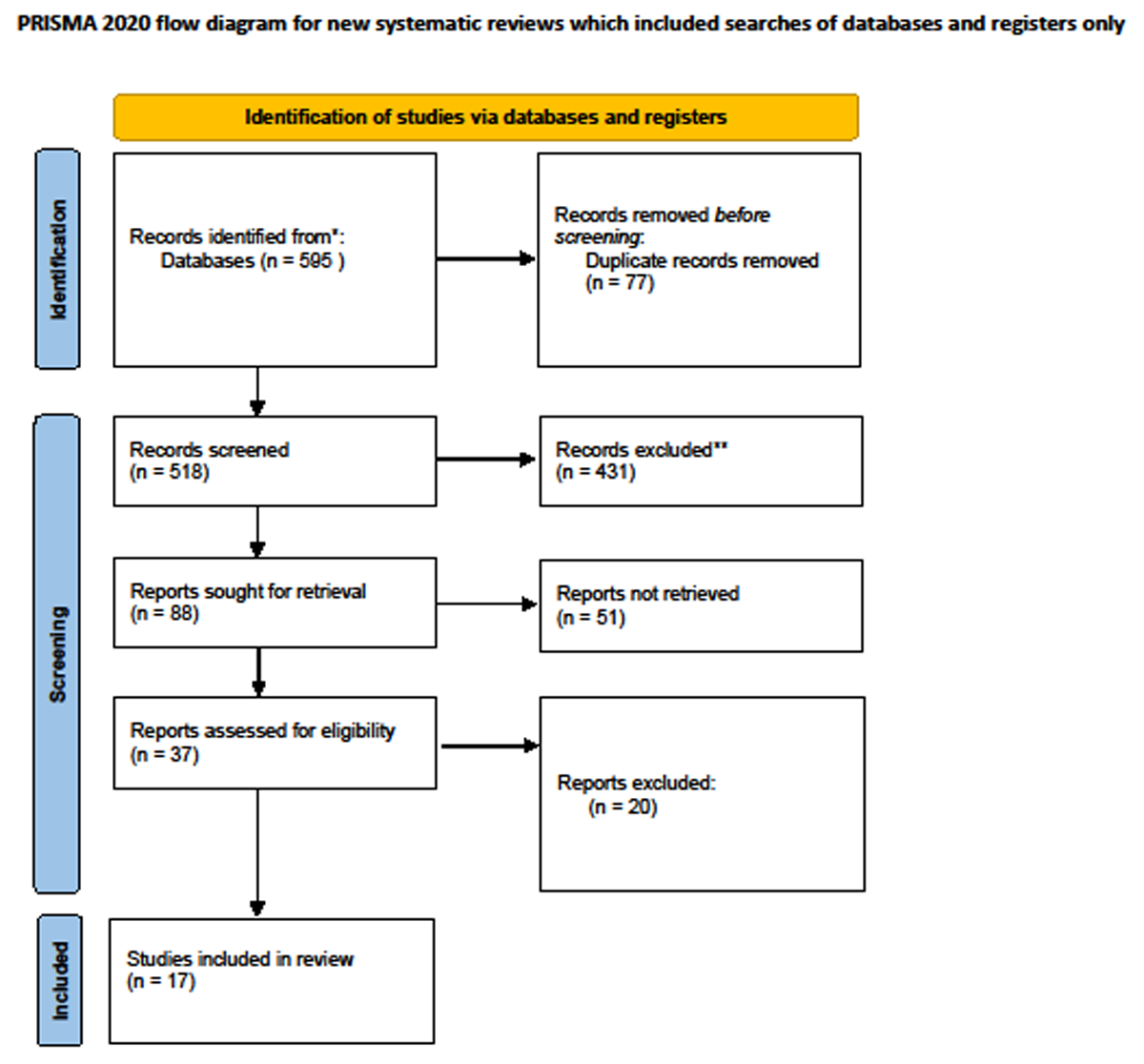
Figure 1
Prisma flow diagram.
Step 4: Mapping and Analysing Data
In the fourth stage, the data was mapped. Data from the 17 articles was sorted and grouped into a chart based on themes and key concepts. Another chart was made to get a descriptive overview of the included articles (see Table 1).
Step 5: Analysis, Summary, and Reporting of Results
In the fifth stage the data was analysed and summarised. The analytical procedure consisted of the following three phases: 1. analysing data, 2. reporting the results and 3. applying meaning to the results (Levac, Colquhoun and O’Brien 2010).
In the initial phase, a thorough examination of all articles was conducted, followed by a manifest content analysis. The manifest content analysis followed the recommendations by Levac, Colquhoun and O’Brien (2010) and examined visible patterns and themes in the texts, to get a detailed overview of how different patterns emerged in the texts. To gain a good understanding of the articles’ content, we read each article several times, and we made written summaries of them. Thereafter, an initial identification of recurring patterns in the articles was made. Three main themes and seven subthemes were confirmed to have emerged. In the third phase, a critical analysis of the compiled description was conducted though applying the theoretical framework.
Limitations and Summary
This study involves all peer-reviewed articles pertaining to Swedish context regarding people with ID and internet usage during the period 2008 to 2023-05-18. The targeted research field is relatively limited, with few studies done. Valuable knowledge found in so-called grey literature and excluded studies may have been missed. To ensure the quality of the analysis, a quality assessment checklist has been used, to prevent the study from becoming too subjective and the results from becoming insufficiently reliable.
We believe that the procedure described above, despite its limitations, has generated an interesting sample of studies in the covered research area for closer analysis. In what follows, we will now identify major empirical tendencies in the literature studied.
Results and Analysis
Description of the research studies
The 17 articles are primary studies, and the research methods used in the studies have been qualitative and quantitative. Included studies are presented in Table 2. The articles were published between 2008 and 2023.
Table 2
Descriptions of included studies in the final selection.
| AUTHOR(S) | AIM(S) | METHODS | PARTICIPANTS | RESEARCH METHOD |
|---|---|---|---|---|
| Alfredsson Ågren, Hemmingsson and Kjellberg. 2020a | Investigate digital participation of adolescents with ID by comparing aspects of Internet use among adolescents with and without ID. | Questionnaires and reference data from the Swedish Media Council | 114 individuals with ID. 1161 individuals in the reference group | Qualitative study |
| Alfredsson Ågren, Hemmingsson and Kjellberg. 2020b | To examine and describe internet access and usage among young adults with mild to moderate ID in their everyday lives. | Observations with followup, individual interviews | 15 individuals with ID | Qualitative study |
| Alfredsson Ågren, Hemmingsson and Kjellberg. 2020c | To investigate opportunities and risks of internet use as perceived by the parents of adolescents with ID in comparison with a national reference group of parents of adolescents. | Questionnaires and reference data from the Swedish Media Council | 99 parents of individuals with ID. 1561 individuals in the reference group | Qualitative study |
| Alfredsson Ågren, Hemmingsson and Kjellberg. 2023 | To explore environmental opportunities and challenges when performing internet activities and how internet use influences social and community participation for young people with ID from the perspectives of the target group. | Observations with followup, individual interviews | 15 individuals with ID | Qualitative study |
| Björquist and Tryggvason. 2022 | To examine how the use of ICT might promote social participation for youths with disabilities. | Focus group interviews | 8 individuals with ID. 5 personnel. | Qualitative study |
| Borgström. 2022 | To study how young women with ID experience self-presentations on the internet. | Individual interviews, couple interviews, and focus group interviews | 17 individuals with ID | Qualitative study |
| Borgström. 2023 | To investigates young people with ID and the relationship between online and offline vulnerability. | Individual interviews, couple interviews, and focus group interviews | 25 individuals with ID | Qualitative study |
| Engwall. 2022 | To analyse the digital process mobilised by day centre staff in the wake of covid 19 restrictions and day centre closure. | Individual interviews | 14 individuals working with support for people with ID. 4 managers | Qualitative study |
| Eriksson and Ineland. 2023 | To conceptualise officials understanding of ICT usage among persons with an ID, and to analyse how thisunderstanding might influence the provision of services for those with an ID. | Individual interviews | 9 municipal politicians | Qualitative study |
| Löfgren-Mårtenson. 2008 | To describe the perspective individuals with ID have on their internet usage and discuss how others perceive internet usage. | Individual interviews | 12 individuals with ID. 10 teachers/staff working with people with ID. 2 individuals working with ICT | Qualitative study |
| Löfgren-Mårtenson, Sorbring and Molin. 2015 | To investigate the perceptions of parents and professionals regarding the Internet as a social arena for love and sexuality among young people with ID. | Focus group interviews | 8 individuals working in special education. 5 parents of individuals with ID | Qualitative study |
| Molin, Sorbring and Löfgren-Mårtenson. 2017 | To describe and analyse how young people with ID view risks and opportunities on the Internet and how they reflect upon emancipative strategies and issues of online and offline identification processes. | Individual interviews | 27 individuals with ID | Qualitative study |
| Ramsten and Blomberg. 2019 | To investigate how staff members work with young adults with mild to moderate ID to foster their independence and participation through ICT. | Focus group interviews | 15 staff members working in supported housing | Qualitative study |
| Ramsten, Marmstål Hammar, Martin and Göransson. 2017 | To describe how municipal organisations in Sweden structure support in terms of policy and strategies to enable the use of ICT in social care for young adults with mild-to-moderate ID. | Questionnaire | 147 individuals from different municipalities | Quantitative study |
| Ramsten, Martin, Dag and Marmstål Hammar. 2019 | To describe staff perceptions of the role of ICT and its influences on daily life in young adults with mild to moderate ID living in residential homes. | Focus group interviews | 17 staff members working in supported housing | Qualitative study |
| Ramsten, Martin, Dag and Marmstål Hammar. 2020 | To describe the use of ICT from the perspective of young adults with mild-to-moderate ID in a municipal social care context. | Individual interviews | 11 individuals with ID, residing in supported housing | Qualitative study |
| Sorbring, Molin and Löfgren-Mårtenson. 2017 | Investigate how parents of young individuals with ID perceive opportunities and obstacles for their children’s internet usage, as well as how the parents themselves act to support their child in internet use. | Individual interviews and couple interviews | 22 parents of individuals with ID | Qualitative study |
People’s Own Internet Experiences and Strategies
Generally, people with ID subscribe to a positive view of the internet. They see it as an arena for opportunities for social participation on equal terms with those of others, and they generally are motivated to increase their knowledge of socially approved behaviour on the internet through experience (Löfgren 2008). People with ID describe themselves as aware of the potential risks with the internet and see themselves as able to handle possible negative events (Molin, Sorbring and Löfgren-Mårtensson 2017). They view internet usage as an essential part of their daily lives, enabling social interaction and entertainment (Ramsten et al. 2020). In some studies, the majority of people with ID report that they do not need any technical support (Borgström 2023; Molin, Sorbring and Löfgren-Mårtensson 2017). Furthermore, people with ID often describe the internet as a place where they could have privacy with less external control than in their daily lives (Löfgren-Mårtenson 2008).
Several studies describe the value of internet use for people with ID, impacting them in domains beyond the online realm (Alfredsson Ågren, Hemmingsson and Kjellberg 2023; Björquist and Tryggvason 2022; Ramsten et al. 2019; Ramsten et al. 2020). Being able to independently search for answers to questions on the internet can create increased independence. Information on the internet can facilitate everyday activities, such as cooking. Instead of needing to ask others, people with ID can find recipes and instructions for various dishes using their connected devices (Björquist and Tryggvason 2022; Ramsten et al. 2020). Connected devices can also serve as communication aids, allowing individuals who have difficulty expressing themselves verbally to supplement their communication with the help of apps, images or photos (Björquist and Tryggvason 2022; Ramsten and Blomberg 2019).
People with ID follow several strategies to facilitate their own internet use. Written strategies include using notes to write down passwords and instructions. Voice-based support can aid difficulties with spelling. Reducing the number of connected devices and using personalised support programmes and settings also ease internet usage for people with ID (Alfredsson Ågren et al. 2020b). Strategies for managing the internet are however primarily described as entailing the receipt of support from others, such as parents, siblings, staff or peers (Alfredsson Ågren, Kjellberg and Hemmingsson 2020b; Alfredsson Ågren, Hemmingsson and Kjellberg 2023; Borgström 2023).
Social Aspects of Internet
Internet access can reduce feelings of loneliness amongst people with ID (Ramsten et al. 2019). Articles report that people with ID often have very limited proximate social networks (Löfgren-Mårtenson, Sorbring and Molin 2015; Sorbring et al. 2017; Ramsten et al. 2019), whereas parents and staff describe the online social network of people with ID as being of great importance (Löfgren-Mårtenson, Sorbring and Molin 2015). People with ID report using the internet to establish social relationships and maintain existing ones. Social media can provide the opportunity to find others with similar interests, enabling expansion of social networks, initiation of friendships and romantic relationships (Löfgren-Mårtenson 2008; Molin, Sorbring and Löfgren-Mårtensson 2017; Ramsten et al. 2020). Parents and staff describe the internet as an important arena for both love and sexuality for people with ID (Löfgren-Mårtenson, Sorbring and Molin 2015).
The internet has been described as a meeting place where everyone can participate, both those with and without disabilities (Borgström 2022, 2023; Löfgren-Mårtenson 2008; Ramsten et al. 2019). On the internet, individuals have a greater ability to choose how they want to present themselves without preconceived notions about any disability that they may have (Borgström 2022; Löfgren-Mårtenson 2008). Through the internet, people with ID get access to the same content as abled people (Alfredsson Ågren, Hemmingsson and Kjellberg 2023; Löfgren-Mårtenson, Sorbring and Molin 2015; Molin, Sorbring and Löfgren-Mårtensson 2017), which enables access to current culture (Löfgren-Mårtenson 2008). Internet usage can also ease communication with others. It can give the possibility to overcome obstacles, such as geographical distance when maintaining contact with others (Alfredsson Ågren, Hemmingsson and Kjellberg 2023; Ramsten et al. 2020). However, people with ID tend to use social media to a lesser extent than abled people (Alfredsson Ågren, Kjellberg and Hemmingsson 2020a). Limited access to the internet means that people with ID risk being excluded from the social arenas where many of their peers are (Ramsten et al. 2019).
The articles also showed that social interaction on the internet does not only entail positive consequences for its users. For people with ID who were active and interacted with a wider audience on social media, hate comments were recurrent (Borgström 2022). The more interaction people with ID have with abled people, the more hate comments, threats and bullying they also receive. This has made those who interact with abled people feel more vulnerable (Molin, Sorbring and Löfgren-Mårtensson 2017).
Parent’s Perspectives
Parents of people with ID generally emphasise the positive aspects of internet use on the part of their children. They are concerned about risks on the internet but view the risk of their children becoming isolated as greater than the risks which internet usage poses (Löfgren-Mårtenson et al. 2015). They express concerns that their children’s participation in society will become even more limited as society becomes more and more digitalised (Sorbring, Molin and Löfgren-Mårtenson 2017). Parents of people with ID describe their children’s internet activities more positively than parents of abled people do (Alfredsson Ågren, Kjellberg and Hemmingsson 2020c). Parents of people with ID value their young adult’s privacy, but also tend to believe that they need support in their internet use. An ethical dilemma arises here, in that parents want to provide help to their young adult’s while also not restricting their autonomy too much (Sorbring, Molin and Löfgren-Mårtenson 2017).
‘The Swedish Digital Intellectual Disability Divide’
Digital divide
The articles showed that people with ID in Sweden have relatively limited access to the internet. They have significantly lower access to smartphones and computers, and are less active on the internet, than abled people (Alfredsson Ågren, Kjellberg and Hemmingsson 2020a; Alfredsson Ågren, Kjellberg and Hemmingsson 2020c; Ramsten et al. 2019). In many cases, people with ID do not have any connected devices in their own homes, and some only have shared access (Björquist and Tryggvason 2022; Engwall 2022). Thus, the results showed a digital divide, describing differences between those who are connected and those who are not (Hargittai 2021).
Connectedness among people with ID is affected by people in the individuals’ surroundings. Internet usage is often used as a form of reward, where parents and staff set requirements to be met by people with ID, such as completing household duties, before they can use the internet. There are often also rules regarding which activities the individuals could engage in online (Alfredsson Ågren, Hemmingsson and Kjellberg 2023). Professionals often report using time restrictions on internet use and blocking websites with sexual or violent content (see, e.g., Löfgren 2008). Limitations on internet activities are usually based on what kinds of use the staff deemed to be appropriate (Ramsten and Blomberg 2019).
These limitations and restrictions could be understood as ways to wield power, limiting the autonomy of people with ID (Rose 1999). Taking the point of departure in the understanding of intellectual disability as socially constructed (Rapley 2004) limitations to, and restrictions of, internet connectedness could be understood as taking place in discursive practises, where modes of practises and subjectification, rituals and routines produce human natures. Furthermore, the limitations and restrictions are taking place in social welfare settings with a history of exclusion of people with intellectual disability from mainstream community life (Rapley 2004). Contemporary exclusion of people with ID from one of the social arenas where mainstream community life takes place today, could, from a critical perspective, be viewed as a discursive practise spanning from yesterday’s historical exclusion of people with ID (Rapley 2004) to today.
Design inequality
As the internet is structured today, accessibility is restricted for people with cognitive and adaptive impairments (Alfredsson Ågren, Hemmingsson and Kjellberg 2023; Ramsten et al. 2020; Sorbring, Molin and Löfgren-Mårtenson 2017). If a person has difficulties in reading, writing, counting and spelling, large amounts of the available information is hard to comprehend, making internet usage problematic (Sorbring, Molin and Löfgren-Mårtenson 2017; Ramsten et al. 2020; Alfredsson Ågren, Hemmingsson and Kjellberg 2023). ID often affects the individual’s motor skills, making small devices hard to manage. Another requisite for internet usage is the ability to remember passwords and follow multi-step instructions. These cognitive functions are often impaired among people with ID (Alfredsson Ågren, Hemmingsson and Kjellberg 2023). These findings display aspects of design justice, questioning that hardware, software and online content often by default are designed for non-disabled people (Goggin 2021).
Digital inequality
The systems found on many parts of the internet are hard for people with ID to learn how to use (Sorbring, Molin and Löfgren-Mårtenson 2017). The ability to navigate and access content in digital environments is often learnt early, outside the context of the welfare state. This learning process is harder to master for people with ID (Eriksson and Ineland 2023). For many individuals, oral instructions are easier to follow than written ones, but not all internet services include a ‘read aloud’-option (Sorbring, Molin and Löfgren-Mårtenson 2017). Internet use is also hindered for people with ID by the fact that websites and apps are constantly updated, changing their appearance and functionality (Alfredsson Ågren, Kjellberg and Hemmingsson 2020b; Sorbring, Molin and Löfgren-Mårtenson 2017). The specific language used on the internet also often differs from that used in many other contexts, which can pose difficulties (Löfgren-Mårtenson 2008; Sorbring, Molin and Löfgren-Mårtenson 2017).
The articles showed that lack of social skills, such as deficient social reciprocity and limited understanding of how to behave on the internet, can elevate several social risks online (Ramsten et al. 2019). People with ID navigating the net often struggle to understand others’ feelings and needs, resulting in disappointment and conflicts in online relationships (Löfgren-Mårtenson, Sorbring and Molin 2015). Not understanding specific words or underlying messages often creates barriers (Sorbring, Molin and Löfgren-Mårtenson 2017). Staff described that people with ID often struggle with understanding the consequences of their actions, which complicates interaction on the internet. Both staff and parents have noticed that individuals with ID had difficulty understanding what constitutes normatively approved social behaviour on the internet (Löfgren-Mårtenson, Sorbring and Molin 2015). Some parents do express concerns about their children encountering content on the internet that they do not understand or that could have a negative impact on them (Löfgren-Mårtenson, Sorbring and Molin 2015).
One aspect of digital inequality concerns the opportunity of developing digital skills (Hargittai 2021). The articles show the need of improvement of digital skills, not simply to provide people with ID with physical access to the web, to level the gaps between privileged and underprivileged groups, in the strive for digital equality (Dobransky and Hargittai 2021).
Internet Use and Power Relations
Municipal politicians believe that digitalisation and ICT in social work could increase societal participation. Using ICT in social care is considered desirable, but it is also noted that the structures and support services required to realise this are not yet in place (Eriksson and Ineland 2023).
Organisational barriers that hinder internet accessibility for people with ID have been identified within the structures of the welfare state itself (Eriksson and Ineland 2023). Existing legal regulations and frameworks for municipal organisations complicate the development of support for ICT. On a practical level, difficulties have been described in formulating how ICT support would be provided on an individual basis. There are also uncertainties at the organisational level in several domains. These uncertainties encompass practical, ethical and economic issues. Political leaders risk becoming passive in issue domains where there are many uncertainties, including the absence of routines, guidelines and structures (Eriksson and Ineland 2023).
Several municipalities in Sweden lack guidelines for working with ICT use by people with ID. Out of 78 municipalities surveyed in one study, only 9 municipalities reported having guidelines for working with ICT use by people with ID. A total of 15 out of 78 municipalities reported that they worked with ICT for people with ID to a ‘great extent’ or ‘some extent’ (Ramsten et al. 2017). The lack of an overarching structure for support forces those persons who do give support into managing situations without guidelines, which can lead to support being provided arbitrarily. This can elevate the risk for unequal access to support (Eriksson and Ineland 2023). Several studies show that social care staff often do not provide people with ID support in their internet use, since such support is not formally defined as being one of staff’s job responsibilities (Alfredsson Ågren, Kjellberg and Hemmingsson 2020b; Björquist and Tryggvason 2022; Eriksson and Ineland 2023). Furthermore, staff describe that lack of organisational resources hinders them from providing sufficient support (Eriksson and Ineland 2023). Often, staffers have limited technical knowledge, which becomes an obstacle for people with ID, since they have greater difficulties in independently using the internet without support (Alfredsson Ågren, Hemmingsson and Kjellberg 2023). Due to varying levels of technical knowledge among staff and because some staff do not encourage internet-based activities, many people with ID do not get the support needed (Björquist and Tryggvason 2022).
Professionals describe access to information technology as a crucial precondition for societal participation, increasing individuals’ sense of involvement and independence (Ramsten et al. 2019). However, among staff, a generally pessimistic view of internet use among people with ID can be identified. People with ID are described as a vulnerable and naive group, for whom the internet poses many risks that they could not protect themselves against. Therefore, social care staff tends to view internet use as inappropriate for individuals with ID (Löfgren 2008). Staff often argued that they needed to limit the integrity of people with ID for protective purposes (Löfgren 2008; Ramsten and Blomberg 2019; Ramsten et al. 2019). Some groups of professional staffers do express that ICT usage could lead to greater opportunities for participation for people with ID and believed that it should be encouraged. These staffers do, however, express concerns that people with ID might encounter negative social and economic consequences due to their online actions, which they would not be able to handle by themselves (Ramsten et al. 2019). Professionals working at schools also express concerns about internet-related risks, which they base on the perception that people with ID do not understand the consequences of their actions (Löfgren-Mårtenson, Sorbring and Molin 2015). In some supported housing locations, professionals express resistance to digital activities. Professionals perceive digital activities as too time consuming and have difficulty seeing any positive effects of participating in such activities (Engwall 2022).
Professionals describe the need to act to protect people with ID from situations that could lead to negative consequences. This presents a continuous dilemma wherein the professionals try to strike a balance between protecting individuals and encouraging their independence. Some professionals want individuals to retain their privacy and, therefore, only provide internet-related support when asked (Ramsten et al. 2019). Due to the lack of guidelines regarding how to work with usage of ICT by people with ID, much responsibility falls on the people with ID themselves, who must request and arrange the help needed to use ICT (Eriksson and Ineland 2023). The prevailing discourse from the professionals’ perspective consistently describes people with ID as needing support and protection in this domain. Making choices that go against the prevailing discourse would mean that the professional is behaving in a deviant manner. This is likely to elicit reactions from the environment—leaving the professional with no predefined guidelines to lean on, only their own choices and opinions. This can likely limit engaged professionals in their ability to encourage individuals with ID to take ICT-related risks (Borgström 2023).
From a critical perspective (Rose 1999), these findings could be understood as macro and micro level power relations interacting. On the macro level, existing legal regulations and frameworks for municipal organisations complicate the development of support for ICT. At the same time on the micro level, professionals conduct, and practises are characterised by concerns. These concerns could be understood as underpinned by the understanding of intellectual disability as a diagnosable disorder, a fixed capacity in a group of categorised people in need of support and protection (Rapley 2004).
Discussion
Based on the results of the scoping review, we would now like to deepen the knowledge emerging from the scoping review by discussing the main findings from the mapping of internet use among people with ID in Sweden and scrutinising the phenomenon from a critical perspective.
Firstly, the study’s results demonstrate a significant discrepancy in attitudes towards individuals with ID and internet use, illustrating how staff continuously reinforce the prevailing discourse that perceives individuals with ID as less competent. Although people with ID perceived themselves as competent internet users (Borgström 2022, 2023; Löfgren 2008; Molin, Sorbring and Löfgren-Mårtensson 2017; Ramsten et al. 2020), professionals working with individuals with ID, described a pessimistic view, focussing on the individuals’ characteristics as hindering factors (Engwall 2022; Löfgren 2008; Lines Combes and Richards 2021; Löfgren-Mårtenson, Sorbring and Molin 2015; Ramsten et al. 2019). In one study, professionals described internet use as completely inappropriate for individuals with ID, based on their individual difficulties (Löfgren 2008). The discrepancy in attitudes illustrate different understandings of intellectual disability (Rapley 2004). One attitude among professionals, characterised by the understanding of intellectual disability as an individualised medical diagnosable disorder (Rapley 2004), and another understanding among people with intellectual disabilities developing their own strategies to facilitate their own internet use; perceiving themselves as people being in a situation, caused by social conditions, which requires for its elimination (UPIA 1976).
Secondly, in this study both possibilities of utilising digital technology in the context of disability (Goggin 2021) were shown. On the one hand, the results show that the internet gives people with ID a chance to present themselves without preconceived notions about any disability that they may have (Borgström 2022; Löfgren-Mårtenson 2008). Furthermore, internet gives individuals the opportunity to access current culture, ease communication with others (Alfredsson Ågren, Hemmingsson and Kjellberg 2023; Löfgren-Mårtenson 2008; Ramsten et al. 2020) and participate in social activities on the same terms as abled people (Borgström 2022; Löfgren-Mårtenson 2008). Previous research has shown that the internet may provide possibilities for people with ID to balance the stigma associated with ID (Chadwick, Wesson and Fullwood 2013) and act in online environments where their disability is not as visible as offline. People with ID experience online activities as freer and safer environments than offline environments (Hebblewhite, Hutchinson and Galvin 2020), and social media are used to establish friendships as well as romantical relationships (Darragh et al. 2017). As Lussier-Desrocher et al. (2017) claim, digital participation is an important aspect of societal participation. The internet has the potential to compensate for several of the impediments caused by disability, and to facilitate participation in activities otherwise unavailable to people with ID (Chadwick, Wesson and Fullwood 2013). Access to the internet can thus be a way to counteract, or at least slow down, the discriminatory discourse surrounding disabilities that is continually reproduced in our society.
On the other hand, the same opportunities were denied by posed limitations and restrictions associated with internet use (Alfredsson Ågren, Hemmingsson and Kjellberg 2023; Löfgren 2008). These findings are in line with previous research identifying lack of access caused by limited availability of internet connections, limited access to internet-connected devices, and protective and restraining actions taken by professionals and parents (Lussier-Desrochers et al. 2017; van Holstein et al. 2023). ‘The Swedish digital intellectual disability divide’, as shown in several articles (Alfredsson Ågren, Kjellberg and Hemmingsson 2020a; Alfredsson Ågren, Kjellberg and Hemmingsson 2020c; Björquist and Tryggvason 2022; Engwall 2022; Ramsten et al. 2019), illustrates the previous known contradiction: that people with ID, who have much to gain from internet and social media, are the ones least likely to get access to it (Chadwick, Wesson and Fullwood 2013). Previous research shows that the need professionals feel to control their clients’ internet usage to protect them is associated with worries that people with ID do not understand the risks associated with internet use (Lines, Combes and Richards 2021). In power relation terms (Rose, 1999), the absence of routines, guidelines and structures concerning implementing ICT support on an individual level (Eriksson and Ineland 2023) could be understood as ongoing macro level power relations, and professionals protecting people with ID from risks associated with internet use (Löfgren-Mårtenson, Sorbring and Molin 2015) could be understood as ongoing micro level power relations. The interactions between macro and micro actors are shown in the several studies identifying that social care staff often do not provide people with ID support in their internet use, since such support is not formally defined as being one of staff’s job responsibilities (Alfredsson Ågren, Kjellberg and Hemmingsson 2020b; Björquist and Tryggvason 2022; Eriksson and Ineland 2023). Lack of organisational resources hinders staff from providing sufficient support (Eriksson and Ineland 2023). Illuminating power relations could help understanding how, despite a prominent Swedish policy goal that Sweden should be the best country in the world in using the possibilities of digitalisation (Government of Sweden 2023), people with ID still lack access to the internet and the preconditions for fully enjoying the benefits of the internet. Control of internet access could strengthen asymmetric power relations, and people with ID are withheld to spend time at places offering possibilities of privacy and autonomy (Löfgren-Mårtenson 2008). Control of the internet excludes people with ID from making their own decisions based on relevant information and also means that their possibilities to make decisions in their own lives are taken away (Seale and Chadwick 2017). From a critical perspective the question could be posed whether the digital disability divide is a contemporary discursive practise, with similarities to the exclusion of people with apparent impairments from the mainstream of community life into institutional settings (Rapley 2004); with a risk of subjecting individuals to social exclusion (Tsatsou 2022).
Finally, when striving to level the digital divide (Hargittai 2021), the digital inequality (Hargittai 2021) identified also needs to be addressed. From a human rights perspective (United Nations 2008) people with ID should be involved in digital designing, to improve access to the internet. Just as broader sidewalks in the physical environment allow participation in society for wheelchair users, so could adapted digital devices and environments allow participation for people with ID in digital environments. It is of great importance for further research to gain knowledge about the obstacles to participation which are built into the design of our digital environment, and how these obstacles could be reduced. Since access to the internet is an important part of gaining independence, it is important to ensure that people with ID pick up these skills at the same time as abled people. The ability to navigate and assimilate content in digital environments is often taught early, beyond the context of the welfare state (Eriksson and Ineland 2023). People with ID need more guidance and time when learning new skills. Several questions of equality arise from the results of this study. One of these pertains to how people with ID could be provided support to develop skills on how to use the internet and digital devices, and how they could participate in digital domains of society on the same terms as others.
Conclusions
This study concludes that people with ID in Sweden have insufficient internet access. A digital disability divide as well as design and digital inequalities were identified. The reasons for the lack of internet access cannot only be attributed to impairments in cognitive and adaptive functions of the individual. Rather, societal structures, technological design, and organisational conditions complicate internet access. Having access to the internet and knowledge of digital technology is of great importance for all citizens in todays’ society. Digital exclusion of people with ID risks reinforcing existing social exclusion.
The results of this study indicate that a complement to individual education would be to ensure, at the societal and structural level, that people with ID get equal and accessible support to use and train the skills needed to use the internet. As of today, there are no overall policies in Sweden for how to support internet usage among people with ID. This forces professionals to make individual decisions on whether and how support should be provided, which elevates the risk for unequal access to support.
A critical understanding of inequality in internet access is not only of relevance for the Swedish context, but also of relevance for understanding the power position of people with ID globally. In line with Chadwick, Wesson and Fullwood (2013), the results of this scoping review show that the ones potentially gaining the most from realignment (people with disabilities) are not the ones whose use of the internet is facilitated the most. Explanations for this could be sought in power relations (Rose 1999) and social constructions of intellectual disability (Rapley 2004), but also in research describing how people with ID are not represented among professionals designing digital environments and technical design (Chadwick, Wesson and Fullwood 2013), and not placed in positions of power in internet policy design. This issue of human rights is not only a question for individuals to solve, but for policy to address.
Acknowledgements
We would like to thank senior researcher Catharina Gustavsson for valuable comments on preceding versions of the manuscript. Thanks to Adam Sheehan for language review. We also would like to thank the anonymous reviewers that gave us valuable insight on our work.
Competing Interests
The authors have no competing interests to declare.