
Introduction
While the employment rate of disabled people worldwide (women and men combined) is well below that of non-disabled people (44% compared with 75% respectively), the situation is even more alarming when we focus on women with disabilities (Burchardt 2004; Randolph and Andresen 2004). Their employment rate falls to 19.6%, showing that women with disabilities are only half as likely to be employed. Given this observation, Méndez (2012) points out that one of the major and persistent problems is that society, and public authorities in particular, still too often view discrimination in a mono-categorical way. This is why most bills and public policies are designed around a single major theme (employment, family, sexual orientation, gender, disability, etc.), and still too few are the result of a prior intersectional analysis based on the superimposition of several themes. McCall (2005) notes that in response, the scientific community has turned to the intersectional theories defined by Crenshaw (1989), which enable discrimination to be analysed from multiple sources (Almendra 2015; Collins 2022; Anthias 2013). This movement has led to a significant increase in scientific literature on the intersectionality of gender and disability in the context of occupational inclusion (Mosconi, Revillard and Vouillot 2022; Boudinet and Revillard 2022; Bechrouri et al. 2016; Davaki et al. 2013; Bouchet 2019). However, to our knowledge, there has not yet been an intersectional bibliometric study of the literature relating to the occupational inclusion of women with disabilities. In this article, we report the findings of a joint intersectional bibliometric study based on the terms ‘woman’, ‘disability’, and ‘work’.
The aim of this research is both to list and classify a growing number of recent publications relating to the themes mentioned and to highlight key benchmarks on these intersectionalities. We hope that putting existing research into perspective and analysing its strengths and weaknesses will facilitate the emergence of complementary work within the scientific community, particularly in relation to the professional integration of women with disabilities.
Theoretical Framework: Intersectionality and Disability
‘Intersectionality’, theorised by Crenshaw (1989), is a concept that emerged in the United States in the 1970s in connection with ‘Black feminism’, the feminist movement that campaigned for the rights of Black women who suffered multiple discrimination due to both their gender and their skin colour (Almendra 2015). Crenshaw (1989) defines intersectionality as the expression of a complex system of multiple and simultaneous structures of oppression, in order to show the different ways in which race, gender and social class interact to shape complex discrimination against Black women in the United States. This concept thus makes it possible to go beyond the simple unidirectional factor-by-factor analysis of marginalisation by proposing a joint multifactorial analysis (Anthias 2013).
The concept of intersectionality use was quickly extended to the analysis of all populations presenting an increased risk of exposure to multiple discrimination (Molina 2012). The expansion of this concept began in the 1990s (Oprea 2008) under the impetus of the third wave of feminism as confirmed by the work of Thomen Bastardas (2021), who refers in particular to the claims made by various waves of feminism. While the first wave of feminism (1850–1945) fought for basic rights, particularly the right to vote, the second wave (1960–1970) sought to raise awareness of domestic violence and wider social issues such as work, family, sexuality, reproduction, etc. The third wave (1990–2000) focused on recognising the diversity of women, including those doubly marginalised or stigmatised because of their colour, sexual orientation, disability, etc.
This evolution of the field of intersectionality has led to the emergence of new definitions. For Collins (2022), intersectionality consists of taking into account the connections between different attributes of a population that may be at the root of multiple discrimination. The use of the concept is no longer limited to the case of women of colour, but extends to all sources of discrimination. This evolution in the use of the intersectional approach to interpret the different categories of discrimination is now decisive (Figure 1).
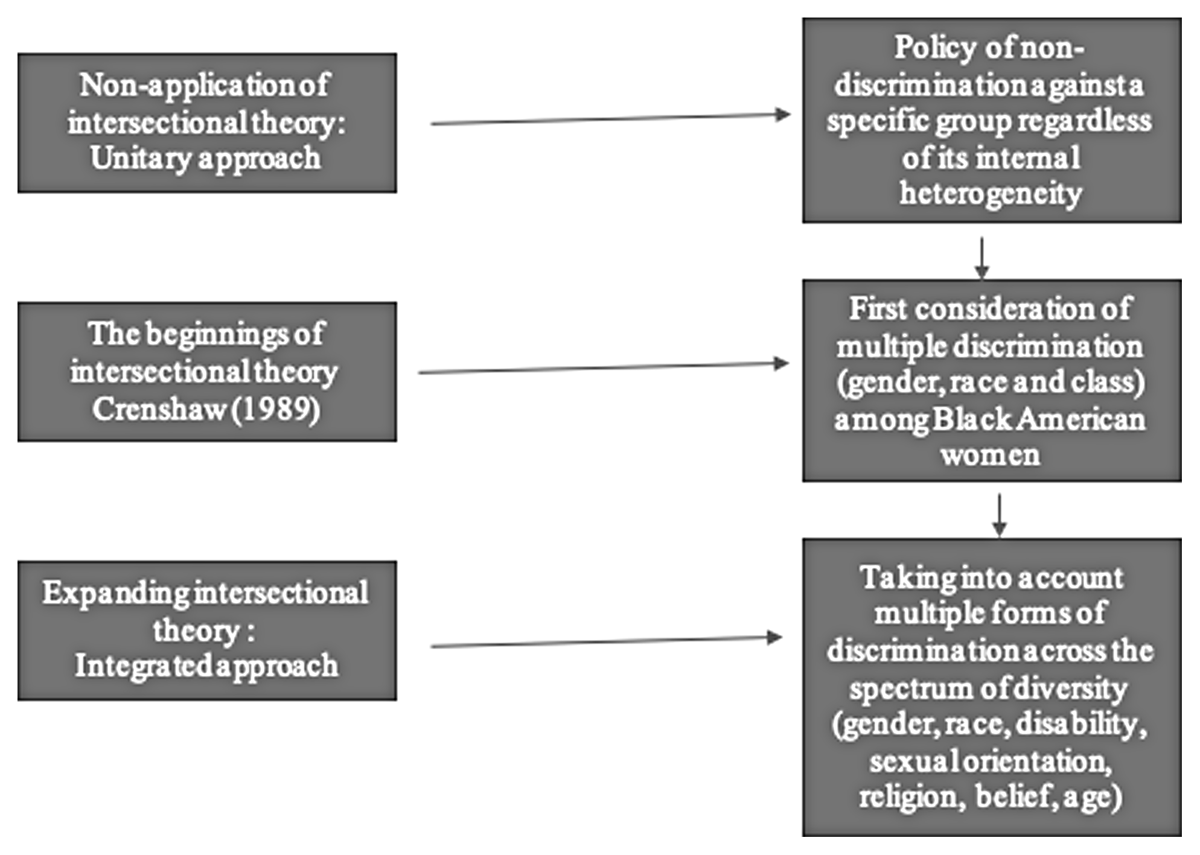
Figure 1
Trends in the use of the intersectional approach to interpret diversity discrimination. Source: Compilation based on Molina (2012).
The evolution of the use of the concept of intersectionality can be seen in the occupational inclusion of women with disabilities. Historically, research has focused firstly on the evolution of women’s socio-professional inclusion (Davis 2008), and secondly, but independently, on the socio-professional inclusion of people with disabilities through successive models and approaches to disability that have evolved over time: rejection model until the 18th century, medical model from the 19th century, social model from the 1990s onwards, and diversity model from the 2000s (Palacios 2008). The limited consideration of gender issues in disability studies and, conversely, the lack of focus on disability in gender studies have been highlighted by several scholars. In response, some researchers have sought to bridge this gap by developing feminist disability studies, which argues that disability is inherently intertwined with other social markers, particularly gender (Sturchio MSW 2020). According to Masson (2022), different theoretical approaches have emerged over time. In the late 1980s, the feminist materialist disability approach developed (Fine and Asch 1988; Wendell 1989; Thomas 1999). This perspective focuses on the material consequences of being both a woman and a disabled person, particularly the heightened risk of discrimination and exclusion. In the second half of the 1990s, the feminist critical disability approach emerged (Shildrick 2009; Campbell 2009; Thomson 1997). Unlike the materialist approach, this framework shifts the focus away from bodily materiality and discrimination. Instead, it examines how social norms, categorisations of bodies, and perceptions of difference shape identities and subjectivities.
Since 2000, under the influence of feminist disability studies, several studies have explored the intersection of gender, disability, and work (Brown and Moloney 2019; Naples, Mauldin and Dillaway 2019; Mik-Meyer 2015). These studies emphasise that the experiences and challenges faced by women with disabilities in the workplace differ significantly from those of men with disabilities or women without disabilities. Therefore, a targeted research approach is necessary to fully grasp the specific barriers, inequalities, and structural disadvantages affecting this group.
Despite this growing body of literature, the field remains fragmented, with research dispersed across different disciplines and theoretical frameworks. A bibliometric study would provide a systematic overview of how research on women, disability, and work has evolved over time, identifying key themes, gaps, and trends. By mapping the structure of this literature, such a study would contribute to a more coherent and integrated understanding of the intersectionality between gender, disability, and employment.
Methodology
To deepen our knowledge and analyse the literature on women, disability, and work, we conducted a bibliometric study using Scopus.
Choice of database
We selected Scopus for its wide coverage of peer-reviewed journals in business, management, and social sciences, directly relevant to our research. Compared with Web of Science or Dimensions, Scopus offers broader coverage in social sciences and management, and includes key outlets on diversity, disability, and gender. Scopus metadata are directly compatible with the Bibliometrix R package, enabling efficient advanced analyses. Reliance on a single database has limits: Scopus overrepresents English-language and Global North journals and may exclude regional or non-indexed works (Moed 2005; Zupic and Čater 2015).
Search strategy
We designed a systematic search strategy using Boolean operators and synonyms to capture relevant publications. The exact query was as follows:
(“woman” OR “women” OR “female” OR “females” OR “girl” OR “girls” OR “lady” OR “ladies”)
AND
(“disability” OR “disabilities” OR “disabled” OR “handicap” OR “handicaps”
OR “impairment” OR “impairments” OR “imparment” OR “imparments” OR “impared”
OR “infirm” OR “infirmity” OR “infirmities”
OR “incapacity” OR “incapacities” OR “incapacited”
OR “functional diversity” OR “functional diversities”)
AND
(“work” OR “works” OR “labour” OR “labours” OR “labor” OR “labors”
OR “job” OR “jobs” OR “employment” OR “employments”
OR “profession” OR “professions” OR “professional” OR “professionals”).
The search covered 2018–2022 to reflect recent trends and the post-Covid context, which strongly affected employment of women with disabilities. Data were extracted on 15 March 2023 and exported in BibTeX and CSV.
Inclusion and exclusion criteria
We retained peer-reviewed articles in Scopus (2018–2022) addressing at least one of the three focal dimensions (woman, disability, work) and relevant to the others. We excluded conference proceedings, book chapters, grey literature, and papers focusing solely on clinical or medical aspects of disability without reference to work or gender.
To avoid missing relevant contributions, we incorporated a wide range of synonyms and related terms for each of the three core concepts (see Table 1).
Table 1
Synonyms of the original terms used in our bibliometric analysis.
| ORIGINAL TERMS | SYNONYMS OR RELATED TERMS TAKEN INTO ACCOUNT |
|---|---|
| Woman | Women; girl; girls; lady; ladies; female; females |
| Disability | Disabilities; disabled; disability; disabilities; handicap; handicaps; imparment; imparments; impared; incapacity; incapacities; incapacited; infirm; infirmity; infirmities; functional diversity; functional diversities |
| Work | Works; labour; labours; labor; labors; job; jobs; employment; employments; profession; professions; professional; professionals |
[i] Source: Own elaboration.
Data cleaning and preprocessing
The initial search yielded 1,810 articles. Duplicate entries were removed and metadata were cleaned to ensure accuracy. Author names were standardised (e.g., ‘Zhang Y.’ and ‘Y. Zhang’ merged) and spelling variants of keywords were harmonised (e.g., ‘labour’ vs. ‘labor’). Keyword harmonisation was done manually by two researchers; disagreements were resolved through discussion until consensus.
Analytical dimensions
Our bibliometric analysis followed methodological recommendations (Donthu et al. 2021; Zupic and Čater 2015), combining performance, science mapping, and network analyses:
– Keyword and research area analysis, to identify dominant themes, recurrent concepts, and emerging topics.
– Performance analysis of authors, institutions, and countries, using bibliometric indicators such as the h-index (number of publications with at least h citations), g-index (emphasising highly cited works), and m-index (normalising the h-index by career length).
– Collaboration and network analysis, focusing on co-authorship structures, institutional partnerships, and international collaborations.
This multidimensional approach enabled a systematic mapping of research dynamics and helped us identify the collaborative structures shaping the field.
Tools and techniques
We used the RStudio 4.x environment, applying the Bibliometrix package (Aria and Cuccurullo 2017) and its Biblioshiny extension, both of which are widely used in bibliometric studies (Jalal 2019; Shamsuddin, Ismail and Roslan 2022). The analyses conducted included:
– Descriptive statistics to identify annual publication trends, prolific authors, and core journals.
– Citation and co-citation analyses to evaluate scientific impact and influence.
– Co-authorship and institutional networks to examine collaboration patterns and international linkages.
– Keyword co-occurrence and conceptual mapping, using Multiple Correspondence Analysis (Pagès 2020), which is recognised as a robust method for visualising thematic clusters and interrelationships among concepts.
Figures and tables were generated directly from Biblioshiny outputs and refined for clarity and interpretability.
Reliability and validity
To strengthen reliability, two researchers independently reviewed the data cleaning process. Interpretations of clusters and network maps were cross-validated within the research team. Coverage adequacy was checked by comparing our corpus size with similar bibliometric studies on gender, disability, and work.
Despite these precautions, bibliometric analysis has inherent limitations. The results depend on the database selected (Scopus), which may exclude relevant articles indexed elsewhere. English-language dominance may bias findings towards Anglo-Saxon research. Finally, limiting the search to business and management may have excluded studies in sociology, psychology, or health sciences also addressing gender and disability at work (Moed 2005; Chadegani et al. 2013).
Results of Bibliometric Analysis
Descriptive analysis/state of research
Annual publication frequency
In order to analyse the trend in the development of research on the theme studied, the number of recent publications (2018–2022) is presented in Figure 2 below.
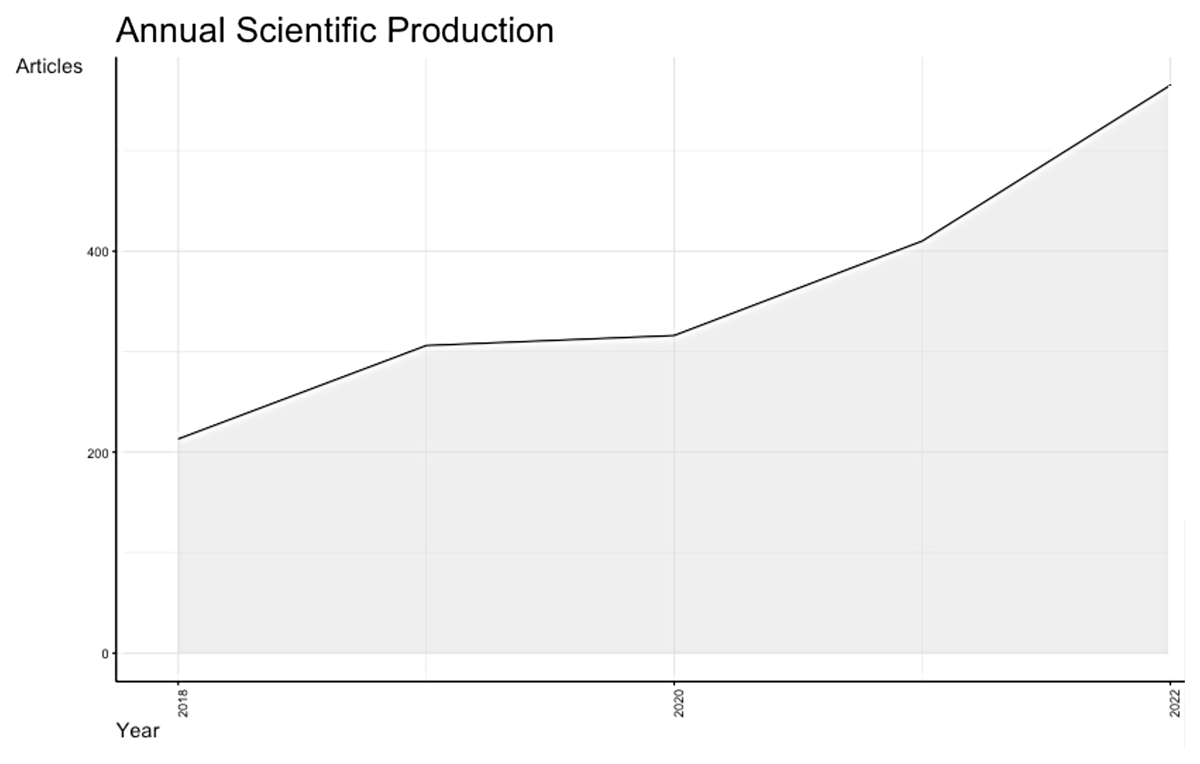
Figure 2
Annual publication frequency (2018–2022) on the theme ‘women, disability, and work’. Data source: Compilation based on biblioshiny software from bibliometrix.
Over the five-year reference period, the number of articles published has steadily increased, demonstrating the growing interest of researchers in the theme of ‘women, disability, and work’. Moreover, 71% of the 1,810 articles making up the reference for the 2018–2022 period were published after 2020, that is, in the post-Covid period. We can therefore assume that the very critical situation of the professional integration of women with disabilities during the pandemic (Ferraris 2021) has prompted researchers to take up this issue and propose ways of improving it. We can assume that investment in this recent theme will continue in the coming years and will consolidate the existing literature.
This initial analysis of scientific output by year was supplemented by a search for the scientific authors most actively involved in the theme. A ranking was established on the basis of the number of publications by the author, his or her h, g, and m metric index, and the number of citations obtained. The h, g, and m indices are metric indices used to quantify a researcher’s impact (Lima, Velho and Faria 2012). We selected the top 20 publishers presented in Table 2.
Table 2
Ranking of the 20 authors according to the number of publications on the theme ‘women, disability, and work’ (2018–2022).
| AUTHOR | h_index | g_index | m_index | QUOTES | PUBLICATIONS | FIRST PUBLICATION |
|---|---|---|---|---|---|---|
| Zhang Y | 5 | 6 | 0.833 | 123 | 6 | 2018 |
| Jammaers E | 4 | 6 | 1 | 75 | 6 | 2020 |
| Mousa M | 4 | 6 | 1 | 49 | 6 | 2020 |
| Li Y | 3 | 6 | 0.6 | 53 | 6 | 2019 |
| Flores LY | 3 | 6 | 0.5 | 38 | 6 | 2018 |
| Williams J | 3 | 5 | 0.6 | 49 | 5 | 2019 |
| Kumar S | 3 | 4 | 0.75 | 21 | 5 | 2020 |
| Cooke FL | 3 | 4 | 1 | 53 | 4 | 2021 |
| Hennekam S | 3 | 4 | 0.75 | 38 | 4 | 2020 |
| Li X | 3 | 4 | 0.6 | 71 | 4 | 2019 |
| Tyler M | 3 | 4 | 0.6 | 59 | 4 | 2019 |
| Kim J | 3 | 4 | 0.6 | 48 | 4 | 2019 |
| Lee Y | 3 | 4 | 0.6 | 40 | 4 | 2019 |
| Kubacki K | 3 | 4 | 0.6 | 26 | 4 | 2019 |
| Wang J | 3 | 4 | 0.5 | 47 | 4 | 2018 |
| Bainbridge HTJ | 3 | 4 | 0.5 | 24 | 4 | 2018 |
| Liu H | 2 | 4 | 0.667 | 24 | 4 | 2021 |
| Spaaij R | 2 | 4 | 0.4 | 96 | 4 | 2019 |
| Li J | 2 | 4 | 0.333 | 67 | 4 | 2018 |
| Edwards J | 2 | 4 | 0.333 | 28 | 4 | 2018 |
[i] Source: Compilation based on the biblioshiny package from bibliometrix.
Analysis of these results shows that over the five years in question, seven authors published at least five times on this theme: Zhang Y, Jammaers E, Mousa M, Li Y, Flores LY (six publications each); Williams J, Kumar S (five publications each). It should be emphasised that these 20 authors carry considerable weight, since they represent 5% of the publications produced by the 4,863 authors taken into account in total for this study.
Journals publishing on the theme
Figure 3 above ranks the 20 most productive journals on this research theme. Eight journals published at least 20 articles, the most productive being Gender, Work and Organization with 36 publications, that is, almost 10% of all articles published in the top 20 journals. It is followed by the Journal of Vocational Behavior (30 publications) and Equality, Diversity and Inclusion (29 publications), which each account for almost 8%; then by Work, Employment and Society (26 publications); Journal of Business Ethics (24 publications); Journal of Career Development (23 publications); Journal of Human Resource Management (23 publications); and Journal of Business Research (20 publications). Of these 20 journals, only Gender, Work and Organization and Equality, Diversity and Inclusion include a gender or diversity-related term in their title. For the rest, we can distinguish between generalist and more specific journals, most of whose titles refer to work or human resources and not exclusively to disability or women. This may seem surprising given that these last two themes are key elements in our intersectional bibliometrics. What is more, these 20 journals together publish 20% of the 1,810 reference publications, with the remaining 80% split between 576 other scientific journals.
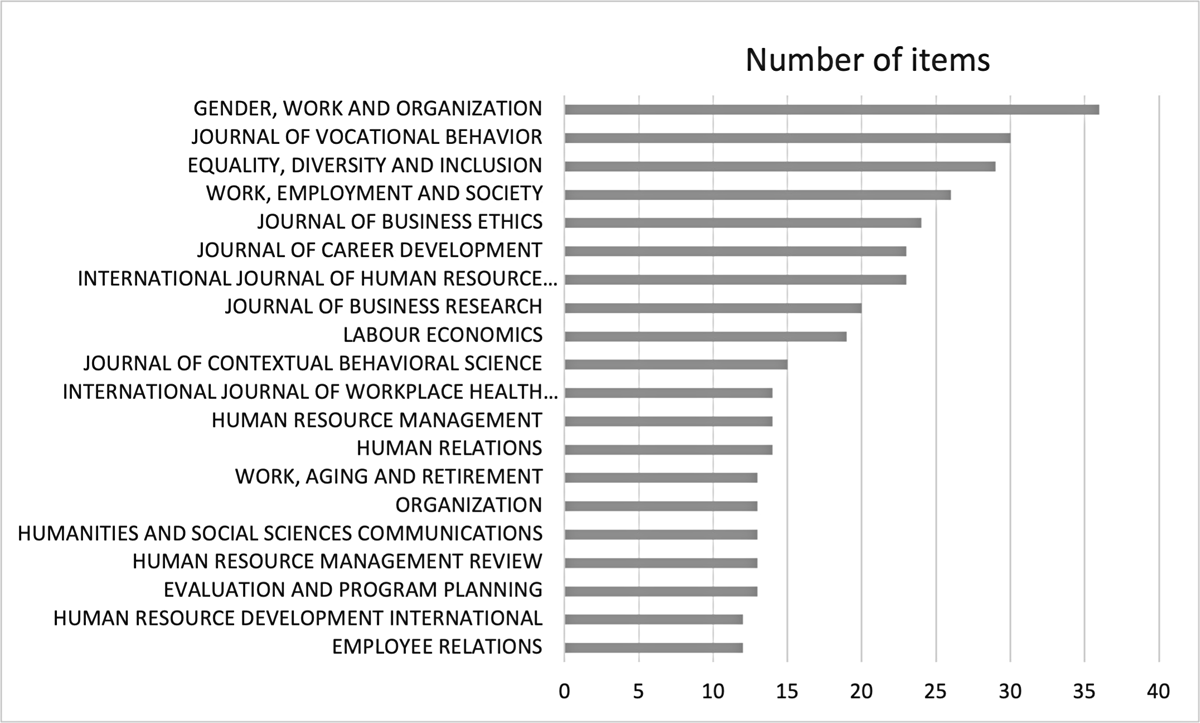
Figure 3
Ranking of the 20 journals according to the number of publications on the theme of ‘women, disability, and work’ (2018–2022). Source: Compilation based on the bibliometrix biblioshiny software package.
Universities publishing on the theme
Table 3 presents an analysis of the publications according to their affiliation with various universities. It shows the existence of leaders and experts in the field, such as Griffith University, which dominates the ranking with 25 publications. This high output is explained by the presence of a multidisciplinary research group on disability, one of whose three priority areas is occupational inclusion. The institution is also heavily involved in gender issues. More generally, the rankings show the strong presence of Anglo-Saxon universities, particularly Australian and North American, with Monash, Sydney, Auckland, Texas, California, and Macquarie each having at least 15 publications. So, while the top three universities are Australian, a total of nine Australian universities are also ranked in the top 20 and are responsible for publishing more than 5% of the articles in the bibliometric database. These results testify to Australia’s strong commitment to gender issues, and more specifically to women with disabilities in the workplace.
Table 3
Ranking of the top 20 universities according to the number of publications on the theme of ‘women, disability, and work’ (2018–2022).
| UNIVERSITY | ARTICLES | COUNTRY |
|---|---|---|
| Griffith University | 25 | Australia |
| Monash University | 17 | Australia |
| Sydney University of Technology | 17 | Australia |
| Auckland University of Technology | 16 | New Zealand |
| University of Texas A&M | 16 | United States |
| University of California | 16 | United States |
| Macquarie University | 15 | United States |
| University of Alberta | 14 | Canada |
| University of Missouri | 14 | United States |
| University of York | 13 | Canada |
| Aarhus University | 12 | Denmark |
| RMIT University | 12 | Australia |
| Deakin University | 11 | Australia |
| Swinburne University of Technology | 11 | Australia |
| The University of Queensland | 11 | Australia |
| University of Göteborg | 11 | Sweden |
| University of Maryland | 11 | United States |
| Michigan University | 11 | United States |
| University of New South Wales | 11 | Australia |
| University of Tasmania | 11 | Australia |
[i] Source: Compilation based on the bibliometrix biblioshiny package.
However, this heterogeneity in university publications also exists between countries.
Countries publishing on the theme
The top 20 countries in terms of number of publications on ‘women, disability, and work’ are shown in Table 4 below. For a better understanding of the results, the fact that the total frequency of publication for the top 20 countries is higher than the number of articles analysed may be explained by international collaborations involving co-authors from different countries.
Table 4
Ranking of the top 20 nations according to the number of publications on the theme of ‘women, disability, and work’ (2018–2022).
| COUNTRY | FREQUENCY OF PUBLICATION |
|---|---|
| United States | 1107 |
| United Kingdom | 450 |
| Australia | 334 |
| Canada | 233 |
| China | 161 |
| India | 130 |
| Germany | 125 |
| Netherlands | 81 |
| Spain | 81 |
| Italy | 80 |
| Sweden | 77 |
| France | 74 |
| Malaysia | 71 |
| South Africa | 62 |
| New Zealand | 53 |
| Belgium | 52 |
| Finland | 52 |
| South Korea | 40 |
| Norway | 38 |
| Portugal | 36 |
[i] Source: Compilation based on the bibliometrix biblioshiny package.
The results presented in Table 4 reveal the overwhelming dominance of the United States, which is responsible for more than 60% of the world’s publications on the subject (1,107 articles), 2.46 times more than the United Kingdom, which comes second (450 articles). Australia (334 articles) and Canada (233 articles) rank 3rd and 4th, respectively. This ranking shows the significant contribution of North America to the subject (two nations occupying the first four places), and more generally that of the Anglo-Saxon countries, which occupy the first four places in the ranking.
Extending the analysis to all 20 countries shows that, with the exception of Malaysia, this ranking is made up entirely of nations from the economic North or the most powerful countries of the economic South, grouped under the umbrella of the BRICS (Brazil, Russia, India, China, South Africa). Conversely, other regions of the world are poorly or not at all represented, such as the African continent, whose contributions correspond to less than 1% of world publications, essentially represented by the output of South Africa (Duermeijer, Amir and Schoombee 2018). Yet in many African countries, major social inequalities persist, as in North Africa, where only 21% of women participate in the labour market (Agence Française de développement 2020) or in Cameroon, where most disabled men and women are unemployed or have insecure jobs (Nyokon Mouté 2021). These results are in agreement with Hountondji (2001), who argues that the inequalities associated with globalisation are not just economic, but also affect knowledge and research. Thus, for Alatas (2006), the countries of the economic South have difficulty achieving autonomy in research, for the following reasons in particular:
– They are influenced by the media and the dominant thinking of the countries of the North
– They do not have the necessary university infrastructure and investigative tools because they are too expensive
– Their researchers tend to join institutions in the north of the economy, which offer them better financial conditions and greater stability.
This major geographical inequality in terms of publication is all the more worrying given that, in higher education, scientific production now takes precedence over teaching. This is the ‘publish or perish’ concept evoked by Amutuhaire (2022), which has even greater consequences for teacher-researchers in developing countries, who do not have the same resources to publish. So, to meet this major challenge of moving towards a more balanced geographical production of knowledge, Adebowale (2001) suggests intensifying regional cooperation, and Keim (2010) reinforces the use of the centre-periphery model of collaboration between areas at the cutting edge of research and those lagging behind. Table 5 is generated to show the existing network of international collaborations and their nature.
Table 5
Ranking of countries according to the number of publications in the top 20 international scientific collaborations on the theme of ‘women, disability, and work’ (2018–2022).
| COLLABORATION | FREQUENCY OF PUBLICATION |
|---|---|
| United States/Canada | 31 |
| United States/United Kingdom | 22 |
| United Kingdom/Australia | 20 |
| United States/Australia | 19 |
| United States/China | 19 |
| Australia/China | 14 |
| United States/Germany | 14 |
| United Kingdom/Canada | 13 |
| United Kingdom/Germany | 13 |
| United States/South Korea | 13 |
| United Kingdom/France | 12 |
| United Kingdom/Netherlands | 12 |
| United States/France | 11 |
| Australia/Canada | 10 |
| Netherlands/Belgium | 10 |
| Australia/New Zealand | 9 |
| United Kingdom/Belgium | 9 |
| United Kingdom/China | 9 |
| Australia/Netherlands | 8 |
| Australia/Germany | 7 |
[i] Source: Compilation based on the bibliometrix biblioshiny package.
This ranking, based on the most important international scientific collaborations related to the theme studied, shows that there is still some way to go to strengthen the model of centre-periphery collaboration advocated by Keim (2010). Indeed, the podium in this ranking is made up exclusively of countries in the economic North, all of them Anglo-Saxon. If we extrapolate the analysis to the ranking, we see that apart from the BRICS group, represented here solely by China, there are no countries from the economic South. Over and above the difficulties encountered by these countries in developing high-quality research mentioned above (Alatas 2006), this lack of international North-South collaboration may be linked to the existence of a relationship of domination rather than collaboration with the countries of the South (Boshoff 2009). According to the work of Dahdouh-Guebas et al. (2003), at least 60% of authors from Northern countries failed at least once to declare their co-author(s) from Southern countries; 40% of them also acknowledged having contacts in Southern countries, but mainly to build up their field of research, not necessarily with a view to co-authorship. In addition, Mohanty (1988) points out that this lack of collaboration encourages an ethnocentric view of research, with researchers in the economic North analysing societies in the South according to their own values and societal norms.
Analysis of quotations and co-citations
The frequency with which authors and publications are cited enables us to measure whether the research work carried out has an influence on the literature and, more generally, on the scientific community involved in the subject studied. Using R software, we obtained the results shown in Table 6 below:
Table 6
Ranking with authorship of the 20 most cited articles on the theme of ‘women, disability, and work’ between 2018 and 2022.
| ARTICLE | QUOTES FROM THE ARTICLE |
|---|---|
| Shore LM, 2018, Hum Resour Manage Rev | 244 |
| De Vos A, 2020, J Vocat Behav | 197 |
| Gupta P, 2020, J Bus Res | 189 |
| Jiang L, 2018, J Manages | 184 |
| Kleine AK, 2019, J Organ Behav | 167 |
| Johnston CS, 2018, J Career Assessment | 166 |
| Puntoni S, 2021, J Mark | 152 |
| Fisk RP, 2018, J Serv Manage | 135 |
| Feng Z, 2020, Gender Management | 134 |
| Kossek EE, 2018, Acad Manage Annals | 126 |
| Anglin AH, 2018, J Bus Venturing | 125 |
| Blustein DL, 2019, J Career Assess | 124 |
| Jilke S, 2018, J Public Adm Res Theory | 109 |
| Pizam A, 2019, Int J Hosp Manage | 94 |
| Daks JS, 2020, J Contextual Behav Sci | 92 |
| Pak K, 2019, Hum Resour Manage Rev | 92 |
| Seron C, 2018, Work Occup | 85 |
| Choudrie J, 2018, J Bus Res | 84 |
| Lerchenmueller MJ, 2018, Res Policy | 81 |
| Yim MYC, 2019, J Bus Res | 80 |
[i] Source: Compilation based on the bibliometrix biblioshiny package.
The most influential papers in the scientific community are those by Shore et al. (2018) (244 citations); De Vos, Van der Heijden and Akkermans (2020) (197 citations); Gupta et al. (2020) (189 citations). It is interesting to note that none of the first three articles focuses exclusively on the professional integration of women with disabilities, but on broader related themes. Indeed, the article by Shore et al. (2018) addresses the issue of different models of inclusive workplaces, that of De Vos, Van der Heijden and Akkermans (2020) focuses on sustainable career management and that of Gupta et al. (2020) is a study on the beneficial effects that social entrepreneurship can have on minorities in particular, by giving them more responsibility, confidence, and autonomy. The analyses by Masson (2013) and Arneton (2018), as well as the study of the 17 other articles cited in this top 20 confirm this lack of specificity. It is therefore crucial that more researchers take an interest and become involved by creating specific research groups and publications on the professional integration of women with disabilities. In this way, the issue will cease to be addressed indirectly through the professional inclusion of diversity. This over-generalized angle of analysis is not necessarily adapted to the specificities and particular needs of the different heterogeneous groups that make up this diversity, and in particular, that of women with disabilities.
Thematic analysis
Keyword study
Of the 1,810 articles analysed on the theme of ‘women, disability, and work’, a total of 5,393 keywords were identified by the various authors to illustrate their content. Table 7 below gives an overview of these main keywords.
Table 7
Top 20 keywords related to 1,810 articles on ‘women, disability, and work’ (2018–2022). Source: Compilation based on the bibliometrix biblioshiny package.
| NUMBER OF OCCURRENCES OF THE KEYWORD IN THE ARTICLES CONCERNED | % PRESENCE OF THE KEYWORD IN THE CONSIDERED ARTICLES | |
|---|---|---|
| Gender | 100 | 13% |
| Disability | 85 | 11% |
| Diversity | 64 | 8% |
| Inclusion | 49 | 6% |
| Discrimination | 48 | 6% |
| Intersectionality | 45 | 6% |
| Employment | 41 | 5% |
| COVID-19 | 40 | 5% |
| Mental health | 40 | 5% |
| Women | 34 | 4% |
| Entrepreneurship | 30 | 4% |
| Well-being | 29 | 4% |
| Leadership | 23 | 3% |
| Stigma | 23 | 3% |
| Leisure | 22 | 3% |
| Social support | 20 | 3% |
| Career development | 19 | 2% |
| Health | 19 | 2% |
| Job satisfaction | 18 | 2% |
| Motivation | 18 | 2% |
[i] Source: Compilation based on the bibliometrix biblioshiny package.
Analysis of Table 7 shows that the two most frequently used keywords, present in more than 10% of the study’s reference articles, are: ‘gender’ with 100 occurrences, present in 13% of articles, and ‘disability’ with 85 occurrences, present in 11% of articles. Other, more generic terms also stand out, such as ‘diversity’ (64 occurrences, 8% of articles), followed by ‘inclusion’, ‘discrimination’, and ‘intersectionality’ (each 6% of articles), underlining the cross-cutting nature of this bibliometric study of the double marginalisation of women with disabilities in the workplace (Desaint 2022). Finally, it is worth noting that the term ‘work’ only occupies the 46th position and therefore does not appear in our ranking of the top 20 keywords, the term ‘employment’ (in 7th position) being preferred.
Conceptual structure of knowledge using keyword correspondence analysis
To observe the relationships that exist between the various keywords linked to the 1,810 reference articles, we carried out a multiple correspondence analysis recognised by Pagès (2020) as one of the most effective statistical techniques for studying the links between two qualitative variables when using bibliometrix software. In particular, this technique makes it possible to create a conceptual map, grouping together keywords with strong interdependent relationships. The results obtained are presented in Figure 4.
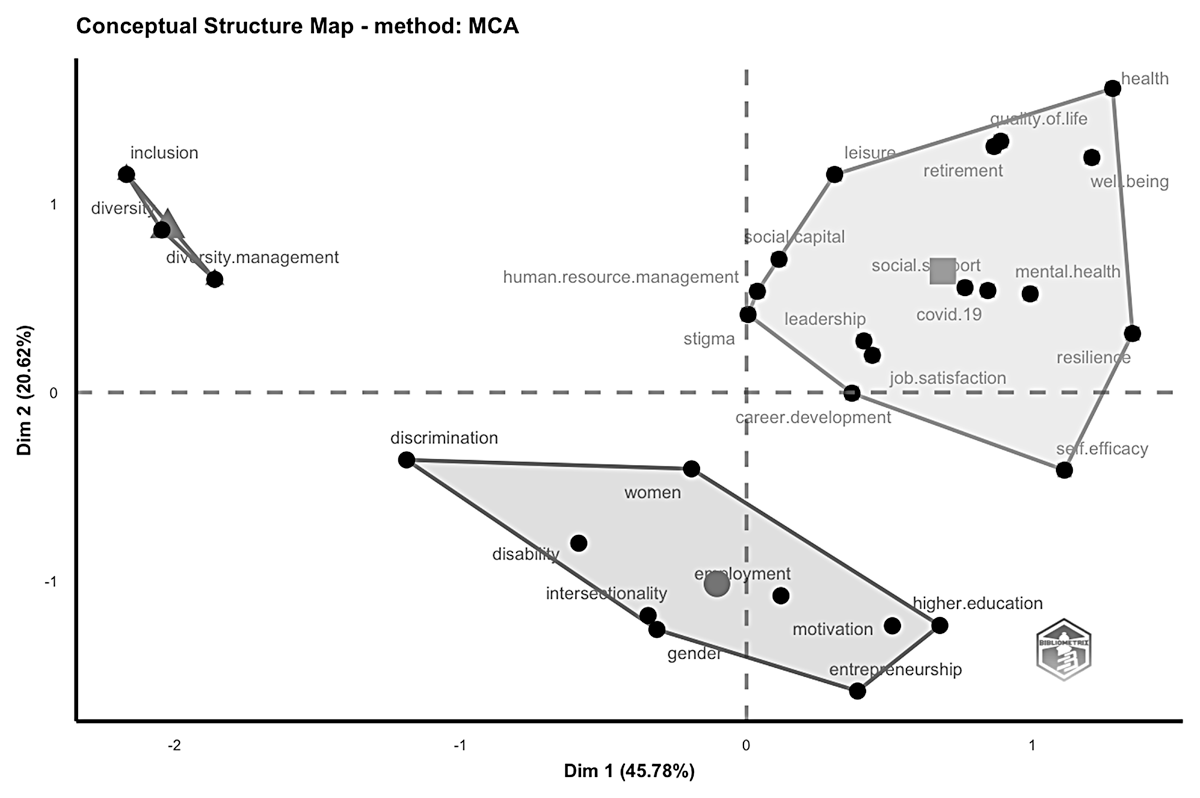
Figure 4
Concept map – multiple correspondence method – Cluster analysis of the keywords of the reference articles ‘women, disability, and work’ (2018–2022). Source: Compilation based on the bibliometrix biblioshiny package.
Figure 4 shows three main groups of interdependent keywords, represented respectively by geometric figures, each corresponding to a characteristic theme. In practice, these groups are made up of the keywords most often associated in publications. This conceptual diagram reveals three main associations of keywords, corresponding to three lines of research. The first axis (bottom centre) is based on the theory of intersectionality developed by Crenshaw (1989), which, according to Collins (2022), highlights the links between different attributes of a population that may be at the root of multiple discrimination—in our case, that linked to gender and disability. The second axis (top right) is based on the self-efficacy theory of Bandura (1977), which measures an individual’s self-confidence in achieving his or her goals. Several authors, including Griffith and Combs (2015) and Wilson et al. (2015), also refer to it to study the factors that influence the self-confidence of marginalised populations in relation to their educational and professional pathways, which are fundamental stages in their overall self-fulfilment. Finally, the third line of research (top left) concerns managing the overall inclusion of diversity within organisations. According to Arreola and Sachet-Milliat (2022), since social pressure has strongly encouraged companies to professionally include the most vulnerable, the scientific community, particularly in the field of management, has taken a close interest in these issues.
Finally, the analysis of the relationships between the keywords was further developed using a network presentation (Figure 5), which supports the conceptual map obtained (Figure 4).
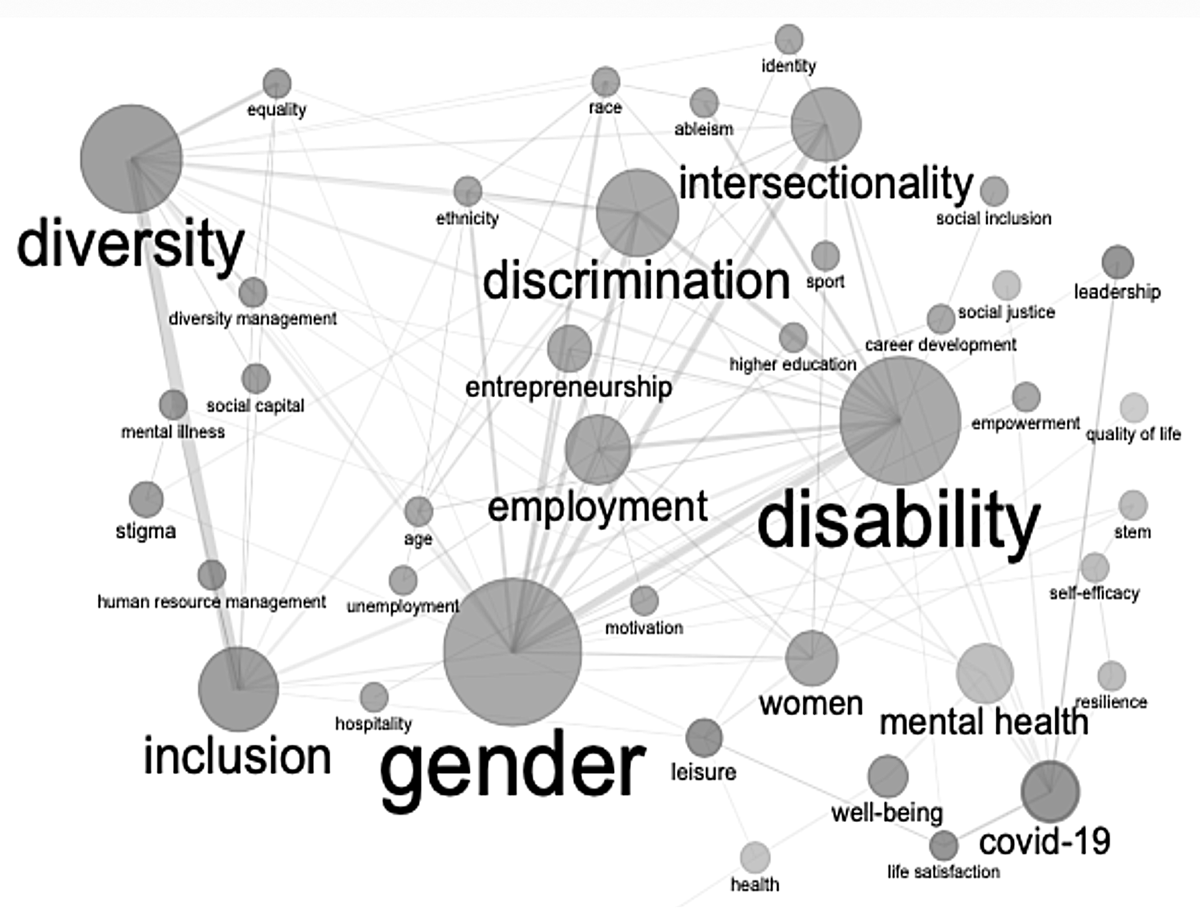
Figure 5
Network analysis of relationships between keywords in reference articles on the theme ‘women, disability, and work’ (2018–2022). Source: Compilation based on the bibliometrix biblioshiny package.
A network analysis of the relationships between the authors’ keywords shows two main associations. In the first, intersectionality is associated with the majority of sources of multiple discrimination in employment. In particular, we get associations between the terms ‘intersectionality’, ‘discrimination’, ‘disability’, ‘gender’, ‘ableism’, ‘race’, ‘identity’, ‘ethnicity’, and ‘employment’. The second covers the various themes relating to the inclusive management of diversity as a source of equality and the fight against the stigmatisation and ill-being it generates. So, there are strong links between the words ‘diversity’, ‘inclusion’, ‘diversity management’, ‘human resources management’, ‘equality’, ‘stigmatisation’, and ‘mental illness’.
Discussion
The aim of this study is to use bibliometric indicators and visualisation techniques to analyse the existing literature on intersectional studies related to the professional inclusion of women with disabilities.
The study sheds light on the following points. Firstly, the significant increase in the number of articles published after 2020 demonstrates the scientific community’s unprecedented interest in the co-themes of gender, disability, and work. It also suggests that academics understand the benefits of integrating intersectionality theory into their thinking, particularly in the face of complex issues such as the significant decline in occupational inclusion experienced by women with disabilities during the Covid crisis (Ferraris 2021). On the other hand, an analysis of the main journals publishing on the subject shows a certain concentration, with the top 20 accounting for more than 20% of publications worldwide. These are often generalist journals, but most of them focus on issues related to work or human resources. We then identified the most effective authors in terms of production on the theme. The top 20 account for more than 5% of publications, led by Zhang Y, Jammaers E, Mousa M, Li Y, Flores LY (six publications each) and Williams J, and Kumar S (five publications each). Analysis of the authors’ affiliations shows a real domination and expertise on the part of Australian universities, with nine institutions in the top 20, each with a number of publications ranging from 25 to 11 over the period in question, dealing with the occupational integration of women with disabilities. Thirdly, a country-by-country analysis reveals the undisputed leadership of the United States, responsible for 60% of the world’s publications, that is, 2.5 times more productive than the United Kingdom, the second-ranked nation. More generally, the Anglo-Saxon countries are omnipresent, with the United States, the United Kingdom, Australia, and Canada occupying the top four places. This dominance is also reflected in bilateral transnational scientific collaborations, with the top four places occupied by research groups formed solely between the four leading countries: USA/Canada (31 publications), USA/UK (22 publications), UK/Australia (20 publications), USA/Australia (19 publications). Moreover, 99% of the conventions in the top 20 have at least one of these four countries as a partner. However, the presence of China should be highlighted, particularly through two high-level agreements: USA/China (19 publications) and Australia/China (14 publications). But China remains the only nation from the BRICS group to feature in the top 20 transnational conventions. This domination is problematic in an academic world where the production of articles is increasingly important (Amutuhaire 2022). It is increasingly difficult for countries in the economic South, with limited resources and infrastructure and suffering from a brain drain, to be competitive (Alatas 2006) since the countries of the North still too often seek a relationship of domination rather than collaboration (Dahdouh-Guebas et al. 2003). It is therefore urgent to correct this limiting aspect by developing more policies to encourage centre-periphery collaboration between the countries of the economic North and those of the South (Adebowale 2001; Keim 2010). Such collaboration would enable territories that are currently little involved in research to exist and assert their specific characteristics. This is the case for Africa, a vast continent that currently accounts for less than 1% of world publications (Duermeijer, Amir and Schoombee 2018), while the employment rate for women and people with disabilities remains highly problematic. (Nyokon Mouté 2021; Agence Française de développement 2020).
Furthermore, a study of the 20 most cited articles reveals that none focus exclusively on the subject of the professional integration of women with disabilities, but that they all address broader themes and models of inclusive workplaces (Shore et al. 2018), sustainable careers (De Vos, Van der Heijden and Akkermans 2020), and social entrepreneurship (Gupta et al. 2020). This demonstrates the existence of a literature on this subject, but with still too few specific publications, as confirmed by Masson (2013) and Arneton (2018). Related to this, the analysis of keyword co-occurrences makes it possible to classify them into two groups. The first is made up of keywords relating mainly to different forms of discrimination: disability, gender, ethnicity, race, identity, etc. The second group includes keywords more closely related to business management, in particular diversity management, inclusion, employment, leadership and job satisfaction, etc. In addition, the keyword multiple matching method revealed three potential areas of research related to the professional integration of women with disabilities. The first is based on the theory of intersectionality, which simultaneously studies the characteristics at the root of multiple discrimination (Crenshaw 1989; Collins 2022). The second is based on the theory of self-efficacy, which is used in particular to measure self-confidence and influencing factors, especially among marginalised populations in terms of their career and educational paths, which are fundamental steps towards overall fulfilment. (Bandura 1977; Griffith and Combs 2015; Wilson et al. 2015). Finally, the last line of research concerns managing the inclusion of all diversity within organisations. This is an issue that challenges companies in the face of strong societal pressure to implement social responsibility policies that allow vulnerable populations to be integrated into the workforce, in order to align with the diversity present in society. As a result, the world of academic research, particularly in the field of human resources management, has also taken up this issue (Arreola and Sachet-Milliat 2022).
Conclusion
This study breaks new ground by providing the scientific community with recent bibliometric data on the theme of integrating women with disabilities into employment. It highlights not only the most influential articles, but also the most effective researchers, universities, countries, and international collaborations. On the basis of these quantitative analyses, we are contributing to a better overall understanding of the structure of knowledge on the topic under study, which will also enable us to better characterise the existing intersectionality between gender, disability, and occupational inclusion. The subject of study is recent, and the strong growth in the number of publications citing it is encouraging. However, analysis of the most influential articles shows that they remain general in nature, focusing mainly on the professional inclusion of diversity through issues such as inclusive workplaces, sustainable career management, and social entrepreneurship.
In the future, therefore, there will be a need to increase the number of publications dealing specifically with the professional inclusion of people with disabilities, and in particular women, who constitute particular diversity groups with their own history, characteristics, and needs. The creation of specific research groups on this theme, such as the one at Griffith University in Australia, which has proved to be very effective, would seem to be a highly appropriate solution. In addition, our study of the origin of publications revealed the existence of a research context strongly dominated by the countries of the economic North or the BRICS. As a result, very few articles come from universities in the countries of the economic South, even though these are the areas where women with disabilities have the most difficulty entering the world of work. The solution lies in rebalancing geographical inequalities by developing genuine North-South scientific collaboration and gradually abandoning the system of domination by the North over the South.
The study of keywords and multiple correspondences reveals avenues of research that contribute to the theme studied and that researchers should now actively pursue: intersectionality, personal effectiveness theory, and managing the inclusion of diversity in organisations.
However, the current study has certain limitations, some of which are specific to bibliometric analysis. The data analysed comes from the Scopus database and, therefore, the use of a separate database could lead to other results (Chadegani et al. 2013). The scope of the analysis was limited to the intersection of the terms ‘woman’, ‘disability’, and ‘work’, as well as the associated synonyms indicated in the methodology. However, it is possible that the authors used other related terms that we did not consider. Consequently, the analysis may not have taken into consideration all the articles relating to scientific research on the theme of the professional inclusion of women with disabilities. Finally, in the context of this research on professional inclusion, the bibliometric analysis was carried out on the basis of articles belonging to the category ‘Business and Management’. Consequently, some articles and/or authors publishing in other disciplines (sociology, medicine, psychology, etc.) may not have been included.
Data Accessibility Statement
The data that support the findings of this study are available from the corresponding author upon reasonable request.
Acknowledgements
We would like to thank the women with disabilities we met in Europe and Latin America who provided inspiration for this article. Finally, we are very grateful to the anonymous reviewers and the editor for all the valuable comments they will provide for the further development of this investigation.
Competing Interests
The authors have no competing interests to declare.
Author Contributions
All authors contributed substantially to the conception and writing of the manuscript, participated in its revision, and approved the final version for submission.