
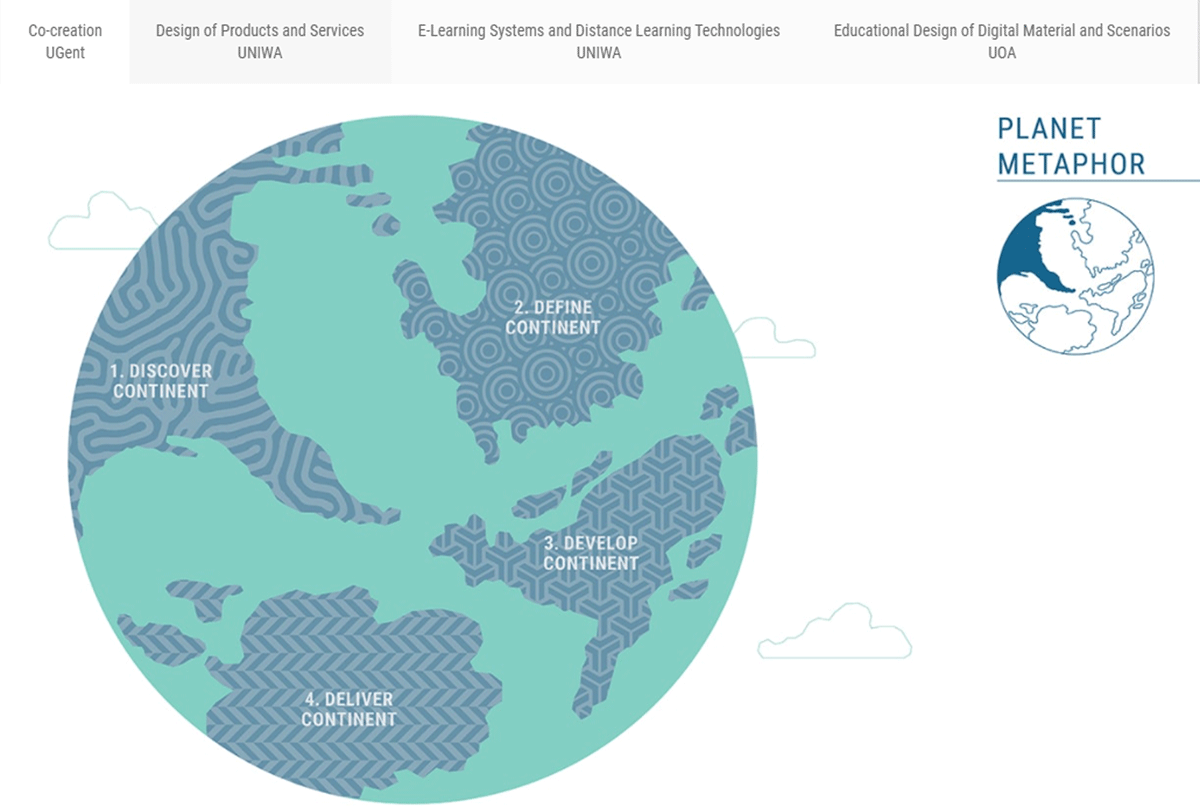
Figure 1
The 4 continents of the Planet platform as the 4 stages of the DT methodology.
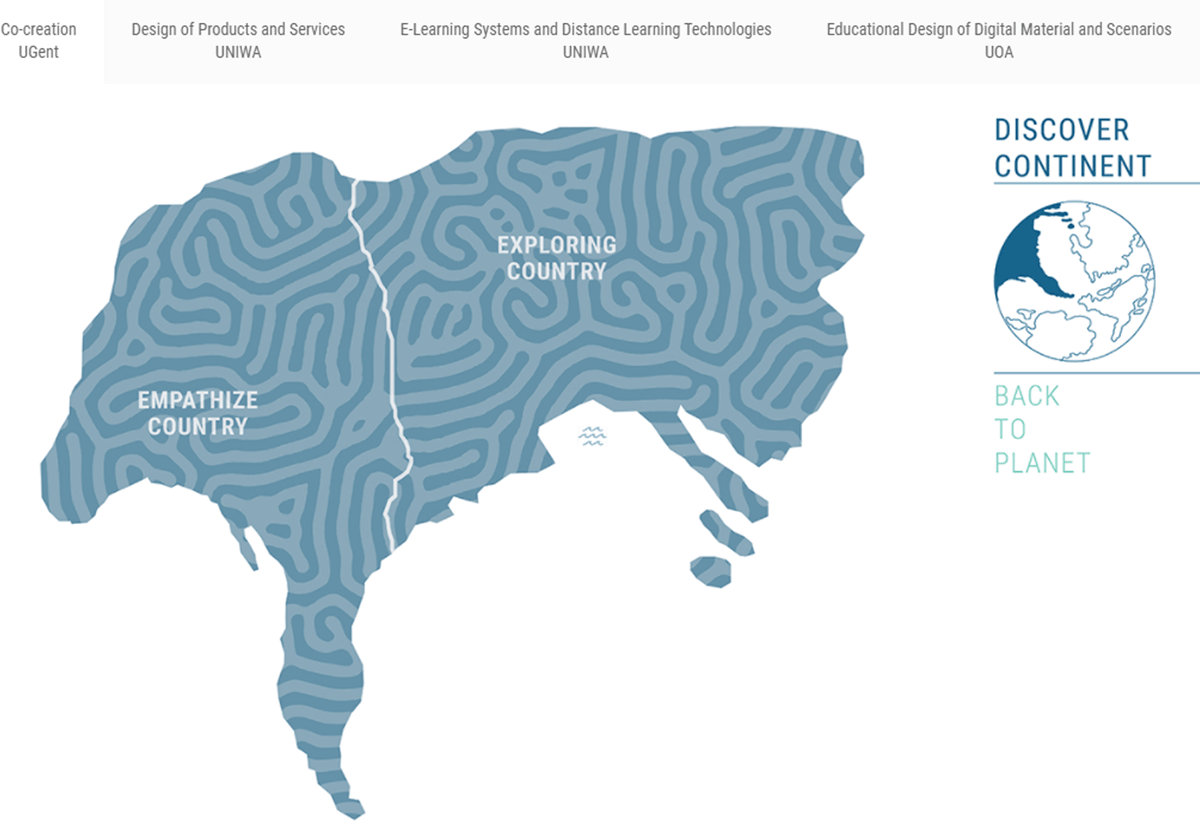
Figure 2
Countries that represent ‘concepts’ in the Discover continent.
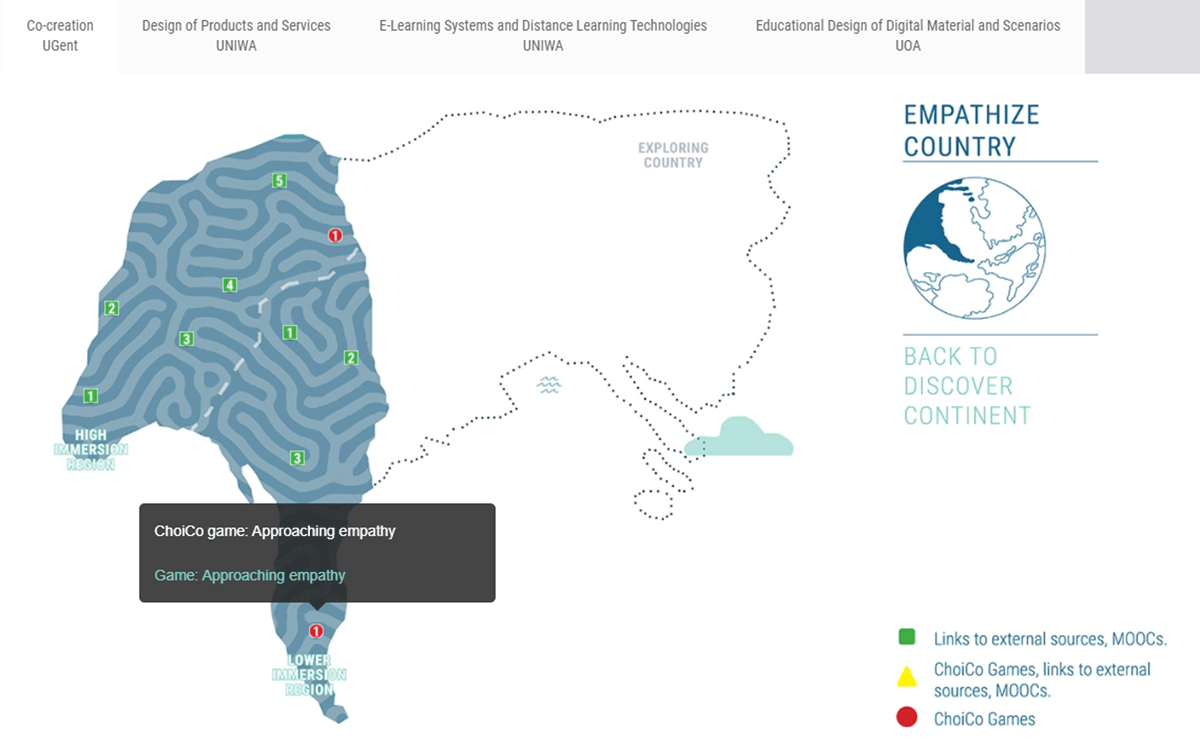
Figure 3
Cities as tools that include links to external and internally-made sources (e.g. ChoiCo games).
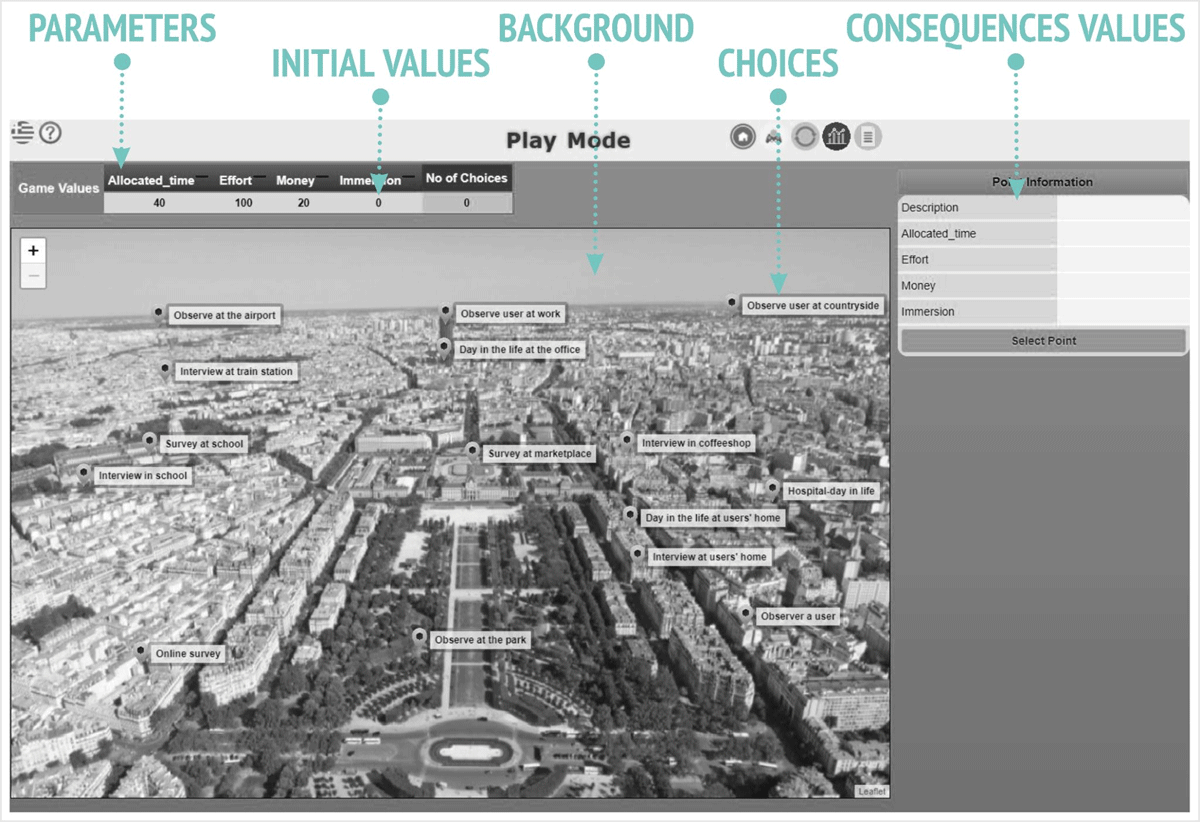
Figure 4
Introduction of the ChoiCo game elements (http://etl.ppp.uoa.gr/choico/).
Table 1
An example from the coding process with NVivo 12.
| CODES | STUDENTS’ COMMENTS |
|---|---|
| Improving critical thinking skills | “Specifically it improved my critical thinking skills because you start to question the methods that you employed in the project. So you start thinking ‘Oh wait, maybe we could do it otherwise!” |
| Creating a new game | “My team and I worked together to make a ChoiCo game, the main idea was to make the player make decisions about the parts that he would want on his own e-scooter to possess. He has seven categories from which he can choose from different types of components for his e-scooter. Every component has three values on it, price, weight and durability. Once the player completes all seven categories he is going to be presented with a message. If the choices he made were correct (meaning the e-scooter was not too expensive, heavy or unstable) the message will say: “You did it!”, but if the choices weren’t so wise the message will say: “You failed!”. Regarding the game making experience, I personally found our game quite enjoyable and fun, it took us some trial and error to figure some stuff out, but in the end everything blended together perfectly. It was a really amazing experience, all the members of the team were friendly and hardworking.’ |
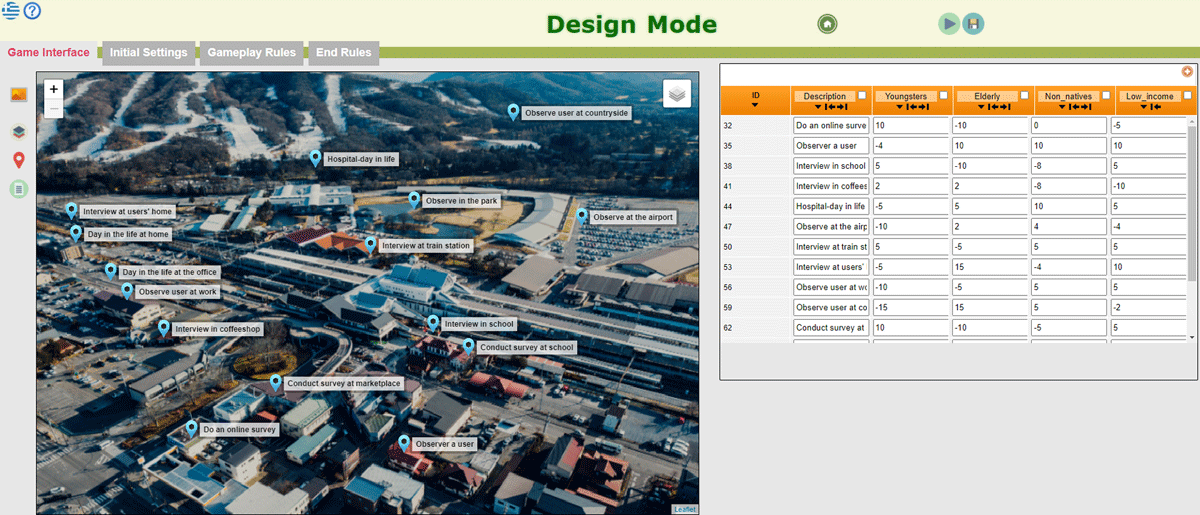
Figure 5
Impact of Empathy game design mode allows students to change the game values on the right hand side.
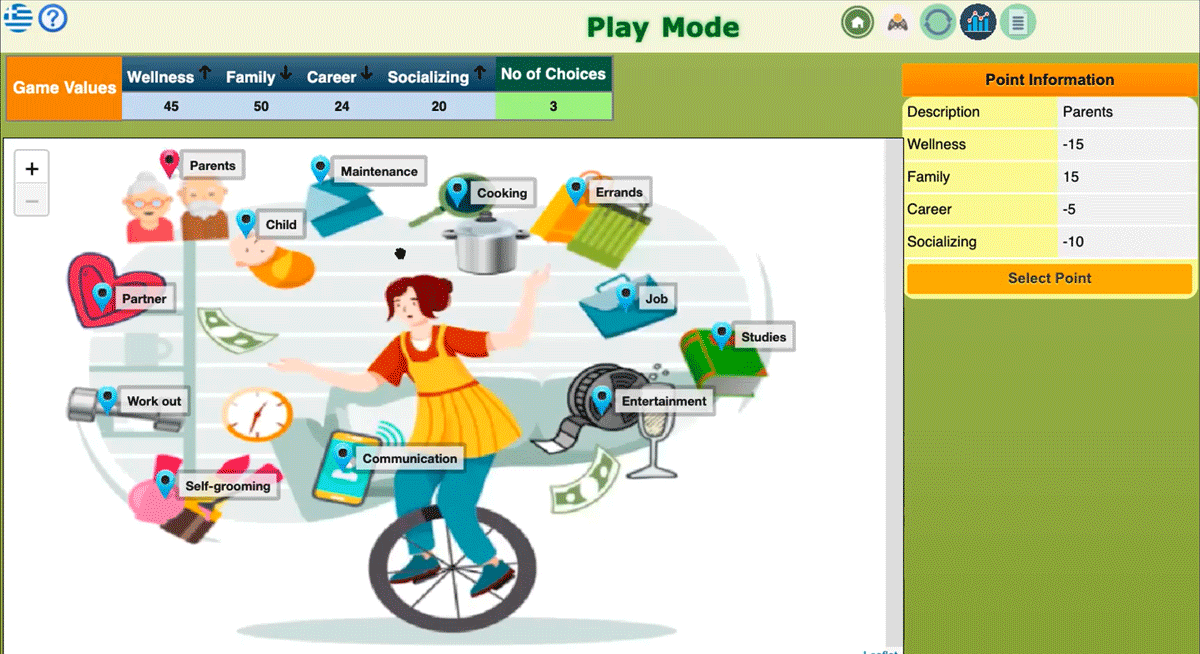
Figure 6
An example of how students created a new ChoiCo game (background, game values, choices).
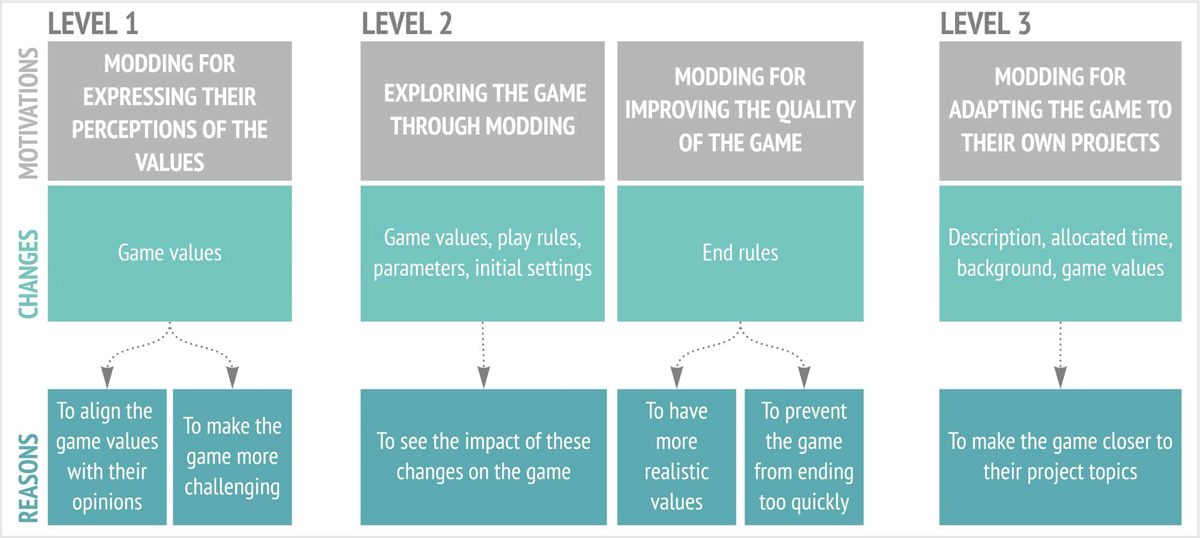
Figure 7
Motivations of the students for modifying the ChoiCo games.