
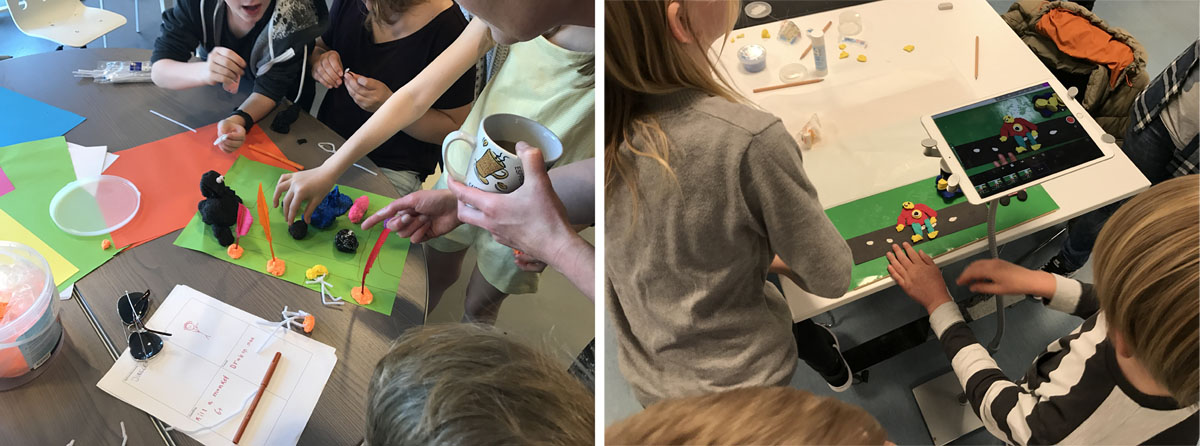
Figure 1
To the left: Case 1 experimenting with different creative materials to represent their game design idea. To the right: Case 2 experimenting with the tablet to record the stop-motion video representing their game design idea.
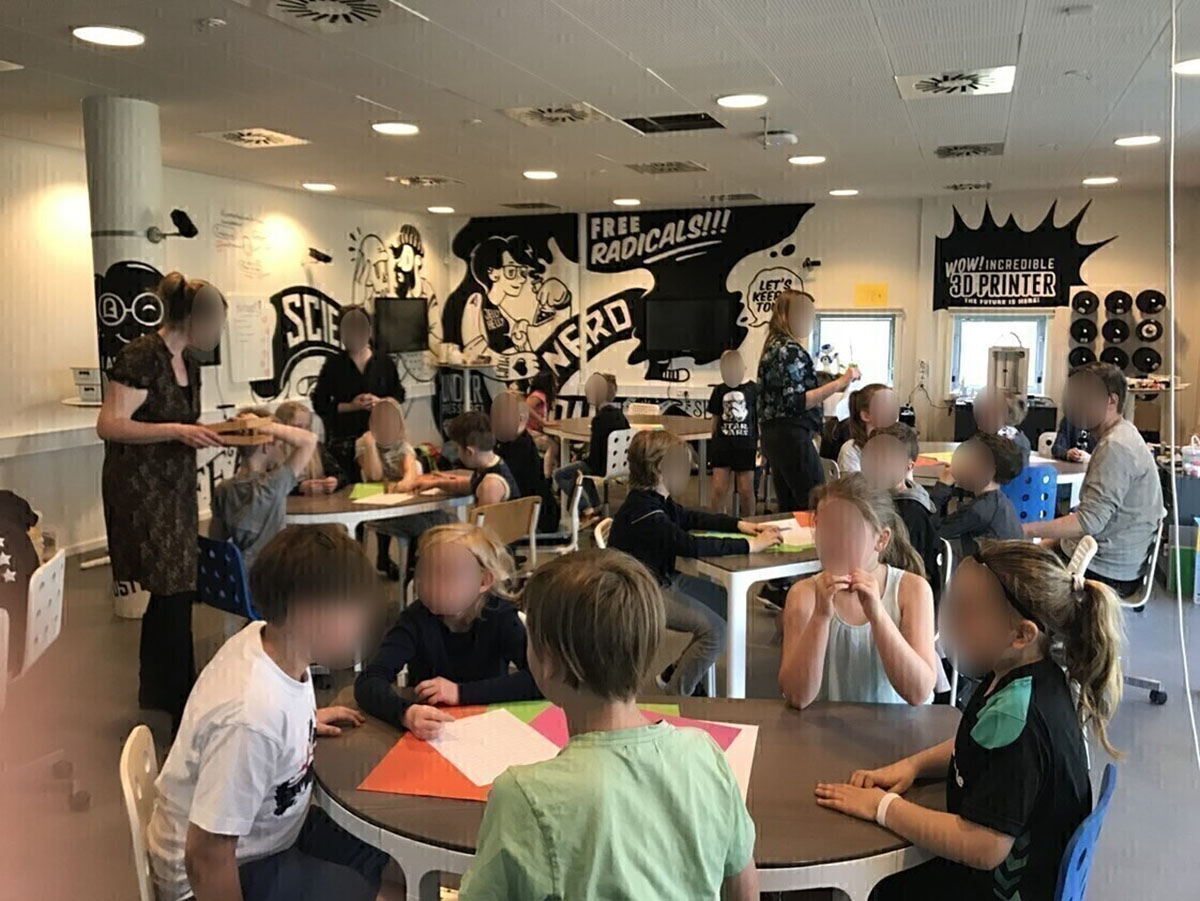
Figure 2
A typical workshop environment representing the initial phase of the children’s game design idea generation. Video cameras can be seen to the left on the pillar and on the wall (far left).
Table 1
Overview of workshop design activities and timetable.
| TIME | DESIGN ACTIVITIES UNDERTAKEN |
|---|---|
| 09:00–09:10 | Introduction. Establishing creativity framework and climate. |
| 09:10–09:30 | Sketching activity using an A4 sheet to develop a game-plot and deciding upon characters and other objects/props to include in the game design. |
| 09:30–10:45 | Exploratory activity using analogue and digital tools to develop different features from the sketching activity. |
| 10:45–11:30 | Transformative activity focusing on children’s presentations of their game design represented through their game narratives (analogue form [Case 1] and digital form [Case 2]). |
| 11:30–12:00 | Joint lunch and informal conversations about the activity. |
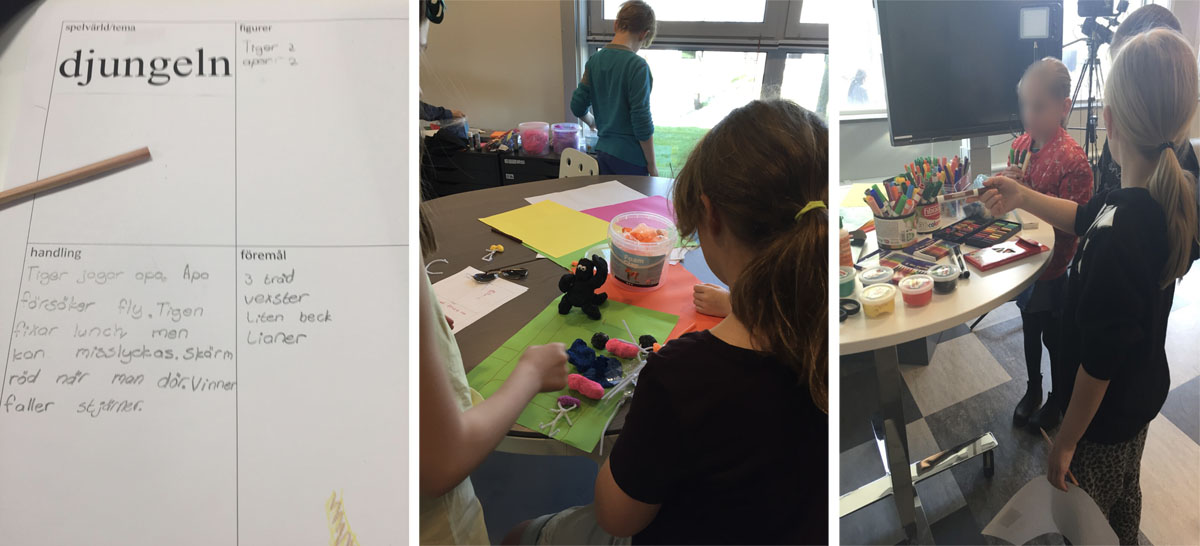
Figure 3
A 4 sheet for the Desert gameplay theme and space for the children to specify the plot of the gameplay, characters, and objects and/or props (left). Mid and right pictures show a variety of the creative material available for the children.
Table 2
Overview of the analysis process (adopted from Braun and Clarke, 2006).
| PHASE | DESCRIPTION OF THE ANALYSIS PROCESS |
|---|---|
| Getting to know the data | Watching and re-watching the video data and observer notes. |
| Generating initial codes | Systematically coding interesting features of the data and gathering data relevant to each code. |
| Searching for initial themes | Synthesising codes into initial themes and gathering relevant data to each initial theme. |
| Reviewing themes | Checking if the themes work in relation to the coded data and the whole data set, generating a thematic map of the analysis. |
| Defining themes | Iteration of the analysis to refine the details of each theme in relation to the research questions, generating definitions and names for each final theme. |
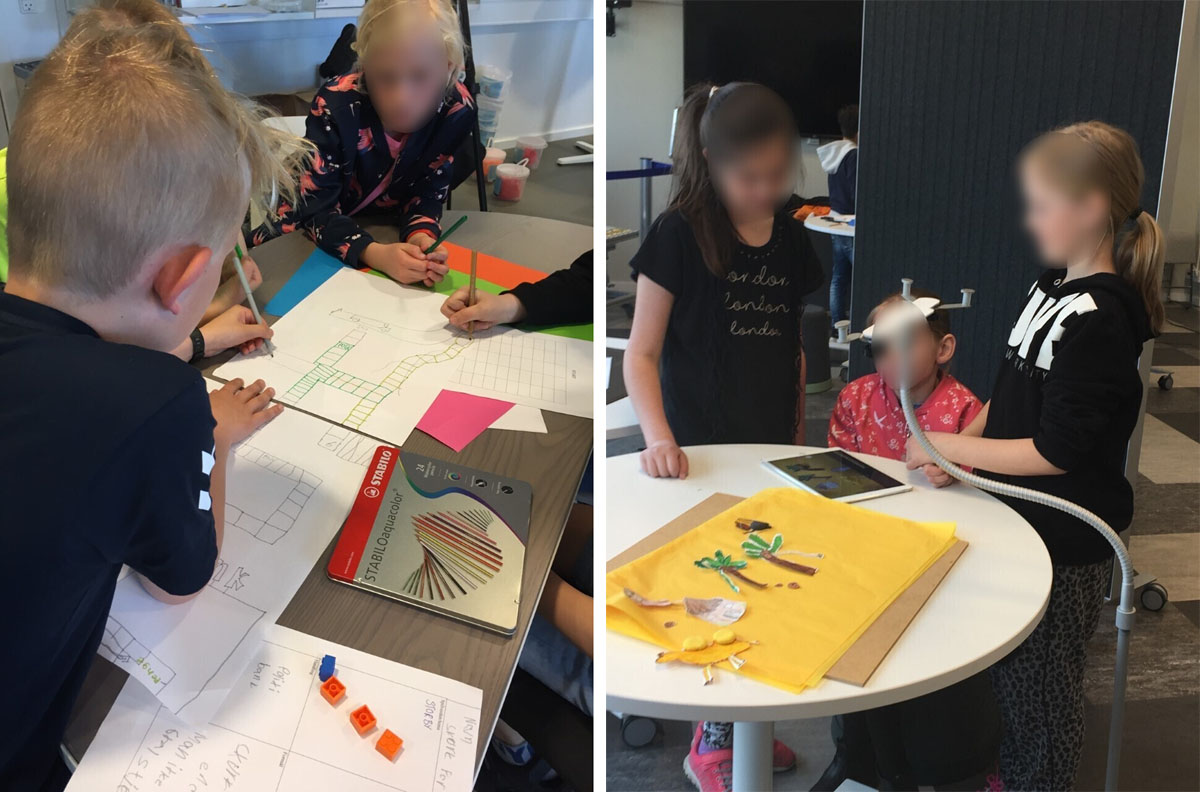
Figure 4
An example of children’s exploratory activities, where they are exploring possible game designs (left) and where the girl in the right image is showing her group how she explored the sound designs to find the one fitting their game design the best.
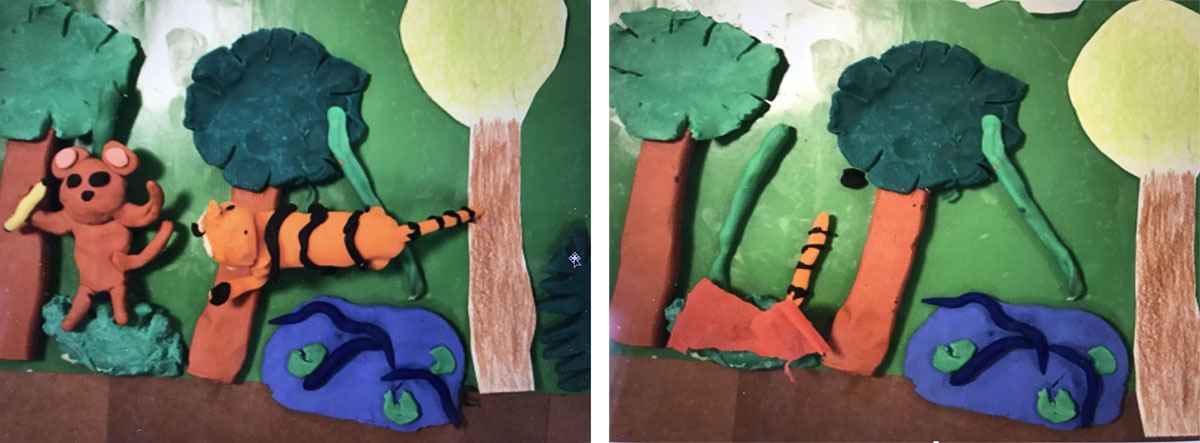
Figure 5
An example of children’s combinational activity, where a ‘game over’ scenario was represented by a tiger hunting a monkey (Figure 5, left), but where the tiger fail to catch the monkey and, thereby, died and caused game over for the player who represented the tiger and victory for the player representing the monkey. The dead tiger is represented by a red spot (Figure 5, right).
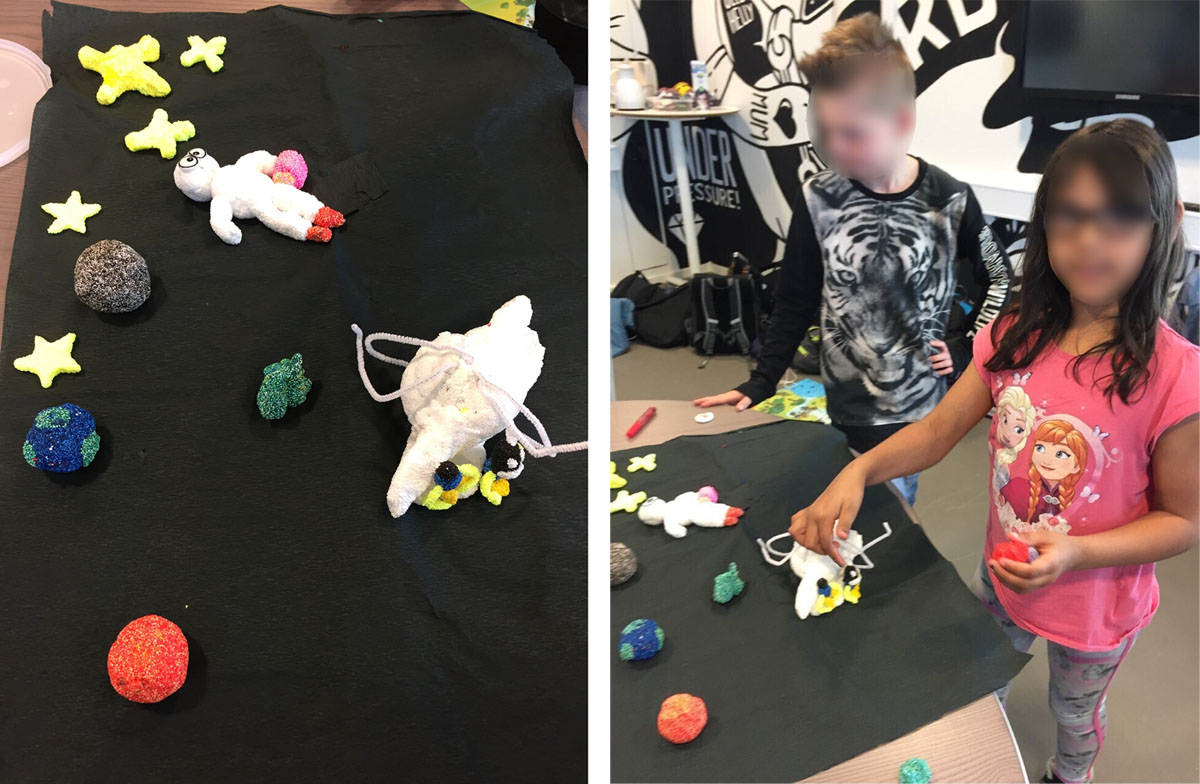
Figure 6
An example of children’s transformative activity, where an impossible solution to a space game through materialisation was transformed to a possible game design.