
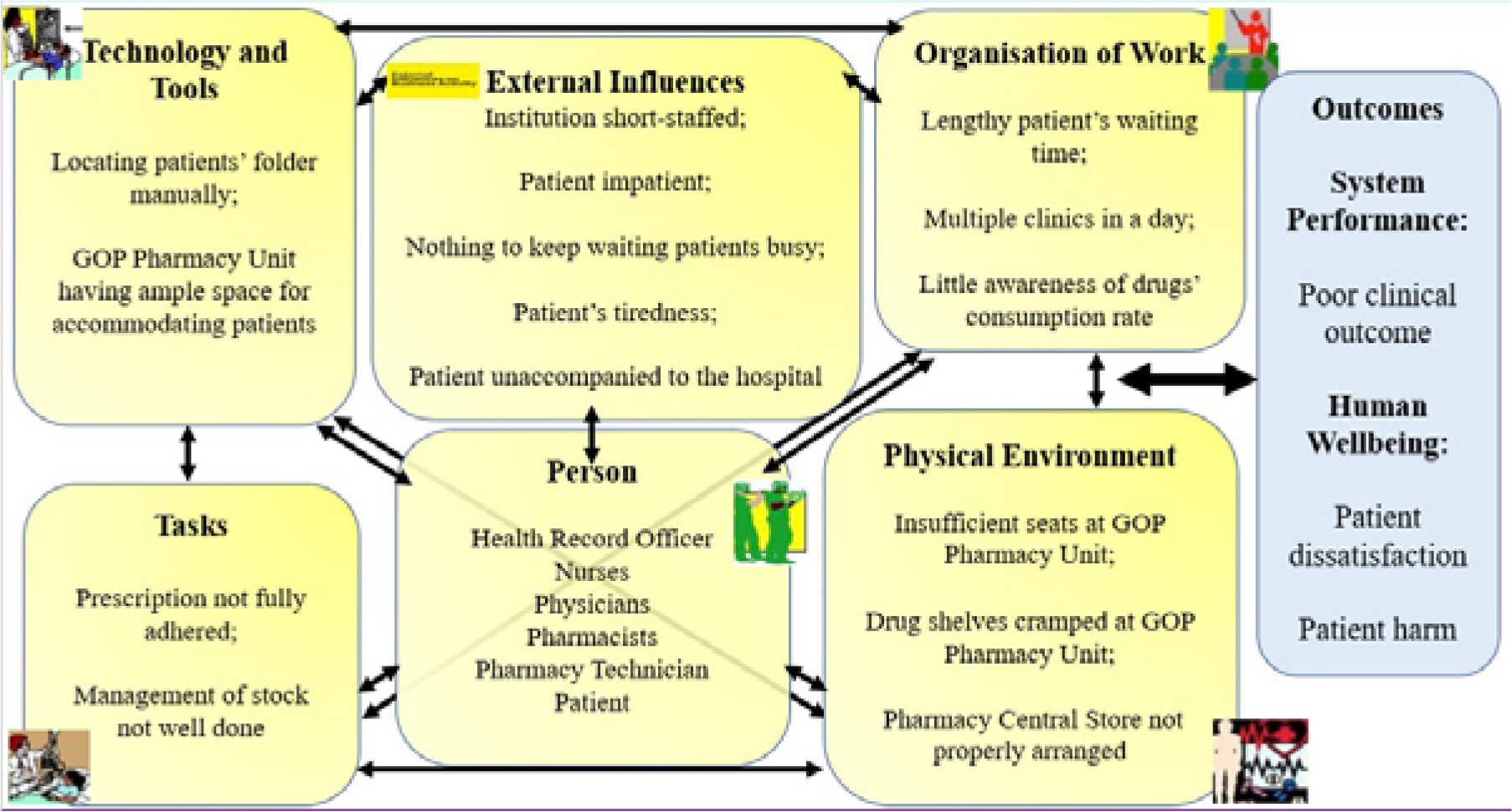
Figure 1
Systems Engineering Initiative for Patient Safety (SEIPS)
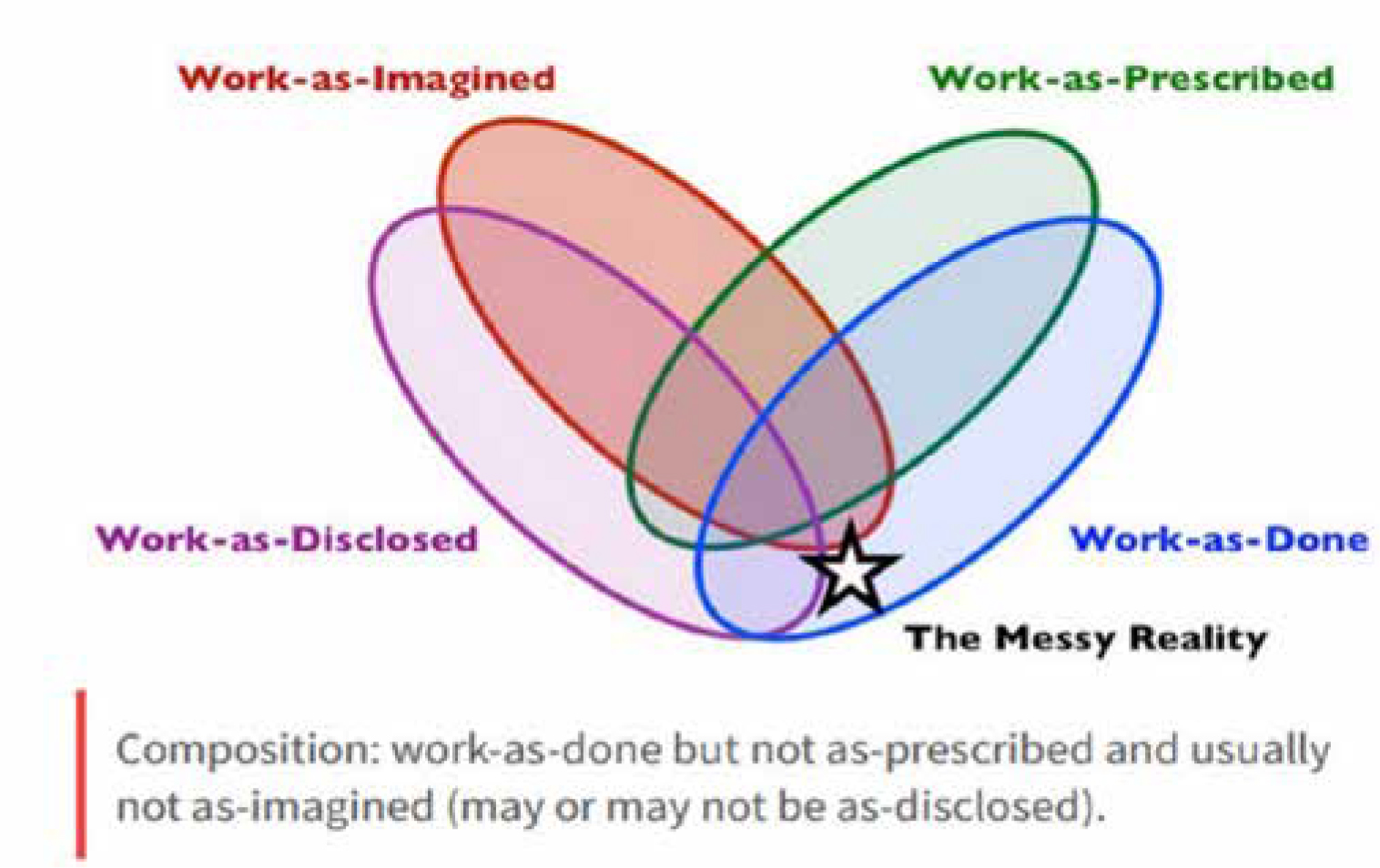
Figure 2
Messy Reality Archetype of Human Work
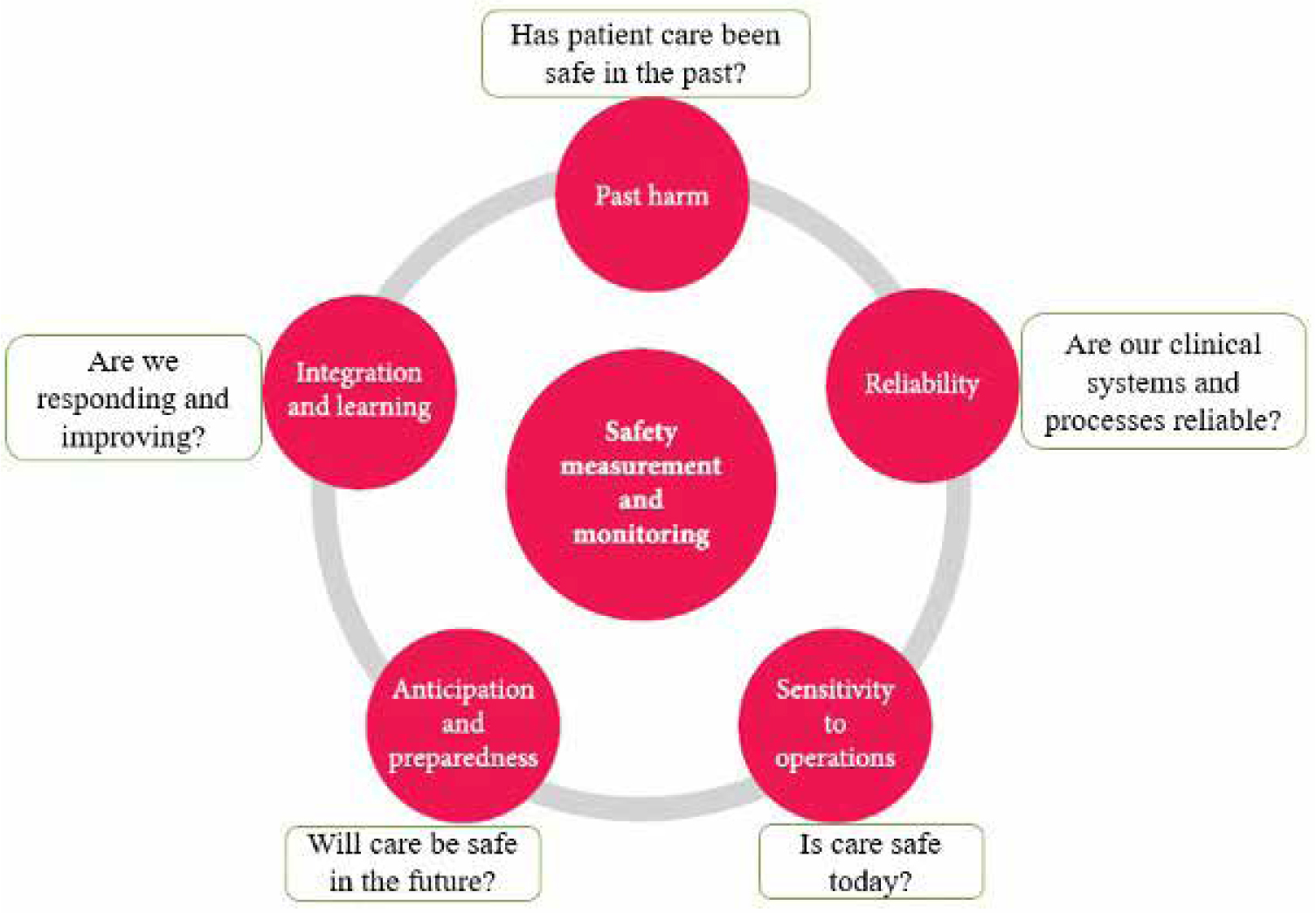
Figure 3
The Use of Monitoring and Measuring Framework
Table 1
Recommendations Guided By Using Measurement and Monitoring of Safety Framework
| Safety Measurement and Monitoring | Recommendation | Justification |
|---|---|---|
| Knowing Past Harms | Adequate mortality reporting | Help to know which harm causes which death10 |
| Targeted Incident Reporting | Help to know, and adequately monitor, specific harms11 | |
| Create a list of Never Events and its mandatory reporting | Create consciousness of impermissible harm to patient and for safety improvement intervention12 | |
| Ensuring Reliability | Speedy implementation of the computerization of institution’s work process | It can facilitate easy flow of work process and improve professional care practice13 |
| Evenly spread-out clinic days to cover all days of the week | It can reduce patient waiting time | |
| Pharmacist feedback to physician on prescriptions | It can improve prescribing outcome and patient safety14 | |
| Timely feedback on stock level of drugs | It can reduce the tension and frustration associated with drug shortage15 | |
| Periodic update of Hospital Formulary and distribution of list of available drugs to physicians | It can create awareness of available drugs for patient care and serves as a guide for prescribing16 | |
| Following the rules/procedure | It can ascertain the quality of care given to patients17 | |
| Clinical auditing | It can give insight into daily clinical practice and show area for improvement18 | |
| Sensitivity to operations | Adequate staff level | Inadequate staffing can result in missed care, job stress and dissatisfaction19 |
| Monitor patient flow | It can reduce patients’ waiting time, delay, and cancellation20 | |
| Safety walk-rounds | It can improve safety culture, safety, and quality of care21 | |
| Pharmacist-physician inter-professional relationship | It helps to improve the care and safety of patients22 | |
| Patient interview | Helps obtain holistic information from patients for their safety | |
| Operational meetings | Performances are reviewed periodically for safety consideration and awareness | |
| Action and intervention timing | Responding and intervening in time to safety concerns prevents ripple-effect of harm | |
| Anticipation and Preparedness | Staff indicators of safety | Safety climate will be enhanced through safety inspections23 |
| Safety culture and climate | It helps keep patient safe24 | |
| Patients’ access to 24 hours pharmacy telephone | It can help in preventing adverse drug event, a high priority of cause of harm in healthcare25 | |
| Safe dispensing and counselling practice | It can reduce patient safety risk26 | |
| Integration and Learning | Medication error intervention report | It can help all to be self-aware of such case and enable taking necessary action |
| Medication error monthly summary report | Helps in knowing the trend of medication error and taking action to improve on tackling it | |
| Databases’ medication harm capturing | Helps in learning, and solving, from the captured harms. | |
| Risk awareness information | Helps in preventing possible harms. | |
| Informing staff of actions taken | Helps create a sense of belonging and allows them to key into the patient safety ‘vision’ | |
| System improvement action | Taking this step creates a culture awareness in the institution. | |
| Feedback through newsletters | Helps create a sense of belonging and allows them to key into the patient safety ‘vision’ |
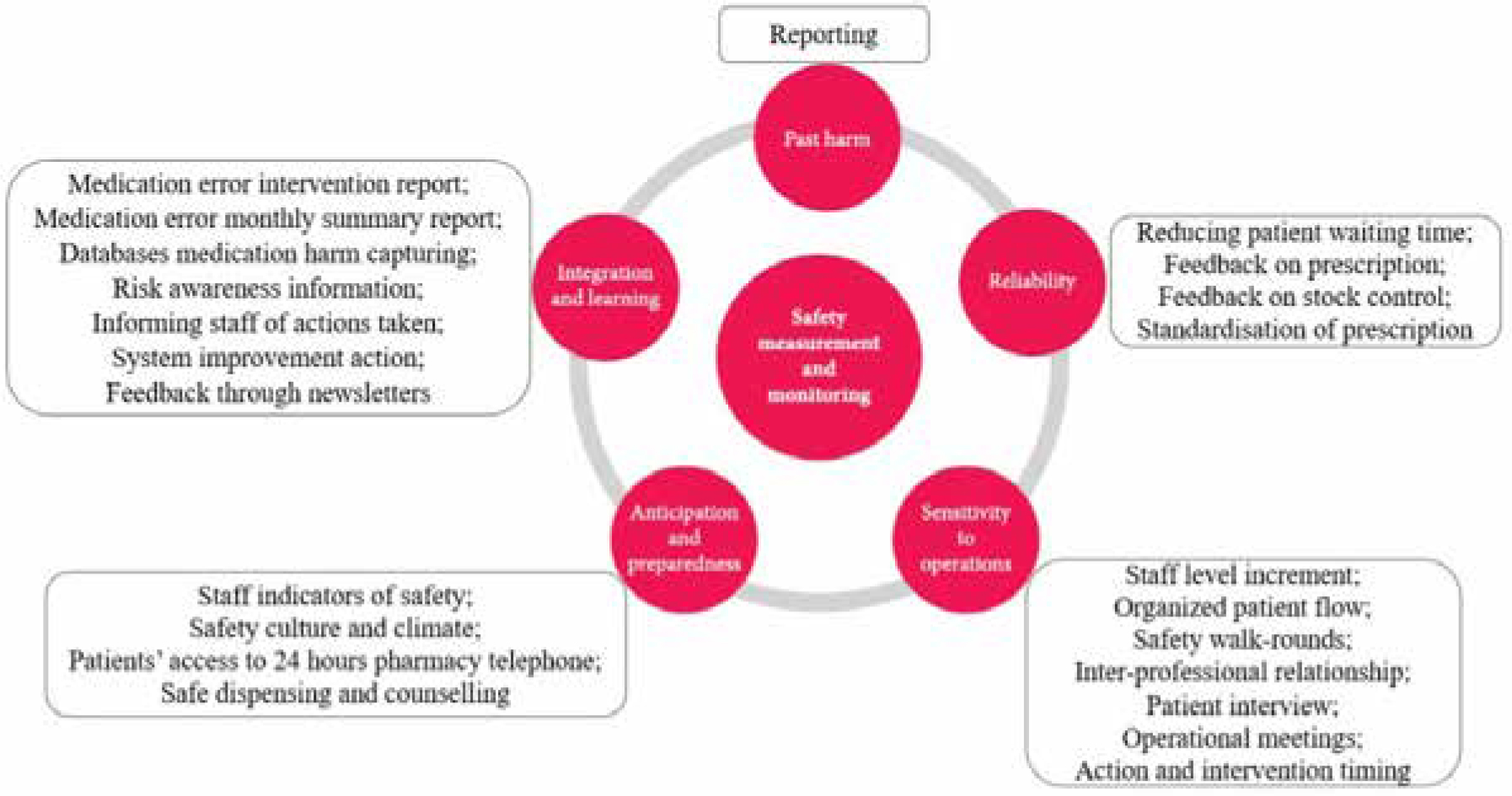
Figure 4
Overview of recommendations guided by MMSF