
Table 1
Health areas and population covered by the BCNCE NTDs project, 2020-2021.
| No | Health zones | Health areas and populations | Health zone population | Population covered by the BCNCE NTDs project | |
|---|---|---|---|---|---|
| 1. | Kimpese | Kasi Mukimbungu Yanga dia songa Malanga Lovo Viaza Total: | 10,831 8,325 21,116 4,176 5,600 4,260 53,968 habitants | 187,796 | 53,968/187,796 (29%) |
| 2. | Nsona-Mpangu | Songololo Kisonga Nkamuna Minkelo Lombe Mayanga Total: | 14,384 6,768 3,816 7,860 3,304 7,169 43,301 habitants | 115,035 | 43,301/115,035 (38%) |
| TOTAL | 302,831 | 97,269/302,831 (32%) | |||
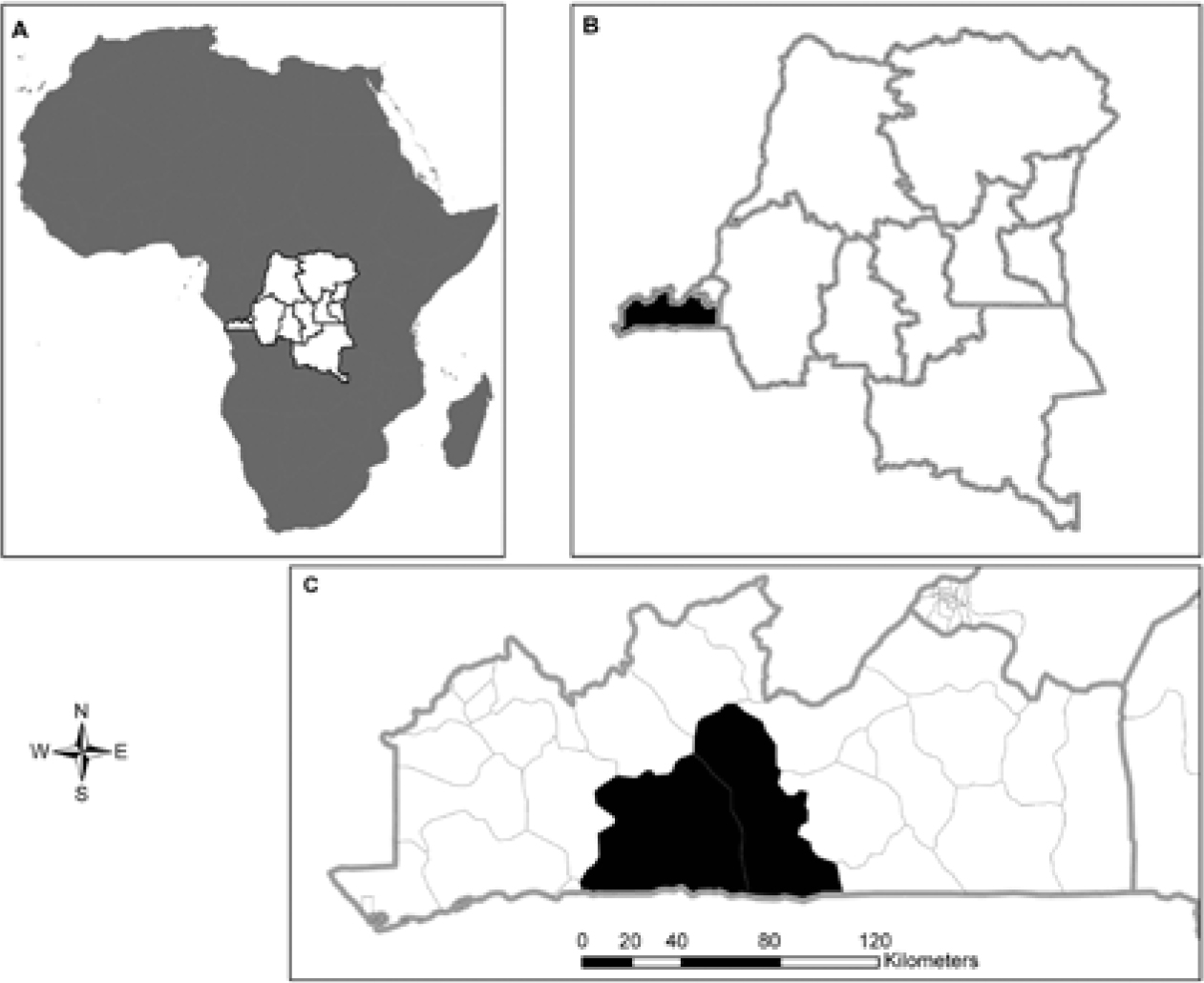
Figure 1
A. The DRC in Africa. B. The Kongo Central Province in the DRC. C. The Songololo Territory in the Province of Kongo Central.
Table 2
Distribution of focus groups and categories of key informants.
| Categories of key informants | ||||
|---|---|---|---|---|
| Religious leaders (pastors) | Lay leaders | Care providers | Total | |
| Number of groups | 2 | 12 | 2 | 16 |
| Participants | 24 | 120 | 12 | 156 |
Table 3
Distribution of individual interviews by categories of key informants.
| Categories of key informants | |||||||||
|---|---|---|---|---|---|---|---|---|---|
| Self-care | Confirmed recovered cases | Baptized | Total | ||||||
| BU | Leprosy | BU | Leprosy | Yaws | BU cured | Leprosy | Yaws | ||
| Number | 14 | 2 | 25 | 2 | 5 | 1 | 0 | 0 | 49 |
Table 4
Information collected from key informant interviews.
| Themes | Sub-Themes |
|---|---|
| Role of faith leaders in improving patient care seeking |
|
| Patient perception, behavior, and care seeking |
|
| Stigma |
|
| Obstacles to treatment and seeking care |
|
| Community ownership of the project |
|
| Self-care |
|
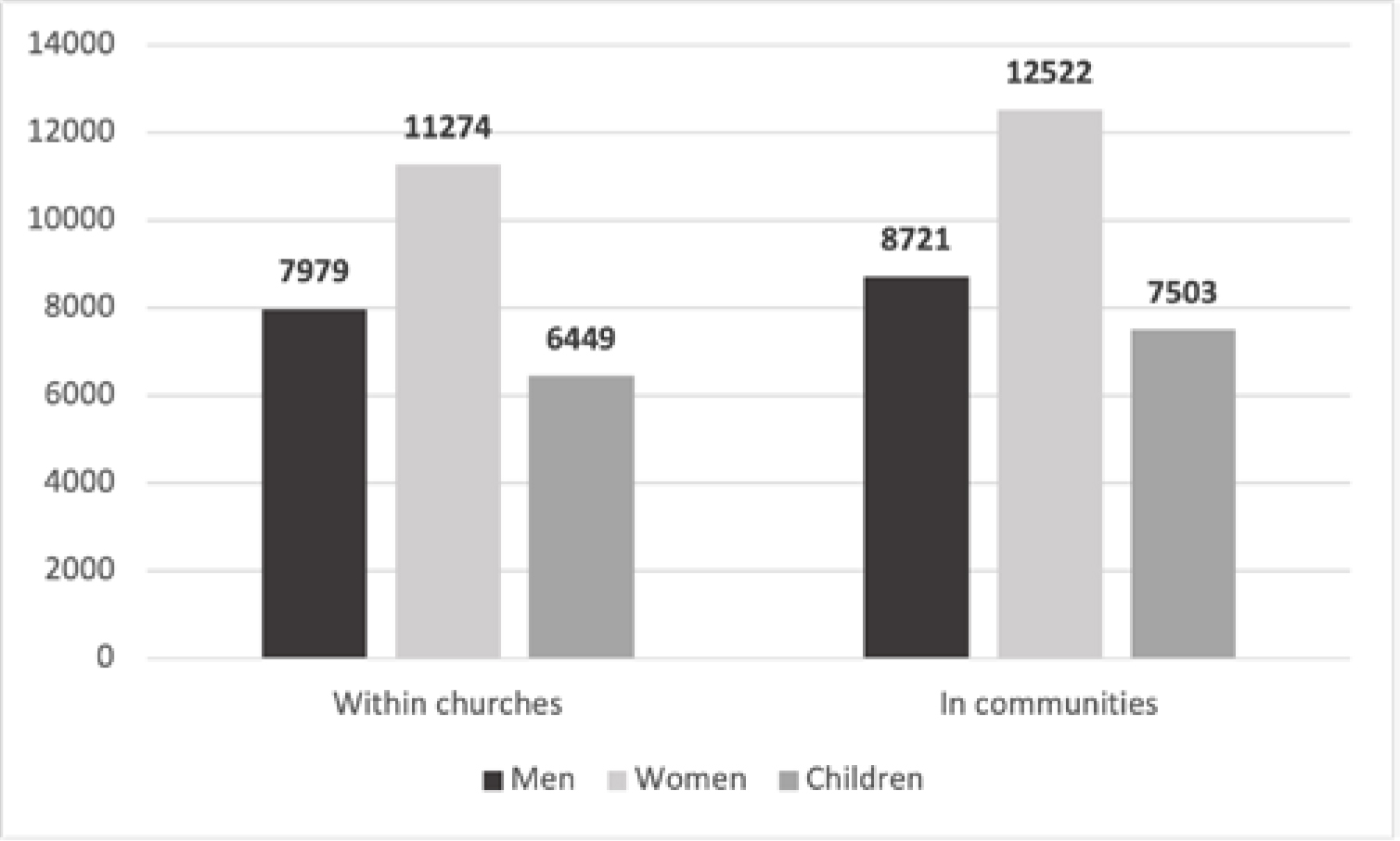
Figure 2
Number of people sensitized via the network of churches in targeted health areas, from July 2020 to June 2021.
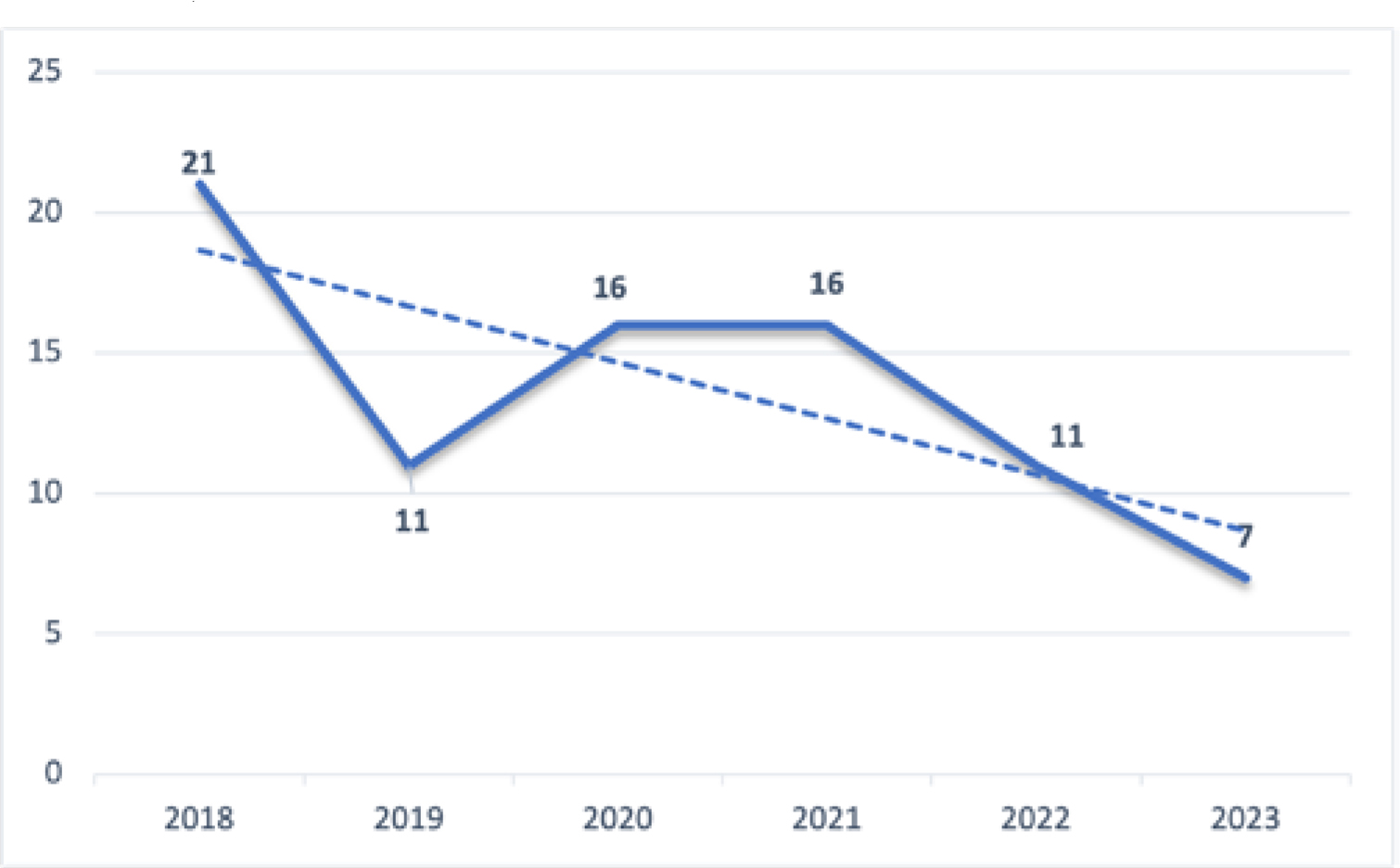
Figure 3
Trend of Leprosy new case detection in Eastern Kongo Central, 2018-2023 (including cases detected through BCNCE NTDs network).
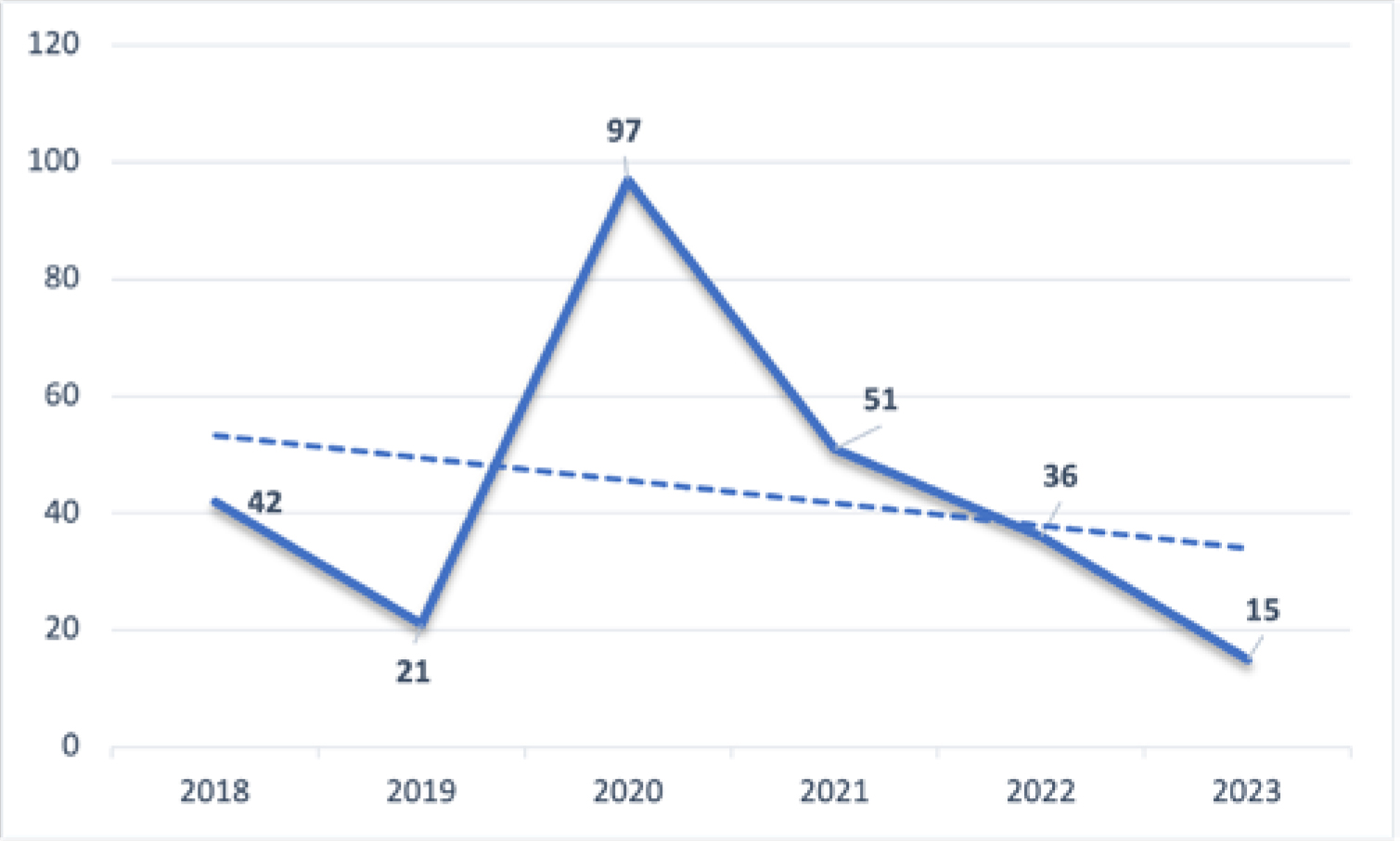
Figure 4
Trend of Buruli ulcer new case detection in Eastern Kongo Central, 2018-2023 (including cases detected through BCNCE NTDs Network).