
Introduction
Neglected tropical diseases (NTDs) are a diverse group of conditions caused by a variety of pathogens (including viruses, bacteria, parasites, fungi, and toxins) and are mainly prevalent among impoverished communities in tropical areas, although some have a much larger geographical distribution.1
NTDs have long-lasting consequences, including permanent disabilities, physical impairments, socioeconomic challenges, and death. They also cause stigma and have significant repercussions on mental health, which can reduce quality of life.2,3 Although programs to prevent, control, and eliminate NTDs have made some tremendous gains, mental health support has not always formed a significant part of these efforts.4 For several years, the approach to combating skin NTDs has focused on the diagnosis and treatment of cases,5 and less attention has been paid to the psychosocial consequences associated with NTDs.6-8 However, projects like this are part of a progressively growing focus on these integrated holistic aspects.
Most countries in the African region are co-endemic for at least five NTDs. Buruli ulcer (BU), leprosy, and yaws are among those considered case management NTDs (CM NTD) with cutaneous manifestations, also called skin NTDs. The WHO Weekly Epidemiological Record from September 2022 ranks the Democratic Republic of Congo (DRC) fourth in the world after India, Brazil, and Indonesia for leprosy burden and first in Africa despite the elimination threshold reached at the national level for leprosy. In addition, the country is in the belt of countries endemic for yaws and BU.9 DRC has reported an average of 3,646 new leprosy cases and 304 suspected BU cases per year for the last 6 years. More data is needed on yaws, which was thought to be eradicated in the early 1960s but remains a concern.10
The Evangelical Medical Institute (IME) of Kimpese and American Leprosy Missions (ALM) together implemented the Building Church Network Capacity to End NTDs (BCNCE) pilot project during ALM’s fiscal year 2021 (from July 1, 2020, to June 30, 2021) in the Songololo Territory, Kongo Central Province of the Democratic Republic of Congo. The aim of this project was to strengthen holistic services (physical, mental, social, and spiritual) and care related to skin NTDs, primarily Buruli ulcer, leprosy, and yaws, thus, contributing to the reduction of morbidity, disabilities, and related psychosocial impacts.
In countries like DRC, with a weak health system but robust faith network, the intervention was based on strengthening the capacity of the local church networks, seen as trusted, strategic, and well-established institutions within communities. The Pew Research Center estimates 95.8% of the population in DRC is Christian.11 The Christian church in DRC has played a positive role during socio-political challenges and other disease conditions including HIV and COVID-19 and continues to be seen as a trusted institution within a fragile context.
For health practitioners, involving religious leaders is important and consistent with health promotion efforts aimed at strengthening community action; it empowers communities to take control of their health and well-being, as set out in the Ottawa Charter, 1986.12
This approach is consistent with findings from other studies. Hanna Luetke Lanfer et al. point out that religious authorities are not only institutionalized in their own organizational structures but also in wider social circles and are, therefore, valuable partners in disseminating and promoting health messages. Because of their well-established social roles and the links between religion and health, religious leaders have been employed as opinion leaders in health campaigns during acute public health emergencies or disease outbreaks, such as Ebola outbreaks in West Africa, non-emergency settings for contraceptive use in Nigeria, and vaccination efforts in various countries.12 Religious leaders believed that presenting health messages in sermons helped calm people and made them more likely to accept the messages.13
The churches can reach broad populations and have demonstrated great potential for reducing health disparities and associated stigma.14-16 The overall objective of this project was, therefore, to equip Christian religious leaders to provide spiritual and emotional support and, in some cases, even provide physical care to individuals and families affected by skin NTDs. The faith leaders were recruited and trained on skin NTDs, community sensitization, case identification, and referral to health system, as well as self-care and psycho-spiritual support.
Project Implementation
The present study aims to evaluate the impact and results obtained after the pilot implementation of the BCNCE project through faith leader engagement on activities such as community awareness campaigns, NTD suspect case identification and referral, self-care training for patients, and ongoing spiritual and emotional care support for people affected by NTDs. During the project, faith leaders were trained on NTDs. After training, they organized awareness campaigns lasting between half an hour and an hour at the church level (Sundays after the service and in meetings of different church groups: women’s group, men’s group, youth group) and in the community (public places such as markets and/or crossroads). These sessions were combined with active case detection and held to raise awareness about skin NTDs and promote organized door-to-door case finding. Faith leaders used skin NTD photo booklets or “image boxes.” The awareness sessions were also conducted in collaboration with the project team using NTD film projection within churches to identify skin NTD cases through informal consultation. Suspect cases were reported to the nearest health facility for any confirmation and treatment. The pastors then provided any follow-up spiritual and emotional support through relational engagement. Pastors submitted reports regarding their interactions, observations, and stories of hope.
Methods and Materials
Overview
This mixed-methods evaluation took place from August 2022 to April 2023. Quantitative data were collected to assess the contribution of the intervention to the fight against skin NTDs in terms of social mobilization, detection of suspected cases, referral to healthcare facilities, confirmation of cases, and treatment.
The qualitative component included interviews with project beneficiaries, either individually or in group discussions, to understand their perspectives regarding the involvement of faith leaders in the holistic management of skin NTDs. The evaluation helped to answer the following questions: (i) How does the engagement of Christian religious leaders influence community health perceptions (causes, ability to treat) and behavior, including health-seeking behavior for those affected? (ii) How can Christian religious leaders play a role in the patient’s journey to care, including increased willingness to come forward for case identification and treatment compliance? (iii) What role can Christian religious leaders play in the reduction of stigma at the community level? (iv) How can Christian religious leaders build trust in health systems?
Study site
The evaluation included the entire project implementation area, which was selected based on historical data on the presence and co-endemicity of skin NTDs, specifically leprosy and Buruli ulcer, within the hospital catchment area.
Activities were carried out in 12 known co-endemic health areas (HA), shown in Table 1 in the 2 health zones (HZ) of Kimpese and Nsona-Mpangu (6 HA per HZ) in the Songololo Territory, Province of Kongo Central (Figure 1).
Table 1
Health areas and population covered by the BCNCE NTDs project, 2020-2021.
| No | Health zones | Health areas and populations | Health zone population | Population covered by the BCNCE NTDs project | |
|---|---|---|---|---|---|
| 1. | Kimpese | Kasi Mukimbungu Yanga dia songa Malanga Lovo Viaza Total: | 10,831 8,325 21,116 4,176 5,600 4,260 53,968 habitants | 187,796 | 53,968/187,796 (29%) |
| 2. | Nsona-Mpangu | Songololo Kisonga Nkamuna Minkelo Lombe Mayanga Total: | 14,384 6,768 3,816 7,860 3,304 7,169 43,301 habitants | 115,035 | 43,301/115,035 (38%) |
| TOTAL | 302,831 | 97,269/302,831 (32%) | |||
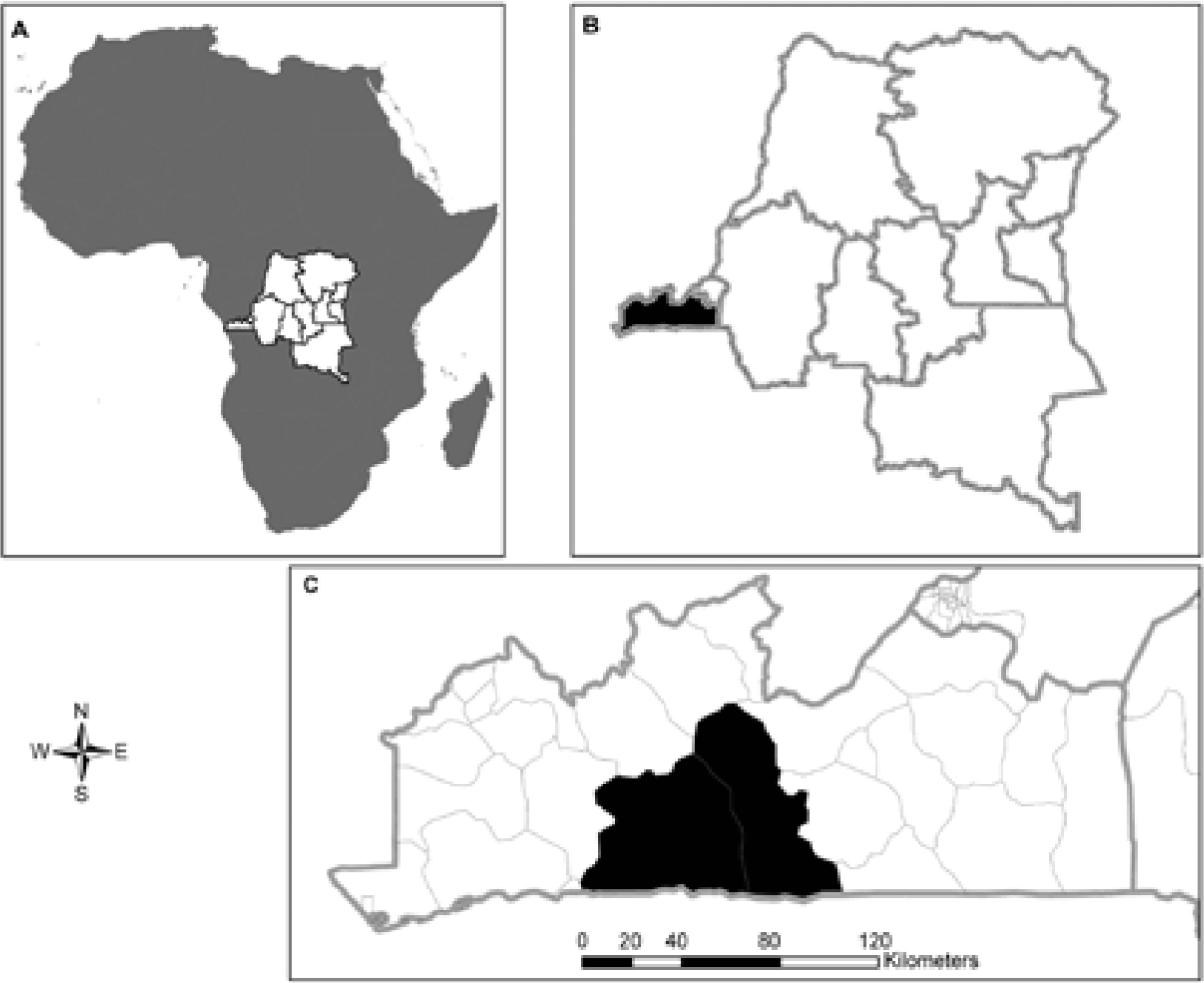
Figure 1
A. The DRC in Africa. B. The Kongo Central Province in the DRC. C. The Songololo Territory in the Province of Kongo Central.
Church Mapping
Prior to the launch of the project, a mapping exercise to identify existing churches was carried out over a one-month period in July 2020. For the Kimpese Health Zone, the health demographic surveillance system (HDSS) database of the Kimpese Health Research Centre (KHRC), developed from census mapping carried out in 2018, was initially used for five health areas to obtain the first list of all the churches. Eight teams of two people were formed, including supervising doctors, nurses, and focal point pastors from the health districts to conduct field visits to the targeted health areas. For this phase, only the Protestant churches were selected and involved in the project. The mission of each team was to make contact with the local authorities (duke/village chief) and the head nurses in the villages, find a field guide or community informant to help identify churches and stakeholders, and visit the churches to learn more about their denominations, identify names of the pastors in charge or their delegates, and talk to them about the project.
Identified pastors were interviewed and provided a briefing on the BCNCE project, followed by the selection of two lay leaders (one woman and one man). Relevant information on the pastors and two lay leaders per church (identities, genders, ages, addresses/villages, church, functions, and telephone numbers) was collected.
Data Collection
Quantitative
Quantitative data from project implementation were collected using various reporting tools, such as the awareness raising session report form, the referral form for suspected cases, and the monthly report form for cases of skin NTDs. The collection and compilation of epidemiological data on the three targeted diseases was carried out in close collaboration with the team from the central offices of the health zones and the Provincial Coordination of Skin NTDs.
Qualitative
Qualitative data were collected via purposeful sampling through individual interviews and group discussions conducted with the following key informants: religious leaders (pastors), lay leaders (influential people in the community affiliated with the church), healthcare providers, persons affected by NTDs, including those practicing self-care (BU and leprosy), confirmed cured cases (BU, leprosy, and yaws), and those who accepted Christ and were baptized during the project.
In total, 16 focus groups were conducted and distributed as follows: 2 with religious leaders grouped according to the health zones where the project was implemented, 2 others with healthcare providers, and 12 with lay leaders from different health areas, shown in Table 2. Participants were identified and recruited through the focal point pastor of the catchment area, and health workers identified patients from the health facility attached to the village or catchment area. An additional 49 individual interviews took place with the stakeholders, shown in Table 3.
Thematic analysis
The qualitative data collected during the various interviews and focus groups were transcribed, entered into MS Word, and processed using NVivo 12 software. An inductive analysis approach was applied for which a framework for analysis and coding was used to analyze the transcripts. Information collected from key informant interviews was analyzed based on the themes as shown in Table 4.
Table 4
Information collected from key informant interviews.
| Themes | Sub-Themes |
|---|---|
| Role of faith leaders in improving patient care seeking |
|
| Patient perception, behavior, and care seeking |
|
| Stigma |
|
| Obstacles to treatment and seeking care |
|
| Community ownership of the project |
|
| Self-care |
|
Ethics approval
Ethical approval was obtained from the Kimpese Health Research Centre IRB on August 2, 2022, with reference number CE-CRSK 01-08-2023. Written consent was obtained from all participants for the qualitative aspect of the evaluation. Ethical approval was received for the evaluation, not project implementation.
Results
Quantitative findings
One hundred sixty churches were identified as part of the mapping activity and involved in the project. From these churches, 480 religious and lay leaders (72 pastors and 408 lay leaders) participated in a three-day training covering skin NTDs, psychospiritual support, and behavior change. Additionally, 26 health professionals were trained in the management of skin NTDs.
Suspected cases were referred to the nearest health facility with a referral note to the frontline health workers to investigate and treat the patients as needed.
The number of people exposed to awareness sessions on skin NTDs reached 25,702 in churches and 28,746 in villages (Figure 2), leading to the identification of 441 suspected cases of skin NTDs referred to the health centers, among whom 385 (87%) arrived at the health center.
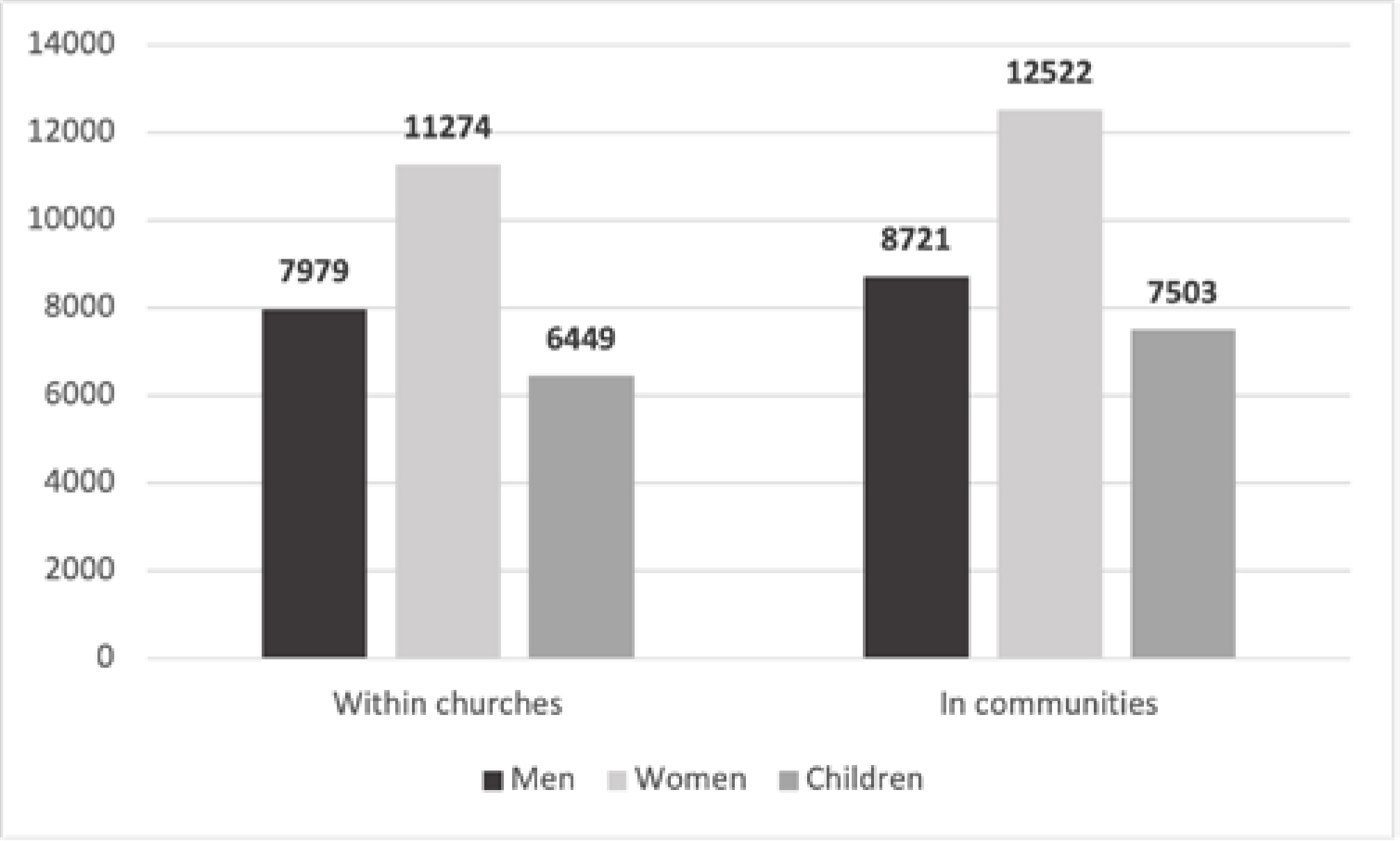
Figure 2
Number of people sensitized via the network of churches in targeted health areas, from July 2020 to June 2021.
Out of 441 presumed cases of skin NTDs, more than half were Buruli ulcer suspect cases (243), followed by yaws (148 suspected cases), then leprosy (17 suspected cases), and finally other skin conditions. Children were included in the data on attendees at awareness sessions, given children (under the age of 15) are most affected by Buruli ulcer, accounting for up to 50% of those affected in Africa.
Out of 243 suspected cases of Buruli ulcer, 25 were laboratory confirmed cases (10%), 6 out of 17 (35%) suspected cases of leprosy were confirmed, and only 2 out of 148 (1%) suspected cases for yaws were confirmed. A total of 33 cases were confirmed and treated. This represents an increase in case detection compared to previous years, especially for Buruli ulcer, even despite challenges associated with COVID-19. There has been a downward trend in Buruli ulcer and leprosy case detection over the last six years (Figures 3 and 4). The endemicity of yaws in the region has yet to be determined, but the project has added yaws as a disease to be monitored.
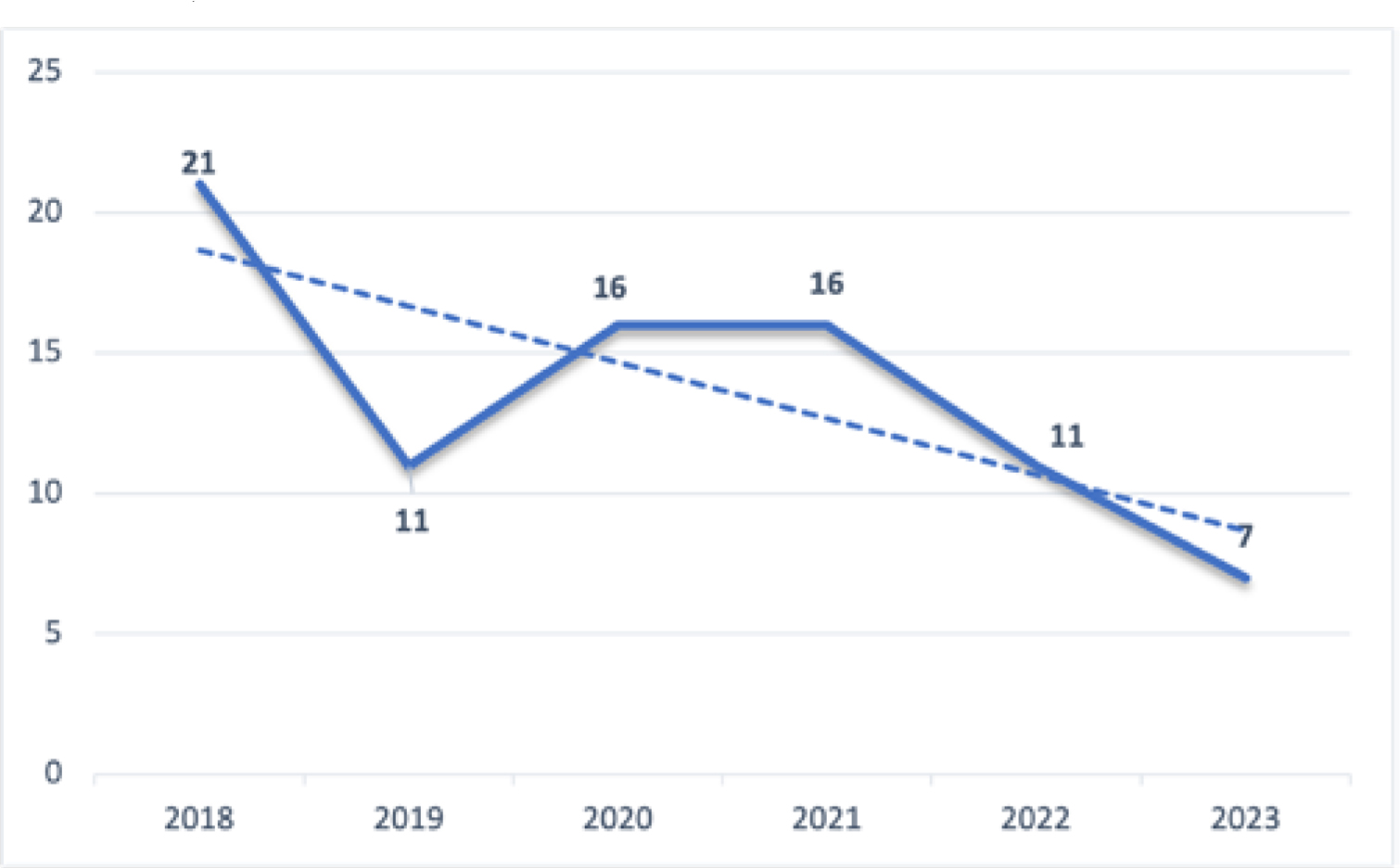
Figure 3
Trend of Leprosy new case detection in Eastern Kongo Central, 2018-2023 (including cases detected through BCNCE NTDs network).
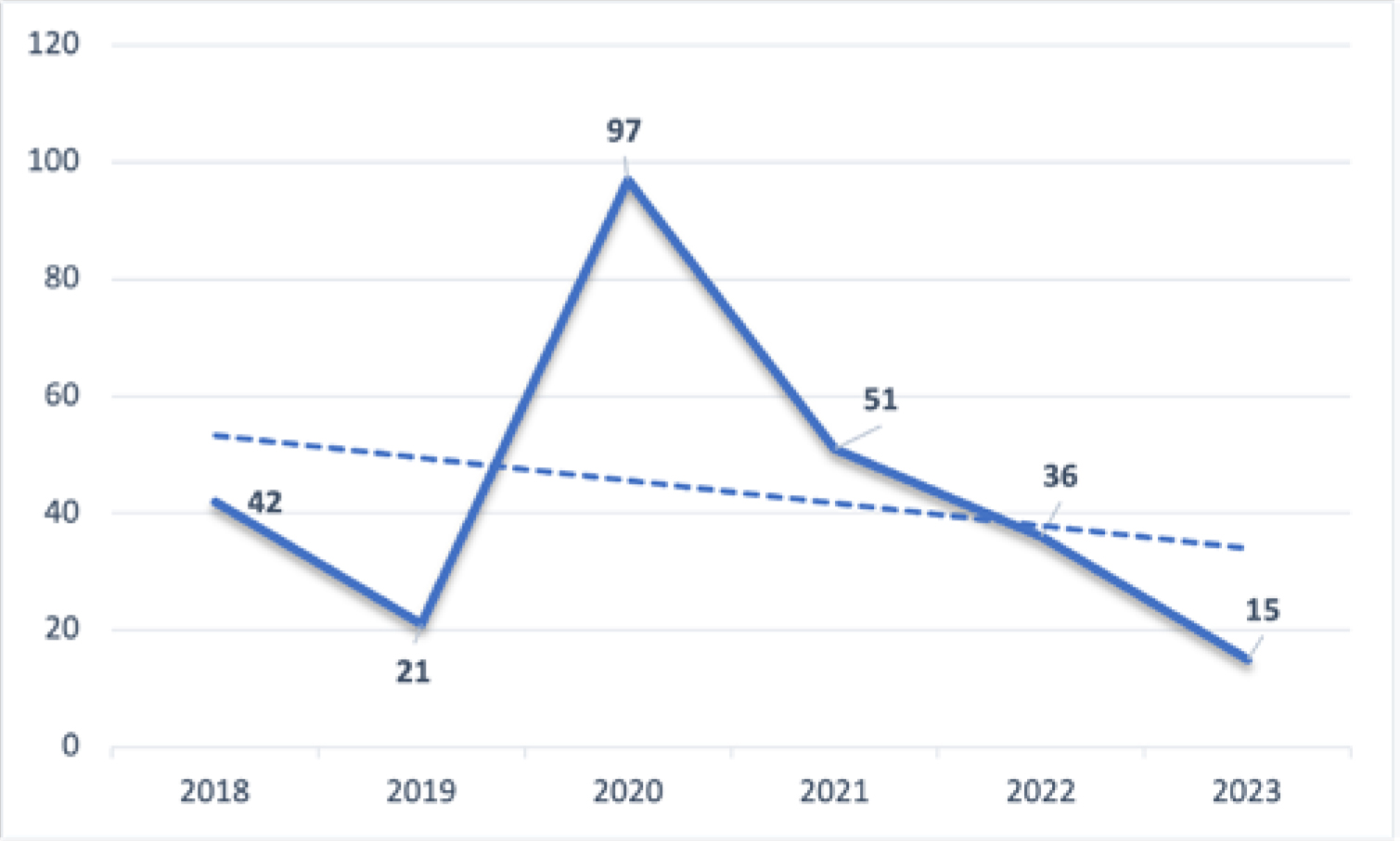
Figure 4
Trend of Buruli ulcer new case detection in Eastern Kongo Central, 2018-2023 (including cases detected through BCNCE NTDs Network).
During the one-year, overlapping period of BCNCE project implementation between the years 2020 and 2021, on average, 16 new cases of leprosy were reported in the eastern part of the region, of which 6 were detected via the BCNCE network in the implementation health areas (37.5%) (Figure 3), and 74 new cases of Buruli ulcer, of which 25 were detected via the BCNCE network (33.7%) (Figure 4).
Regarding self-care activities, 32 patients benefited from self-care training from trained health professionals and were provided with kits of materials and consumables required for each case scenario.
In terms of psychospiritual support, 81 patients (of the 441 suspected cases) benefited from spiritual and emotional support and 44 experienced the love of God, 17 of whom received baptism.
Qualitative Findings
Role of leaders in improving patient care seeking
The trained religious and lay leaders played their role in improving patient, health-seeking behaviors by focusing on raising awareness among the community of different religious denominations (Catholics, Protestants, Kimbanguists, and aboriginal churches). As faith leaders are frequently respected and dependable members of their communities, they were seen as a trusted source regarding NTDs. They also encourage community members to seek medical attention when necessary and help dispel myths and misconceptions regarding NTDs.
We have a Christian vision, and we behave as advisors who lead the work in divinity by resorting to the Bible to remove bad thoughts always oriented towards witchcraft. But we are here to console, raise awareness, and comfort. Within the framework of the churches, we have the mission to seek out the sick to give them lessons. (FG-1 lay leader participant, HA Kisonga)
Combining the efforts of religious and secular leaders with community outreach can create a stronger and more inclusive health care outreach strategy, ultimately reaching a broader and more diverse audience within the community.
Awareness is raised on two levels. Even at home, too, we can raise awareness, but also at the community level because we have used religious pastors, but also community relays who can help us on the ground. (FG-14 health facility head nurse participant, HZ Kimpese)
The psychospiritual support was led by faith leaders for people affected by skin NTDs in different communities. Counseling and emotional support, prayer, spiritual support, and community support were the methods used by the faith leaders to support the patients.
Psychospiritual accompaniment is as we said. When I find an individual, I explain to him. It is certain that he believes that his illness is a bad spell cast on him. From home, I pray for him that God will do something in his favor. (FG-10 lay leader participant, Mbuka1)
Faith leaders also play a critical role in skin NTD case identification in their communities and refer cases to health facilities for care. Arrival of the patients at health facilities is monitored by faith and lay leaders; they have helped ensure that people referred to health facilities not only receive but also benefit from the care provided.
Only, it is up to us to follow up on the patient that we discovered ourselves in order to know if he was received and treated at the follow-up center where they were referred. (FG-15 lay leader participant, Nsana-Mpangu)
Another way to follow up, as I have referred him and the patient has returned home, I have to start coming to visit him at home. Eh! I come to his house and take advantage of organizing a prayer. After an exhortation, I want to know how he is progressing. Eh! When he sees this, his psychology will be affected. (FG-15 lay leader participant, Nsana-Mpangu)
Patient perception, behavior, and care seeking
NTDs impact the world’s poorest and most marginalized groups, those who are frequently disregarded. Misconceptions of persons afflicted with NTDs often result from a lack of knowledge regarding these diseases. Negative community perceptions of NTDs may contribute to the spread of inaccurate information about the diseases.
They will speak against him. They will slander him]. They will say, hey! This wound, that he had stolen something. Or he courted someone else’s wife. And all that. That’s a Mukongo. As soon as you turn your back, he slanders you. (FG-10 lay leader, Mbuka1)
Lack of knowledge and awareness about NTDs contributes to delays in seeking care. People in the community do not know or cannot recognize the symptoms of NTDs, and they are not aware that effective treatments are available. Limited access to healthcare services, including diagnostic testing and treatment, also negatively impacts care-seeking behavior, especially in the remote areas where healthcare facilities are difficult to reach.
My sister told me it was a fetish attack. I went to the church for prayers. (Patient, B.M.A)
It is when the wound becomes too big that they consider returning to modern treatment. (Patient, M.Z)
Stigma
Depending on the disease, cultural considerations, and the community’s awareness and education regarding NTDs, the attitude of the community towards patients with NTDs can vary greatly. Support from family members is an integral part of creating a nurturing and inclusive environment for people with NTDs. This support significantly reduces feelings of isolation and helps improve social well-being by promoting understanding, providing opportunities for social engagement and advocating for inclusive practices in various aspects of life.
A person sick with NTD begins to ask for death because they are isolated: “It’s better for me to die;” they develop strange behavior, they become unhappy, always worried. As a message of comfort: if you have a person with such an illness, you should not keep them at a distance because the presence of people around them allows them to forget their condition and certain negative ideas about their illness. This person needs psychotherapy, you have to comfort them, advise them by saying that this illness is curable, and every illness has a beginning and an end, and you just need to follow the instructions, you will be cured. (FG Lay Leader participant, Kisonga)
Patients experience stigma or marginalization as a result of their illness in certain situations. Through church networks, religious leaders have been actively involved in efforts to combat skin NTDs and improve the social well-being of those affected. Faith leaders contributed in several ways, with a focus on reducing isolation and stigma, notably through psychospiritual support to sufferers. It is important to recognize that the success of these efforts depends on open communication, collaboration with healthcare professionals, and a holistic approach to well-being that takes into account physical, psychological, and spiritual health.
When you catch this disease, always remain a Christian. Because even if you receive the treatment, therefore the medicines, you are sick, you must really have faith. If you believe that Jesus will do something, if you have great faith, you will be healed too. You can take the example of Naaman for him.” (FG -10 lay leader participant, Mbuku1)
Obstacles to treatment and seeking care
NTDs remain a priority in global health that require a focused effort to overcome the challenges faced by people affected. One common challenge is a lack of access to necessary medications. This may cause patients’ symptoms to worsen, therapy to be delayed, or care to be interrupted and may lead people to seek care from traditional healers or go to churches for prayers to heal their conditions.
Regarding the management of BU, the need is really not satisfactory. There are not enough medicines. If we perhaps have to speak in terms of numbers, we are served thirty percent. There are too many breakups. (FG Health facility head nurse participant, ZS Nsona-Mpangu)
Self-care
Self-care education provided by faith leaders and healthcare professionals has improved access to care and overall well-being for patients and former patients with skin NTDs, allowing them to actively manage their own health and condition.
When it comes to self-care, in the old days, we didn’t know how to care for ourselves. After this training, we raised awareness in the community. They were shown how to take care of themselves in the event of a skin NTD to avoid disability. (FG-13 Health facility head nurse participant, ZS Nsona-Mpangu)
The self-care training and practice made the patients feel more at ease. They talked about the degree of relief the self-care provided. They expressed gratitude to the self-care trainers for reaching out to them with such practical solutions.
I was really delighted with the self-care training…it helped me get better from my disease.” (Patient interview participant)
Community ownership of the project
Feedback from the community indicated that the project is having a positive impact and is appreciated by the people it serves. This suggests that the project meets the needs of affected people and is aligned with community values and priorities.
I was really happy. I really didn’t have any hope anymore because as my hand was, even the veins there were bulging. The joints no longer worked, I was no longer sure that my hand would still function and that it could heal. But when I arrived at the IME, I received good treatment, and the hand returned to normal. Although I remained with this defect, the hand resumed its activity, so I was very happy. (Interview, Patient B.N)
The involvement of religious leaders and service providers in the implementation of this project succeeded in strengthening collaboration and dialogue with beneficiaries (patients) and the community. This type of engagement is crucial to the success of various projects, particularly those related to health care or community services.
“Case finding is at two levels: it is at the provider level and also at the community level because there are opinion leaders who are involved like pastors. So, pastors were also trained to detect skin NTDs in society, in the community and direct them to the health care structure.” (FG-13 health facility head nurse participant, HZ Kimpese)
The stakeholders found satisfaction with this project; however, sustainability is a consideration, and there is a need to ensure continued motivation of pastors and lay leaders. This will involve non-monetary benefits, creative problem-solving, fostering relationships, and maintaining communication among partners.
…for this work to move forward, you and we must stand together, let’s stand together for this work to move forward. (FG-1 lay leaders, Kisonga)
Discussion
Results from BCNCE project implementation and findings from this evaluation have led to several observations and recommendations. The involvement of religious and lay leaders via the church networks could support communitywide outreach measures, working alongside public health officials and community health workers to reach as many people as possible.
Aside from the spiritual care pastors are uniquely qualified to provide, this approach allows for more comprehensive case detection. Follow-up research is needed to understand target confirmation rates and any challenges with over or under referral of suspect cases by pastors who have less training than health workers, but initial results are promising, as the evaluation showed that a third of the new cases of leprosy and Buruli ulcer reported in the implementation area were detected via the BCNCE network. Future comparisons could assess case search cost-effectiveness, comparisons with other case detection modes, and ideal models of collaboration with community health workers.
Faith leaders from this study are contributing to combating NTDs due to their influence in their communities. However, they may face several challenges given their lack of medical knowledge. This could lead to mistrust within the health system; this should be addressed by building collaboration between health providers and communities to ensure communication and trust building among the various stakeholders. In DRC, religious leaders are considered trusted resources within their communities. They are often better placed to mobilize and promote community participation for health issues. Lessons learned from this project reveal there is a need to establish and strengthen mutual trust and strong collaboration and communication between healthcare providers, religious leaders, and patients. This leads to a more compassionate, culturally sensitive, and efficient health system. This collaboration not only builds mutual trust but also has the potential to significantly improve the health and well-being of the community as a whole. Additional research may be needed to further understand optimal approaches of engagement, especially in areas with greater religious diversity.
This evaluation also indicated positive results in the contribution of faith leaders in reducing the isolation of people affected by skin NTDs and improving their mental well-being. Stigma is a significant obstacle to seeking and engaging with care and adhering to a recommended treatment plan. As such, it is a significant social factor of disease control effectiveness. Given the multifaceted nature of stigma and prejudice, a personal, interpersonal, and community level approach is critical.17 The involvement of the church network in reducing the isolation of people affected by NTDs and improving their mental well-being can have a significant and positive impact. The church network, with its broader community reach and moral authority, can play a vital role in addressing these issues. Churches are a powerful force in reducing the impact of isolation on people affected by skin NTDs and improving their physical and mental well-being. This was seen throughout the qualitative interviews and antidotal stories from the pastors.
Overall, tackling NTDs requires a multifaceted, sustainable, and inclusive approach that involves multiple stakeholders and disciplines.18 By pursuing a multidisciplinary approach focused on holistic care, work can be done to eradicate devastating diseases like NTDs, thereby, improving the health and well-being of vulnerable communities across the world.
In rural areas, mental health has attracted less attention from policymakers and remains a largely neglected area. Rural populations in Africa have very limited or no access to psychologists or neuropsychiatrists.19-21 In other parts of the world, such as India, access to mental healthcare also remains a significant concern, with considerable gaps in access to and quality of treatment and limited availability of mental health professionals, especially in rural areas.22 In this respect, the BCNCE approach is an innovative initiative that could bridge this gap by providing ongoing emotional and spiritual support from religious leaders trained in psychospiritual accompaniment for all those in need in rural communities, reducing the isolation of severely stigmatized people affected by skin NTDs and improving awareness and experience of God’s love among affected people. In recent years, there has been a growing discussion around spiritual metrics and how to rigorously measure aspects of hope, spiritual support, experiencing God’s love, etc. This could be applied to future impact studies of this approach. A limitation of this study is that aspects of spiritual and emotional support were self-reported by pastors without a clear definition for consistency.
The results obtained by the implementation of the BCNCE project indicate that this approach was a success. It enabled local faith-based networks to mobilize the community in raising awareness, identifying cases, and referring them to care facilities, thereby improving case-finding and access to care. This project and the lessons learned could serve as a case study for projects that could be implemented in other contexts.
Competing Interests
None declared.