
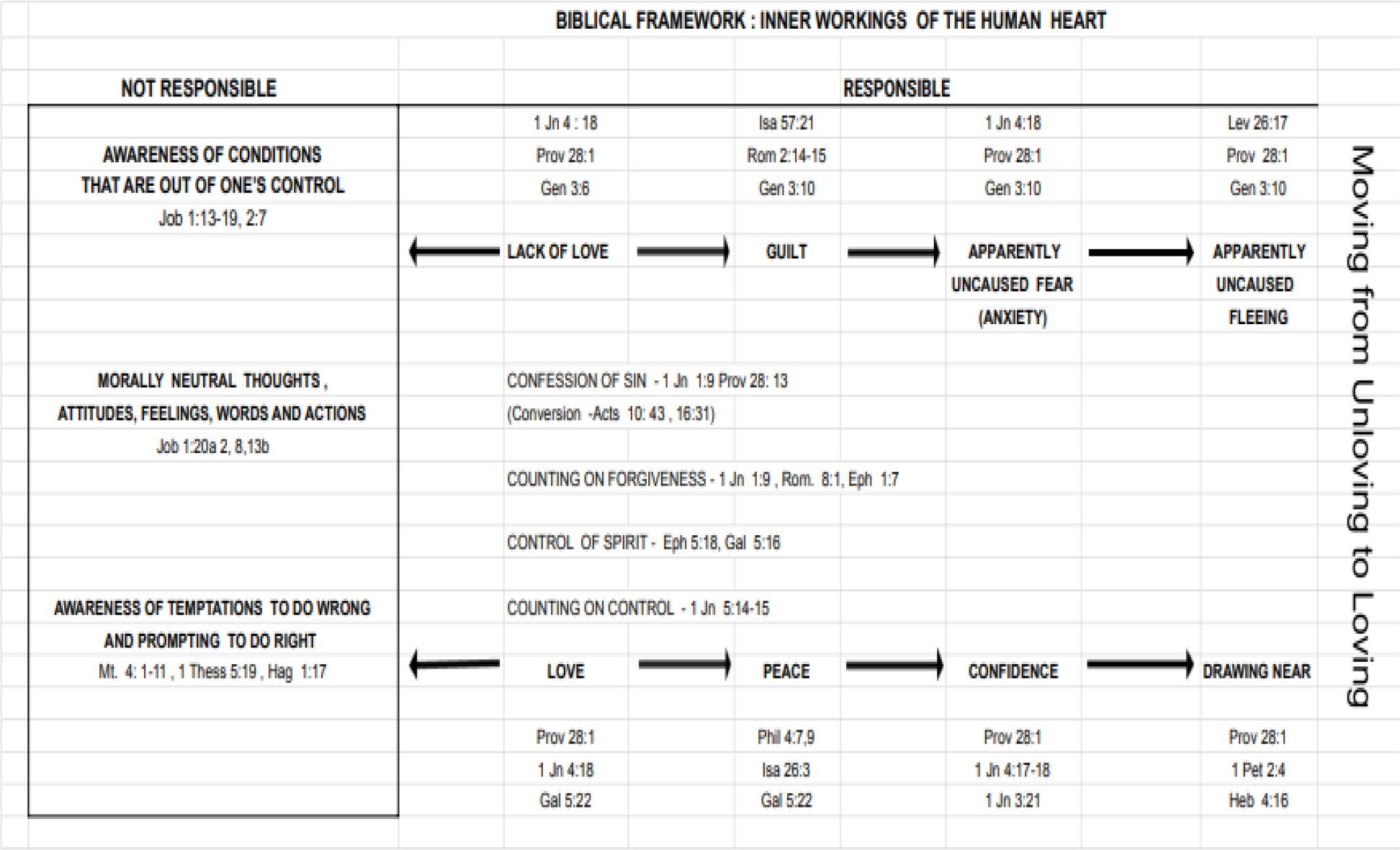
Figure 1
Biblical Framework (Thomson, 2022, with permission)12
Table 1
Literature Analysis Summary on Care Support for R/S Clients
| Disciplines identified as involved with R/S Care and/or Healthcare support for R/S Clients |
|---|
|
| Examples of Care Support Categories |
|
| Examples of identified Care Support Tasks and Interventions for R/S Clients |
|
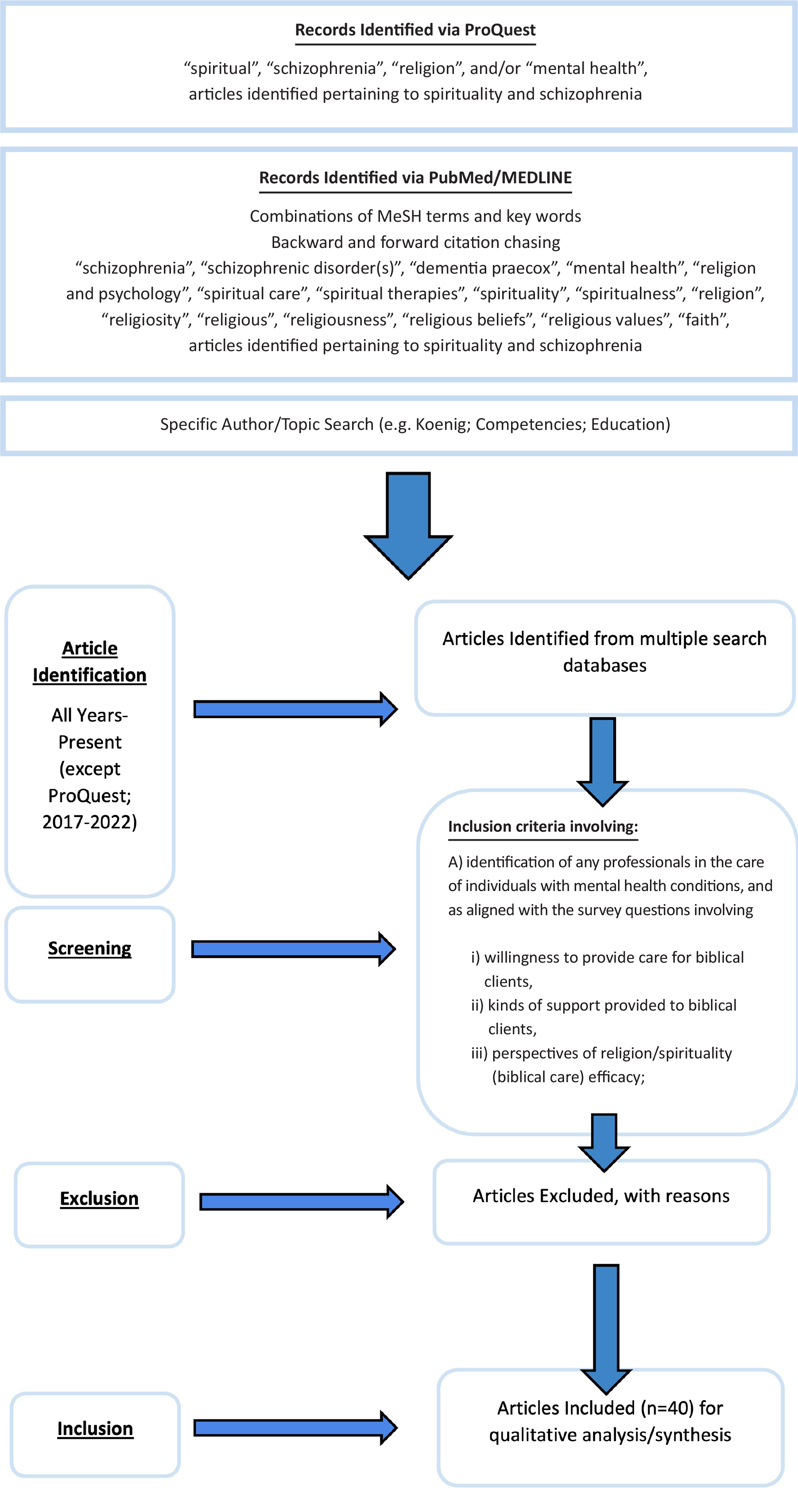
Figure 2
Literature Search Flow Diagram
Table 2
Preliminary Coding Summary for the Multidisciplinary Survey
| Research Question Themes, Codes, and Subcodes | Sample Quotes |
|---|---|
| HCP/Interdisciplinary willingness to coordinate care for individuals receiving BFC. | |
| Yes-varied explanations | “I always offer to maintain communication if the patient wants it.”“Yes, but it would be hard to initiate that without it being clear that that was at the heart of the issue.”“Collaborate or keep lines of communication open to minimize MRPs or other issues and optimize outcomes.”“Yes, to ensure social resources, also congregational supports.” |
| No-varied explanations | “No, probably not.”“No—no at this time. My approach deals with the individual.”“No. Would refer patient to another health provider.”“No… However, if the client agreed to a multi-phasic team approach to his care, I would participate on such a team.” |
| HCP/Interdisciplinary support for individuals receiving BFC entails info gathering,direct care within scope of practice, communication with BFC provider, or provider referral. | |
| Gather info-what’s most significant | |
| All (and any) information providedChildhood information (early-life issues)Diagnosis and symptoms Faith information Medication compliance | “Psych history, spiritual history, medication history, psychotropic deprescribing history.”“…Helping clients identify and acknowledge early-life root experiences and how those experiences-often unbeknownst to them-impact their physical, emotional, and spiritual health is key to what I do.”“MM was diagnosed with Schizophrenia without any positive symptoms.”“What’s the PT’s belief system? Spiritual Assess: PT’s beliefs about their illness, the body as God’s temple, spiritual walk, belief in gifts of the Spirit, Fruit of the Spirit.”“I wouldn’t want to treat a patient for whom spirituality was very significant.”“Medication compliance.” |
| Kinds of interdisciplinary support | |
| Multiple group sessions to manage emotional statesMultiple individual sessions Patient educationPrescribe or recommend medicationReferral, because BFC is out of scope of practice | “Although clients often find relief with only a few sessions, multiple individual and group sessions would help MM stabilize manage his emotional states.”“Talk therapy would be encouraged in patients like MM before the use of anti-psychotic medication.”“PT Ed on the role of meds to resolve misinfo-enhance health literacy.”“Recommendations on appropriate med therapy.”“Referral-outside of scope of practice for physical therapy.” |
| Follow-up or maintain BFC communication | |
| No-no explanation | |
| Yes, no explanationYes, if symptoms resume Yes, multiple follow-ups | “Sure.”“Yes, faith can be associated with trauma.”“I would follow up… at predetermined intervals.”“Yes, for purposes of identifying faith-centered supports.” |
| Interdisciplinary perceptions of BFC efficacy | |
| DependsMore information needed, but more supports should be implementedDepends on definition of cured because relapse is possible | “….since spirituality was exercised, the mighty healer, King Jesus has cured him because he dared to believe.”“I would question if he ever had schizophrenia to begin with and if schizotypal personality disorder or a mixed form of depression would have been more fitting diagnosis.” |
| NoSchizophrenia is incurableTherapy is still needed | “No. This condition has no cure.” |
| YesBut more info is needed | “Overall, yes, I would still recommend follow ups due to the length of time MM was dealing with their condition.” |
[i] *BFC-Biblical Framework, HCP-Health Care Provider/Professional, MRPs-Medication Related Problems, PT-Patient
Table 3
Theme Development Summary
| Key Points | |
|
|
| Disciplines | |
|
|
| Treatment (Approaches/Encounters/Outcomes) | |
|
|
| Values | |
|
|
| Themes by Category | |
| |