
Introduction
Faith, religion, and spirituality are terms which are often utilized interchangeably, although spirituality tends to be the broader in description. Medical and psychiatric patients may express several religious needs while receiving healthcare,1 although religion/spirituality (R/S) may often be overlooked in healthcare delivery.2 Utilizing the first of the four osteopathic medicine tenets of care, an individual may be considered as a unit consisting of body, mind, and spirit. Thus, spirituality is an interwoven part of patient-centered care.3
Spiritual care can facilitate coping or healing,4 impacting lived experience through the transcendent or sense of purpose,5 supporting personal integrity and meaning.6 Despite growing numbers of nonreligious or non-practicing religious people, atheists, and agnostics in recent years,7 as well as some decline in the practice of Christianity,8 much of the world’s population remains involved in some level of religious or spiritual belief. Among this diversity, Christianity retains prominence. The importance of R/S assessment is noted by both the World Health Organization (WHO) and the Joint Commission for accreditation of healthcare institutions.5 WHO quality-of-life measure (WHO-100) includes Spirituality/Religion/Personal Belief as one of its domains for individual self-report of health and well-being. The Joint Commission guidelines for pastoral care suggests assessment of the importance of personal spiritual beliefs and their relevance to medical care.5 The Substance Abuse and Mental Health Services Administration (SAMSHA) has many programs for prevention, interventions, treatment, and recovery provided through faith-based settings.9 SAMSHA partners with faith-based and community organizations for multilevel support of resilience and recovery, especially in historically underserved and culturally diverse populations.9
The Accreditation Council for Graduate Medical Education (ACGME) guidelines do not include spirituality learning requirements in psychiatric residencies.10 In fact, the word spiritual is used once in reference to R/S as a “factor that significantly influences the physical and psychological development throughout one’s life cycle.” In the past, ACGME recommended training on religious and spiritual factors that can influence mental health.11 More recently, training appears left to the discretion of individual programs and only a component of a list of sociocultural issues, rather than as an integral part of patient-focused care.
Biblical Framework Counseling (BFC) is a spiritual care intervention based on the belief that the Christian Bible is adequate to treat root causes of mental disorders that are not otherwise physiologically caused.12 Symptoms as classified by the Diagnostic and Statistical Manual (DSM) of Mental Disorders are identified from a framework (Figure 1) based on biblical scripture involving emotions and actions that reflect a lack of love towards God or others and consequent patterns of guilt, fear, and/or fleeing.5,12 BFC providers discuss attitudes and behaviors in response to life relationships and circumstances, with an emphasis on i) walking in agape love and addressing sin, ii) recognizing 4 basic kinds of human relationships from biblical scripture, and iii) establishing and maintaining open loving relationships.5,12 Organized religious activity (ORA), e.g., church worship, small group bible study, and non-organized religious activities (NORA), e.g., journaling, audible prayer, personal scripture study,4,12 confession of sinful actions where applicable, counting on God’s forgiveness, control of the spirit, and counting on control to make better choices, attitudes, and actions are examples of strategies.12 BFC is considered solely faith-based, excluding psychotherapy.
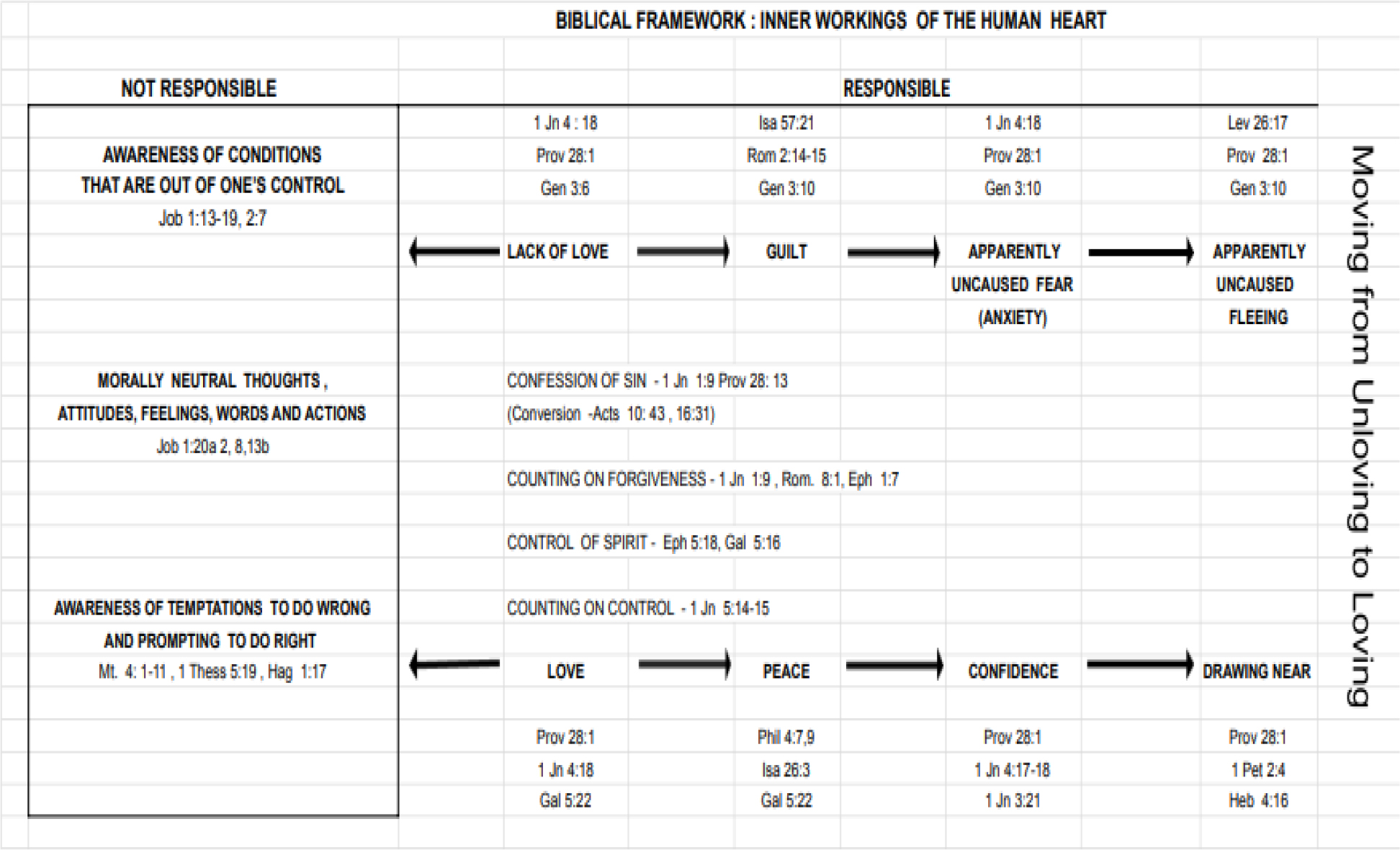
Figure 1
Biblical Framework (Thomson, 2022, with permission)12
Our earlier work involves community needs assessment across resource-constrained communities of the Arkansas Delta in the US, a High-Income Country (HIC), as well as citizen leaders of Ghana and Nigeria, Low-to-Middle-Income Country (LMIC) nations of West Africa.13 R/S care was an expressed patient support need and considered a significant influencing factor of community help-seeking and health behaviors. Some view it as a source of self-care and resiliency, while among others it is a cause for stigma, for example, varied or negative opinions on some mental disorder etiologies, public condemnation and ostracization of sin, and directives for spiritual warfare, demonic deliverance, or exorcism.13 Some religious caregivers and the public in these communities have limited levels of mental health literacy and are associated with stigma rooted in spiritual beliefs, negative health provider attitudes, patient help-seeking hesitancy, and limited or lack of mental health status disclosure.13,14
The online survey explored interdisciplinary professionals’ perspectives about care for individuals who choose to receive BFC. Across interprofessional education and collaborative care teams, it is useful to know if health professionals encounter people with faith traditions significant to their health behaviors, what concerns may arise, and if and how patients with biblically held beliefs may be supported. Professionals who had been trained or experienced in medicine and healthcare, complementary and alternative medicines (CAM) or therapies, and faith-based care and/or beliefs (not only Judeo-Christian) were recruited to participate in the qualitative survey.
Due to the mental health workforce shortages and spiritual care needs in our resource-constrained communities of interest, broader multidisciplinary mobilization and patient-centered health service innovation are priorities. We sought to understand what issues might arise in mobilizing and building the capacity to provide and collaborate on R/S care. While BFC may not be a well-known form of biblical counseling, we selected the BFC case to help illustrate and highlight emergent considerations for health providers, such as personal health beliefs on mental disorder etiologies, the reliance on and efficacy of biblical scripture, the role of pharmacotherapy, and communication in treatment.
Methods
Data Collection and Analysis
The study first utilized a literature review to gain qualitative, exploratory data. The review is summarized in Figure 2 as recommended by PRISMA, using 1) ProQuest Religion database, 2) PubMed/MEDLINE National Library of Medicine, with citation chasing to trace relevant author research, 3) Search by specific author or topics pertaining to spiritual care guidelines or medical education competencies. The literature was manually reviewed for the provision of R/S care and notable characteristics (Table 1) by the two research investigators (BP, VO), both health professionals of the Christian faith. VO is a mental health practitioner of the clinical pharmacist discipline with R/S care training, while BP is of the osteopathic medicine discipline.
Table 1
Literature Analysis Summary on Care Support for R/S Clients
| Disciplines identified as involved with R/S Care and/or Healthcare support for R/S Clients |
|---|
|
| Examples of Care Support Categories |
|
| Examples of identified Care Support Tasks and Interventions for R/S Clients |
|
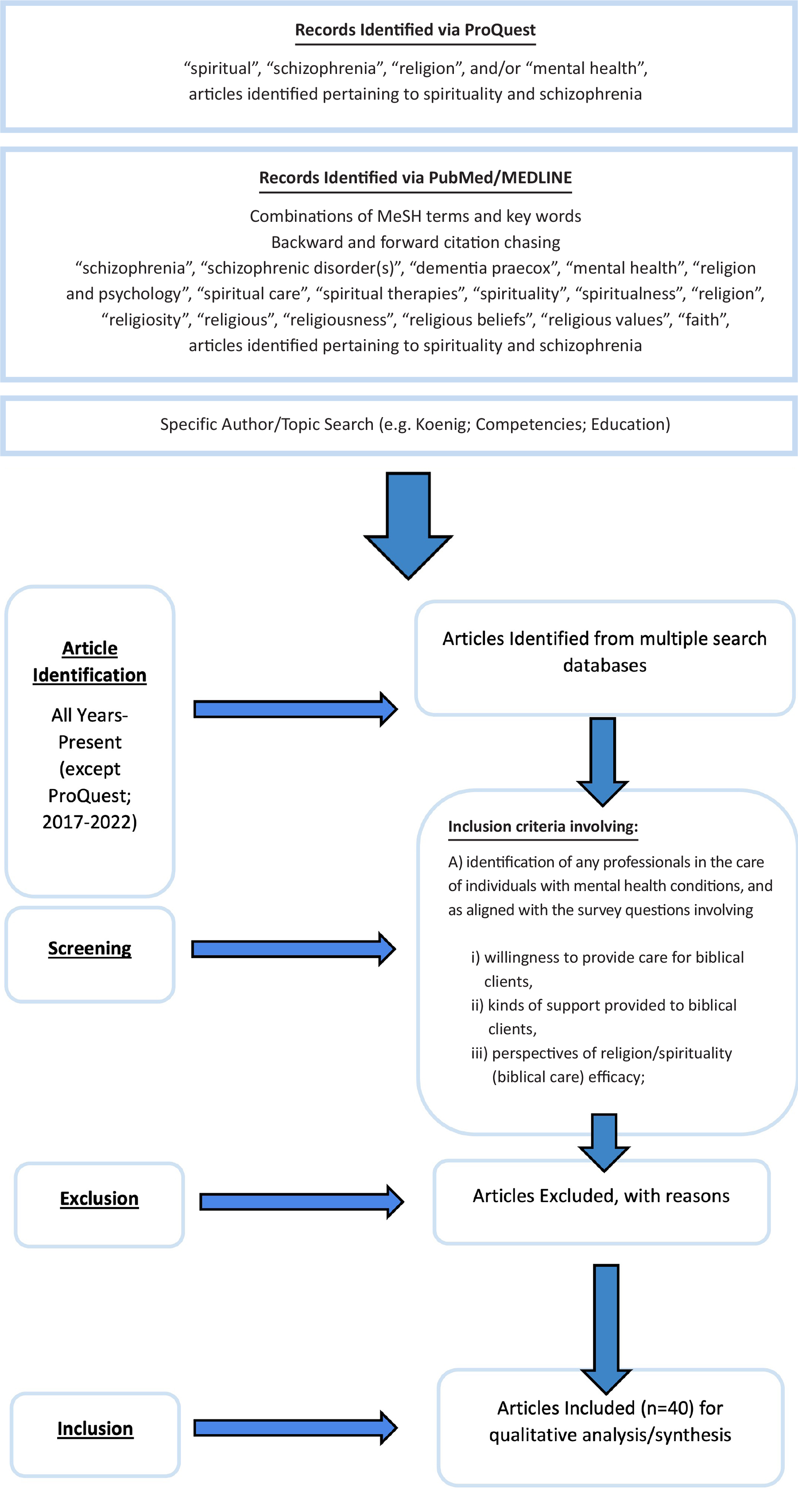
Figure 2
Literature Search Flow Diagram
Those articles that were reviewed identified various health disciplines providing R/S support for biblical clients, reports on efficacious R/S interventions, as well as any consensus practice guidelines on R/S in medical education. Articles excluded for instance, were those focused solely on substance misuse; focused solely on patients with religious delusions; religious support of schizophrenia in remission, defined as those not on current treatment or without breakthrough symptoms over several years; published work using religiosity solely to improve pharmacotherapy compliance rather than a means of treating the illness. R/S care articles with very limited religious subsets and restrictions that did not appear generalizable to Christianity were excluded. Review articles of published research were prioritized, while articles that highlighted or reiterated the data from the literature without the introduction of additional findings were excluded. Forty articles were approved for inclusion. One investigator served as the primary literature reviewer while another investigator served as a primary coder for repeated cycles of individual and joint review, discussion, identification of patterns and themes. The investigators also consulted with the institution medical library staff on the search strategy. The investigators utilized an iterative approach to devise a preliminary coding list of descriptive words, phrases, and concepts. The list was grouped into three categories of characteristics for theme development and revised with repeated investigator review and discussions.
The second part of the study utilized an online survey which was developed for participant review of a schizophrenia case as described by a Biblical Framework Counselor using an open-ended questionnaire for anonymous responses. The online informed consent included a brief definition of BFC and gave access to the survey. Inclusion criteria were individuals with training and experience within a professional discipline by which they may encounter individuals with mental health conditions. The survey involved questions regarding 1) willingness to provide professional care for BFC clients, 2) examples and extent of support to be provided, 3) opinions of BFC efficacy. Participant enrollment occurred by snowballing with distribution by the investigators of an online survey link via email to introduce the study and to click a tab for consent to participate. The data were collected in real time with the REDCap (Research Electronic Data Capture) application for secure storage, then exported into NVivo software for qualitative analysis. Survey responses were analyzed by inductive coding and thematic analysis, utilizing a stepwise procedure manually as described by Braun and Clarke (2006) and employing NVivo 12 software. In the first step of the analysis, data was reviewed to identify patterns. The second step grouped different responses with similar meanings. In NVivo, each participant response was assigned to a node or initial code and labeled with a descriptive phrase to summarize the meaning of the data assigned to it. When different responses had similar meanings, they were clustered by assigning them to the same node. In the third step, themes were sought in the data. The themes emerged through clustering initial codes that were related in the sense that the data assigned to them expressed different aspects of a larger, overarching idea. The fourth analysis step involved comparing the themes to the original data to verify patterns. The fifth step involved naming the themes (Table 2). The investigators also conferred with external qualitative research consultants on the NVivo-collected data to confirm content validity.
Table 2
Preliminary Coding Summary for the Multidisciplinary Survey
| Research Question Themes, Codes, and Subcodes | Sample Quotes |
|---|---|
| HCP/Interdisciplinary willingness to coordinate care for individuals receiving BFC. | |
| Yes-varied explanations | “I always offer to maintain communication if the patient wants it.”“Yes, but it would be hard to initiate that without it being clear that that was at the heart of the issue.”“Collaborate or keep lines of communication open to minimize MRPs or other issues and optimize outcomes.”“Yes, to ensure social resources, also congregational supports.” |
| No-varied explanations | “No, probably not.”“No—no at this time. My approach deals with the individual.”“No. Would refer patient to another health provider.”“No… However, if the client agreed to a multi-phasic team approach to his care, I would participate on such a team.” |
| HCP/Interdisciplinary support for individuals receiving BFC entails info gathering,direct care within scope of practice, communication with BFC provider, or provider referral. | |
| Gather info-what’s most significant | |
| All (and any) information providedChildhood information (early-life issues)Diagnosis and symptoms Faith information Medication compliance | “Psych history, spiritual history, medication history, psychotropic deprescribing history.”“…Helping clients identify and acknowledge early-life root experiences and how those experiences-often unbeknownst to them-impact their physical, emotional, and spiritual health is key to what I do.”“MM was diagnosed with Schizophrenia without any positive symptoms.”“What’s the PT’s belief system? Spiritual Assess: PT’s beliefs about their illness, the body as God’s temple, spiritual walk, belief in gifts of the Spirit, Fruit of the Spirit.”“I wouldn’t want to treat a patient for whom spirituality was very significant.”“Medication compliance.” |
| Kinds of interdisciplinary support | |
| Multiple group sessions to manage emotional statesMultiple individual sessions Patient educationPrescribe or recommend medicationReferral, because BFC is out of scope of practice | “Although clients often find relief with only a few sessions, multiple individual and group sessions would help MM stabilize manage his emotional states.”“Talk therapy would be encouraged in patients like MM before the use of anti-psychotic medication.”“PT Ed on the role of meds to resolve misinfo-enhance health literacy.”“Recommendations on appropriate med therapy.”“Referral-outside of scope of practice for physical therapy.” |
| Follow-up or maintain BFC communication | |
| No-no explanation | |
| Yes, no explanationYes, if symptoms resume Yes, multiple follow-ups | “Sure.”“Yes, faith can be associated with trauma.”“I would follow up… at predetermined intervals.”“Yes, for purposes of identifying faith-centered supports.” |
| Interdisciplinary perceptions of BFC efficacy | |
| DependsMore information needed, but more supports should be implementedDepends on definition of cured because relapse is possible | “….since spirituality was exercised, the mighty healer, King Jesus has cured him because he dared to believe.”“I would question if he ever had schizophrenia to begin with and if schizotypal personality disorder or a mixed form of depression would have been more fitting diagnosis.” |
| NoSchizophrenia is incurableTherapy is still needed | “No. This condition has no cure.” |
| YesBut more info is needed | “Overall, yes, I would still recommend follow ups due to the length of time MM was dealing with their condition.” |
[i] *BFC-Biblical Framework, HCP-Health Care Provider/Professional, MRPs-Medication Related Problems, PT-Patient
The case study reviewed by the survey participants was described to them as hypothetical and verbatim by a Biblical Framework Counselor supporting an individual referenced as MM (please see Appendix). The investigators manually reviewed the responses for findings consistent with the literature and survey goals, emergent concepts, as well as participant opinions in common and contrast with those of the biblical counselor. Findings from each study component (literature review, survey, case) were reviewed by the investigators to articulate key points for the final overall themes (Table 1, 2, 3).
Table 3
Theme Development Summary
| Key Points | |
|
|
| Disciplines | |
|
|
| Treatment (Approaches/Encounters/Outcomes) | |
|
|
| Values | |
|
|
| Themes by Category | |
| |
Results
Provisional themes from the literature search indicated that a broader range of disciplines provide mental health support beyond psychiatrist, psychologists, and professional counselors, and disciplines that engage in R/S care activities beyond clergy and chaplains (Table 1). R/S (religious/spiritual) treatment of schizophrenia appeared infrequent, but with promising results: improved quality of life, decreased risk of suicide, and reduced symptomatology.13-15 Healthcare, behavioral, religious, and caregiving providers utilized R/S, medical, and/or psychological monotherapy. R/S support in the literature encompassed activities provided exclusively from, concurrently, or integrated with medical or psychological care. Examples of R/S interventions included 12-step programs such as Alcoholics Anonymous or life groups such as Celebrate Recovery.
The case was described verbatim by the BFC provider to shed light on the information they considered most pertinent and what response it would arouse in the survey participants. Participants comprised as follows: medical and health professionals (e.g., physician, pharmacist, nurse, physical therapist), behavioral health professionals (e.g., chemical dependency counselor, professional counselor, psychiatrist, psychiatric nurse practitioner, psychiatric pharmacist, psychologist, clinical social worker), collaborative alternative medicine professionals (CAM) (e.g., EFT [emotional freedom technique] provider, herbals and functional medicine coach), R/S professionals (e.g., Christian minister, chaplain). Initially codes were divergent, regarding willingness to coordinate care for individuals with biblical counseling beliefs, what kind of support they might provide, and perceptions of BFC efficacy. Table 2 outlines the preliminary coding from the survey.
Those willing to provide support within their scope of practice seemed to be generally compatible in their views on the significance of faith in supporting mental health. Others preferred a complete hands-off approach because they either as stated “do not believe,” “I was raised Hindi,” “I’m agnostic;” “it bothers me…as a religious minority…it shows lack of respect…,” or lacked confidence in the case patient’s reported diagnosis, or in the information provided by the BFC provider, or in BFC efficacy itself. The following were emergent themes: 1) R/S was typically integrated into treatment as part of holistic care, 2) Most recommend follow-ups for BFC patients to minimize any potential or perceived relapse risk, and 3) Medication management and multiple individual therapy sessions were most frequently recommended for medical care. Spiritual maintenance was also considered necessary, as well as suicidality monitoring. There were contrasts in BFC and non-R/S provider perspectives on pertinent mental health history and inferences. Sample quotes include “…the history is poorly taken… little details regarding family interaction and individual development…;” “Biblical truths are key;” “…identify and acknowledge early-life root experiences…;” “Psych history, spiritual history.” Information considered most important to the non-R/S participants were confirmatory diagnosis, symptoms, comorbidities, relevant childhood issues, faith-health beliefs, medication and therapy history, adherence, and substance use history.
Overall, key findings that emerged from the different study components indicate there is potential for multidisciplinary professionals to be enlisted for mental health services and to incorporate the delivery of R/S care. Health professionals could assess, provide, coordinate, and/or refer R/S care for individuals for whom spirituality is significant. There are several published R/S care interventions; choice and delivery may vary based on patient beliefs and preferences. When considering patients for biblical counseling, health professionals should use caution in those with active religious delusions and monitor for any worsening of delusions, as reported with R/S care in a minority of patients, despite more commonly reported positive outcomes.15,36,43-45,49,52 Health professional provision and/or collaboration on R/S support will involve considerations such as provider-patient respective mental health/spiritual beliefs and congruency, provider training and scope of practice, comfort level with the R/S interventions. Types of R/S care intervention, such as BFC or biblical counseling as monotherapy may raise ethical questions for some health providers and hesitancy to collaborate by either healthcare or R/S professionals.
Discussion
While multiple institutions acknowledged the importance of spiritual care, implementable GME guidelines appeared absent. Studies show positive associations between teaching R/S competencies to psychiatry residents and patient appointment attendance.16-18 Additionally, current ACGME requirements for family medicine include “cultural competence” and “sensitivity to diversity” but do not specifically require spiritual care.17 National Consensus Project18 palliative care guidelines outline the importance of screening for unmet spiritual needs and a responsibility of all clinicians serving mentally ill to be responsive. The project provides an assessment that could help evaluate patient spiritual needs.
Individuals in our targeted, resource-constrained communities have expressed an interest in spiritual care. As these regions typically face severe healthcare workforce shortages, mobilizing R/S tools, interventions, and providers can extend mental health services access. Furthermore, incorporating more R/S guidelines and training into health professional education and practice can better equip the workforce to meet patient-centered needs in these communities.
A Biblical Framework for Mental Health Support
Biblical Framework Counseling (BFC) is one spiritual care intervention based on the belief that the Christian Bible is adequate to treat root causes of mental disorders not otherwise physiologically caused.12 It takes the concepts of mental health and defines them in Biblical terms with application to mental disorders as defined by the DSM. Fig 1 gives a conceptual illustration of the Biblical Framework based on mankind’s “heart,” sometimes called the soul and spirit -one’s immaterial essence,12,19-20 as differentiated from the material or physical body and brain. Thomson12 identifies the immaterial heart as a major source of emotions, described as sensibilities, which urge or lead to thoughts, decisions, and actions, as well as the site of the conscience which distinguishes personal right and wrong thoughts, motives, decisions, and actions. Sensibilities are to be distinguished from general physical emotions or feelings from the brain or body. Additionally, the immaterial heart includes the mind (intellect) and will (volition); the will functions within the mind, while the sensibilities function within the will and conscience.12 Thoughts, decisions, and behaviors outside the realm of man’s responsible choices are reportedly determined by material body and brain. They can also be affected by physiological disease, chemicals, physical imbalances, poisons, and other substances, but they do not determine responsible choices of the heart. Still, man’s heart choices can impact physiological changes on man’s material brain and body. Positive and negative emotions, health behaviors, life choices have reportedly been associated with changes, such as in cardiovascular, endocrine, immune function, and mental health;4 these are also impacted by heart attitudes and response to conscience.12
BFC is R/S treatment, not psychotherapy, and pursues a quality of life consistent with scripture (1 Corinthians 13:4-7), facilitating positive emotions and impact on mind-body mechanisms.12 Emotions and cognitions (e.g., peace, existential well-being, happiness, hope, optimism, meaning, purpose) that have been positively associated with physical health outcomes and wellness4 are reflected in the biblical framework as peace, confidence, and drawing near to God, from consistently expressing loving attitudes to God and others, and addressing human heart or conscience issues.12 Intentional “Active Love” has also been described in medical practice literature.21 Unloving choices for which one is responsible, instinctively, and instantaneously on the other hand result in a sense of knowledge and guilt, knowledge, and fear of deserved judgment (apparently uncaused fear or anxiety), and an urge to flee from one’s sense of guilt and fear of judgment (apparently uncaused fleeing),5,12 behaviors all associated in biblical scripture with wrong choices.
Individuals for whom spirituality is significant may prefer faith-based strategies over medical or psychological ones. R/S may influence life choices, decisions, and health behaviors.4,5,22 Many receive initial mental health support from faith leaders than psychiatrists.23 Thus, health professionals may encounter individuals receiving or preferring R/S care, whether they are aware or not. During spiritual assessment, a clinician may observe and note patient R/S affiliations, beliefs, and practices without endorsing or dismissing them,5 or attempting to proselytize. A patient's beliefs and care preferences may be perceived to be beyond clinician or health facility scope of care policy, or there may be incongruence in patient-clinician R/S beliefs. Health providers may be comfortable encouraging client R/S beliefs and practices, engaging with them, such as offering prayer, or instead deciding on a complete hands-off approach with referral to a house of worship or R/S provider. Others may be concerned about BFC's exclusion over integration of psychotherapy. Decision-making could be controversial: How could one discern if a mental health condition is physiologically caused or not? The BFC provider's stance is to make a determination and provide care with the awareness that only God can fully discern an individual's heart.12 Still, schizophrenia, the condition in the study case, is considered multi-faceted and stemming from environmental, physiological, and genetic components that cannot be easily teased apart. For these reasons as well as a limited awareness of BFC efficacy data beyond anecdotal oral case reports, some might feel reluctant to support the intervention. From a Biblical perspective, an individual with schizophrenia may demonstrate delusional symptoms illustrated by Nebuchadnezzar (Daniel 5:20-22) as expressions of what is described using the biblical framework (Figure 1) as “apparently uncaused fleeing”12 or fearful hallucinations or anxiety as the biblical description of “fear when there is no one pursuing” (Prov. 28:1), often manifesting as a conscience-stimulated emotion of anxiety, which may be described as an inexplicable, disproportional, excessive emotion, disorganized thought, anger, hostility, catatonia, or consequent attempts to avoid judgement as in Genesis 3:10. Pharmacotherapy as a recovery approach is helpful (Prov 31:6-7), but not considered a treatment end-all.
With increasing public mental health and substance issues, as well as the launch in the US of the 988-crisis number, there are increasing support demands and awareness of the benefits of counseling. On the other hand, an individual choosing BFC may misunderstand health professional hesitancy to support their choice and feel that it infringes upon their position or religious freedom rights as per the US Constitution or even their right of autonomy. Yet the DSM-IV does underscore the importance of environmental factors in the etiology of schizophrenia,12,24 which in the BFC paradigm would include man’s immaterial choices and reactions to their environment, alongside the physiological factors which may predispose them.12
Some health professionals would consider it unethical to rely solely on Christian Bible therapy to treat individuals competently. BFC providers typically encourage clients to continue to see their primary care physician and other health providers for medical treatment. Professionals who provide biblically based R/S care such as BFC and nouthetic counseling may be hesitant to collaborate with health providers that cannot support a patient’s preference for R/S care as primary treatment modality, monotherapy, or as an alternative to psychological interventions. Furthermore, while there is positive data in the literature regarding religiously modified CBT,34,42,54 integration of biblical and psychological interventions is not always accepted or could be considered contradictory to a patient’s religious beliefs. Awareness and health literacy may facilitate better therapeutic alliance among health professionals and BFC clients. Some healthcare workers would seek the emergence of published research data. Others may lean towards this as a supplemental or integrated approach, not primary or monotherapy. One might argue that refusal to accept a patient’s biblical counseling could be characterized as an objection of conscience or personal ethics. Such ethical dilemmas could be handled with professional discretion with the intent of providing competent, individualized patient care and quality of life, accompanied by monitoring of the patient’s symptoms and responses. Examples of support described by the survey participants included health education, annual medical checkups, support group referrals such as National Alliance of the Mentally Ill (NAMI) or Mental Health of America (MHA). Others might feel strongly enough on the issue to completely “wash their hands” of the matter; patients may feel likewise, choosing not to integrate their R/S care with psychological approaches, to minimize pharmacotherapy and seek non-pharmacological treatment options where feasible. Some individuals in our resource-constrained communities expressed this during the course of our Africa Diaspora CEC work and had help-seeking preferences in trusted faith-based settings. Clinicians should be aware of patient religious activities and appreciate their value as to whether they positively/negatively impact their mental health conditions. There is also a greater tendency for health professionals to support integrated care, while a BFC perspective might lean towards monotherapy or parallel, concurrent care which excludes psychotherapy.
BFC and Health Professional Communication, Engagement, Ethics
The BFC provider in the case reported that MM had a long medical history of schizophrenia; they made no psychiatric diagnosis. The BFC provider, however, does diagnose spiritual problems.12 The description and emphasis points are different for health professionals, as noted from survey participant comments. Some noted information that they considered important was absent; others questioned the diagnosis, either as an honest inquiry or reflecting bias and skepticism about BFC. MM’s case had prominent negative symptoms. Both DSM-4 and DSM-5 do have schizophrenia types with prominent negative symptoms.24-25 An independent evaluation might be useful, while noting the patient’s medical and spiritual history.
Communication of the healthcare provider and BFC provider would involve key points both parties can understand through their respective lenses to exchange information mutually considered most pertinent. Collaborative practice entails multiple parties working together towards common goals. For example, physicians could refer MM to his BFC spiritual “therapist.” Introspection could decide on engaging with, recusal, or referral out of BFC clients. Interdisciplinary collaboration can be achieved without congruence in spiritual care beliefs or faith-tradition. Core ethical considerations include autonomy with the latitude to consent or decline treatment; beneficence and non-maleficence to do no harm; open-mindedness and validation of other provider perspectives.
Physician Hesitancy
Investigator (BP) noted a recurring theme in the literature of physician hesitancy, even discomfort broaching the subject of faith with their patients. This stance also emerged in some instances with the survey, even if the professional was Christian. Yet, from a positionality/reflexivity standpoint, they (BP) have had direct observational experiences such as with a psychiatry clerkship preceptor whom they considered to model best practices. The preceptor always asked patients if they are religious, if they practice, and if they have someone whom they'd like to call. It was the preceptor’s personal practice from their military experiences and religious values to consider religious communities as a good support resource; with only one patient in their entire career where the church publicly cast someone out due to mental illness. Investigator (VO) noted communities where patients had denied mental health concerns during clinic screenings, but when the physician and clinic staff made spirituality groups available for enrollment, they openly shared concerns in R/S group settings.22 They (VO) have also offered R/S options during comprehensive medication management services, which is well utilized in their mental health practice. Some studies have noted psychiatrists to be significantly less likely than patients to engage in religious affiliation, worship services or activities.26-28 This could leave patients with access to fewer religious resources during psychiatric care, especially in the face of existing mental health worker shortages.
An interdisciplinary team approach, including BFC providers, could allow physicians to avoid delving into a patient’s faith, yet still address spiritual care needs if so desired. In resource-constrained communities which may have higher levels of mental health worker shortages, as well as populations experiencing medical system distrust, access to BFC as a mental health support could help to facilitate trusted access to care. An interdisciplinary approach could also allow for broader spirituality training and assessment of religious and spiritual factors impacting mental health. The BFC provider has more time to spend with the patient compared to some physician-patient encounters of about 10-20 minutes, a time constraint also contributing to R/S hesitancy. Smith and Suto,29 found that clinicians lost motivation to discuss spirituality with their patients due to feelings that some conversations were outside of their scope of practice and training. This was voiced also in this study survey. Others avoided the topic, despite congruence in belief, to avoid offense. Clearer GME guidelines for skills development might be helpful.
Conscious Objection: Do physicians have a responsibility to incorporate religious forms of treatment?
As touched on earlier, physicians rely on conscious objection when deciding whether to perform procedures or apply treatments that may not coincide with their religious beliefs. The American Osteopathic Association (AOA) code of ethics states, “A physician-patient relationship must be founded on mutual trust, cooperation, and respect. The patient must have complete freedom to choose her/his physician. The physician must have complete freedom to choose patients whom she/he will serve, but should not refuse for reasons of discrimination, including, but not limited to, race, creed, color, sex, national origin, sexual orientation, gender identity, or disability. In emergencies, a physician should make her/his services available.” 3 The US 1964 Civil Rights Act 28 (Title VII) mentions religion.30 Still, if a patient seeks or receives R/S services that are deemed antithetical to a healthcare provider’s personal beliefs or may be absent from their general professional practice guidelines, it may present an ethical dilemma in decision-making. With BFC patients, a personal determination for R/S care could be for conscious objection, collaborative engagement, or direct provision.
Patient Considerations for R/S Care and BFC
Patient location could be a barrier to care, where houses of worship could help. For example, individuals residing in homeless shelters or identifying as homeless may not have access to a quiet place for prayer/meditation. Our community assessment work in rural, resource-limited areas have demonstrated a strong and repeatedly expressed interest in R/S mental health support and nonpharmacological approaches as initial treatment, including EFT, osteopathic medicine manipulation (OMM), etc. despite resource opportunities for medication access, affordability, and education.13,31 Some may have limited access to primary care physicians for BFC provider referrals. Houses of worship in the community that assist with social support, such as food banks, homeless shelters, or other benevolence, could be BFC referral, access, and communication points. Education and eliminating stigma in some church communities would be an important consideration.
Limitations
This study was sought to gain a greater understanding on R/S care that could be applied towards increasing access to mental health services in resource-constrained communities, which have particular interest in biblically based care such as BFC. Our literature review and survey reinforced key points from data collection until no new ideas emerged. There would still be benefit from the dissemination of a greater number of patient cases and anecdotal reports that include biblical counseling from health professionals across our targeted HIC and LMIC resource-constrained communities, which may allow for greater generalizability. BFC may be an unusual illustration of R/S care, as it is unfamiliar to many health professionals and has limited published literature. Yet, it is very useful to consider BFC for potential application in mental health since it identifies symptoms as classified by the DSM, perhaps to help bridge communication and understanding between health care and biblical counseling providers, and build capacity and confidence for biblical coaching or selecting spiritual care interventions (e.g., prayer) by health providers. The schizophrenia case presents a more challenging scenario than other mental disorders because of the severity of this condition. This could have negatively influenced some survey respondent opinions, compared to if a mild or moderate alternative condition had been selected. Yet, the literature did indicate potential benefits of R/S care in schizophrenia, such as religious coping, reduced hospitalizations, and lower suicide risk. Furthermore, the case could be said to introduce perhaps a “worst-case scenario” example of issues that arise for biblically based care where there is the belief of sufficiency of the intervention as monotherapy, or at the very least, an alternative to psychotherapy. This is important for our target populations among whom such beliefs do exist, and which are not necessarily compatible with those of their healthcare provider.
The concerns of schizophrenia symptom severity and relapse by some health professionals might have been a reason to include the articles identified in our literature search on the use of spirituality to solely increase pharmacotherapy adherence, even though that focus was not on schizophrenia treatment.
Practice guidelines were only searched for the medical profession, not all disciplines represented in the survey. Psychiatrists’ primary role in mental health services, as well as increased moves for behavioral health integration in primary care physician settings, made the focus on medical education guidelines apt for this research. The professionals included in our data collection can offer new ideas for broadening treatment teams alongside physician care. This work overall might pique the interest of interdisciplinary professionals, health services researchers, and interprofessional educators who could provide detailed case reports and series of BFC effectiveness among individuals, such as addictive, anxiety, depressive, sleep-wake, stressor-, and trauma-related disorders.
Conclusion
As public mental health awareness increases and the health sector embraces patient-centered approaches, increased demand for R/S care could result, which the literature indicates can be beneficial. In HIC and LMIC resource-constrained communities, mental health service need, spirituality significance, and workforce shortages could benefit from a broader range of existing professionals as identified in the literature and survey responses to deliver mental health treatment that includes R/S care. Dissemination and implementation of R/S intervention data can help to inform educational guidelines, care delivery, ethical decision-making, or communicating effectively with R/S providers. Some communities may consider R/S interventions as monotherapy or as the primary treatment modality, with medical care for adjunctive symptom management. The position of clients with biblical and health beliefs should be respected with maintaining a respectful line of communication with BFC or other R/S providers. Health professional education, support, and health outcome monitoring of R/S clients would be useful. More cases and data on the prevalence and effectiveness for those choosing BFC would inform the health services field.
GME and other health professional programs could promote crucial conversations training to build physician and interdisciplinary skills that build confidence in discussing R/S with their patients and equip a broader range of health disciplines that could be deployed in resource-constrained settings. 32 Providers’ individual faith-health beliefs congruence with mental health patients, ethical decision-making for communication, follow-up, level of supportive care, and/or referrals should be considered. General communication or collaboration rather than integration would be more realistic with biblical counseling providers. GME programs may take these considerations, as well as R/S intervention types, medical ethics, and multidisciplinary provider scope of practice as options for clinician training. Making these accommodations would give providers and patients alike an opportunity to discuss R/S as valued patient-centered care.
Acknowledgments
This work was supported by a CATALYST Level 1 research grant awarded by NYIT College of Osteopathic Medicine Office of Research.
The contributions of the Africa Diaspora CEC leadership; Dr. Patricia Ayuk of Howard University; Dr. Sloane Kelley and Rebekah Harmon of the NYITCOM Library; Precision Consulting, INC; Rev. Rich Thomson of Biblical Counseling Ministries, INC. are appreciated.
Competing Interests
None declared.
Appendices
Appendix
Case Study: Biblical Framework Counseling in Schizophrenia
‘MM was brought up in what he termed a “semi-Christian home.” This to him meant that Christ was mentioned but the family did not relate to one another much at all, did not study the Word together, did not pray together, and shunned speaking of difficult issues. MM struggled with sexual desire and could not speak to his family about it. Because of this, MM struggled greatly with guilt and depression. He also struggled with anger towards any authority figure, including his parents. Due to this internal struggle, MM felt the need to withdraw from others seeing himself as different from everyone else.
MM was diagnosed with schizophrenia when he was 15. At the time, the diagnosis was made based upon the criteria in the DSM IV-TR. MM had severe social (and later in life occupational) dysfunction. MM showed negative symptoms: lacked interest in the world, had a diminished/decreased sense of purpose, lacked motivation, and neglected to talk much. Given disorganized speech and the negative symptoms, the diagnosis seemed to fit. MM was mainly managed by a psychiatrist who managed his antipsychotic medications.
At 17, MM was sent to a schizophrenia treatment and rehabilitation center by his parents. They used talk therapy for the duration of the time. MM mentioned this did not help his disorder, but it did help him to understand the disorder better.
At 21, MM continued to have his medication monitored by a psychiatrist and occasionally see a psychologist.
Between the age of 40 and 45, MM struggled with alcoholism, depression, and suicide.
At the ages of 45, MM was introduced to the Biblical Framework. It was through this that he first realized that his symptoms were coming from his heart. He was able to see the lack of love that he had in his heart for his parents, his siblings, and those around him. Specifically, he resented the way he thought others would think of him as they knew his issues with lust and anger. As he continued to identify and to confess his sin and grow in love for others (forgiving and reaching out in kindness), he found his symptoms subsiding. He completely got off his psychotropic drugs. After a month, he checked in with his psychiatrist and asked at what point symptoms would have recurred after being off medication. His psychiatrist indicated that they would have shown back up after 2 weeks. This encouraged him to move forward with being off medication.
Now, several years later, he has married (he was single prior to this), has had a consistent job, and has been an active member of his local church. He no longer shows signs of schizophrenia. The longer-term effects of the psychotropic drugs, however, have caused slowness in his ability to think. He now warns anyone on these drugs of their long-term effects.’