
Introduction
A health profession including medical doctors, nurses, midwives, and health officers helps the cure of patients and the treatment of their diseases. Graduating medical doctors and other health professionals should possess the core competencies which their professional roles and responsibilities imply: health assessment and diagnosis; therapeutic management; and health promotion and prevention of illness and injury.1
Clinical practice is the means by which medical, nurse, midwifery, and public health officer students learn to apply the theory of medical and health science. They need to integrate their theoretical knowledge and practical skills during their study programs both in a real and a controlled environment in a clinical setting.2 One of the outcomes for effective learning in clinical practice is clinical competence which is the ability to perform a specific task in systematic manner that yields tangible results. This definition implies the ability to apply knowledge, skill, and attitude towards different situations.3 Competency refers to the skill itself but competence may be the description of actions that will be demonstrated and assessed.4
There are two approaches to medical and health science competence. The primary approach is behavioral which focuses on skills, direct observation of performance, and depends on the amount of each specific competence. Another approach is the holistic approach, which regards competence in terms of a broad cluster of abilities conceptually linked and focus on general contributions that are important to effective performance.3
Learning in clinical practice is an important component of medical and health science education, considering that medical and health science professions are practice-based professions.5 Clinical practice experience is central to the student’s preparation for entering the workforce as a competent and independent practitioner.6 The quality of medical doctor, nurse, midwife, and public health education depends mainly on the quality of clinical experience that students receive in the clinical environment.7,8
Clinical practice competence is affected by different factors in the clinical setting like the skill of the educator, staff–student interaction, a clear assessment guideline. Effective mentoring and constructive feedback will also influence learning.9 Nonetheless, poor relationships with clinical staff, lack of support from educators, and a lack of challenging learning opportunities may affect students’ learning.10
Around the world, the rapidly shifting of balance in availability and demands of a competent health care workforce requires that the number of competent health professionals be expanded to meet these new complexities. The challenges confronting in today’s rapidly changing health care environments have highlighted the necessity for graduating students to be both competent and prepared for practice. This necessity has in turn highlighted the increasing significance of the nature and quality of students’ clinical learning experiences.11-13 Currently, there is great concern in the Ethiopian government and in the public sector over the poor quality of skills of health professionals. Inadequate skill among health professionals was considered as a major factor in the low client satisfaction reported in many health facilities.14,15 Health facilities cannot function effectively without sufficient numbers of skilled, motivated, and supported health providers who display a good work ethic at all times. However the results of previous study suggested that most new bachelor graduates have adequate theoretical knowledge but lack competence in clinical practice.16
Understanding the causes of poor performance of healthcare providers in both developed and developing countries is crucial to high-quality healthcare. To the extent, poor performance is caused by low competence and improving competency would improve performance. These problems are manageable if the health-care system can properly implement and apply the quality of education both on theory and practice. Therefore, the purpose of this study is to assess factors affecting clinical practice competency of undergraduate medical and heal science students in Ethiopia.
Methods
Data searches
We conducted a related literature search (February up to March 2023) of PubMed, and Web of Science databases for studies describing factors associated with clinical practice competency among students in Ethiopia. The search terms were clinical practice competency OR clinical competency OR clinical practice and clinical practice competency in Ethiopia, clinical competency in Ethiopia, and clinical practice in Ethiopia. In addition, we also searched the reference lists of retrieved articles.
Study selection and extraction
Two investigators independently evaluated the literature suitability; differences were resolved by agreement or determined by a third investigator. First of all, we inspected the repeatability and removed duplicate papers. Then, the titles and abstracts of the papers were perused carefully. Finally, the full articles were read to include the appropriate studies. Studies were included if the study design was either prospective or retrospective and published in English. The odds ratio (OR) and the corresponding 95% CIs on reported data were calculated.
Clinical practice competency was defined as those students who scored above the mean of all competency domain assessment questions. Clinical practice incompetency were those students who scored below the mean score of all competency domain assessment questions.
Confidence while performing a procedure is how confident they currently felt to perform the procedure on a Likert rating scale with options of "very confident," "confident," "not so confident," or "not at all confident."
We extracted the following information about the studies: study features (study name, authors, year of publication, and the number of participants), clinical practice competency status (competent and incompetent), and associated factors such as the presence of a checklist, staff encouraged to do practice, confidence during performing procedures, having preceptor in clinical practice, and orientation of objectives.
Quality assessment
The quality of studies was independently assessed by the Newcastle–Ottawa quality scale (NOS), a specific scale to assess the quality of non-randomized studies in meta-analyses. It consisted of 3 parts which were the selection of study groups, the comparability of study groups, and the assessment of exposure or outcomes. We gave points if the studies met the related condition. Studies with scores of 0–3, 4–6, and 7–9 were, respectively, considered as low, moderate, and high quality.
Statistical analysis
The Q test and I2 statistics were used to evaluate the heterogeneity among selected studies(3). If the heterogeneity was obvious (I2>50%), the random effects model (REM) was used. If the heterogeneity was low (I2≤50%), the fixed effects model (FEM) was used.
The possibility of publication bias was estimated by visual inspection of the funnel plot using Begg's test and Egger's test. The “fill and trim” method was used to further evaluate the possible effect of publication bias on the pooled OR(4). All reported probabilities (P-value) were 2-sided and P <0 .05 was considered statistically significant. Begg’s test assesses if there is a significant correlation between the ranks of the effect estimates and the ranks of their variances. Egger’s test uses linear regression to assess the relation between the standardized effect estimates and the standard error (SE).
Revman version 15.3 and Meta essential version 1.4 was employed to conduct all statistical analyses. Ethical approval was not considered required for analysis of information in the public domain.
Results
Literature search
Figure 1 shows the study selection process. The search strategy identified 1516 papers. Around 680 articles were removed because they were duplicates. After systematically examining the titles and abstracts of the articles, 742 articles were excluded. The reasons for removing the other 89 articles included that they were not in Ethiopia, the data was unavailable, and there was failure to describe factors associated with clinical practice competency. After reading the full text of the articles, four studies were selected for inclusion in the meta-analysis.
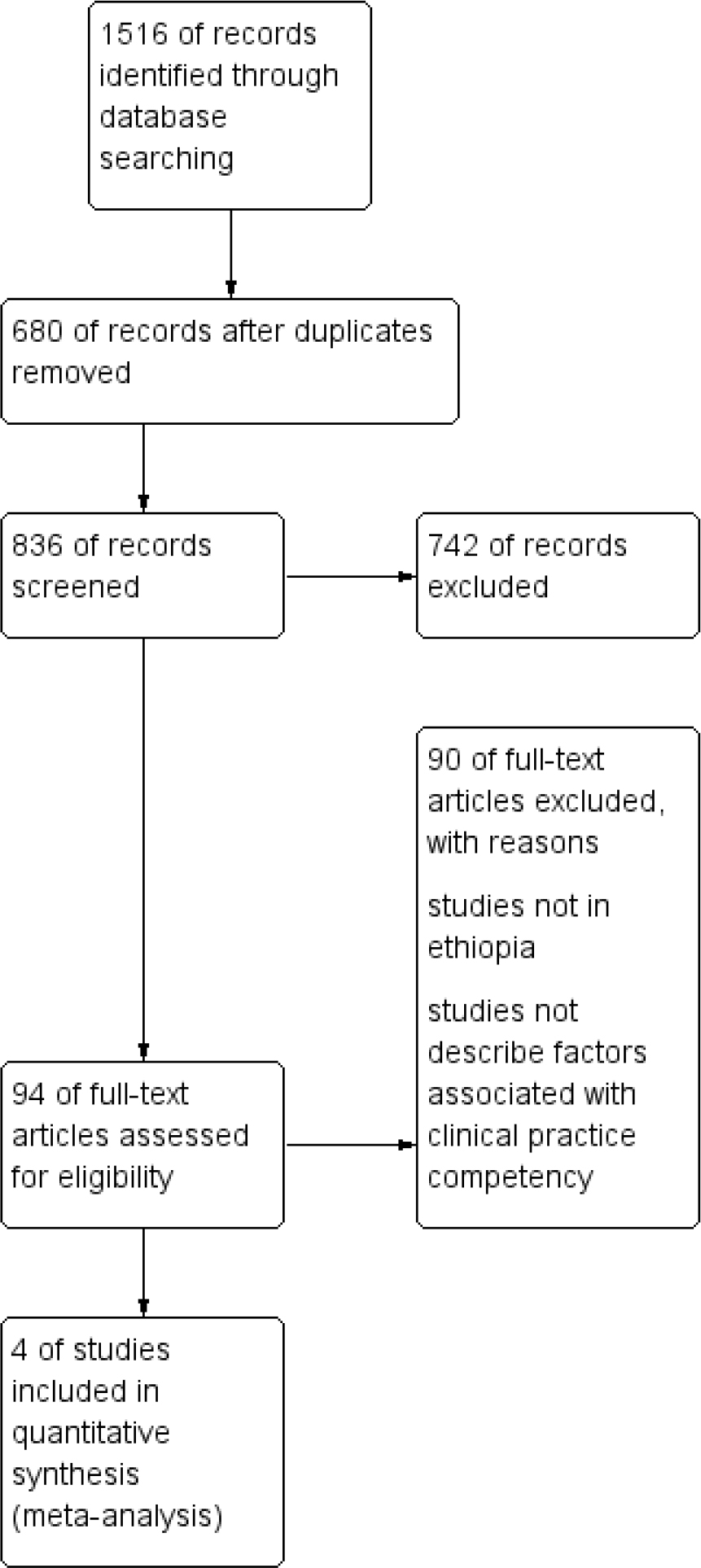
Figure 1
The flowchart of searching and selecting literature.
Characteristics of included studies
There were 1613 participants in four (4) investigations. Table 1 provides a summary of the original studies that were used (n=4). Regarding the study design of the included studies; all were done by institutional based cross-sectional study design Table 2).
Table 1
Characteristics of the included studies (n=4) according to Newcastle-Ottawa Quality Assessment Scale.
| Study | Selection Quality | Comparability Quality | Outcome Quality | NOS scale |
|---|---|---|---|---|
| Getie A, et al 2021 [1] | high quality | moderate quality | high quality | high quality |
| Tesfaye, et al 2020 [3] | high quality | moderate quality | moderate quality | moderate quality |
| Hailu M, et al 2020 [17] | high quality | moderate quality | high quality | high quality |
| Telksew Y. 2022 [4] | high quality | moderate quality | moderate quality | moderate quality |
Table 2
Characteristics of included studies for factors associated with clinical practice competency among students in Ethiopia (n=4).
| Study | Sample size | Study design | Country |
|---|---|---|---|
| Getie A. et al 2021 [1] | 307 | Institution-based cross-sectional | Ethiopia |
| Tesfaye, et al 2020 [3] | 267 | Institution-based cross-sectional | Ethiopia |
| Hailu M, et al 2020 [17] | 318 | Institution-based cross-sectional | Ethiopia |
| Telksew Y. et al 2022 [4] | 403 | Institution-based cross-sectional | Ethiopia |
Based on the quality assessment of NOS, two studies (1, 17) were of high quality while the other two (20, 22) were of moderate quality (Table 1). We selected five factors affecting clinical practice competency among medical and health science students in Ethiopia: presence of a checklist, orientation of objective, staff encouragement to do practice, having a preceptor in clinical practice, and confidence during performing procedure (Table 3).
Table 3
Factors associated with clinical practice competency among students in Ethiopia.
| Study | Presence of a checklist | Clinical practice competency | |
|---|---|---|---|
| Yes | No | ||
| Getie A, et al | Yes | 67 | 60 |
| 2021 | No | 36 | 144 |
| Hailu M, et al | Yes | 43 | 117 |
| 2020 | No | 18 | 140 |
| Tesfaye, et al | Yes | 65 | 57 |
| 2020 | No | 40 | 103 |
| Study | Orientation of objective | ||
| Hailu M, et al | Yes | 49 | 110 |
| 2020 | No | 12 | 147 |
| Getie A, et al | Yes | 80 | 87 |
| 2021 | No | 23 | 117 |
| Tesfaye, et al | Yes | 82 | 98 |
| 2020 | No | 23 | 64 |
| Study | Staff encouragement to do practice | ||
| Hailu M, et al | Yes | 48 | 89 |
| 2020 | No | 13 | 168 |
| Telksew Y, et | Yes | 71 | 78 |
| al 2022 | No | 76 | 178 |
| Tesfaye, et al | Yes | 80 | 76 |
| 2020 | No | 25 | 84 |
| Study | Having preceptor in clinical practice | ||
| Hailu M, et al | Yes | 45 | 70 |
| 2020 | No | 16 | 87 |
| Telksew Y, et | Yes | 56 | 65 |
| al 2022 | No | 81 | 189 |
| Study | Confidence during performing procedure | ||
| Hailu M, et al | Yes | 52 | 165 |
| 2020 | No | 9 | 92 |
| Telksew Y, et | Yes | 62 | 77 |
| al 2022 | No | 85 | 179 |
The magnitude of clinical practice competency in presence of a checklist
In all, 269(30.22%) students had clinical practice competency. 45.95 % of students learned with the presence of a checklist. The proportion of clinical practice competency among students with the presence of a checklist was 42.78%, and the proportion of clinical practice competency among students with no checklist was 19.54%.
The magnitude of clinical practice competency with the orientation of objective
In all, 269(30.15%) students had clinical practice competency. 56.72 % of students learned with the orientation of the objective. The proportion of clinical practice competency among students with the orientation of objective was 41.69%, and the proportion of clinical practice competency among students with no orientation of objective was 15.02%.
The magnitude of clinical practice competency with staff encouragement to do practice
In all, 313(31.74%) students had clinical practice competency. 44.82 % of students learned with staff encouragement to do the practice. The proportion of clinical practice competency among students with staff encouragement to do practice was 45.02%, and the proportion of clinical practice competency among students with no staff encouragement to do practice was 20.95%.
The magnitude of clinical practice competency with having a preceptor in clinical practice
In all, 198(32.51%) students had clinical practice competency. 38.75 % of students learned with having a preceptor in clinical practice. The proportion of clinical practice competency among students with having preceptor in clinical practice was 42.79%, and the proportion of clinical practice competency among students not having a preceptor in clinical practice was 26.02%.
The magnitude of clinical practice competency with confidence during performing procedure
In all, 208(28.84%) students had clinical practice competency. 49.37 % of students learned with confidence during the performing procedure. The proportion of clinical practice competency among students with confidence when performing a procedure was 32.02%, and the proportion of clinical practice competency among students with no confidence during the performing procedure was 25.75%.
Pooled effect size
The pooled effect size of clinical practice competency among students with the presence of a checklist in the form of odds ratio (OR) was 3.40 ((95% CI 2.50–4.62), p<0.00001, I 2=0%) as compared to those without the presence of checklist (Fig. 2).

Figure 2
Forest plot for the association between the presence of checklist and clinical practice competency among students in Ethiopia.
Publication bias and heterogeneity
The I2 test for heterogeneity showed no significant differences among studies (I2=0%, p=0.41).
No publication bias was observed (Egger’s test: p=0.632, Begg’s test: p=0.602) (Fig. 3).

Figure 3
Funnel plot for the presence of checklist and clinical practice competency among students in Ethiopia, 2023.
Pooled effect size
The pooled effect size of clinical practice competency among students with the orientation of objective in the form of odds ratio (OR) was 3.84 ((95% CI 2.29–6.43), p<0.00001, I 2=57%) as compared to those without orientation of objective (Fig. 4).

Figure 4
Forest plot for the association between the orientation of objective and clinical practice competency among students in Ethiopia.
Publication bias and heterogeneity
The I2 test for heterogeneity showed no significant differences among studies (I2=57%, p=0.10).
No publication bias was observed (Egger’s test: p=0.675, Begg’s test: p=0.602) (Fig.5).
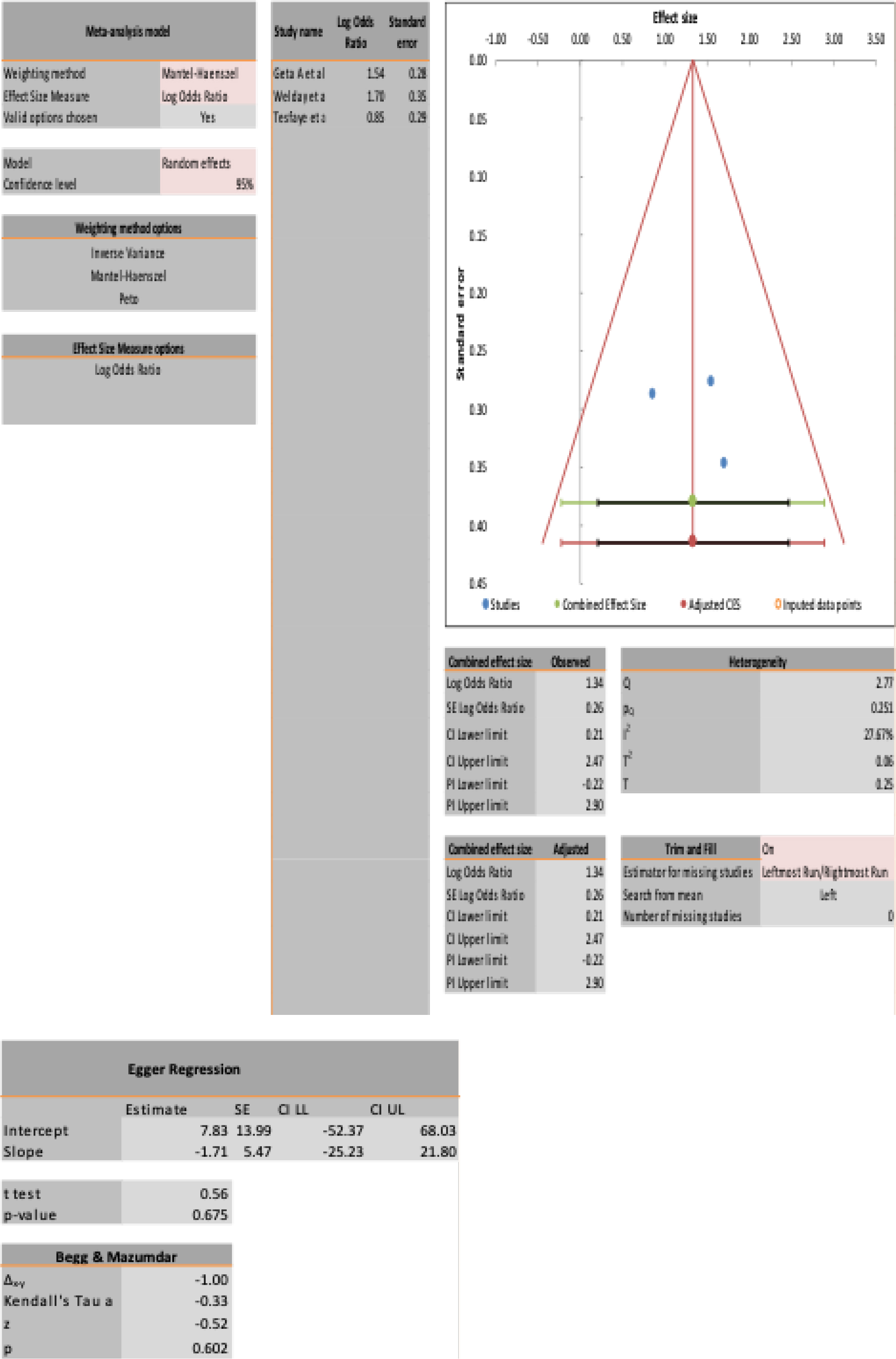
Figure 5
Funnel plot for orientation of objective and clinical practice competency among students in Ethiopia, 2023.
Pooled effect size
The pooled effect size of clinical practice competency among students with staff encouragement in the form of odds ratio (OR) was 2.79 ((95% CI 0.85–9.19), p=0.09, I2=93%), and there was no association between clinical practice competency among students with staff encourage (Fig. 6).

Figure 6
Forest plot for the association between staff encouragement to do practice and clinical practice competency among students in Ethiopia.
Publication bias and heterogeneity
The I2 test for heterogeneity showed significant differences among studies (I2=93%, p=0.001). Publication bias was observed (Egger’s test: p=0.037, Begg’s test: p=0.117) (Fig. 7).
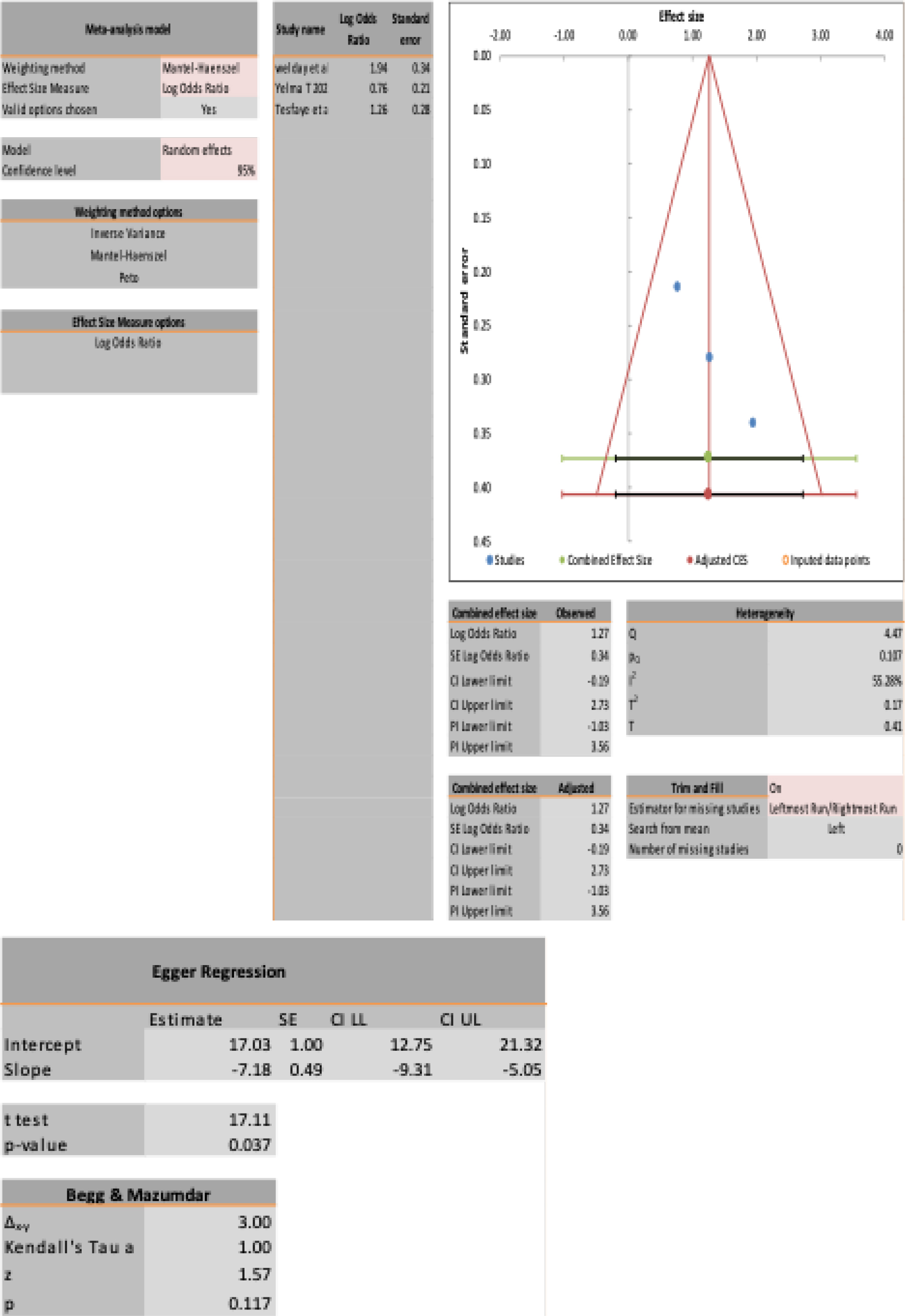
Figure 7
Funnel plot for staff encourage to do practice and clinical practice competency among students in Ethiopia, 2023.
The final pooled effect size after trim and fill analysis in the random effect model was found to be 1.27 (95%CI: -0.19, -2.73). This indicated the absence of a significant association between staff encouragement to do practice and clinical practice competency among health and medical science students in Ethiopia.
Pooled effect size
The pooled effect size of clinical practice competency among students having preceptor in clinical practice in the form of odds ratio (OR) was 1.78, ((95% CI 0.50–6.41), p=0.38, I 2=90%). There was no association between clinical practice competency among students and having preceptor in clinical practice (Fig. 8).

Figure 8
Forest plot for the association between having preceptor in clinical practice and clinical practice competency among students in Ethiopia.
Publication bias and heterogeneity
The I2 test for heterogeneity showed no significant differences among studies (I2=90%, p=0.001).
No publication bias was observed (Begg’s test: p=1.00) (Fig. 9).
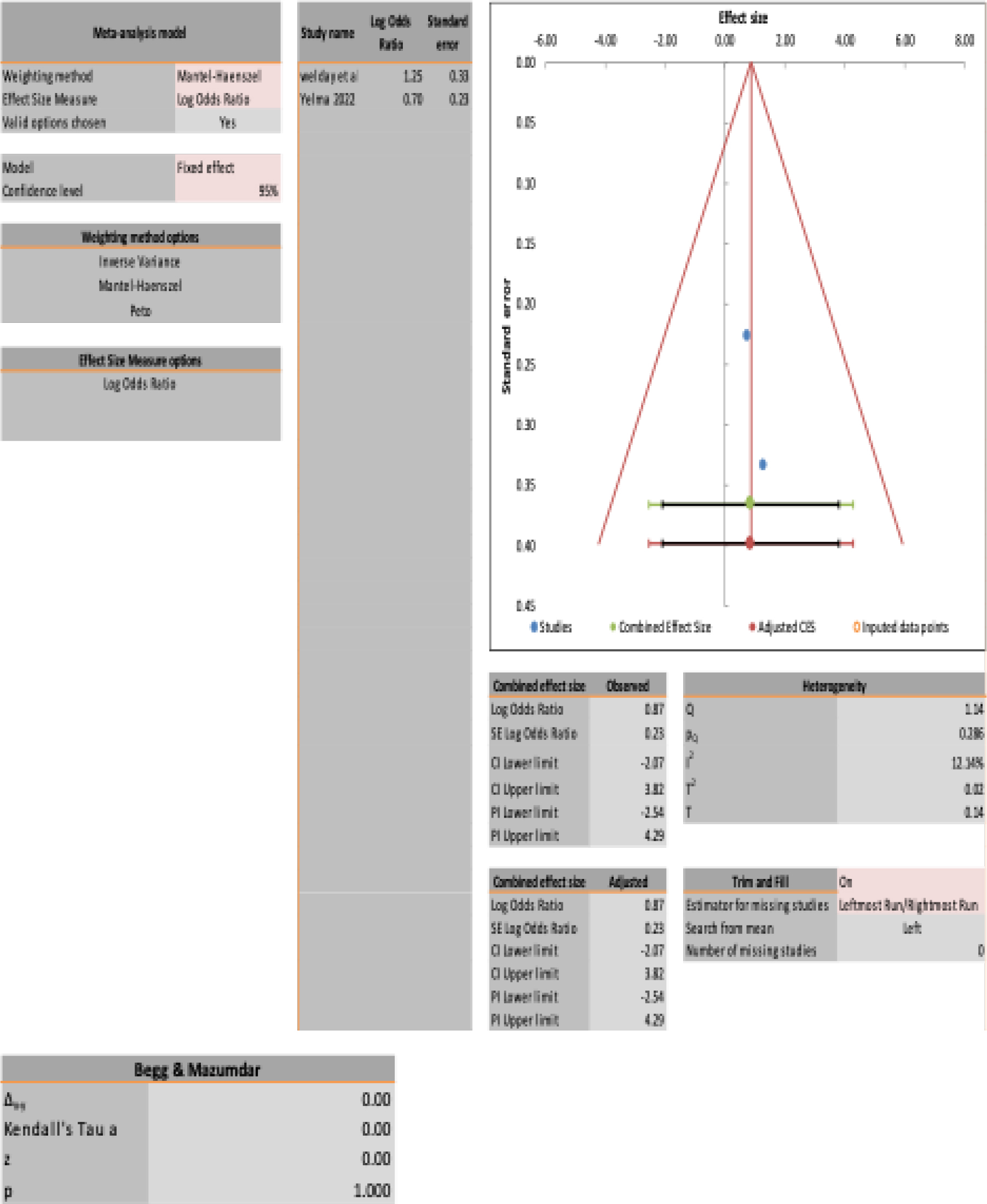
Figure 9
Funnel plot for preceptor and clinical practice competency among students in Ethiopia, 2023.
Pooled effect size
The pooled effect size of clinical practice competency among students having confidence during performing the procedure in the form of odds ratio (OR) was 2.16, ((95% CI 1.17– 3.99), p=0.01, I 2=53%) as compared to those not having confidence during performing the procedure (Fig. 10).

Figure 10
Forest plot for the association between confidence during performing procedure and clinical practice competency among students in Ethiopia.
Publication bias and heterogeneity
The I2 test for heterogeneity showed no significant differences among studies (I2=53%, p=0.14).
No publication bias was observed (Begg’s test: p=1.00) (Fig. 11).
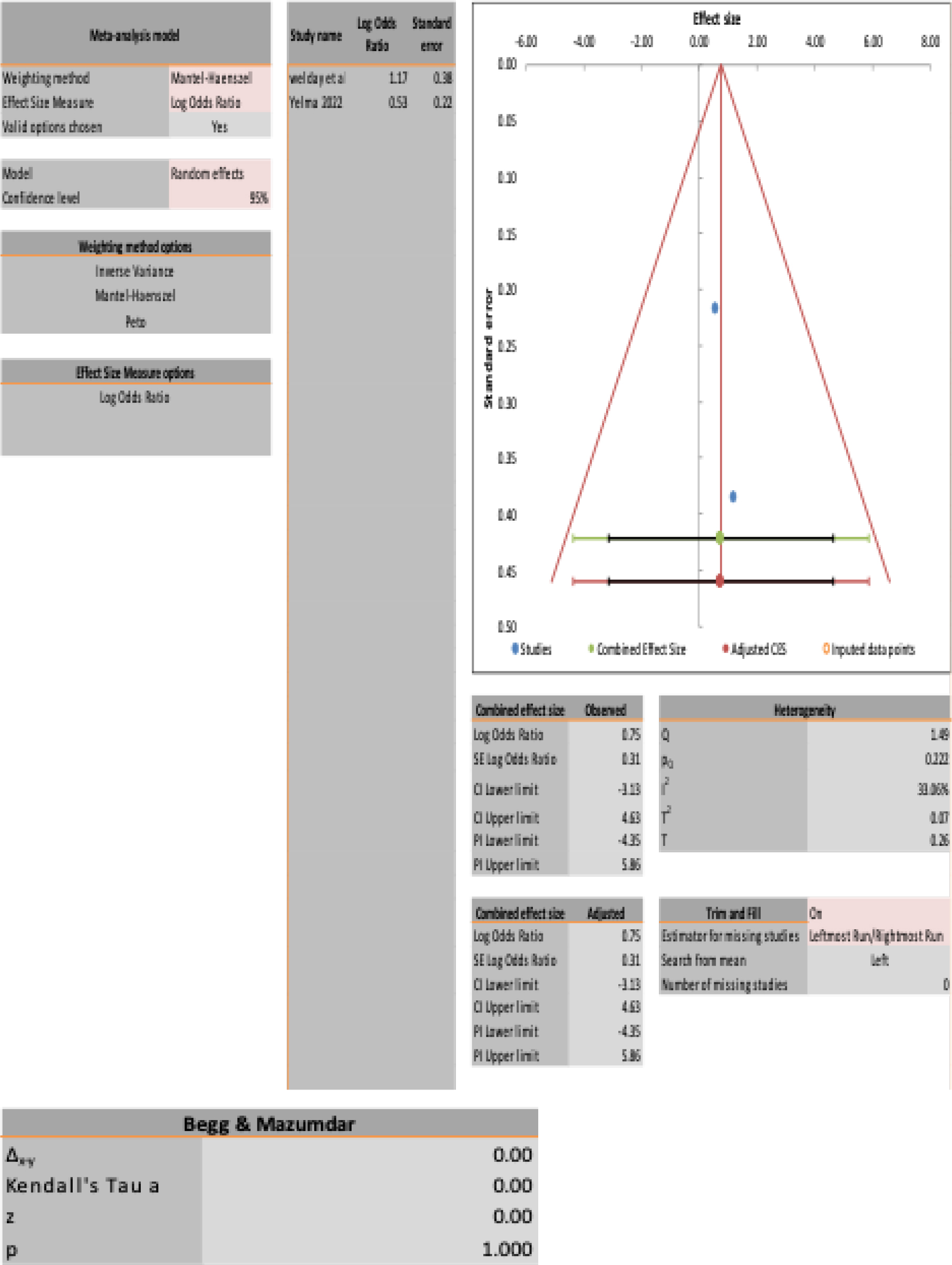
Figure 11
Funnel plot for confidence and clinical practice competency among students in Ethiopia, 2023.
Discussion
In this meta-analysis study, the presence of a check list in clinical practice, having objective clinical orientation as well as confidence during performing procedure was associated with clinical practice competency among medical and health science students in Ethiopia. This finding is similar with studies done in Ethiopia and abroad.
According to the meta-analysis result, the pooled odds ratios revealed that the odds of having clinical practice competency checklist was 3.40 ((95% CI 2.50–4.62), p<0.00001) as compared to those without the presence of checklist. This result is in line with the study conducted at study conducted in Northern Tanzania.18 Since the assessment checklist is prepared based on core competencies, evaluating the student using this assessment checklist can help the student to be clinically competent. Checklists allow for the comparison of learners across training sites, decrease the burden in establishing competency of practicing clinicians, and provide a means to monitor retention of clinical skills over time.
The pooled odds ratios also revealed that the odds of competency among students with the orientation of objective was 3.84 ((95% CI 2.29– 6.43), p<0.01) as compared to those without orientation of objective. This result is similar with the study conducted in Northern Tanzania, 18 Turkey, 19 and Finland.20 This showed that providing orientation of assessment objective had a positive effect on students’ clinical practice competency. The presence of orientation about the objectives may lead the students to focus on their clinical competent areas.
The final pooled effect size after trim and fill analysis in the random effect model was found to be 1.27 (95%CI: -0.19, -2.73) for the association between staff encouragement to do practice and clinical practice competency. This indicated no significant association between staff encouragement to do practice and clinical practice competency among medical and health science students in Ethiopia. This finding disagrees with a study conducted in Botswana.21 The difference in findings between our study and these two studies may be the variation in sample size and study population. Students learned best with staff that encouraged them during the clinical practice and enabled them to be more competent in those studies.
The odds of clinical practice competency among students having a preceptor in clinical practice was 1.78 ((95% CI 0.50–6.41), p=0.38, I2=90%), and there was no association between clinical practice competency among students and having preceptor in clinical practice. This finding is opposed to studies conducted in Ghana, Indonesia, and Pakistan.22,23,24
The odds of clinical practice competency among students having confidence during performing the procedure was 2.16, ((95% CI 1.17–3.99), p=0.01) as compared to those not having confidence during performing the procedure. This finding is consistent with previous study conducted in Indonesia and Sweden.22, 25 The implication is that a student’s self-confidence is a key during clinical practice in enhancing their clinical competency. Confidence during a procedure is an important component of the nursing practice, and the nurse educator should facilitate this process while providing education.21
Conclusion
The presence of a checklist, the orientation of objective, and students having confidence during performing the procedure are factors associated with clinical practice competency among nursing and midwifery students in Ethiopia.
Recommendation
Hence, the federal ministry of health should work closely with teaching institutions, health facilities, and other stakeholders to overcome the gaps. Institutions should allocate clinical preceptors in health facilities in which students are practicing, and clinical instructors should explain the assessment methods to their students.
Acknowledgments
We would like to thank all the primary authors of the included articles. All analyzed data are included in the article. No funding was received for this meta-analysis.
Competing Interests
None declared.
Authors’ contributions
The study's concept and design were developed in collaboration with KTT, KTW, YAK, and ATT. The search plan was developed by KTT, KTW, MTA, JC, YAG, and ATT. The data extraction was performed by KTT, MTA, JC, KTW, and ATT. KTT, KTW, YAG, and ATT all contributed to the data analysis and interpretation as well as the intellectual substance of the work. KTT is the corresponding author and revised the final draft. The final manuscript was read and approved by all writers.