
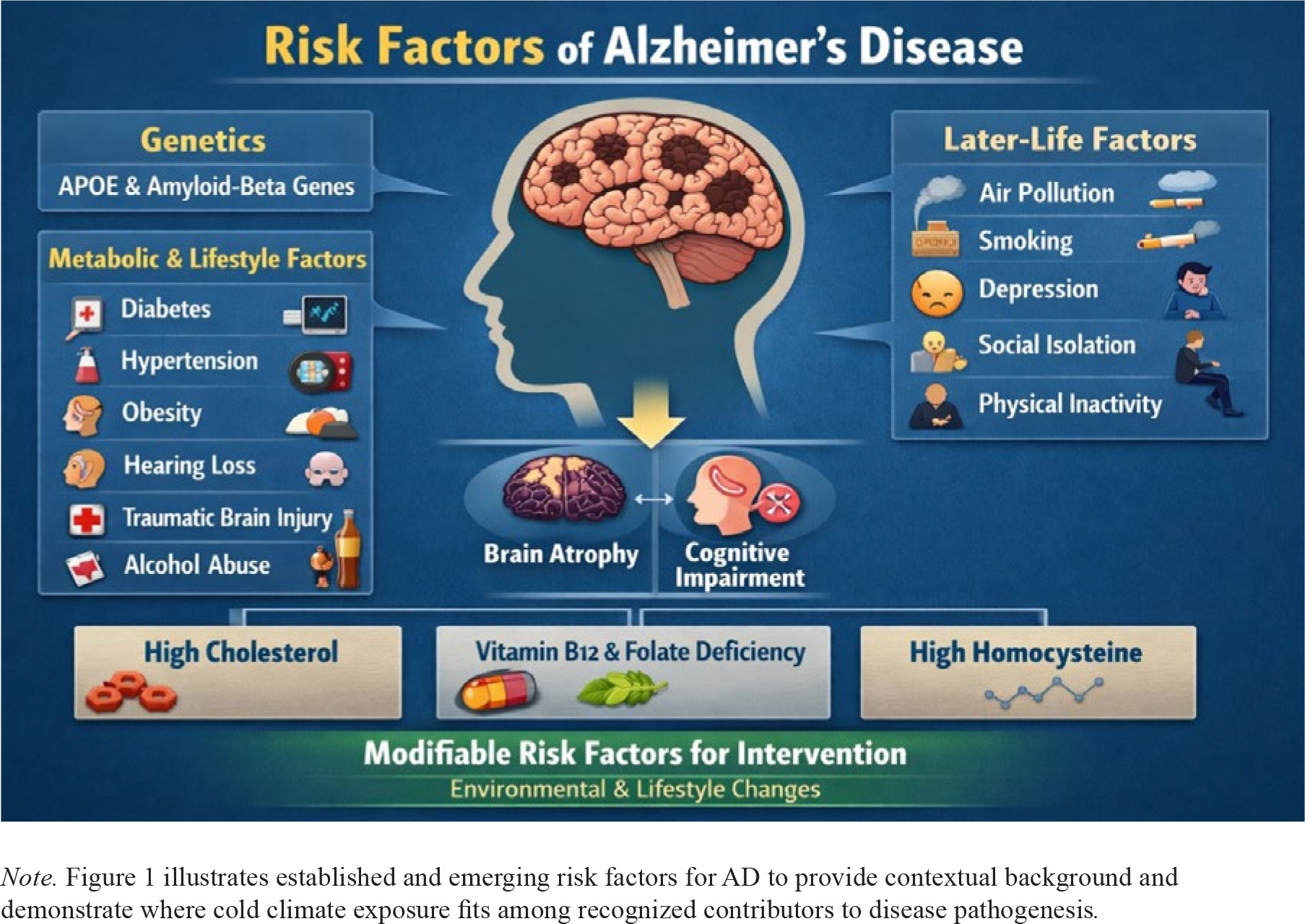
Figure 1
Risk factors of AD
Table 1
Summary of key physiological effects of cold exposure on the brain
| Parameter | Acute Cold Exposure | Chronic Cold Exposure | Neurodegenerative Implication |
|---|---|---|---|
| Cerebral Blood Flow | ↓ Vasoconstriction | Sustained hypoperfusion | Neuronal stress, hypoxia |
| Neurotransmitters | ↑ Norepinephrine, Cortisol | Imbalance of dopamine/serotonin | Mood, cognition, neurotoxicity |
| Sleep/Circadian Rhythm | Mild disruption | Major circadian dysregulation | Impaired glymphatic clearance |
| BBB Permeability | Mild change | ↑ Leakiness | Toxin exposure to brain tissue |
| Immune Activation | ↑ Acute phase response | ↑ Microglial priming | Neuroinflammation, AD risk |
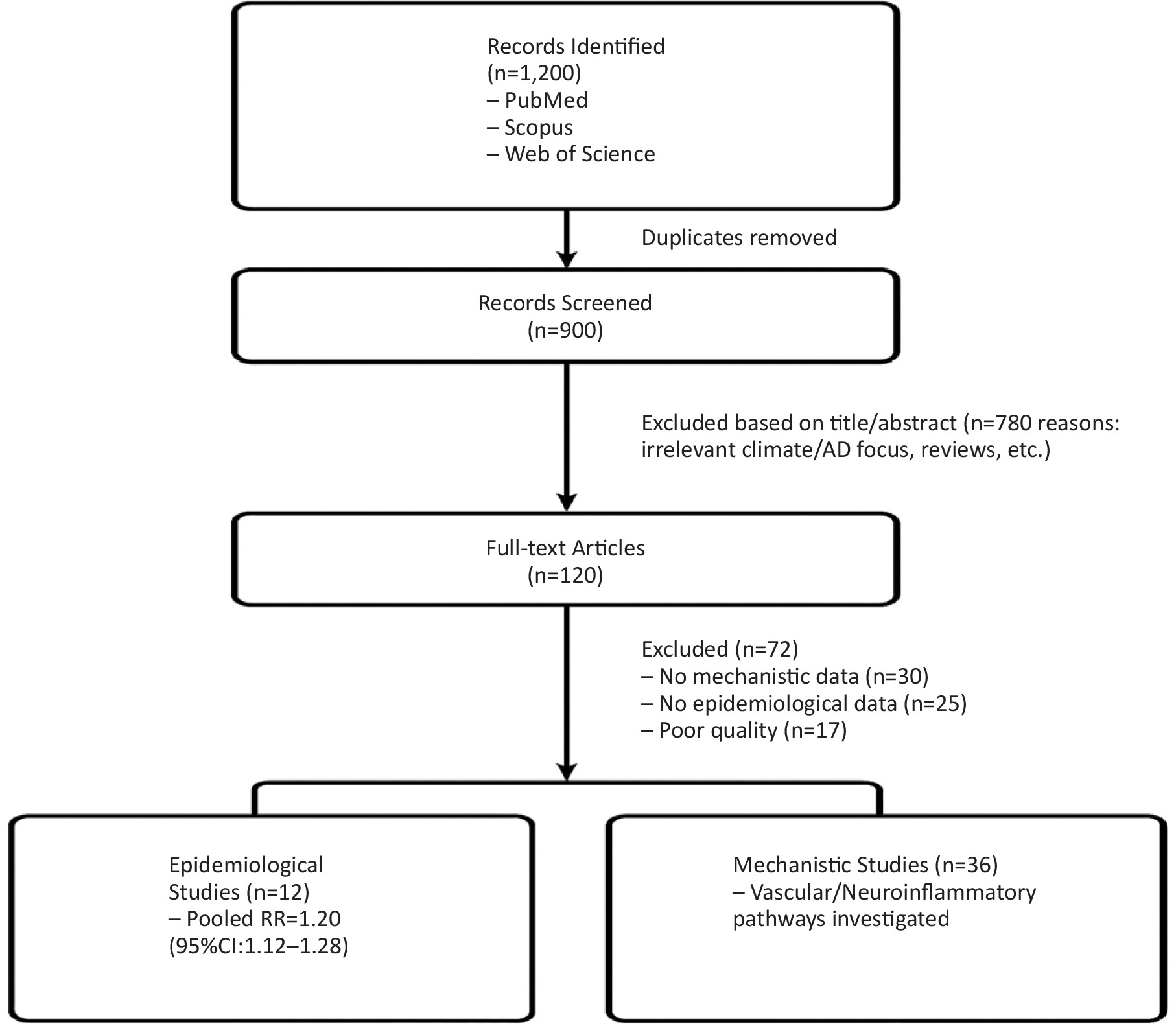
Figure 2
Flow chart of studies identification and selection
Table 2
Summary of Epidemiological Studies Linking Cold Climate to AD and Cognitive Decline
| Study | Region | Climate Indicator | Sample Size | Key Findings | Adjustment Variables |
|---|---|---|---|---|---|
| You 23 | Global (Multiple Countries) | Climate-Patterned Temperature (Tcp) | Not specified | Colder Tcp linked with increased dementia incidence | Life expectancy, affluence, genetics, and urbanization |
| Mooldijk et al. 24 | Netherlands | Season (Winter vs. Summer) | 10,276 | Cognitive scores are 0.05 SD higher in summer | Age, sex, education, and cohort wave |
| Lim et al. 18 | Multiple (USA, Canada) | Seasonality | 3,353 | Fall peak in cognition; seasonal effect = 4-year age difference | Age, sex, education, APOE ε4 |
| Wei et al. 19 | New England, USA | Temp variability (Winter vs. Summer) | Not specified | Colder temperatures are linked with higher dementia-related hospitalizations. | Age, sex, race, SES |
| Mooldijk et al. 17 | Netherlands | Birth Season (Winter vs. Summer) | 12,964 | Winter-born had 15% higher dementia risk (HR = 1.15) | Age, sex, APOE ε4, cardiovascular risk |
| Russ et al. 20 | Italy, Chile, NZ | Latitude (North vs. South) | Not specified | Northern regions had higher dementia mortality | Not specified |
| Kalaria et al. 21 | Sub-Saharan Africa | Regional variability | Various | Dementia prevalence 1–10%; sparse data on climate links | Age, sex, education, and vascular risk |
Table 3
Summary of Meta-Analysis: Effect Sizes or Hazard Ratios where Reported
| Study | Location | Exposure | Outcome | Effect Size (95% CI) | Notes |
|---|---|---|---|---|---|
| Mooldijk et al. 17 | Netherlands | Winter vs. Summer Birth | Dementia Incidence | HR 1.15 (95% CI: 1.05–1.26) | Rotterdam cohort |
| Lim et al. 18 | Multi-country | Seasonal variation | Cognitive performance | ~4 years’ cognitive difference between peak and trough | Mixed AD and non-AD cohorts |
| Wei et al. 19 | USA | Cold temp variability | Dementia Hospitalization | IRR increase, exact value not reported | Ecological exposure analysis |
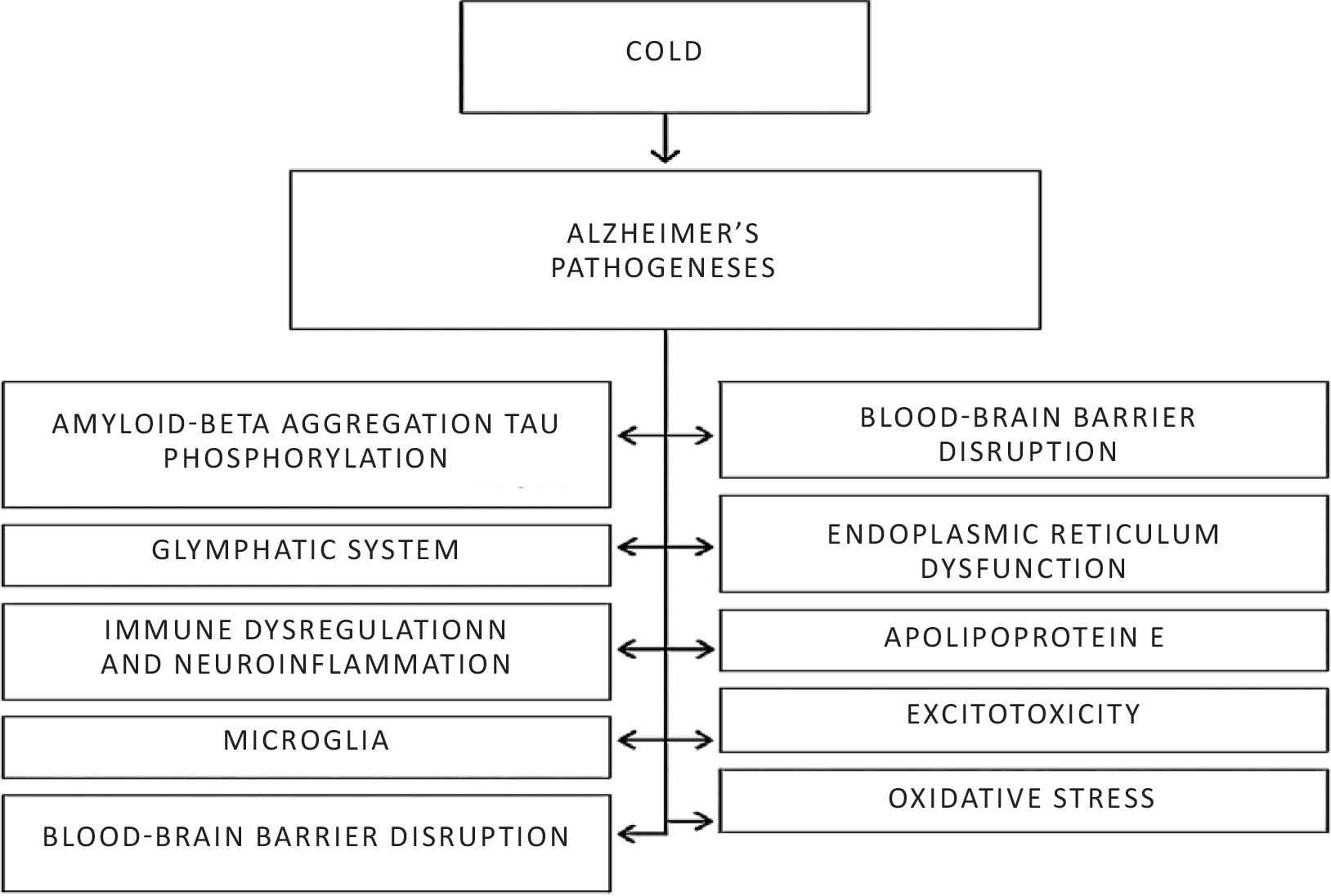
Figure 2
Mechanistic link between cold and AD
Table 4
Mechanisms Linking Cold Exposure to AD Pathology
| Hypothesis/Pathway | Key Mechanisms | Cold-Induced Effects | Impact on AD Pathology | References |
|---|---|---|---|---|
| Aβ & Tau Pathology | Aβ aggregation, tau hyperphosphorylation, glymphatic dysfunction | Cold ↑ BACE1 → ↑ Aβ; sleep alterations impair glymphatic clearance (Aquaporin-4-dependent) | Enhanced amyloidogenesis, tau pathology, reduced Aβ clearance | 25-30 |
| Immune Dysregulation & Neuroinflammation | Microglial priming, proinflammatory cytokines (IL-1β, TNF-α, IL-6) | Cold ↑ glucocorticoids → microglial activation; BBB disruption → immune infiltration | Chronic neuroinflammation, Aβ/ tau toxicity | 11, 31-32 |
| Microglial Dysfunction | TREM2 loss → impaired Aβ clearance; M1 polarization | Cold ↑ M1-like microglia via oxidative stress; ↓ IL-10 | Aβ plaque toxicity, tau propagation | 33-35 |
| BBB Disruption | Pericyte loss, tight junction damage | Cold ↑ MMP-9, nitric oxide → BBB leakage | Peripheral toxin entry, reduced Aβ clearance | 11, 36-37 |
| Endoplasmic Reticulum & Mitochondrial Stress | ER stress → JNK pathway → Aβ/tau accumulation | Cold → mitochondrial dysfunction → bioenergetic failure | Neuronal apoptosis, synaptic loss | 31, 38-39 |
| APOEε4 Link | Impaired lipid metabolism, Aβ clearance | APOE ε4 → thermoregulatory failure → metabolic strain | Higher AD prevalence in cold climates | 5, 14, 17-19, 43-44 |
| Excitotoxicity (Glutamate/NMDA) | Ca²+ overload → mitochondrial damage | Cold ↑ catecholamines/ glutamate → NMDA hyperactivity | Neuronal hyperexcitability, apoptosis | 40-42 |
| Oxidative Stress | ROS accumulation, ↓ antioxidant enzymes (SOD, glutathione) | Cold ↑ mitochondrial ROS; ↓ BDNF | Accelerated Aβ/tau pathology | 45-46 |
| Leaky Gut & Microbiota | Gut dysbiosis → LPS translocation → neuroinflammation | Cold disrupts gut barrier → endotoxin entry | Microglial activation, Aβ/tau deposition | 47-48 |
| Circadian Rhythm & Sleep Disruption | Glymphatic clearance ↓ during poor sleep | Cold/darkness → circadian misalignment → sleep fragmentation | Aβ accumulation, neuroinflammation | 5, 11, 26 |
| Vitamin D Deficiency | ↓ Anti-inflammatory, antioxidant, and BBBstabilizing effects | Low UVB → ↓ vitamin D → impaired Aβ clearance | Cognitive decline, AD risk ↑ | 14, 38, 26-50 |