
Introduction
The intersection of global surgery and environmental sustainability presents a critical opportunity for innovation, particularly in resource-limited settings. This field report documents the significant environmental and clinical benefits demonstrated by surgical camps focused on training local surgeons in frugal innovative surgical procedures, specifically utilizing Gas Insufflation Less Laparoscopic Surgery (GILLS) and a laptop cystoscope. While recognizing the limitations of the underlying data—including assumptions made in the carbon footprint calculations—the results suggest these initiatives may offer substantial environmental savings and improved access to surgical care.
Green Surgery Initiatives: The Frugal Innovation Model
Green surgery aims to make surgical procedures environmentally sustainable by reducing waste, minimizing energy consumption, and using resources efficiently, all while maintaining high standards of patient care. This approach is supported by initiatives such as the Green Surgery Report from the UK Health Alliance on Climate Change and the Royal College of Surgeons, which provides a comprehensive guide to reducing the environmental impact of surgical care. Key principles include optimizing supply chains to favour reusable instruments over disposables, adopting energy-efficient technologies, and minimizing the use of high-emission gases like carbon dioxide in laparoscopy.1,2
The Rural Surgery Innovations of the Association of Rural Surgeons of India makes this possible in rural and remote areas through frugal equipment and techniques.
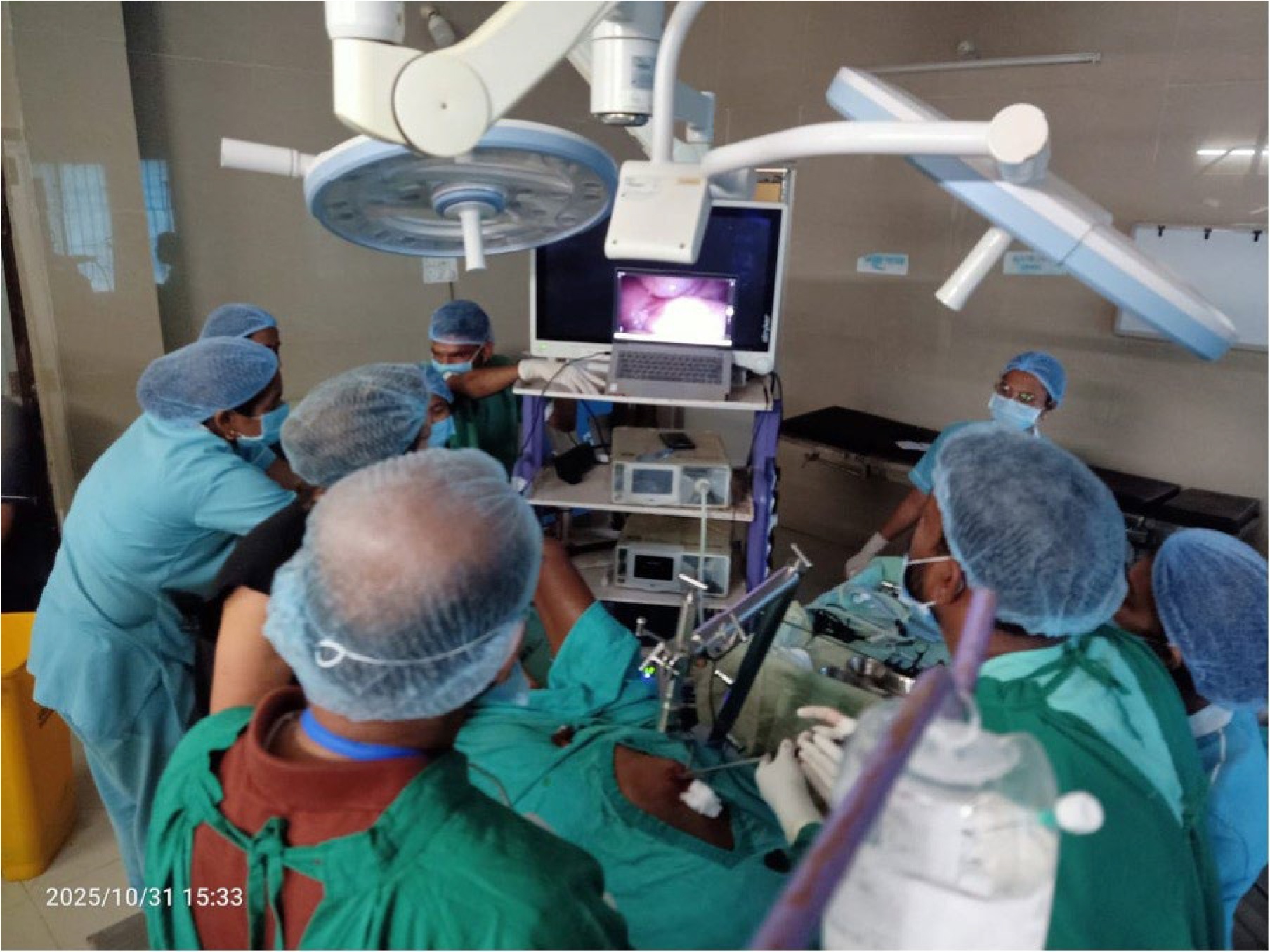
Figure 1
GILLS at Kondagaon
The key innovations include:
Gas Insufflation Less Laparoscopic Surgery (GILLS): GILLS replaces conventional3 carbon dioxide insufflation with a spiral ring attached to a mechanical device, which physically lifts the abdominal wall.4 This simple mechanical lift provides the necessary surgical working space, eliminating the need for expensive gases and specialized insufflation equipment.
Laptop Cystoscope: This is a “plug-andplay” device that draws power for its camera and lights from a laptop or even a cell phone. The images can be cast onto large smart televisions, making it a highly portable and low-cost alternative to conventional, energy-intensive cystoscopes.5 It is also used as the imaging device for GILLS surgeries.
Impact on Surgical Procedures and Access to Surgical Care
Empowering local surgical teams through these camps has yielded a notable increase in surgical volume. A previous study revealed a 20% increase in surgical procedures carried out at the empowered hospitals compared to no significant increase in control hospitals, indicating improved capacity and service delivery following the training.6
The deployment of these techniques, led by a gynaecologist from the Netherlands, involved carrying out various GILLS procedures (e.g., ovarian cystectomies, tubal ligations, single incision appendicectomies, resection of ruptured ectopic pregnancies) in remote locations such as Narayanpur, Kondagaon, and Ganiyari in Chhattisgarh in November 2025.
Key Advantages of GILLS Noted by Trainees
Reduced Anaesthesia and Staff Needs: Unlike conventional laparoscopic surgeries,7 GILLS can be performed under spinal anaesthesia, which saves on costs, gas usage, and the requirement for additional staff for monitoring typically associated with general anaesthesia.
Increased efficiency: Surgeons noted GILLS took much less time, particularly for surgeries like ruptured ectopic pregnancies, as familiar open instruments like large open suction and large gauze pieces could be used for mopping of clots.
Familiarity of Tools: The ability to use familiar open surgical instruments streamlines the procedure and may reduce the learning curve for local surgeons.
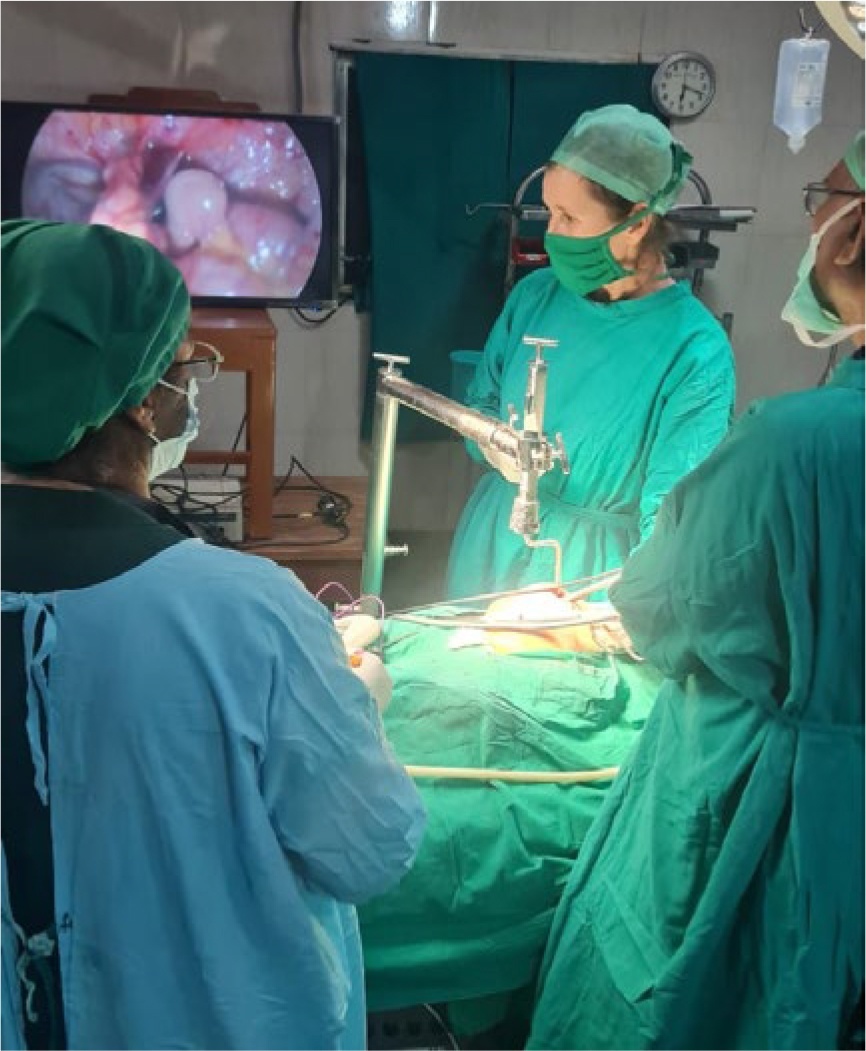
Figure 2
Dr. Erica Janszen supervising GILLS surgery at Narayanpur
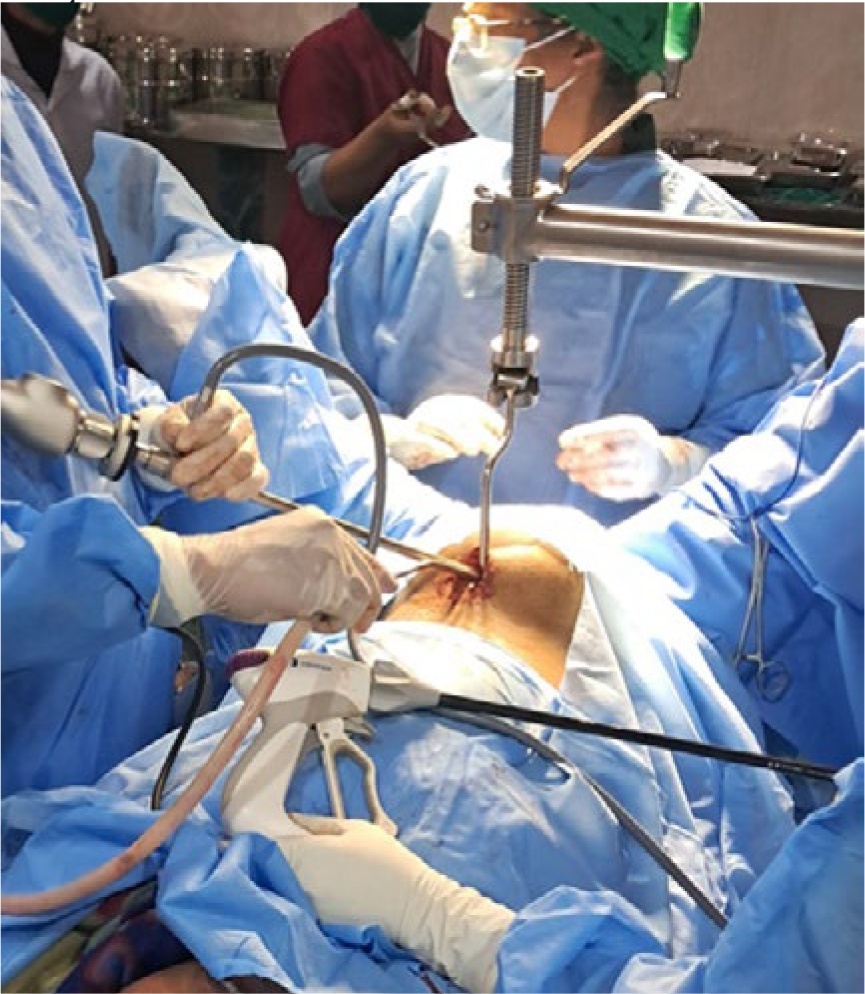
Figure 3
Large open suction in use during GILLS laparoscopic surgery
Laptop Cystoscope Utility
At Kondagaon, a comparison revealed that the images from the low-cost, laptop cystoscope were comparable to those from an expensive conventional camera system for minor surgical procedures, confirming its viability for use in further remote hospital settings for Minimally Invasive Surgery (MIS).
Carbon Footprint Analysis: Significant Savings
The surgical camps, by training local surgeons to perform procedures with GILLS and the laptop cystoscope, create significant carbon footprint savings by reducing patient and gas transport, as well as operational energy demands.
The following information were used for calculations in the above table
The calculation for air travel is based on 3,000 km x 0.15 Kg CO2 per passenger/km.8
The calculation for road trip is based on 400 grams per mile.9
Anaesthesia carbon footprint was calculated from reference 10 and endoscopic surgeries from reference 11.
Values for open surgical procedures were taken from reference 12.
Despite the necessary assumptions in the calculations (e.g., number of road trips for gases, number of patients traveling elsewhere),13 the data in Table 1 demonstrates a dramatic net environmental benefit. A single camp’s expense of 450 kg for expert air travel is overshadowed by a remarkable total estimated saving of 4250 kg, resulting in a net saving of 3800 kg of CO2 per intervention cycle
Table 1
CO 2 Footprint calculations
| ITEM | EXPENSE (in Kg CO2) | SAVING (in Kg CO2) |
|---|---|---|
| Traveling by air to one remote rural hospital for Surgical camp | 450 | |
| 5 Road trips for getting gases for conventional laparoscopic surgeries | 580 | |
| 50 people traveling 300 km by public transport for treatment elsewhere | 750 | |
| 50 hours of GILLS under spinal anaesthesia (instead of General anaesthesia) | 1375 | |
| 50 Hours of endoscopic surgeries with Laptop Cystoscope (instead of conventional) | 1000 | |
| Savings by local surgeon doing surgeries with Laptop Cystoscope | 545 | |
| TOTAL | 450 | 4250 |
From a green-surgery perspective, the dual digital scope replaces bulky, energy-intensive tower systems (camera control unit, xenon / LED light source, large monitors) with a single plug-and-play unit powered by a laptop or even a smartphone. This drastically reduces electricity consumption, eliminates the need for high-wattage light sources and cooling fans, and minimises electronic waste from obsolete towers. Its portability also enables minimally invasive surgery to be performed in the most remote facilities without the logistic and carbon burden of transporting heavy conventional equipment, further amplifying the environmental benefits of the GILLS ecosystem.
Although prospective studies with the dual digital scope have not been carried out yet, studies with otolaryngology staff and residents showed no significant difference between the clips from mobile adapter videos and tower videos. Thirty randomly selected patients underwent video endoscopy with both mobile and video tower recording methods. Sixty videos were edited into a series of 10-second clips. Thirteen otolaryngology staff and residents rated the video quality and provided a diagnosis for each video.14
Discussion
Conventional laparoscopy relies on CO2 pneumoperitoneum, where 20-50 liters of CO2 per procedure are insufflated into the abdominal cavity and vented unfiltered into the atmospherepost-surgery. This contributes to the healthcaresector’s 4-5% share of global GHG emissions, with MIS procedures alone accounting for notable CO2 outputs.15
The adoption of Gas Insufflation Less Laparoscopic Surgery (GILLS) in rural hospitals delivers substantial carbon savings. By eliminating CO2 gas cylinders and their associated transport, GILLS avoids approximately 580 kg of CO2 emissions per 50 cases. Performing these procedures under spinal anaesthesia instead of general anaesthesia saves an estimated 1,375 kg CO2 through the avoidance of volatile anaesthetic agents and energy-intensive scavenging systems. Additionally, enabling advanced surgery locally prevents patients from travelling long distances for care, saving a further ≈750 kg CO2 per cohort of 50 patients. Together, these factors make GILLS one of the most carbon-efficient forms of minimally invasive surgery currently available in low-resource settings.
GILLS reduces the logistic nightmare of providing gases for both surgery and anaesthesia as most of the common GILLS laparoscopic procedures are possible under safe and low-cost, spinal anaesthesia. It also has physiological advantages and fewer complications.15 Single umbilical incision laparoscopic surgeries considered advanced procedures in conventional laparoscopic surgeries are much easier with GILLS.16
Finally realistic full procedural simulators are available for laparoscopic skills training,17 and Figure 4 shows surgeons in Malawi performing laparoscopic surgeries on real patients using the laptop cystoscope immediately following the training program. Figure 5 shows Dr. Nagulan operating with the dual digital scope.
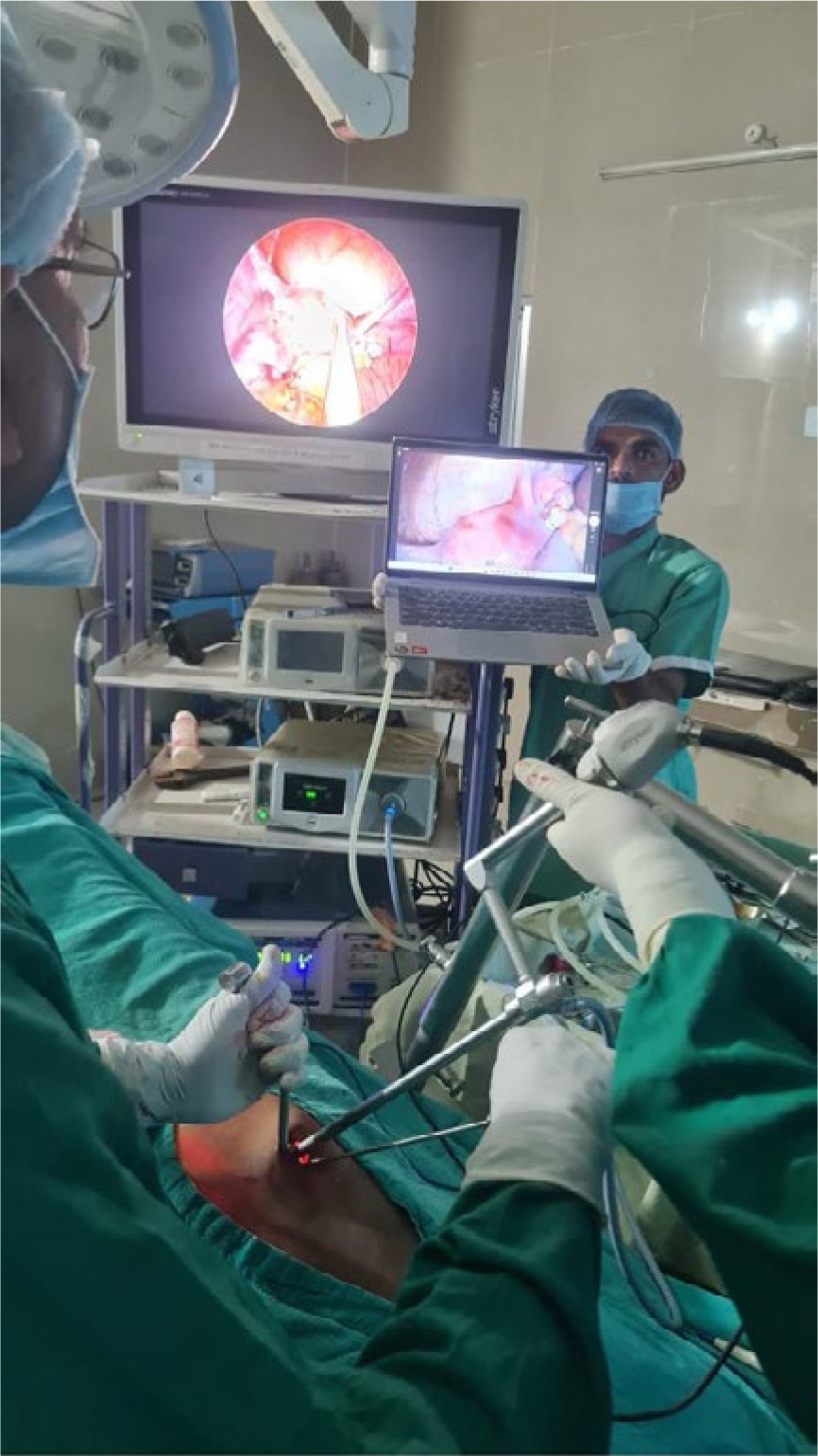
Figure 4
Comparing conventional imaging system and laptop cystoscope
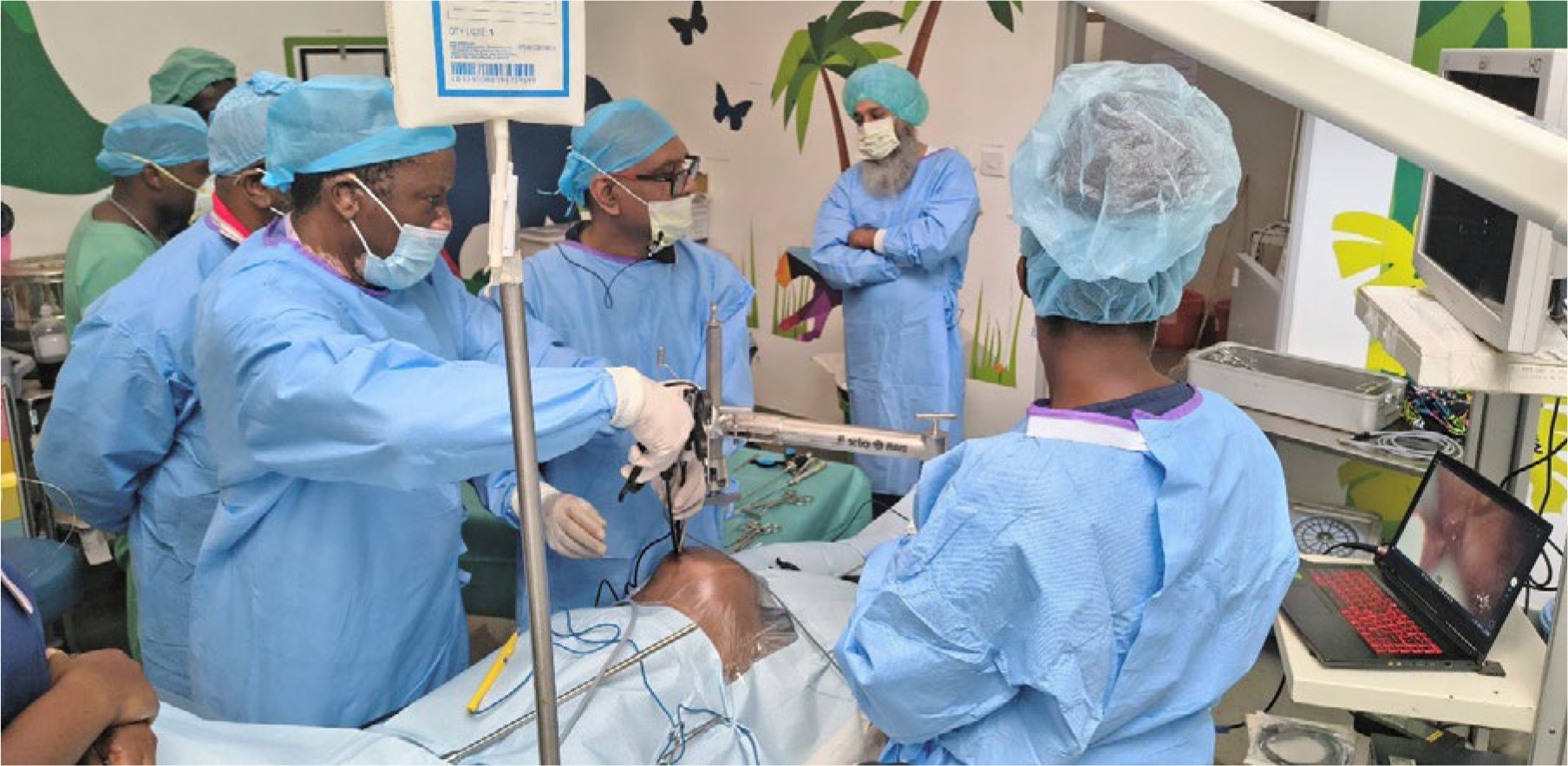
Figure 5
Laparoscopic surgeries using Laptop cystoscope
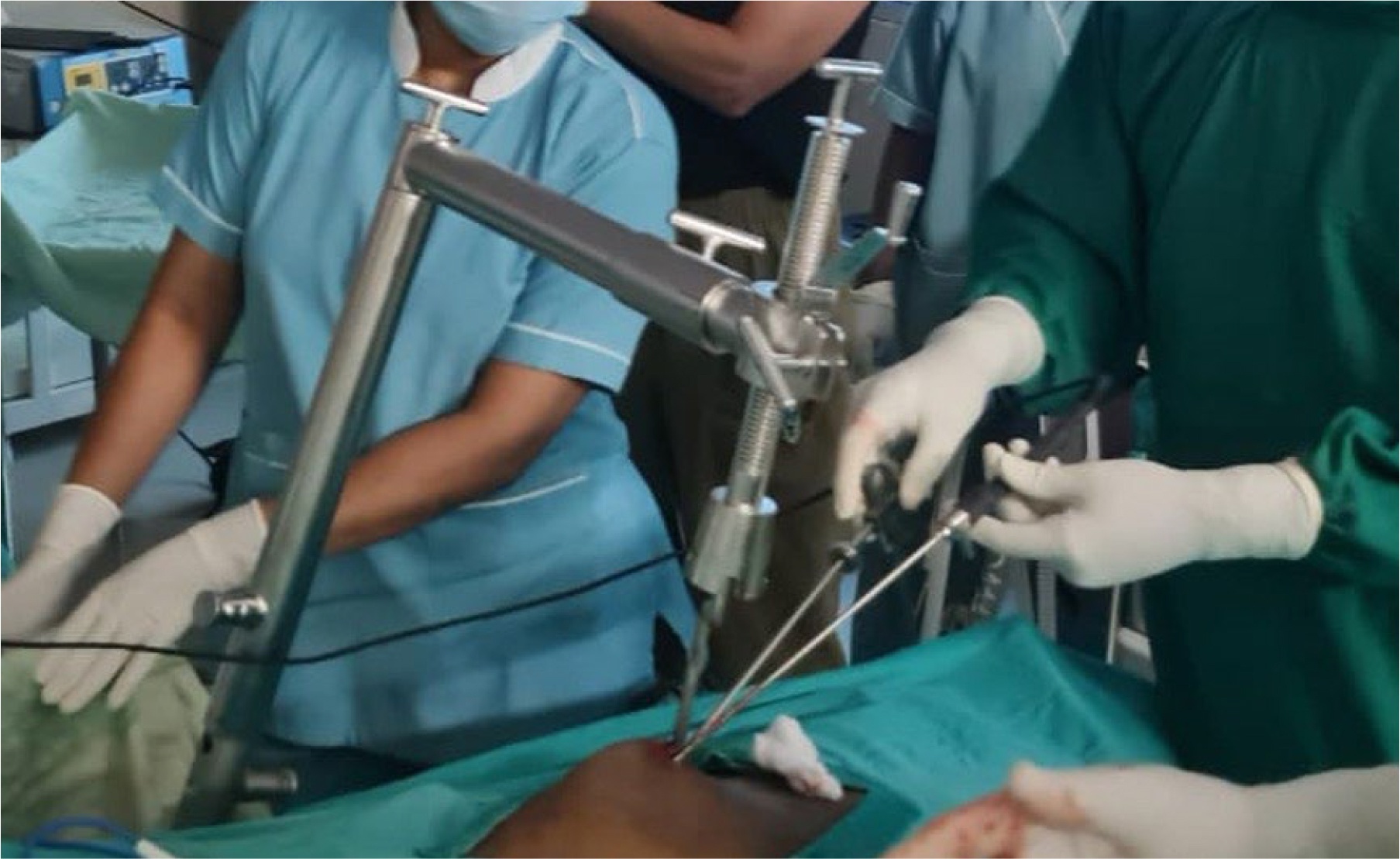
Figure 6
Dr. Nagulan operating with the Dual digital scope