Have a personal or library account? Click to login
Ultrasound-guided injections in pelvic entrapment neuropathies Cover

Ultrasound-guided injections in pelvic entrapment neuropathies

Open Access
|Jun 2021

Figures & Tables

Fig. 1.

Peripheral nerve distribution of the lower extremity

Fig. 2.

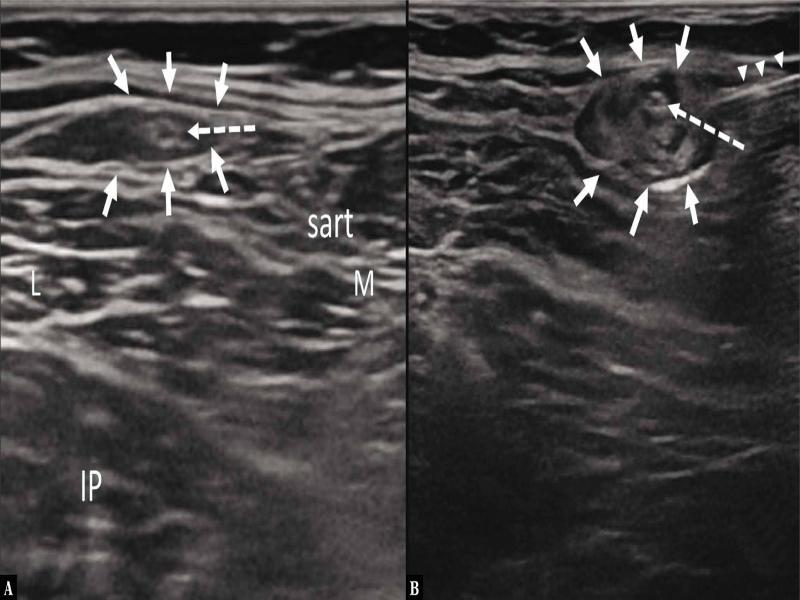
A. Axial ultrasound image of the lateral thigh, showing lateral femoral cutaneous nerve (LFCN; hatched arrows) above the sartorius muscle (sart). Iliopsoas muscle (IP), (arrows) fat pad. B. Ultrasound-guided perineural needle positioning (arrowheads) with spread of the medication within the fat pad (arrows). L – lateral, M – medial

Fig. 3.

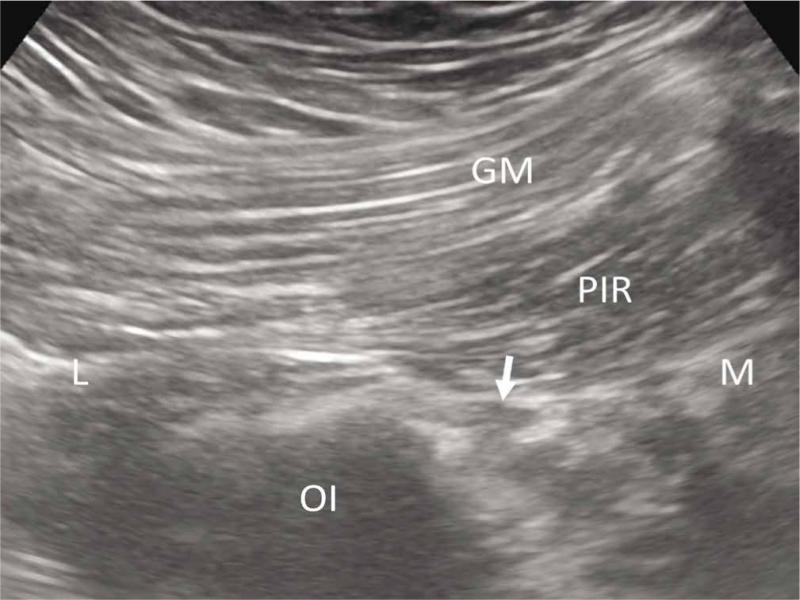
Ultrasound image showing the anatomic relations between the gluteus maximus (GM), piriformis muscle (PIR), the sciatic nerve (arrow) and os ischium (OI). L – lateral, M – medial

Fig. 4.

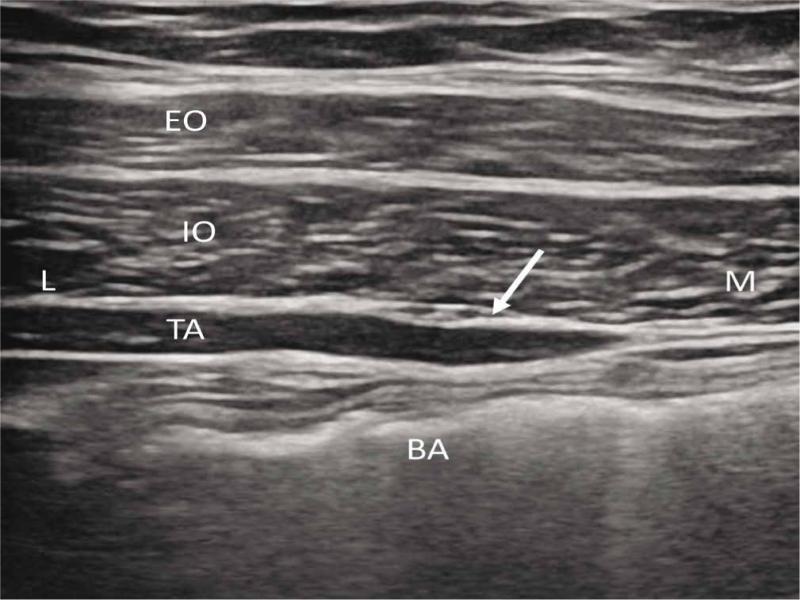
Ultrasound image showing anatomic relations between external oblique muscle (EO), internal oblique muscle (IO) and transversus abdominis muscle (TA). Arrow is depicting neurovascular bundle in the course of the ilioinguinal nerve, the injection for should be performed in its plane. (BA) bowel air. L – lateral, M – medial

Fig. 5.

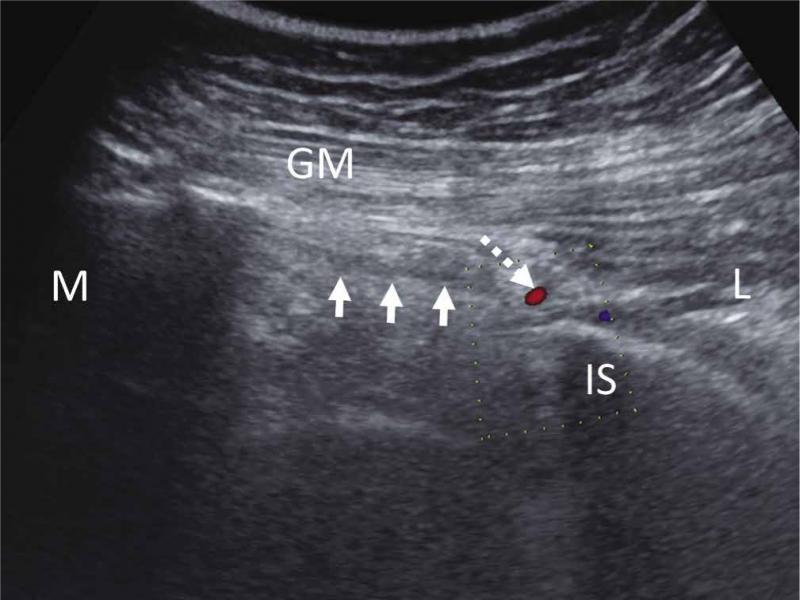
Ultrasound image showing anatomic relations between (IS) ischial spine, sacrospinous ligament (arrows) and internal pudendal artery (hatched arrow). The pudendal nerve is deep lies adjunct to the internal pudendal artery. L – lateral, M – medial

Fig. 6.

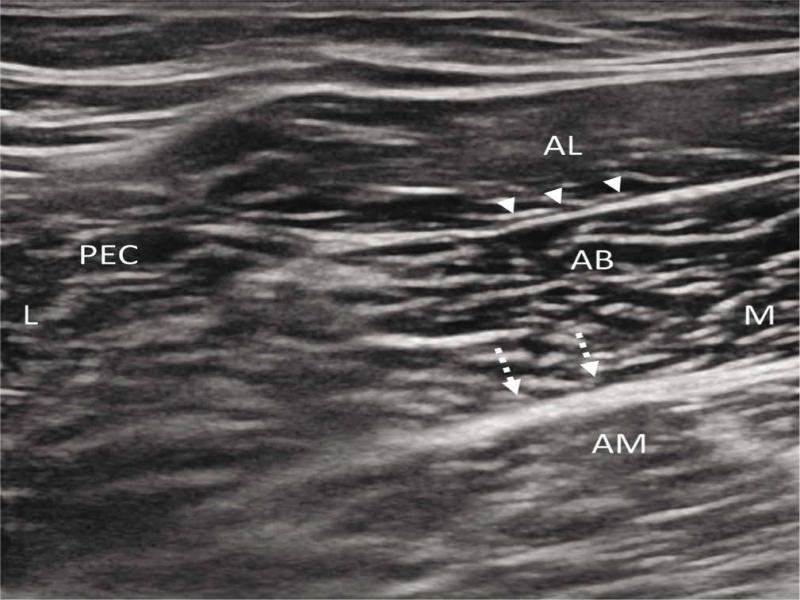
Ultrasound image shows anatomic relations between adductor muscles. The anterior branch of the obturator nerve lies within fascia (arrowheads) between the adductor longus muscle (AL) and adductor brevis muscle (AB). The posterior branch of the obturator nerve lies within fascia (hatched arrows) between the adductor brevis (AB) muscle and adductor magnus muscle (AM). L – lateral, M – medial
DOI: https://doi.org/10.15557/jou.2021.0023 | Journal eISSN: 2451-070X | Journal ISSN: 2084-8404
Language: English
Page range: 139 - 146
Submitted on: Feb 20, 2021
Accepted on: Apr 9, 2021
Published on: Jun 18, 2021
Published by: MEDICAL COMMUNICATIONS Sp. z o.o.
In partnership with: Paradigm Publishing Services
Publication frequency: 4 issues per year

© 2021 Urša Burica Matičič, Rok Šumak, Gregor Omejec, Vladka Salapura, Žiga Snoj, published by MEDICAL COMMUNICATIONS Sp. z o.o.
This work is licensed under the Creative Commons Attribution-NonCommercial-NoDerivatives 3.0 License.