Have a personal or library account? Click to login
Cartilaginous compression of the liver – clinical and ultrasonographic aspects Cover

Cartilaginous compression of the liver – clinical and ultrasonographic aspects

Open Access
|Mar 2018

Figures & Tables

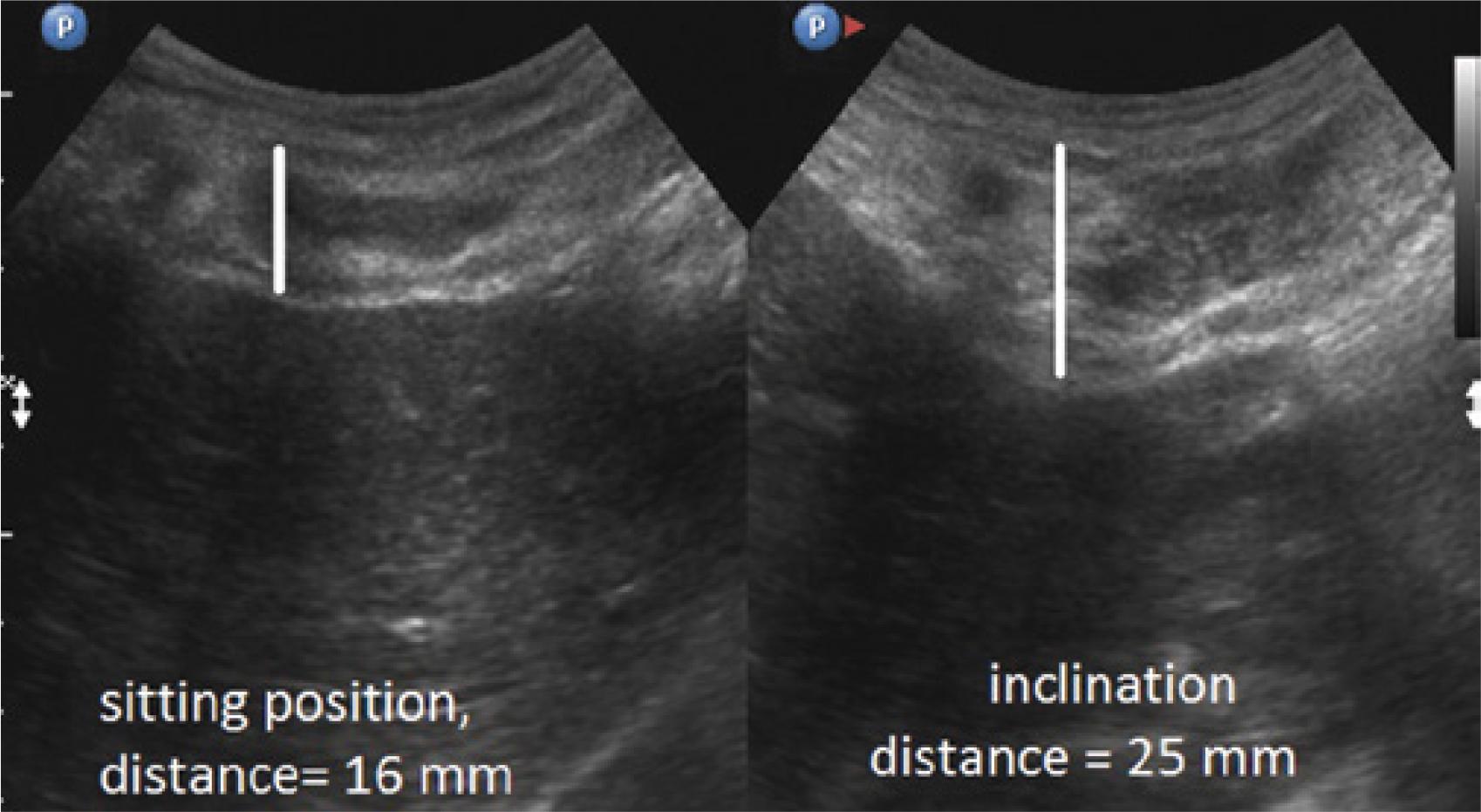
Fig. 1

A scheme for the measurement of the musculocartilaginous complex in a patient in sitting position and with forward trunk flexion

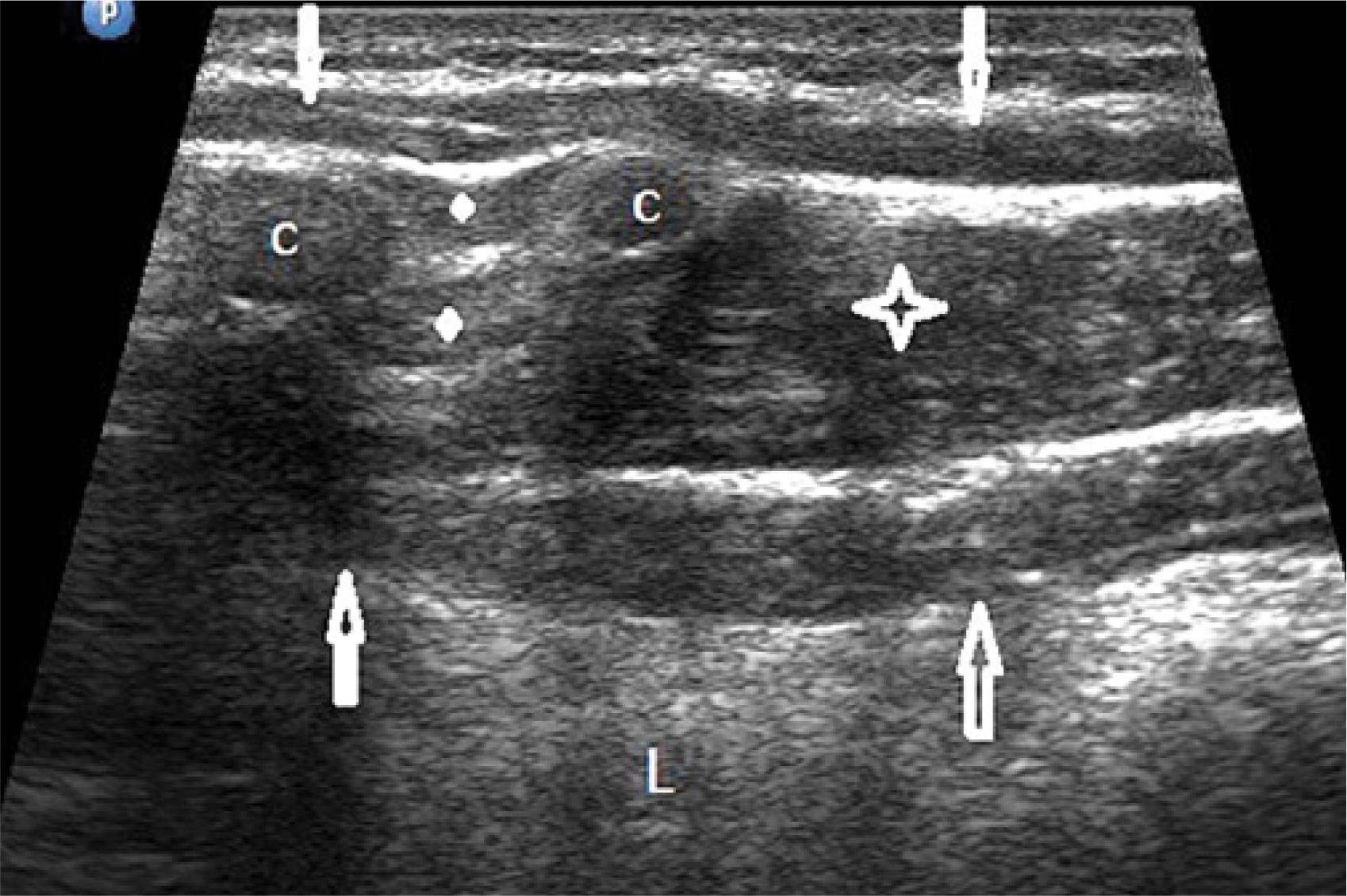
Fig. 2

A 20-year-old athlete examined in a supine position during free breathing. Right costal arch area.
Legend: downwards arrows – the external oblique muscle; upwards arrows – the transverse abdominal muscle; asterisk – the internal oblique muscle; a diamond at the top of the figure – the external intercostal muscle; a diamond at the bottom of the figure – the internal intercostal muscle; c – costal cartilages, L – liver
A 20-year-old athlete examined in a supine position during free breathing. Right costal arch area. Legend: downwards arrows – the external oblique muscle; upwards arrows – the transverse abdominal muscle; asterisk – the internal oblique muscle; a diamond at the top of the figure – the external intercostal muscle; a diamond at the bottom of the figure – the internal intercostal muscle; c – costal cartilages, L – liver

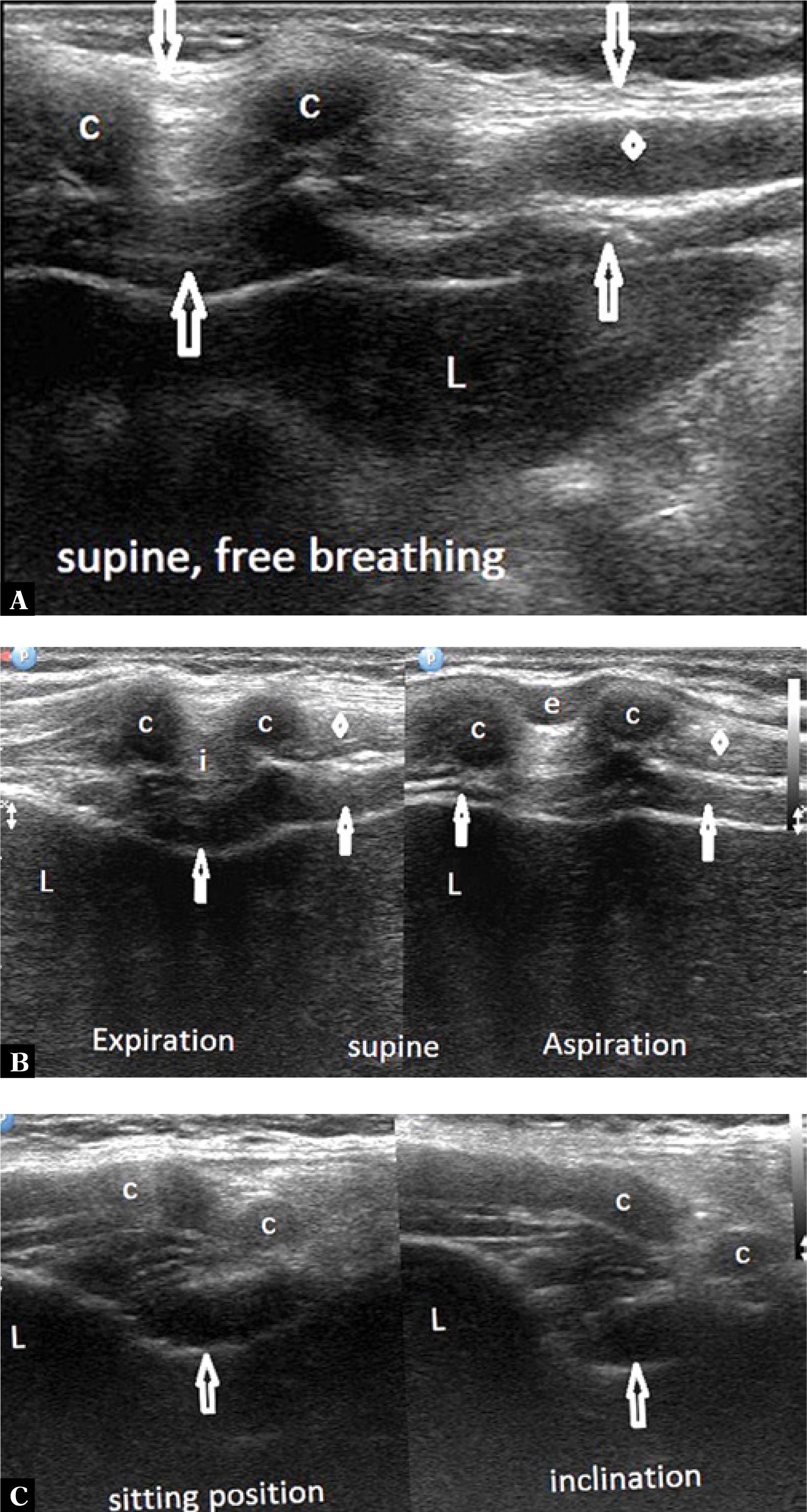
Fig. 3

A 26-year-old female. A. Examination in supine position during free breathing: right costal arch area imagined with a 7–12 MHz linear transducer; legend: c – costal cartilages, downwards arrows – the external oblique muscle, upwards arrows – the transverse abdominal muscle, a diamond – the internal oblique muscle, L – liver. B. Examination in supine position: assessment of the musculocartilaginous complex in the dynamic evaluation during deep inhalation and exhalation – on exhalation, a thickening of the transverse abdominal muscle (upwards arrows) and the external oblique muscle (i) occurs, costal cartilages (c) move closer to each another; on inhalation, thinning of the transverse abdominal muscle (upwards arrows) occurs, the tone of the external intercostal muscle with reduced echogenicity increases (e); costal cartilages (c) move away from each other; L – liver. C. Examination in a sitting position and forward trunk flexion: musculocartilaginous compression of the liver is most pronounced in anterior trunk flexion; which is accompanied by costal cartilages being pulled dorsally

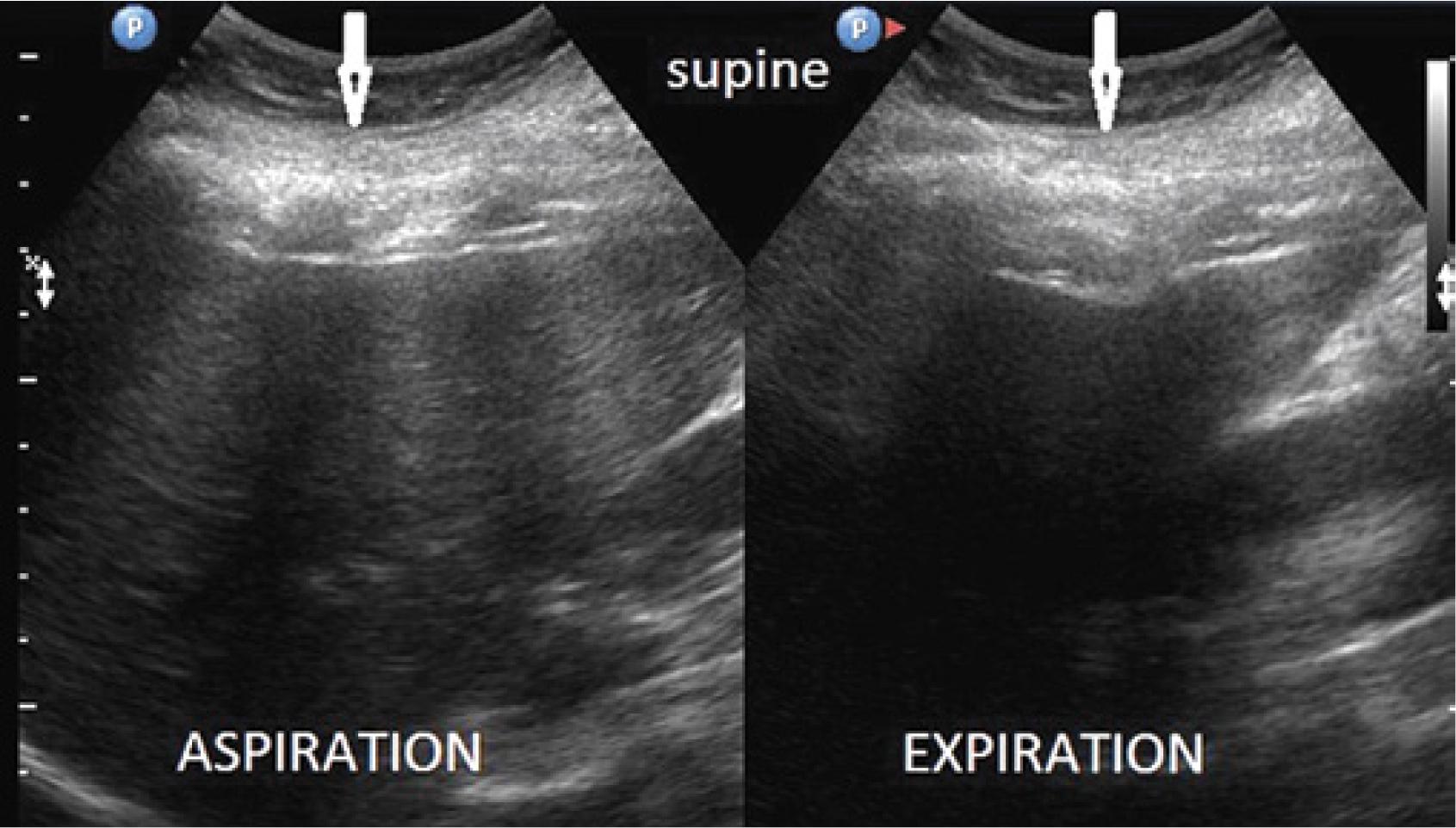
Fig. 4

A 46-year-old female examined using a 3–6 MHz convex transducer in a supine position during inhalation and exhalation. Minor musculocartilaginous compression of the liver occurs during exhalation; however, precise determination of musculocartilaginous components is not possible

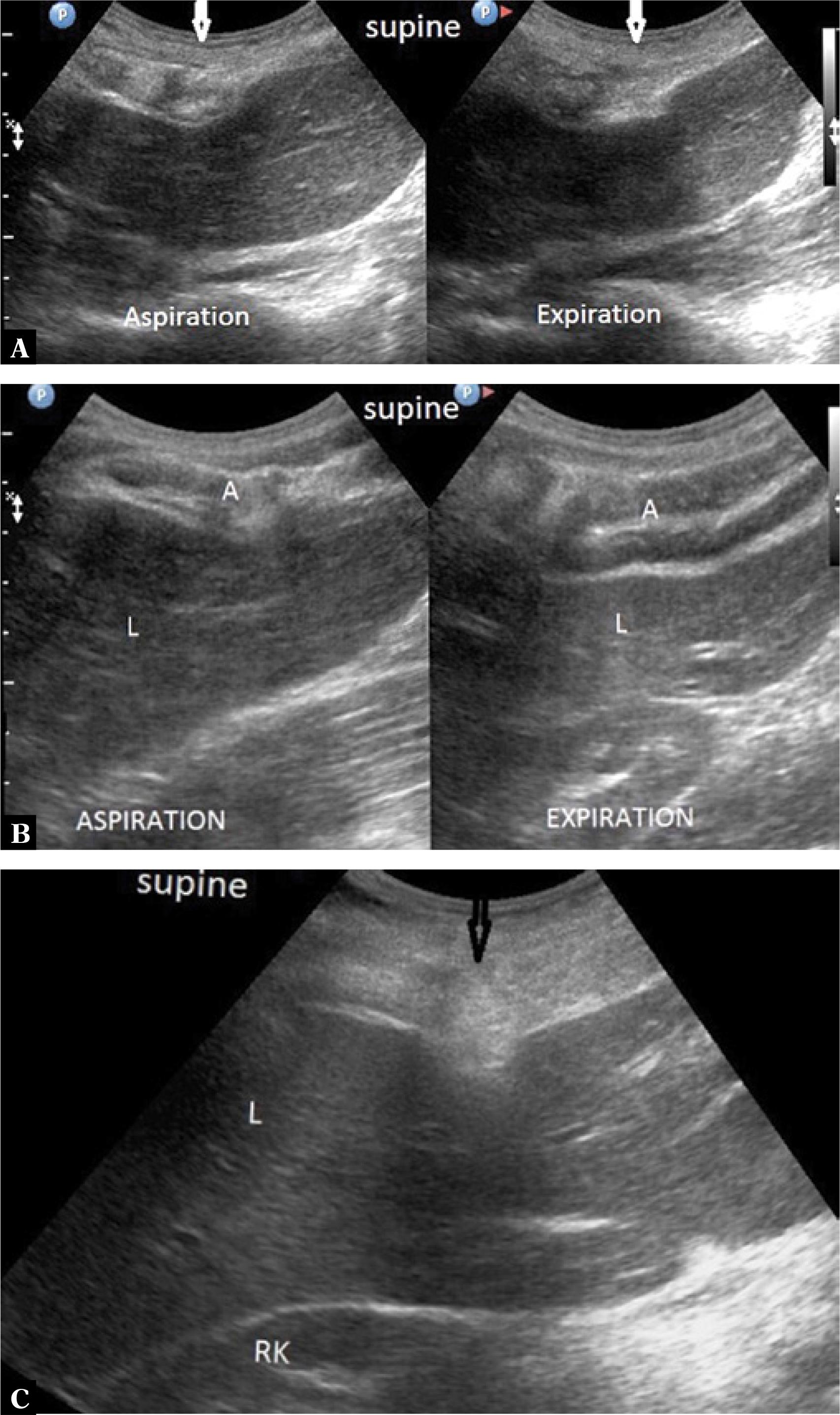
Fig. 5

A. The musculocartilaginous complex with inhomogeneous echogenicity during inhalation and exhalation with distinct, moderate liver compression (arrows). B. Hypoechoic musculocartilaginous complex with clear liver compression during exhalation (arrows). C. Highly echogenic musculocartilaginous complex with clear liver compression (arrow)

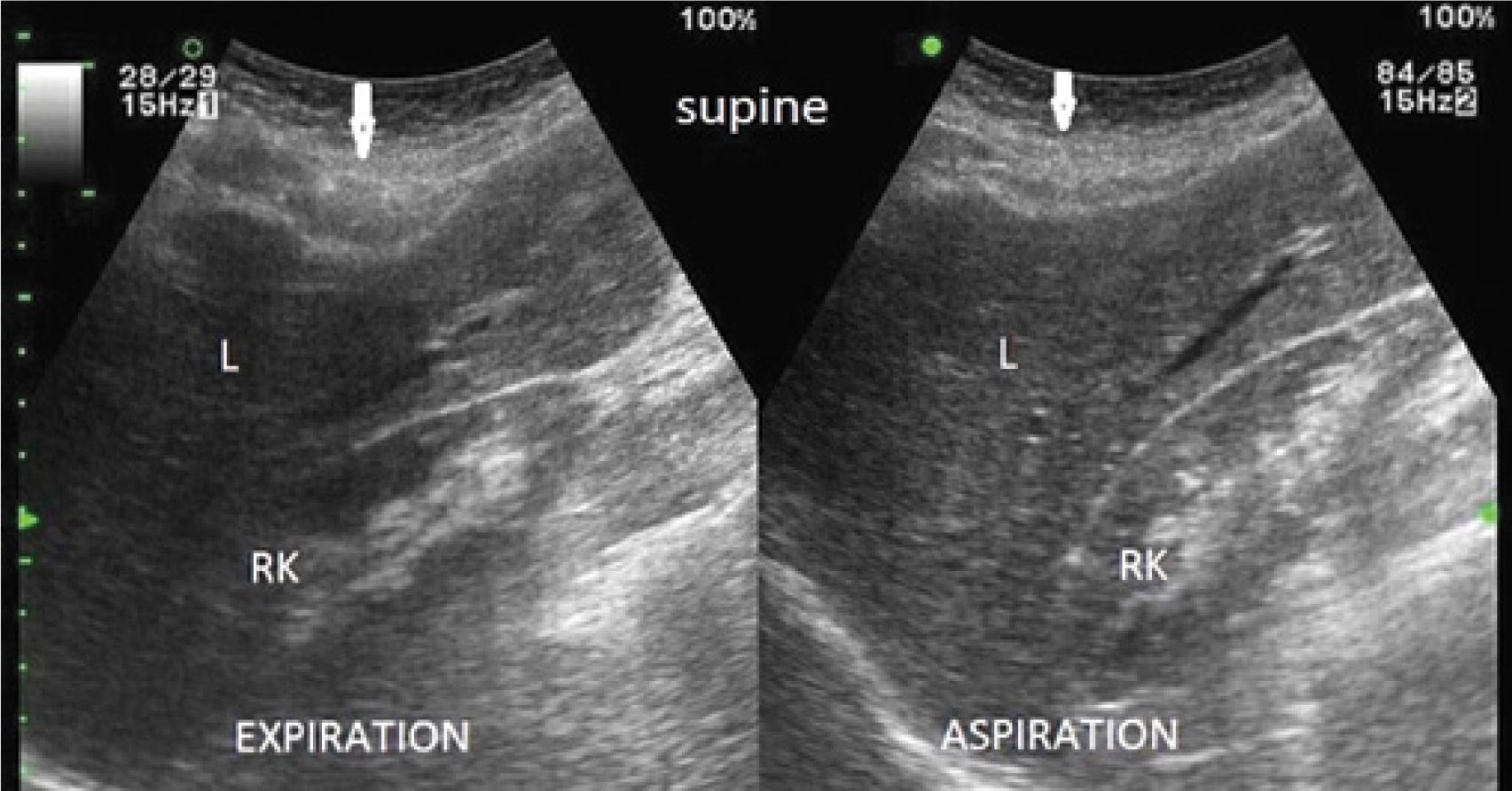
Fig. 6

Significantly deeper, focal musculocartilaginous compression of the liver (arrows)

Fig. 7

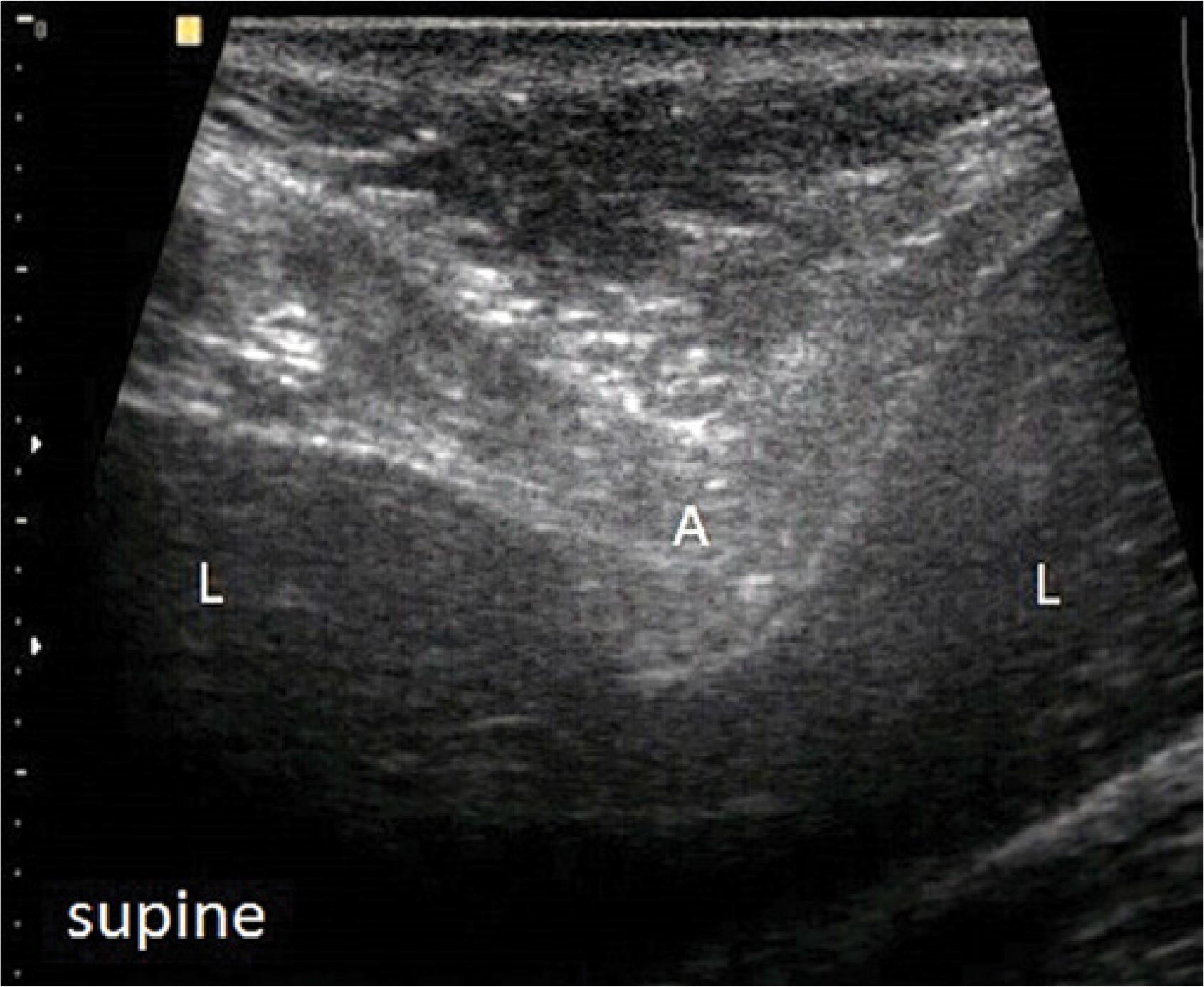
Very deep penetration of the costal arch (A) dividing the liver into two parts (L)

Fig. 8

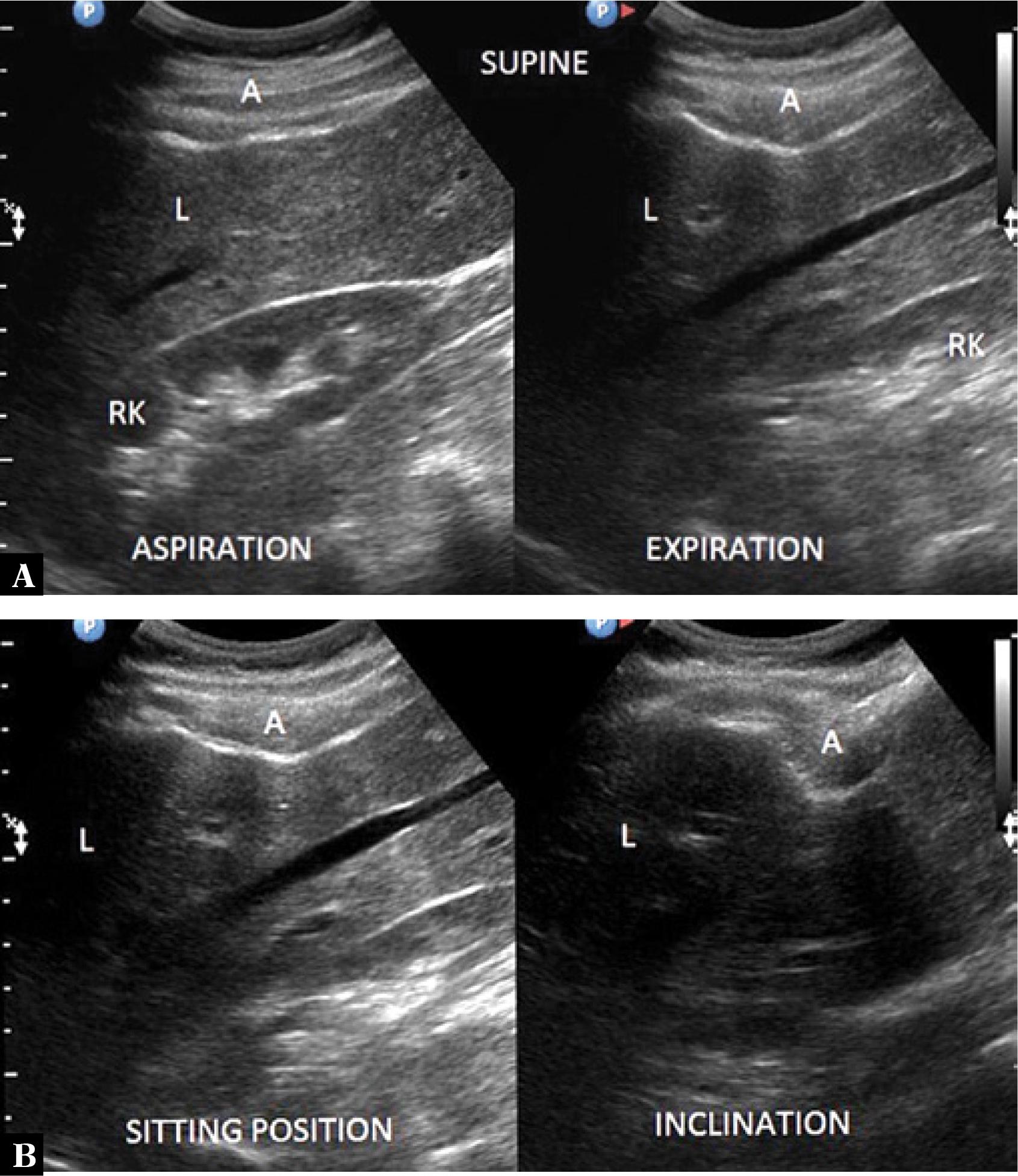
A. Patient in supine position – hepatic compression by the musculocartilaginous complex is deeper during exhalation than inhalation. B. The same patient – in an upright sitting position on the left; in a sitting position with forward trunk flexion on the right – most pronounced hepatic compression

Fig. 9

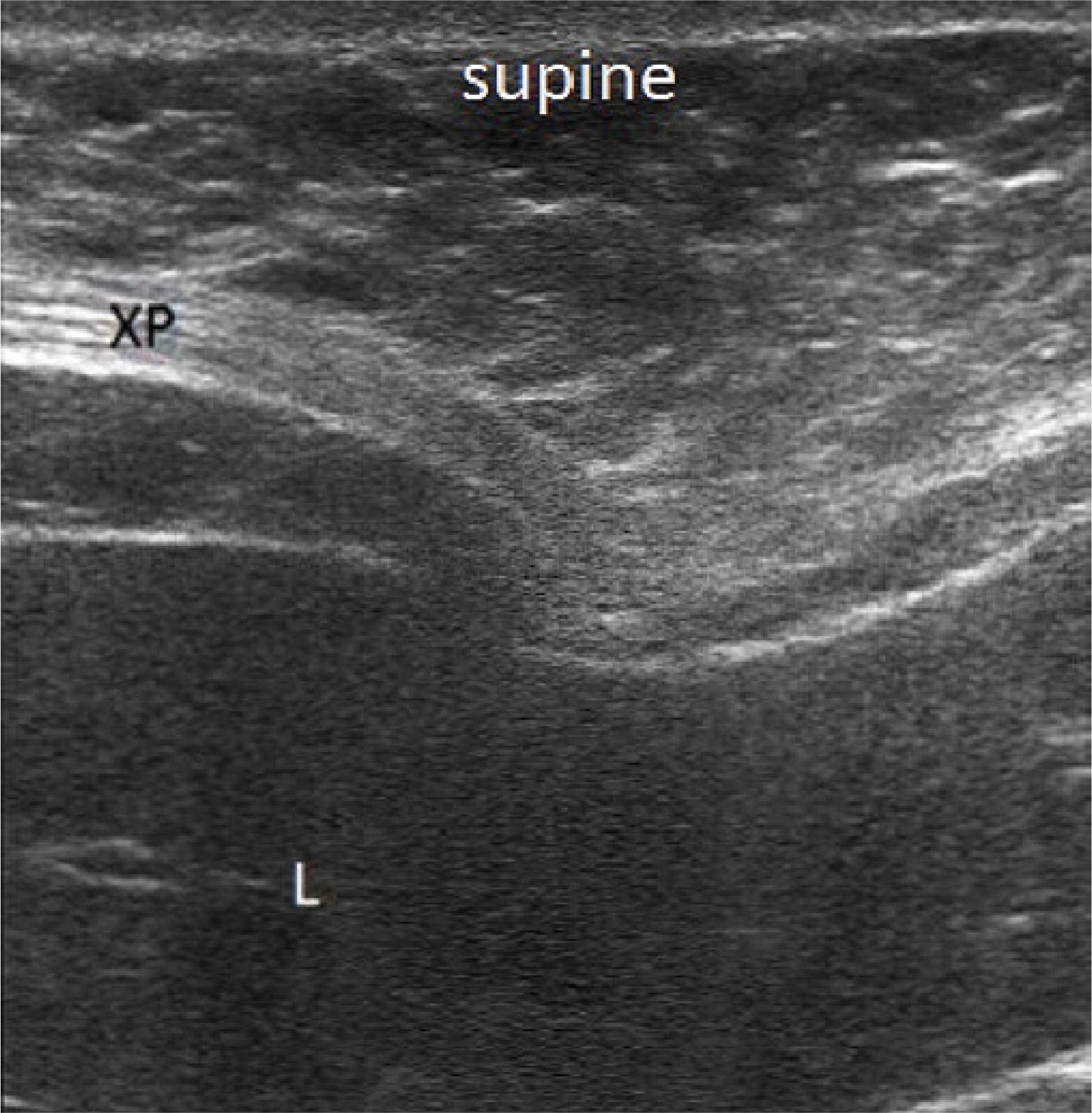
The cartilaginous tip of the xiphoid process (XP) compressing the left hepatic lobe (L)

Fig. 10

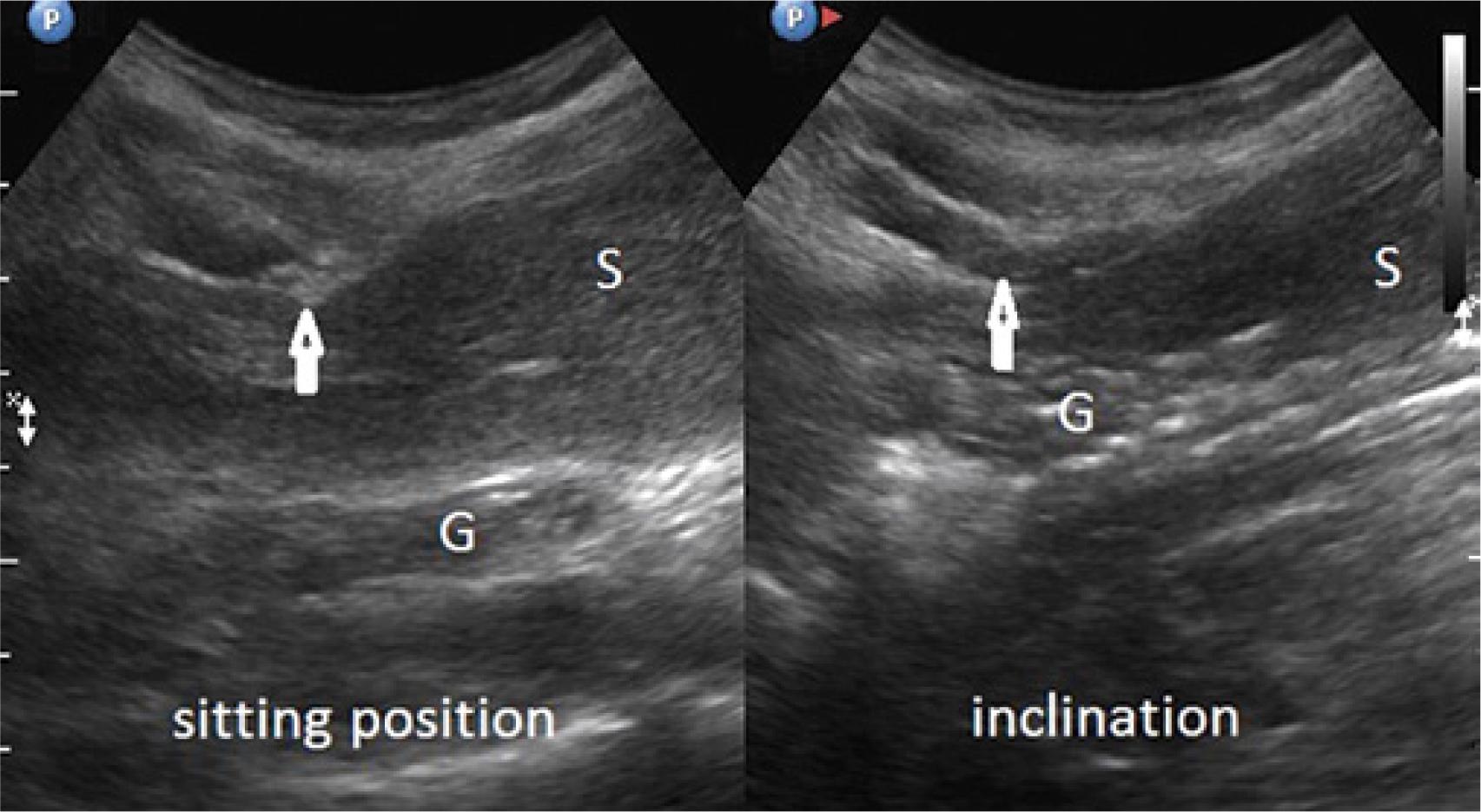
Splenic compression (S) by the musculocartilaginous complex on the left (arrows) in a sitting position (left side of the figure) and forward trunk flexion (right side of the figure); G – stomach

Comparison of the thickness of the musculocartilaginous complex during inhalation, exhalation, supine position, sitting position and forward trunk flexion in 178 patients

FeatureThickness rangeMean SDFeatureThickness rangeMean SD
Inhalation11–28 mm14.5 mm +/− 2.4Exhalation12–40 mm21.5 mm +/− 3.3
Sitting11–31 mm17.0 mm +/− 2.9Flexion20–40 mm25.4 mm +/− 3.5

Ultrasonographic characteristics of the musculocartilaginous complex in 182 patients

FeatureNumber of patientsPercentage
Heterogeneous 12166.5
Hypoechoic 3519.2
Hyperechoic 2614.3
Smooth outline of indentation 182100.0
Broad base of the costal arch 182100.0
Focal costal compression 15283.5
Segmental costal compression 3016.5

Summary of statistical data on the thickness of the musculocartilaginous complex at different testing stages in 178 patients

StageMeanStageMean
Inhalation14.5 mmExhalation21.5 mm
Inhalation14.5 mmSitting17.0 mm
Inhalation14.5 mmFlexion25.4 mm
Exhalation21.5 mmSitting17.0 mm
Inhalation21.5 mmFlexion25.4 mm
Sitting17.0 mmFlexion25.4 mm
DOI: https://doi.org/10.15557/jou.2018.0002 | Journal eISSN: 2451-070X | Journal ISSN: 2084-8404
Language: English
Page range: 9 - 15
Submitted on: Jan 29, 2017
Accepted on: Aug 8, 2017
Published on: Mar 30, 2018
Published by: MEDICAL COMMUNICATIONS Sp. z o.o.
In partnership with: Paradigm Publishing Services
Publication frequency: 4 issues per year

© 2018 Andrzej Smereczyński, Katarzyna Kołaczyk, published by MEDICAL COMMUNICATIONS Sp. z o.o.
This work is licensed under the Creative Commons Attribution-NonCommercial-NoDerivatives 4.0 License.