
Introduction
Occupation is a part of every human’s life. The notion of occupation not only means activities of daily living but also those which we perform in our professional life or free time. During their life, people experience various dysfunctions caused by diseases or injuries which make it difficult to function properly. Then, complex and multidirectional rehabilitation plays a significant role. It should be conducted by an interdisciplinary team of specialists that, apart from a doctor, a physiotherapist or a nurse, should also include an occupational therapist, since occupational therapy constitutes a significant element of each stage of rehabilitation [1].
Currently, the focus in the therapy worldwide is shifted to a patient whose participation in selecting the form of activities is very significant. It cannot be forgotten that every individual functions in a particular environment constituting its integral part together with relatives, friends and cultural conditions [2]. Therefore, an attempt is made at meeting the patients’ needs as cooperation with them takes the form of partnership. Occupational therapists are usually employees of healthcare and social services who accompany individuals with limitations resulting from disabilities, old age or learning difficulties [3,4]. The main tasks of therapists include supporting patients in finding alternative ways of performing activities which are important for them and improving their functioning in social and personal spheres. Occupational therapy focuses mainly on the patients’ psyche, health and well-being and its aim is to enable the patients to function at their best in everyday and professional life. While defining the directions of their work, occupational therapists may use numerous widely available therapeutic models, e.g. Person-Environment-Occupation (PEO) Model or Model of Human Occupation (MOHO) [5,6].
In Poland occupational therapy was perceived in a relatively narrow meaning. It was often defined as a form of ergotherapy or was associated with rehabilitation as a professional preparation consisting of preparing practical or artistic objects. It included various tasks connected with art, music, dance, crafts or recreation; however, it did not deal with activities of daily living [7]. Much less attention was paid to the patients’ surroundings. Nowadays, though, more and more focus is shifted to the necessity of including the patients’ environment and activities of daily living in the occupational therapy of the elderly and the disabled [8].
Occupational therapy does not only refer to individuals with health problems but to all those who experience occupational problems. It is gaining more and more popularity both in Europe and in other countries worldwide. While working individually with patients, occupational therapists aim their activities at developing their ability to live independently and to undertake professional, educational, recreational and social activities [9]. However, prior to commencing their work, therapists have to diagnose the patients’ needs on the basis of an interview during which occupational problems are analysed and therapeutic goals are set taking into account their subjective feelings and needs. The aim of occupational therapy is to preserve or recover the patients’ ability to perform various activities, and therefore, to mitigate functional effects of a disease or injury and help to return to decent existence. Occupational therapy takes a very important place in rehabilitation as it combines therapeutic and social aspects. All the activities should be adapted to the patient’s situation, i.e. to reduced mental capabilities and physical fitness, decreased motivation and current state of health [10].
An occupational therapist should:
– aim to help the patient to achieve self-sufficiency (e.g. by training activities of daily living, recommending supporting devices);
– help to develop physical fitness, which facilitates clinical treatment by improving the function of injured body parts or the whole body (focusing on a particular activity so that the patient forgets the fatigue and performs more movements);
– prepare the patient to take up activities aimed at professional activation;
– motivate and encourage the patient taking into account their functional abilities;
– provide entertainment in the patient’s free time;
– recommend solutions which lead to environment without barriers [11].
The process of occupational therapy should start from establishing the best possible rapport between the patient and the therapist based on mutual acceptance. It will later allow the therapist to properly interpret or, should the need occur, to correct inappropriate behaviours of the patient which could evoke unpleasant emotions [12,13].
Functional diagnosis is the first stage of the therapy. On its basis, the therapist prepares a short- and long-term plan of the therapy. Both occupational therapy and other therapies should be conducted in the form of cooperation with other members of the interdisciplinary team. A complex assessment of living conditions and environment of the patient plays a significant role. A broad analysis of the problem makes it possible to adapt the conditions to the patients’ disabilities and make use of their skills and predispositions in practice. The therapist should take various roles depending on the needs, e.g. in learning an activity or detecting threats at home or at work. The therapist’s activities should be aimed at helping the patient to achieve independence and to build the patient’s feeling of influence on the occurring changes [14].
The aim of the study was to present the current knowledge of the inhabitants of Lesser Poland about the profession of occupational therapists, their competences and their position on the job market.
Material and methods
The study included 244 respondents, i.e. 75% of females and 25% of males, aged between 25 and 65. The age group of 25- to 35-year-olds was the largest one (128 respondents, 53%), while the age group of 56- to 65-year-olds consisted of the smallest number of respondents (17%). Respondents aged 36-55 years constituted 30% of the study group which included both working and studying individuals. In terms of employment, the study group was varied. The highest percentage was comprised of employees of healthcare system (21%), while the smallest group included individuals dealing with trade (4%) and the unemployed (7%). The study group also included students (12%) whose number was equal to the number of administration employees. The respondents employed in management and education constituted 10% of the study group, while individuals working in other fields accounted for 6% of the studied population. In turn, 16% of the study participants did not indicate any employment. As far as the place of living is concerned, the biggest group included individuals living in rural areas (30%) and in towns smaller than 50000 inhabitants (30%). Respondents living in towns larger than 50000 inhabitants constituted a slightly smaller group (21%), while the smallest group included the participants living in cities larger than 250000 inhabitants (19%).
An anonymous questionnaire (developed by the authors of the study) which included 11 single-choice closed questions regarding the use of occupational therapist’s services was applied as a research tool. The questionnaire asked about the competences of therapists and the issue of trust that patients have in the therapists. Moreover, it asked about the preferences concerning the therapists’ sex and age and the awareness regarding salary and situation on the job market. The final part of the questionnaire included questions related to personal data of the respondents and the date and place of the study. The questionnaire, which was used once in the study, was available online and in a paper form. The respondents answered the questions independently. Both the paper and online version of the questionnaire was created in the same manner, i.e. with the use of the online tool Google Documents. Then, the file was sent via e-mail, published on discussion forums for the disabled as well as on general discussion forums and Facebook. The forms completed online constituted 38% of all the questionnaires, while the remaining forms were filled in at rehabilitation centres (17%), nursing homes (16%), educational institutions (14%), offices (8%) and hospitals (7%).
Results
The vast majority of the respondents (89%) perceived the job of an occupational therapist as a needed profession. Out of 244 respondents, 74% never used the services of an occupational therapist, while 26% had some contact with occupational therapy at least once in their lifetime. The responses of the study participants who used the services of an occupational therapist included 3% of negative opinions, which may indicate their dissatisfaction with the process of occupational therapy. In the group of individuals who underwent occupational therapy, 95% of the respondents perceived this job as a needed one, while 2% did not express any opinion on this issue (fig.1). Individuals who did not use the services of occupational therapists mainly perceived this profession as a needed one (87%), while only one person (>1%) in this group thought the job was not needed. In turn, 12% of the respondents did not express their opinion (fig.1)
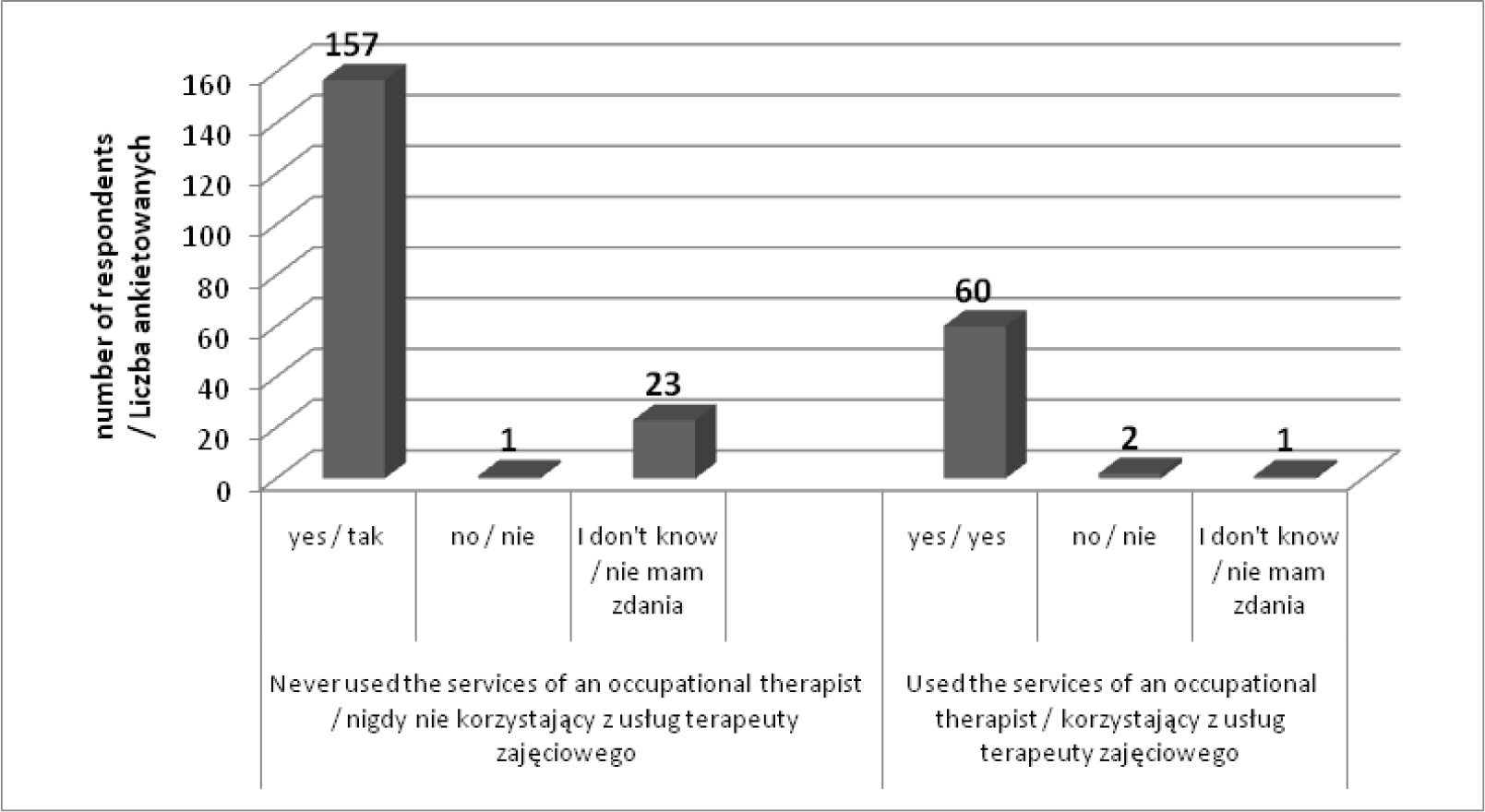
Fig. 1.
Opinions of the respondents on the issue of the need for the profession of an occupational therapist (number of respondents)
The respondents who never used the services of occupational therapists usually replied that they associated this job with occupational therapy workshops (46%) and with adaptation to daily living (35%). Only a small number of the study participants (16%) associated the profession of an occupational therapist with manual activities (e.g. arts and crafts). The lowest number of the respondents (3%) replied that they did not have any associations with this job (fig.2).
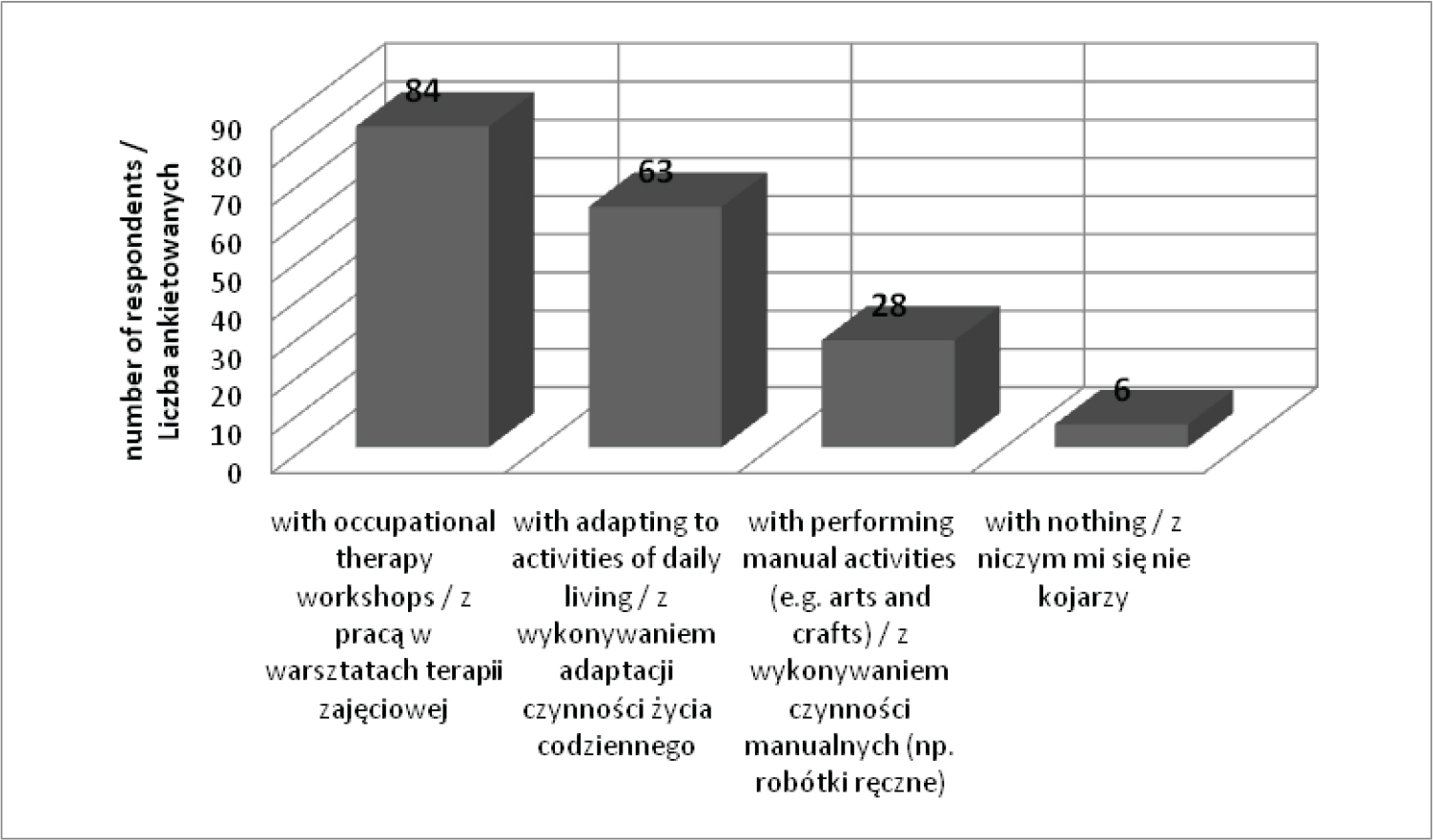
Fig. 2.
Associations concerning the job of occupational therapists among the respondents who never used the services of occupational therapists (number of respondents)
In the group of the respondents who used the services of occupational therapists, the majority (41%) replied that they associated this profession with adapting to the activities of daily living. However, only a slightly smaller group (30%) replied that they associated the job with occupational therapy workshops and performing manual activities, i.e. arts and crafts (25%). Only 3% of the respondents replied that they did not have any associations with the job of a therapist (fig. 3).
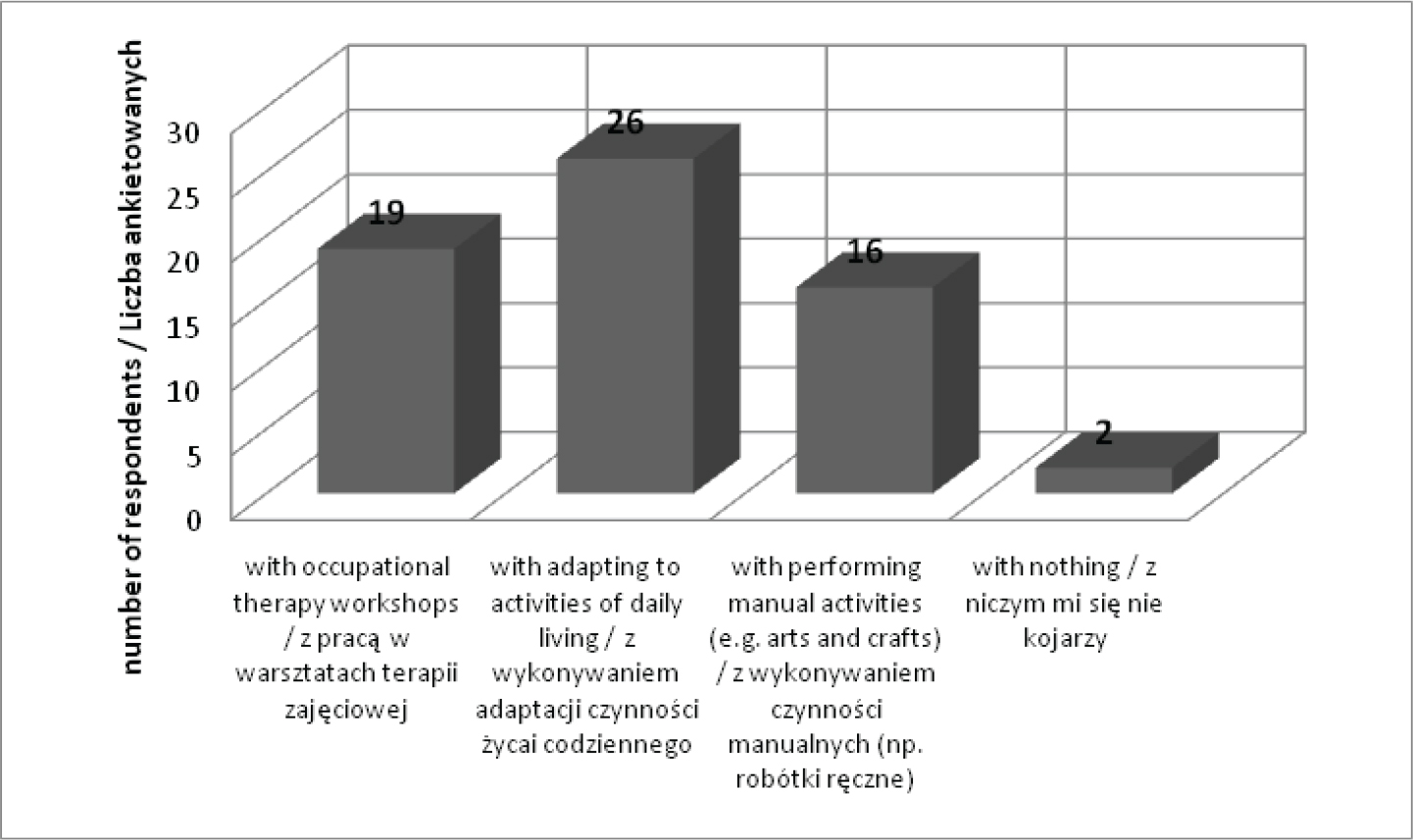
Fig. 3.
Associations concerning the job of occupational therapists among the respondents who participated in occupational therapy (number of respondents)
The questionnaire included two questions regarding the patients’ trust in occupational therapists when adapting their house and performing exercises connected with activities of daily living. The majority of the respondents (144 persons, i.e. 60%) replied that they would trust an occupational therapist when adapting their house to their needs. As far as performing exercises is concerned, 26 individuals (10%) responded positively, while 74 individuals (30%) did not have any opinion on that (fig. 4)
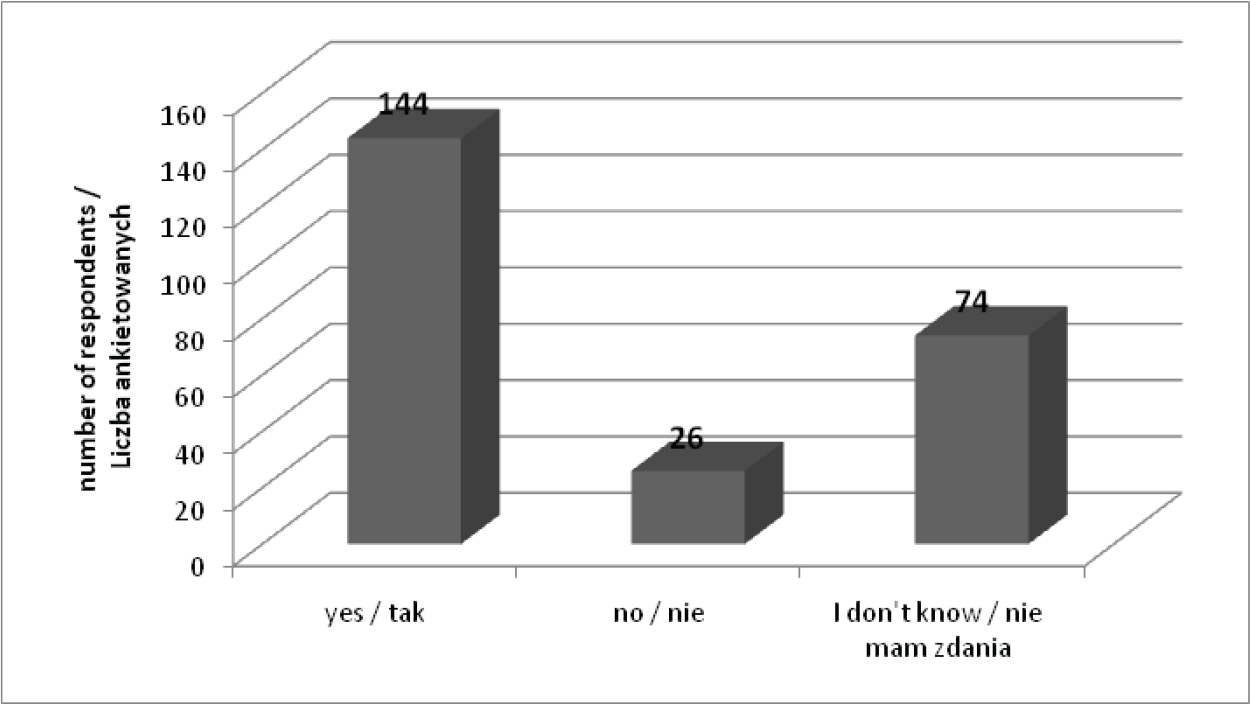
Fig. 4.
Opinions of the respondents concerning their trust in occupational therapists when adapting their house to their needs (number of respondents)
The opinions of the respondents differed when it came to the question regarding activities of daily living. The majority of the study participants (43%) chose the answer “It depends on a patient”, while the lowest number of the respondents (23%) would not trust the therapist in this aspect since it is a competence of a physiotherapist. A positive answer was selected by 82 respondents (34%) (fig.5).
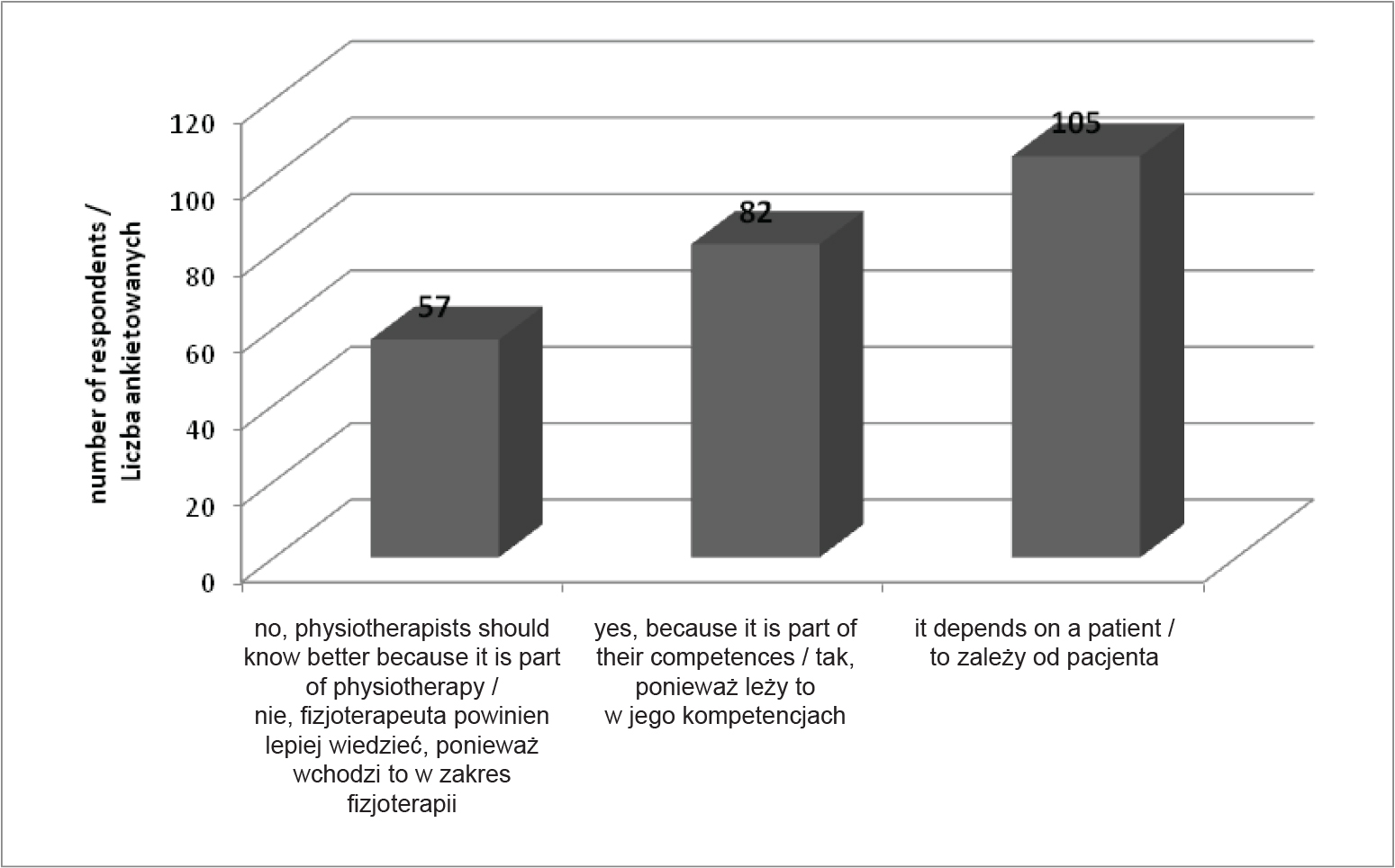
Fig. 5.
Opinions of the respondents concerning their trust in occupational therapists when performing exercises connected with activities of daily living (number of respondents)
Discussion
In the available literature there is a scarcity of studies regarding the way in which the profession of an occupational therapist is perceived in the Polish society. In Western Europe and the USA, the job of occupational therapists is commonly known and their competences do not raise any doubts. However, in Poland education for this profession based on the European model is in the development phase.
Our research shows that the society is not fully aware of the competences of occupational therapists and a number of people associate this job only with occupational therapy workshops focusing mainly on manual abilities and professional preparation. However, there were also several respondents who were more aware of opportunities which a job of occupational therapists provides, e.g. helping patients in such spheres as adapting rooms or activities of daily living, professional life or free time to their individual needs. The research shows that a small number of respondents had an opportunity to meet occupational therapists or use their services, as this job is not well-known yet, which may result from great discrepancies when it comes to possibilities of educating and employing such persons.
Despite the fact that the job of an occupational therapist according to the European model is not well-known in our society yet, it is perceived as a needed profession. Occupational therapy should develop in Poland, where, similar to other European countries, the population ageing is noticeable. The number of individuals who need care is growing so they should have a chance to meet an occupational therapist who would help them adapt their surroundings to normal functioning even at the time of disease or old age so that they can live a decent life. Each person belongs to a particular society and therefore, they should be able to move freely and have an easy access to assisstance when they suffer from a disease, regardless of age, social status or sex [15].
Conclusions
The job of an occupational therapist was perceived by the respondents as a needed profession, both in the case of individuals who used and those who did not use the services of occupational therapists.
The way in which occupational therapy is perceived by the study participants differs from a current model presented in the world.
The majority of the study participants would trust an occupational therapist both in performing exercises connected with activities of daily living and in adapting the house to their needs.