
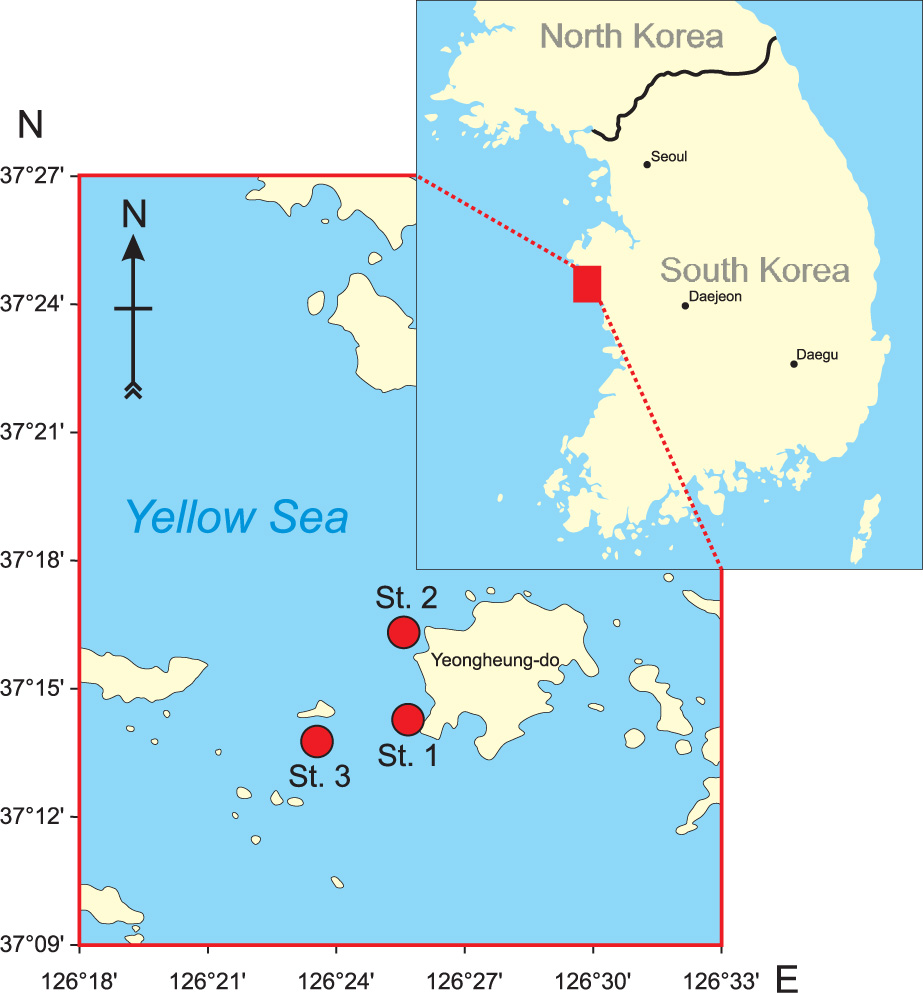
Figure 1
Sampling sites in the Yeongheung-do coastal waters, Incheon, Korea. St. 1: Site 1. St. 2: Site 2. St. 3: Site 3
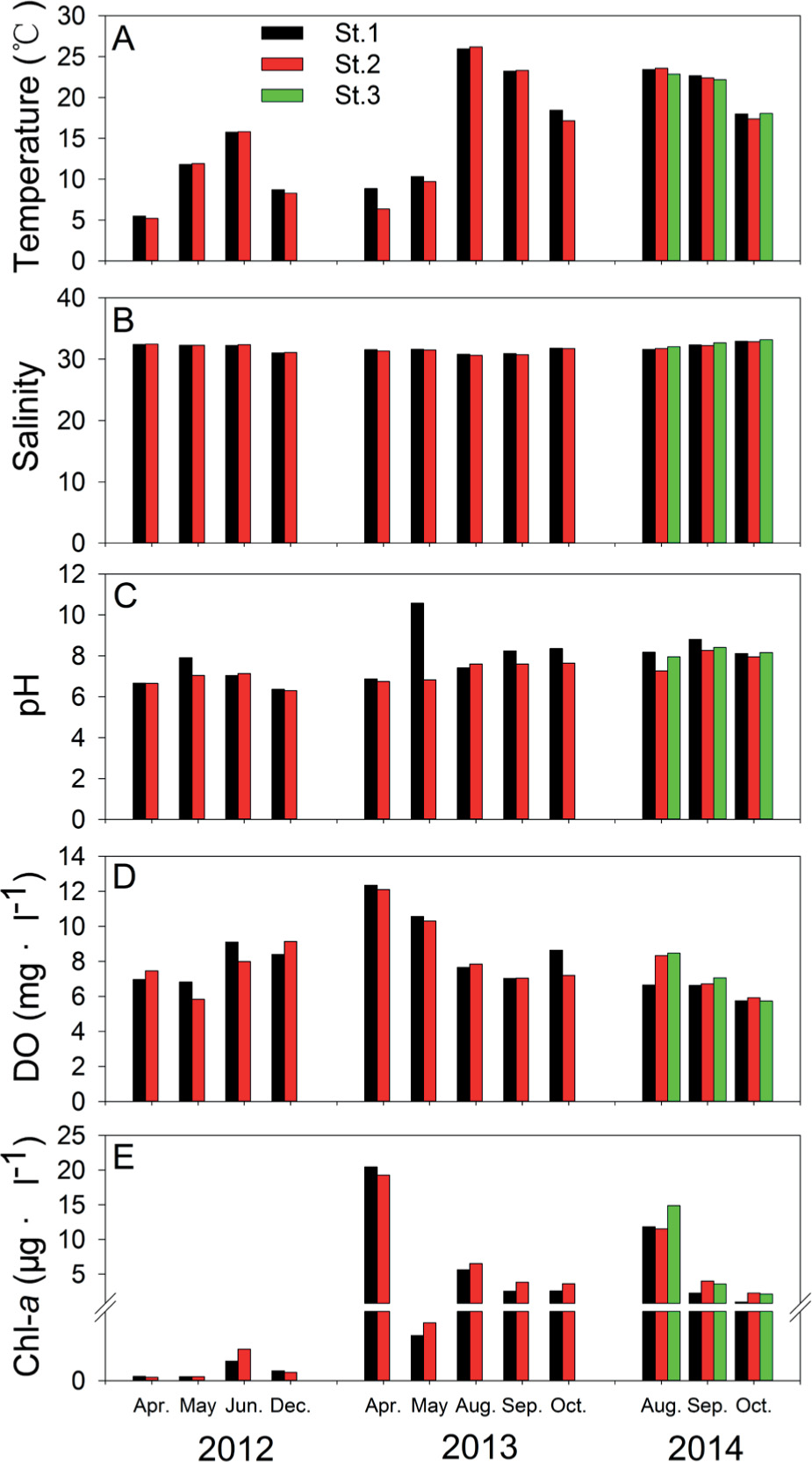
Figure 2
Physicochemical factor fluctuations at St. 1 through St.3 during field monitoring. A: Temperature; B: Salinity; C: pH; D: Dissolved oxygen (DO); E: Chlorophyll a, note the y axis break in E: Break from 0.6 to 0.8
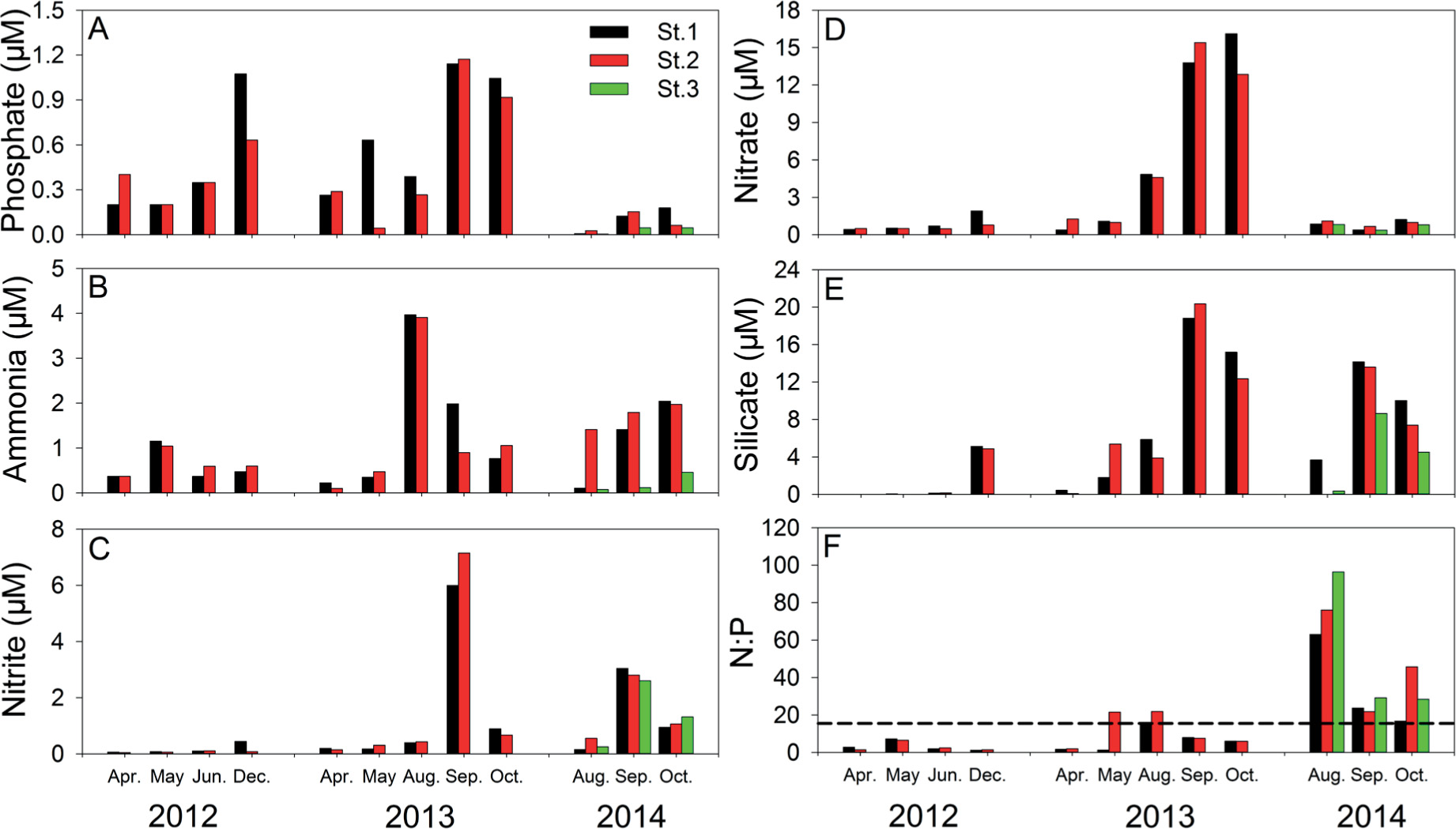
Figure 3
Nutrient variations at St. 1 through St. 3 during field monitoring. A: Phosphate; B: Ammonia; C: Nitrite; D: Nitrate; E: Silicate; F: N:P ratio; the dotted N:P line represents a value of 16, which is the nitrogen to phosphorus ratio in the plankton and is remarkably similar to the global ocean dissolved nitrate to phosphate ratio (16:1) (Redfield 1958)
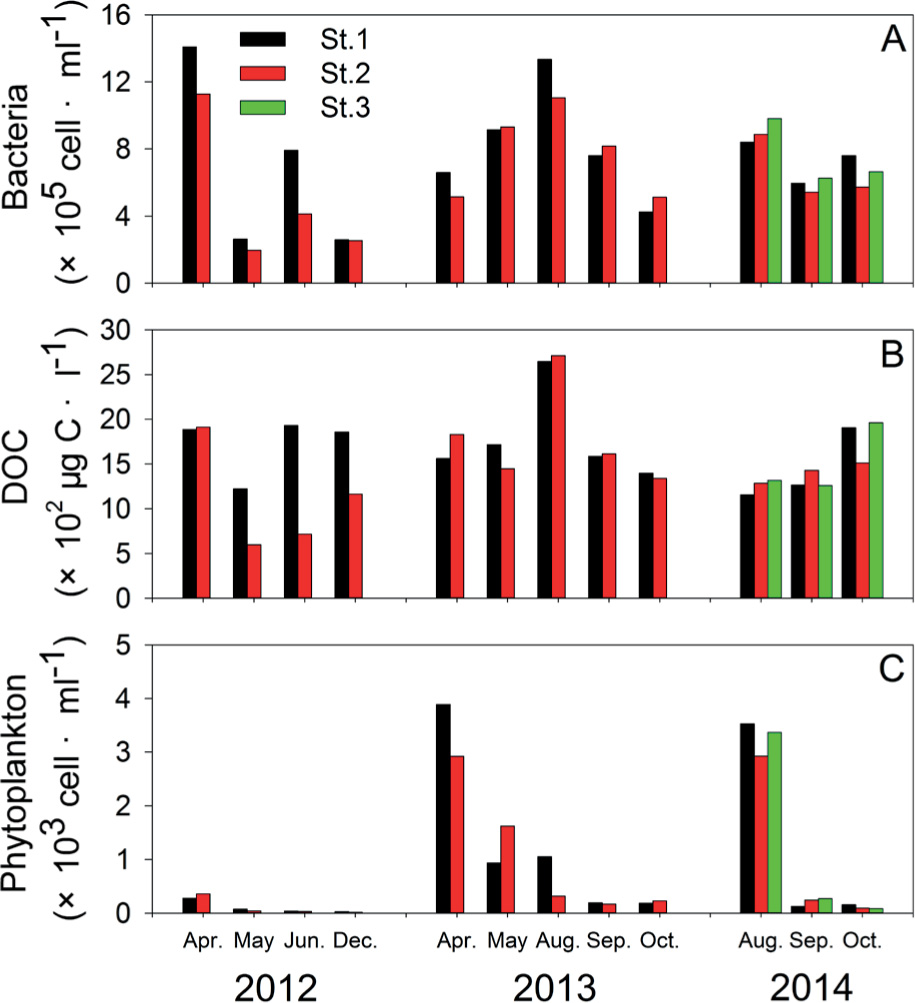
Figure 4
Bacteria, dissolved organic carbon (DOC) and phytoplankton variations at St. 1 through St. 3 during field monitoring. A: Bacteria abundance; B: DOC concentration; C: phytoplankton abundance
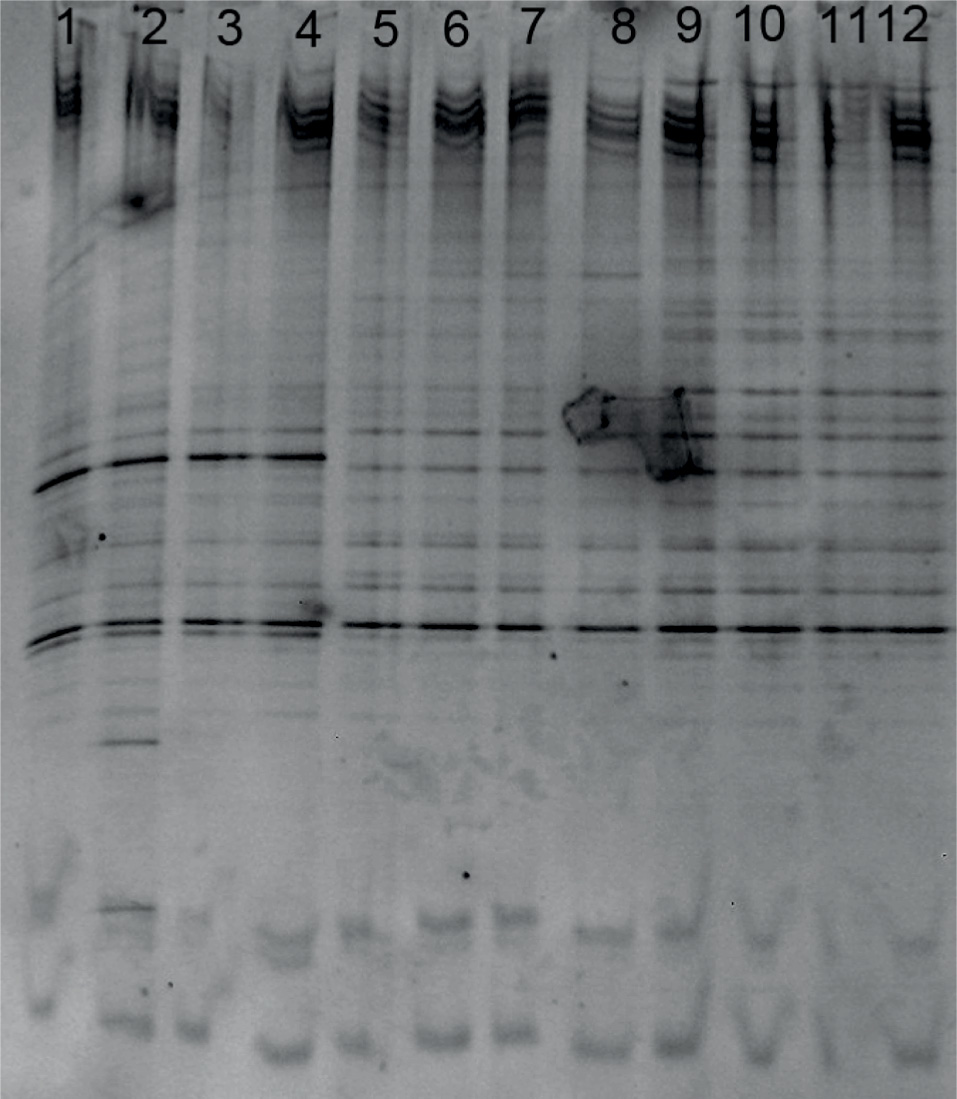
Figure 5
DGGE band patterns (negatively converted) obtained from the 2013 field monitoring campaign in Yeongheung-do, Incheon, Korea. 1. 08-27-2013 St. 1- Surface; 2. 08-27-2013 St. 1 - Bottom; 3. 08-27-2013 St. 2 - Surface; 4. 08-27-2013 St. 2 - Bottom; 5. 09-24-2013 St. 1 - Surface; 6. 09-24-2013 St. 1 - Bottom; 7. 09-24-2013 St. 2 - Surface; 8. 09-24-2013 St. 2 - Bottom; 9. 10-29-2013 St. 1 - Surface; 10. 10-29-2013 St. 1 - Bottom; 11. 10-29-2013 St. 2 - Surface; 12. 10-29-2013 St. 2 - Bottom
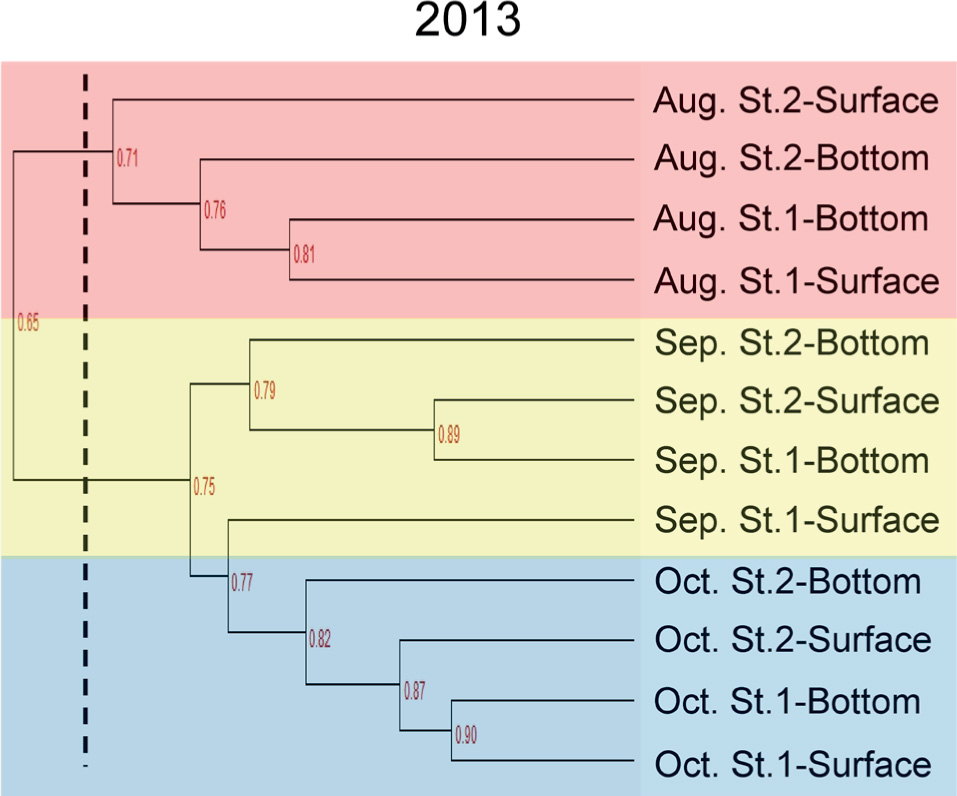
Figure 6
DGGE pattern clustering analysis using the unweighted pair-group method with arithmetic means (UPGMA) for samples collected from St. 1 to St. 3 during the 2013 field monitoring campaign. Distinct background colors used to distinguish the months in different clades.
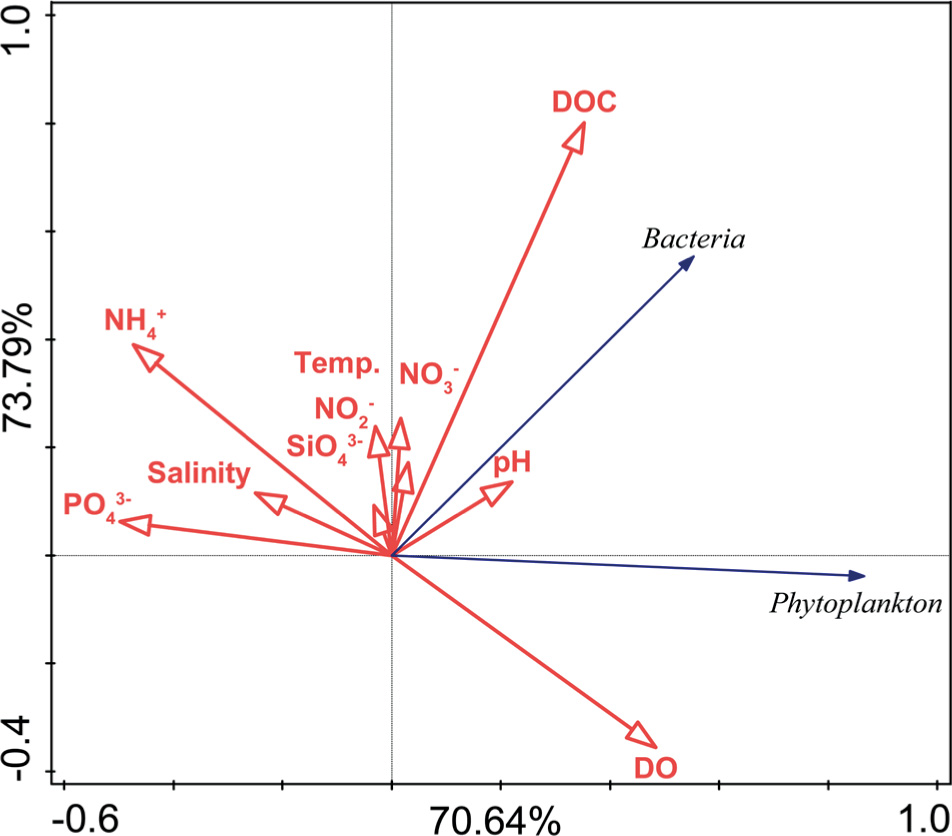
Figure 7
Redundancy analysis (RDA) of field monitoring data for physicochemical and biotic factors. A significant relationship existed between DOC and bacterial abundance. Cumulative percentage variance of the first two axes was 70.64% and 73.79%, respectively.
Table 1
Correlations between physicochemical and biotic factors measured during field monitoring
| 1 | 2 | 3 | 4 | 5 | 6 | 7 | 8 | 9 | 10 | 11 | 12 | ||
|---|---|---|---|---|---|---|---|---|---|---|---|---|---|
| 1. Bacteria | Pearson Correlation | 1 | |||||||||||
| p value | |||||||||||||
| N | 48 | ||||||||||||
| 2. Phytoplankton | Pearson Correlation | .157 | 1 | ||||||||||
| p value | .287 | ||||||||||||
| N | 48 | 54 | |||||||||||
| 3. Temperature | Pearson Correlation | .206 | .050 | 1 | |||||||||
| p value | .160 | .718 | |||||||||||
| N | 48 | 54 | 54 | ||||||||||
| 4. Salinity | Pearson Correlation | -.098 | -.150 | -.185 | 1 | ||||||||
| p value | .510 | .279 | .179 | ||||||||||
| N | 48 | 54 | 54 | 54 | |||||||||
| 5. DO | Pearson Correlation | .015 | .546** | -.443** | -.358** | 1 | |||||||
| p value | .918 | .000 | .001 | .008 | |||||||||
| N | 48 | 54 | 54 | 54 | 54 | ||||||||
| 6.pH | Pearson Correlation | .291* | .009 | .459** | .067 | -.170 | 1 | ||||||
| p value | .045 | .948 | .000 | .631 | .218 | ||||||||
| N | 48 | 54 | 54 | 54 | 54 | 54 | |||||||
| 7. DOC | Pearson Correlation | .625** | -.056 | .103 | -.298 | .108 | -.036 | 1 | |||||
| p value | .000 | .781 | .609 | .131 | .593 | .859 | |||||||
| N | 27 | 27 | 27 | 27 | 27 | 27 | 27 | ||||||
| 8. PO43- | Pearson Correlation | -.208 | -.357 | -.057 | -.555** | .107 | -.016 | .092 | 1 | ||||
| p value | .299 | .067 | .778 | .003 | .595 | .938 | .647 | ||||||
| N | 27 | 27 | 27 | 27 | 27 | 27 | 27 | 27 | |||||
| 9. NH4+ | Pearson Correlation | .268 | -.270 | .549** | -.295 | -.336 | .103 | .511** | .026 | 1 | |||
| p value | .176 | .174 | .003 | .135 | .087 | .608 | .006 | .897 | |||||
| N | 27 | 27 | 27 | 27 | 27 | 27 | 27 | 27 | 27 | ||||
| 10. NO2− | Pearson Correlation | -.007 | -.263 | .476** | -.215 | -.303 | .281 | -.020 | .443** | .157 | 1 | ||
| p value | .973 | .184 | .012 | .281 | .124 | .156 | .920 | .021 | .435 | ||||
| N | 27 | 27 | 27 | 27 | 27 | 27 | 27 | 27 | 27 | 27 | |||
| 11. NO3− | Pearson Correlation | -.020 | -.224 | .340 | -.458** | -.087 | .146 | .092 | .793** | .217 | .583** | 1 | |
| p value | .922 | .262 | .082 | .016 | .667 | .468 | .649 | .000 | .277 | .001 | |||
| N | 27 | 27 | 27 | 27 | 27 | 27 | 27 | 27 | 27 | 27 | 27 | ||
| 12.SiO4− | Pearson Correlation | -.120 | -.378 | .498** | -.203 | -.340 | .348 | .007 | .545** | .281 | .827** | .734** | 1 |
| p value | .551 | .052 | .008 | .311 | .082 | .075 | .971 | .003 | .156 | .000 | .000 | ||
| N | 27 | 27 | 27 | 27 | 27 | 27 | 27 | 27 | 27 | 27 | 27 | 27 | |
Table S1
Depth of sampling sites
| Date | Depth (m) | ||
|---|---|---|---|
| St.1 | St.2 | St.3 | |
| 2013-08-27 | 2.5 | 6 | ND |
| 2013-09-24 | 4 | 7 | ND |
| 2013-10-29 | 3 | 7 | ND |
| 2014-08-28 | 2 | 6.5 | 11 |
| 2014-09-25 | 2 | 6 | 10 |
| 2014-10-28 | 3 | 6 | 12 |
ND – No data available
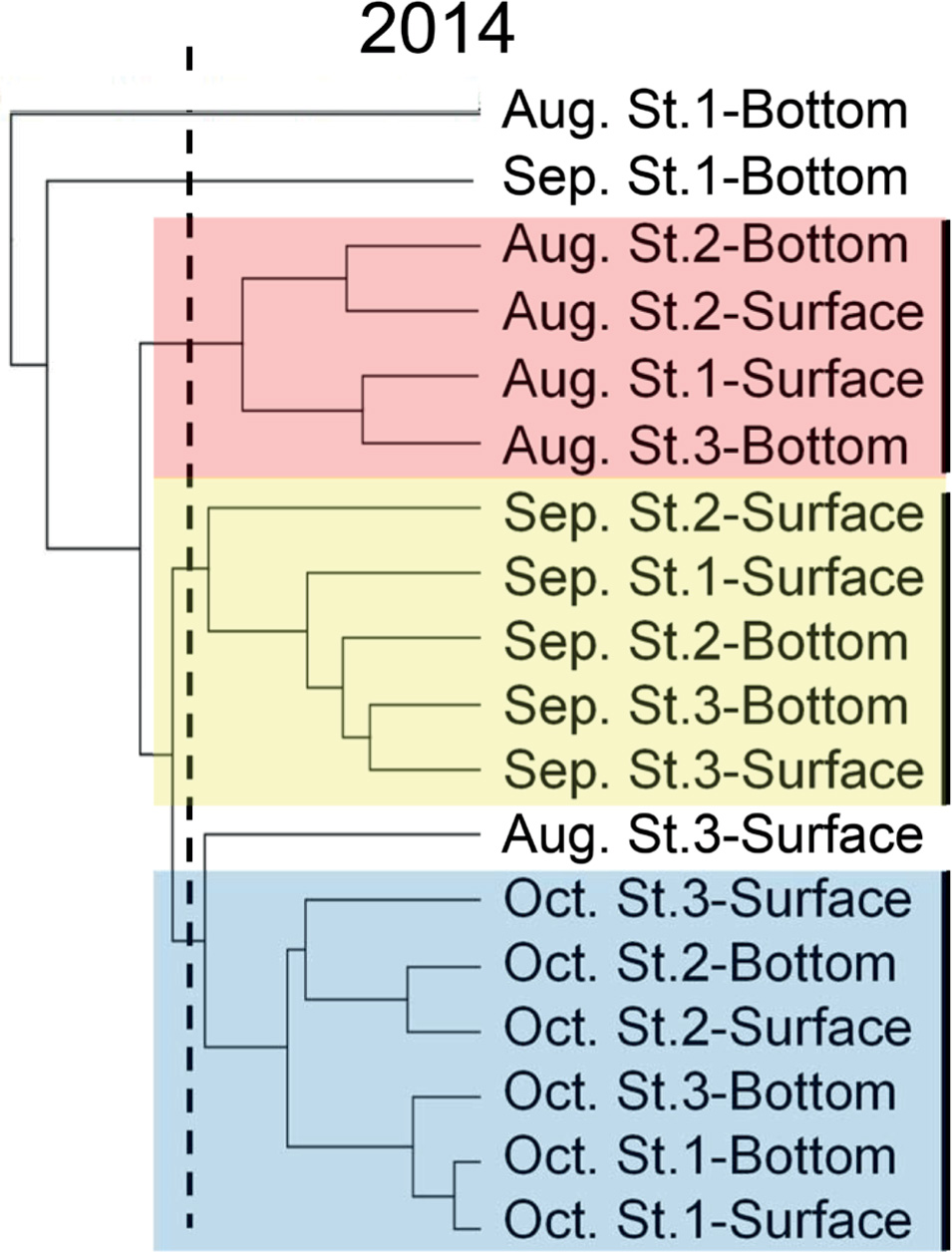
Figure S1
DGGE pattern clustering analysis using the unweighted pair-group method with arithmetic means (UPGMA) for samples collected from St. 1 to St. 3 during the 2014 field monitoring campaign. Distinct background colors used to distinguish the months in different clades.