
Introduction
As a kind of benign adenomas in the pituitary gland, clinically non-functioning pituitary adenomas (NFPAs) are the most common type of pituitary macroadenomas in adults. The NFPAs account for about 34.0% [1] of all pituitary adenomas (PAs) that occur at a prevalence rate of 75-94 per 100,000 [1,2]. Patients with NFPAs generally suffer from headaches, hypopituitarism, hypogonadism and visual field defects. Late diagnosis due to inconspicuous signs and symptoms, extension to the cavernous sinus and sellar floor, resistance to pharmacological therapy and high recurrence rate, make their treatment disappointing and challenging [3]. Approximately 80.0% of NFPAs originate from gonadotroph cells (gonadotroph pituitary adenoma, GnPA) [4], and other NFPAs are mainly associated with null cells (null cell pituitary adenoma, ncPA). The identification of novel therapeutic targets for human NFPAs depend on a good understanding of the molecular mechanism of NFPAs [5].
Progression in understanding the mechanism of PAs, especially NFPAs, has been achieved over the last several years. According to the reports, germline mutations in AIP or MEN1 genes are associated with young age-onset PAs [6,7]. The HGF and c-MET genes are frequently expressed in PAs, and their expressions are correlated with phos-phorylated Akt expression [8]. Durán-Prado et al. [9] identified that sst5TMD4, a truncated variant of somatostatin receptor 5, appeared in 85.0% PAs rather than normal pituitary, and it may play an inhibitory role in PAs that possess poor response to somatostatin analogs. Raf/ MEK/ ERK and PI3K/Akt/mTOR signaling pathways are perturbed in NFPAs [10]. As a target of the SF1 gene in gonadotroph cells, CYP11A1 is up-regulated in human GnPA, and Cyp11a1 promotes survival and proliferation of primary cells and cell lines of rat PAs [5]. Rotondi et al. [11] suggested that the gonadotroph phenotype was strongly associated with AIP expression in NFPAs. The AIP level is higher in GnPA than that in ncPA, and both AIP and cyclinD1 levels are high in most NFPAs. The AIP level correlates with follicle-stimulating hormone β (FSHβ) and cyclinD1 levels in GnPA. However, AIP is not involved in the aggressiveness of NFPAs [11]. Recently, CCNB1 was found to mediate the proliferation-inhibiting role of miR-410, a small non-coding RNA, in GnPA [12]. Additionally, Chesnokova et al. [13] have identified that human pituitary tumors originated from gonadotroph cells express abundant FOXL2, and both FOXL2 and PTTG promote cluster- ing expression and secretion from gonadotroph cells, thus restraining the proliferation of pituitary cells.
Along with the development of microarray, transcriptome analysis has been widely utilized in understanding tumor mechanism. Based on the gene expression microarray dataset GSE26966, Michaelis et al. [14] identified that GADD45β, a downstream effector of p53, is a tumor suppressor in gonadotroph tumor. Its overexpression in mouse gonadotroph cells blocks cell proliferation and promotes apoptosis [14]. Based on the same dataset, Cai et al. [15] identified the coexpressed and altered genes involved in gonadotroph tumors and suggest that ITGA4, MPP2, DLK1, CDKN2A and ASAP2 might be biomarkers. However, pathways or functions of the altered genes were not studied by Michaelis et al. [14], and the protein-protein interactions (PPIs) between genes were not investigated in the two aforementioned studies [14,15]. In particular, Zhao et al. [16] performed an integrated analysis of five available microarray datasets of various PAs, to detect 3994 differentially expressed genes (DEGs) (including 2043 up- and 1951 down-regulated genes), and conducted a PPI network analysis. However, PPIs of more DEGs are needed to be analyzed, and more potential novel PAs-related genes are still unknown. Moreover, molecular mechanisms underlying the pathogenesis of PAs, particular NFPAs, remain unclear, and it is still essential to comprehensively investigate and annotate the alterations in gene expression profiles. In the present study, NFPAs-related microarray data uploaded by Michaelis et al. [14] were analyzed to identify significant DEGs, study NFPAs-related functions and pathways, construct interaction network, and identify potential novel NFPAs-related genes.
Materials and Methods
Microarray Data
Microarray dataset of gene expression, GSE26966 [14], was downloaded from the Gene Expression Omnibus (http://www.ncbi.nlm.nih.gov/geo/ query/acc.cgi?acc=GSE26966). In this dataset, nine normal human pituitary samples were collected from individuals without an endocrine dysfunction at autopsy 2-18 hours post death, and 14 NFPAs samples were obtained from patients at the time of transsphenoidal surgery after obtaining the patient’s or their families’ permission [14]. Moreover, the 14 NFPA samples contained 10 human GnPA samples [histological analysis: >5.0% staining for α-subunit (ASU), follicle-stimulating hormone (FSH) or lutein-izing hormone (LH)] and four ncPA samples (histological analysis: <5.0% staining for ASU, FSH or LH) [14]. Clinical characteristics of tumor samples were: male/female = 8/6, mean age (years) = 61.4, invasive/noninvasive = 7/7, and recurrent/non-recurrent = 5/9. Clinical characteristics of normal controls were: male/female = 4/5 and mean age (years) = 55.9 years that had no significant difference in comparison with tumor samples (p value = 0.39) [14]. Raw microarray data were collected using Affymetrix Human Genome U133 Plus 2.0 Array (http:// www.ncbi.nlm.nih. gov/geo/query/acc.cgi?acc=GPL570) in the previous study [14].
Pre-Treatment and Differential Analyses
Robust multi-array average algorithm in the affy package (from http://www.bioconductor/org/package/release/bioc/ html/affy.html) [17] in R was chosen for background correction, data normalization, and calculation of expression values. T-test in package simpleaffy [18] was performed, and fold change (FC) values were determined. Then, p values were corrected using the Bonferroni method, and corrected p value <0.05 and [log2 FC] >2 were set as the cut-off to identify DEGs. Thereafter, package Pheatmap (https://cran.r-project/org/web/packages/pheatmap/index. html) [19] in R was utilized to cluster genes and samples based on the expression values of DEGs.
Functional and Pathway Enrichment Analyses
Gene Ontology (GO) enrichment and Kyoto Encyclopedia of Genes and Genomes (KEGG) pathway analyses were conducted using package GOstats (http://www.biocon ductor.org/packages/release/bioc/GOstats.html) [20]. The p value <0.05 was set as the threshold. User data mapping module in the KEGG database (http://www.kegg/jp) was utilized to visualize the significantly enriched pathways.
Construction of Protein-Protein Interaction Network
For all of the identified DEGs, a PPI network was constructed with information from a well-known online server, Search Tool for the Retrieval of Interacting Genes/ Proteins version 10 (STRING v10) (http://string-db.org) [21]. Only the PPIs with a confidence score of >0.4 were defined as significant PPIs, which were then utilized to construct the PPI network. The network was visualized using software Cytoscape version 2.8 (http://www.cytoscape.org) [22], and node degrees were determined.
Potential Novel Non-Functioning Pituitary Adenoma-Related Genes and Sub-Network
In order to find potential novel disease genes, known genes implicated in pituitary tumorigenesis were obtained from the Comparative Toxicogenomics Database (CTD) (the most recently released version was up-dated on February 9 2016, http://ctdbase.org/) [23]. Afterwards, the appearance of these known genes were checked in the PPI network to see whether the known genes were DEGs. Common genes, namely, the overlapped genes, were marked in the PPI network. Other DEGs were defined as potential novel NFPAs-related genes, as they were significantly altered in NFPA specimens and interacted with known disease genes. Furthermore, the top 10 significant DEGs, and DEGs directly interacting with the top DEGs, were extracted to construct a sub-network.
Results
Differentially Expressed Genes and Clusters
A total of 604 DEGs were acquired between NFPAs and controls, involving 177 up- and 427 down-regulated genes. The top 10 up-regulated genes and top 10 down-regulated genes are shown in Table 1. The 604 DEGs and 23 samples were clustered, and DEGs could well differentiate the disease samples from the healthy controls (Figure 1).
Table 1
The top 10 up-regulated genes and top 10 down-regulated genes.
| Genes | Log2 FC | Corrected p Value | Gene Title |
|---|---|---|---|
| Up-regulated | |||
| SSBP2 | 2.04 | 1.43E-10 | single-stranded DNA binding protein 2 |
| CDH10 | 2.68 | 1.43E-10 | cadherin 10, type 2 (T2-cadedrin) |
| FAM171A1 | 2.18 | 2.45E-10 | family with sequency similarity 171, member A1 |
| EFNB3 | 2.05 | 8.76E-10 | ephrin-B3 |
| PCYT1B | 2.16 | 9.13E-10 | phosphate cytidylytransferase 1, choline, β |
| RNF157 | 2.26 | 1.16E-09 | ring finger protein 157 |
| CDK18 | 2.46 | 1.57E-09 | cyclin-dependent kinase 18 |
| LRFN5 | 3.63 | 2.01E-09 | leucine rich repeat and fibronectin type III domain containing 5 |
| CACNA2D4 | 4.11 | 2.92E-09 | calcium channel, voltage-dependent, a2/δ subunit 4 |
| P PARGC1B | 2.97 | 5.94E-09 | peroxisome proliferator-activated receptor γ, coactivator 1 β |
| Down-regulated | |||
| GH1 | –9.74 | 1.49E-21 | growth hormone 1 |
| CSH1 | –8.67 | 3.69E-15 | chorionic somatomammotropin hormone 1 (placental lactogen) |
| DLK1 | –9.33 | 4.16E-15 | δ-like 1 homolog (Drosophila) |
| CSH2 | –9.17 | 3.14E-13 | chorionic somatomammotropin hormone 2 |
| HIP1R | –2.16 | 5.43E-12 | huntingtin interacting protein 1 related |
| CDKN2A | –2.33 | 4.74E-11 | cyclin-dependent kinase inhibitor 2A (melanoma, p16, inhibits CDK4) |
| MGP | –2.86 | 8.06E-11 | matrix Gla protein |
| KCNJ6 | –3.79 | 9.50E-11 | potassium inwardly-rectifying channel, subfamily J, member 6 |
| SPRY4 | –2.32 | 1.03E-10 | sprouty homolog 4 (Drosophila) |
| MEG3 | –5.72 | 1.60E-10 | maternally expressed 3 (non-protein coding) |
Corrected p value <0.05 and [log2 FC (fold change)] >2 were set as the cut-off to identify differentially expressed genes.
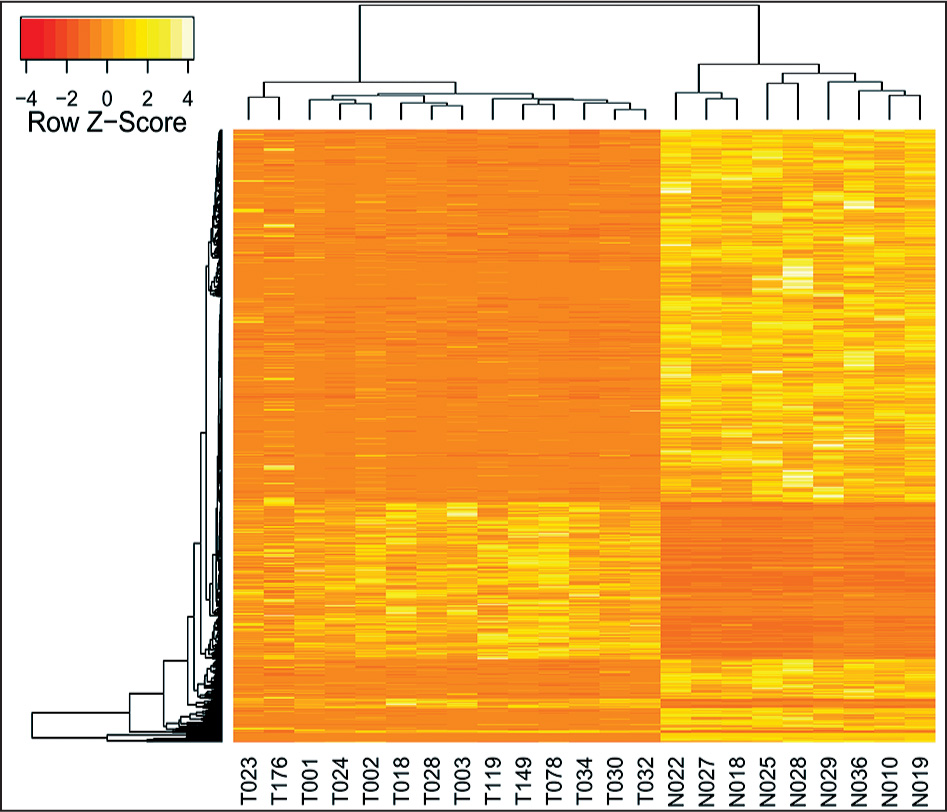
Cluster analysis of DEGs. DEGs: differentially expressed genes; T: tumor samples; N: healthy normal samples. Cluster analysis was performed both at gene level (vertical) and sample level (horizontal).
Functions and Pathways
The GO enrichment analysis and KEGG pathway analysis were performed to reveal the key biological functions altered in NFPAs. As shown in Table 2, 12 pathways were significantly enriched, which were mainly associated with signaling pathway and receptor interaction. In GO enrichment analysis, DEGs were significantly enriched in 1037 biological process terms mainly about cell communication and signaling, 65 cellular component terms mainly related with an extracellular matrix (ECM), plasma membrane, and collagen, as well as 186 molecular function terms mainly associated with transcription factor activity and receptor binding (Table 2). In order to better understand the positions of DEGs in pathways and their roles in the development of NFPAs, we visualized four significant pathways that had been reported to participate in the pathogenesis of NFPAs or PAs, including MAPK signaling pathway [10] (Figure 2), p53 signaling pathway [24] (Figure 3), transforming growth factor β (TGFβ), signaling pathway [25] (Figure 4), and Jak-STAT signaling pathway [8] (Figure 5).
Table 2
Significantly enriched terms.
| Category | Term ID | Corrected p Value | Number of DEGs | Number of Genes | Term |
|---|---|---|---|---|---|
| KEGG | K04610 | 3.18E-04 | 10 | 69 | complement and coagulation cascades |
| K04512 | 3.97E-04 | 11 | 84 | extracellular matrix-receptor interaction | |
| K04010 | 4.55E-03 | 20 | 271 | MAPK signaling pathway | |
| K04115 | 5.32E-02 | 8 | 69 | p53 signaling pathway | |
| K00350 | 6.79E-03 | 9 | 87 | transforming growth factor β signaling pathway | |
| K04630 | 7.62E-03 | 13 | 155 | Jak-STAT signaling pathway | |
| K04080 | 1.14E-02 | 18 | 256 | neuroactive ligand-receptor interaction | |
| K04510 | 1.27E-02 | 15 | 202 | focal adhesion | |
| K05218 | 2.08E-02 | 7 | 71 | Melanoma | |
| K05412 | 2.90E-02 | 7 | 76 | arrhythmogenic right ventricular cardiomopathy | |
| K05210 | 4.63E-02 | 7 | 84 | colorectal cancer | |
| K04920 | 4.70E-02 | 6 | 67 | adipocytokine signaling pathway | |
| GO BP | GO:0032501 | 2.26E-24 | 266 | 4974 | multicellular organismal process |
| (top 10) | GO:0010243 | 6.92E-13 | 57 | 596 | response to organic nitrogen |
| GO:0007275 | 4.19E-12 | 112 | 2080 | multicellular organismal development | |
| GO:0048583 | 2.00E-10 | 99 | 1624 | regulation of response to stimulus | |
| GO:0023051 | 4.23E-10 | 110 | 1866 | regulation of signaling | |
| GO:0010646 | 5.12E-10 | 110 | 1872 | regulation of cell communication | |
| GO:0048812 | 1.38E-09 | 49 | 571 | neuron projection morphogenesis | |
| GO:0048667 | 3.03E-09 | 48 | 566 | cell morphogenesis involved in neuron differentiation | |
| GO:0007243 | 3.09E-09 | 64 | 879 | intracellular protein kinase cascade | |
| GO:0022008 | 6.39E-09 | 63 | 900 | neurogenesis | |
| GO CC | GO:0005576 | 1.31E-14 | 132 | 2164 | extracellular region |
| (top 10) | GO:0005615 | 1.19-E-09 | 61 | 848 | extracellular space |
| GO:0005587 | 1.37E-05 | 4 | 6 | collagen type IV | |
| GO:0005581 | 1.90E-05 | 12 | 88 | collagen | |
| GO:0043005 | 5.12E-05 | 39 | 634 | neuron projection | |
| GO:0005578 | 5.72E-05 | 18 | 204 | proteinaceous extracellular matrix | |
| GO:0031012 | 8.74E-05 | 9 | 62 | extracellular matrix | |
| GO:0016323 | 1.39E-04 | 15 | 158 | basolateral plasma membrane | |
| GO:0005887 | 5.55E-04 | 59 | 1216 | integral to plasma membrane | |
| GO:0005584 | 9.84E-04 | 2 | 2 | collagen type I | |
| GO MF | GO:0005201 | 2.40E-10 | 17 | 78 | extracellular matrix structural constituent |
| (top 10) | GO:0008201 | 1.20E-07 | 18 | 129 | heparin binding |
| GO:0097367 | 1.60E-07 | 22 | 191 | carbohydrate derivative binding | |
| GO:0042803 | 5.71E-06 | 38 | 553 | protein homodimerization binding | |
| GO:0005179 | 9.11E-11 | 14 | 110 | hormone activity | |
| GO:0000981 | 1.75E-05 | 22 | 253 | sequence specific DNA binding RNA polymerase II transcription factor activity | |
| GO:0001077 | 4.36E-05 | 10 | 67 | RNA polymerase II core promoter proximal region sequence-specific DNA binding transcription factor activity involved in positive regulation of transcription | |
| GO:0019199 | 5.05E-05 | 11 | 82 | transmembrane receptor protein kinase activity | |
| GO:0005102 | 1.92E-04 | 55 | 1093 | receptor binding | |
| GO:0048407 | 2.70E-04 | 4 | 11 | platelet-derived growth factor binding |
ID: identifier; DEGs: differentially expressed genes; KEGG: Kyoto Encyclopedia of Genes and Genomes; GO: gene ontology; BP: biological process; CC: cellular component; MF: molecular functions.
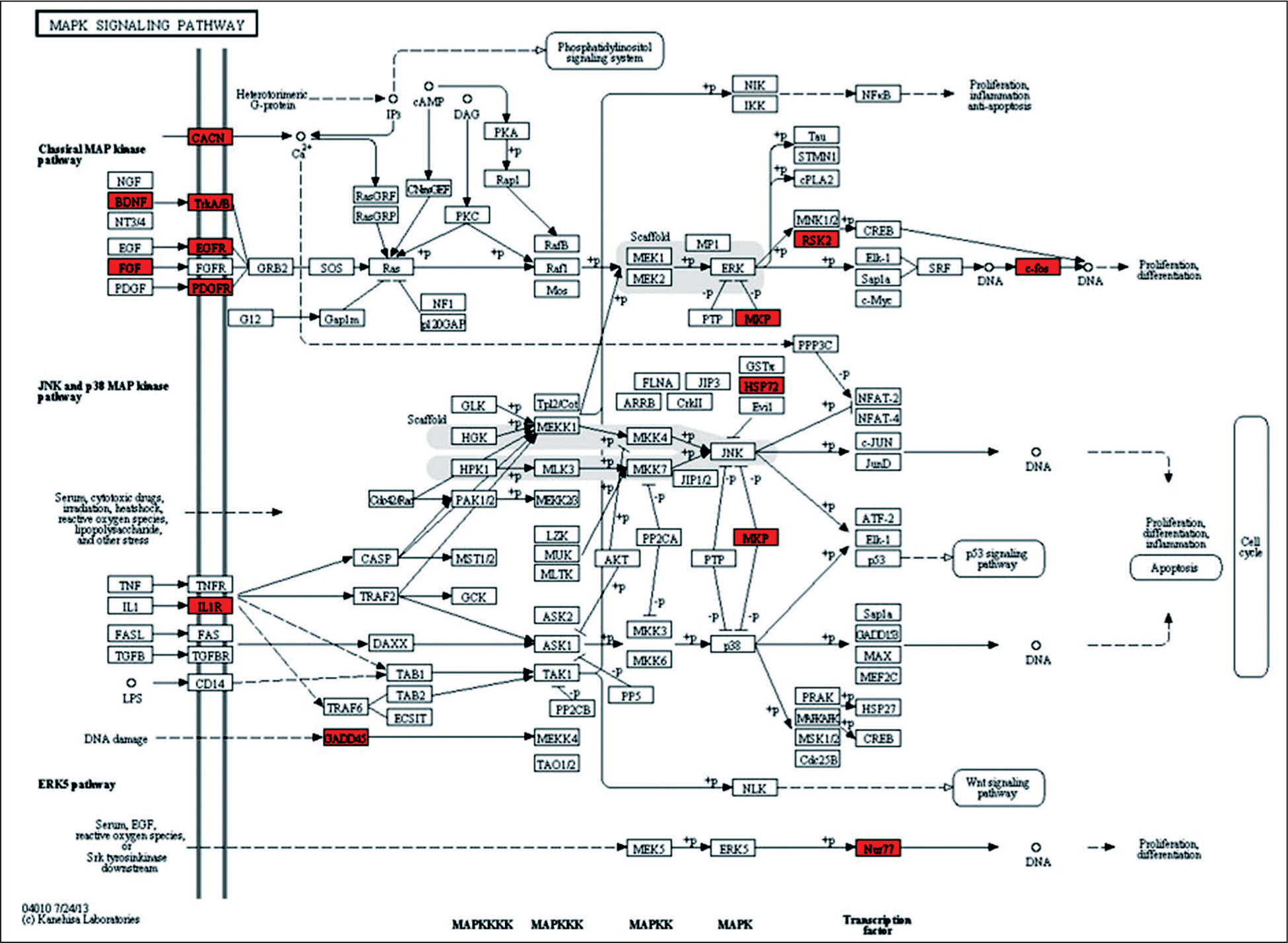
The MAPK signaling pathway. Genes down-regulated in NFPAs are shown in green, while up-regulated genes are in red.
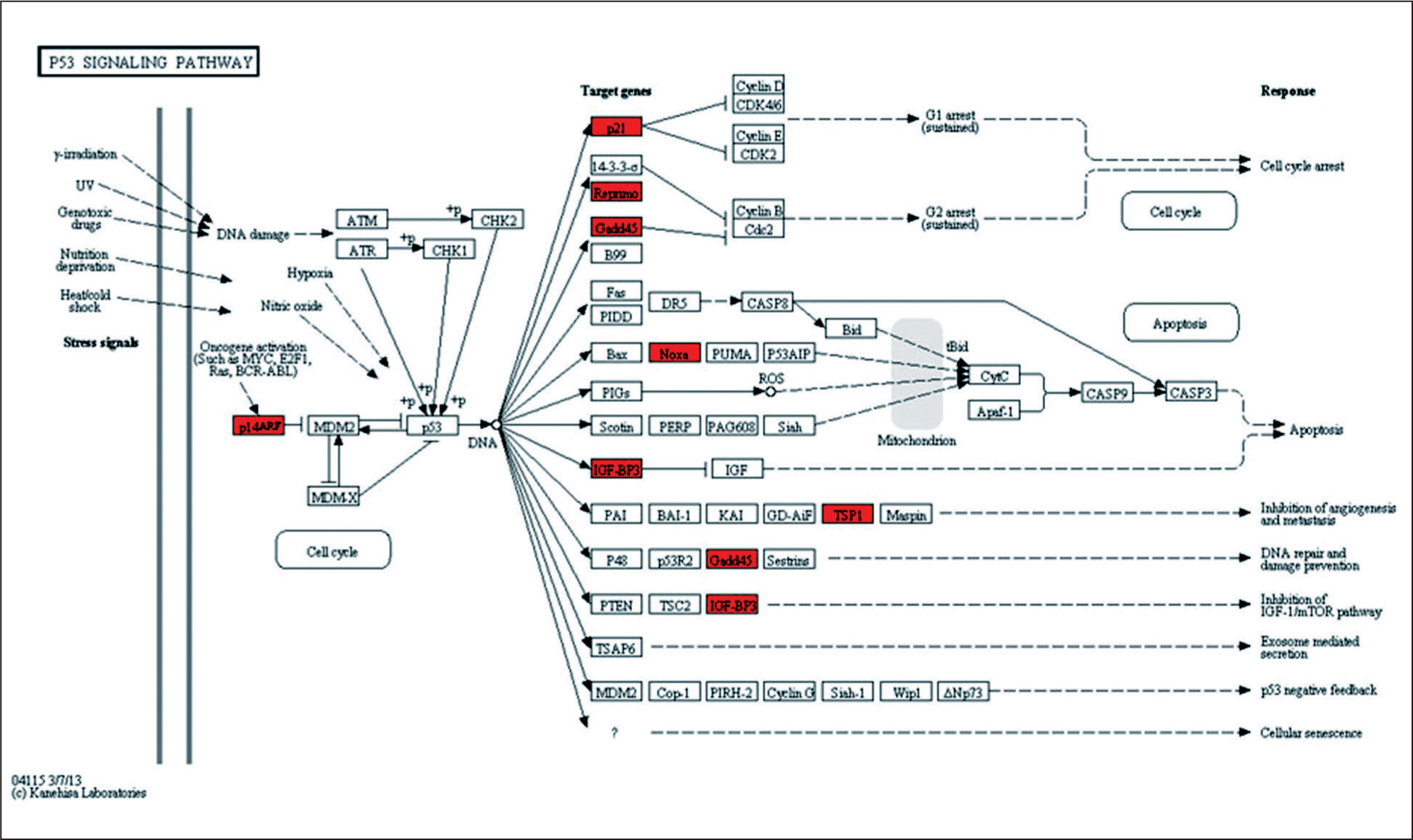
The p53 signaling pathway. Genes down-regulated in NFPAs are shown in green, while up-regulated genes are in red.
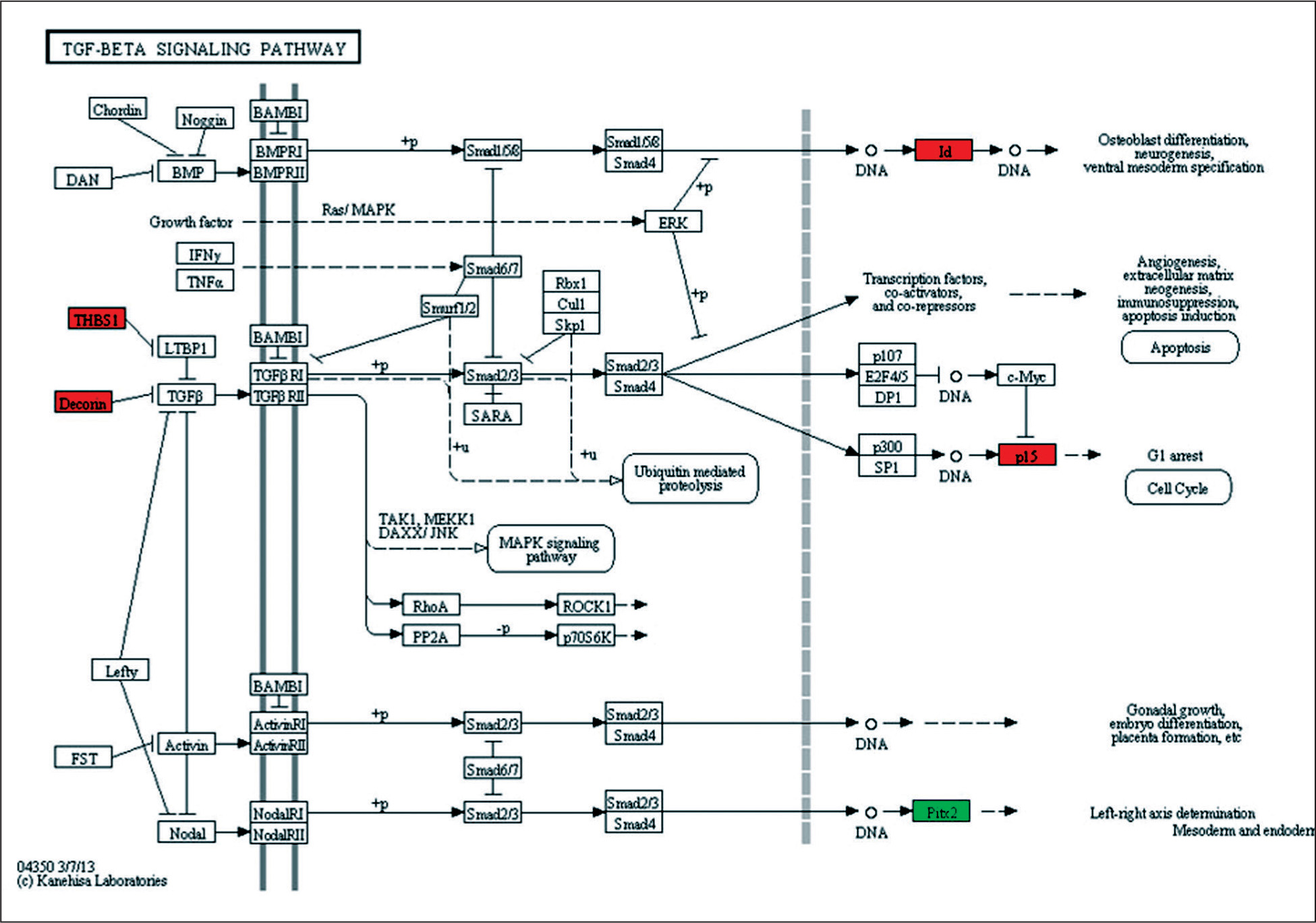
The TGFβ signaling pathway. Genes down-regulated in NFPAs are shown in green, while up-regulated genes are in red.
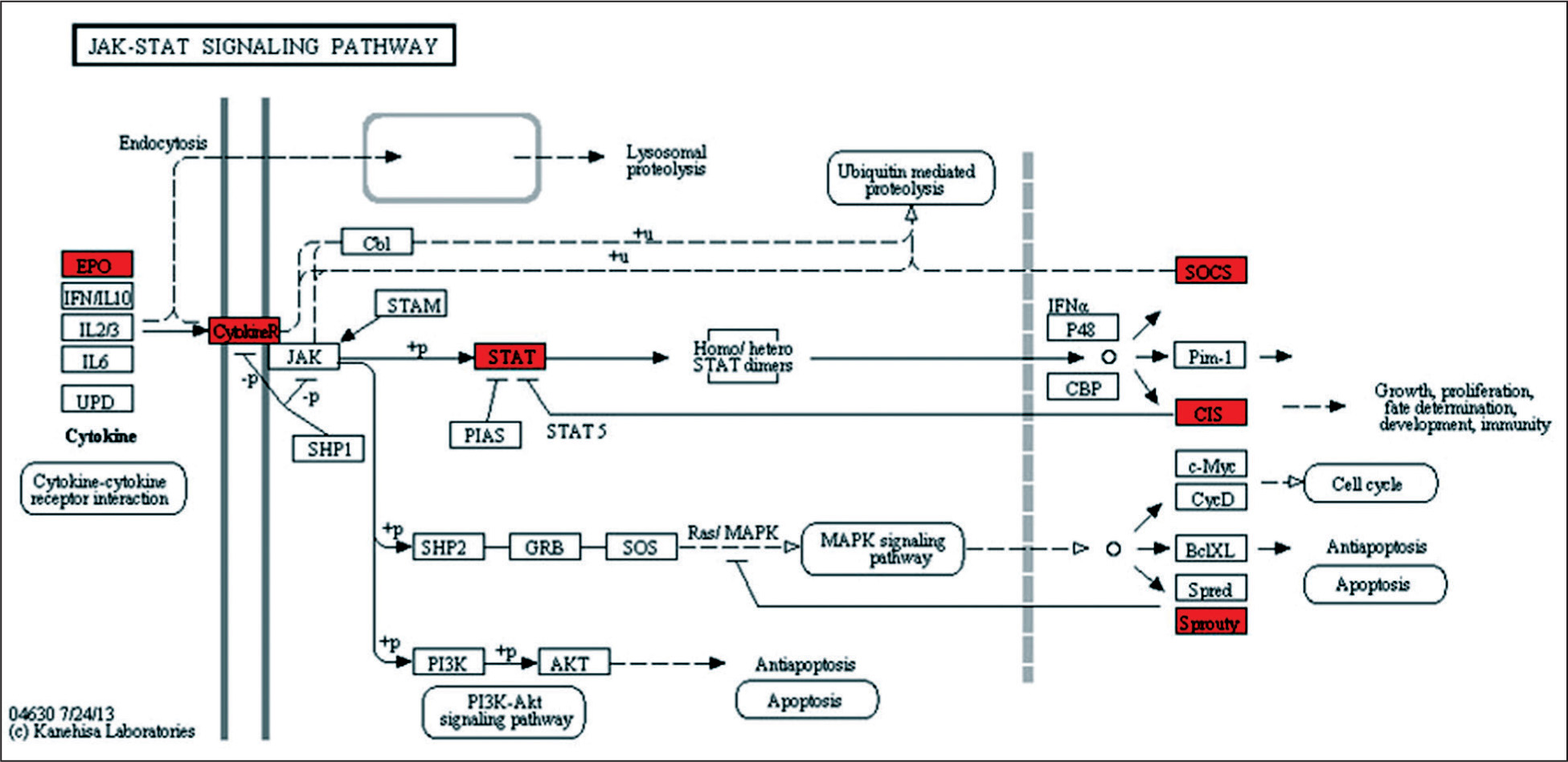
Jak-STAT signaling pathway. Genes down-regulated in NFPAs are shown in green, while up-regulated genes are in red.
Protein-Protein Interaction Network of Differentially Expressed Genes
For the 604 DEGs, the PPI network was constructed using information from STRING v10 (Figure 6). The whole network consisted of 115 up-regulated DEGs, 305 down-regulated DEGs and 1379 PPIs (Figure 6).
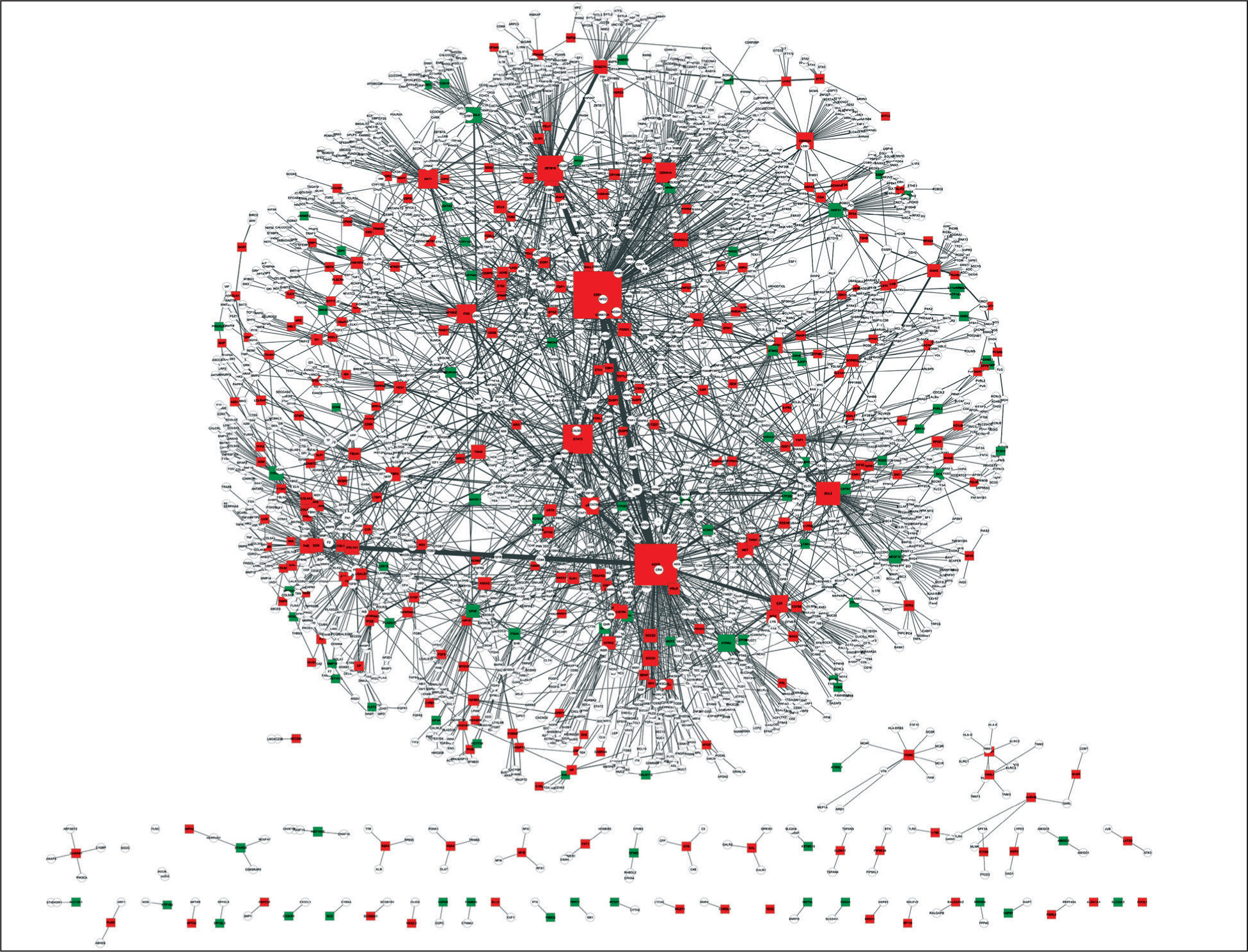
The whole PPI network of DEGs. Red nodes represent the genes up-regulated in NFPAs, and green nodes represent the genes down-regulated in NFPAs. Circle nodes stand for known disease genes, whereas triangle nodes stand for potential novel disease genes. Node size positively correlates with node degree, namely, the number of neighbors. PPI: protein-protein interaction; DEGs: differentially expressed genes; NFPAs: non-functioning pituitary adenomas.
Potential Novel Non-Functioning Pituitary Adenoma-Related Genes and Sub-Network
Known disease genes were obtained from the CTD database (http://ctd base.org/) and compared with the DEGs in the PPI network. Consequently, 99 up- and 288 down-regulated DEGs were known disease genes, e.g. EGFR (epidermal growth factor receptor, degree = 63) [10,26-28] and ESR1 (estrogen receptor 1, degree = 48) [29] (Figure 6). In contrast, 16 up- and 17 down-regulated DEGs were potential novel NFPA-related genes, e.g. COL4A5 (collagen type IV α5, degree = 17), LHX3 (LIM homeobox protein 3, degree = 11), MSN (moesin, degree = 11) and GHSR (growth hormone secretagogue receptor, degree = 10) (Figure 6). Moreover, COL4A5 interacted with known NFPA-related genes such as EGFR, LHX3 interacted with known NFPAs-related genes like PRL (Prolactin), and MSN interacted with known NFPA-related genes such as EGFR. Among the top 10 up-regulated genes and top 10 down-regulated genes, only 12 DEGs interacted with other DEGs [e.g. CD-KN2A (cyclin-dependent kinase inhibitor 2A)-IDH1 (isocitrate dehydrogenase 1)], and all 12 DEGs were known disease genes [e.g. DLK1 (δ-like 1 homologue)] (Figure 7). In addition, potential NFPA-related gene GHSR interacted with the top DEG GH1 (growth hormone 1).
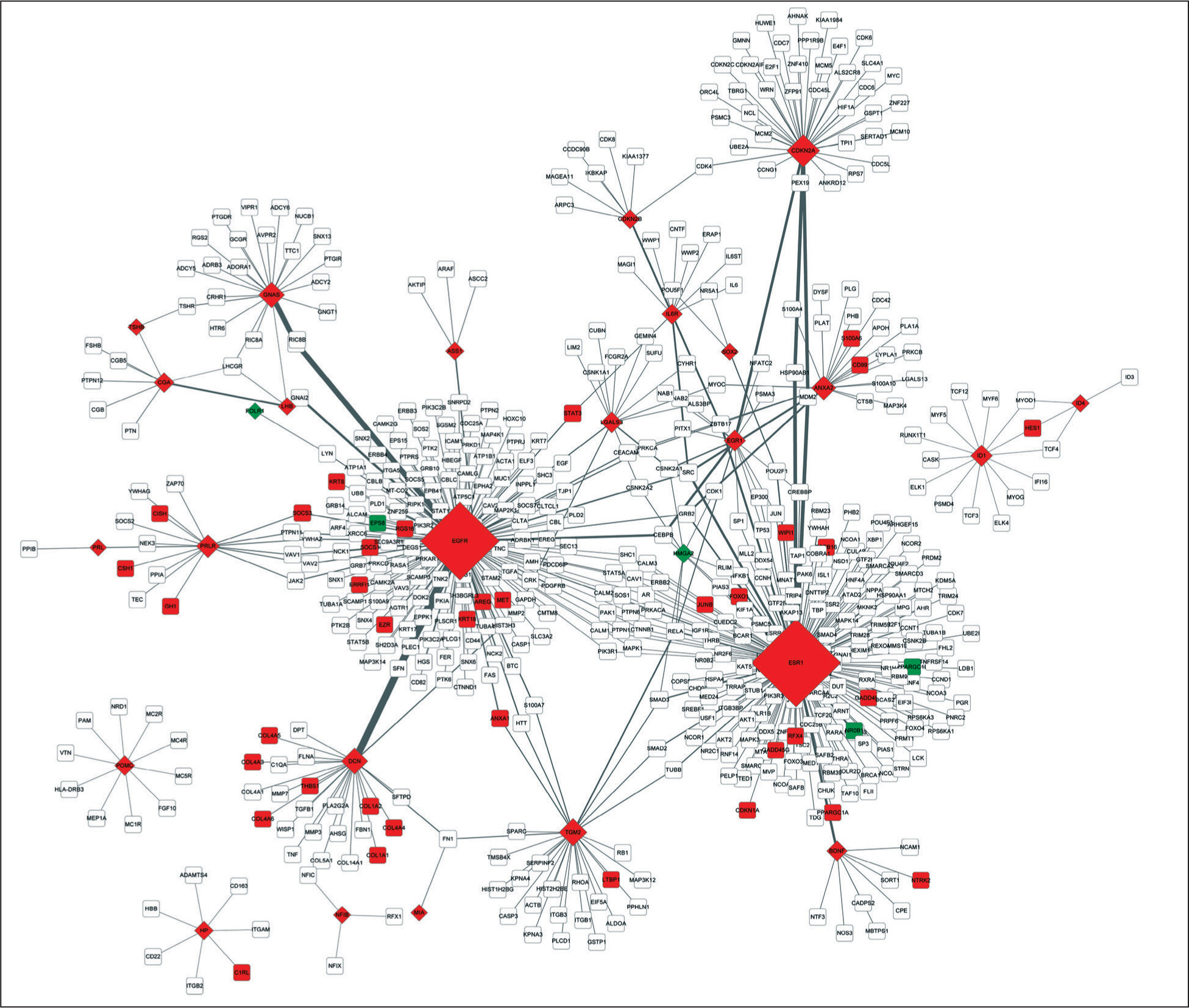
The PPI sub-network containing the top 10 DEGs. Red nodes represent the genes up-regulated in NFPAs, and green nodes represent the genes down-regulated in NFPAs. Circle nodes stand for known disease genes, whereas triangle nodes stand for potential novel disease genes. Node size positively correlates with node degree, namely, the number of neighbors. PPI: protein-protein interaction; DEGs: differentially expressed genes; NFPAs: non-functioning pituitary adenomas.
Discussion
Non-functioning pituitary adenomas comprise about 34.0% of pituitary tumors, while their molecular mechanism is still incompletely understood [5]. In the current study, we comprehensively analyzed the gene expression profile of NFPAs and healthy pituitary glands. As a result, 604 DEGs were identified between NFPAs and controls, including 177 up- and 427 down-regulated genes, which were much less than those identified by Michaelis et al. [14]. However, in the current study, we analyzed the same microarray data using different software, algorithms, and analysis criteria (corrected p value <0.05 and [log2 FC] >2) in order to focus on the DEGs that were more significant.
In the current study, mean FC of the up-regulated genes was 6.6, and mean FC of the down-regulated genes was –19.2, which were different from those in the previous study by Michaelis et al. [14] (4.5 and –32.2, respectively). The differences of mean FC values might be caused by the different DEG sets in the two studies [14]. The major DEGs found by Michaelis et al. [14] had similar expression change patterns in the current study, e.g. for the PLAGL1, CDKN1A, RPRM, PMAIP1, MDM2, GADD45A, GAD-D45B and GADD45G genes.
Of the top DEGs, DLK1, GH1, CDKN2A and MEG3 were significantly down-regulated in NFPAs in comparison with normal pituitary glands in this study. According to the report, the MEG3 and DLK1-MEG3 locus are silenced in human NFPAs of gonadotroph origin, and DLK1-MEG3 locus plays a tumor suppressor role in NFPAs [30]. Based on proteome data and microarray data or reverse transcription quantitative real-time polymerase chain reaction analysis, Moreno et al. [31] found that DLK1, GH1 and PRL are down-regulated in NFPAs when compared with normal pituitary glands, whereas IDH1 is significantly up-regulated. The CDKN2A and DLK1 are considered as biomarkers of gonadotroph tumors by Cai et al. [15], and gene silencing mediated by hypermethylation of the CpG island within exon 1 in CDKN2A is associated with NFPAs [32]. As clearly shown in Figure 7, the expression change patterns of known disease genes DLK1, GH1, PRL, CDKN2A and IDH1, were consistent with the aforementioned studies [30-32], demonstrating the high accuracy of our results.
Expressions of EGFR in NFPAs varied in different studies [10,26-28]. In the current study, EGFR showed low expression in NFPAs (Figure 7), and it interacted with known disease gene CDKN2A, indicating that low expression of EGFR might be associated with NFPAs. We also found that CDKN2A was a top DEG, and it interacted with 22 DEGs in the whole PPI network and most DEGs in the PPI sub-network, suggesting that CDKN2A might play a crucial role in the progression of NFPAs.
Furthermore, potential novel genes were identified (Figure 6), especially COL4A5, LHX3, MSN and GHSR. The role of these genes in NFPAs has not been investigated by previous studies. According to the report, mRNA level of GHSR in NFPAs is lower than that in growth hormone-producing PAs [33]. In the present study, COL4A5, LHX3, MSN and GHSR were significantly down-regulated in NF-PAs in comparison with normal controls, and they interacted with known NFPA-related genes such as EGFR, PRL, and GH1. These results indicated that COL4A5, LHX3, MSN and GHSR might participate in the initiation and progression of NFPAs via interaction with EGFR, PRL and GH1, respectively.
We found DEGs were significantly enriched in the p53 (Figure 3) and Jak-STAT signaling pathways (Figure 5), which had been reported to take part in PAs pathogenesis [8,24]. The p53 signaling pathway is involved in biological processes such as cell cycle arrest, apoptosis, senescence, DNA repair and changes in metabolism. Expression level of p53 correlates with the proliferative state of PAs [24]. The Jak-STAT pathway is an important downstream pathway for growth factor receptors and cytokine receptors, and it is involved in the regulation of cell proliferation and survival [34,35]. As all of the DEGs mapped on these pathways were remarkably down-regulated in NFPAs, p53 and Jak-STAT signaling pathways might play roles in the progression of NFPAs.
In addition, DEGs were significantly enriched in GO terms mainly about cell communication, signaling, ECM, plasma membrane, collagen, transcription factor activity and receptor binding (Table 2). The ECM, plasma membrane, and receptor binding are the basis of cell communication and signaling between pituitary cells, which play crucial roles in the development and invasion of PAs [36, 37]. As DEGs mapped on these GO terms were remarkably dysregulated in NFPAs, cell communication and signaling might contribute to the progression of NFPAs.
In conclusion, a number of genes (e.g. COL4A5, LHX3, MSN and GHSR) identified in this study, might be potential novel NFPA-related genes. Furthermore, cell communication and signaling pathways (e.g. p53 and JakSTAT) might be implicated in the pathogenesis of NFPAs. Currently, no effective medical therapies are available for NFPAs, due to their unclear mechanism. Although further validation is required, our findings might provide information to guide future researchers and even benefit the development of medical therapy for NFPAs.
Declaration of Interest
This study was supported by Natural Science Fund (grant number: 20150101193JC). The authors report no conflicts of interest. The authors alone are responsible for the content and writing of this article.