
Table 1
Risk factors for developing post-cardiac injury syndrome.
| CATEGORY | RISK FACTOR | PATHOPHYSIOLOGY & NOTES | KEY REFERENCES |
|---|---|---|---|
| Patient Characteristics | Younger age | Younger patients (typically < 60 years) mount a more vigorous immune and inflammatory response to surgical trauma compared to older patients. | 49 5 |
| Female sex | Females have a statistically higher incidence in many cohorts, likely due to hormonal factors or a general predisposition to autoimmune-like reactions. | 5 50 | |
| History of pericarditis | A prior history of pericarditis creates a “primed” immune system, increasing susceptibility to recurrence after surgical triggering. | 51 | |
| Surgical Factors | Pleural incision (pleurotomy) | Opening the pleura allows blood and inflammatory mediators to spread from the pericardium into the pleural space, significantly increasing post-pericardiotomy syndrome (PPS) risk. | 5 51 |
| Type of surgery (valve vs CABG) | Valve surgery (mitral/aortic) and aortic root surgery carry a higher risk than simple coronary artery bypass grafting (CABG), likely due to greater tissue manipulation. | 49 50 | |
| Blood transfusions | The receipt of red blood cell units is associated with increased systemic inflammation and higher PPS rates. | 50 | |
| Postoperative | Retained blood / effusions | Accumulation of blood in the pericardial or pleural spaces acts as a substrate for local inflammation and oxidative stress. | 2 |
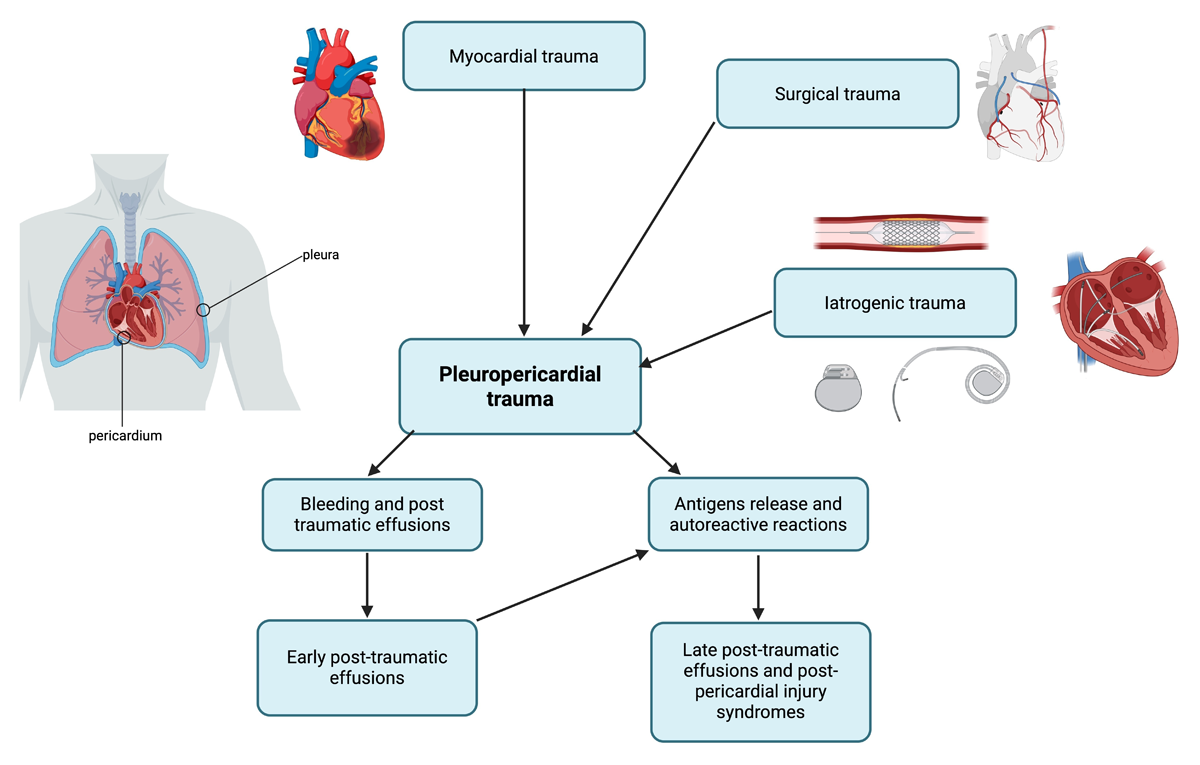
Figure 1
Flowchart illustrating the pathogenesis of post-cardiac injury syndrome.
Table 2
Diagnostic criteria for post-cardiac injury syndrome. Post-cardiac injury syndrome is diagnosed in patients with recent cardiac surgery or other cardiac injury when acute pericarditis is present, defined by >1 of the 4 primary pericarditis criteria, in the appropriate clinical context, after exclusion of alternative diagnoses. EKG: electrocardiogram; CT: computed tomography
| CATEGORY | CRITERION | DESCRIPTION (2025 ESC-ALIGNED) |
|---|---|---|
| Symptoms | Clinical presentation | Typical sharp, pleuritic chest pain, often positional (worse supine, relieved by sitting forward) or dyspnea |
| Major Diagnostic Criteria | Pericardial friction rub | Superficial, scratchy sound on auscultation, reflecting pericardial inflammation |
| Typical EKG changes | New diffuse ST-segment elevation and/or PR-segment depression | |
| Systemic inflammation | Elevated C-reactive protein and/or erythrocyte sedimentation rate | |
| New or worsening pericardial effusion | Detected by echocardiography or other cardiac imaging | |
| Imaging evidence of pericardial inflammation | Pericardial edema or late gadolinium enhancement on cardiac magnetic resonance or pericardial thickening on CT | |
| Clinical Context | Recent cardiac injury | Cardiac surgery (post-pericardiotomy), myocardial infarction, or iatrogenic cardiac trauma |
| Supporting Findings | Pleural effusion | |
Diagnostic Definition:
| ||
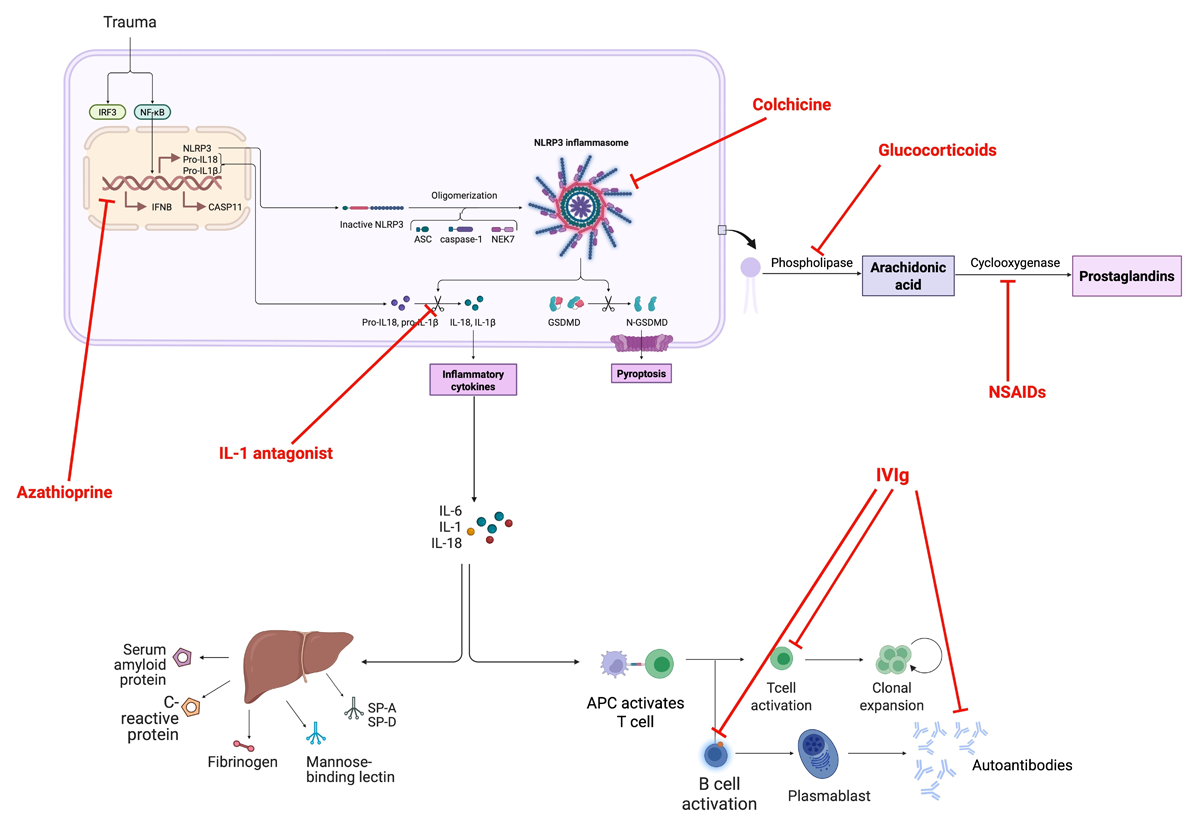
Figure 2
Pathophysiology and molecular targets in post-cardiac injury syndrome.
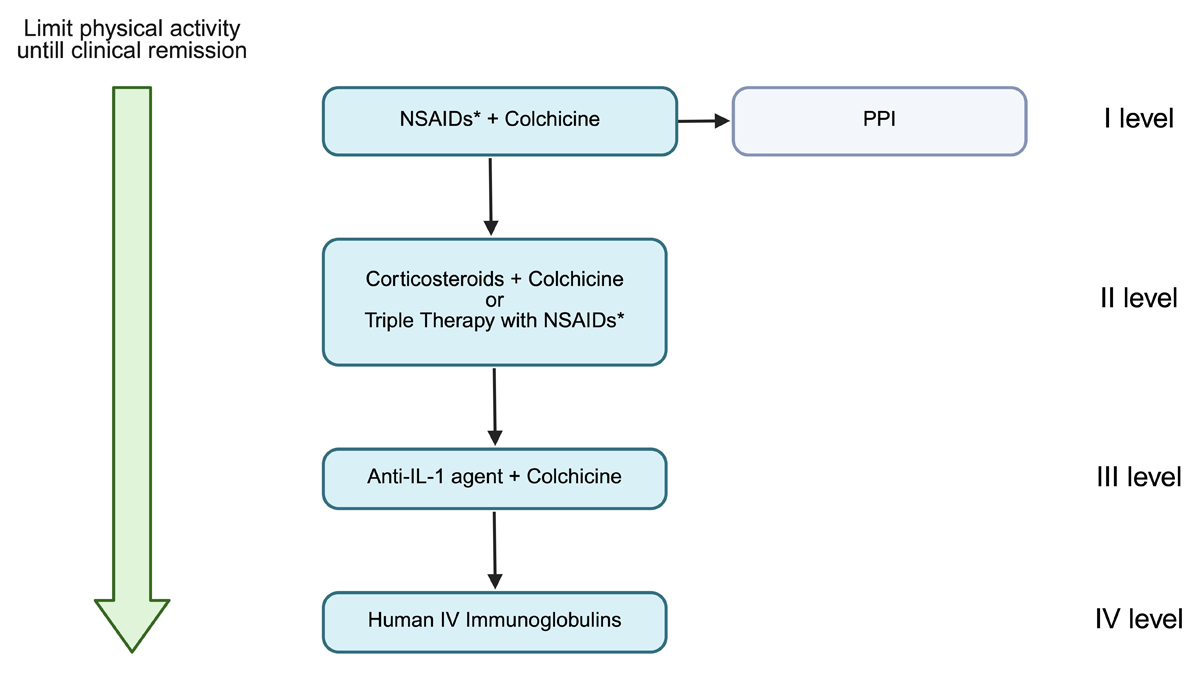
Figure 3
Step-by-step suggested management algorithm for post-cardiac injury syndrome. PPI: proton pump inhibitors; NSAIDs: nonsteroidal anti-inflammatory drugs; IL-1: interleukin-1; IV: intravenous
*NSAIDs or aspirin
Table 3
Drugs for post-cardiac injury syndrome according to 2025 European Society of Cardiology guidelines. CRP: C-reactive protein; ESC: European Society of Cardiology
| DRUG CLASS | DRUG | RECOMMENDED DOSE | DURATION | ESC RECOMMENDATION (2025) | COMMENTS/PRECAUTIONS |
|---|---|---|---|---|---|
| Nonsteroidal Anti-Inflammatory Drugs (NSAIDs) | Aspirin | 750-1000 mg every 6-8 h | 1-2 weeks, then gradual taper guided by symptoms and CRP | Class I, Level B | Preferred after myocardial infarction or when antiplatelet therapy is required |
| Ibuprofen | 600-800 mg every 6-8 h | 1-2 weeks, then taper | Class I, Level B | Common first-line agent after cardiac surgery; use gastroprotection | |
| Indomethacin | 25-50 mg every 8 h | Short-term | Class IIb, Level C | Less commonly used; higher risk of adverse effects | |
| Colchicine | Colchicine | 0.5 mg once daily (< 70 kg) or twice daily (≥ 70 kg) | 3 months | Class I, Level A | Reduces symptom duration and recurrence; dose adjusted for renal impairment |
| Corticosteroids | Prednisone | 0.25-0.5 mg/kg/day | Short course with slow taper | Class IIa, Level C | Reserved for NSAID/colchicine intolerance or refractory disease; avoid high doses |
| Interleukin-1 Inhibitors | Anakinra | 100 mg subcutaneously daily | ≥ 6 months, individualized | Class I, Level B | For recurrent or refractory PCS, rapid symptom and CRP response |
| Rilonacept | Loading 320 mg, then 160 mg weekly | Long-term, not known | Class IIa, Level B | Alternative IL-1 blockade in recurrent pericarditis | |
| Adjunctive Therapy | Proton-pump inhibitor | Standard dose | During NSAID therapy | Good clinical practice | Gastrointestinal protection |
| Preventive Therapy | Colchicine (prophylaxis) | 0.5 mg once or twice daily | 1 month | Class IIa, Level A | Start 48-72 h before cardiac surgery to prevent PCS |
[i] Notes: Tapering should be guided by clinical resolution and normalization of inflammatory markers, not by fixed time intervals. Antibiotics are not indicated unless the infection is proven.
Table 4
Clinical trials on the treatment and prevention of the post-cardiac injury syndrome. AF: atrial fibrillation; CPB:, cardiopulmonary bypass; GI:, gastrointestinal; NNH: number needed to harm; NNT: number needed to treat; PCS: post-cardiac injury syndrome; PPS: post-pericardiotomy syndrome
| STUDY (YEAR) | DESIGN/SETTING | POPULATION | INTERVENTION vs PLACEBO | PRIMARY ENDPOINT | MAIN RESULTS(PCS/PPS-RELATED) | KEY SAFETY FINDINGS |
|---|---|---|---|---|---|---|
| Horneffer et al. (1990) | Randomized, double-blind, placebo-controlled trial | Adults with established PPS after cardiac surgery (149 enrolled) | Ibuprofen or indomethacin (treatment) | Resolution ≥ 2 of fever, chest pain, rub within 48 h | Ibuprofen 90.2% and indomethacin 88.7% effective vs placebo 62.5% (P = .003) | Side effects were low and similar across groups; no difference in length of stay or significant effusions reported |
| COPPS (Imazio et al., 2010) | Multicenter, randomized, double-blind, placebo-controlled | Adults after cardiac surgery (colchicine started post-op day 3) | Colchicine | PPS incidence at 12 months | PPS reduced: 8.9% vs 21.1% (P = .002; NNT = 8). Secondary composite (hospitalization/tamponade/constriction/relapse) also decreased (0.6% vs 5.0%, P = .024) | GI intolerance similar: 8.9% vs 5.0% (P = .212) |
| COPPS-2 (Imazio et al., 2014) | Multicenter, randomized, placebo-controlled | Adults undergoing cardiac surgery (colchicine started 48–72 h pre-op, continued 1 month) | Colchicine 0.5 mg OD (< 70 kg) or BD (≥ 70 kg) | PPS within 3 months | PPS reduced: 19.4% vs 29.4% (absolute difference 10.0%; NNT = 10). No significant difference for effusions; AF reduction only in on-treatment analysis | More adverse events with colchicine (20.0% vs 11.7%; NNH = 12), mainly GI; no serious adverse events |
| DECS Substudy (Bunge et al., 2014) | Substudy of RCT (valve surgery cohort), placebo-controlled | Adults undergoing valvular cardiac surgery (n = 822) | High-dose intra-op dexamethasone 1 mg/kg | PPS occurrence | No protective effect: PPS 13.5% vs 15.5% (RR 0.88; 95% CI, 0.63-1.22). Complicated PPS has also not been reduced | No PPS benefit; trial-level safety not PPS-specific here |
| Wilson et al. (1994) | Randomized, double-blind, placebo-controlled | Children with established PPS (n = 21) | Prednisone 2 mg/kg/day, taper to zero over 14 days | Remission at 72 h and 1 week | No difference at 72 h; higher remission at 1 week with prednisone (10/12 vs 3/9, P = .03) | Pericardial effusion enlargement was noted in two steroid-treated children |
| Mott et al. (2001) | Randomized, double-blind, placebo-controlled | Children undergoing cardiac surgery with CPB (analyzed n = 246) | Methylprednisolone 1 mg/kg pre-CPB + 4 doses over 24 h | PPS incidence/severity | No reduction in PPS incidence (overall PPS 16%; no inter-group difference, P = .73). Marginal increase in complicated PPS in steroid arm (P = .05) | Short-course steroid prophylaxis did not prevent PPS and may worsen complicated PPS |