
Case Presentation
This is a case of a 71-year-old man with a past medical history of prostate cancer (treated with radiation therapy more than 10 years earlier), hypertension, and hyperlipidemia. He presented with progressive shortness of breath and lower-extremity edema over 1 month. Transthoracic echocardiography revealed a large pericardial effusion with tamponade physiology (Figure 1). The patient underwent urgent pericardiocentesis, yielding 800 mL of bloody pericardial fluid. Cytologic analysis confirmed metastatic lung adenocarcinoma as the underlying etiology. A whole-body computed tomography (CT) scan demonstrated multiple right-lung nodules, and subsequent positron emission tomography (PET)-CT identified a primary mass in the right lower lobe (Figure 2). Because the pericardial drain continued to produce high output (approximately 200 mL over 24 hours) and serial imaging showed recurrent effusion, a pericardial window was considered. However, due to the patient’s limited pulmonary reserve, the risks of surgery outweighed the benefits. The catheter was therefore left in place for extended drainage over 2 weeks. Eventually, the output subsided, and the catheter was removed. The patient was started on palliative chemotherapy (carboplatin/pemetrexed) and discharged home for ongoing oncologic management. Following are a few points to remember.
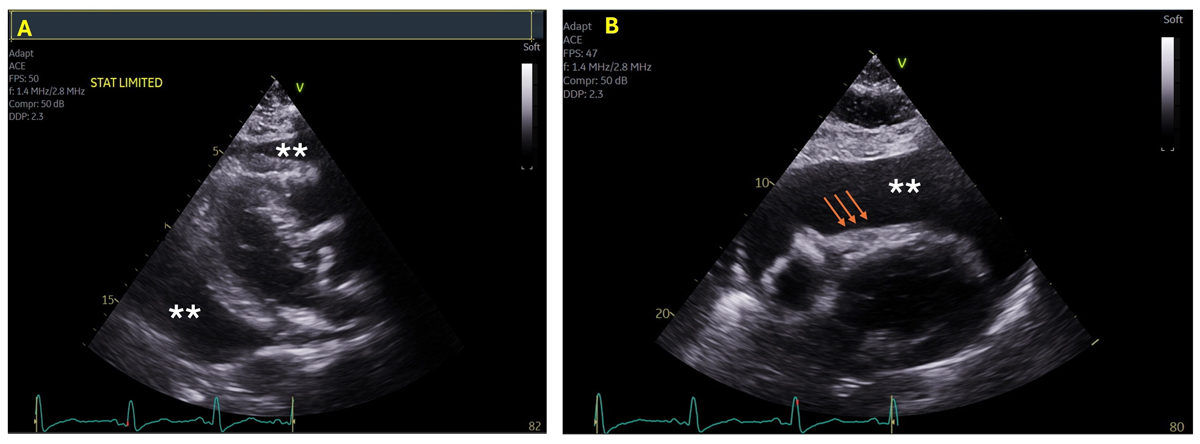
Figure 1
Transthoracic echocardiogram, parasternal long-axis view (Panel A), and subcostal view (Panel B) showing large circumferential pericardial effusion (asterisks) with right ventricular diastolic collapse (arrows).
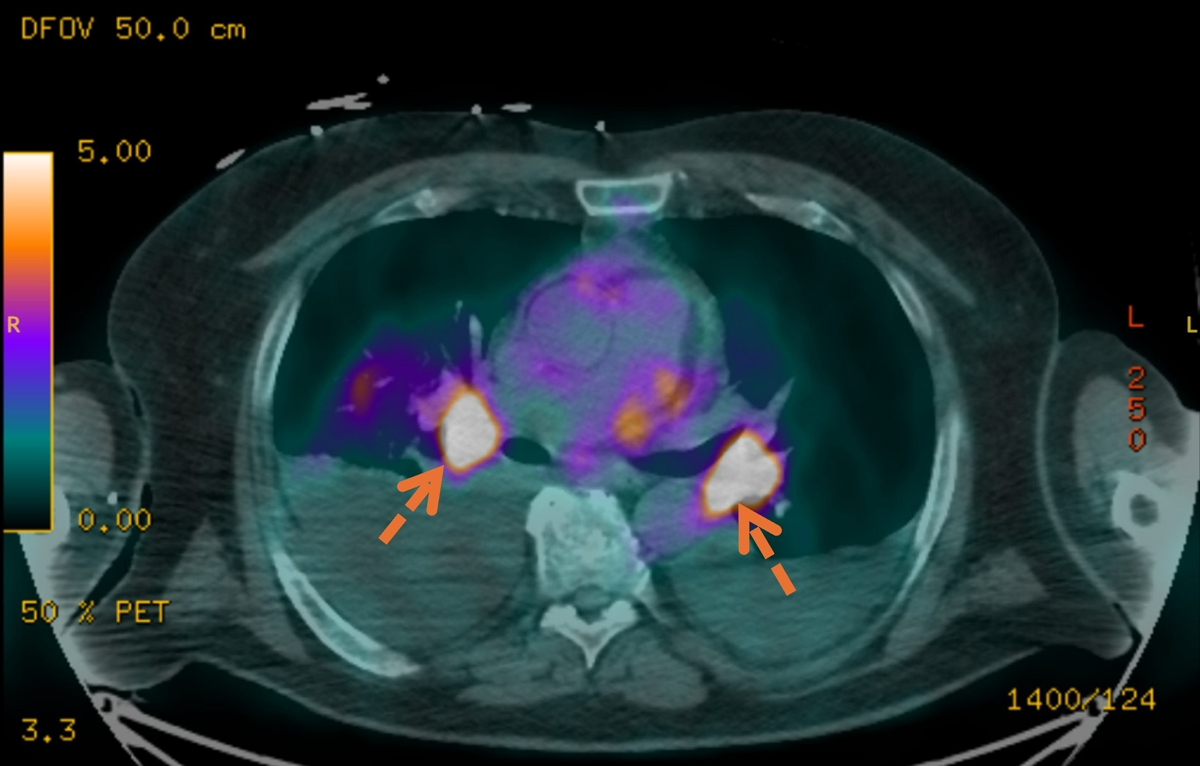
Figure 2
F-18 labeled fluorodeoxyglucose (FDG)-positron emission tomography showing extensive FDG avid disease in the chest (arrows). The primary malignancy appears to be a medial right lower lobe lung mass.
Points to Remember with Malignant Pericardial Effusion
Rising incidence. With an aging population and increasing cancer prevalence, it is anticipated that cardiologists will encounter malignant pericardial effusions more frequently.
Epidemiology. In cancer patients, epidemiologic studies have shown that 5% to 15% will have some evidence of pericarditis, either through direct tumor involvement or via chemotherapy or radiation treatment. The most common primary tumors are lung, breast, and lymphomas.1
Clinical features. Malignant pericardial effusions tend to be large and are more frequently associated with hemodynamic compromise or cardiac tamponade. In one study of 450 patients with acute pericardial disease, large effusions and tamponade (69.7% and 60.6%, respectively) were significantly more common in malignancy-related cases.2
Diagnostic yield. Pericardial fluid cytology is highly informative, with a diagnostic yield of 50% to 80%, sensitivity of 92%, and specificity of 100%.3 However, more recent reports suggest the yield may be as low as 39%.4 When cytology is inconclusive, pericardial biopsy should be pursued.
Management. Immediate pericardiocentesis is indicated when tamponade is present. The choice between extended catheter drainage and a surgical pericardial window remains case-dependent. In a systematic review of 31 observational studies, recurrence rates were 38% for isolated pericardiocentesis, 12% for extended catheter drainage, and < 7% for pericardial window.4 Multidisciplinary discussion and shared decision-making are strongly recommended.
Prognosis. The presence of malignant pericardial effusion indicates a poor outcome. In a recent meta-analysis of 41 case reports (lung adenocarcinoma being the most common etiology, with 78% presenting in tamponade), death occurred in 44% of patients, with a median survival of 45 days.5
Conclusion
Management of malignant pericardial effusion requires timely diagnosis through cytology and, if needed, biopsy. Because most of these effusions are large, drainage should be considered even in asymptomatic patients due to the high risk of progression to cardiac tamponade. Early multidisciplinary collaboration remains key to improving outcomes and aligning treatment goals with patient prognosis.
Competing Interests
The author has no competing interests to declare.