
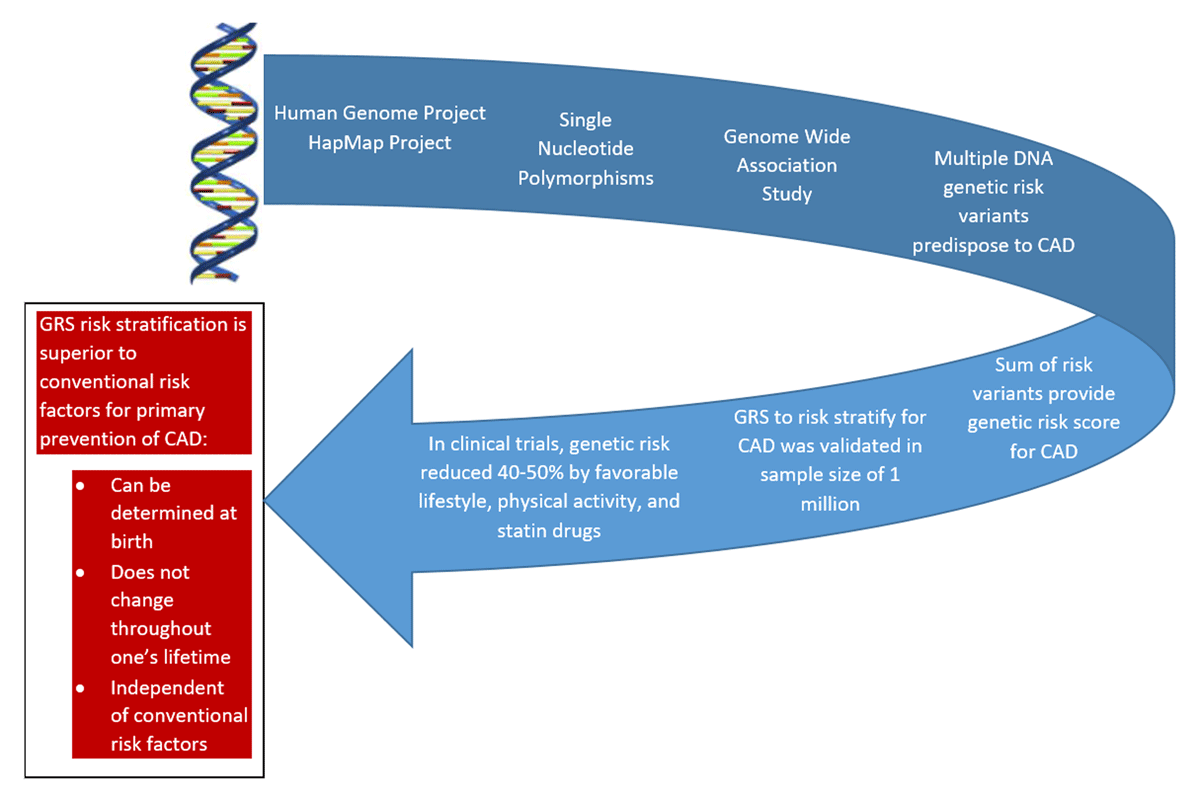
Figure 1
Graphic depiction of the genetics of coronary artery disease (CAD) using a genetic risk score as a biomarker to risk stratify for CAD and to identify young asymptomatic individuals at high risk for CAD. Genome-wide association studies enabled an unbiased search for genetic variants predisposing to CAD. The total risk burden is summarized in a single number referred to as a genetic risk score, which is now more commonly referred to as Polygenic Risk Score (PRS). The PRS was used to stratify for risk of CAD. Prospective clinical trials showed lifestyle changes and drug therapy decreased genetic risk by 40-50%. Modified from Roberts et al. JACC Basic Translational Science 2021;6(3);287-304.
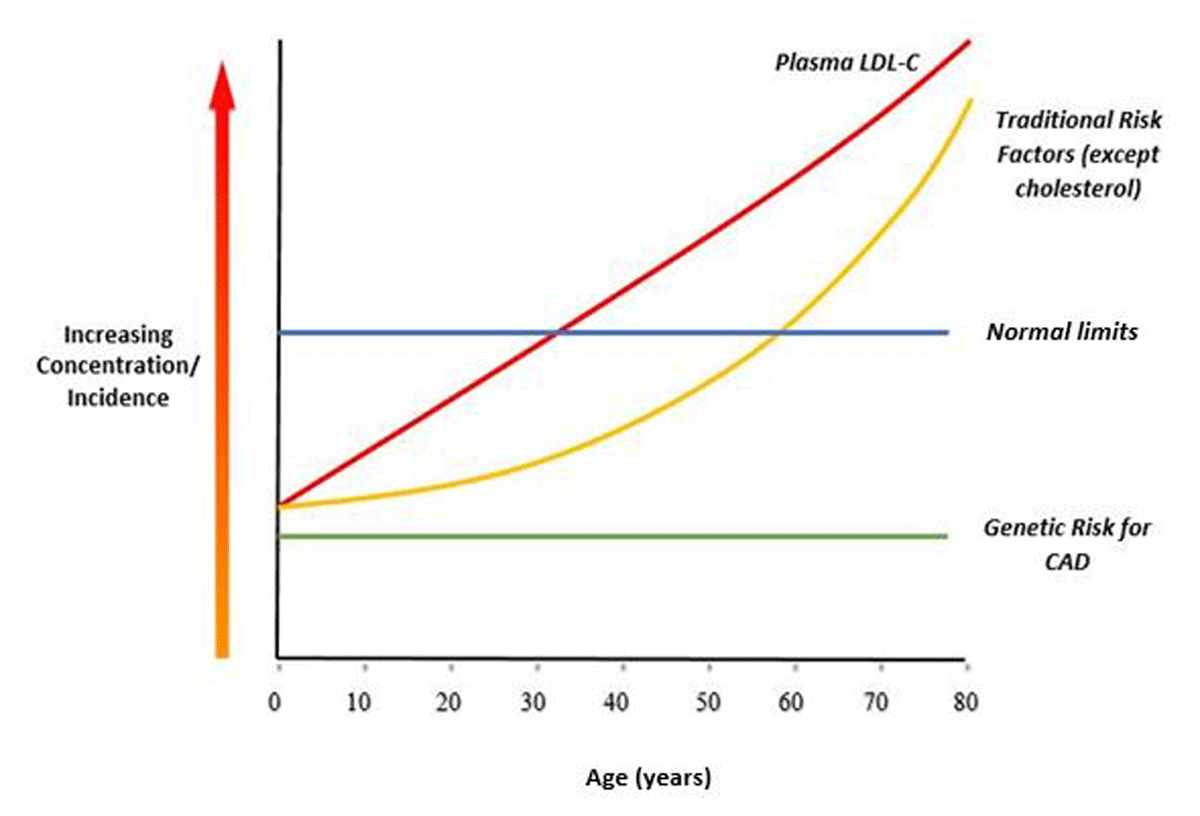
Figure 2
Conventional risk factors are age dependent. Traditional risk factors such as hypertension or diabetes are seldom present until one is in their 50s or 60s. The one exception is cholesterol, which increases early in life. The risk for coronary artery disease (CAD) doubles every 10 years. In contrast, the genetic risk score for CAD is independent of age and remains the same throughout life. Genetic risk obtainable any time after birth provides a major advantage, enabling one to predict the risk for CAD early in life.