
The field of heart transplantation has experienced remarkable progress over the past decades, transforming from an experimental procedure into a life-saving intervention with continually improving outcomes. According to the International Society for Heart and Lung Transplantation (ISHLT), an estimated 60,000 to 70,000 heart transplants were performed in the United States between 1967 and 2020. Recent data from the United Network for Organ Sharing (UNOS) further document that an additional 21,259 heart transplants were completed in just the past five years (2020–2024).
As Houston Methodist Hospital celebrates its 40-year milestone in heart transplantation, it is both timely and essential to reflect upon the scientific advancements, ongoing challenges, and emerging opportunities in this dynamic field. Persistent shortages of donor organs, complexities associated with immunosuppressive therapies, and the imperative to optimize long-term patient outcomes continue to drive innovative research and clinical advancements. This issue features a collection of articles exploring key aspects of heart transplantation—from its historical foundations to the latest advances that are shaping its future.
The journey of heart transplantation began with experimental animal models before culminating in the first human transplant in 1967. The article “History of Heart Transplant” by Drs. Ashrith Guha and Farhan Ishaq chronicles the landmark achievements that paved the way for modern transplantation, including immunosuppressive breakthroughs, the development of biopsy techniques, and cutting-edge organ preservation technologies such as Paragonix and TransMedics Organ Care Systems.
As it has since the first procedure was performed, patient selection remains a critical component of transplant success. The review by Dr. Michelle M. Kittleson, “Who is the Candidate? The Heart Transplant Evaluation Process,” examines the rigorous multidisciplinary approach required to assess a patient’s candidacy, balancing the severity of their cardiac disease, the absence of contraindications, and their ability to adapt to post-transplant life.
Surgical techniques have evolved significantly since the pioneering procedure performed in 1967 by Christiaan Barnard. In the review “Evolution of Surgical Techniques for Heart Transplant,” Drs. O.H. Frazier, Mehmet Akay, and Erik Suarez use traditional medical illustrations to explore the refinement of surgical strategies that have improved patient outcomes, including advances in donor heart preservation and surgical reconstruction techniques.
One of the most pressing challenges in heart transplantation is the limited donor pool. In “Expanding the Donor Pool,” Drs. Kelly H. Schlendorf and Saleem Toro discuss innovative approaches to address this issue, including the utilization of hepatitis C virus-infected donors, donation after circulatory death, and emerging organ preservation technologies aimed at improving donor heart viability.
Another challenge is the management of immunosuppression. While it remains a cornerstone of post-transplant management, immunosuppression presents a delicate balance between preventing rejection and minimizing adverse effects. “Immunosuppression Management in Heart Transplantation” by Dr. Marlena Habal reviews the evolution of immunosuppressive therapies, their impact on long-term outcomes, and novel strategies aimed at mitigating humoral alloimmunity and reducing toxicity.
Rejection surveillance has traditionally relied on invasive endomyocardial biopsy; however, emerging technologies offer less invasive alternatives. In “Rejection Surveillance: Integrating Cell-Free DNA and Gene Expression Panels,” Drs. Janardhana R. Gorthi and Hatem Alansari highlight the role of molecular diagnostics such as gene expression profiling and donor-derived cell-free DNA, alongside imaging modalities like echocardiography and cardiac MRI, in revolutionizing rejection monitoring.
Next, Drs. Monica M. Colvin and Colin T. Stomberski discuss cardiac allograft vasculopathy, which is a significant cause of late graft failure. In their review, “Cardiac Allograft Vasculopathy: A Focus on Advances in Diagnosis and Management,” the authors highlight cutting-edge imaging techniques and targeted interventions aimed at early detection and slowing progression of this transplant-specific coronary artery disease.
For patients with adult congenital heart disease, transplantation often involves multi-organ considerations. “Multi-Organ Transplantation in Adult Congenital Heart Disease” by Drs. Rayan Yousefzai, Valeria E. Duarte, and colleagues details the complexities of combined heart-liver, heart-lung, and heart-kidney transplantation in this unique patient population, emphasizing the need for specialized surgical approaches and multidisciplinary collaboration.
From here, Drs. Shelley Hall and Amit Alam discuss the allocation of donor hearts, which remains a topic of ongoing policy refinement. Their review, titled “Policy and Oversight of Cardiac Transplantation,” examines the historical evolution of heart allocation systems, the challenges of the current tiered structure, and the transition towards a continuous distribution model aimed at enhancing organ distribution efficiency.
Finally, with the persistent shortage of allogeneic donor hearts, alternative strategies are under investigation. In the final review, “Allogeneic, Xenogeneic, and Exogenic Hearts for Transplantation,” Drs. Eckhard Wolf, Daniel J. Garry and coauthors explore the promise of genetically modified xenografts and bioengineered organs, highlighting recent milestones in preclinical and clinical xenotransplantation research.
As heart transplantation enters its next era, continued innovation, thoughtful policy refinement, and multidisciplinary collaboration will be essential to further advancing clinical outcomes and broadening equitable access to this transformative, life-saving therapy. Embracing cutting-edge technological advancements—from sophisticated organ support systems and novel organ preservation methods to enhanced donor-recipient matching algorithms—promises to extend the viability and success of transplants, benefiting more patients than ever before. Additionally, refining allocation policies to ensure fairness, reduce disparities, and optimize resource utilization will be crucial in addressing ongoing challenges related to organ scarcity and geographic variability.
Looking further into the future, pioneering developments such as genetically modified xenografts and bioengineered organs present extraordinary opportunities to revolutionize transplantation medicine. Genetically modified xenografts—organs sourced from animals engineered to minimize rejection risks—could potentially solve the chronic shortage of donor hearts. Meanwhile, advancements in tissue engineering and regenerative medicine in the future could enable the creation of fully bioengineered hearts tailored specifically to individual patients, virtually eliminating issues of organ rejection and improving long-term outcomes. To fully realize these groundbreaking innovations, continued interdisciplinary collaboration among cardiologists, surgeons, immunologists, geneticists, bioengineers, policymakers, and patient advocacy groups will be paramount.
I am very thankful to the authors included here for all of their contributions to this issue. The insights shared throughout this publication vividly illustrate the significant strides already made, highlight ongoing efforts to overcome existing barriers, and illuminate these exciting possibilities on the horizon, ultimately reinforcing a collective commitment to transforming the future of heart transplantation and improving the lives of patients awaiting this vital therapy. We owe it to our patients to continue and build upon the passionate dedication and courage exemplified by the early transplant pioneers—including physicians, researchers, early recipients, donors, and their families—honoring their collective legacy by tirelessly pushing the boundaries of what is possible in heart transplantation.
Cindy M. Martin, MD
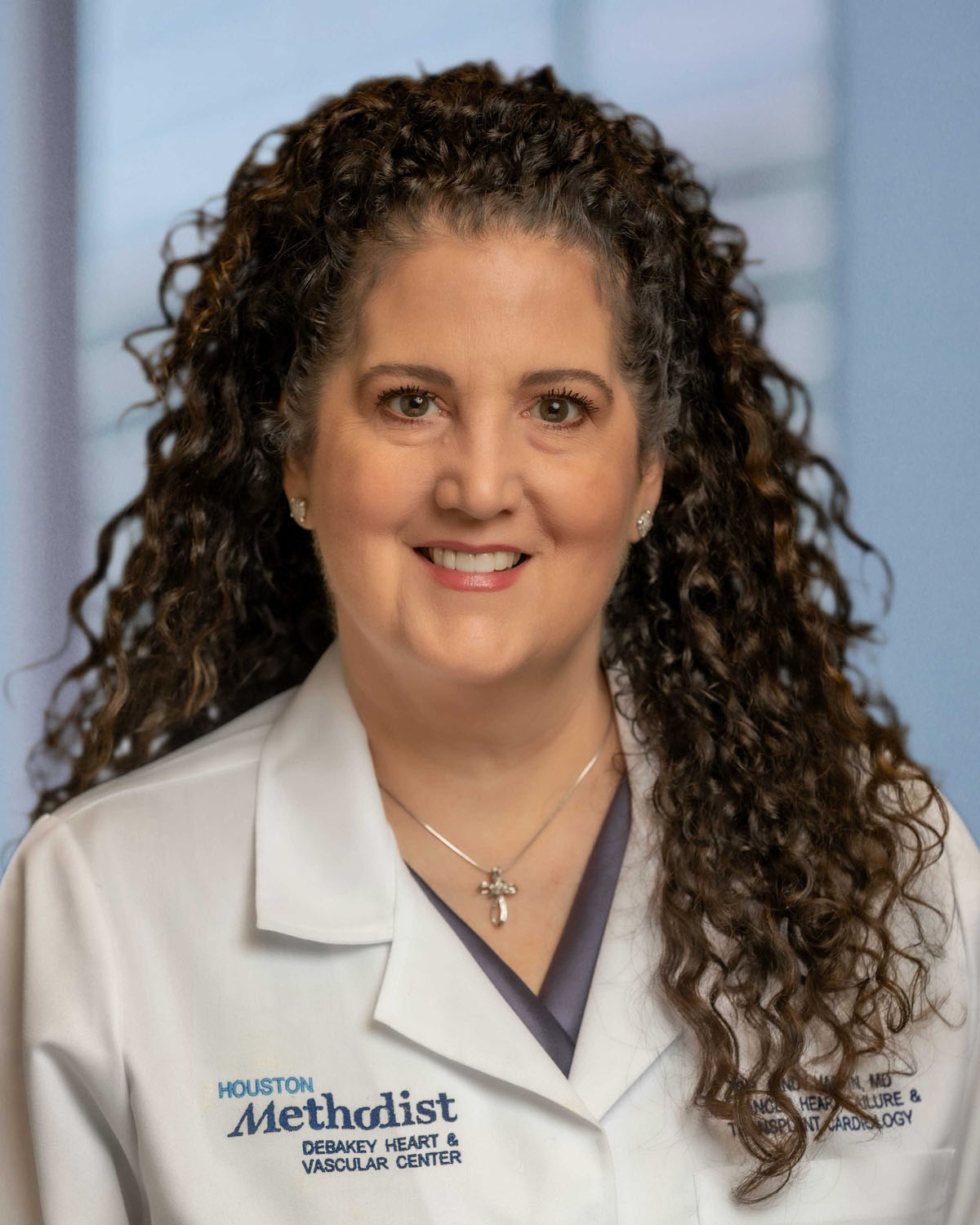
Dr. Cindy M. Martin, a distinguished physician-scientist and cardiologist, is renowned for her expertise in advanced heart failure, transplantation, mechanical circulatory support, and adult congenital heart disease. She currently serves as chief of the Department of Heart Failure, Transplantation, and Mechanical Circulatory Support and Lois E. and Carl A. Davis Chair in Heart Failure within the Houston Methodist DeBakey Heart & Vascular Center at Houston Methodist Hospital. She also holds professorships at Weill Cornell Medical College and Houston Methodist Academic Institute.
Dr. Martin completed her medical education at Louisiana State University School of Medicine, Shreveport, LA, where she earned her MD after receiving her Bachelor of Arts in Chemistry from Louisiana Tech University. Her postdoctoral training includes an internal medicine residency and cardiology fellowships in molecular cardiology, clinical cardiology, and advanced heart failure and transplant cardiology at the University of Texas Southwestern Medical Center in Dallas, TX. Dr. Martin is board-certified by the American Board of Internal Medicine in Cardiovascular Disease, Advanced Heart Failure and Transplant, and Adult Congenital Heart Disease.
Her extensive academic career includes serving as associate professor and then professor of medicine at the University of Minnesota Medical School, where she significantly contributed to the development and leadership of programs in advanced heart failure, transplantation and mechanical circulatory support. Moreover, she led the establishment of a specialized adult congenital and cardiovascular genetics center, reflecting her commitment to multidisciplinary care and innovation. Practicing at Houston Methodist Hospital since October 2022, Dr. Martin has spearheaded clinical innovations, programmatic growth, and patient care advancements. Her leadership roles have been pivotal in expanding transplantation services, optimizing donor utilization strategies, and advancing clinical practices.
Dr. Martin also plays an active leadership role on a national level. She is currently a UNOS/OPTN Cardiac Committee member contributing to policy discussions shaping organ allocation and transplantation access nationwide. Within the American College of Cardiology (ACC), she has been a featured speaker and educator at national meetings and participates in initiatives focused on congenital heart disease, transplant cardiology, and health equity and is a current member of Heart Failure and Transplant Section Leadership Council.
In addition to clinical practice, Dr. Martin is actively involved in basic, translational, and clinical research, particularly focusing on right ventricular dysfunction, advanced heart failure therapies, genetic cardiomyopathies, and transplantation outcomes. Her research contributions have been recognized with substantial grant support, including from the National Institutes of Health and various industry-sponsored studies.
A dedicated educator and mentor, Dr. Martin has consistently contributed to the professional development of medical students, residents, fellows, and junior faculty. Her commitment to teaching excellence has earned her accolades including Faculty Teacher of the Year in internal medicine at the University of Minnesota. She frequently lectures nationally and internationally, covering topics such as heart failure, transplantation, congenital heart disease, cardiovascular genetics, and innovations in patient care.
Dr. Cindy M. Martin remains committed to advancing cardiovascular medicine through clinical excellence, groundbreaking research, and dedicated education.
Competing Interests
Dr. Martin is a consultant for Abbott.