
Table 1
Comparison of immunosuppressive medications. TCMR: T-cell–mediated rejection; NFAT: nuclear factor of activated T cells; CNI: calcineurin inhibitors; DSA: donor-specific antibody; Tx: transplantation
| DRUG CLASS | EXAMPLES | MECHANISM OF ACTION | STRENGTHS | LIMITATIONS | CLINICAL CONSIDERATIONS |
|---|---|---|---|---|---|
| Calcineurin Inhibitors (CNI) | Tacrolimus, Cyclosporine | Inhibits calcineurin
| Effective against acute T-cell mediated rejection (TCMR) | Nephrotoxicity, neurotoxicity, poor control of humoral response | Mainstay of current regimens; high early survival but long-term toxicity |
| mTOR Inhibitors | Sirolimus, Everolimus | Blocks mTOR pathway
| Renal sparing; may reduce progression of cardiac allograft vasculopathy (CAV) | Poor wound healing, risk of early rejection, fungal infections | Often used in CNI reduction/withdrawal strategies |
| Costimulation Blockade (CoB) | Belatacept (variant CTLA4-Ig) | Blocks CD28-CD80/86 interaction
| Superior control of DSA and humoral alloimmunity | Less effective against early TCMR, viral infection risk (eg, CMV, EBV) | Used in delayed substitution protocols; trials ongoing in heart Tx; alternative CoB (anti-CD40L) is being investigated in kidney Tx |
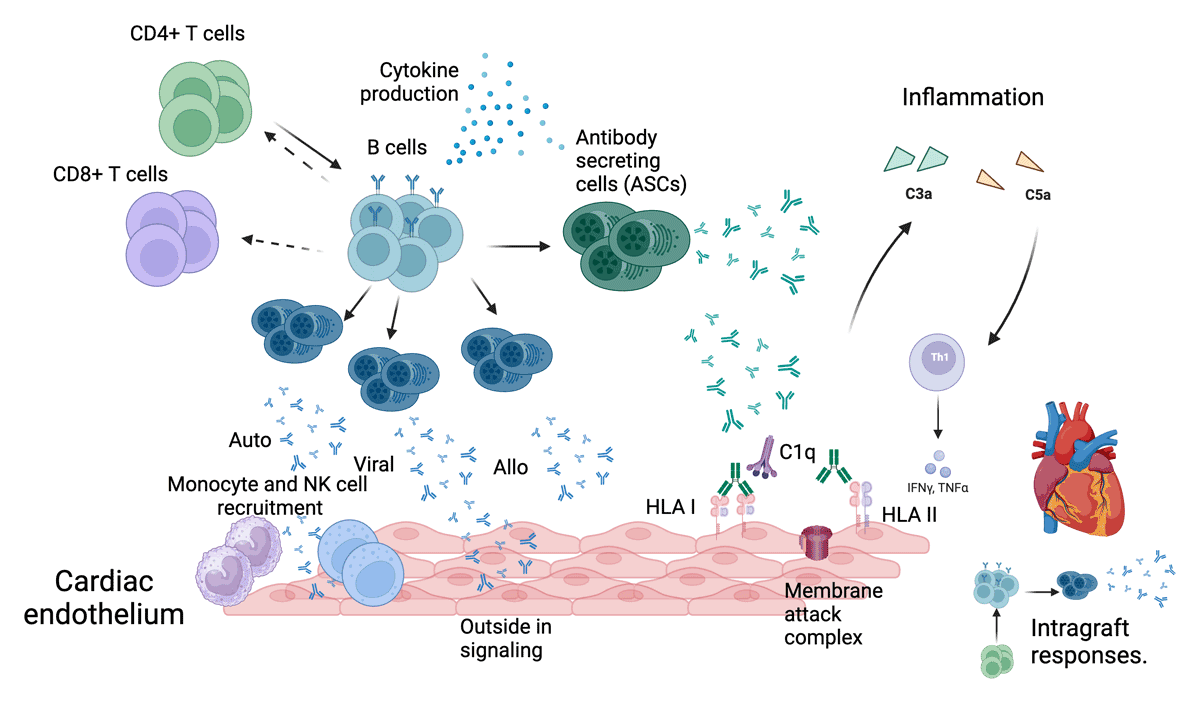
Figure 1
Complexity of the humoral alloresponse. In the context of T-cell help, B cells differentiate into antibody secreting cells in a germinal center (GC) dependent and GC independent manner. Human leukocyte antigen (HLA) and non-HLA antibodies drive the intersection of innate and adaptive immune responses. In addition to activating complement, antibodies exert their effects through Fc-receptor mediated functions, including NK cell and monocyte recruitment and can elicit outside-in signaling. Complement components C3a and C5a drive inflammation, which can further support persistent adaptive alloimmunity and cytokines that upregulate HLA class II which are associated with inferior allograft outcomes. These responses can occur in lymphoid organs and/or in the allograft (bottom right). Created in BioRender, Habal M. (2025) https://BioRender.com/f31u092