
Introduction
The prevalence of patients with adult congenital heart disease (ACHD) has been increasing due to advances in surgical techniques and medical management, growing from approximately 300,000 in the 1970s to nearly 2 million today.1,2,3 For the first time, there are more adults with congenital heart disease (CHD) than children.4 Heart failure (HF) is the leading cause of death in this population, accounting for 20% to 30% of all CHD-related deaths, with even higher rates in those with complex lesions.5,6 Heart transplantation may be the only viable option for ACHD patients with HF when other interventions pose excessive risks or offer limited benefits. The proportion of heart transplants performed for ACHD patients has increased from around 6% in the 1990s to between 10% and 11% recently, with heart-lung transplants reaching approximately 23%.7 Despite these increases, a significant gap remains between those who could benefit from transplantation and those who receive it.
Challenges in transplanting ACHD patients include recognizing advanced HF, limited access to specialized centers, and unique medical complexities related to specific ACHD diagnoses. Even after listing, these patients face higher mortality risks while on the waitlist.8 Additional challenges include the need for multi-organ transplantation, complex surgical requirements, increased bleeding risk, and specialized postoperative care.
A major limitation in ACHD transplantation is significant noncardiac involvement, often necessitating multi-organ transplants such as heart-lung or heart-liver. This review highlights the medical, imaging, surgical, and social considerations involved in multi-organ transplantation for patients with ACHD.
Multisystem Impacts of Advanced Congenital Heart Disease: Extracardiac Organ Dysfunction
Extracardiac organ dysfunction, also known as bystander organ dysfunction, is a common complication in advanced congenital heart disease.9 It may preclude heart-alone transplantation, necessitating multi-organ transplantation in some cases. Both repaired and unrepaired defects can result in extracardiac organ dysfunction, requiring a thorough evaluation to assess severity.
Fontan-associated liver disease is a frequent complication of the Fontan procedure, primarily due to chronic venous congestion and impaired hepatic flow.10,11,12 Hepatic flow, mediated by the hepatic artery and portal vein, enters the liver through the portal triads and drains via the liver sinusoidal network into the inferior vena cava.10,13 The pericentral zone (zone III) is particularly susceptible to chronic venous pressures.13,14 Cyanotic heart disease—whether palliated, repaired, or unrepaired—can lead to hepatocyte necrosis and worsening liver dysfunction.10 The extent of dysfunction depends on the severity and duration of cyanosis, with primary congenital heart defects and shunt-dependent conditions posing higher risks compared to secondary cyanotic heart disease, such as post-Fontan pulmonary arteriovenous malformations.10
Renal dysfunction is prevalent in CHD, with 30% to 50% of adults experiencing significant impairment.15 Risk factors include pathophysiologic changes, surgical interventions, postoperative instability, nephrotoxic exposure, cyanosis, neurohormonal changes, secondary polycythemia, and cardiorenal syndrome.15,16,17,18,19 Sarcopenia, common in HF,20 limits the reliability of serum creatinine levels, emphasizing the need for comprehensive renal assessments to guide transplantation candidacy and immunosuppression strategies.21 Identifying ACHD patients at risk for post-transplant kidney failure and listing them for combined heart/kidney transplantation is imperative, as extrarenal organ transplant recipients with post-transplant kidney failure have a 4.55 relative risk of death compared to those with intact renal function.22
Lung disease in CHD may present as pulmonary vascular disease (pulmonary hypertension or arteriovenous malformations) or restrictive lung disease.23,24,25 Pulmonary arterial hypertension (PAH) due to CHD is classified as group 1 PAH in chronic left-to-right shunts and group 5 PAH in single-ventricle physiology; this is often under-recognized due to challenges in flow quantification, especially with extensive collateral burden.23 Pulmonary arteriovenous malformations may arise following procedures such as the classic Glenn or Kawashima operations. These malformations have historically been linked to the absence of hepatic venous effluent reaching the pulmonary circulation. With advancements reducing delays before Fontan completion, the risk of such malformations has decreased.24,26,27 Coiling procedures can alleviate cyanosis but may cause lung parenchymal loss. Restrictive lung disease is also prevalent, influenced by defect type, prior sternotomies, and factors such as scoliosis.25
Evaluating extracardiac organ dysfunction in CHD requires a multidisciplinary approach. In some cases, the severity of dysfunction may preclude safe transplantation unless multi-organ transplantation is considered. It is also imperative to recognize and refer ACHD patients who may benefit from transplantation to specialized ACHD transplant centers in a timely manner. Early referral helps prevent disease-related complications that could preclude transplantation and improves both waitlist outcomes and post-transplant survival. Although all surgical and interventional options should be thoroughly explored before considering transplantation, caution must be exercised with certain palliative procedures that offer limited or no long-term benefit. Such procedures may lead to further sensitization or increase surgical complexity due to multiple reoperations, ultimately complicating future transplant eligibility and outcomes.
Special Considerations in Immunological and Medical Therapy
Patients with CHD have unique immunologic profiles and sensitization mechanisms that require special consideration at the time of transplantation. They face an increased risk of rejection, infection, and malignancies if these factors are not addressed adequately. Although a direct link between the immune system and CHD has not been established, children with CHD experience more infections and severe complications.28 Reduced immune cell counts and maturity—including decreased granulocyte activity, lower T and B lymphocyte levels, diminished naive T-cell production, and reduced IgA, IgG, and complement levels—lead to increased morbidity from common pathogens such as respiratory syncytial virus.28,29,30,31
An exaggerated inflammatory response during infections further contributes to susceptibility.32 Corrective or palliative surgeries often involve partial or complete thymectomy to visualize the great vessels and access the heart.33 The impact of thymectomy on immune function has been partially understood since 1987, with recent studies highlighting differential effects based on timing and extent.34,35,36,37 Early thymectomy has been associated with impaired immune function, including reductions in several T-cell subpopulations.38
Secondary factors, such as leukopenia and hypogammaglobulinemia, commonly occur in patients with failing Fontan circulation complicated by protein-losing enteropathy or Fontan-associated liver disease, exacerbating infectious risks.39,40 Additionally, CHD patients are often allosensitized through pregnancy, transfusions, and chronic exposure to foreign human leukocyte antigens in homografts.41,42,43,44
In patients with hypogammaglobulinemia, allosensitization may be underestimated due to low IgG levels or exogenous immunoglobulin use. Following transplantation, partial immune reconstitution may increase the risk of late humoral rejection, though further studies are needed.45 Various desensitization strategies have been proposed, but the true burden of allosensitization may be underestimated as CHD patients are frequently turned down for transplantation.42 Multi-organ transplantation may be indicated in select cases, with evidence suggesting an immunoprotective effect of concurrent liver transplantation. There is a paucity of data regarding the use of combined heart-liver transplantation solely for immunological considerations in the absence of a clear indication for liver transplant. However, emerging evidence suggests that this approach may be beneficial in highly sensitized patients.46,47,48
Given these risks, individualized assessment of rejection and infection potential should guide peritransplantation and maintenance immunosuppression strategies.
Multimodality Imaging for Transplant Planning of Patients with ACHD
A thorough preoperative imaging assessment in adults with ACHD is essential for successful transplant planning due to the complexity of their native and surgically altered anatomy. Most ACHD patients have undergone multiple surgeries, presenting challenges such as surgical reentry due to adhesions, increased bleeding risk from collateral vessels, and the need for vascular reconstruction or correction of unaddressed defects. These factors contribute to longer surgical times and prolonged ischemic intervals, necessitating meticulous donor selection and logistical planning, including optimizing travel distances.
Imaging modalities such as echocardiography, cardiac magnetic resonance, and computed tomography play a crucial role in evaluating calcifications, vascular reconstruction needs, systemic venous anatomy—including superior vena cava patency, bridging veins in persistent left superior vena cava, and inferior vena cava morphology—pulmonary vein anomalies, and aortic reconstruction requirements. These considerations are especially important for patients with aneurysmal dilation, arch hypoplasia, repaired truncus arteriosus, or those who have undergone a Damus-Kaye-Stansel procedure.
Preoperative imaging should also assess adhesions between the sternum and cardiac or vascular structures for reentry planning and evaluate the patency of peripheral vessels for alternative cannulation strategies (Figure 1). Additionally, understanding pulmonary artery anatomy and the collateral vessel burden is critical to mitigating bleeding complications. Pretransplant interventions, such as coil embolization, should be considered when necessary (Figure 2).
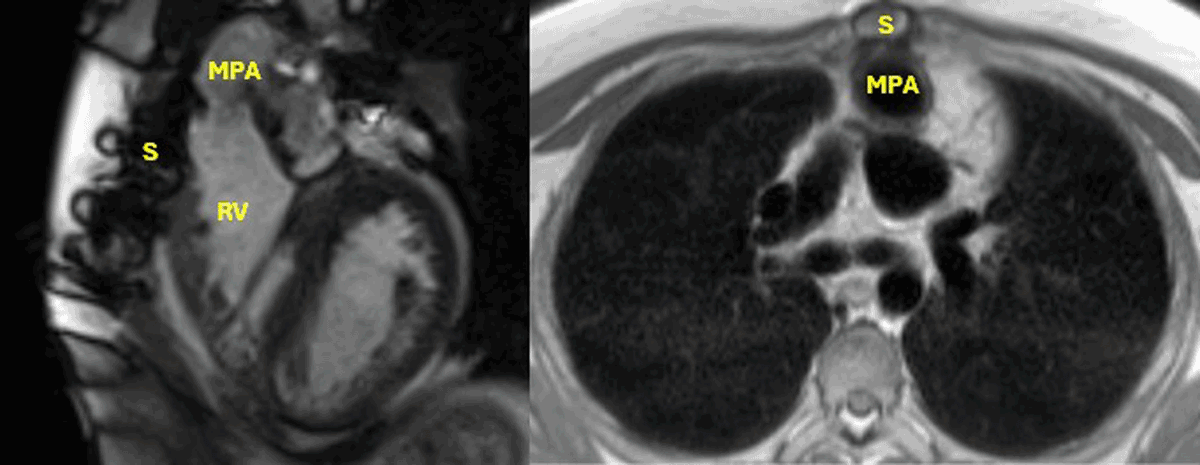
Figure 1
Cardiac magnetic resonance demonstrating right ventricle and main pulmonary artery adhesions to the sternum in a patient with double outlet right ventricle status post biventricular repair with arterial switch operation. S: sternum, RV: right ventricle, MPA: main pulmonary artery
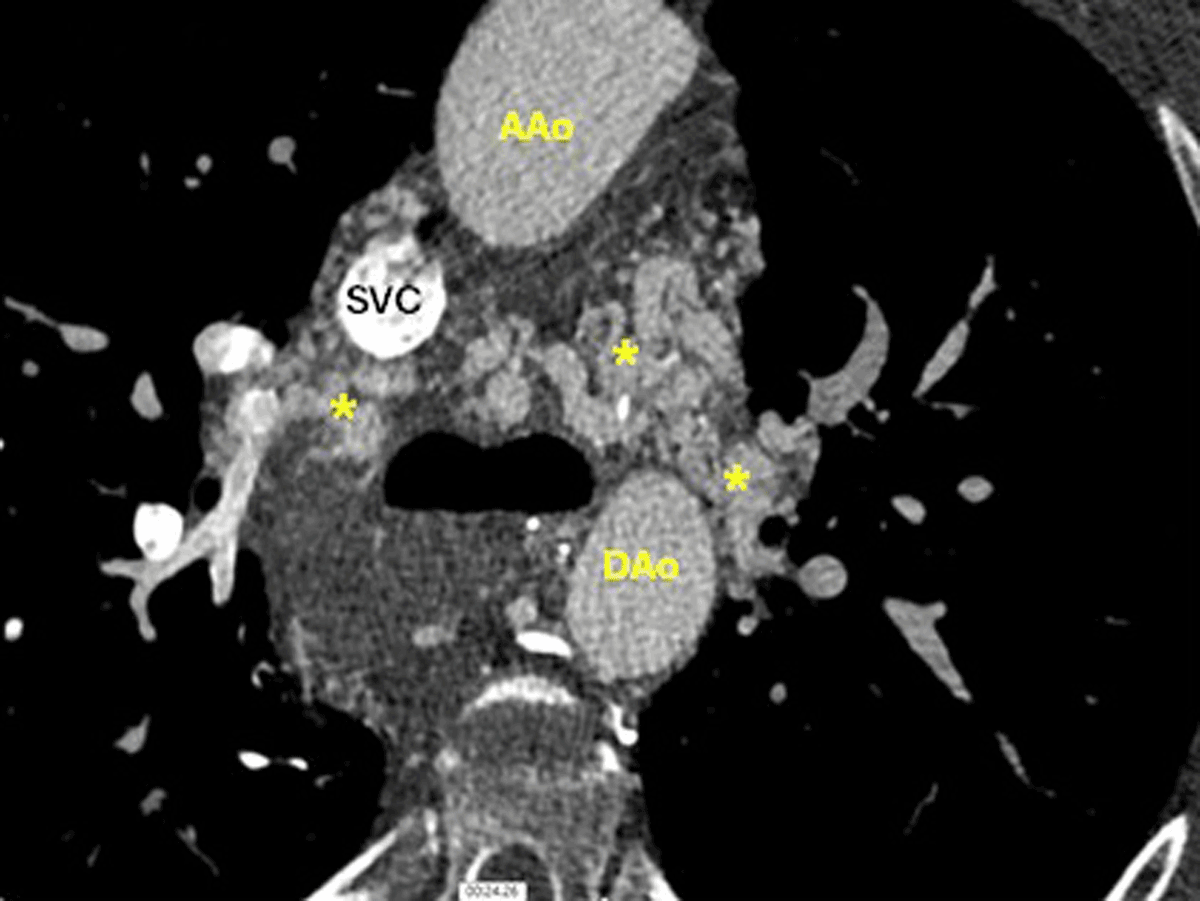
Figure 2
Computed tomography angiography of the chest with extensive collateral networks around the airway, the SVC and the aorta in a patient with unbalanced complete atrioventricular canal status post Fontan palliation. (*) Collateral networks, AAo: ascending aorta; Dao: descending aorta; SVC: superior vena cava
For patients with complex anatomies, such as those with Fontan circulation, careful imaging protocol design and timing are essential to optimize diagnostic accuracy and surgical planning. Extended imaging coverage—including the innominate vein, aortic branches, diaphragm, and hepatic veins—is recommended for comprehensive vascular assessment. It is also crucial to perform imaging in ACHD patients at centers with the requisite expertise to ensure accurate assessment and optimal surgical planning.49
Surgical Challenges in Heart Transplantation for ACHD Patients
ACHD patients with HF requiring transplantation primarily include those with single-ventricle physiology and systemic right ventricles, such as ccTGA or D-TGA post-atrial switch. Compared to patients without ACHD, they present unique surgical challenges.
Most ACHD patients have undergone prior surgeries, with about 80% having at least one sternotomy and more than 50% experiencing multiple sternotomies.50-51 Reentry into the chest necessitates preoperative multimodal imaging to evaluate the availability of a safe space behind the sternum and assess femoral vessels, which are often compromised by prior procedures. Establishing a secure peripheral cannulation site is critical before re-sternotomy. Axillary cannulation should be considered, particularly for cases involving aortic arch surgery or hypothermic circulatory arrest.
In scenarios where damage to a systemic ventricle or atrium is suspected during sternotomy, maintaining positive pressure within cardiac chambers during the cooling phase proceeding with the circulatory arrest can mitigate the risk of air embolism. Close coordination among surgical, perfusion, and anesthesiology teams is essential for successful outcomes.
Extensive anatomical reconstruction is often required, especially for Fontan patients who may need superior vena cava (Figure 3, Video 1) and pulmonary artery reconstructions (Figure 4, Video 2). Fontan patients with hypoplastic left heart syndrome frequently require arch repair. Atypical great artery positions necessitate the use of long vascular segments from the donor and extensive surgical planning.
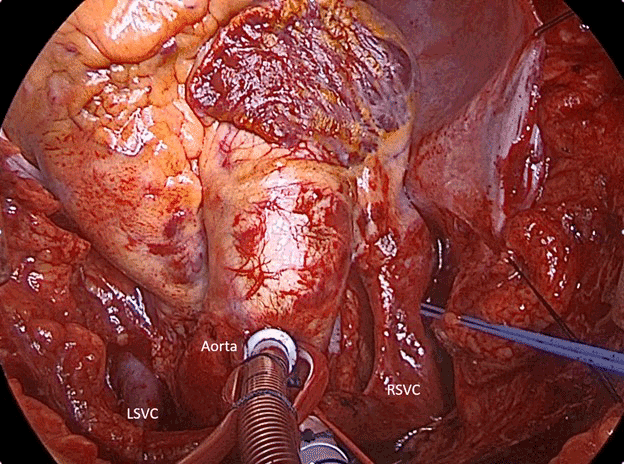
Figure 3
Patient with left superior vena cava (LSVC) and right superior vena cava (RSVC) who needs reconstruction for preparation for donor superior vena cava.
Video 1
Left superior vena cava (LSVC) reconstruction for Fontan patients who need superior vena cava; see also at https://youtu.be/KNPclQwR-UM.
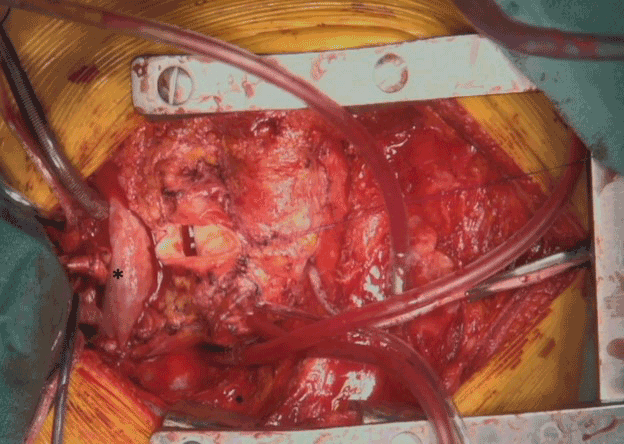
Figure 4
Patient who needs reconstruction of pulmonary arteries with a patch (*) to create a landing zone (*) for the donor pulmonary arteries.
Video 2
Pulmonary artery reconstruction; see also at https://youtu.be/zqP7aHtQ99Y.
Bleeding is a major concern due to extensive collateralization and potential liver dysfunction, contributing to 2% mortality in ACHD orthotopic heart transplantation (OHT) cases.52 Preoperative coil embolization may reduce bleeding during the surgery53 and can also decrease ventricular volume load in the case of aortopulmonary collateralization. Vascular prostheses can aid in reconstructing recipient anatomy for donor-heart compatibility. It is crucial to ensure that the recipient’s anatomy is compatible with the implantation of the donor’s heart upon its arrival.
ACHD patients experience longer ischemic times compared to non-ACHD patients.54 Comprehensive preoperative planning is crucial to minimize complications and optimize ischemic time. Planning must include safe reentry, bleeding management, anatomical reconstruction, and coordination with donor hospital timelines for potential cross-clamp delays to reduce mortality.
Surgical Challenges and Considerations in Fontan Physiology
Since 1971, patients with an anatomical or functional univentricular heart have been treated with Fontan palliation.55 This circulation features a single ventricle pumping blood to the systemic circulation while venous return flows passively to the lungs. Following the Fontan procedure, a sharp rise in central venous pressure leads to long-term complications affecting abdominal organs, with Fontan-associated liver disease (FALD) being the most common.
Liver cirrhosis is prevalent early after Fontan completion56,57 and is diagnosed in up to 80% of patients. Diagnosing FALD presents challenges, as biomarkers, scoring systems (FALD, MELD, MELD-Xi), and imaging modalities such as elastography58 and magnetic resonance imaging59 have limitations. Liver biopsy remains the gold standard for diagnosis and staging.
Treatment options for established FALD include OHT or combined heart and liver transplantation (HLT). The choice between single- and dual-organ transplants varies by institutional protocols. Recent data suggest that HLT provides a greater survival benefit compared to OHT alone in cirrhotic Fontan patients and in those with advanced FALD score ≥ 2.48,60
HLT, a complex procedure, can be performed sequentially or en bloc and has been a topic of debate since the first HLT performed in 1984.61 Organ care systems allow tailoring of the approach based on patient stability. In unstable cases or those with significant bleeding post-OHT, organ care systems can preserve the liver for up to 12 hours, postponing orthotopic liver transplantation (OLT) until hemodynamics stabilize.
The thoracic phase may require hours to reconstruct normal anatomy for successful OHT. Peripheral vessels are often used to safely reenter the chest; they may also facilitate venovenous bypass during OLT. Close collaboration between thoracic and liver teams is crucial for technical coordination. After OHT, the chest may be left open to stabilize hemodynamics before OLT. Once the liver is implanted successfully, chest closure can be performed. En bloc HLT is preferred for patients with limited intrathoracic inferior vena cava availability due to prior surgeries or calcifications.
Optimized Fontan circuit management and HLT availability represent significant advancements in improving long-term survival for single-ventricle patients.
Surgical Challenges and Considerations in Heart-Double Lungs
The first combined heart and lung transplantation procedure was performed in Houston by Denton A. Cooley in 1968, with the first long-term survival procedure occurring at Stanford Medical Center in 1981.62 Since then, this combined transplant has remained a relatively uncommon procedure, with only 18 to 74 performed annually in the United States (US). Stanford Medical Center, the University of Pittsburgh, and Houston Methodist Hospital have had the three highest combined volumes since 1988.63 The primary indications for this procedure are most commonly complex congenital heart disease with severe pulmonary hypertension or acquired heart disease with fixed severe pulmonary hypertension or intrinsic lung disease.
The surgical implantation of a heart and double lung organ bloc requires four anastomoses: the trachea, aorta, and both the superior and inferior vena cava. Therefore, preoperative imaging review focuses on verifying that the resection of the recipient’s heart and lungs retains these structures in standard anatomic positions. In complex congenital recipients, communication with the procuring surgeon should focus on potential nonstandard requirements, such as the need for extra length of vessels (including the vena cava) to incorporate the innominate vein or the aorta to verify the inclusion of the aortic arch. In cases where a left superior vena cava is present with an absent innominate vein, reconstruction with a harvested innominate vein may be required, or a Warden procedure should be considered for certain congenital heart disease patients.
The most challenging aspect of the procedure in ACHD patients is routinely described as the explantation of the recipient’s diseased organs. This is due to multiple redo sternotomies and the need for planning appropriate cannulation strategies to ensure the proper length and anatomical positioning of the recipient’s target anastomotic tissues. Additionally, the degree of collaterals may necessitate coiling by an ACHD interventionalist prior to transplantation.
As the organs are placed en bloc, postoperative pulmonary arterial hemodynamics are frequently excellent, with significantly lower concern for right heart dysfunction compared to heart-alone implantation.
Surgical Challenges in Combined Heart/Abdominal Transplantation in ACHD Patients
Combined heart/kidney transplantation is common in the US, with 373 procedures nationally in 2024 (OPTN data). Kidney transplantation adds minimal surgical risk compared to heart transplantation alone in experienced centers. Given the surgical and hemodynamic challenges associated with heart transplantation for ACHD, a common strategy is to “stage” the procedures, maintaining the kidney graft on a perfusion device and delaying the kidney transplant to a second procedure. This allows for the stabilization of the fresh heart recipient to optimize the kidney transplant procedure.64 With the recent implementation of the safety net in heart and kidney transplantation, the timing and considerations for kidney transplantation may evolve as more data become available in the ACHD population.
Heart/liver transplantation is a much less common procedure, with 73 cases performed in the US in 2024. Liver transplantation involves more significant hemodynamic stressors than kidney transplantation, both from bleeding in a coagulopathic patient with portal hypertension and from the need to partially or fully clamp the vena cava to facilitate the liver transplant itself. The use of venovenous bypass can reduce some of these intraoperative hemodynamic stressors; however, in ACHD patients with anomalous venous anatomy, careful coordination between the heart and liver teams is needed to ensure vascular access for bypass.
Historically, cold-ischemia time considerations have made heart/liver transplantation for ACHD challenging, as liver graft quality and ischemia-reperfusion injury worsen with cold ischemia times approaching 12 hours. The emergence of normothermic machine perfusion for liver allografts may reduce this ischemia-time concern, allowing the liver graft to be maintained on the device for extended periods to facilitate the complex heart procedure.65 Select centers have anecdotally described “staging” the heart/liver procedure in the same manner as the more common staged heart/kidney procedure, using the perfusion device to extend liver preservation and allowing stabilization of the freshly post-transplant heart patient prior to liver transplantation.
Psychosocial and Care Coordination in ACHD Transplant Patients
ACHD patients and their caregivers face significant challenges accessing transplant services, particularly for multi-organ transplants. Fewer than 4% of ACHD patients receive care at one of the 35 accredited ACHD centers, with even fewer having access to specialized centers for multi-organ transplants.6 The scarcity of these centers often requires patients and caregivers to travel long distances for evaluations and assessments. Many centers also require temporary relocation before or after the transplant, creating physical, emotional, and financial burdens.
Many ACHD patients have undergone surgeries in childhood, but the absence of centralized health records often leaves families managing extensive collections of outdated records. Gaps in care can occur due to factors like financial strain, competing life responsibilities, or the misconception that palliative procedures were a “cure,” complicating the path to transplant access and care continuity.
Mental health issues, such as anxiety, depression, and stress are common in ACHD patients due to early mortality awareness, medical complications, and social isolation.66 Neurocognitive deficits from abnormal fetal circulation, perioperative injury, or medication side effects further increase caregiver reliance, contributing to burnout.67,68 Tools like the Stanford Integrated Psychosocial Assessment for Transplantation are used to assess psychosocial readiness for transplant, with poor scores linked to adverse outcomes.69 Interventions such as cognitive behavioral therapy, psychiatric medications, and support groups help improve psychological outcomes.70
Effective care coordination is crucial for ACHD patients requiring multi-organ transplants. ACHD-transplant nurse coordinators collaborate across organ groups, ensuring comprehensive education and ongoing assessments. This coordination is vital for preparing patients for both the transplant process and life afterward.71
Conclusion
This review addresses the challenges of transplanting ACHD patients and the need for multi-organ transplants in this population. Despite the complexities, long-term outcomes of ACHD transplants are comparable to, or even better than, those for other cardiomyopathies.72,73 The volume of ACHD transplants at a center and access to specialized expertise correlate with improved short-term outcomes.73,74
Given the complexities of ACHD transplantation, a dedicated multidisciplinary team is essential, including but not limited to an ACHD surgeon, ACHD cardiologist, transplant cardiologist, ACHD interventionalist, anesthesiologist, hepatologist, pulmonologist, abdominal transplant surgeon, and a dedicated ACHD coordinator and social worker. A specialized transplant evaluation pathway for ACHD patients is vital, encompassing referral processes, diagnostic testing, ACHD surgical planning, and multidisciplinary meetings to ensure comprehensive care, including addressing caregiver needs, procurement requirements, vascular access, and post-transplant care.
The 2018 organ allocation system acknowledges some challenges by assigning ACHD patients a Status 4 in the UNOS system. However, gaps remain regarding status upgrades, sensitization, and the urgency of multi-organ transplants. As efforts continue to improve the heart transplant allocation system and transition toward a continuous distribution model, it is essential to consider assigning higher priority to ACHD patients given the persistent challenges associated with timely transplantation in this population.
There is an urgent need for medical and transplant societies to develop an allocation system that better accounts for the unique needs of ACHD patients, ensuring timely access to transplantation for this growing population. There may also be a role for identifying structured programs through UNOS for heart and multi-organ transplantation in ACHD patients to improve patient access and streamline the referral process.
Key Points
Heart failure is the leading cause of death in patients with adult congenital heart disease (ACHD). Although heart transplantation may be the only viable option for some of these patients when other interventions pose excessive risks or offer limited benefits, a significant gap remains between those who could benefit from transplantation and those who receive it.
Extracardiac organ dysfunction is common in ACHD patients, and comorbidities such as Fontan-associated liver disease, pulmonary vascular and restrictive lung disease, and renal dysfunction frequently necessitate multi-organ transplantation.
Patients with CHD have unique immunologic profiles and sensitization mechanisms that require special consideration at the time of transplantation because they face an increased risk of rejection, infection, and malignancies if these factors are not addressed adequately.
Evaluating extracardiac organ dysfunction in CHD requires a multidisciplinary approach, and it is important to recognize and refer ACHD patients who may benefit from transplantation to specialized ACHD transplant centers in a timely manner.
Early referral helps prevent disease-related complications that could preclude transplantation and improves both waitlist outcomes and post-transplant survival. Although all surgical and interventional options should be thoroughly explored before considering transplantation, caution must be exercised with certain palliative procedures that offer limited or no long-term benefit.
Competing Interests
The authors have no competing interests to declare.