
Introduction
The heart failure epidemic represents a major global health challenge, affecting an estimated 64.3 million individuals worldwide. Heart failure (HF) is particularly prevalent among the aging population and is only increasing in incidence, placing an escalating burden on healthcare systems.1 In the United States, HF stands as a principal cause of hospitalization for adults aged 65 and above, responsible for an annual expenditure surpassing $30 billion.2 Frequent hospitalizations associated with HF lead to extensive healthcare utilization and adverse outcomes for patients, including substantial decrements in quality of life.3 Sadly, despite formidable advances made in pharmacologic, device-based, and surgical therapies, mortality attributable to HF is on the rise.4
HF management has always emphasized the goal of myocardial recovery by ejection fraction for improved outcomes and decreased healthcare utilization. However, conventional connotations of this aspirational goal are limited. A more expansive definition of “recovery” considers the systemic nature of HF pathophysiology and management. Regarding the myocardium, recovery means to restore structural, functional, and hemodynamic parameters to values within expected or “normal” ranges. When concerning the patient, recovery means the functional restoration of the organism as a whole (systemic recovery), mitigating symptoms and optimizing functional capacity. Although myocardial and systemic recovery are often correlated, this is not always necessary, with potential for both synergistic and independent improvement.5, 6, 7 If this broader definition of recovery serves as the primary intention of all HF care discovery and delivery, applicability spans both acute and chronic settings. In acute settings, integrated care systems are designed to swiftly administer lifesaving treatments such as temporary hemodynamic and mechanical circulatory support (MCS) for cardiogenic shock. In advanced HF cases with acute on chronic decompensation, durable MCS and transplantation are considered. In the chronic setting, optimization of guideline-directed medical therapy (GDMT), maintenance of symptom-free outpatient status, and avoidance of hospitalizations may be accomplished through remote monitoring systems, insurance incentives, and multidisciplinary care coordination to ensure comprehensive management and timely interventions.
The purpose of this review is to underscore the importance of fostering recovery in a more inclusive sense across the spectrum of HF, from acute to chronic settings (Figure 1). This includes a call to redefine the conventional “Heart Failure Specialist” label, which falls short of encompassing the subspecialty’s dedication to restoring both cardiac function and patient well-being. Contrary to the connotation of HF being an irreversible end-stage condition, the proposed nomenclature of “Myocardial Recovery Specialists” may better reflect this commitment, potentially streamlining multidisciplinary care and offering a more empowering message for patients, healthcare providers, and trainees. This aligns with the field’s recent receptivity to rebrand “Heart Failure Teams” as “Heart Success Teams,”8 a commendable step towards redefining the narrative. While “heart failure” has a long-standing history, a change is needed to reflect the evolving understanding that it is not always an irreversible end point but, rather, a dynamic condition with the potential for remission, recovery, improved quality of life, and survival.
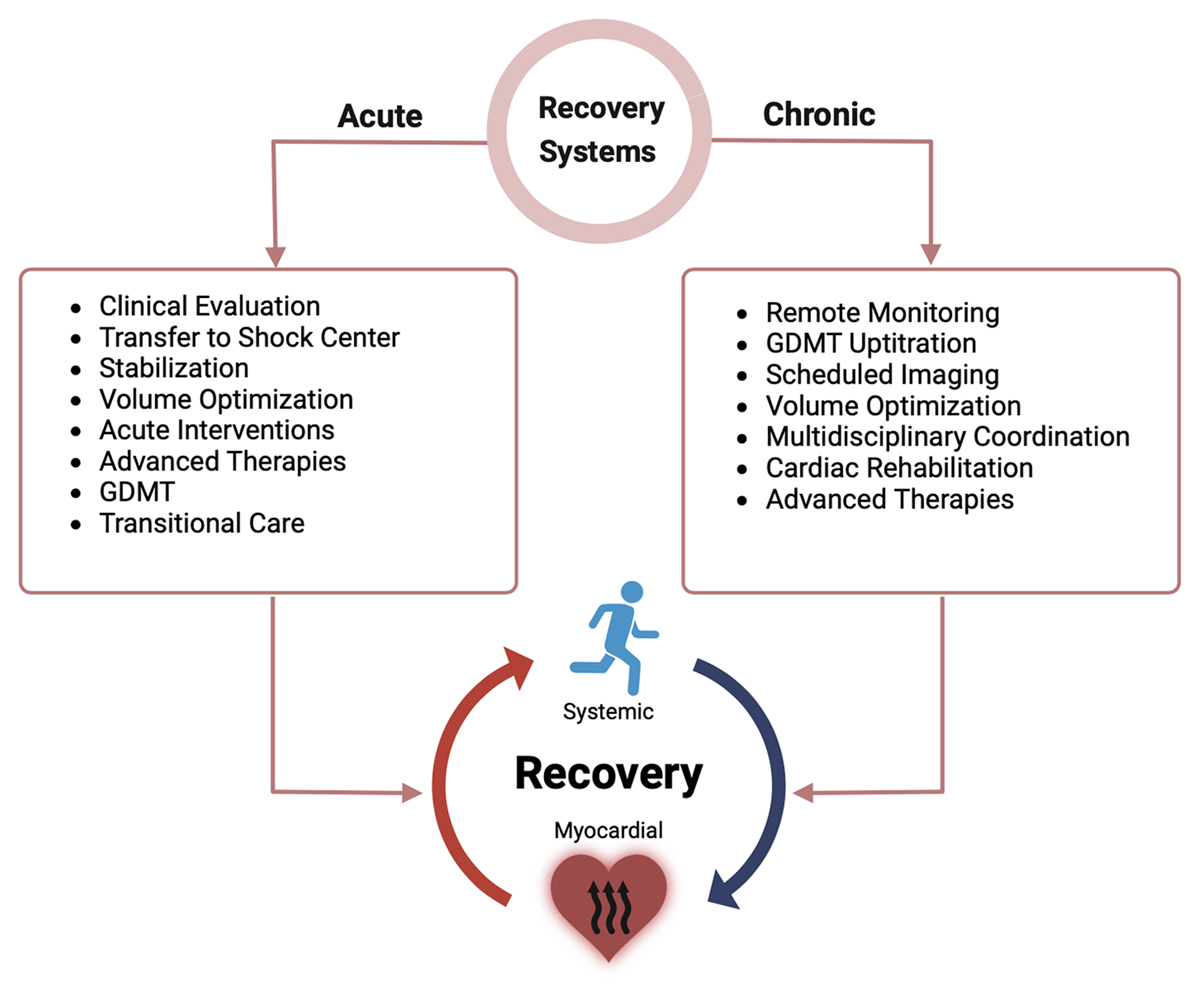
Figure 1
The role of systems of care in myocardial and systemic recovery in the acute and chronic setting. Created with Biorender.com. GDMT: guideline-directed medical therapy
Part 1: Systems of care for myocardial recovery in acute cardiogenic shock
Importance of Standardized Care and Team-Based Approaches
In scenarios of cardiogenic shock, the intention of enabling myocardial recovery from a causative insult that results in clinical compromise is at the forefront of management. This requires well-delineated protocols for identification, establishing underlying pathophysiology and prompt interventions accordingly. Standardized care delivered by teams within integrated systems (Shock Teams or Acute HF Recovery Teams) has been shown to improve clinical outcomes in settings of acute cardiogenic shock.9 These teams are composed of specialists in cardiac critical care, interventional cardiology, advanced HF, and cardiothoracic surgery. Shock Teams play a crucial role in triaging patients and initiating immediate management strategies. For example, they guide the transfer of patients from less specialized facilities to centers equipped with cardiac catheterization facilities for emergent revascularization, dedicated cardiac intensive care units (CICUs), MCS, and extracorporeal membrane oxygenation capability. This multidisciplinary collaborative approach to care is critical to establishing the foundations for delivering recovery-focused care.
Identification, Interventions, and Advanced Therapies for Acute Myocardial Recovery
Timely identification and evaluation of cardiogenic shock are the critical contingent steps in the path toward myocardial recovery. Integration of patient history, objective laboratory data, and nuanced clinical findings (centered around indications of hypoperfusion) is required for identification of cardiogenic shock. Identification across the acute HF spectrum is aided by the Society for Cardiovascular Angiography & Interventions (SCAI) SHOCK classification scheme, which characterizes patients’ presentations into stages based on clinical and biomarker criteria.10 Varying from at-risk (Stage A) for cardiogenic shock but without signs of hypoperfusion to refractory shock with critical organ hypoperfusion (Stage E), these stages help shape approaches to management as well as prognosis. Decision-making processes involve determination of the levels of monitoring (ie, CICU, invasive hemodynamic assessments), types of support (ie, inotropes, MCS), and consideration of other advanced therapies as appropriate. Importantly, it requires dynamic reassessment such that treatment and monitoring strategies can be adjusted based on initial responses to chosen interventions.11
Upon recognition of myocardial and clinical decompensation, HF specialists and shock teams seek to rapidly determine the underlying cause, which is crucial for enabling timely and effective interventions aimed at recovery. The specific etiology guides the clinical management strategy; for instance, the treatment for nonischemic cardiomyopathy shock differs from acute myocardial infarction shock (AMI-shock). These teams play a critical role in managing acute stabilization and prioritizing myocardial recovery from the outset, conducting a thorough evaluation of the risks and benefits of different treatment options. A major benefit of this collaborative approach is the enhancement of care processes. Particularly in instances of AMI-shock, the value of minimizing “door-to-unload” time is increasingly recognized in limiting myocardial damage.12
Among those who are stabilized from the decompensated state, less attention may be placed on the initiation of GDMT; yet its initiation for those who will be discharged home is vital for favorable out-of-hospital long-term trajectories. Despite established guidelines recommending GDMT initiation and up-titration during hospitalization for acute HF, including evidence from the STRONG-HF (Safety, tolerability and efficacy of up-titration of guideline-directed medical therapies for acute heart failure) trial,13 maximization remains suboptimal.14, 15, 16 Though it may seem counterintuitive, the same shock teams that identify and manage acute cardiac decompensations play a vital role in early optimization of GDMT for selected hospitalized patients. This approach is essential for both myocardial restoration and improved quality of life.17
A critical component that shapes all facets of management in acute myocardial recovery is patient-centered care, broadly defined as a philosophy that incorporates fundamental aspects of patients’ beliefs and values into all elements of care management.18 Decisions regarding plans of care and expectations for types of recovery require taking the patient’s baseline status into account. For example, a 48-year-old woman who is previously healthy and active presenting with AMI-shock may garner different expectations for myocardial and functional recovery compared to a 75-year-old man with long-standing nonischemic cardiomyopathy with baseline New York Heart Association (NYHA) Class III symptoms presenting with a low output but normotensive decompensation (SCAI Stage B). Multidisciplinary shock teams engage in discussions with patients and their loved ones to guide elements of diagnostic workup and therapeutic interventions, acknowledging that not all patients may have the same priorities and end goals. Supportive cardiology or, often less palatably termed, “palliative care” teams are instrumental in guiding these discussions.19
This broad model of recovery of function applies beyond conventional SCAI Stage C, D, and E shock to acute decompensated HF settings (SCAI Stages A and B), emphasizing the continuum of presentations. Patients who are admitted or seen on an urgent basis for congestion often experience a discontinuation of GDMT during hospitalization despite increasing evidence that withholding these medications during hospitalization can increase in-hospital mortality. The 2022 American Heart Association/American College of Cardiology/Heart Failure Society of America guideline reflects this importance by placing emphasis on maintaining GDMT during hospitalization provided there is no indication for deteriorating perfusion.17, 20, 21
Limitations to Progress in Myocardial Recovery
Despite advances in managing acute hemodynamic decompensation, challenges posed by the philosophic shift proposed for myocardial recovery should be mentioned. The present lack of effective therapies to salvage myocardial and systemic function from severe cardiogenic shock and multiorgan failure, coupled with persistently high mortality rates in this setting, may deter HF specialists from aggressively pursuing recovery pathways.22 Consequently, clinicians may be less likely to entertain notions of recovery. Further, systems are incentivized to consider left ventricular assist devices (LVADs) and heart transplantation as appropriate therapeutic options in these scenarios.22, 23 While these are important and life-saving evidence-based strategies to improve patient quality of life and survival in the right population, recovery pathways are not incentivized in the same ways. To truly advance myocardial recovery, continued research into novel therapies and interventions (such as the door-to-unload concept mentioned previously) is imperative, along with a shift in focus towards restoring the heart’s intrinsic function rather than solely relying on destination device-based solutions.23 Addressing the systemic barriers that disincentivize myocardial recovery pathways are likely equally crucial to ensure that patients receive comprehensive and appropriate care.
Part 2: Systems for myocardial recovery in the transition to and in outpatient settings
Guideline-Directed Medical Therapy
Myocardial recovery for HF with reduced ejection fraction is commonly reflected by decreases in chamber sizes (reverse remodeling) and improvements in ejection fraction.24 In addition to addressing causative insults (coronary artery disease, endocrinopathies, toxins, etc.), these goals are achieved through the therapeutic up-titration and optimization of GDMT, for which various systems of care have been evaluated. Yet, the benefits of GDMT extend far beyond improvements in ejection fraction to include improved survival, reductions in hospitalizations, and improvements in functional capacity. Thus, for patients across the ejection fraction spectrum, the concept of “recovery” may be more accurately defined by the restoration of systemic function enabling the resumption of activities enjoyed prior to their diagnosis of HF (functional recovery). The sodium glucose cotransporter-2 inhibitor (SGLT2i) class of drugs serve as a prime example, efficacious across the spectrum of ejection fraction as well as across acute and chronic settings. Gao et al.25 performed a meta-analysis showing a mean increase in walk distance of 13 meters after being treated with SGLT2i.25 This difference may not seem significant, but for someone who is housebound, the ability to walk across the street to the grocery store can mean a sizeable improvement. In general, it is important for the scientific community to promote public awareness around the disconnect between ejection fraction and functional capacity, emphasizing that the latter holds more significant implications for survival. To do so, consistent collection of appropriate measures of functional capacity and quality of life in clinical trials is essential. Only then can the agenda of recovery in HF move forward in a more patient-centered way.25
Systems of Recovery and Care in the Transition to (and in) Chronic Care
In the transition to outpatient care upon discharge from the hospital or after an urgent visit, patients with HF face a critical period of vulnerability, with around 25% of them readmitted within 30 days and 50% within 6 months—a factor that has prompted the Centers for Medicare & Medicaid Services to impose penalties for HF-related readmissions.26, 27, 28 To address this issue, transitional care models and toolkits have been developed with the aim of reducing 30-day readmissions, with mixed results.29 The most impactful interventions have been the implementation of quality improvement programs to increase GDMT prescription by discharge and ensure the scheduling of follow-up appointments within a week of discharge, highlighting the importance of frequent in-person monitoring and the rapid up-titration of GDMT while hospitalized.17, 29
In an extensive review, Tang et al.4 highlighted the different systems employed for GDMT optimization post an acute-HF event, including interdisciplinary HF clinics that demonstrate only a modest increase in GDMT initiation but excel in GDMT up-titration, largely due to protocol-driven titration algorithms. While telehealth clinics did not significantly increase GDMT prescriptions, smaller studies utilizing wireless devices transmitting daily heart rate, blood pressure, and weight data (reviewed by physicians and nurses) have shown increased GDMT use, including optimization of medication dosages.4
Audits, clinician education, and electronic health record (EHR) alerts have also been explored as methods for GDMT optimization. Outpatient audits have yielded mixed results, with some studies demonstrating improvements in specific medication classes but otherwise inconsistent outcomes across the board.4 For example, the PACT (Preventing Alzheimer’s with Cognitive Training) study examined the utility of patient-centered transitional care models at hospital discharge on composite clinical outcomes, finding that the implementation of patient-centered models did not improve outcomes when compared to the standard of care.30 Alternatively, the THRIVE (The Heart Failure Readmission Intervention by Variable Early Follow-up) study31 assessed the utility of early structured telephone follow-up after hospitalization for HF and determined that this approach can increase 7-day follow-up while having similar 30-day clinical outcomes compared with in-person follow-up visits.31 Similarly, targeted EHR alerts have been shown to be associated with increased rates of prescribing GDMT, suggesting that tailored EHR-based alerting may encourage GDMT initiation and optimization.32 Clinician education-focused approaches have generally not led to significant changes in GDMT optimization. Overall, a combination of interdisciplinary HF clinics, telehealth, remote monitoring, audits, EHR alerts, and patient engagement may offer the most effective approach for systematically prescribing and optimizing GDMT.
With a more comprehensive definition of recovery serving as an overarching goal, transitions in care may become less onerous for patients and care providers alike. Initiation of GDMT in the inpatient setting to promote myocardial recovery may allow for transitional care to be increasingly focused on multidisciplinary communication and engagement with patients, which has been identified as a key aspect for optimization of GDMT.33 Increased efforts on elements of transitional care may allow for further focus on initiatives such as rehabilitation programs, which have been shown to improve patient-centered outcomes and functional capacity.34, 35
In the outpatient setting, telehealth and remote monitoring technologies provide cardiovascular specialists with valuable clinical data to manage HF, enabling prompt adjustments in therapy and ideally preventing hospital readmissions, with a recent meta-analysis providing evidence that the use of home telemonitoring systems may reduce all-cause mortality and HF-related hospitalizations.36 Implantable devices such as pulmonary artery pressure measurement systems, along with wearable technology for arrhythmia detection, support proactive HF management by monitoring physiological surrogate indicators and allow for interventions through integrated clinician notification systems.37, 38
Heart Failure Disease Management Programs
Heart failure disease management programs emphasize comprehensive care integration through the involvement of multidisciplinary care teams including cardiologists, primary care physicians, HF nurses, mid-level providers, psychologists, social workers, physical therapists, pharmacists, dietitians, and case managers (Figure 2). Extensive evidence supports the role of each player within these interdisciplinary teams. For example, integration of HF nurses who closely follow patients in clinic following discharge may improve patient-reported outcomes and reduce hospital readmissions,39 while other data show that regular cardiac exercise may improve functional status and quality of life in patients with HF.37 Data also suggest that multidisciplinary team approaches may be associated with reduced HF hospitalizations, further highlighting the role of these care teams in driving myocardial recovery.40
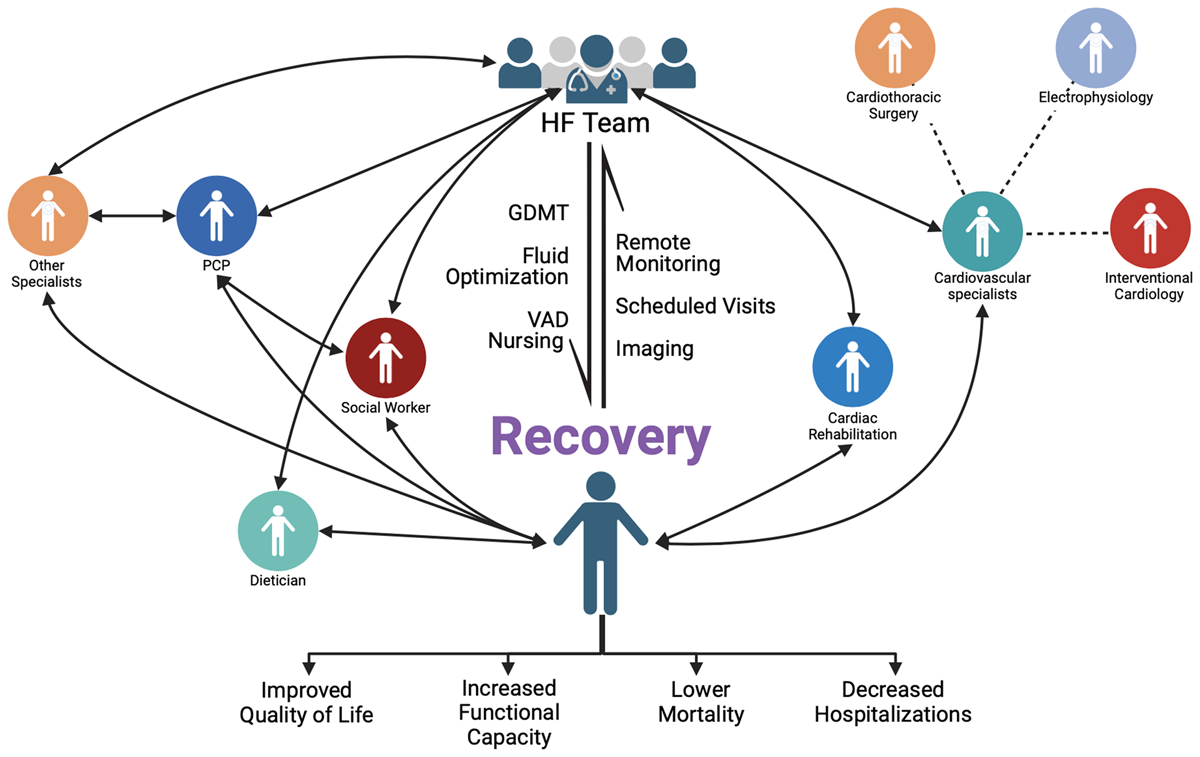
Figure 2
Heart failure disease management program (labeled HF team) with intra- and interdisciplinary coordination for recovery. Created with Biorender.com. GDMT: guideline-directed medical therapy; PCP: primary care physician; VAD: ventricular assist device
Patient Empowerment in Heart Failure Management
Patient empowerment plays a crucial role in the HF recovery process. Empowerment-based self-care programs have been shown to significantly enhance patients’ ability to manage their conditions, leading to improved health outcomes and reduced healthcare utilization.41 In the modern age, even tele-empowerment programs have shown to improve self-care behaviors and reduce uncertainty about illness, ultimately leading to fewer hospital admissions. Incorporating family-centered empowerment models can further enhance recovery and outcomes by improving psychological well-being, quality of life, and reduced anxiety and stress levels in cardiovascular patients.42 Thus, patient empowerment initiatives have the potential to promote not only physical recovery but also psychological resilience and improved quality of life. By fostering a sense of shared management and instilling confidence in the management of their health, empowerment strategies may lead to more frequent myocardial and systemic recovery.
Recovery Applicable to the Patient with Advanced Heart Failure
Stage D HF has been used to characterize patients refractory to standard therapies and with severe life-limiting symptoms. Among patients classified as having advanced HF, where intrinsic recovery (both from a myocardial and functional standpoint) is unlikely, we propose that concepts of recovery are still applicable, especially when considered in the broader context. Specifically, advanced therapies at this juncture include LVADs and/or cardiac transplantation. These therapies are intended to deliver patients from suffering with minimal exertion or at rest to a point of being able to resume activities of daily living, work, and even engage in sports and other recreational activities (especially in the case of transplantation). In these circumstances, myocardial recovery may not be achievable with respect to restoration of normal cardiac function or hemodynamics, yet heart assist or replacement therapies permit life-saving systemic and functional recovery more relevant to quality of life and survival.
Left Ventricular Assist Device as a Bridge to Recovery
A small but significant subset of LVAD patients (1–5%) achieve sufficient myocardial recovery to enable device explantation.43, 44 These patients are generally younger and have nonischemic etiologies of HF (particularly myocarditis) with shorter durations of HF.45 Despite this potential, standardized systematic weaning protocols are inconsistently employed, potentially owing to the low historical frequency of recovery events. LVAD therapy as a bridge-to-recovery tool is justified by evidence suggesting that patients who undergo explantation may even approach the function of healthy individuals.46 While risk prediction scores, such as the INTERMACS Cardiac Recovery Score, may aid in identifying patients with higher recovery potential prior to implantation, some institutions have standardized protocols for recovery, including GDMT optimization, rehabilitation programs, and regular assessments for hemodynamic optimization. In such models, the approach to every individual regardless of etiology, age, or circumstance would be one that seeks myocardial and functional recovery.47 A proactive, recovery-focused approach from the time of LVAD implantation for every patient may yield better outcomes on LVAD therapy regardless of whether LVAD explantation is feasible or not. This strategy is supported by the INTERMACS registry analysis demonstrating that when LVADs are implanted explicitly with a bridge-to-recovery intent, recovery rates increase to 11% compared to 1% within the general LVAD population.48 This notion is further supported by the RESTAGE-HF (Remission from Stage D Heart Failure) trial,49 which demonstrated that in a controlled setting, LVAD support combined with standard pharmacologic treatment led to more frequent LVAD explantation than LVAD therapy alone.49
While a small subset of patients with end-stage HF may experience myocardial recovery with temporary or durable MCS, the majority will not. Therefore, the primary focus shifts to optimizing patients’ systemic recovery through functional capacity and other organ recovery rather than solely targeting myocardial restoration and LVAD explantation. Currently, durable LVAD technology, although not without complications, has advanced considerably and allows patients to lead active and fulfilling lives. This can mean the difference between walking a few steps to walking a mile, or finally being able to perform normal daily tasks.50, 51
Redefining the Field: Implications and Benefits for Cardiac Management
The term “heart failure” carries a significant psychological burden for patients, potentially exacerbating the depression and anxiety that often accompany this condition.52 Research in health condition labeling suggests that negative terminology can adversely affect patient well-being and treatment outcomes.53 The word “failure” may evoke feelings of hopelessness and irreversibility. As a field, HF has already taken meaningful steps towards rebranding, including shifting towards the term “function” rather than “failure”52 and renaming HF teams as “Heart Success Teams.”8 We, however, propose a reevaluation of terminology commensurate with the proposed intentionality of restoring function and promoting recovery beyond the myocardium. Alongside the proposed paradigm shift, we advocate for a nomenclature shift from “heart failure” specialists to “myocardial (and thereby functional) recovery” specialists. This nomenclature emphasizes the potential for improvement, aligning with evidence-based approaches in cardiac management that focus on restoring function in a broad sense. Additionally, this terminology highlights the dynamic, progressive nature of treatment, moving away from the perception of heart failure as a static, end-stage condition (Figure 3). Making this shift seems more imperative now than ever, because despite the striking scientific advancements in the field over the past 10 years, HF mortality has been on the rise from 2012 to 2021 at higher rates than over 25 years ago, completely undoing the initial decline from 1999 to 2012.54
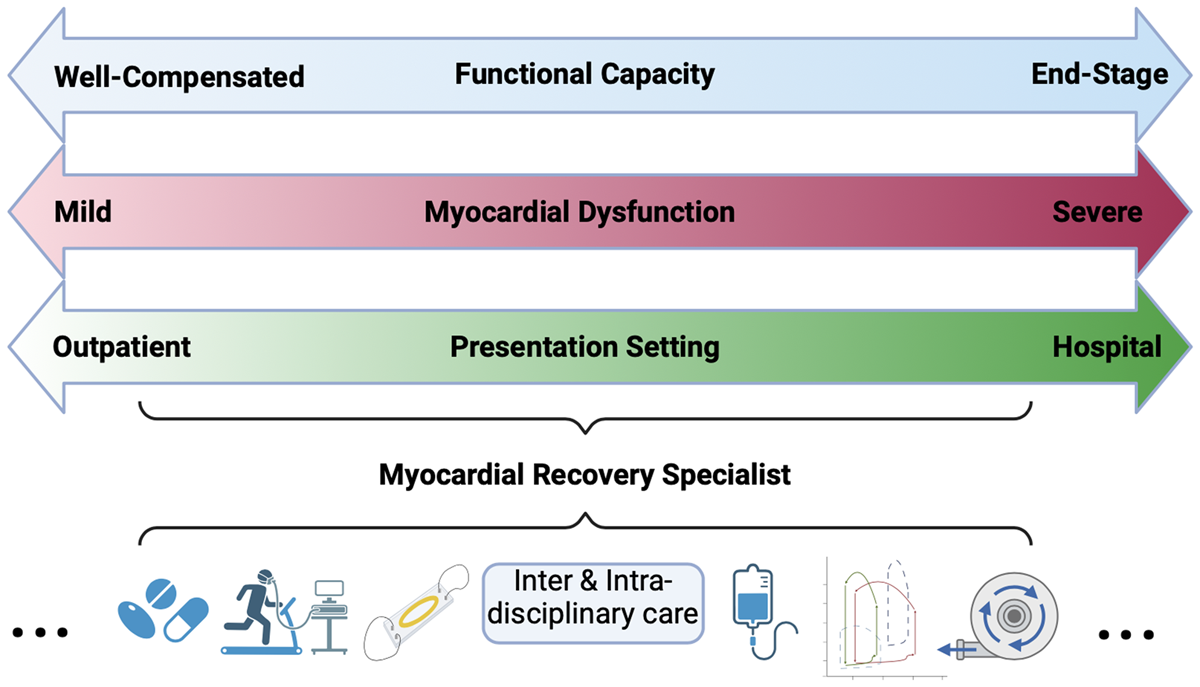
Figure 3
The breadth of “Myocardial Recovery Specialists” across patient functional capacity, myocardial dysfunction severity, and presentation setting as well as highlighted personalized therapies and coordination for care. Created with Biorender.com.
This new perspective expands beyond the traditional boundaries of isolated cardiac dysfunction, allowing for a more comprehensive understanding of the interplay between the heart and other organ systems. By adopting the designation “myocardial recovery specialists” in the systemic context, patient understanding and engagement may improve, ultimately facilitating the development of more holistic, patient-centered management strategies for those living with HF. Broader implications for this nomenclature shift may extend to increasing trainee interest in the field, improved interdisciplinary coordination, and earlier patient referrals for therapy.52
Summary/Conclusion
This review proposes a paradigm shift in the definition of “recovery” in HF that extends beyond the restoration of normal myocardial structure and dynamics to the entire human system, reflected by improved patient functional capacity and clinical outcomes. Rebranding the specialty from “heart failure” to “myocardial recovery” (in the systemic context) more accurately reflects the diverse presentations and pathologies encountered under the HF umbrella and has the potential to promote streamlined care across various clinical settings, enable coordinated efforts across subspecialties and disciplines, enhance patient engagement and empowerment in shared-care models, and stimulate renewed trainee interest to enter the field of HF.
Key Points
A shift toward a broader interpretation of recovery in heart failure considers recovery holistically, including not only myocardial optimization but also systemic and functional recovery.
An intention of recovery that is more comprehensive may help streamline care systems for patients living with heart failure across acute and chronic settings.
Implementation systems are needed to ensure the use and up-titration of guideline-directed medical therapies for improved myocardial and systemic recovery regardless of setting.
The term “myocardial recovery specialists” more accurately represents the dynamic field that is currently limited to the “heart failure” nomenclature.
Competing Interests
The authors have no competing interests to declare.