Table 1.
Summary of aspects of murine models used to study deep vein thrombosis and how they affect vasculature. EIM: electrolytic injury model; IVC: inferior vena cava
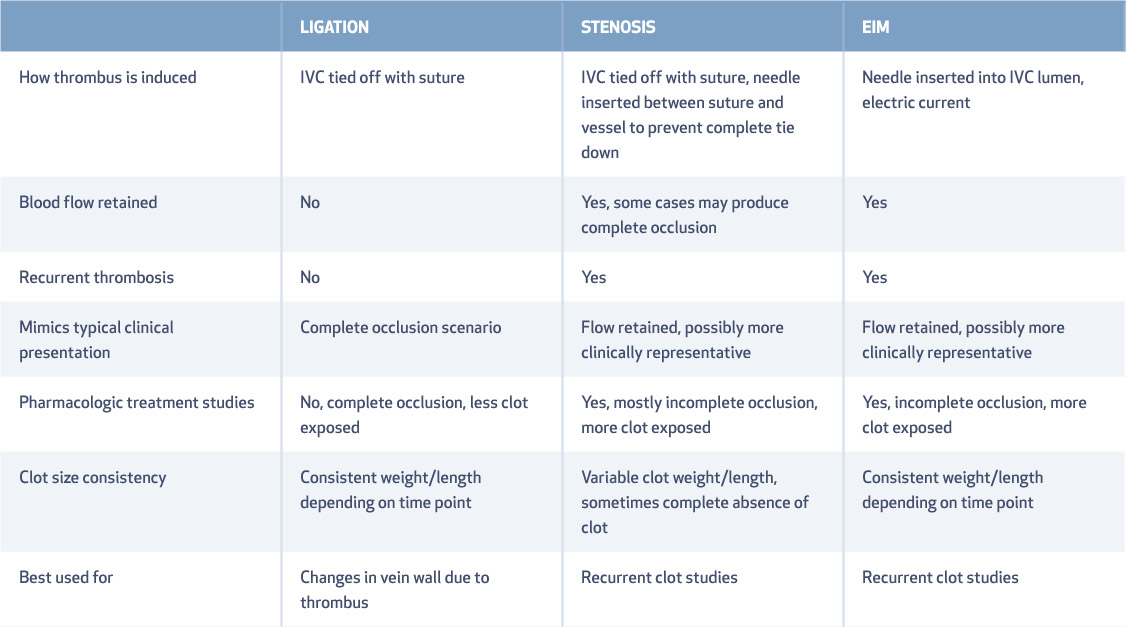
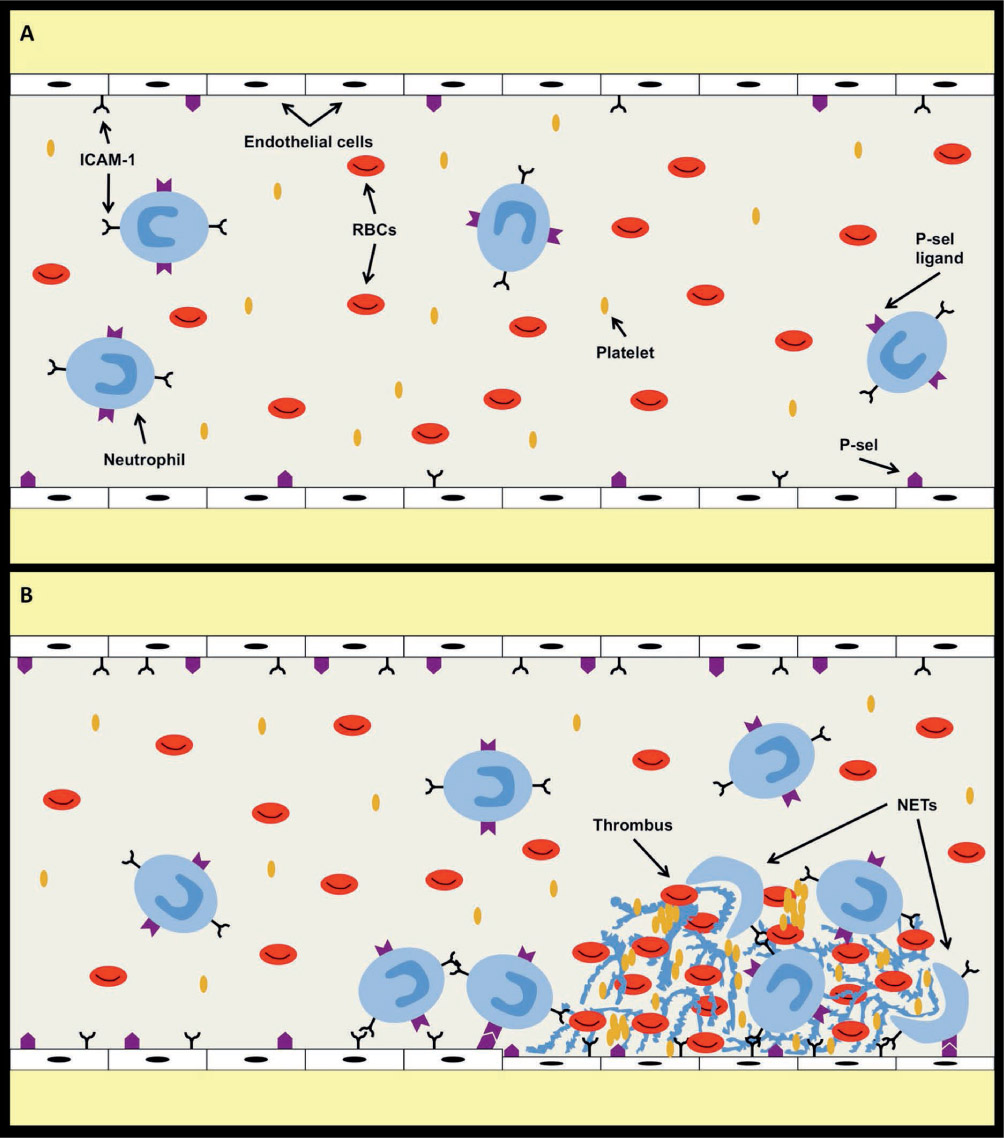
Figure 1.
Illustration of the interaction between the vessel wall, ICAM-1, P-selectin, neutrophils, NETs, red blood cells, platelets, and thrombus formation. (A) Normal blood flow before thrombotic event. No NET formation or upregulation of ICAM-1 and P-selectin. (B) Thrombus formation with NETs providing scaffolding. Upregulation of ICAM-1 and P-selectin present as well as increased presence of neutrophils in response to thrombus. ICAM-1: intracellular adhesion molecule-1; NETs: neutrophil extracellular traps; RBCs: red blood cells
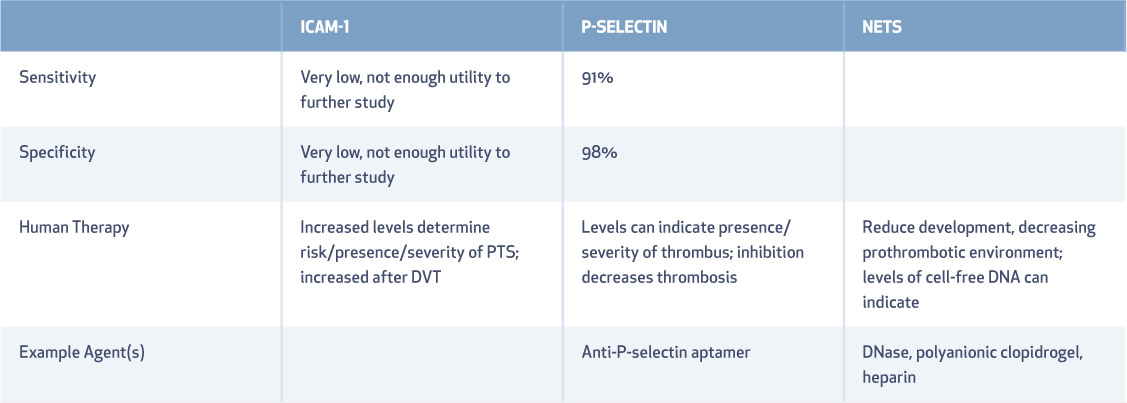
Table 2.
Comparison of sensitivity, specificity, potential human therapeutic strategies, and potential example agents of thrombosis treatment for ICAM-1, P-selectin, and NETs. ICAM-1: intracellular adhesion molecule-1; NETs: neutrophil extracellular traps; PTS: post-thrombotic syndrome; DVT: deep vein thrombosis