
INTRODUCTION
The first Enhanced Recovery After Surgery (ERAS) protocol was established in 2001 by a group of surgeons from Northern Europe. Their primary goal was to optimize surgical outcomes through the implementation of evidence-based medicine and best practices in patients undergoing colonic resections.1 Henrik Kehlet pioneered the concept in the 1990s with an initiative originally known as “fast-track surgery”—the idea being to standardize a multimodal approach to patient care that would reduce the variability in outcomes across centers conducting colorectal surgery. The results revealed multiple benefits including shorter length of hospital stay (LOS) (2 vs 10 days), reduced hospital cost, and lower morbidity and mortality after surgery.2 The current proponents of ERAS encourage the process one step further by concentrating on the quality of patient care and improving patients' functional capacity, thereby expediting the return to baseline function.
Surgical trauma induces a state of stress in the body, thereby leading to homeostatic imbalance. In nature, the stress response is a survival mechanism to provide energy and maintain cardiovascular equilibrium. However, an exaggerated or ongoing response, as is with surgery, has adverse consequences including protein catabolism, hyperglycemia, hypertension, tachycardia, and immunosuppression (Figure 1).3
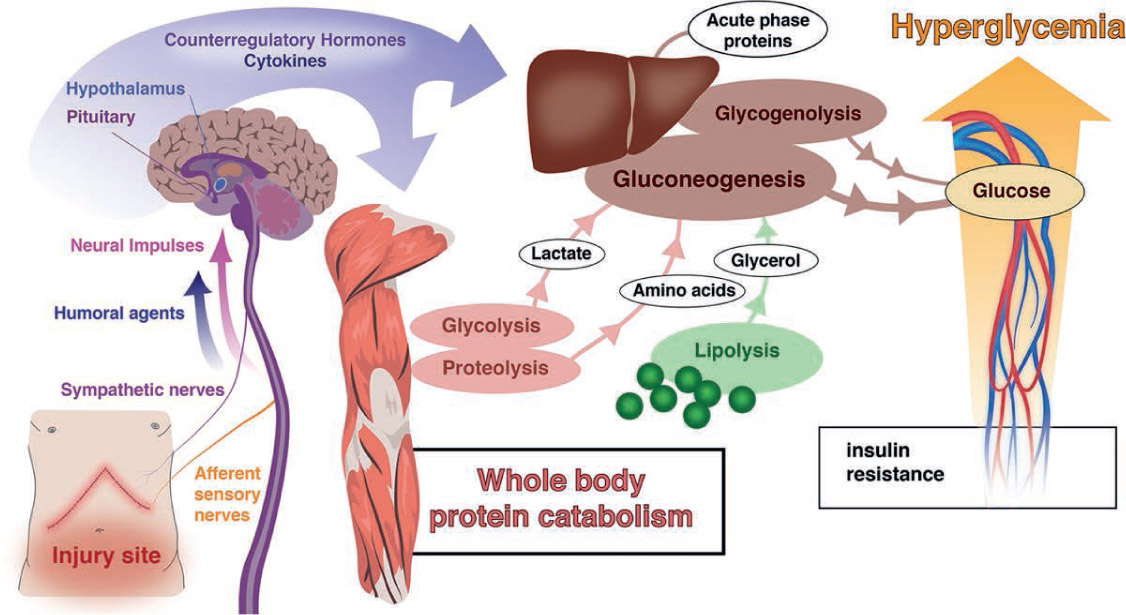
Figure 1.
Effects of stress response on whole body protein catabolism. Reprinted with permission.3
The primary goals of the multimodal, multidisciplinary, and comprehensive ERAS pathways are to blunt the response to surgical stress through optimization of nutritional and functional status, limitation of preoperative fasting, individualized fluid management, opioid-sparing analgesia, minimally invasive surgery, and early postoperative ambulation and feeding. These components have facilitated a faster return to the patient's preoperative functional state. Though guidelines vary, there are roughly 20 elements included in each pathway (Figure 2). Multidisciplinary teams of professionals must work together throughout the perioperative period to streamline the process, thus optimizing patient care. Not only have ERAS pathways had a significant impact at a hospital level, but they are also becoming increasingly important on a national level. Currently, ERAS is gaining recognition in the battle of the U.S. opioid epidemic, recently declared a public health emergency, by minimizing the need for opioid prescriptions in post-surgical patients.4
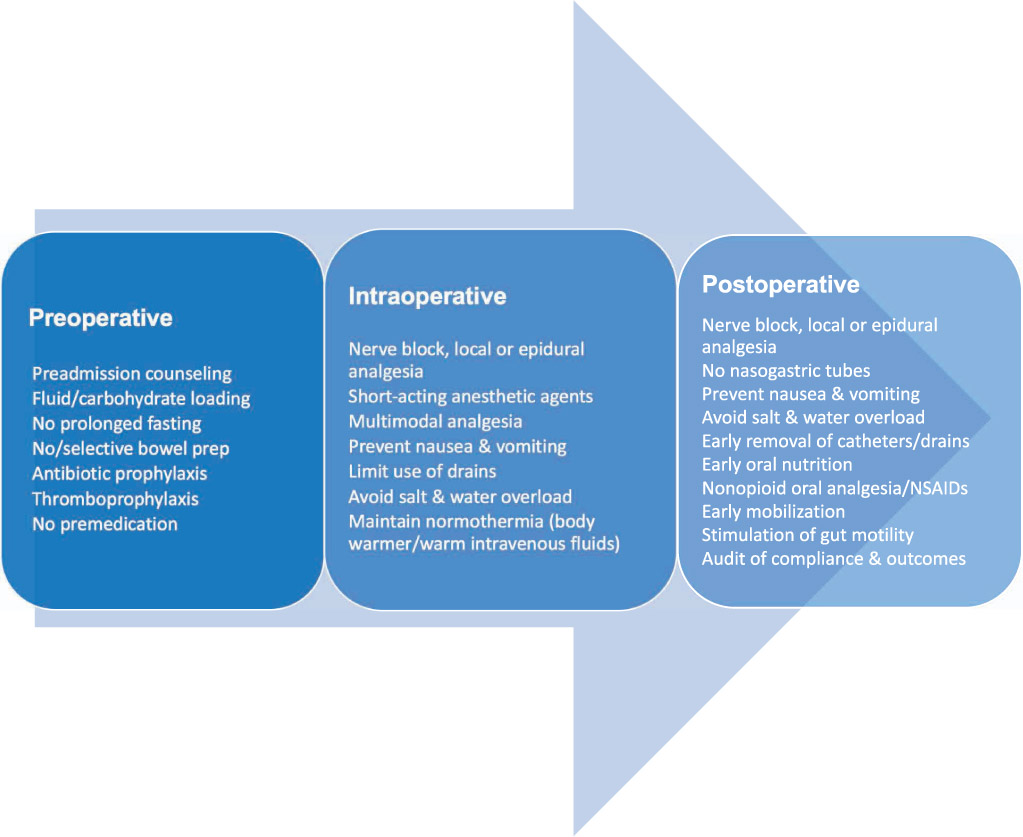
Figure 2.
Preoperative, intraoperative, and postoperative components of an ERAS pathway.
PREOPERATIVE GOALS
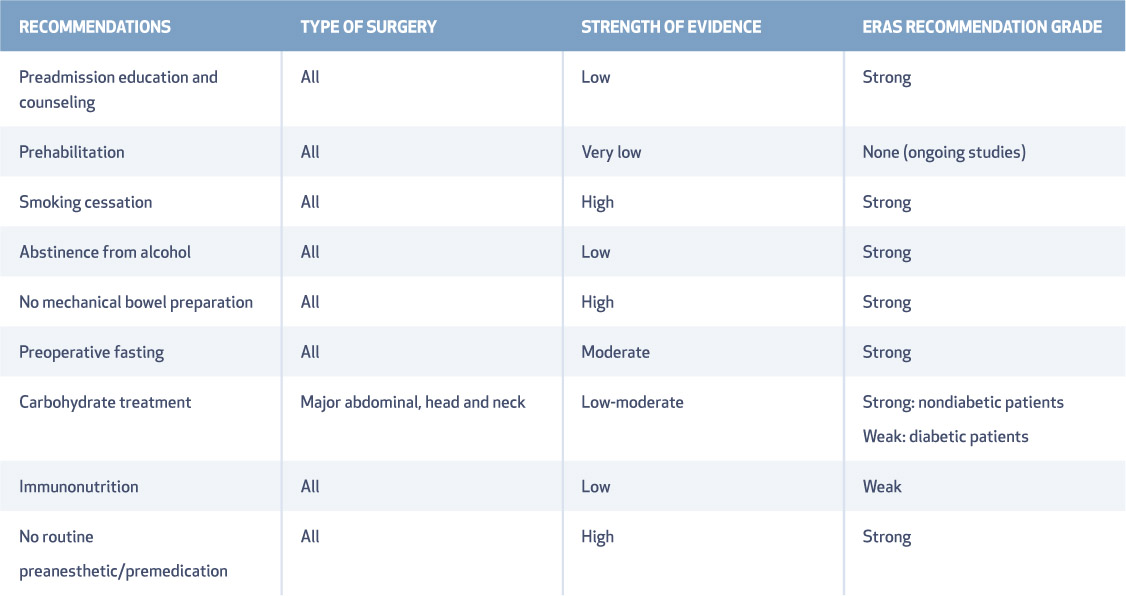
Patient education plays a critical role in outcome and patient satisfaction. Setting patient expectations at the beginning of the surgical journey is important in achieving compliance with the perioperative plan. It is essential for patients to understand that their participation is vital to their surgical outcome and recovery.5 All patients included in an ERAS protocol should undergo a preoperative multidisciplinary evaluation to assess and optimize functional and nutritional status, mitigate comorbid conditions including diabetes and anemia, and discuss smoking and alcohol cessation (Table 1).3,6,7 This process begins in the surgeon's office through the implementation of algorithms that incorporate screening tests, questionnaires, and baseline laboratory studies. The surgical team also provides educational material and initiates discussions with the patient regarding what to expect in the perioperative period. Patient assessment and education can be continued in a preoperative anesthesia clinic. Further testing may include a formal risk assessment and referral to other specialties including cardiology, endocrinology, nephrology, pulmonary, or a frailty clinic.
Table 1.
Guidelines endorsed by ERAS (Enhanced Recovery After Surgery) Society for preoperative interventions. Although current guidelines vary across a wide range of surgical procedures, the recommendations are generally consistent.7
Nutrition
The term “prehabilitation” has been used to describe the process of optimizing functional and nutritional capacity and preparing the patient to better cope with the stress of surgery.8 Evidence demonstrates that patients who are malnourished, are in poor physical condition, have low anaerobic tolerance, or have comorbidities have greater postoperative morbidity and mortality.9 Cardiopulmonary exercise testing provides an objective method of evaluating fitness and allows risk stratification of patients. Meta-analyses show conflicting evidence as to whether preoperative augmentation of functional capacity decreases LOS, but additional reviews report an improvement in self-perceived health, quality of life, and mental health.10 Nutrition screening is also important to identify and optimize malnourished patients whose nutrition deficit may increase the stress of surgery.11
The European Society for Clinical Nutrition and Metabolism (ESPEN) states that malnutrition is an independent risk factor for LOS, mortality, infection, and increased cost.12 The Nutrition Risk Screening Tool is a commonly used test to identify patients who are at increased risk of malnutrition. A low body mass index, recent weight loss of 5% or greater during the previous 1 to 3 months, decease in food intake below normal, patient aged 70 and older, and severity of underlying disease are all taken into account in a final cumulative score that ranges between 0 and 6.13 A 2012 randomized prospective study of 1,085 patients found that those patients at high nutrition risk—as identified by a nutrition risk score of 5 or greater—who were optimized with nutritional support for at least 7 days before surgery had a 50% reduction in morbidity.14 Similar conclusions were made in a study by Wu et al. in moderately to severely malnourished gastrointestinal cancer patients presenting for surgery.15 Although ESPEN guidelines suggest that 7 to 14 days of nutritional support is indicated for severely malnourished patients, specific nutrition support goals need to be further delineated.12 Furthermore, the North American Surgical Nutrition Summit consensus recommendations suggest that preoperative nutritional care, including diet counseling, immunonutrition, and screening tools should be introduced to all patients to maintain adequate nutritional status throughout the perioperative period.3
Smoking
Smoking is another factor that has been found to have a negative impact on recovery. A 2011 study by Turan et al. showed that a smoking history of > 11 packs/year in noncardiac surgical patients is associated with a higher likelihood of 30-day mortality and a broad range of serious complications including wound infection, pneumonia, myocardial infarction (MI), and stroke.16 Cigarette smoke contains numerous toxic elements including nicotine and carbon monoxide. In the acute phase of tobacco use, these elements lead to an imbalance between oxygen demand and oxygen delivery. Chronic smoking increases inflammation, oxidative stress, hypercoagulability, and endothelial damage, leading to the progression of vascular atherosclerosis and thrombosis.17 In the respiratory system, smoking damages cilia, stimulates mucous overproduction, and increases bronchial airway reactivity, thereby increasing the risk of infection and prolonged mechanical ventilation.
In the 1980s, two large studies out of Mayo Clinic suggested that stopping smoking less than 8 weeks prior to surgery leads to an increased pulmonary risk based on a transient increase in cough and mucous production. However, Shi and Warner contend that these studies were misinterpreted and that this belief creates a barrier to tobacco use interventions in surgical patients. In their 2011 article from Anesthesia and Analgesia, the authors argue that although maximal benefits from smoking cessation may take weeks to become evident, surgery is an important time for patient education, and smoking cessation is beneficial at any point in the perioperative period.18
Blood Transfusion
The association between blood transfusion and postoperative morbidity and mortality is well known. Approximately 30% of patients who present for surgery are considered anemic (hematocrit < 36% for women and < 39% for men). A large retrospective cohort study by Musallam et al. of more than 200,000 patients revealed that even mild preoperative anemia (hematocrit between 29%–36% for women and 29%–39% for men) is independently associated with an increased risk of 30-day noncardiac morbidity and mortality in both men and women across all age groups (> 16 years old) and subspecialties. Complications include respiratory, urinary, wound, septic, and thromboembolic events.19 While this and other studies suggest that preoperative anemia is associated with poor outcomes, randomized trials conclude that red blood cell (RBC) transfusion to correct anemia does not improve outcomes.
A retrospective cohort study by Murphy et al. of more than 8,000 patients undergoing cardiac surgery found that as little as one unit RBC transfusion significantly increases the risk of infection, stroke, MI, renal impairment, ICU and hospital stay, and mortality.20 Current recommendations in specialties such as cardiac and orthopedic support the measurement, investigation, and treatment of anemia prior to elective surgery, although further studies evaluating the role of perioperative anemia optimization are warranted.21
Preoperative Fasting and Carbohydrate Loading
In the 1960s, concerns with aspiration during anesthesia led to the concept of preoperative fasting or “NPO” (nil per os) after midnight. However, continued investigations demonstrated that patients had no increase in complications when given the opportunity to drink clear liquids prior to surgery, and patient satisfaction was improved.22 Since 1986, multiple randomized controlled clinical trials have shown that ingestion of clear liquids within 2 to 4 hours prior to surgery versus more than 4 hours is associated with a higher gastric pH and a smaller gastric volume.23,24 The American Society of Anesthesiology (ASA) changed the fasting guidelines in 1999, following the lead of Canada, Norway, and the UK, to allow patients to drink clear liquids up to 2 hours before surgery.25 The current ASA recommendations are to refrain from solid foods for 6 hours and to continue the intake of clear liquids until 2 hours before surgery.7
The concept has developed further in the last decade. Currently, patients are not only permitted to drink clear liquids up to 2 hours prior to surgery but are encouraged to do so, assuming there is no known delay of gastric emptying. Many studies have demonstrated that undergoing surgery in a carbohydrate-fed state (by way of a carbohydrate clear liquid drink) versus a fasting state results in improved patient satisfaction and clinical benefits due to the reduction in postoperative insulin resistance.26,27 ERAS guidelines recommend 800 mL of a 12.5% carbohydrate-containing clear drink with a proven safety profile the night before surgery and 400 mL 2 hours before surgery.28 In patients with type I diabetes or severe type 2 diabetes, ESPEN recommends avoiding carbohydrate drinks because these patients are insulin deficient, not insulin resistant.29 The benefits of preventing catabolism include improved tissue healing, decreased infection rates, decreased LOS in major surgery,27 and reduced postoperative nausea and vomiting.30,31 Additionally, a randomized, double-blind, placebo-controlled trial from Germany among 188 ASA III-IV patients undergoing elective cardiac surgery reported that those receiving a preoperative carbohydrate load required less inotropic support after weaning from cardiopulmonary bypass (P < .05).32 There also appears to be a longer lasting effect of glycogen synthase for up to 1 month after surgery30 and a reduction in protein breakdown33 that are associated with improved muscle strength. This is important because muscle weakness not only impedes mobilization but can also lead to an inability to cough, thereby increasing the risk of atelectasis and pneumonia.6 In older patients, deconditioning can occur after only 2 days of hospitalization,34 and just 3 days of bed rest can lead to a reduction in insulin sensitivity.35
INTRAOPERATIVE CARE
Intraoperative objectives strive to change dogmatic practice by (1) minimizing the use of nasogastric tubes, surgical drains, and urinary catheters; (2) optimizing hemodynamics and fluid balance; and (3) using minimally invasive procedures (when possible), multimodal analgesia, opioid-sparing techniques, antimicrobial prophylaxis, and prophylaxis for nausea and vomiting.36,37
Postoperative Nausea and Vomiting
In general, the rate of postoperative nausea and vomiting (PONV) in the postoperative anesthesia care unit (PACU) is roughly 30%.38 High-risk patients are identified by five independent predictors, including female gender, age < 50 years, opioid use in the PACU, history of PONV, and nausea in the PACU.39 Patients identified as high risk have an incidence of PONV up to 80%, but this number can drop to less than 20% with a combination of antiemetic medications.40 The efficacy of therapy is optimized when combining medications with different mechanisms of actions.41 Options include 5-HT3 antagonists, NK1 receptor antagonists, corticosteroids, anticholinergics (scopolamine patch), and antihistamines.39 Additional strategies to decrease the baseline risk of PONV include the avoidance of nitrous oxide, minimization or avoidance of opioids, adequate hydration, and the use of total intravenous anesthesia with propofol as opposed to inhalation anesthetics.42
Interestingly, a 2016 study by Markovic-Bozic et al. revealed a decrease in inflammatory cytokines with the use of propofol infusion compared to inhaled sevoflurane. This 2016 study revealed a significantly higher anti-inflammatory effect (decreased IL-6/IL-10 ratio) for 24 hours after surgery in the propofol group, although the difference in outcome and postoperative complications was not significant.43 The literature, however, is conflicting, and future studies are encouraged to determine the role of inhaled versus intravenous agents with regard to long-term benefit and outcome.
Multimodal Analgesia
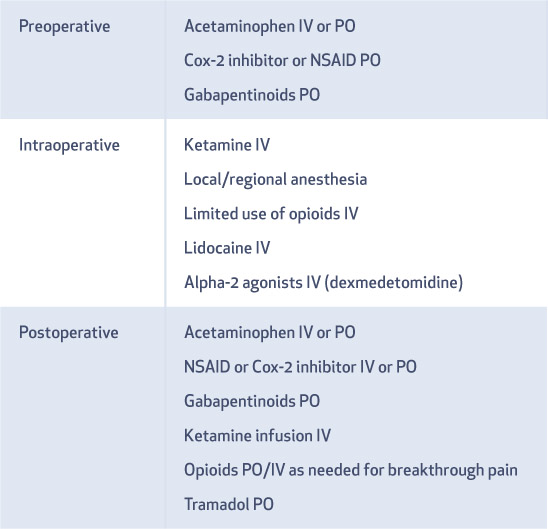
Multimodal analgesia with scheduled nonsteroidal anti-inflammatory drugs, acetaminophen, gabapentinoids, ketamine, alpha-2 agonists, and neuraxial and/or peripheral neural blockade techniques clearly improves analgesia and decreases postoperative systemic opioid consumption (Table 2). As the efficacy of multimodal analgesic regimens continues to improve, opioids are progressively being used solely for rescue analgesia rather than as the primary postoperative regimen. High compliance with nonopioid enhanced recovery protocols significantly reduces opioid requirements and leads to improved outcomes. Short-term side effects of opioids include nausea, vomiting, ileus, urinary retention, delirium, and somnolence, all of which can delay hospital discharge.44
Table 2.
Multimodal analgesic medications that help to decrease postoperative systemic opioid consumption. IV: intravenous; PO: per os (oral)
Reduced opioid consumption is an important goal since the current opioid epidemic is one of the most serious public health crises in the United States.4 Excessive or leftover medications may be sold, diverted, or given away to friends or family. Opioids contribute to approximately one death every 35 minutes and have become the second leading cause of accidental death.45,46 Although the United States accounts for only 5% of the world's population, the country's opioid users account for 83% of the world's oxycodone supply and 99% of the hydrocodone bitartrate supply.46 To that end, primary care specialties account for roughly 50% of all opioid prescriptions, but the rate of opioid prescribing is highest among specialists. Surgeons play an important role in initiating opioid use and can make a significant impact on the current state by educating their patients on the topic, prescribing smaller amounts, and participating in the safe disposal of unused opioid medications through medication take-back programs.4 Use of a multimodal nonopioid regimen significantly reduces the perioperative requirements of opioids, thereby decreasing the number of patients who need an opioid prescription upon discharge. In most ERAS pathways, a majority of patients do not require opioids after hospital discharge.
Fluid Management
Maintaining fluid and electrolyte balance and tissue perfusion is an important part of the ERAS program. Several meta-analyses of randomized controlled trials have shown that goal directed fluid therapy (GDFT) can reduce LOS and postoperative morbidity in high-risk patients undergoing major abdominal surgery; this is achieved by using additional monitoring devices that measure stroke volume variation, pulse pressure variation, and cardiac index. In these cases, “high-risk” patients are defined as those with limited physiologic reserve, severe cardiopulmonary illness, aortic vascular disease, renal impairment, and planned extensive surgery.47 Results, however, are heterogeneous with regard to postoperative outcomes within an enhanced recovery pathway because patients tend to be better optimized and euvolemic rather than hypovolemic when entering the operating room.48 Trials comparing GDFT with evidence-based fluid regimens in the context of enhanced recovery pathways have not shown the same benefits of GDFT as initially seen when compared with more traditional liberal fluid administration. Several studies demonstrated no benefit when comparing GDFT with a zero-balance strategy in ERAS patients, though it was not associated with harm.49,50 Despite this, the current recommendation for enhanced recovery established by the American Society of Colon and Rectal Surgeons and the Society of American Gastrointestinal and Endoscopic Surgeons is to use GDFT in high-risk patients undergoing major colorectal surgery in an ERAS pathway since there still tends to be a nonsignificant trend towards decreased complications and mortality in the GDFT group.24
POSTOPERATIVE CARE
Continuation of the pre- and intraoperative pathway components is of utmost importance. Goals at this stage include not only opioid-sparing analgesia and maintenance of fluid balance but also early ambulation, early feeding, and prompt removal of catheters and drains.
Early Mobilization
Prolonged immobility is associated with a host of complications including thromboembolic disease, skeletal muscle loss and weakness, atelectasis, and insulin resistance.51 In most observational studies, adherence with early and progressive mobilization targets is a significant predictor of earlier discharge.52 Patients in enhanced recovery programs meet mobilization targets sooner. It is important to emphasize to patients the importance of an early mobilization plan with daily goals for time out of bed and distance walked beginning as soon as the day of surgery.
Urinary Catheters
Urinary catheters are routinely used for bladder decompression and measuring urine output. Unfortunately, prolonged use can lead to a variety of adverse outcomes for the patient and significant costs for the institution. The risk of developing a catheter-associated urinary tract infection (CAUTI) is 5% per day.53 In addition, 3.6% of those who develop a CAUTI will go on to develop urosepsis, which leads to increased morbidity, mortality, and LOS.53 Strategies for prevention include limiting the use and duration of urinary catheters (less than 24–48 hours irrespective of epidural analgesia)24 and using proper aseptic technique for catheter insertion. A recent meta-analysis evaluating the impact of ERAS pathways on hospital-associated infections shows not only a significant reduction in postoperative UTIs but also a decrease in lung infections and surgical site infections as evidenced by a reduction in inflammatory markers and an increase in circulating immunoglobulin, complement factors, and NK cells, all indicators of improved humoral immunity.54
Ileus Prevention and Early Feeding
Although most commonly seen following abdominal surgeries, postoperative ileus can also be seen with extra-abdominal procedures as in orthopedic or cardiothoracic cases. It is considered the single most important factor prolonging LOS after major abdominal surgery.55 The development of postoperative ileus is multifactorial and includes neurogenic, hormonal, pharmacological, and inflammatory factors. Strategies to reduce postoperative ileus include the use of minimally invasive surgical techniques, limitation of opioids, avoidance of nasogastric tubes, prevention of fluid overload during and after surgery, and the initiation of early feeding (< 24 hours after surgery).55
IMPLEMENTING AN ERAS PROGRAM
The evolution and strength of an ERAS program relies on the comprehensive collaboration of many departments and professionals as well as continuous auditing of the process. In colorectal surgery, for example, the ERAS society has revised the ERAS guidelines three times in the last 10 years. Elements of the pathway are implemented by many different healthcare professionals, including surgeons, anesthesiologists, dieticians, and nurses. Despite the well-described benefits of ERAS, barriers to implementation still occur at an individual (i.e., resistance to change) and institutional level (i.e., lack of manpower and financial resources).56 Although the strongest evidence for the benefits of ERAS protocols has been described in colorectal surgery, specialties including gastrointestinal, pancreatic, hepatobiliary, urologic, gynecologic, orthopedics, and thoracic services have successfully implemented these pathways.36
ERAS in Thoracic Surgery at Houston Methodist Hospital
The applicability of ERAS varies between surgical specialties and has only recently been developed in thoracic surgery. Two important studies, one in 2008 by Muehling et al.57 and the other in 2009 by Das-Neves-Pereira,58 showed that fast-track protocols used in thoracic surgery led to reductions in LOS and postoperative complications. Over the past 2 years, we have implemented an enhanced recovery protocol in the thoracic surgery division at Houston Methodist Hospital. The protocol was introduced in stages, beginning with a preoperative education program that instructed patients to walk one mile daily prior to surgery, practice using an incentive spirometer, and abstain from smoking and drinking alcohol before surgery. Next, rather than using the previously ordered intravenous (IV) patient-controlled analgesia (IVPCA) with hydromorphone, we employed a multilevel intercostal nerve block intraoperatively using a long-acting local anesthetic along with a non-narcotic-based pain medication regimen as the primary source of postoperative pain control. Finally, we added the intraoperative protocol that includes the use of total IV anesthesia during the surgery, multimodal analgesia with minimal opioids, PONV prophylaxis, and maintenance of euvolemia. We applied the protocol across all cases, including minimally invasive and open lung resections, esophageal resections, and benign foregut surgeries. Prior to implementing the program, patients had transitioned from hydromorphone IVPCA to schedule II narcotics in the postoperative period and were discharged home with several weeks of schedule II narcotics. After full ERAS implementation, patients appeared to have less pain with faster recovery to baseline and no longer needed the schedule II narcotics while in the hospital or at home. On the follow-up visit, most patients stated that they were able to recover from surgery using only non-narcotic medication. Data is currently being collected and analyzed to fully appreciate the impact this pathway has on patient outcomes. Overall, we feel this program has improved the quality and speed of our patients' recovery from thoracic surgery.
ERAS IN CARDIAC SURGERY
In 2017, the Inaugural Enhanced Recovery After Cardiac Surgery Symposium was held in Boston, Massachusetts. In April 2018, the Enhanced Recovery After Cardiac Surgery Society presented a comprehensive evidence-based consensus statement for best practices on 23 different subjects that can be considered for institutional ERAS pathways in the perioperative care of cardiac surgery patients (Table 3).59 Although the application of ERAS principals seems appealing in cardiac surgery, the implementation thus far has been limited as there are clear differences in both the patient population and the type of surgery. A recent pilot study by Fleming et al. looked at the feasibility and outcomes of enhanced recovery after cardiac surgery (ERACS) in 52 patients compared to 53 patients pre-ERACS.60 The results revealed a statistically significant decrease in postoperative complications—including acute kidney injury, atrial fibrillation, respiratory failure, cardiac tamponade, and postoperative MI—in the ERACS group. Pain scores (postoperative days 1–3) and PONV (on postoperative day 3) were significantly lower in the ERACS group, as was time to resumption of solid foods. Hospital LOS, however, remained unchanged.60 Further randomized controlled trials with a larger number of patients are necessary to confirm the postoperative outcomes seen here and determine whether they are associated with a decreased cost and LOS.
Table 3.
Expert consensus for optimal perioperative care in cardiac surgery based on class of recommendation and level of evidence. Adapted from Enhanced Recovery After Surgery (ERAS): An Expert Consensus Statement in Cardiac Surgery.59 RCTs: randomized controlled trials; CPB: cardiopulmonary bypass
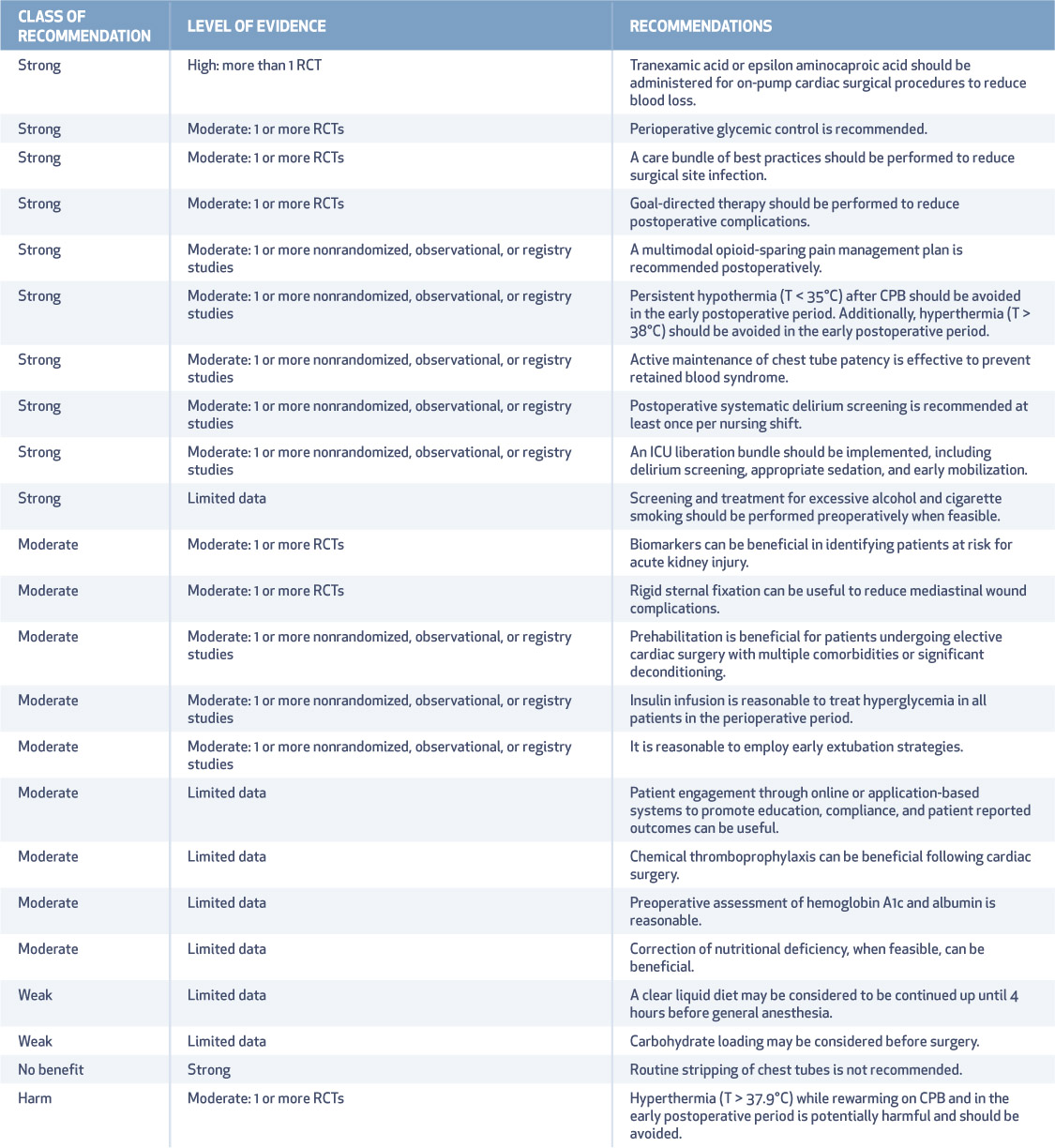
The current ERAS Cardiac Surgery Society recommendations with different levels of evidence include initiation of prehabilitation in patients with multiple comorbidities or deconditioning, patient engagement and education, perioperative glycemic control, rigid sternal fixation to minimize mediastinal wound complications, goal-directed therapy, multimodal, opioid-sparing pain management, maintenance of normothermia, and biomarkers to identify patients at risk for acute kidney injury, to name a few.59 Although programs for ERAS in cardiac surgery are just beginning, it can be inferred that the preoperative, intraoperative, and postoperative interventions used in other subspecialty pathways can have a positive impact on outcomes, LOS, and patient satisfaction in cardiac surgery as well.
ERAS in Cardiac Surgery at Houston Methodist Hospital
Transcatheter aortic valve replacement (TAVR) has revolutionized the treatment of high-risk patients with aortic stenosis,61 and more than 1,100 patients have been treated with TAVR at our institution. Our perioperative management has changed considerably since 2011, when general endotracheal anesthesia (GETA), pulmonary artery catheters, and transesophageal echocardiography (TEE) were used for all patients. GETA involved IV induction with a benzodiazepine, opioids, propofol, and a short-acting muscle relaxant. Anesthesia was maintained using volatile inhaled agents, mainly isoflurane. Patients were extubated at the end of the procedure, transported to the cardiovascular intensive care unit, and the majority discharged to the cardiac ward on postoperative day one.
Two years ago, an ERAS program was implemented at our institution for TAVR patients. The program initially focused on anesthetic management but quickly incorporated changes in total perioperative care. After gaining experience with the TAVR procedure, GETA was replaced by conscious sedation with propofol and dexmedetomidine infusions. To avoid use of narcotics and their related side effects, local anesthesia is injected into the surgical site prior to incision, and IV acetaminophen is administered for analgesia. Central venous catheters used during the procedure are removed in the operating room, and transthoracic echocardiography is used instead of TEE to measure the success of surgical repair and assist in goal-directed fluid and inotropic therapy. As procedural time diminished, routine urinary catheter placement was abandoned to decrease the risk of CAUTIs.62 The temporary pacemaker lead placed via the central venous catheter is removed unless profound bradycardia or new bundle branch block occurs. Immediately following the procedure, patients are transported to the PACU and then to the cardiac ward, thereby leading to a decrease in ICU utilization. Within hours of arrival to the PACU, patients are mobilized.
In the TAVR population, anesthesia with conscious sedation resulted in improved postanesthetic recovery time, reduced inotropic use, and reduced time to mobilization.63,64 On occasion, patients may require GETA if they are unable to remain supine or require nontransfemoral access or when TEE guidance is essential to the procedure. The same minimalist approach is adopted with GETA through the use of short-acting infusions while avoiding benzodiazepines and narcotics. The objective is to reduce recovery time and speed the return to baseline function.
Reducing hospital LOS is associated with improved outcomes in the elderly.65 Use of conscious sedation, avoidance of urinary catheter placement, and early removal of temporary pacemaker are important modifiable factors in reducing LOS.66 Treating TAVR patients with advanced age, frailty, and significant comorbidities represents a significant clinical challenge. However, implementing a multimodal, multidisciplinary ERAS pathway is a safe and effective way to manage this unique patient population.
CONCLUSION
Evidence-based ERAS pathways are quickly evolving and being adopted across almost all surgical specialties. Although ERAS pathways are in their infancy in cardiac surgery, the positive outcomes seen with the colorectal surgery ERAS pathways can act as a guide to begin application in other specialties. Successful implementation requires the education and participation of all involved staff as well as the patients themselves. Identifying therapeutic interventions to target modifiable risk factors, understanding the surgical stress response, maintaining perioperative homeostasis, and a continuous audit of the process lead to major improvements in the quality of patient care, outcomes, and cost savings. The advances seen thus far will continue to become more important as the healthcare reimbursement models change to focus on patient outcomes, quality measures, and reduced cost.
KEY POINTS
Enhanced Recovery After Surgery (ERAS) programs provide a multidisciplinary, evidence-based approach to patient care.
ERAS optimizes a patient's preoperative functional status to improve clinical outcome and patient satisfaction.
ERAS promotes a decrease in length of stay, postoperative complications, and hospital costs.
Acknowledgements
We would like to thank Houston Methodist Hospital's ERAS CMPI team for their dedication to the enhanced recovery effort at our hospital. Also, a special thanks to Jane Carter, M.D., Juan Cata, M.D., and Jessica Varisco for their language editing, interest and support of this manuscript.
Notes
[1] Conflict of Interest Disclosure: Dr. Brown's spouse is on the board of directors for RAMSES (robotic assisted microsurgical and endoscopic surgery). Dr. Kim is on the speakers' bureau for Olympus, Medtronics, Intuitive Surgical, Boston Scientific. Dr. Chan is a consultant for Medtronic, Ethicon, and Boston Scientific.