
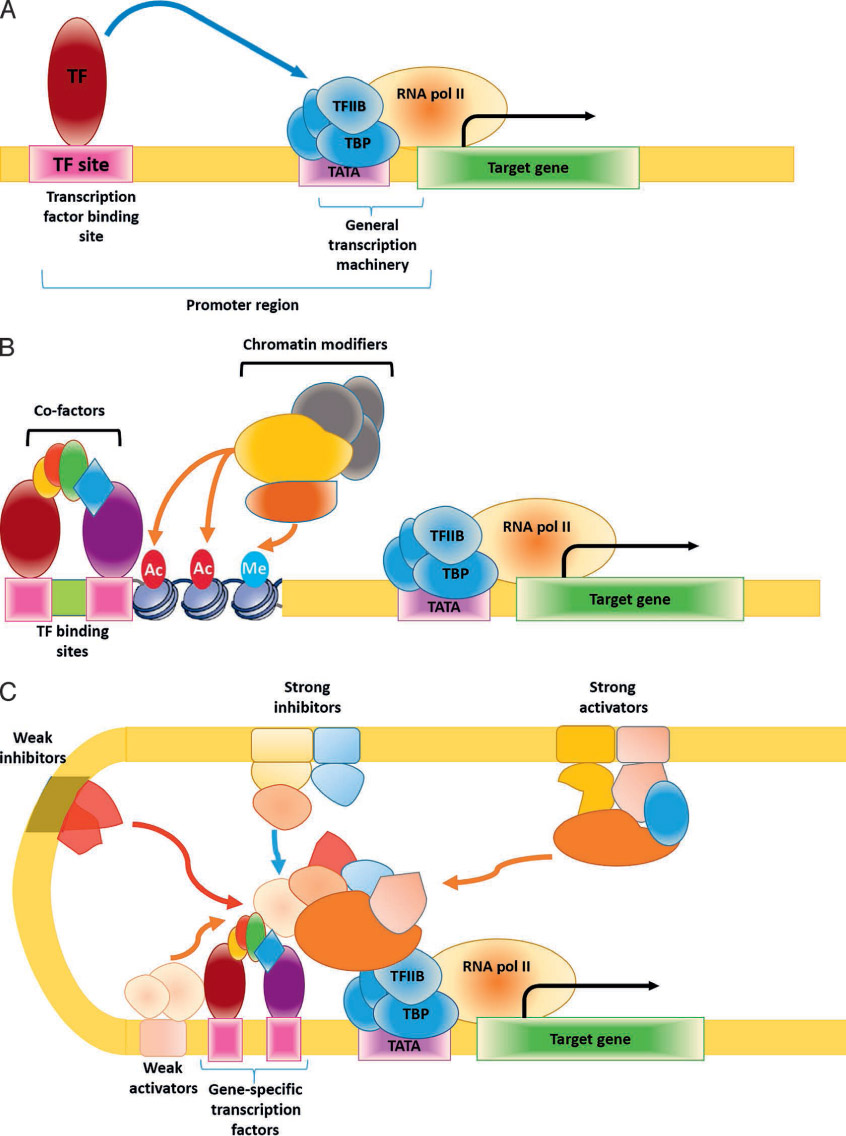
Figure 1.
Transcription is a highly complex process subject to numerous modes of regulation. (A) A simplistic view of transcription of a single gene driven by a single transcription factor. (B) A generalized view of the main components involved with regulation of a single gene. The cofactor and chromatin modifiers headings include both positive and negative regulators. (C) A representation of the complexity that can be involved in regulation of a single gene including both cis and trans positive and negative factors. Ac: acetylation; Me: methylation; TF: transcription factor; TBP: TATA-binding protein; RNA pol II: RNA polymerase II; TFIIB: transcription factor IIB
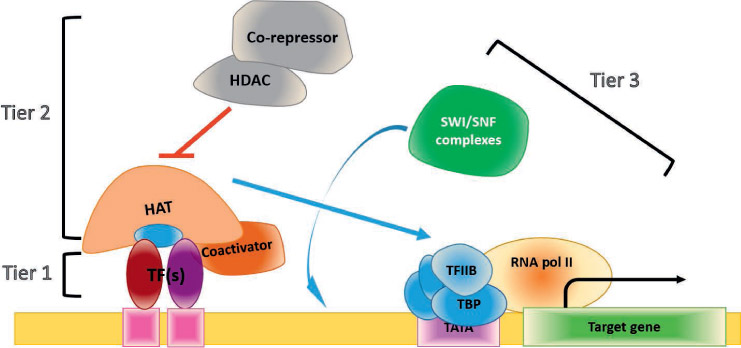
Figure 2.
Transcription regulators vary in specificity for target gene regulation. In general, each gene has a promoter with specific binding sites for a few key transcription factors that result in the highest level of specificity of gene regulation (Tier 1). Bound to these transcription factors are protein complexes involving both transcription factor-specific and more pleiotropic coactivators and corepressors (Tier 2). The general transcription machinery and proteins required to open the chromatin and initiate transcription are the least specific class of transcription regulators (Tier 3). HDAC: histone deactylases; SWI/SNF: SWItch/Sucrose NonFermentable; HAT: histone acetyltransferase; TFIIB: transcription factor IIB; TBP: TATA-binding protein; RNA pol II: RNA polymerase II
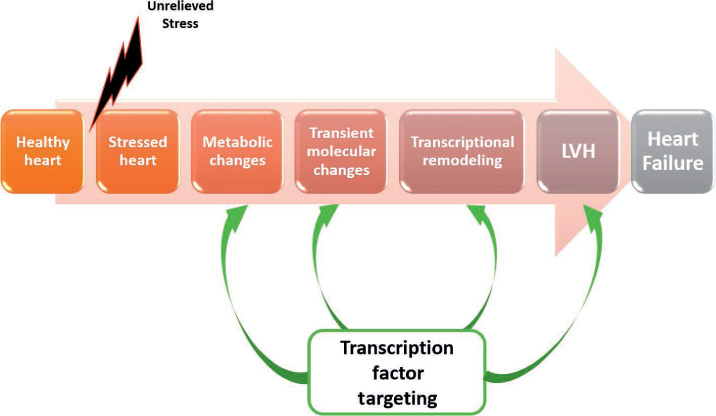
Figure 3.
Beneficial treatment of left ventricular hypotrophy (LVH) through regulation of transcription will likely depend on timing and target choice. In general, once a heart receives a persistent or detrimental stress that will eventually cause LVH, there are transient molecular changes that give way to long-term transcriptional changes. At each of these steps, a different class or set of transcription factors is likely the optimal target for treatment. Early detection and treatment would ideally be able to reverse or prevent long-term remodeling.