
Introduction
To recognise and analyse the features of the natural environment that shape the water cycle, partial geocomplexes, i.e., hydrotopes, were separated into spatial dimensions in uncontrolled catchments. Hydrotopes are units comprising areas with the same nature of water management concerning the type of water cycle and ground moisture status (Bartkowski 1977). Studies on the differentiation of hydrotopes in Poland were primarily conducted in the 1980s and 1990s in the central part. These studies incorporated an analysis of spatial arrangements of small-scale water circulation in the aspect of spatial planning and the country’s water deficit (Bartkowski 1986) and forecasting water outflows Bartkowski (1977, 1986) after Stępczak (1963). Detailed studies of hydrotopes were carried out, among others, by Sołowiej (1976), who distinguished by two methods performed in the vicinity of Lake Czeszewo in the Pojezierze Mogileńskie (genetic and functional approach). The author also identified hydrotopes in the vicinity of Lake Szperek near Ostrów Wielkopolski by the method of ‘contour overlay’ (Sołowiej 1977). A similar division was presented by Richling (1992) following Schmidt (1978), who distinguished two aspects of partial geocomplexes: morphological (determination of the spatial extent of the unit) and functional (determination of the nature of the water cycle with a compilation of the water balance of the unit). Ostaszewska (1984) identified hydrotopes using guiding criteria such as lithology, relief, land cover and depth to groundwater. Based on the magnitudes of effective useful retention in a 1 m layer of the soil profile and assuming the presence of a deep groundwater level, Pawłat-Zawrzykraj (2004) studied the Raszynka catchment area (Nizina Środkowomazowiecka), identifying five types of hydropedotopes. Based on the water permeability of soils, the effectiveness of useful soil retention, the effective infiltration and the depth of groundwater Pawłat-Zawrzykraj (2006a, b) distinguished hydrotopes. Bartczak and Tyszkowski (2016) also delimited hydrotopes in the area of eastern Kujawy in the Zgłowiączka catchment based on the study of environmental elements influencing the way in which water circulates, geological structure, relief, and land use.
With the development of computer techniques, approaches for delimiting hydrotopes as factors for hydrological modelling are becoming increasingly important, including the soil and water integrated model (SWIM), precipitation-runoff-evapotranspiration-hydrotope model (PREVAH), tracer-aided catchment (TAC), integrated runoff model – F Bultot (IRMB), general circulation model (GCM) and soil and water assessment tool (SWAT). In these models, units equivalent to hydrotopes are most commonly used, i.e., hydrologic response units (HRUs; Tilch et al. 2002), terrain mapping units (TMUs; Meijerink et al. 1997) and elementary units (EUs; Müller-Wohlfeil et al. 2000). They are understood as homogeneous landscape units with identical water relations, usually delimited on the basis of data, concerning the geological structure, soil cover, relief and land cover over the area considered.
The main goal of this study was to determine the dominant types of water circulation (hydrotopes) in the area of the Polish Tatra Mountains and the southern part of Podhale. Hydrotopes were separated according to the deductive method and their typology was determined. The spatial differentiation of hydrotope types within regional units, i.e., microregions and mesoregions were analysed. Hydrotopes are understood, according to Kondracki and Richling (1983), as the smallest spatial units of homogeneous occurrence and circulation of water.
Study area
Hydrotopes were delimited in the area of the Polish Tatra Mountains and in the southern part of Podhale. Physico-geographically, the study area (Fig. 1) is located in the macroregion Łańcuch Tatrzański and Obniżenie Podhalańskie. The macroregion of Łańcuch Tatrzański (Balon 2001, Balon, Jodłowski 2014) is the highest part of the Carpathian Mountains, characterised by its latitudinal course. The Polish part of the macroregion is divided into three mesoregions: Tatry Reglowe, Tatry Zachodnie and Tatry Wysokie, and into 14 microregions (Balon, Jodłowski 2014). North of the macroregion Łańcuch Tatrzański is the macroregion Obniżenie Podhalańskie (Balon, Jodłowski 2014), within which mesoregions are distinguished, among others Bruzda Podtatrzańska (divided into six microregions) and Pogórze Przedtatrzańskie (divided into six microregions). The Bruzda Podtatrzańska takes the form of a sequence of denudation–erosion depressions (Balon, Jodłowski 2014) with an area of 66.7 km2 and a length >20 km within Poland.
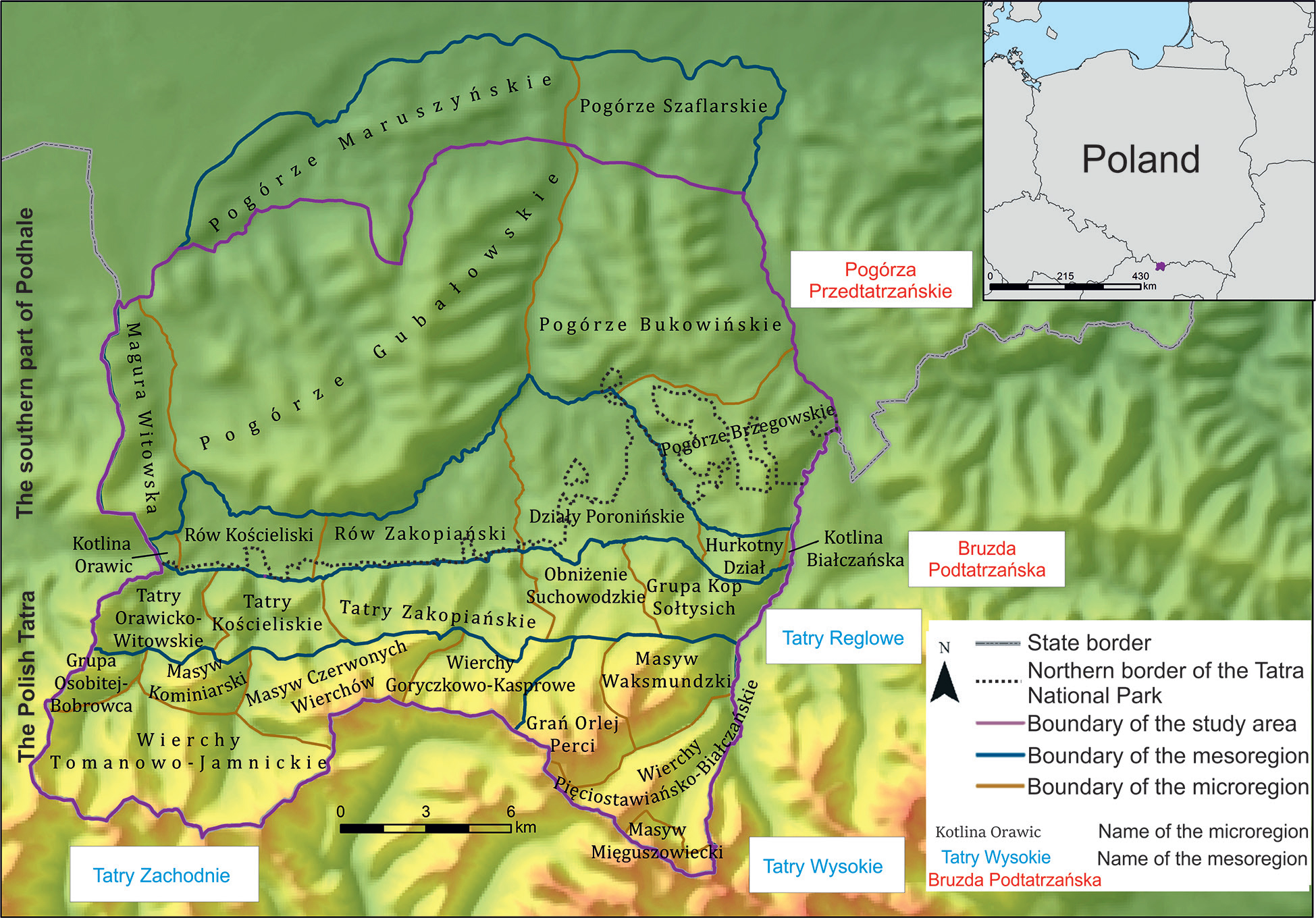
Fig. 1.
Physical–geographical division of the study area (Balon et al. 2015, Krąż, Wójcik 2015, Jodłowski et al. 2021a, b) model: ASTER Global DEM (n.d.)*. In the study, the names of lower-level physiogeographic units (microregions and mesoregions) are provided in Polish. The names commonly known and used in the international literature (Carpathians, Tatra Mountains) are written in English. * ASTER Global DEM is a product of METI and NASA.
The study area is very diverse in terms of geological structure, soil cover, land cover, relief and hydrography (Figs 2-6), among other factors. In addition, belts and zones are clearly visible (Wit, Ziemońska 1960, Wit-Jóźwik 1974, Balon 2000, 2002, Łajczak 2006, Żelazny et al. 2015).
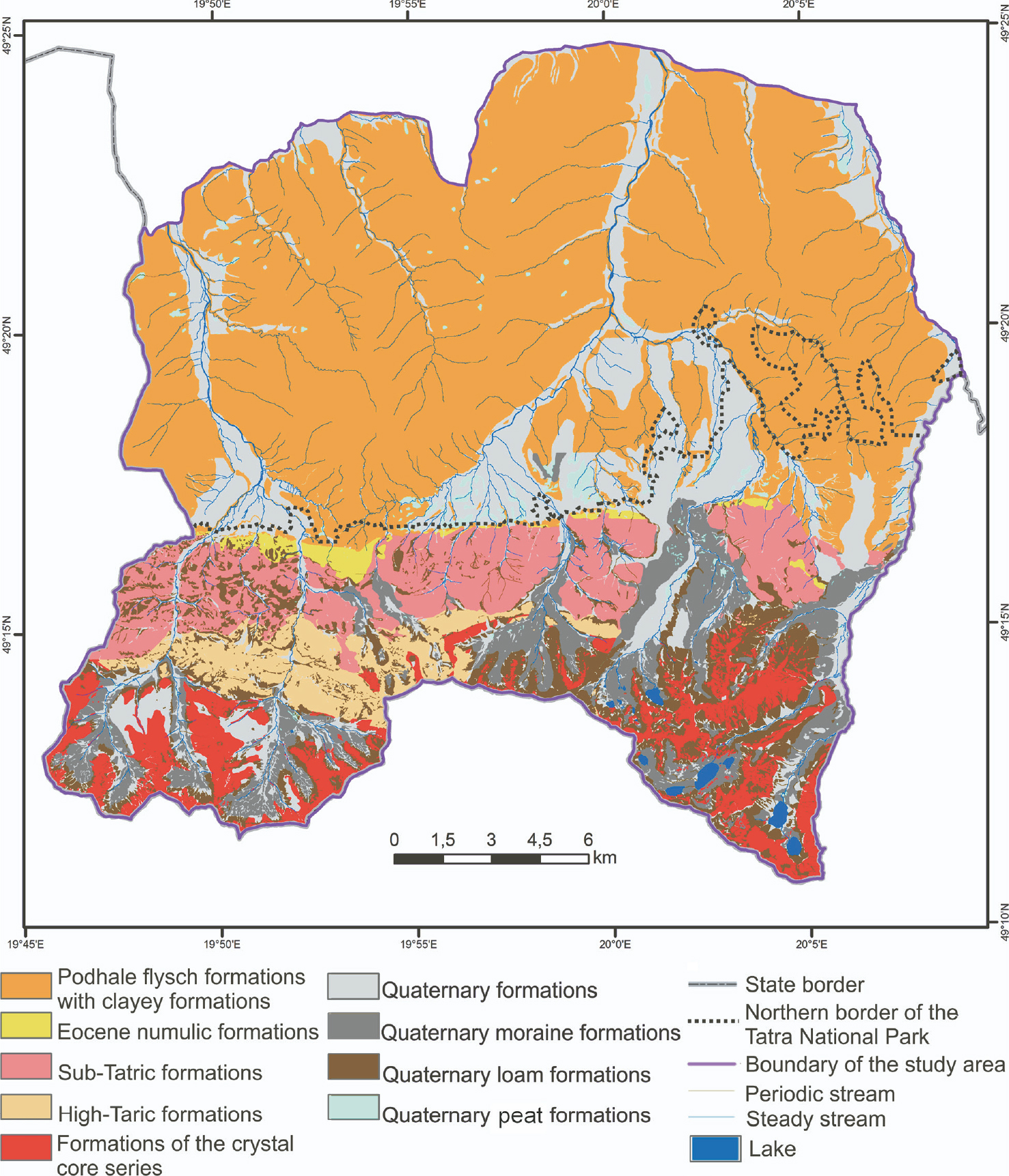
Fig. 2.
Geological structure of the study area based on Guzik, Guzik (1958), Guzik et al. (1958, 1959, 1975), Michalik (1958), Guzik (1959a, b), Michalik, Guzik (1959a, b), Detailed Geological Map of Poland (1975, 1976), Guzik, Jaczynowska (1978), Bac-Moszaszwili et al. (1979), Sokolowski, Jaczynowska (1979a, b, 1980), Jaczynowska (1980) and Małecka (1982).
Material and methods
A range of available cartographic material was used to determine the dominant water circulation (Table 1). Four maps were used to delineate geological formations (Fig. 2), two of which were used to determine soil cover types and subtypes or grain sizes (Fig. 3). The land cover (Fig. 4) of the study area was separated based on data from the Database of Topographical Objects, 1:10,000 (BDOT10k) (GUGiK 2013), while the slope (Fig. 5) was classified using the Digital Elevation Model (GUGiK 2009) division defined by Klimaszewski (2005). Additionally, wetland and floodplain data from the Hydrographic Map of Poland (2006) were used (Fig. 6).
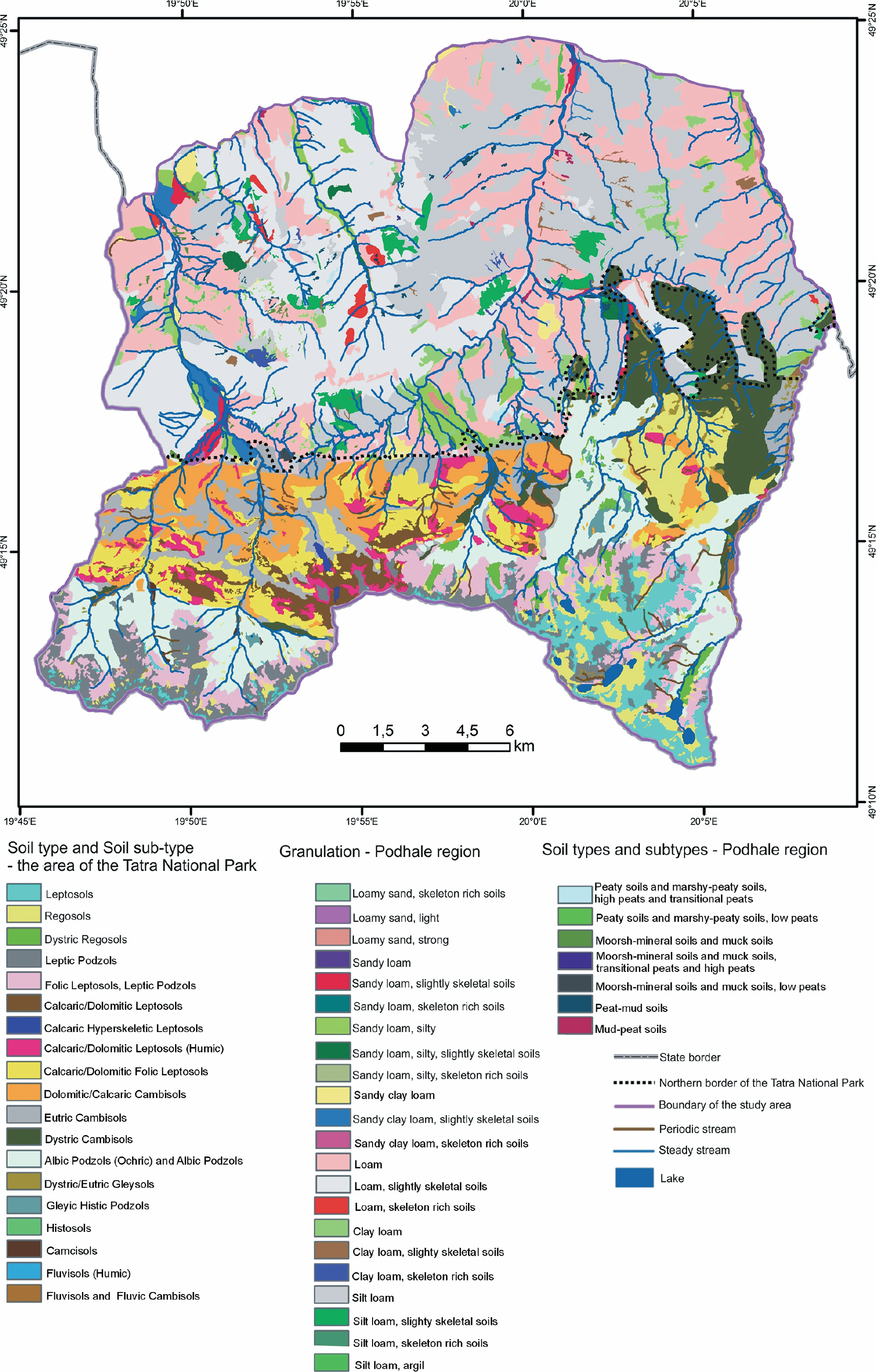
Fig. 3.
Soil cover of the study area based on Soil and Agricultural Map (1963–1980) and Skiba (2002); classification of soil types based on the IUSS Working Group WRB (2022).
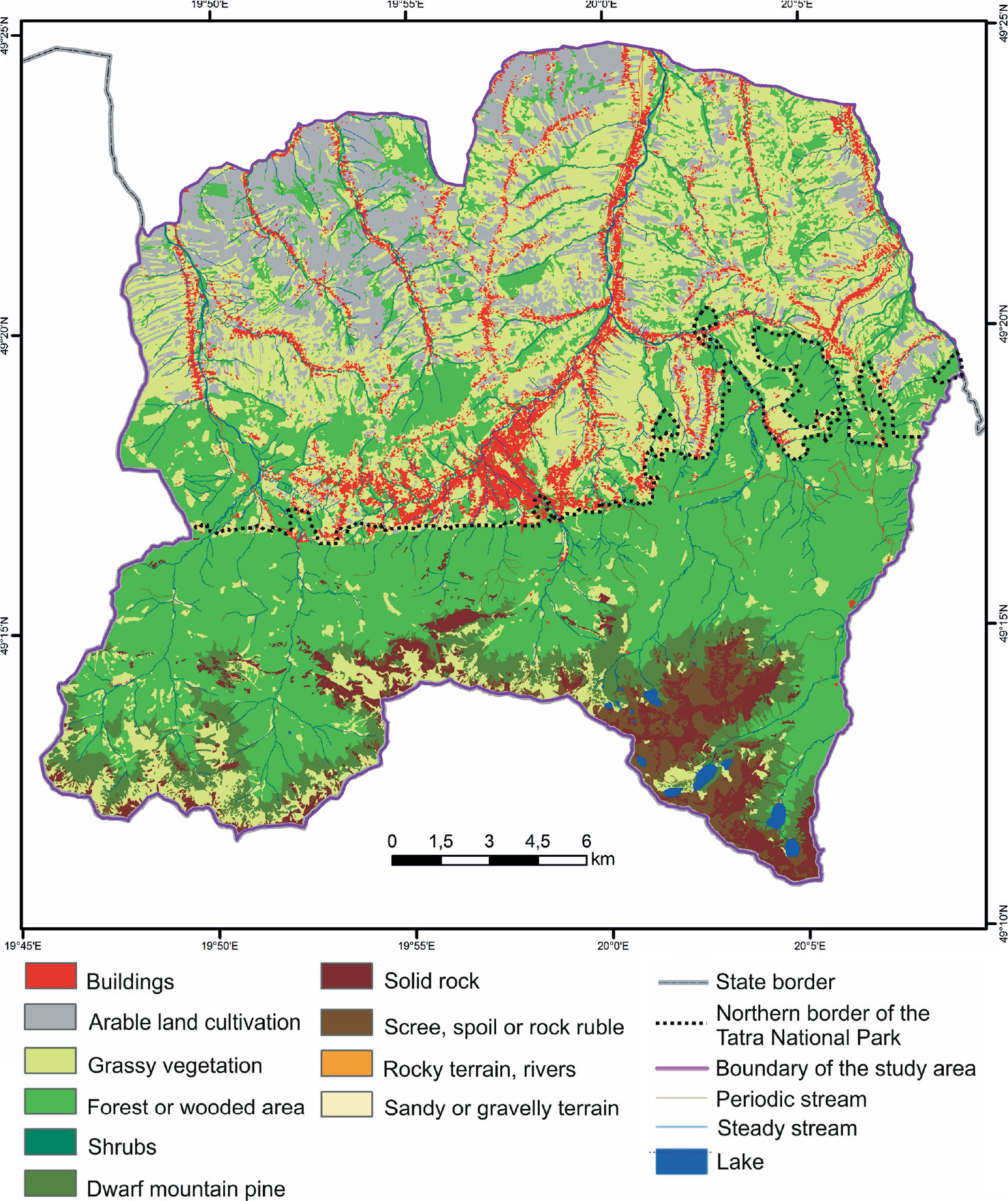
Fig. 4.
Land cover of the study area based on Regulation of the Minister of Internal Affairs and Administration of 17 November 2011 on the database of topographic objects and the database of general geographic objects, as well as standard cartographic studies (2011), Database of Topographical Objects, 1:10,000, (BDOT10k) (GUGiK 2013).
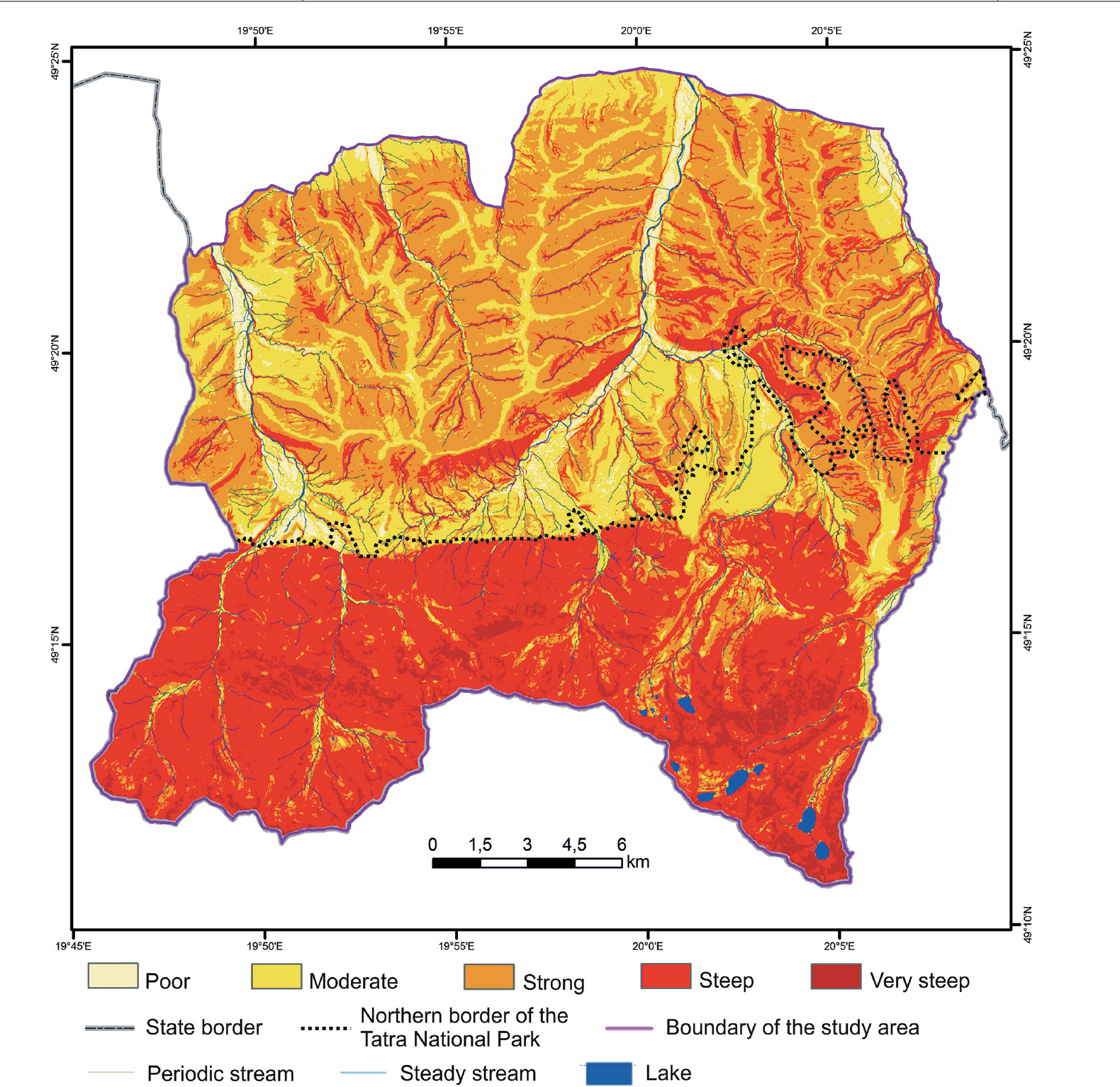
Fig. 5.
Slope gradients in the study area based on Digital Elevation Model (GUGiK 2009).
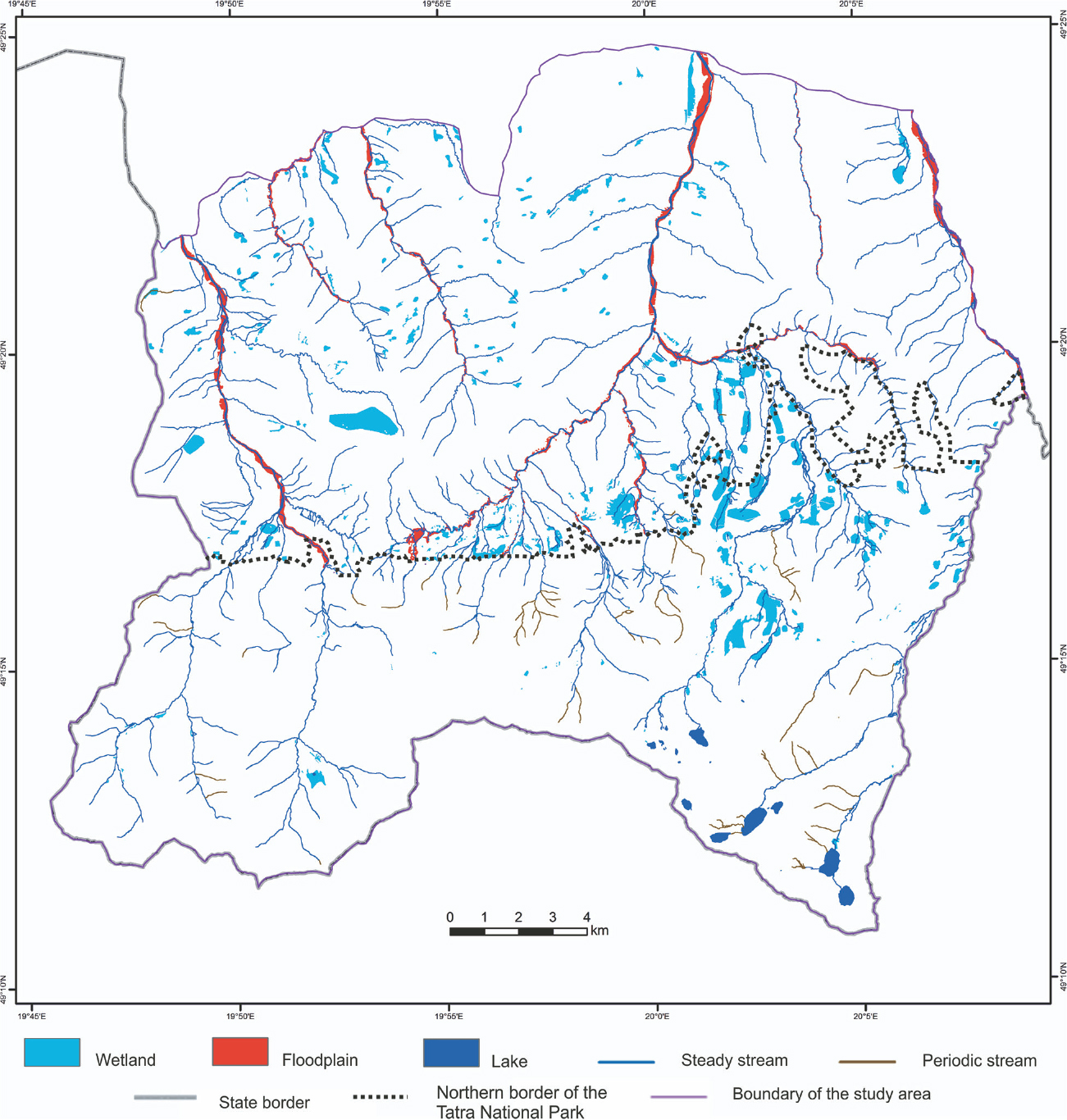
Fig. 6.
Wetlands, permanent, periodic and areas flooded in the study area based on the Hydrographic Map of Poland (2006).
Table 1.
Assessment of infiltration, surface runoff, and evapotranspiration volumes for individual elements of the natural environment (kinds of water circulation: I – infiltration, R – runoff, E – evapotranspiration).
| Elements of the natural environment/data source | Feature | Type of water circulation | ||
|---|---|---|---|---|
| A. Geological structure based on Guzik, Guzik (1958), Guzik et al. (1958, 1959, 1975), Michalik (1958), Guzik (1959a, b), Michalik, Guzik (1959a, b), Detailed Geological Map of Poland (1975, 1976), Guzik, Jaczynowska (1978), Bac-Moszaszwili et al. (1979), Sokołowski, Jaczynowska (1979a, b, 1980), Jaczynowska (1980), Małecka (1982) | Formations | I | R | E |
| Quaternary: debris, scree, rubble, pebbles, sand and gravel, fluvial, fluvial-glacial formations; Quaternary moraine formations | 5 | 1 | 1 | |
| High-Tatric, Eocene numulitic | 4 | 2 | 2 | |
| Sub-Tatric | 3 | 3 | 3 | |
| Podhale flysch, Quaternary loam: loam, loam rubble and mantle rock | 2 | 4 | 4 | |
| Crystal core series | 1 | 5 | 5 | |
| Quaternary: peat, mire, wetland | Without attribution of points, name of hydrotope type: retention marsh | |||
| B. Soil cover – types, subtypes of soils; grain size based on Soil and Agricultural Map (1963–1980) and Skiba (2002) | Regosols; Dystric Regosols; Calcaric Hyperskeletic Leptosols | 5 | 1 | 1 |
| Leptic Podzols; Folic Leptosols, Leptic Podzols; Albic Podzols (Ochric) and Albic Podzols; loamy sand, skeleton-rich soils, moors-mineral soils and muck soils, transitional peats and high peats; moorsh-mineral soils and muck soils, low peats; moorsh-mineral soils and muck soils | 4 | 2 | 2 | |
| Fluvisols (Humic); Fluvisols and Fluvic Cambisols; loamy sand; sandy loam; loam, skeleton-rich soils; sandy clay loam, skeleton-rich soils; sandy loam, silty, skeleton-rich soils; sandy loam, skeleton-rich soils | 3 | 3 | 3 | |
| Calcaric/Dolomitic Leptosols (Humic); Calcaric/Dolomitic Folic Leptosols + Calcaric/Dolomitic Leptosols (Humic); Dolomitic/Calcaric Cambisols; Dystric Cambisols, Eutric Cambisols, Cambisols; clay loam, skeleton-rich soils; silt loam, skeleton-rich soils; silt loam; silt loam, slightly skeletal soils; sandy loam, sandy loam, slightly skeletal soils; sandy loam, silty, sandy loam, silty, slightly skeletal soils; sandy clay loam; sandy clay loam, slightly skeletal soils; loam, loam, slightly skeletal soils | 2 | 4 | 4 | |
| Lithic Leptosols; Calcaric/Dolomitic Leptosols; Dystric/Eutric Gleysols; clay loam; clay loam, slightly skeletal soils; silt loam argil | 1 | 5 | 5 | |
| Peaty soils; peaty soils and marshy-peaty soils, high peats and transitional peats; peaty soils and marshy-peaty soils, low peats; peat-mud soils, mud-peat soils | Without attribution of points, name of hydrotope type: retention marsh | |||
| C. Gradient of slopes based on Digital Elevation Model (GUGiK 2009) and division of slope according to Klimaszewski (2005) | Poor | 5 | 1 | 5 |
| Moderate | 4 | 2 | 4 | |
| Strong | 3 | 3 | 3 | |
| Steep | 2 | 4 | 2 | |
| Very steep | 1 | 5 | 1 | |
| D. Land cover based on Database of Topographical Objects, 1:10,000, (BDOT10k) (GUGiK 2013) class division according to Regulation of the Minister of Internal Affairs and Administration of 17 November 2011 on the database of topographic objects and the database of general geographic objects, as well as standard cartographic studies (2011) | Buildings | Areas excluded from the analysis | ||
| Unused land: scree, spoil, rock rubble; rocky terrain – rivers; sandy or gravelly terrain | 5 | 1 | 1 | |
| Forest or wooded area, dwarf mountain pine, shrubs | 4 | 2 | 5 | |
| Arable land cultivation | 3 | 4 | 3 | |
| Grassy vegetation | 2 | 3 | 4 | |
| Unused land – solid rock | 1 | 5 | 2 | |
| Surface water: steady stream, periodic stream | Name of hydrotope type: trough retention permanent, trough retention periodic | |||
| Lake | Name of the hydrotope type: retention lake | |||
| Additional data Hydrographic Map of Poland (2006) | Wetlands (permanent, trough) | Name of the hydrotope type: retention marsh | ||
| Flooded areas | With the addition of the name of the hydrotope type – flood | |||
As a result of overlaying the maps of the environmental elements (Figs 2–5) and taking into account the data on wetlands and floodplains (Fig. 6), individual hydrotopes, hereafter referred to as hydrotopes, were delimited. Figure 7 presents the procedure used in the form of a flowchart. Combinations of individual subdivisions on the maps were identified as potential hydrotopes types. A simplification procedure was carried out, combining these potential types into units, which were defined as actual types, hereafter referred to as hydrotope types. In the subsequent analysis, the values of point bonitation for infiltration, surface runoff and evapotranspiration were used. Points were assigned by adopting the following distribution of intensity (Table 1): 5 – very high, 4 – high, 3 – medium, 2 – low, 1 – very low. The highest number of points for a given water circulation type indicates the dominance of that circulation type in the criterion under consideration. A lower number of points denotes a lower share of a given circulation type in the criterion under consideration. The points obtained as a result of the scoring were summed up and, on this basis, the actual hydrotopes were separated. The names of the hydrotope types indicate the share of the dominant water circulation type in the unit, for example, infiltration type (I). Where water circulation types were scored the same number of points, for example, infiltration and evapotranspiration, the type name is binary (infiltration-evapotranspiration type; I-E).
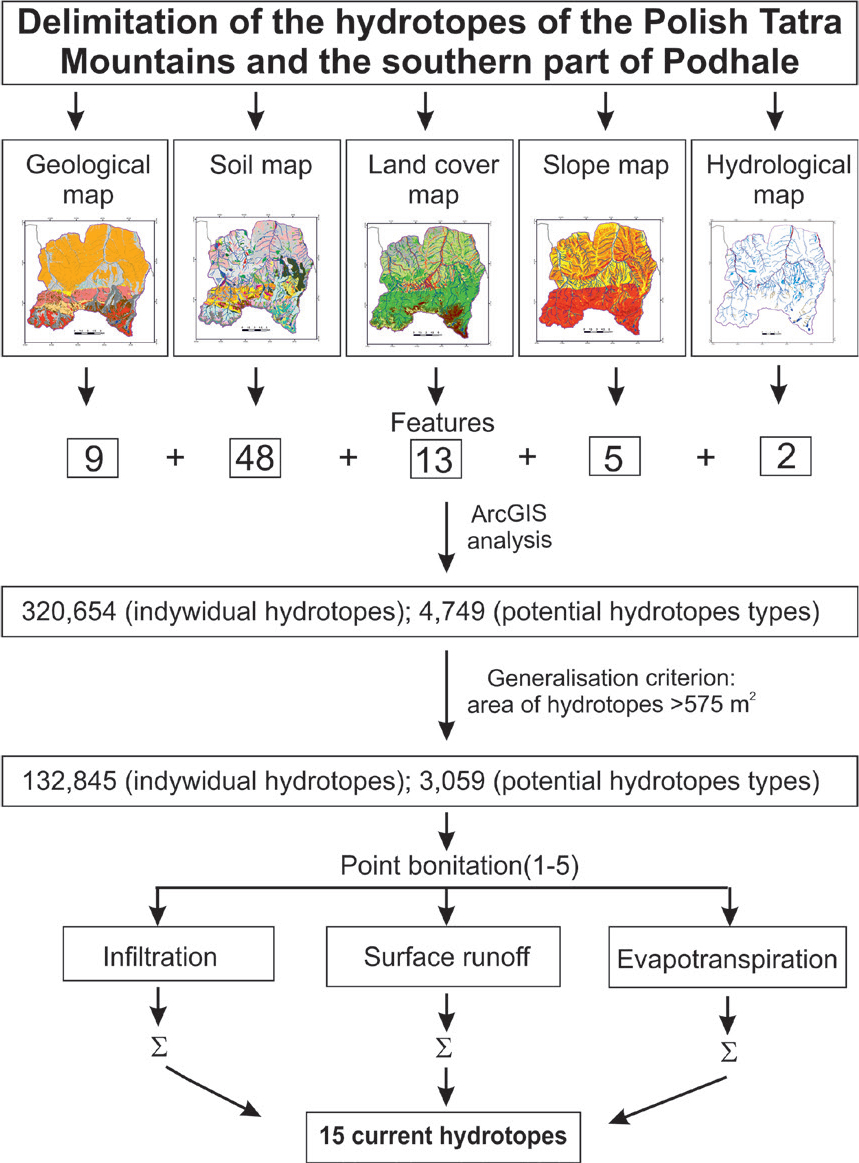
Fig. 7.
Flowchart for the delimitation of hydrotope type.
ArcGIS 10.3.1 (ESRI) software was used for the analysis. Generalisation after analysing the details of the source maps used the smallest unit for the maps made, i.e., 575 m2 (23 grid cells). Groupings of grid cells below the adopted value were removed and replaced with a contiguous area type.
Results
Number of hydrotopes and types of hydrotope
The analysis yielded 132,845 individual hydrotopes (after generalisation) ranging from 575 m2 to 3.19 km2, 3059 potential hydrotope types, and 15 actual types ranging from 0.01 km2 (runoff-evapotranspiration [R-E]) to 239.71 km2 (evapotranspiration [E]). These types were divided into 10 simple and 5 complex types (Table 2). The built-up area, which is not subject to the analysis of water circulation types in this study, includes 367 individual combinations (28.38 km2).
Table 2.
Number of units, area and proportion of hydrotope types in the entirety of the study area.
| No. | Type of hydrotopes | n | Area [km2] | Share [%] |
|---|---|---|---|---|
| Simple types | ||||
| 1 | Infiltration (I) | 503 | 92.57 | 20.1 |
| 2 | Infiltration flood (If) | 101 | 2.03 | 0.4 |
| 3 | Runoff (R) | 356 | 86.13 | 18.7 |
| 4 | Runoff flood (Rf) | 62 | 0.30 | 0.1 |
| 5 | Evapotranspiration (E) | 562 | 239.71 | 52.0 |
| 6 | Evapotranspiration flood (Ef) | 169 | 2.10 | 0.4 |
| 7 | Retention marsh (RM) | 450 | 12.88 | 2.8 |
| 8 | Retention lake (RL) | 39 | 1.48 | 0.3 |
| 9 | Trough retention permanent (TRperm) | 511 | 5.69 | 1.2 |
| 10 | Trough retention periodic (TRperio) | 148 | 0.27 | 0.1 |
| Composite types | ||||
| 11 | Infiltration-runoff (I-R) | 29 | 0.79 | 0.200 |
| 12 | Infiltration-runoff flood (I-Rf) | 5 | 0.04 | 0.010 |
| 13 | Infiltration-evaporanspiration (I-E) | 87 | 16.26 | 3.500 |
| 14 | Infiltration-evapotranspiration flood (I-Ef) | 35 | 0.91 | 0.200 |
| 15 | Runoff-evapotranspiration (R-E) | 2 | 0.01 | 0.002 |
| Total | 3059 | 461.17 | 100.00 | |
Spatial variation of hydrotope types in microregions
Figures 8 and 9 show the different hydrotope types in the Polish Tatra Mountains and the southern part of Podhale. The infiltration type is shown for all microregions of the study area. The highest proportion was recorded in the Wierchy Tomanowo-Jamnickie (18.1% of the area), whereas the lowest was observed in the Kotlina Białczańska (0.20% of the area). The large proportion of the infiltration type in the Wierchy Tomanowo-Jamnickie microregion is related to the fact that a significant part of the area is covered by Quaternary formations, primarily rock, fluvial sediments, moraine covers, Albic Podzols (Ochric) and Albic Podzols, Leptic Podzols. In addition, forest and dwarf mountains, pine and grassy vegetation are dominant.
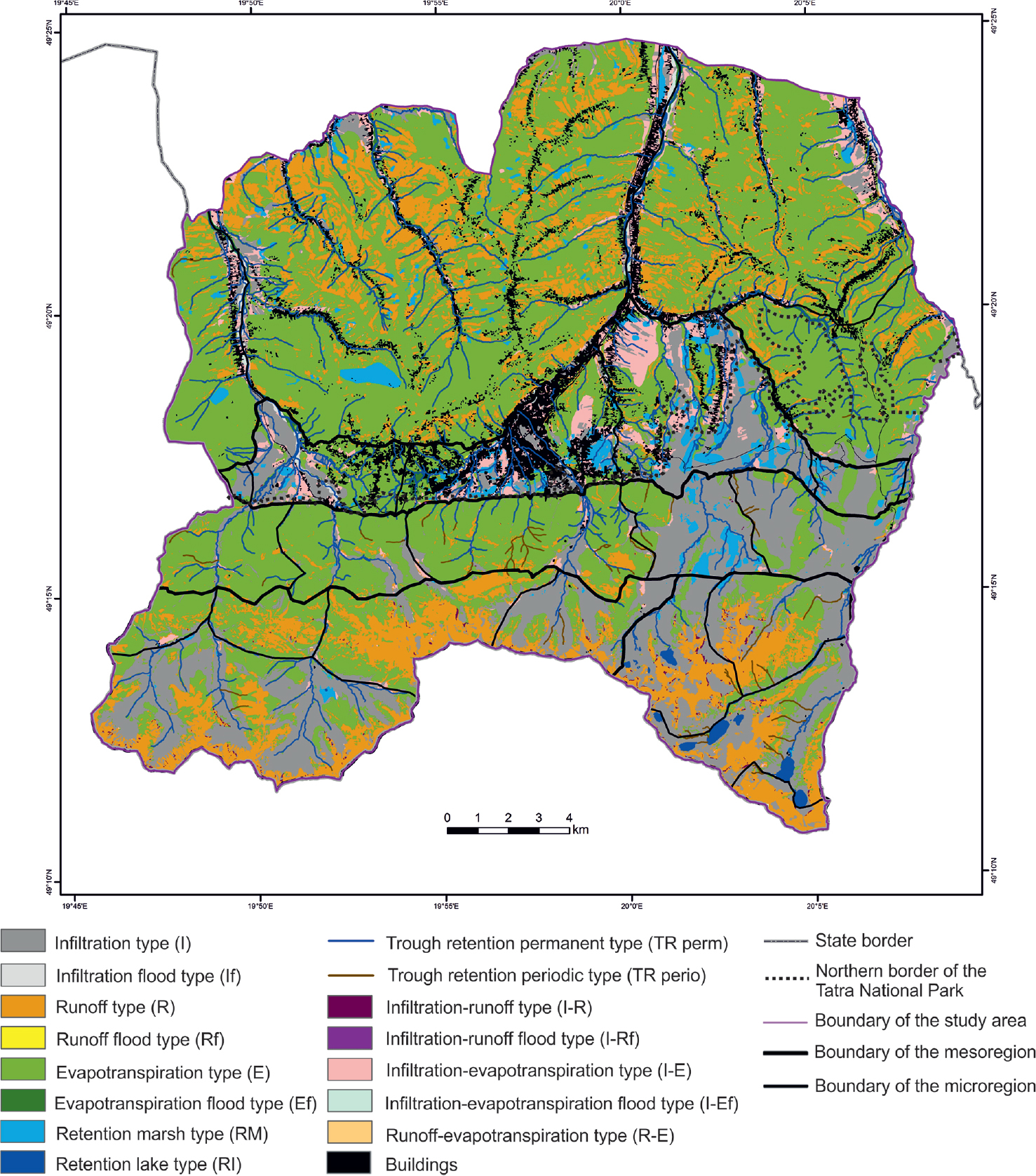
Fig. 8.
Spatial variation of hydrotope types in the study area.
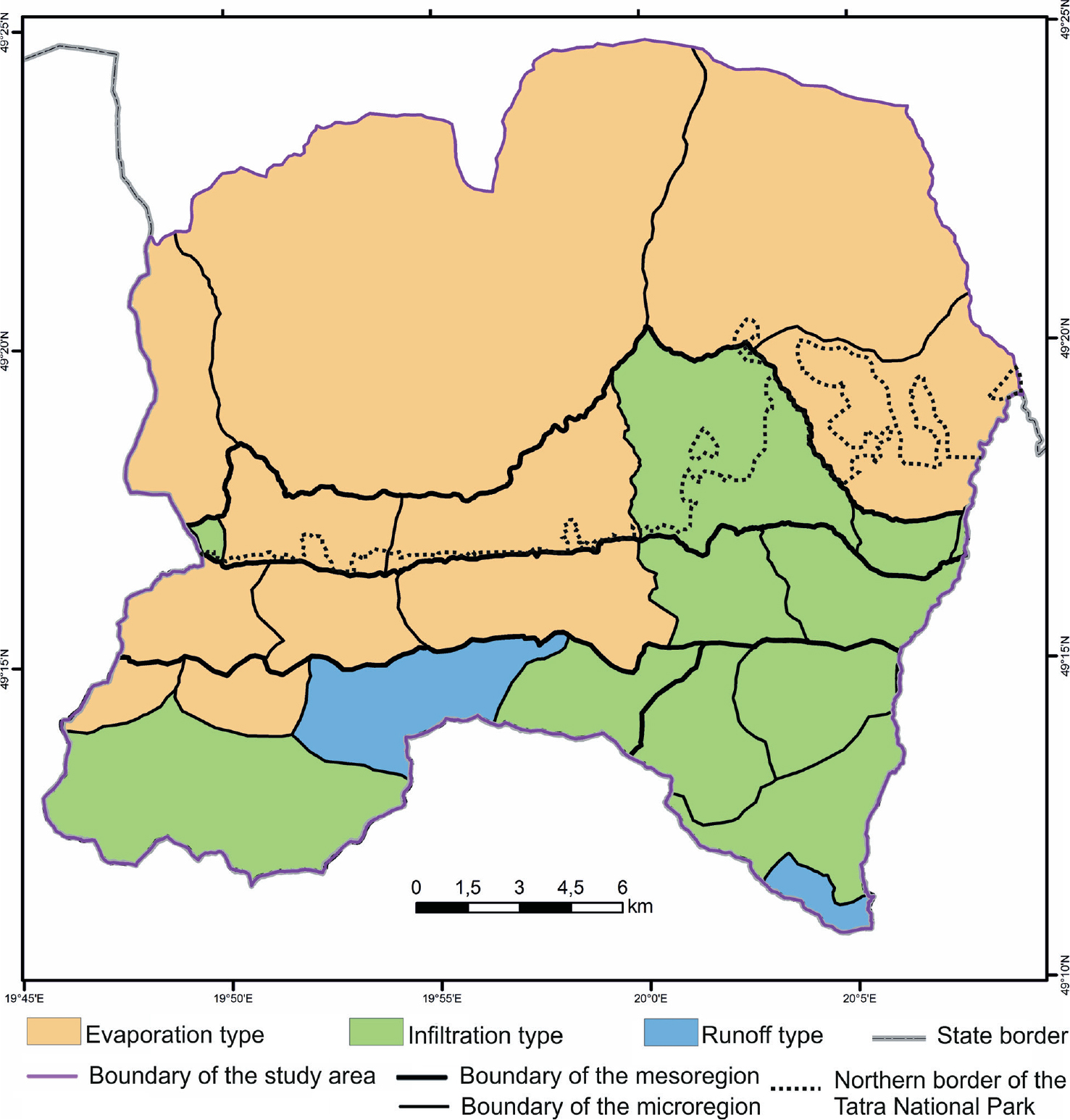
Fig. 9.
Variation in the dominance of hydrotope types in the study area.
The infiltration flood type is found in seven microregions; mainly in the Pogórze Przedtatrzańskie mesoregion (which is mostly in the Pogórze Bukowińskie and Pogórze Gubałowskie microregions, where it accounts for 33.6% and 21.1% of the area, respectively) and in the mesoregion Bruzda Podtatrzańska (mainly in Rów Kościeliski, where it accounts for 17.4% of the area). The smallest share of the analysed type was recorded in Działy Poronińskie (2.1% of the area). The dominance of this type is related to the occurrence of Quaternary formations, i.e., fluvial, fluvial-glacial formations, and forested areas on floodplains.
The runoff type was determined for 24 microregions. The share of the analysed type ranges from 0.001% (Kotlina Orawic) to approximately 35.9% of the area (Pogórze Gubałowskie). The Pogórze Gubałowskie microregion is mainly dominated by formations of Podhale flysch; it is covered by Eutric Cambisols and Dystric Cambisols, which comprise loam and silt loam. A significant proportion of grassland vegetation and agricultural land is observed, and strongly sloping slopes predominate. Thus, the geological structure, soil cover, land cover, and slope gradient determine the dominant runoff type in this area.
The runoff flood type was determined in seven microregions; mainly in the mesoregion of the Pogórze Przedtatrzańskie and in the Pogórze Gubałowskie (36.9% of the area) and Pogórze Bukowińskie (23.8% of the area) microregions. A significant share was also recorded in the Rów Zakopiański (23.8% of the area). The smallest share of this type was recorded in the Magura Witowska microregion (0.01% of area). The occurrence of the analysed type in the area of Pogórze Podtatrzańskie is mainly connected with the occurrence of the Podhale flysch formations, grassy vegetation and the cultivation of arable land in floodplains.
The evapotranspiration type was determined in all microregions, mainly in the mesoregion of the Pogórza Przedtatrzańskie and in the Pogórze Gubałowskie (33.4% of the area), Pogórze Bukowińskie (15.9% of the area), and Pogórze Brzegowskie (8.8% of the area) microregions. The smallest share of this type was recorded in the Masyw Mięguszowiecki microregion (0.03% of area). The dominance of the analysed type is caused by its occurrence in the Pogórze Gubałowskie, mainly in the Podhale flysch formations, including the Eutric Cambisols, Dystric Cambisols, loam, silt loam, grassland vegetation and agricultural land.
The evapotranspiration flood type was determined in seven microregions, mainly in the Pogórza Przedtatrzańskie mesoregion – in the Pogórze Gubałowskie (42.1% of the area), Pogórze Bukowińskie (20.9% of the area), and Pogórze Brzegowskie (8.2% of the area) microregions. A significant share was also recorded in the Rów Zakopiański (16.0% of the area). The smallest share of this type occurs in the Magura Witowska microregion (3.1% of the area). As previously stated, geological structure, soil cover, and land cover clearly influence the dominance of the evapotranspiration type; additionally, due to the occurrence of floodplains, the evapotranspiration flood type could be distinguished.
The retention marsh type occurs in 22 microregions. The highest share of the analysed type was found in the Działy Poronińskie (30.1% of area) and Pogórze Gubałowskie (25.9% of area). The smallest share was recorded in the Tatry Orawicko-Witowskie microregion (0.01% of area). This type is associated with the occurrence of the above-mentioned microregions of permanently and periodically wet areas, peaty soils, marshypeaty soils, mud-peat soils, peat-mud soils, low peats, transitional peats, and high peats.
The retention lake type occurs in 13 microregions. It was found that 78.6% of the area occurs in the microregion – Wierchy Pięciostawiańsko-Białczańskie, which is characterised by numerous lakes. A significant share was also recorded in the Grań Orlej Perci microregion (18.9% of the area). The smallest share of the analysed hydrotope type was found in the Grupa Kop Kop Sołtysich microregion (0.03% of the area).
The trough retention permanent type occurs in all microregions. The proportion of the analysed type ranges from 0.03% of the area in the Masyw Mięguszowiecki microregion to 24.1% of the area in the Pogórze Gubałowskie, where numerous permanent steady streams occur.
The trough retention periodic type occurs in 15 microregions; mainly in the Tatry Zakopiańskie (25.1% of area), Masyw Waksmundzki (14.2% of area), and Wierchy Pięciostawiańsko-Białczańskie (14.1% of area) microregions. The smallest share of the analysed type was recorded in the Masyw Czerwonych Wierchów microregion (0.5% of the area). Periodic watercourses are abundant in these areas.
The infiltration-runoff type occurs in 19 microregions. The proportion of the analysed type ranges from 0.1% of the area (Grupa Osobitej-Bobrowca) to 26.5% of the area (Grań Orlej Perci). The presence in the Grań Orlej Perci microregion of Quaternary formations, mainly clays, clayey debris, rock rubble, and moraine covers, lithosols, regosols, screes, mounds, and rock debris influences the dominant share of the infiltration-runoff type.
The infiltration-runoff flood type was found to occur in five microregions, mainly in the Pogórze Przedtatrzańskie mesoregion – in Pogórze Gubałowskie (55.4% of area), Pogórze Brzegowskie (14.2% of area), and Pogórze Bukowińskie (10.3% of area). A significant share was also recorded in the Rów Zakopiański (19.8% of the area). The smallest share of this type was recorded in the Działy Poronińskie microregion (0.3% of area). This type includes very steep terrains, located in the flood zone, covered by forest vegetation and Quaternary materials including fluvial formations, fluvial-glacial formations, silt loam, loam, and sandy clay loam.
The complex infiltration-evapotranspiration hydrotope type occurs in 21 microregions. It is predominant in the microregion of the Działy Poronińskie (29.7% of the area), where a large share of Quaternary formations, mainly fluvial-glacial, loam, was recorded. A significant share is occupied by grassy vegetation and moderately and strongly sloping terrain. The lowest share of this type was recorded in the Masyw Waksmundzki and Masyw Kominiarski (0.1% of the area) microregions.
The infiltration-evapotranspiration flood type occurs in seven microregions, more than half of which is found in the Pogórze Przedtatrzańskie mesoregion, mainly in Pogórze Gubałowskie (33.6% of the area) and Pogórze Bukowińskie (31.8% of the area). A significant share was also recorded in the Rów Zakopiański (17.4% of the area). The smallest share of this type was recorded in the Pogórze Brzegowskie microregion (0.5% of the area). This type was found mainly in the Pogórze Przedtatrzańskie mesoregion due to its occurrence in river valleys with a high proportion of Quaternary formations, loam, and grassy vegetation. These areas are poor to moderately sloping.
The runoff-evapotranspiration type occurs in three microregions. This type is dominant in the Grań Orlej Perci microregion (56.0% of the area), in which, as previously mentioned, Quaternary formations, mainly loam, clayey debris, and stony weathering and moraine cover; lithosols, regosols, screes, mounds, and rock rubble occur.
Discussion
Comparison of materials and methods used for delimitation of hydrotopes
The literature on hydrotope delimitation differs, among other things, in the detail of the methodology described and the results obtained. To delimit hydrotopes, many researchers use diverse, but usually similar, cartographic materials showing the diversity of lithology, soil cover, land use, relief, types of water circulation, and depth to groundwater. However, it is important to note that, depending on the level of detail of the units and the scale of the study, the environmental elements used vary. Generally, the higher the unit, the lower the number of environmental elements used to delineate it. For example, Ostaszewska (1984) used four elements of the environment to delineate hydrotopes and three elements to separate types of assemblages. In addition, the variability of each element was analysed with less detail than in the delimitation of hydrotopes. In so doing, the authors used various methods, such as overlaying the content of maps of environmental elements (e.g., Sołowiej 1977, Ostaszewska 1984, Jańczak 1985) and groupings based on similarity into higher-level units (e.g., Richling 1980, Ostaszewska 1984). Hydrological modelling has also been used, for example, Müller-Wohlfeil et al. 2000, Tilch et al. 2002.
Two research approaches can be distinguished in the works discussed, namely, the genetic approach, which relies on the delimitation of hydrotopes based on the genetic types of Quaternary sediments (e.g., Sołowiej 1976), and the functional approach, which assumes that water is the main criterion in the delimitation of hydrotopes (among others Sołowiej 1977, Richling 1980, Ostaszewska 1984, Pawłat-Zawrzykraj 2006a, b, Bartczak, Tyszkowski 2016).
As stated in Sołowiej (1977), water, lithology, and terrain morphometry are the most appropriate criteria for separating hydrotopes. It is correct to separate hydrotope complexes based on their water regime by lithology and land use, and separate hydrotopes by relief and land use. Jańczak (1985) states that lithology, relief, and land cover are the basic criteria for separating a hydrotope complex. Similarly, Richling (1980) and Richling and Ostaszewska (1983) argued that water circulation depends mainly on the relief and lithology of the area, while vegetation plays a lesser role.
In the present study, similar to many previous works (e.g., Sołowiej 1976, Richling 1980, Ostaszewska 1984, Jańczak 1985), four elements of the natural environment are observed. When comparing against works in the Lowlands, it is important to note that much greater variability was observed in the deep geological structure, which has a fundamental influence on water circulation in the mountains, and more varied slope gradients. In the present study, the map overlay method (individual hydrotopes were separated) was used to distinguish hydrotopes, similar to Sołowiej (1977), Richling (1980), Ostaszewska (1984), and Jańczak (1985). As in Richling (1980) and Ostaszewska (1984), the present study takes the names of the actual types to specify the proportion of the dominant water circulation type in the unit. Thus, a functional approach was used, and the main criterion for separating the units was water and its circulation.
It is also important to note the challenge of availability and the detail of cartographic data used in studies. The studies cited above were generally carried out over relatively small areas, in which it was possible to perform detailed field surveys to study individual elements of the natural environment. In the present study, covering a much larger area (the entire Polish Tatra Mountains and the southern part of Podhale), direct field mapping was not possible; the work is therefore based on available materials.
Variety of carve-out names
In some previous studies concerning hydrotopes subdivisions, the authors do not give the names of the subdivisions used, providing only descriptive characteristics of the units (e.g. Jańczak 1985, Sołowiej 1987) or an abbreviated code through which the element-criteria applied to the subdivisions can be read (e.g., Sołowiej 1977).
The authors used different names and characterised the separate units in different ways. It is important to note that the separated units have a mixed typological-regional character; their names refer not only to the features of the environment, but also to the location: some authors gave names specifying the type of water circulation present, others indicated its location, and some combined these two pieces of information. As further noted by Sołowiej (1976) and Bartkowski (1977), hydrotope complexes are based on relief forms, for example, the hydrotope complex of large river valleys, as well as separated hydrotope complexes with a dominant infiltration type. Moreover, Sołowiej (1977) studied the relationships between infiltration capacity and surface runoff and delineated four types of water regimes; these are also typological-regional units. In the present study, actual and potential hydrotopes were not assigned names; only after analysis was a name given to the hydrotope types, assuming that the name was derived from the dominant type of water circulation in the unit. As this study uses a functional criterion, in which water is assumed to be the main criterion in the delimitation of hydrotopes (Sołowiej 1976), and the study aimed to determine the nature of the water circulation of the area, hence, the names adopted indicate the dominant type of water circulation in the delimited unit. Similar names of hydrotopes were used by Sołowiej (1977), Richling (1980), Ostaszewska (1984), and Bartczak and Tyszkowski (2016).
Spatial distribution of hydrotope types
Vertical differentiation of the hydrotope type system is visible mainly in the southern part of the Tatra Mountains, where on the highest ridges in the form of solid, impermeable rocks, the run-off type was recorded, and in the valleys covered by Quaternary formations, the infiltration type and the permanent and periodic trough retention type were determined. Thus, the results of the present study partly correlate with the hydrographic zones delineated by Wit-Jóźwik (1974). Considering the distribution of the separated hydrotope types, no clear belt-like arrangement was observed as seen in the geological structure and hydrographic regions and subregions delineated by Wit and Ziemońska (1960), Wit-Jóźwik (1974) and Żelazny et al. (2015). However, some convergence can be observed. According to the aforementioned authors, mainly infiltration and surface runoff are observed in the crystalline subregion. Similarly, in the present study, the southern part of the Tatra Mountains is characterised by clearly visible infiltration and runoff hydrotope types. In the region below the Tatra Mountains, according to Wit and Ziemońska (1960) and Wit-Jóźwik (1974), infiltration dominates; similarly, in the present study, infiltration and evapotranspiration hydrotope types were mostly found. There are also numerous patches of marsh retention in this area. The foothills region, according to the cited authors, is characterised by a predominance of surface runoff over infiltration. In the present study, mainly evapotranspirational and runoff types of hydrotopes are observed in the Podhale area. Infiltration flood types occur in the valley bottoms in this area.
The differentiation of hydrotope types does not directly relate to regional units, i.e., micro and mesoregions. It is possible to distinguish the hydrotope types that dominate in a given microregion; however, each microregion features a differentiation of hydrotope types.
In general, a latitudinal and meridional pattern of hydrotope types was identified in this work. In the southern part of the Tatra Mountains, the runoff type forms patches with an elongated course (latitudinal or meridional), referring to the course of the ridges. The areas of infiltration type refer to river valleys, depressions covered by Quaternary formations including debris, scree, rubble, rocks, sand, and gravel formations, fluvial, fluvial-glacial formations, and moraine covers. In most parts of the Podhale, patches of the runoff type have both a meridional and latitudinal pattern, denoting the course of the hills. The background to the infiltration and runoff type is the evapotranspiration type, which is dominant in the study area. The difference in the overall distribution on the map of hydrotope types, occurring between the results of the present study and those of the authors cited above, is due to the assumptions of the work. In the southern part of the Tatra Mountains, there is more surface runoff due to impermeable, solid rock and significant slopes. The further north one goes, the higher the proportion of evapotranspiration, related to the coverage of the area by forests and crops.
Conclusions
Analyses carried out within the Polish Tatra Mountains and the southern part of the Podhale region led to the following conclusions:
132,845 individual hydrotopes, 3059 potential hydrotope types, and 15 actual types were delimited.
The considerable number of hydrotope type separations is due to both the complexity of the natural environment of the study area and its considerable area. The methodology used appears to be appropriate for an area with a complex natural environment.
There is a clear predominance of simple hydrotope types in the study area (evapotranspiration, infiltration, runoff, totalling 90.7%).
The spatial differentiation of hydrotope types is related to the distribution of elements of the natural environment, mainly the geological structure and relief of the area. The infiltration type patches take a meridional course, referring to the bottoms of river valleys and depressions covered by Quaternary formations. The runoff type patches in the southern part of the Tatra Mountains and in most parts of the Podhale have a meridional or latitudinal course, referring to the course of the ridges. The background for the infiltration and runoff type is the evapotranspiration type, which is dominant in the study area.
The distribution of separated units shows a partly vertical differentiation. No clear strip pattern was noted, referring to the hydrographic regions delineated in the area.
The diversity of hydrotope types does not directly relate to the designated regional units: micro- and mesoregions.
Acknowledgements
Publication based on the doctoral dissertation entitled. ‘Spatial differentiation of hydrotopes of the Polish Tatra Mountains and southern part of Podhale’. The author thanks Prof. Jarosław Balon for his substantive supervision and valuable guidance during the preparation of this paper. The author would like to thank the anonymous reviewers whose comments improved the quality of the article.