
Introduction
In the Koźle Basin (Southern Poland), there are remnants of Allied strategic bombing conducted in 1944 (Waga, Fajer 2021). Some of these can still be seen on the ground surface, while others are hidden underneath. Damaged buildings and defensive structures, utility infrastructure relics or bomb explosion craters can be easily identified, but it is more difficult to locate the items resting below the ground surface: accumulated substances and waste from industrial production (released from destroyed installations), bomb shrapnel and larger bomb fragments (Fig. 1), damaged remnants of small arms and artillery ammunition used by German anti-aircraft guns as well as parts of aircraft that were hit and shot down. Operational means of warfare, including weapons, were also abandoned in craters in the area. The greatest threat, however, is posed by unexploded high explosives dropped from aircraft – unexploded bombs (UXBs). Those were mainly 250 and 500 lb general purpose and fragmentation bombs, but also incendiary bombs. They were intended to hit, among others, industrial plants vital to the Third Reich’s war machine – concrete and steel structures, tracks, paved roads, and squares (Waga et al. 2022a). The bombs were meant to shatter and penetrate reinforced factory roofs and explode inside. However, in many cases, they hit areas adjacent to their targets where the ground was soft, moist or even swampy. This cushioned their fall, and they failed to explode as a result. There are many similar places in Europe. All of them have big problems with spatial management and public safety caused by ground contamination by UXO, threatening people’s lives and property (e.g., Unexploded Ordnance Desk Study 2011, Masche 2013). In some countries, very detailed regulations have been developed for conduct in areas threatened by the presence of UXO, and the public is widely informed about it (cf. Spyra, Katzsch 2007, Katzsch 2009, Bomben in Oranienburg 2016, Fede at al. 2017, Ielpo 2018, Castellani 2019).
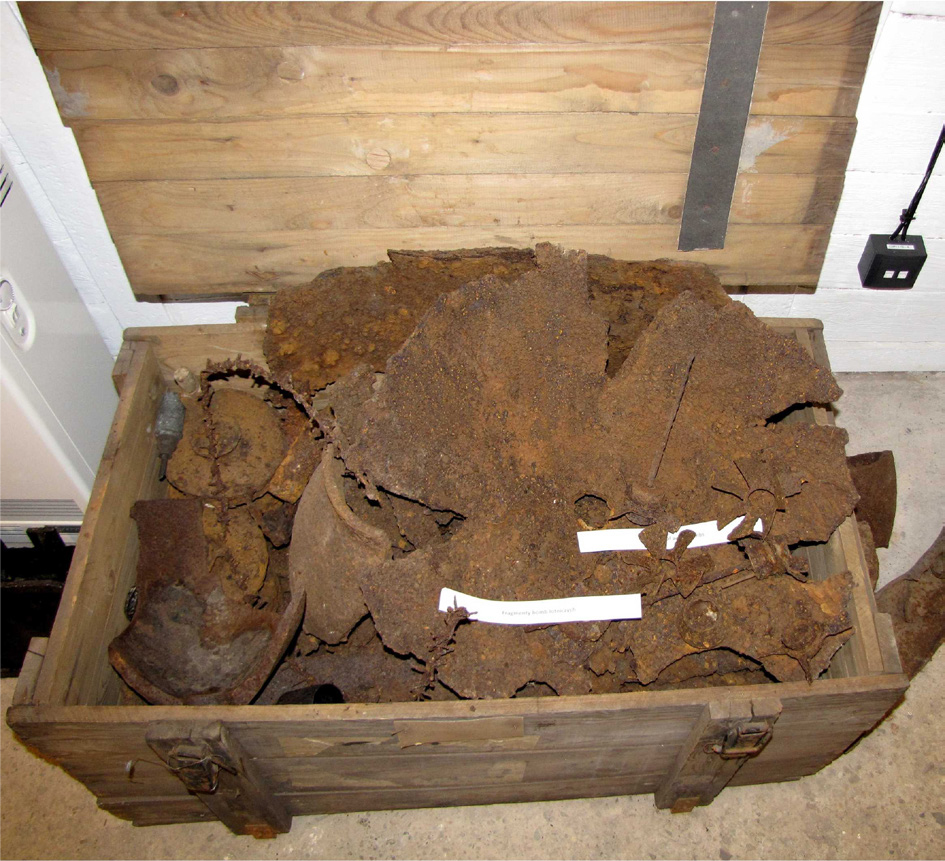
Fig. 1.
Bomb fragments collected from construction site excavations. Exhibits owned by the “Blechhammer 1944” Museum of the Silesian Battle for Fuel in Kędzierzyn-Koźle. (photo: J.M. Waga).
It is estimated that in the North European Plain, which is covered by layers of clastic deposits of glacial, fluvial or aeolian origin, the average percentage of unexploded bombs was 10–15% (Katzsch 2009, Kruse et al. 2019). However, this percentage could be higher in some cases (Šafář et al. 2022). In a marshy area in the vicinity of Kędzierzyn-Koźle, just one out of eight 500 lb bombs dropped from a USAAF plane exploded! In this respect, mid-mountain basins filled mainly with fine-grained Neogene deposits are similar to the North European Plain (Šafář et al. 2022). The amount of unexploded ordnance (assuming a rate of 10%) in the vicinity of the city of Most in the Czech Republic was estimated at 1,700 (Dolejš et al. 2020). In the entire Koźle Basin, where nearly 40,000 bombs were dropped (max 77/ha), the number of UXBs should be estimated at 4,000–6,000. A small number of those UXBs were removed and neutralized while the war was still going on by the Sprengkommandos, mainly consisting of prison and concentration camp inmates (Konieczny 1998), while others are gradually removed by Polish sapper patrols and specialized companies (Czajkowski-Chołota 219, Pulkowski 2020, Waga et al. 2022b).
Bombs dropped from aircraft usually penetrated obliquely into the soft ground and, if they failed to explode, they usually drifted along a trajectory that resulted from the interaction of inertia, gravity, and ground friction. Preliminary investigations make it possible to assume that in the vicinity of Kędzierzyn-Koźle, similarly as in eastern Germany, such drift sections are usually 10–30 meters long and most unexploded ordnance lies below the minimum building foundation depth (0.8–1.2 m below ground level) and also the depth at which large diameter gas pipelines are laid (2.2 m below ground level) (Katzsch 2009, Arbeitskreis… 2018).
These were mostly delay-action bombs (nose fuse: delay 0.1s; and tail fuse: delay 0.01/0.025s), intended for the destruction of buildings, reinforced concrete and metal structures, as well as land-cratering (Waga, Fajer 2021). It should be noted that on each such bomb, both fuses (nose and tail) were armed. Nearly 80 years after the bombs were dropped, some of these fuses are already permanently disabled due to progressive corrosion and contamination. The rest, however, retain their ability to successfully initiate a detonation. This is the case, for instance, when bombs lie below the groundwater table in anaerobic conditions that inhibit corrosion. An even more dangerous development is when the groundwater is chemically contaminated and the solutions present therein activate redox processes. There are known cases of spontaneous explosions after several decades (Waga et al. 2022b). In late 2021/early 2022, one such event occurred in the study area under the bottom of a canal draining saline waters from an industrial site.
To avoid uncontrolled incidents with unexploded ordnance, especially in areas of development and intensive economic activity, surveys should be carried out in former bombing zones to locate unexploded ordnance (Baum 1999, Spyra, Katzsch 2007, Foley 2008, Byrnes 2009, O’Neill, Fernández 2009, Fernández et al. 2010, Mahling et al. 2013, Shepherd 2016, Brenner et al. 2018, Rose 2019, Talik, Mularczyk 2020). Such research, also covering deeper layers in the ground, was undertaken, among others, in the USA, Germany, Belgium, Italy and Czechia (Butler 2001, Report of the Defense … 2003, Katzsch 2009, Byholm 2017, Ielpo 2018, Barone 2019, Note et al. 2019, Pospíšil et al. 2022, Šafář et al. 2022). Knowledge from other similar environmental projects, e.g., exploration of post-mining voids and subsurface hazardous waste sites, can be used in these activities (Kirsch, Reinhold 1986). In Poland, valuable experience from locations with similar physiographic conditions in Western and Central Europe should be considered. Surface surveys conducted with standard metal detectors are not sufficient, due to the very limited depth of penetration. Where excavations are performed for construction purposes, deeper subsoil layers below their bottom should also be subject to ongoing verification.
The purpose of the 2022/2023 study was to test whether it is possible to detect in a non-in-vasive manner, and thus safely, various items in the ground that were related to the air campaign conducted in the second half of 1944, using the optimal geophysical methods and equipment available for this purpose.
Study area
Four experimental areas were selected in the Koźle Basin (Fig. 2A). They represent four types of local suburban landscapes and ground conditions. These lie near the mouth of the Bierawka River, where it flows into the Oder:
on the morphological step associated with the deglaciation of the Odranian ice sheet (about 190 m a.s.l.), occupied by pine forest (which is being gradually cut down in the vicinity of the sand mine);
on the 3rd and 4th overflood terraces of the Bierawka River, i.e., Holocene and Vistulian fluvial terrace surfaces lying above the modern floodplain (i.e., 3–3.5 m and 5.5–7 m above the mean water level in the riverbed), occupied by mixed forest and meadows;
on the 4th overflood terrace, i.e., Vistulian fluvial terrace surface (lying 8–9 m above the water level in the channelized riverbed of the Oder River), with deciduous and mixed forest, fields, and former fields;
within the late Vistulian/early Holocene Oder palaeomeander (4 m above the mean water level of the Oder River), with riparian deciduous forest, meadows, rushes, and reeds.
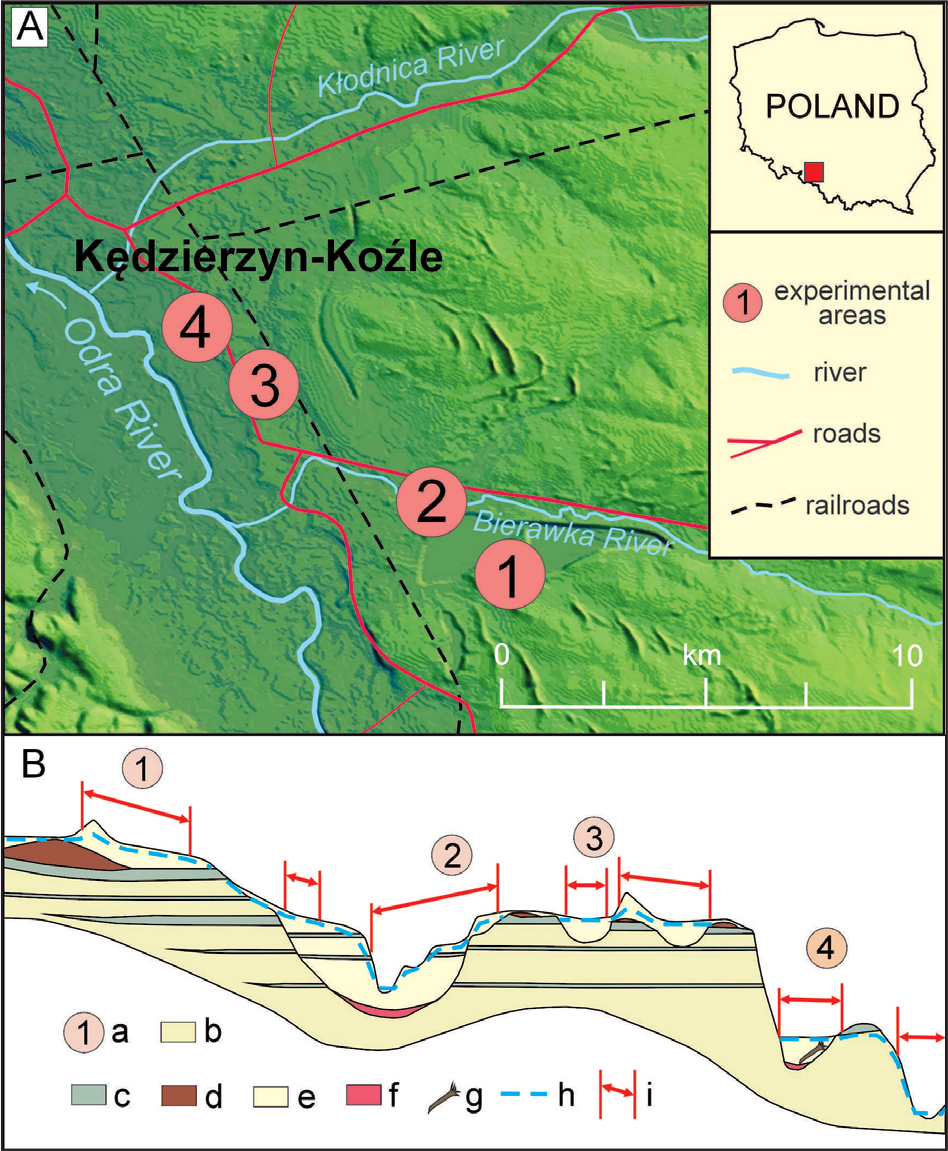
Fig. 2.
A – Location of the study area; B – Synthetic geological cross-section of the study area: a – experimental areas, b – pre-Vistulian sands and gravels, c – massive silts and clays, d – glacial tills with erratic boulders, e – Vistulian sands and gravels, locally organic silts and peats in valleys, f – boulder horizon, locally with erratic boulders, g – “black oaks”, h – water table, i – zones prone to UXB risks.
Almost the entire area of the Koźle Basin is covered by clastic Quaternary formations (Kotlicki, Kotlicka 1980). Groundwater levels are close to the ground surface and can infill craters, except in the vicinity of the Kotlarnia sand mine, around which a depression cone is present. The climate in the study area is mild and moderately warm. In parts of the area where fertile soils are present, this creates conditions conducive to agriculture. Forests grow on less valuable soils or riparian sites (Waga et al. 2023).
Experimental area One and much of experimental area Three are allocated to intensive development in the zoning plans. Adjacent to experimental area Two is a residential area, remnants of a POW camp, World War II shelters and trenches as well as older (17th–19th century) hydrotechnical systems, and iron and copper forges. Experimental area Four is a slightly transformed 19th-century flood polder, which is now partially occupied by an ecological site.
Most relevant to the subject of this study is the geological structure of the experimental areas and the hydrogeological conditions prevailing there, since they were the factor that most often determined whether the bombs exploded or not. Geological profiles within the morphological step associated with the Odranian ice sheet and within the 4th terrace contain layers of massive silt and clay up to ca. 1 m thick (Fig. 3A) (Waga et al. 2022c).
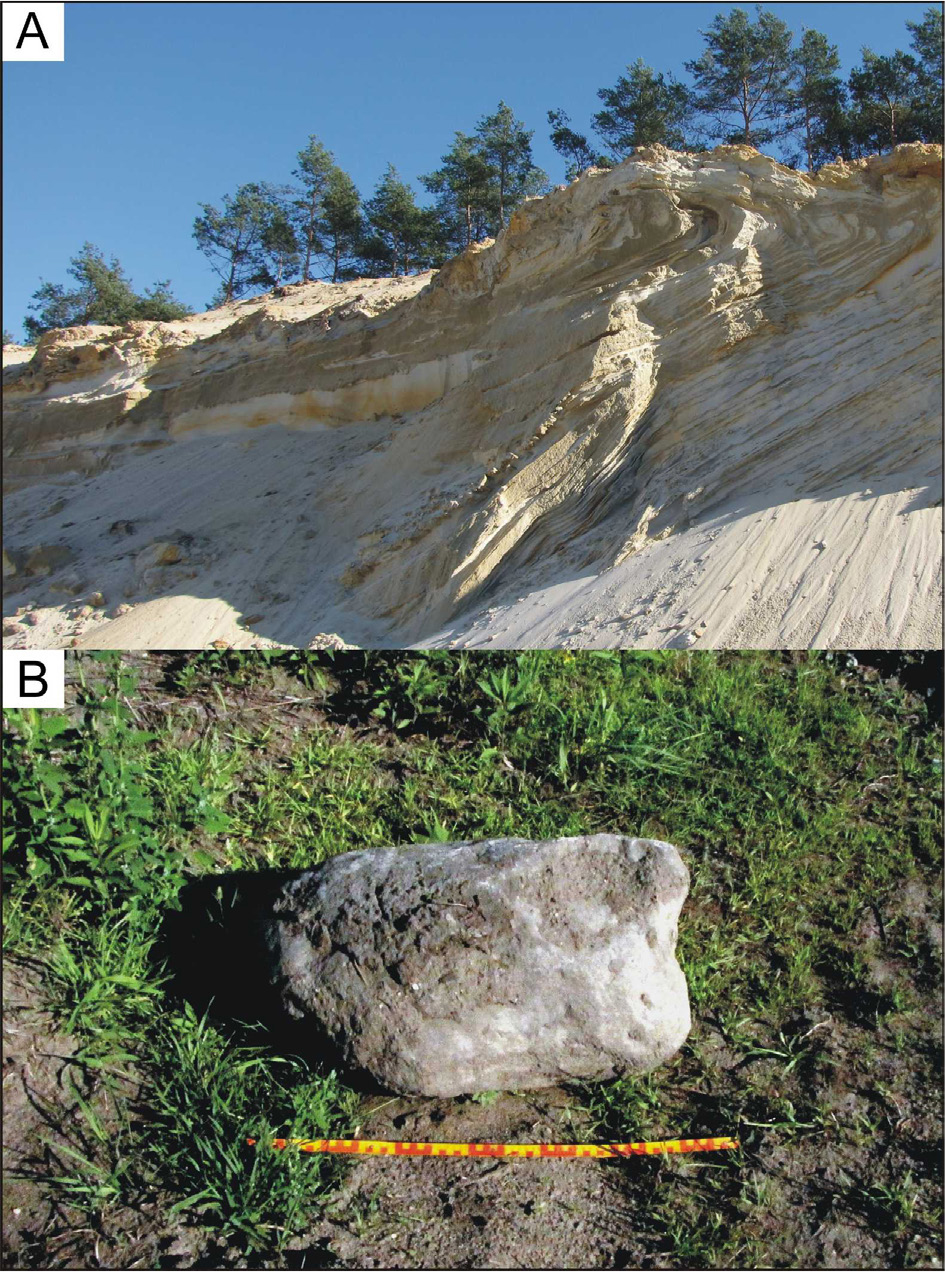
Fig. 3.
A – Glacitectonically disturbed series of marginal sediments with massive silts at experimental area 1; B – Erratic boulder resting on silt, removed from a shallow excavation in experimental area 3 (photo: J.M. Waga).
These are glaciofluvial and glaciolacustrine formations. Locally, these are overlaid with thin patches of glacial tills with erratic boulders (Figs 2B, 3B). Within the 4th terrace, these deposits form structural benches which are parts of the plain from the time when the Odranian ice sheet advanced and subsequently melted. The plain was dissected by rivers and modelled by aeolian processes. River channels were eventually filled with sands, sometimes mixed with fine gravel and silt laminae, during the Warthanian and Vistulian periods (Jersak, Sendobry 1991). Therefore, the 4th terrace in the study area is an erosion-accumulation landform covered in some places with aeolian deposits from several thousand years ago. The aforementioned silt and clay interbedding are conducive to high groundwater levels, and thus water is often present just below the ground surface. In the study area, large palaeomeanders of the Oder River are filled with waterlogged organic and organic-mineral deposits up to 6.5 m thick (Schubert, Kurtz 1930), and in the estuary reach of the Kłodnica River up to 5.0 m thick (Wójcicki, Marynowski 2012).
Data and methods
The work carried out by the authors concerned environmental geophysics (Borecka, Ostrowski 2017). An attempt was made to test the suitability of non-invasive geophysical methods for detecting and identifying remnants of air raids, primarily unexploded bombs. A preliminary research algorithm was developed as well (Waga et al. 2022c). Due to the nature of the main objects of exploration, near-surface geophysics methods were tested, such as metal detection, proton magnetometry, ground penetrating radar profiling, conductometry and electrical resistivity tomography (Table 1). Methods that could trigger bomb fuses were not tested. At the test sites located in areas 2 and 3, all survey methods were used (Table 2); in area 1, due to ongoing farming activities there, and in area 4, due to the unfavourable nature of the land cover (very dense thorn bushes in a nature-protected area), the GPR and EDM methods were not tested. The research was carried out using available equipment on selected objects resting in the ground, under different environmental conditions – in dry, wet, heavily waterlogged and marshy areas (including thixotropic quicksand), with different types of land cover: grass, shrubs, forest, rushes and reeds.
Table 1.
Methods and equipment used in the study.
| Abbrev. | Technology | Device | Manufacturer | Depth (m) |
|---|---|---|---|---|
| MAD | Magnetic anomaly detection | Pioneer VLF | Bounty Hunter | 0–0.65 |
| PM | Proton magnetometry | Maggie magnetometer | Schonstedt | 0–5.5 |
| ECM1 | Electromagnetic conductivity | EM31-MK2 meter | Geonics | 0–6.0 |
| ECM2 | Electromagnetic conductivity | CMD Explorer meter | GF Instruments | 0–6.7 |
| GPR | Ground penetration radar | Pro Ex RAMAC X3M | MALÅ | 0–4.8 or 0–11.5 (recording range 97.94 or 229.62 ns depending on the antenna used) |
| ER | Electrical resistivity | ABEM Terrameter SAS 4000 with ABEM LUND Imaging System | ABEM Instrument | 0–7.2 or 0–14.4 (recording range depending on the electrode spacing: 1 or 2 m) |
Table 2.
Areas and lengths of the profiles investigated by different geophysical methods.
| Experimental areas | MAD [m2] | PM [m2] | ECM1 [m2 or *m] | ECM2 [m2] | GPR [m] | ER [m] |
|---|---|---|---|---|---|---|
| 1a | 3800 | 3800 | 600 | 800 | – | – |
| 2a | 10000 | 10000 | 400 | – | 1120 | 80 |
| 3a | 3150 | 3150 | 240 | – | 290 | 40 |
| 3b | 2250 | 2250 | – | – | 370 | – |
| 3c | 12000 | 12000 | *40 | – | 370 | – |
| 3d | 4300 | 4300 | 960 | – | – | – |
| 4a | 1500 | 1500 | *52 | – | – | – |
| 4b | 1800 | 1800 | *74 | – | – | – |
| 4c | 3050 | 3050 | *69 | – | – | – |
| 4d | 950 | 950 | *65 | – | – | – |
| 4e | 2200 | 2200 | – | – | – | – |
| Total | 45000 | 45000 | 2200 + *300 | 800 | 2150 | 120 |
It drew on previous studies concerning the presence in the Koźle Basin of small UXB craters among large craters from bomb explosions (Waga et al. 2022a, b, d). Detailed survey sites were selected on the basis of analyses of color shaded relief model with a resolution of 25 × 25 cm, which was generated independently using point data from airborne laser scanning (ALS) with a density of 12 points/m2 (Dane pomiarowe LIDAR 2022), a high-resolution orthophotomap posted on the polska.e-mapa.net website and also a handful of archival aerial photographs. An RTK Leica Viva CS10 high-precision GPS with an average measurement accuracy of 1 cm (horizontal) and 1.3 cm (vertical) was used to geolocate the points and profiles surveyed.
To facilitate moving around with survey equipment, the study area was first prospected to determine the location of potential UXBs and other ferromagnetic objects – this was carried out using a proton magnetometer (PM) whose HeliFlux sensors can detect very big objects at depths down to 5.5 m. The area was surveyed bi-directionally along parallel lines located about 1.5 m apart. At locations where signal was detected, local magnetic susceptibility was analysed in detail (Fig. 4A).
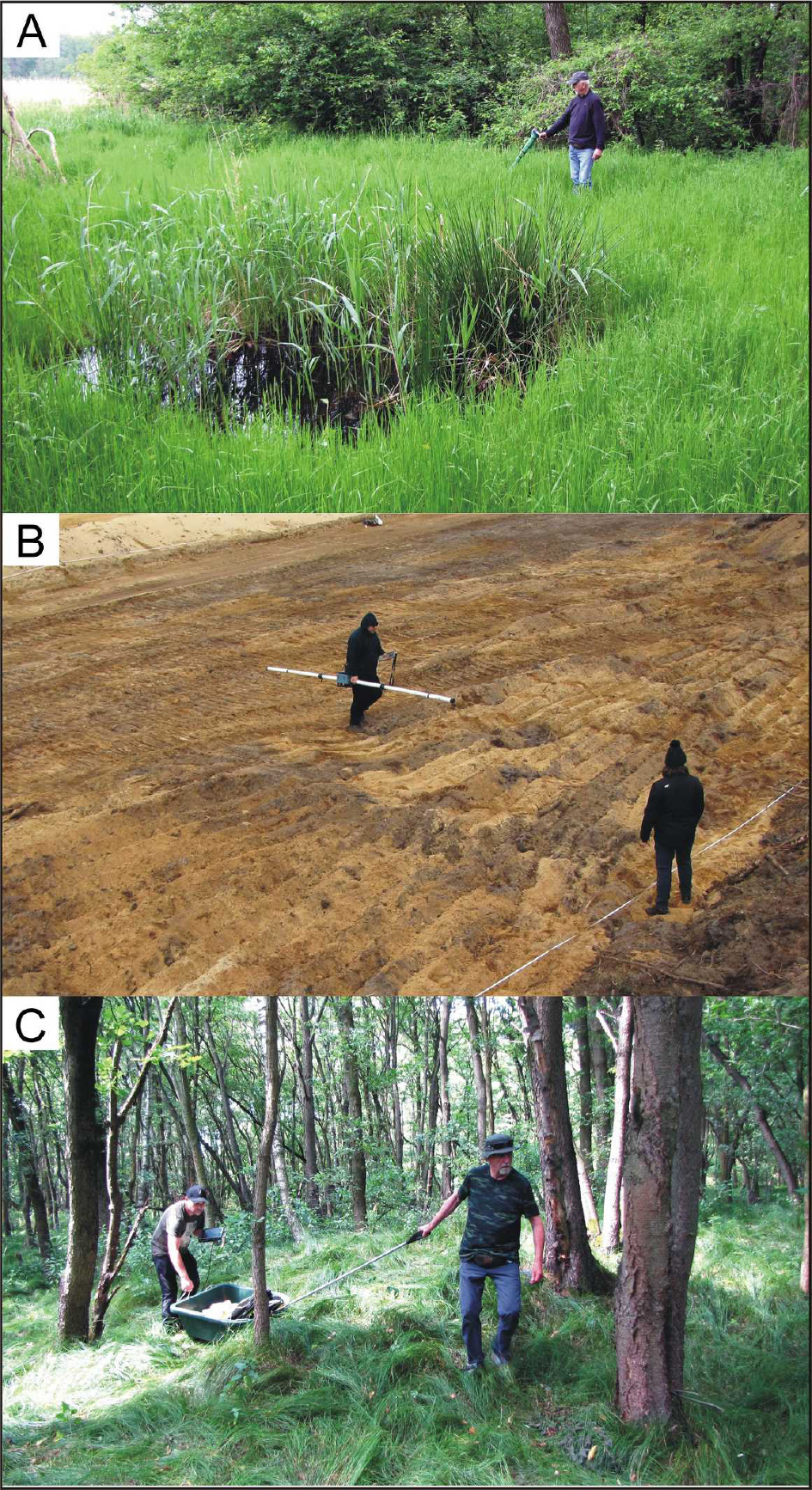
Fig. 4.
A – Ground scanning with a proton magnetometer in the vicinity of a flooded UXB intake crater (in the foreground); B – Ground scanning with a Geonics EM31-MK2 conductivity meter; C – Ground profiling in difficult forest terrain using the Mala RAMAC X3M GPR (photo: J.M. Waga).
In order to separate the signal emitted by shallow objects, a magnetic anomaly detector (MAD) was also used at these sites. This detector has adjustable pulse power and discrimination mode, which enables larger objects to be detected to a depth of about 65 cm. This differential analysis made it possible to identify signals originating at greater and lesser depths.
Subsequently, tests were conducted using a electrical conductivity meter (ECM) ECM1, which measures ground conductivity values and the real (in-phase) component of the electro-magnetic field to a depth of about 6 meters. In this manner, the device detects changes in site geology, such as structures in the subsoil, ground water contamination or other changes that disturb the electrical conductivity of the ground. Electromagnetic induction technology allows the electrical conductivity of a medium to be measured without using electrodes or contacting the ground. Using the inductive method, measurements can be performed in most geological conditions, including surface layers with high electrical resistivity such as sandy formations, gravel or asphalt. The real (in-phase) component measured by the device is particularly useful for detecting metal objects located at shallow depths in the ground. Connecting a computer to the RS-232 interface enables continuous data collection and observing survey results in the form of curves displayed in real time. Depending on terrain conditions, researchers moved along single profiles, e.g., in a forest with a strongly developed middle layer (shrubs) or in high reeds, or along multiple parallel profiles located 2 meters apart in open areas (Fig. 4B) to obtain an image of the study area.
Another series of measurements was carried out using a conductivity meter ECM2. This device is similar in operation to the one discussed above, with three parallel circuits (one transmitter coil and three receiver coils located at distances of 1.48 m, 2.82 m, and 4.49 m). As a result, it enables the imaging of three depth ranges of 1.1/2.2 m, 2.1/4.2 m, and 3.3/6.7 m and can be used in a very broad range of applications involving the evaluation of vertical and horizontal conductivity changes.
A GPR offers similar capabilities, but with a very precise indication of depth; the GPR signal is propagated in a beam with a critical angle conditioned by the relative permittivity of the surveyed ground and surveying conditions. As a result, the signal coverage area known as the footprint increases with depth, and within this area, diffraction hyperboles are formed. In the study, a Mala GPR with a ProEx central unit was used, which was equipped with 250 and 500 MHz shielded antennas that recorded signals in time windows of 229.62 and 97.94 ns, respectively (with claimed depth ranges of around 11.5 m and 4.8 m). The vertical resolution of the measurement, at one quarter of the wavelength, is approximately 0.1 m with a 250 MHz antenna and 0.05 m when using a 500 MHz antenna. Pulses were triggered at 0.02 s intervals. Measurement position was determined using a navigation-grade GNSS receiver. Surveys were conducted along both parallel and single profiles, including polyline profiles (in forested areas where obstacles prevented going in a straight line as well as during profiling along parallel lines). In the forest, a game tray made of plastic was used to transport the antennae, making it possible to safely cross, inter alia, high patches of quaking sedge (Carex brizoides L.) and wetlands (Fig. 4C). The GPR results obtained were processed using a sequence of filters including DC removal, time zero adjustment, mean trace subtraction, amplitude correction and bandpass filtering.
The use of GPR makes it possible to identify anomalies in the ground that are characterized by significant dielectric contrast; these can result both from natural ground characteristics and from anthropogenic disturbance. The latter group of anomalies may include both UXBs and the remnants of their explosion (debris, discontinuities in ground structure, etc.). When interpreting GPR profiles, two types of structures are distinguished that may indicate the presence of UXBs: diffraction hyperboles and zones where signal amplitude is greater relative to the surrounding ground. Diffraction hyperboles are formed as a result of a radio signal being reflected from point or linear objects whose dimension (cross-section) is similar to the radio wavelength used and which exhibit significant dielectric contrast. For a widely used 500 MHz antenna, the size of the objects identified is about 20 cm, which may correspond to the diameter of a 250 lb UXB. If a UXB penetrates the ground, ground structure disruption and bomb fragmentation (e.g., stabilizer being detached) can be expected. These may be indicated by zones of greater signal amplitude. It should be emphasized that GPR soundings must be interpreted very carefully, since similar ground anomalies may have different origins. Combining several verification methods (e.g., GPR profiling, conductivity, and magnetometer measurements) makes it possible to significantly improve identification accuracy.
The electrical resistivity method is commonly used for conducting surveys related to the construction of linear infrastructure facilities (Loke 2000, Bernatek-Jakiel, Kondracka 2022). To test its effectiveness in detecting UXBs, ER measurements were conducted in the area where the presence of subsurface objects was detected using other methods (Fig. 5). In this study, ER profiles were performed using the LUND electrical imaging system with the SAS 4000 Terrameter produced by ABEM Malå.
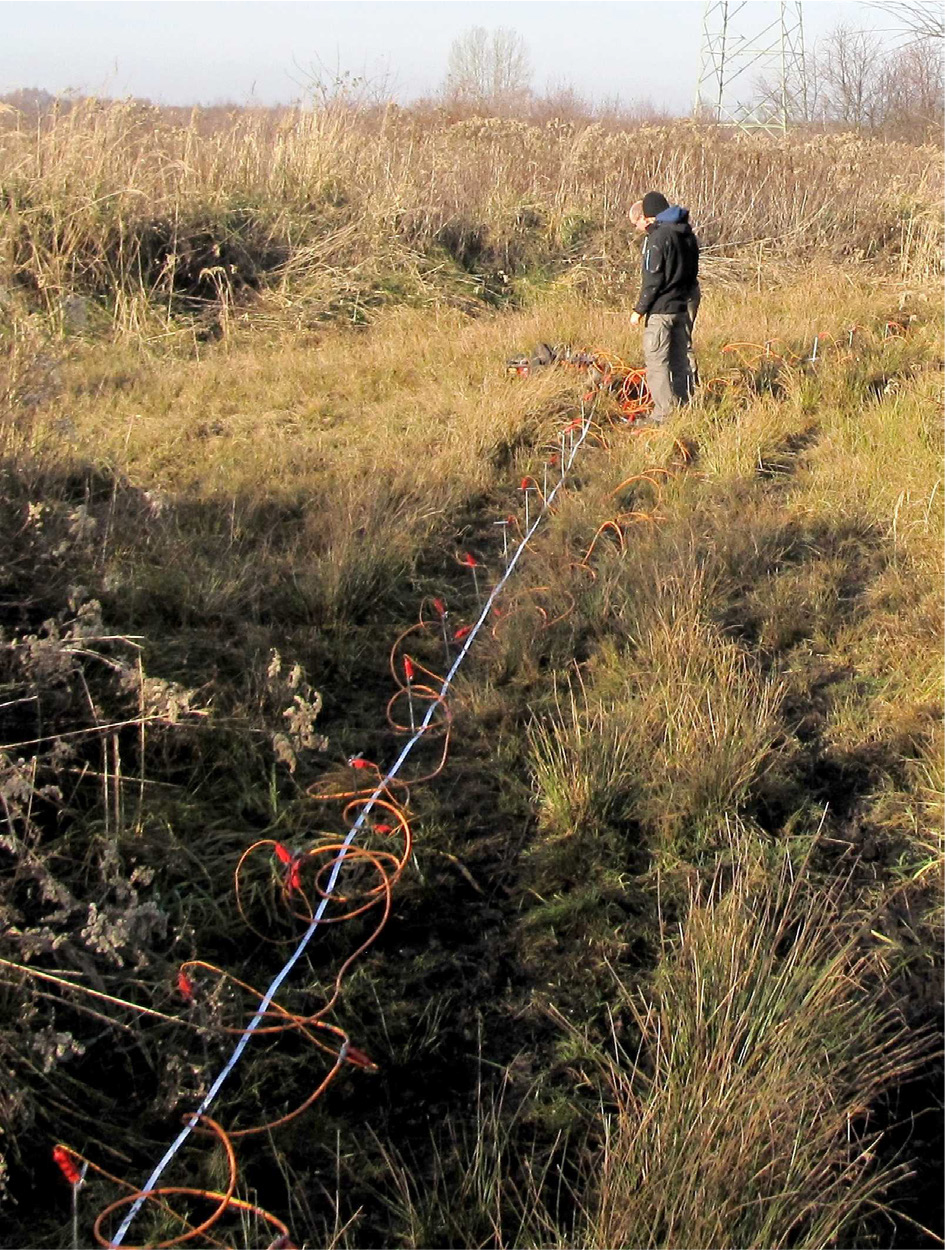
Fig. 5.
Electrical resistivity tomography using ABEM’s LUND Imaging System (photo: J.M. Waga).
In order to obtain high-resolution images down to 10 m below ground level, electrodes were driven into the ground at 1 or 2 m intervals, 0.2 m deep, along 40-or 80-metre sections. General characteristics of the methods applied are shown in Figure 6. During the comparative analyses, data obtained using different methods were superimposed along the profile lines.
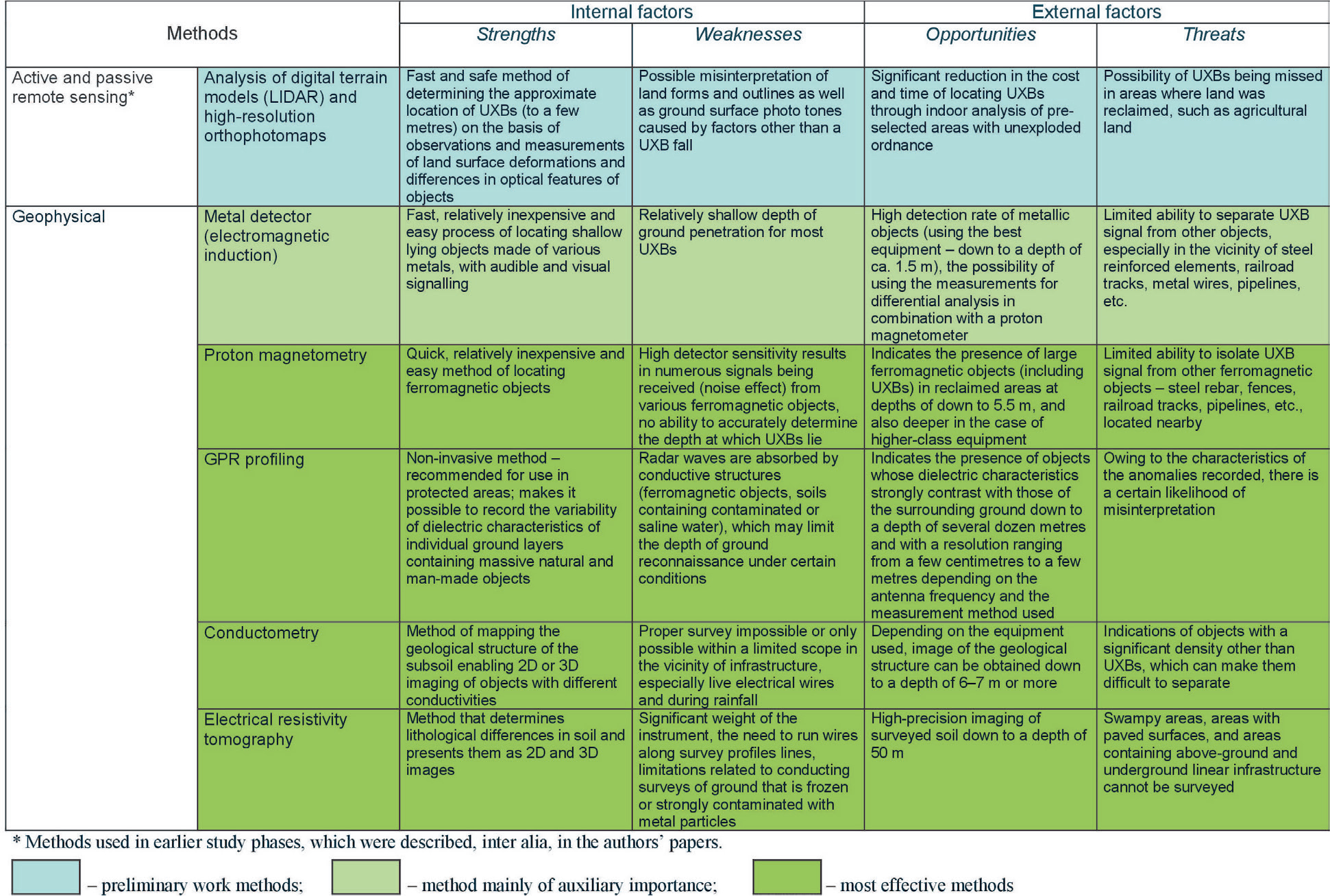
Fig. 6.
Characteristics of methods used to locate UXBs (in SWOT terms).
The distribution of experimental areas and the location of measurement routes involving different equipment were strongly influenced by land cover, and primarily by the presence of crops at various stages of growth, the presence of clumps and larger clusters of shrubs, dense reed beds, or dense goldenrod (Solidago spp.) patches. It was found that from the point of view of vegetative development, the optimal period for this type of study is late autumn, dry, frost-free winter, and early spring.
Results and discussion
During field prospecting conducted in an area of about 4.5 hectares using the PM and the MD, 34 sites were identified where the presence of large ferromagnetic objects in deeper ground layers and several hundred objects lying on or just below the surface was indicated. The latter included parts of agricultural and forestry equipment and implements, crowbars, building components, rebar, mesh wire, barbed wire, rope sections and power connectors (cf. Pospíšil et al. 2022), as well as the aerial warfare remnants (Fig. 7A), including almost exclusively shrapnel and fragments of exploded general purpose and incendiary bombs (Fig. 7B). Lumps of old metallurgical slag and a fragment of basaltoid rock (oral information from J. Burda) with ferromagnetic properties were found as well (Fig. 7C) (cf. Arbeitskreis… 2018). The basaltoid rock fragment could have been transported by the Odranian ice sheet from the vicinity of the volcanic cone of St. Anna’s Hill, 17 km away.
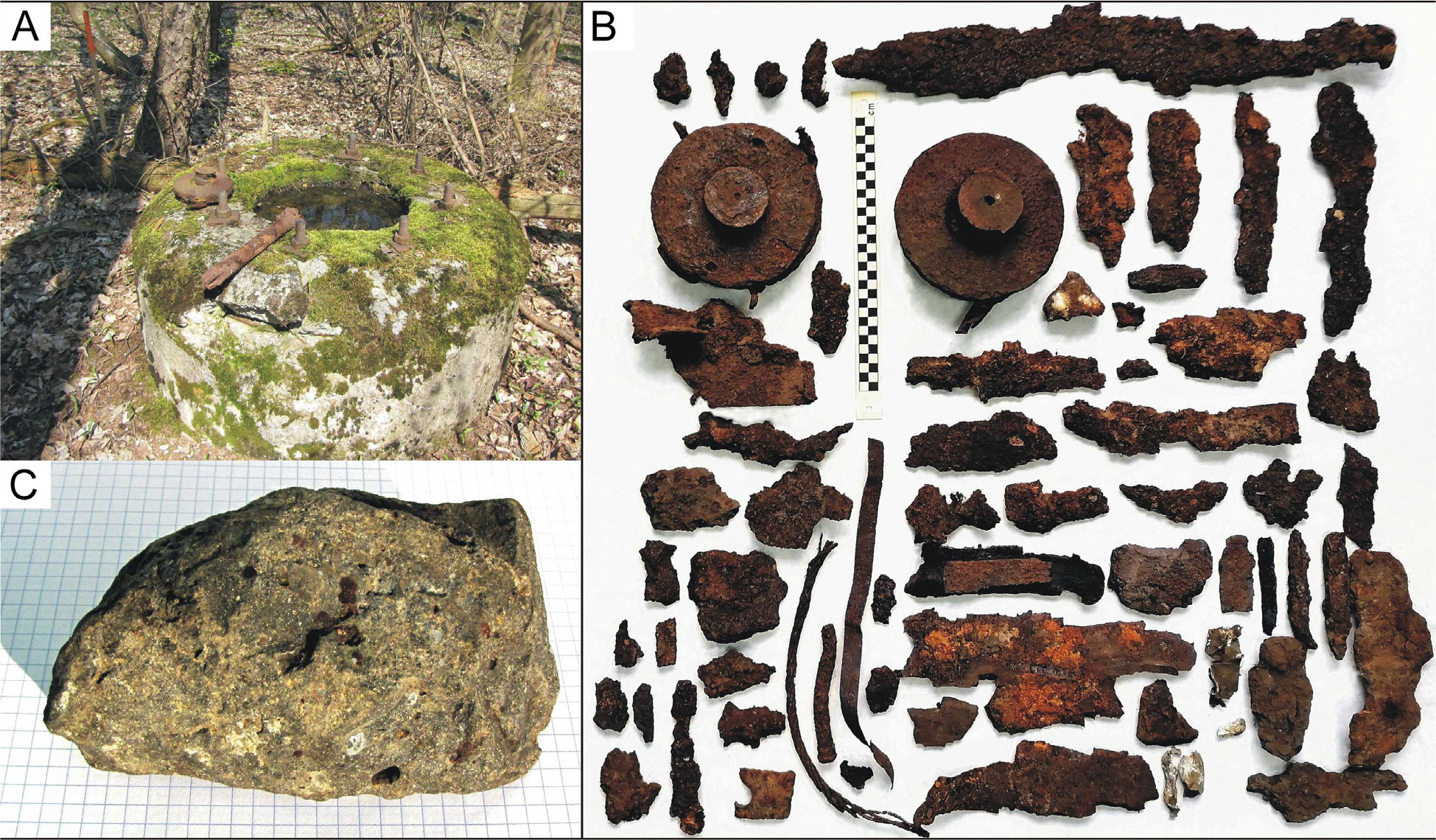
Fig. 7.
Examples of surface finds identified using the proton magnetometer: A – tail base plug of 500 lb bomb with tail fuse fragments and a peg made of steel pipe lying on the concrete base of a 75mm Flak 97 gun that was part of Schwere Heimat-Flak-Batterie 212/VIII Alt Cosel; next to those, an orange stake marking a future development project (photo: J.M. Waga); B – fragments of bombs, of a power line and possibly of a B-24 plane (photo: B. Szypuła); C – Rock fragment with ferromagnetic properties (photo: J.M. Waga).
During the PM surveys in marshy areas in early 2023, when the groundwater level was high, ferromagnetic signals were recorded at several locations. In late summer, however, these readings could not be reproduced. They were not confirmed by conductivity tests either. An analysis of the geological formations overlying the area suggests that the signal could have come from an ortstein layer or a lens of bog iron ore, which responded differently under moist and dry conditions.
The PM used in the survey was found to be a device, which was susceptible to the presence of even small ferrous or ferromagnetic objects in the vicinity. The abundance of bomb debris and scrap metal of various origins situated at shallow depths (0.4–0.5 m) in the study area results in information noise (cf. Note et al. 2019). A special program for distinguishing magnetically susceptible objects can be used in such circumstances (e.g., Fernández 2010). In areas earmarked for development or mining where the near-surface layer was already checked by sappers after World War II, the optimal procedure appears to involve the removal of the topmost humic layer of soil before conducting deeper geophysical surveys. Moreover, the removal of this layer is mandated in Poland by the Law of 3 February 1995 on the Protection of Agricultural and Forest Land (2022).
The objects in question are sometimes buried deep under the surface, but they are also relatively large and thus instruments with relatively lower signal resolution can be used compared to those required in searches for improvised explosive devices (IEDs) made with very small metallic parts or in archaeology for accurate mapping of the object’s shape (Arbeitskreis… 2018, Barrowes et al. 2019). Using the ECM1, single profiles (with a total length of about 300 m) were traced through selected points indicated by magnetometer surveys in difficult, heavily vegetated terrain. In some cases, the presence of anomalies was confirmed (Fig. 8) related to, for instance, a section of a decommissioned, unrecorded World War II-era water pipeline as well as an object that could have been a UXB and also sediment stratification disruptions that could have been remnants of an underground channel left by a drifting UXB. Area surveys covering a total of 2,200 m2 were carried out as well. Signals suggesting the presence of potential UXBs were picked up in two experimental areas, which were also confirmed by the GPR and the PM.
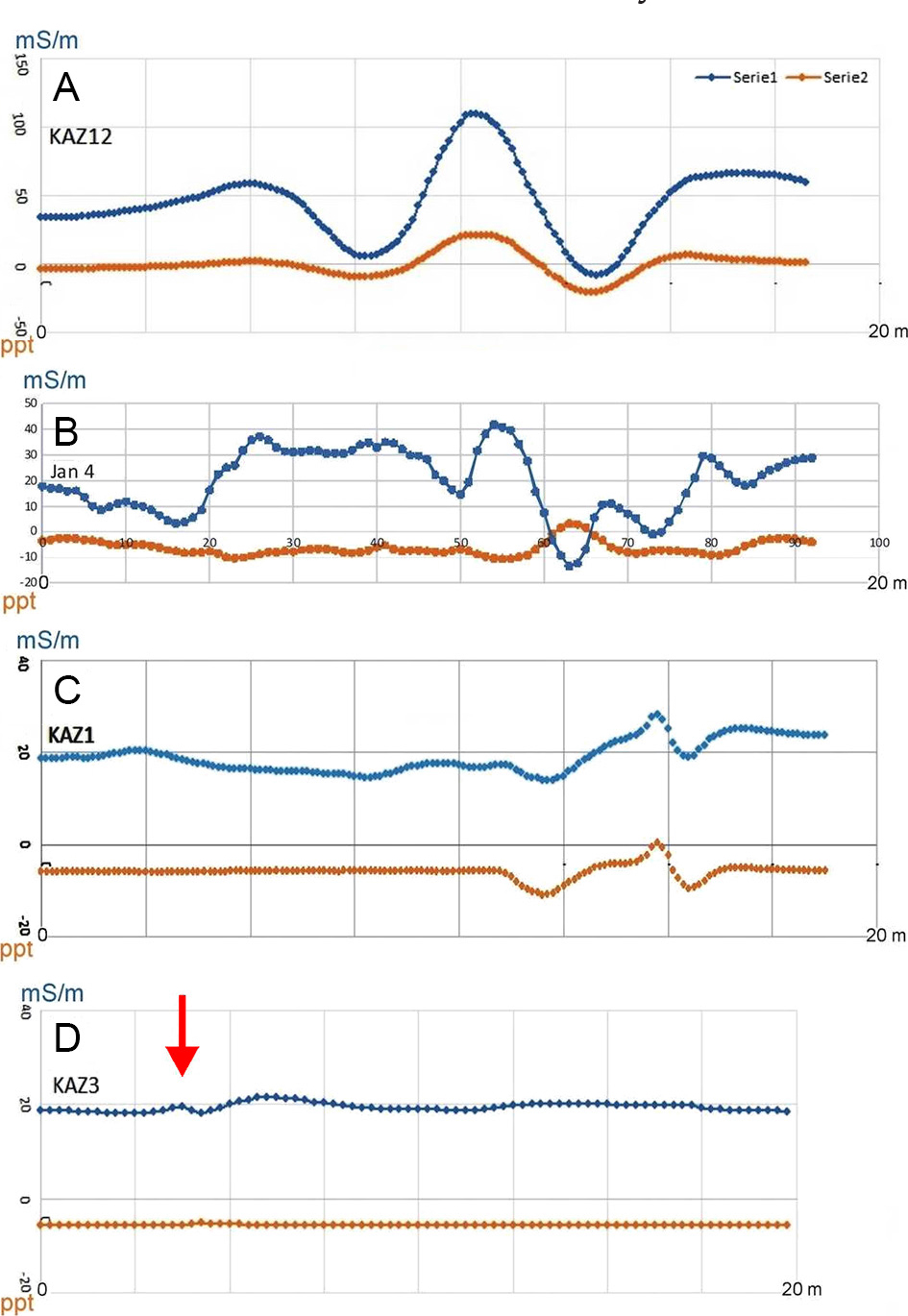
Fig. 8.
Conductivity profiles from measurements performed using the Geonics EM31-MK2 instrument. Serie 1 – apparent conductivity, Series 2 – magnetic component – in-phase. Anomalies indicating: A – the presence of a steel pipe from a former water pipeline; B – presence of shrapnels in a buried crater after a detonated bomb; C – the potential presence of UXB; D – likely drift channel trace (anomaly indicated by a red arrow) located between the UXB inlet crater and its location.
Very good results were obtained in tests carried out using a CMD-Explorer conductivity meter over an area of 800 m2. Importantly, this device can indicate the depth range and position of a potential UXB (Fig. 9) (cf. Katzsch 2009, Pospíšil et al. 2022). It also works well in the first prospecting stage, but due to the considerable length of its antenna (4,855 mm), its use is basically limited to open areas, as it is almost impossible to manoeuvre the antenna between trees and bushes along forest survey profiles.
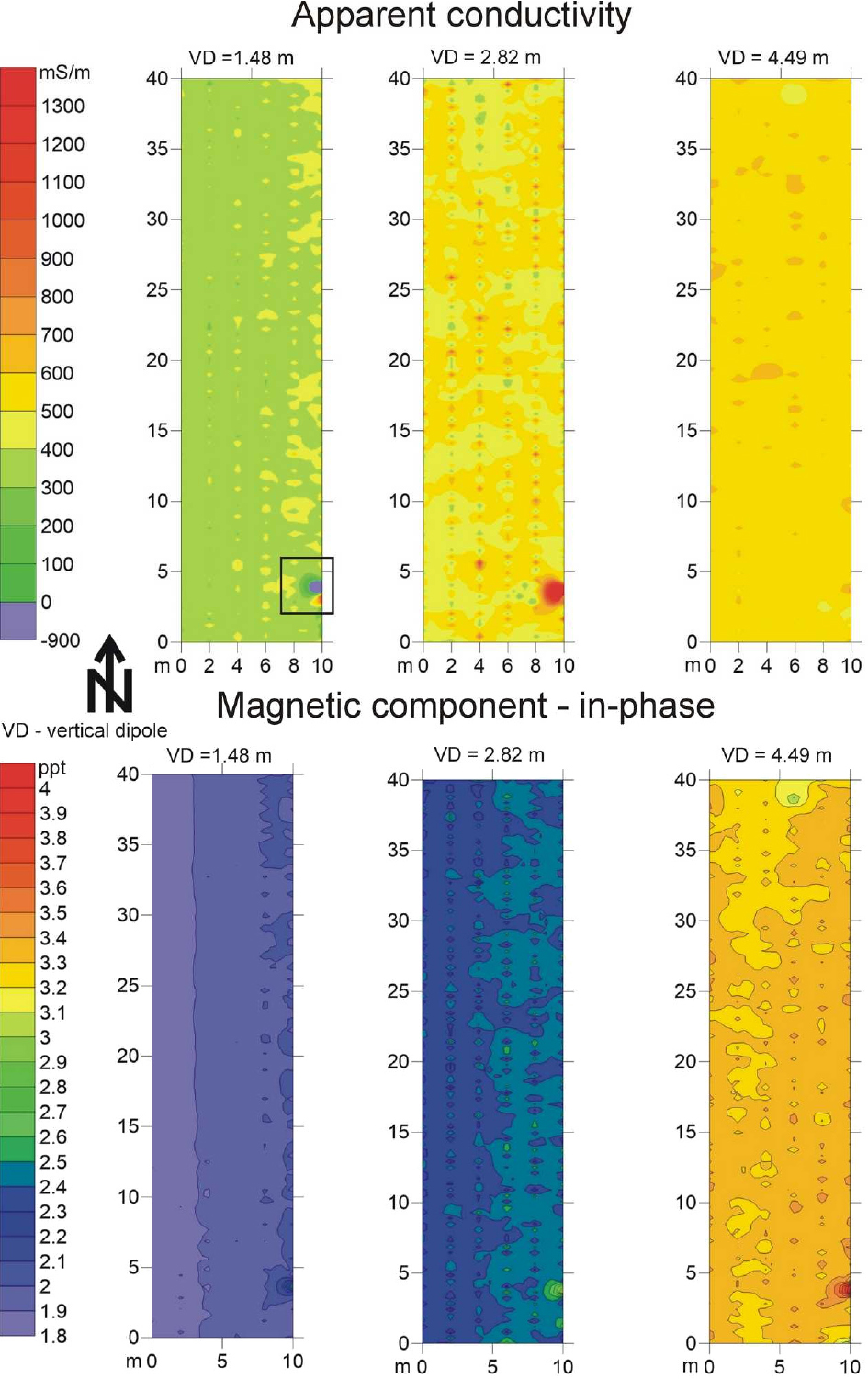
Fig. 9.
Layered map generated from CMD-Explorer conductivity meter readings with a potential UXB identified (location marked with a square).
Although the conductivity value and the magnetic component of the anomaly identified with the CMD-Explorer conductivity meter suggest the nature of the object found in the experimental area (–900 ÷ 1300 mS · m−1), it was assumed that its ferromagnetic characteristics would need to be verified with a proton magnetometer. However, before all tests could be completed, the object detected was removed by the land user from under the exploited sand pit wall, from a depth of 4–4.5 m below the ground surface.
GPR surveys included 30 profiles with a total length of 2,150 m in two experimental areas. Those profiles ran, inter alia, through the points indicated by the magnetometer. The longest profile was 209 m long, and the shortest one was 28 m long.
In flat open areas that were free of obstacles, tomography was performed along parallel lines, while in forested areas, relatively even routes were picked between trees and shrubs. All routes were recorded by the device’s internal GPR. A series of inverted parabolas were identified on 2D images (Fig. 10), which corresponded with magnetometer indications.
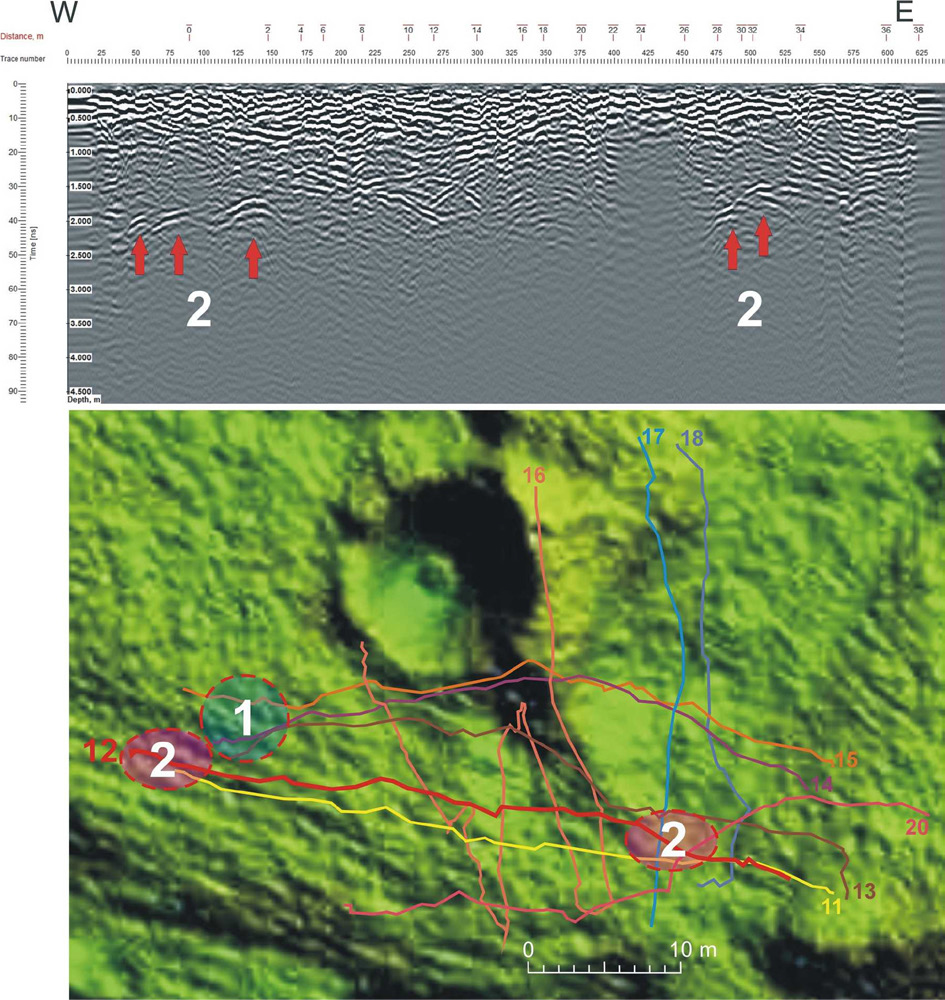
Fig. 10.
GPR profiling in a forest area: 1 – UXB fall site remodeled by later earthworks, 2 – subsurface object zones, 11-20 – profile lines.
Electrical resistivity tomography measurements were performed at two sites. The first site lies within experimental area 3; it is even and waterlogged. A ground structure 8 meters in diameter, symmetrical in its vertical axis, reaching a depth of 5.0 meters, was identified there (Fig. 11A). In its lower section, resistivity ranged from 10 to 220 ohm · m−1, and in the upper section it ranged from 10 to 2,000 ohm · m−1. It is probably a filled crater left by an exploding bomb (cf. Waga 2022b). The filling of its lower part is a material with poorer conductivity. However, in the upper part there are many fragments of various sizes from the bomb shell, as indicated by signals received there during GPR, magnetometric and conductometric tests (Figs 8B, 11B). This structure is situated between two craters formed by unexploded bombs, which are 14 and 20 meters away. Both these small craters are currently filled with silt and organic material.
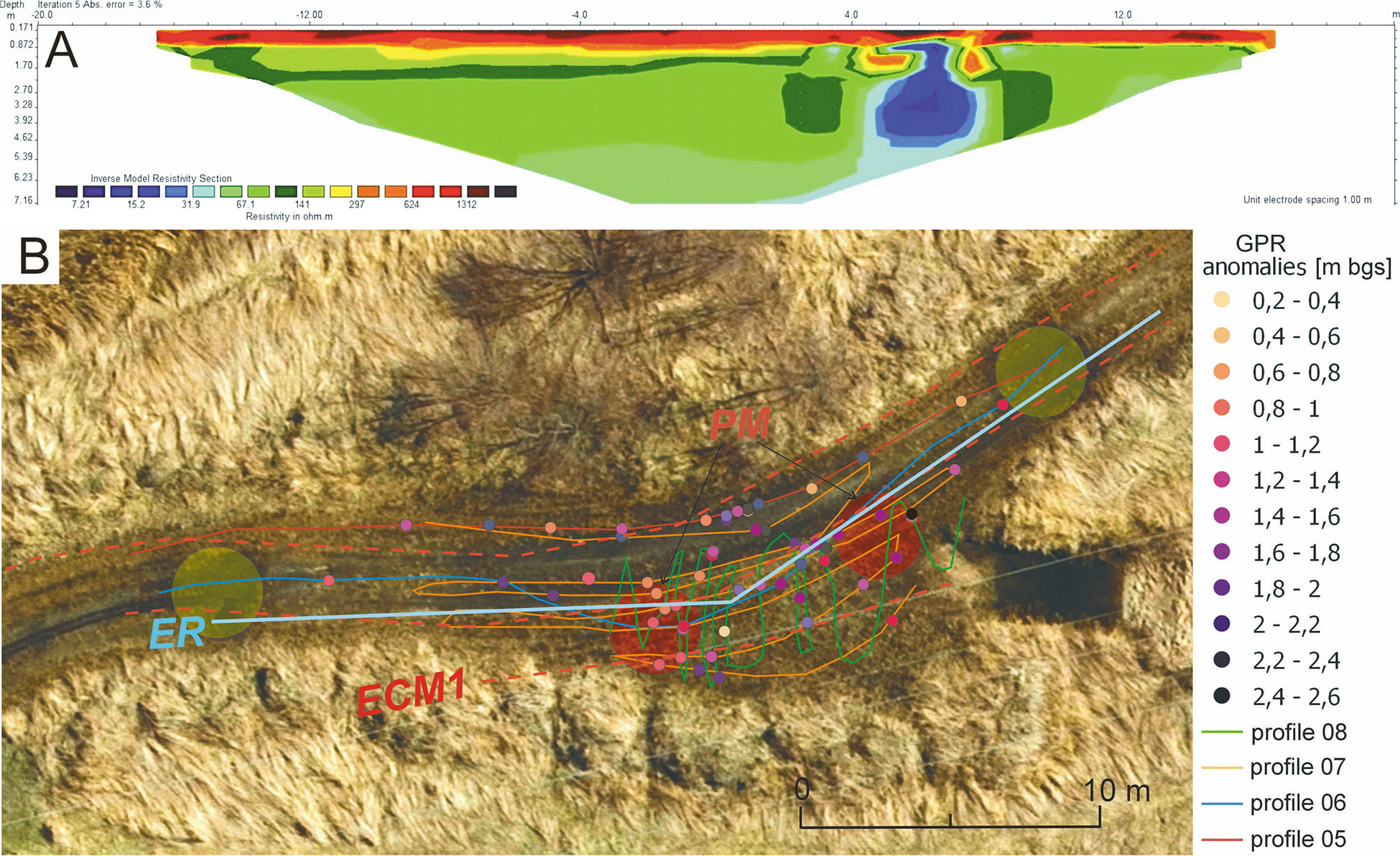
Fig. 11.
Experimental area 3: A – diagram presenting electrical resistivity tomography results obtained in a wetland; B – profiles lines ECM1, GPR, ER and two concentrations of PM signal occurrence (red circles). Large yellow circles – probable remnants of the UXB fall. The profile described as ECM1 is shown in Fig. 8B.
The second site is situated in experimental area 2, in a zone strongly transformed by human activity since at least the Middle Ages, which is heavily contaminated by metallurgical slag. The slag was used to fill land depressions and was also spread on the surface of the terraces in the vicinity of the former smelter. Its presence makes it difficult to interpret not only the results obtained from electrical resistivity tomography measurements, but also the results of other geophysical surveys.
The authors are not qualified sappers, and thus, the study of the objects located did not proceed further. As the authors could not excavate the objects or use other invasive methods to confirm their nature, they passed on information about the presence of potential UXBs to the relevant authorities responsible for public safety.
The use of conductivity meters (especially the CMD-Explorer) and GPR yielded very good results during the search for UXBs. The ferromagnetic characteristics of the finds were confirmed with a proton magnetometer, which was also used for preliminary field prospecting. In the area free of metallurgical slag, where soil and water conditions allowed a survey profile to be developed, electrical resistivity tomography measurements yielded interesting results.
In various soil and water conditions, geophysical methods sometimes give ambiguous results. Therefore, it is advisable to use more than one method in research. The complementary use of various methods, especially in places at risk of the presence of UXB, will allow for obtaining more reliable results.
Studies conducted using all methods tested indicate the need to perform UXB search and identification work before any foundations are laid and even before any installations and equipment are placed on the building site, since these cause changes in readings, sometimes even preventing meaningful measurements. During field work, it was found that locating a UXB’s resting point using just a single profile derived from the crater where the unexploded ordnance fell was difficult. Such tests were carried out in locations heavily overgrown with shrubs and in reed beds where no area surveys could be conducted without clearing the area in question. The difficulty arises both from the fact that the bomb’s precise flight path is not known (it is similar to the path of the aircraft’s approach to the target, modified by the wind) as well as from different ground structures and the obstacles they contain. As the distance from the inlet crater grows, these factors can significantly deflect the horizontal drift path of the UXB. The most difficult cases involve sites that were bombed repeatedly and the azimuths of multiple “strike paths” with bomb release controlled by intervalometers intersect or sites where large numbers of bombs were dropped on a single location. Therefore, geophysical surveys in development areas should be carried out using an area-based method rather than along single profiles, and these surveys should cover areas that are appropriately larger in relation to the area of future development.
Studies conducted in diverse environments in the Koźle Basin make it possible to outline the general picture and put forward a mechanism explaining the failure of the bombs dropped there to detonate. In most cases, this was not caused by faulty fuses (e.g. Miller 2017), but rather the nature of the land cover and soil and water conditions in the area (Fig. 2B). Where buildings were present in the area or more compact formations (massive silts and glacial tills with boulders) were present at low depths, the bombs usually exploded, but in places where less compact formations occurred (waterlogged fluvial deposits such as sands, organic silts and peats or aeolian sands forming dunes), explosions often did not occur. In palaeomeander channels, bombs exploded only infrequently – when they hit black oak trunks, the bottom of the former river channel that consisted of gravel and rocks, or parts of subsurface linear infrastructure.
In locations that were bombed, areas with less compact, waterlogged deposits should be treated as particularly risky from the point of view of unexploded ordnance. Meanwhile, in a low-lying area in the vicinity of one of the experimental areas, preparations for suburban development are underway. These preparations consist in covering marshy areas with CHP plant ash and sand. Apart from the fact that deeper subsoil layers were not checked by sappers as required, another problem emerges there: the leaching of salts from ash and the resulting increase in the electrical conductivity of the groundwater, which adversely affects the potential unexploded ordnance present in the area. Underground migration of salt solutions was probably one of the reasons for the spontaneous detonation of one of the UXBs (Fig. 12). The electrical conductivity of surface water measured at the explosion site is more than 6,000 μS/cm (oral information from T. Molenda).
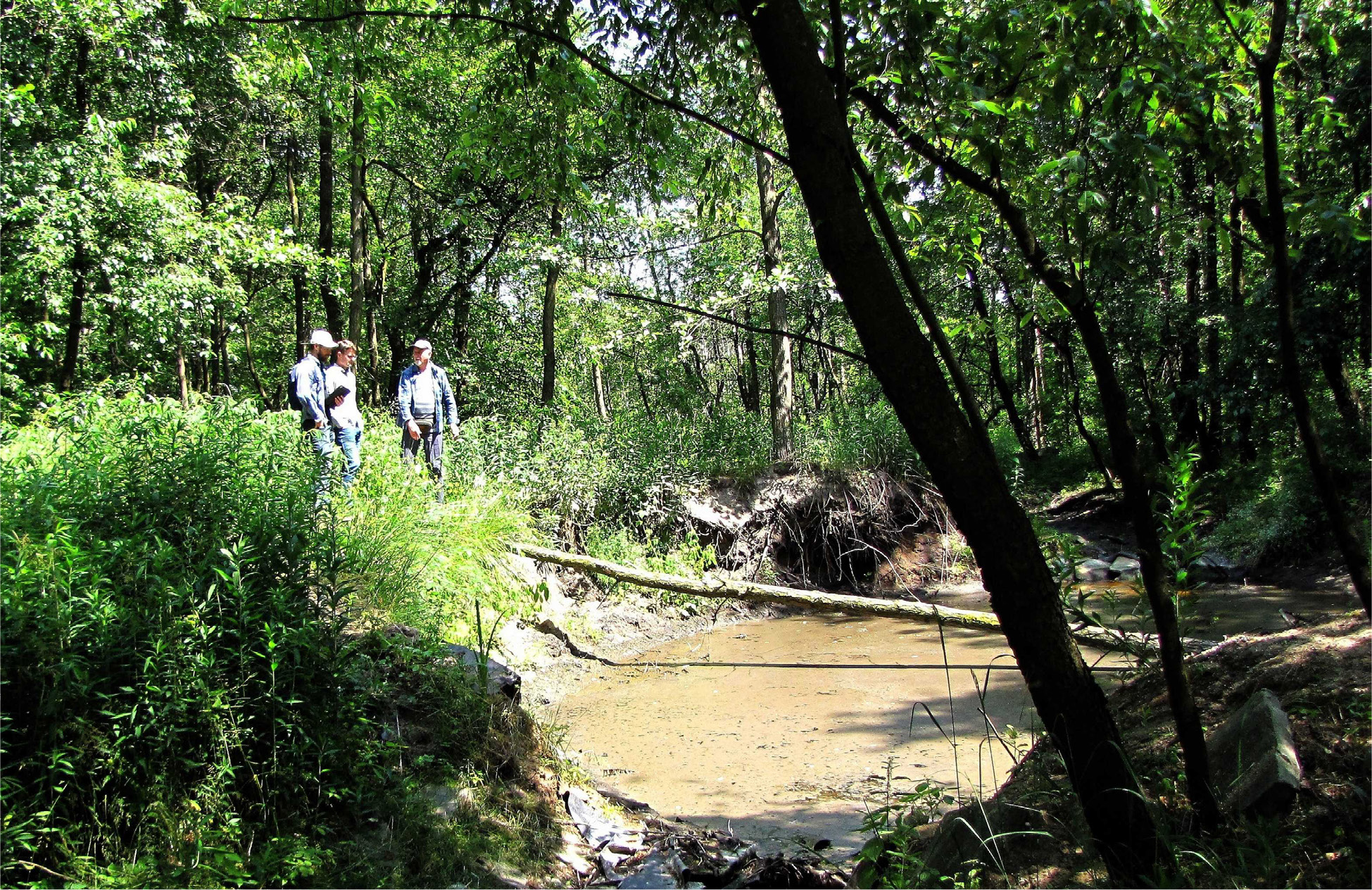
Fig. 12.
Authors in the vicinity of a crater formed as a result of a spontaneous UXB explosion in late 2021/early 2022 (photo: J.M. Waga).
Siting buildings or large pipelines (e.g., gas pipelines) close to unexploded ordnance or above them may result in an explosion as a result of construction activities (pressure, vibration, and shocks) or later, at the infrastructure operation stage. When such explosions occur, important considerations include not only a direct hit by bomb shrapnel, but among other things, the rapid movement of quicksand formations within the ground. When this occurs in the vicinity of a pipeline, it causes a phenomenon similar to a mud volcano, which was already observed in 1939 by Trusheim (1940), and results in the pipeline being warped horizontally and structurally weakened (Bartolini et al. 2015, Liu 2019). As a result of the impulse pressure created, the gas pipeline may also be displaced to the ground surface, since the pipeline is lighter than the surrounding soil. Such changes in the pipe profile may cause leaks that result in gas being released and ignited. In this case, the spatial context is also very important, since other nearby facilities may pose serious threats as well, and residential zones, workplaces and passenger transportation routes may also be present in the vicinity (Trzciński, Hańderek 2015). Decisions on the location of buildings and the use of certain construction technologies in former bombing zones should be reviewed, and regulations should be tightened.
Conclusions
In the Kędzierzyn-Koźle agglomeration, there is considerable interest in vacant development areas as well as the need to route new infrastructure through previously unused areas. The reasons for the cautious approach adopted to date with respect to using these areas for development included safety concerns and the lack of adequate testing instruments. Moving away from this land management model requires carrying out proper surveys and subsequently deciding whether to neutralize the UXBs discovered or move the planned development to another location. As research has demonstrated, there is now effective geophysical equipment capable of identifying locations where unexploded ordnance is present deep in the ground, and there are also methods for verifying this information. It is necessary to carry out deep ground surveys (deeper than 2 meters below ground level) to examine the zone where most of these dangerous objects are found. Cooperation between scientific centres that have the requisite research capabilities and sapper services is necessary, among others, in order to develop a detailed description of UXB locations and to determine the environmental conditions related to UXB occurrence.
Knowledge related to locating and identifying dangerous military ordnance remains relevant not only in the context of the legacy of World War II, but also with respect to modern military conflicts.
Acknowledgments
The authors would like to thank members of the Blechhammer – 1944 Association for important historical information and for preparing the site for geophysical surveys, Professor Jolanta Burda for her petrographic analyses, and Professor Tadeusz Molenda for field hydrochemical measurements. The research activities and publication co-financed by the funds granted under the “Inicjatywa Doskonałości Badawczej” in competition “Swoboda Badań III” at the University of Silesia in Katowice. The authors would like to thank the anonymous reviewers for their comments on the article.
Notes
[1] Contributed by Authors’ contributions
J.M.W., K.S.: conceptualization; J.M.W.: methodology; M.G., K.J.: software, validation; M.G., J.P.: formal analysis; J.M.W., K.S., M.G., K.J., J.P.: investigation; J.M.W.: resources; M.G., B.S.: data curation; J.M.W.: writing - original draft preparation; B.S., M.F., M.D.: writing - review and editing; J.M.W., B.S.: visualization; M.D., M.F.: supervision; M.F.: project administration; J.M.W., M.F.: funding acquisition. All authors have read and agreed to the published version of the manuscript.