
Introduction
The main objective of this research is to determine the resilience degree of the school education system to the COVID-19 pandemic crisis by empirically identifying the extent of schools’ adaptation efforts to new operating conditions in the first year of the pandemic, i.e. during the period of the most significant shock associated with the suspension of classes in school buildings and their transfer to a virtual environment. This research also required the adoption of a customised research methodology related to developing contextual resilience indicators. In addition, we will try to demonstrate spatial differences in the adaptation activities that build the resilience of the education system in geographical terms within the subregional system (poviats [counties]) in the Wielkopolska region, Poland.
The presented article is part of the research trend concerning the spatial dimension of socio-economic transformations towards smart, sustainable, and resilient regions – the 8th Central European Conference in Regional Science, convened in 2022 under the significant title ‘Resilience of cities and regions in an uncertain time’1 can be a testament to the relevance of this research direction. This relatively new research direction has gained importance as a result of the outbreak of recent social crises, such as the COVID-19 pandemic, armed and hybrid conflicts, migration crises, as well as natural disasters, although the most intensive development of research on regional resilience took place after the outbreak of the 2008–2010 financial crisis (Gong, Hassink 2017). Emerging crises reveal the systemic fragility of the contemporary world and thus trigger a discussion on the resilience of regions and their socio-economic systems, which is perceived as a form of defence against unexpected events disrupting their functioning. Various research contexts, including geographical sciences, address issues related to the resilience of regions and social systems. In the field of human geography, the analysis focuses primarily on the regional differences in individual crisis phenomena and very different aspects of their course depending on geographical conditions, especially location and neighbourhood (Davies 2011, Martin 2012, Williams, Vorley 2014, Wink 2014, Masik, Rzyski 2014, Han, Goetz 2015, Masik, Sagan 2016, Masik 2019, Szendi et al. 2022). Based on the published discussions on regional resilience, it can be concluded that one of the most important research problems that emerge with subsequent crises is finding answers to general questions: what factors determine the resilience of individual regions to emerging crises, and what social mechanisms should be activated or supported to strengthen the resilience of regional socio-economic systems to emerging threats?
The outlined research problem is very broad and multidimensional, as evidenced by, among others, the innovative approach to resilience issues in the field of human geography presented by Clark (2024) – a multi-systemic approach, integrating infrastructural, social, ecological, and vertical/volume-aware dimensions.
Our study focuses only on resilience in one of its dimensions, i.e. the school education system. This is a crucial component of the social system as it covers a significant part of society. It is based on the cooperation of many stakeholders: students, their parents and families, teachers, school management, and the governing bodies. Moreover, as empirical research shows, the education system can be positioned as a preventive, adaptive element that builds social resilience (Cerulli et al. 2020).
The choice of addressing social resilience in education was primarily dictated by the recent COVID-19 pandemic crisis and the associated significant disruptions to socio-economic life, which brought new experiences and changes to the functioning of many social institutions, including educational ones. A detailed analysis of practical measures taken to adapt education to pandemic conditions can contribute to a better understanding and explanation of social phenomena in the post-pandemic era, such as changes in access to education, the transformation of education (e.g. innovative educational offerings), and the problems of marginalisation and educational exclusion. These issues constitute an important research feld in human geography. Furthermore, from a geographical perspective, it is interesting to examine how global changes (such as the COVID-19 pandemic) influence changes at local and regional scales.
It is also important to note that the concept of resilience provides a useful analytical framework for human geography, particularly for examining how communities and places respond to disruptions, changes, and crises. However, it is crucial to consider spatial scales, relationships, and context, as Wilson (2018: 95) states that ‘resilience-building processes are spatially heterogeneous,’ and the conceptualisation of resilience in human geography is conducted at various spatial scales. The present article focuses on regional and subregional scales and, within this framework, offers an analysis of social resilience in school education based on empirical research. Thus, the presented study is essentially empirical, although it is grounded in concepts of resilience established in the extensive literature on human geography.
Regional resilience in the context of social structures and its relevance to school education systems
Regional resilience is mainly used in contemporary analyses of regional development. Given the uncertainty and crises of the present era, it has become one of the key concepts in both economic practice and building strategies for ‘long-run regional growth’ (Martin, Sunley 2015). Borucka and Ostaszewski (2008) point out that the term resilience was introduced to the dictionary of social sciences by pioneers of research on children in clinical experiments, and they refer, among others, to research by the American psychologist Emma Werner, conducted since the 1950s. Thus, the term resilience is primarily associated with human resilience through positive adaptation to environmental conditions. Nevertheless, as the authors noted above, this concept also refers to local communities or entire regions and countries. According to Gong and Hassink (2017), in recent years, the concept of resilience has been applied to a broader range of issues, not only related to regional resilience, but also sectoral/industrial resilience or labour market resilience.
Gong and Hassink (2017) indicate publications in a special issue of the Cambridge Journal of Regions, Economy and Society, published in 2010, as the main conceptual basis for regional resilience, which gave rise to the development of the concept in subsequent publications (e.g. Martin 2012, MacKinnon, Derickson 2013, Bristow, Healy 2014, 2020, Boschma 2015, Brakman et al. 2015, Martin, Sunley 2015, Weichselgartner, Kelman 2015, Gong, Hassink 2017, Cainelli et al. 2019, Masik 2019, 2022a, b, 2024, Xiao et al. 2018, Antonietti, Boschma 2021, Clark 2024).
The majority of publications on regional resilience refer to the economic sphere, which is quite precisely defined. According to Martin (2012:10), regional economic resilience is “the capacity of a regional economy to reconfigure, that is adapt, its structure (firms, industries, technologies and institutions) to maintain an acceptable growth path in output, employment and wealth over time”.
In recent years, however, the social dimension of resilience has become an increasingly important area of interest for researchers given the consequences of various threats. An example of a relatively new area of research in social sciences, including socioeconomic geography, is research on social resilience in the context of the health crisis associated with the COVID-19 pandemic (see, e.g. Kimhi et al. 2020, Alizadeh, Sharifi 2021, Fraser, Aldrich 2021, Champlin et al. 2023, Masik 2024, Schubert et al. 2024). The first works on social resilience were presented at the beginning of the new century by Adger (2000: 347), who defined it as “the ability of groups or communities to cope with external stresses and disturbances as a result of social, political, and environmental change”. Research on social resilience emphasises the importance of livelihoods, i.e. material resources, but also other resources and capital that help overcome threats or adapt to crisis conditions (Speranza et al. 2014). Among the distinguished types of capital (including human capital, community capital, cultural capital, social networks, and social trust – see Alizadeh, Sharifi 2021), a special role is attributed to social capital. According to Masik (2024), a region’s social capital, based on strong social ties and good relations between residents and local authorities, administration, or leaders, enables better information exchange, joint actions, and better support in the event of threats, creating so-called ‘informal insurance’. Antonietti and Boschma (2021) indicate that social capital makes societies more resilient to shocks.
When characterising the concept of resilience, it should be also noted that it refers to various dimensions and components and their interconnections, which allow for better interpretation. In addition to the dimensions of economic and social resilience already mentioned, the literature distinguishes environmental and institutional dimensions and various spatial scales of resilience. These aspects were synthetically presented by Masik (2022b). Within the aforementioned dimensions and components, resilience is interpreted as the ability of systems to resist, absorb, and adapt to external and internal disruptions, and also refers to the system’s adaptive capacity and transformation.
It should also be noted that in many studies, the term ‘resilience’ is identified with the concepts of ‘adaptation’ and ‘adaptability’. These two concepts, in turn, are characteristic of the evolutionary approach to the concept of regional resilience, presented in detail by Bristow and Healy (2014, 2020) and Boschma (2015). Evolutionary resilience, or adaptive resilience, assumes that systems can evolve independently, adapt to new conditions, and spontaneously reorganise their internal structure in response to external shocks or a recognised critical state. The second approach to resilience research is the institutional-functional approach (Bristow, Healy 2014, Masik, Sagan 2016, Masik 2018, 2022a). This approach assumes that local and regional authorities, as well as local and regional representatives of various institutions, play an active role in shaping regional resilience. Decision-makers’ key role stems from their knowledge of and familiarity with the specific characteristics of a given area, enabling them to assess the vulnerability of individual economic components to crises and assess development risks and opportunities. Building institutional resilience requires good leadership, significant public resources, cooperation with central and local government bodies, and an open approach to participation (OECD 2014, Figueiredo et al. 2018).
The synthetic outline of the resilience concept presented above is not intended to be a comprehensive discussion of all the approaches and aspects of this phenomenon widely presented in the literature (e.g. we have not addressed the extensive literature on various aspects of urban resilience). We have merely attempted to highlight those aspects and conceptual approaches that can be used in this study to build a conceptual framework for the issue of school resilience analysed in this article.
Given the presented outline of two perspectives in regional resilience research: the evolutionary and institutional-functional approaches, the evolutionary approach, which is related to adaptive resilience, seems most relevant to the research topic. It makes it possible to identify actions that led to changes in the functioning of the school education system during the COVID-19 crisis and its effective adaptation to new conditions. In turn, the institutional-functional approach opens up certain possibilities for interpreting the obtained results, related to the search for factors that strengthen the resilience of the education sector through adaptive actions and by mitigating the effects of the pandemic crisis as a result of interventions by local governments and state administration.
In our analysis, resilience is therefore understood as the ability to undertake adaptive measures by addressing challenges in school education caused by the outbreak of the COVID-19 pandemic, which are intended to achieve stabilisation in the shortest possible period and enable further development. Achieving stabilisation can be interpreted in this case as the ability to continue teaching processes after the announcement of the lockdown and the interruption of in-school learning (March 2020) and to conclude the school year successfully, i.e. by completing the mandatory curriculum (June 2020). Further development, on the other hand, should be understood as the ability to continue teaching processes in the following school year and under the new conditions of the recurring pandemic crisis.
The presented concept of the analysis of the adaptive resilience of the education system assumes ex-post research, which is related to empirical studies conducted after the outbreak of the pandemic and after schools had undertaken adaptive measures, including after receiving fnancial support from the Ministry of Education and local governments as the administrative bodies responsible for schools in Poland.
Conceptual and methodological framework
Research area: Justification and key facts
The rationale for choosing this region as the research area is primarily its geographical potential – it is one of the largest administrative units in Poland at the NUTS 2 level, i.e. it ranks second in the country in terms of size (29,826 km2) and third in terms of population (3,500,030 inhabitants). The Wielkopolska region can also be considered an exemplary research field for analysing the effects of the COVID-19 pandemic on education in Poland, because, as indicated by earlier analyses (Ptaszek et al. 2020, Plebańska et al. 2021, Report of the Minister of Education and Science 2021), the changes shown in education in the first year of the COVID-19 pandemic were characteristic of all regions of Poland. This was mainly due to the centralisation of education management by the Ministry of Education and Science and the legal acts issued in this regard, binding throughout Poland, in all its subregions and regions.
The research was conducted in the subregional system of 35 poviats (NUTS 3), including four cities with poviat rights, namely: Kalisz, Konin, Leszno, and Poznań (the region’s capital) (Fig. 1).
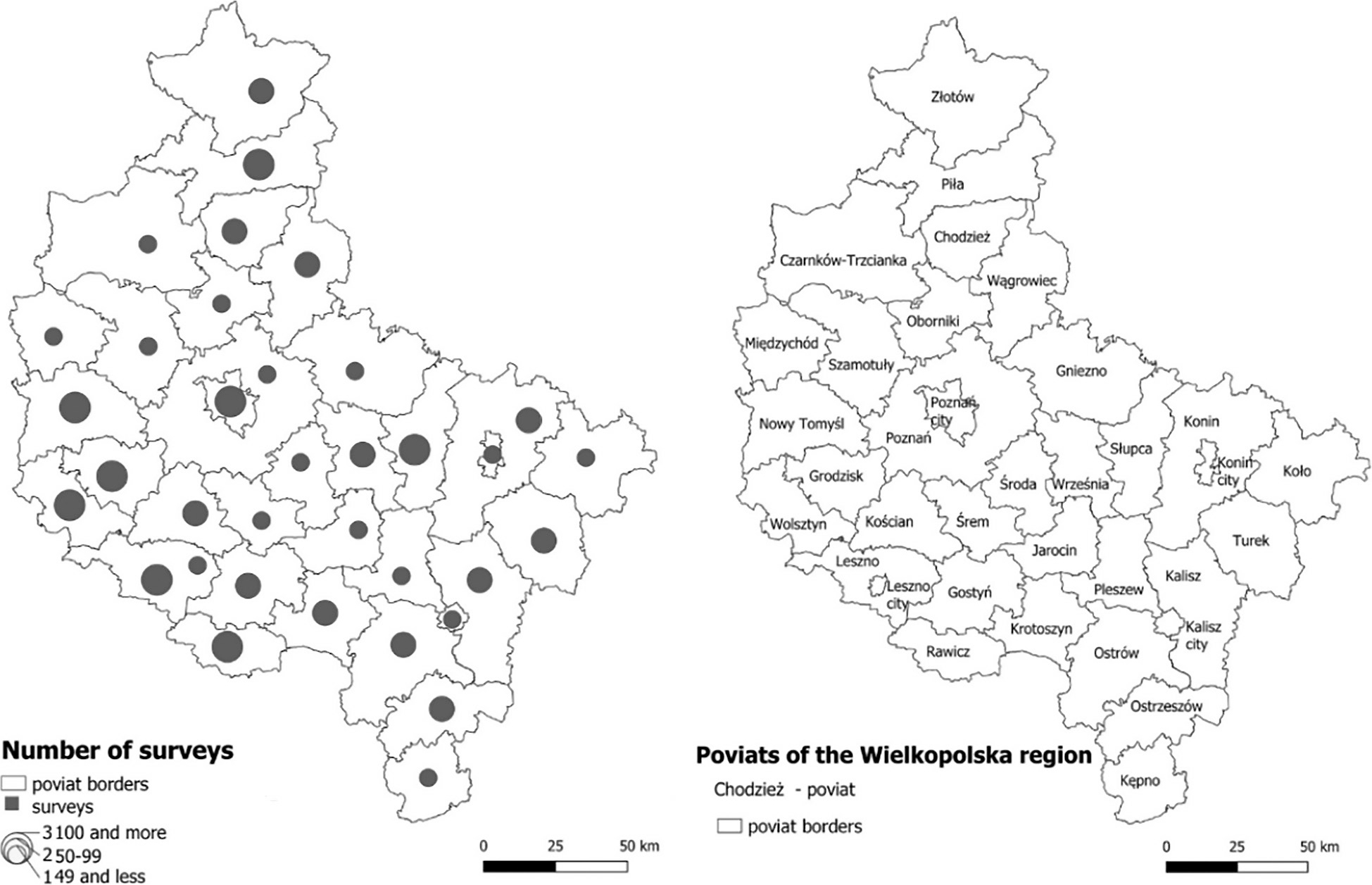
Fig. 1.
Wielkopolska region – the number of surveys and poviats (counties).
Structure of the article
The article focuses on finding answers to the following questions:
How can the degree of resilience of the school education system to the COVID-19 pandemic crisis be assessed?
What were the spatial variations in adaptation measures for the crisis during the pandemic in the education system at the level of subregions, i.e. poviats in the Wielkopolska region?
What factors can be considered the most important in building the resilience of the school education system to the COVID-19 pandemic crisis in relation to the analysed region?
The structure of the article is as follows. The first part presents the justification for the research task undertaken to determine adaptation measures and strengthen resilience to the COVID-19 pandemic crisis in the school education system, which is one of the spheres of the social system. As an original feature of the conducted analyses, we indicate the spatial approach and regional specificity of the discussed processes, which is a characteristic approach in human geography. The second part shows detailed findings regarding the phenomenon of resilience, including regional resilience in the social sphere, in the light of selected publications and announced concepts. In this context, the assumptions of the adopted concept of adaptive resilience of the school education system, as the main research problem in the article, are described. The third part is the conceptual and methodological framework, which includes justification for choosing the study area, key facts about the study area, the structure of the article, the selection of resilience measurement indicators, and the research materials and methods. The fourth part presents the obtained results. The fifth part provides the discussion and conclusions, as well as recommendations on further possibilities of applying the identified aspects and factors of the resilience of the school education system in crises together with the limitations of the study.
A framework for measuring regional adaptive resilience in school education systems
A significant research problem in analysing regional resilience is the selection of indicators to measure this phenomenon. A synthetic review of the applied resilience measures and indicators was presented by Masik (2020) and, based on a literature review, he distinguished several categories of resilience measures, e.g. measures dependent on spatial scales, as well as categories of direct and indirect indicators, and quantitative and qualitative indicators – the latter concern the assessment of resilience measurement based on surveys or expert focus groups. According to the author, indicators at local, neighbourhood, and individual levels are often used to assess the system’s resilience in the social dimension, which can only be obtained using qualitative measurement. In the case of resilience studies in the social sphere, it is also worth recalling Wink’s statement (2014: 87) that “concepts of vulnerability and resilience, as social constructs, look for human perceptions and specificities in recognising and coping with external shocks and changes”. Therefore, the situational context of assessing resilience in its various dimensions, especially in the social sphere, is essential.
Thus, in the case of our research, which concerned only a fragment of the social sphere, the school education system, unique direct and qualitative indicators were used to assess the extent of students’ adaptation, as the most important stakeholders of the school education system, to the new conditions of implementing the didactic process in a remote form. The most important conditions for students’ adaptation to participate in lessons in the new e-learning format should be equipping students with computer equipment (this includes also support for students from schools in the form of appropriate computer equipment), enabling online classes, and ensuring the range of students’ skills in using e-learning platforms necessary to participate in online lessons. As another important factor in the success of students’ adaptation to the implementation of the didactic process in the pandemic conditions – isolation of students in family homes and limited access to school infrastructure – we indicate the preparation of students’ home conditions for remote learning. Another factor that should be considered crucial to the success of online classes is skills and commitment of teachers in developing lesson plans in a clear and engaging manner.
Based on the identified conditions, five indicators were therefore built: (1) the degree to which students have access to computer equipment, (2) the scope of support provided to students by schools with computer equipment (3) the range of students’ skills in using the MS Teams e-learning platform, (4) the preparation of students’ home conditions for distance learning, and (5) the quality of preparation of distance lessons. The values of these indicators obtained through surveys on a representative sample of students from the selected region will indicate the extent of adaptation and, simultaneously, the degree of resilience of the school education to the pandemic crisis. These are the original indicators adopted to achieve the purpose of the study. As Zakrzewska-Półtorak notes (2015), there is no universal set of factors that will make the economy of the region and the city more resistant to shocks and, in the understanding of evolutionary economic geography, such ‘universal lists’ should not be created at all, hence we will consider the detected factors individually, only in the context of the empirical research results. Similarly, Masik (2022a) emphasises that the concept of resilience allows for a thorough analysis of individual cases and that formulating universal factors determining the resilience of cities or regions is quite problematic.
Research material and methods
The aim of the study was achieved primarily through empirical work, based on materials collected from primary sources, i.e. obtained using qualitative research methods, which are considered optimal for research on resilience in the social sphere (Masik 2020). The work also includes methodological objectives related to establishing detailed indicators for measuring the resilience of school education, of a contextual nature, i.e. in the context of the selected region and in the context of analysing the social dimension.
The research material for the implementation of the undertaken topic was obtained as a result of the project entitled: “Diversification of social attitudes in the sphere of educational services during the COVID-19 pandemic”, carried out in 2021 by the authors of this article together with a team of researchers from the Faculty of Human Geography and Planning of the Adam Mickiewicz University, Poznań (Bogacka et al. 2021, Tobolska et al. 2021). To achieve the aim of this study, namely to present the educational aspect of resilience, only part of the source materials obtained during the project were used.
The empirical data were obtained using a survey conducted among the oldest students of primary schools (grades 6–8) and among students of post-primary schools—secondary schools, technical schools, and vocational schools of the first degree. The survey was sent to all schools in the Wielkopolska region using Google Forms. In the period from 1 February to 9 May 2021, 3313 responses from students from all subregions were received (Fig. 1), and the sample was representative. The population of primary and secondary school students covered by the study was almost 467,000 in the 2019/2020 school year, in the year preceding the survey, constituting approximately 10% of all students in Poland.
The assessment of the scope of adaptation to the new conditions of the remote teaching process was based on the answers to the following five survey questions, which were the basis for building the appropriate indicators:
Do you think you have sufficiently good hardware to participate in online classes? – the answers indicated the degree to which students were provided with computer equipment enabling participation in online classes;
Do you have access to school computers, i.e. at school or borrowed from school? – the answers obtained indicate the level of support schools provide to students for participating in online classes;
How would you rate your skills in using the MS Teams communication platform? – the answers showed the range of students’ skills in using the MS Teams e-learning platform;
Do you have adequate conditions for taking online classes at home? – the answers indicated the preparation of students’ home conditions for remote learning, and also showed the involvement of parents in the organisation of online lessons.
Do teachers conduct online lessons better than in-class lessons (e.g. are they more engaged, use more examples, videos, online sources?) – the answers to this question indicate the quality of online lessons, which also affects the extent to which students adapt to and accept new teaching methods.
The study takes into account the general structure of answers to questions regarding the above issues in the context of the entire region, as well as detailed data on positive answers of students to the five questions asked (i.e. the share of answers ‘yes’ and ‘rather yes’) in the subregional context, by poviats. The spatial distribution of positive answers is also presented as cartograms.
Based on the five indicators, synthetic measures of the adaptive resilience of the school education system were constructed for all subregions of the Wielkopolska region using the ranking method. The highest values of the synthetic measure indicate poviats with the highest scope of adaptation, which can be interpreted as the highest degree of resilience to the crisis in the COVID-19 pandemic.
Results
The most essential condition for successfully adapting students to the new form of online lessons is having appropriate computer equipment. On the scale of the entire region, 88.6% of the students surveyed assessed their computer equipment as adequate or rather adequate, therefore enabling participation in online classes. However, there was a group of 11.4% of students (almost every 10th student) who did not have appropriate computer equipment (answers ‘no’ and ‘rather not’). As a consequence, their participation in lessons could be limited accordingly.
In contrast, 100% positive answers to the question were recorded in five poviats; all respondents from the poviats of Czarnków-Trzcianka, Gniezno, Koło, Międzychód, and Śrem assessed their computer equipment as adequate. A relatively large number of positive responses, significantly above the average for the entire region (over 91% of responses ‘yes’ and ‘rather yes’) were also recorded in eight other poviats: Oborniki, Leszno, Jarocin, Pleszew, Słupca, Konin, Turek, Kępno (Fig. 2). The lowest ratings of their equipment were given by students from the following subregions: Ostrów (77.2%), Konin city (81.1%), Kościan (81.2%), Środa (82.5%), Grodzisk (82.7%), Chodzież (85.7%), Krotoszyn (85.9%), Nowy Tomyśl (87.0%).
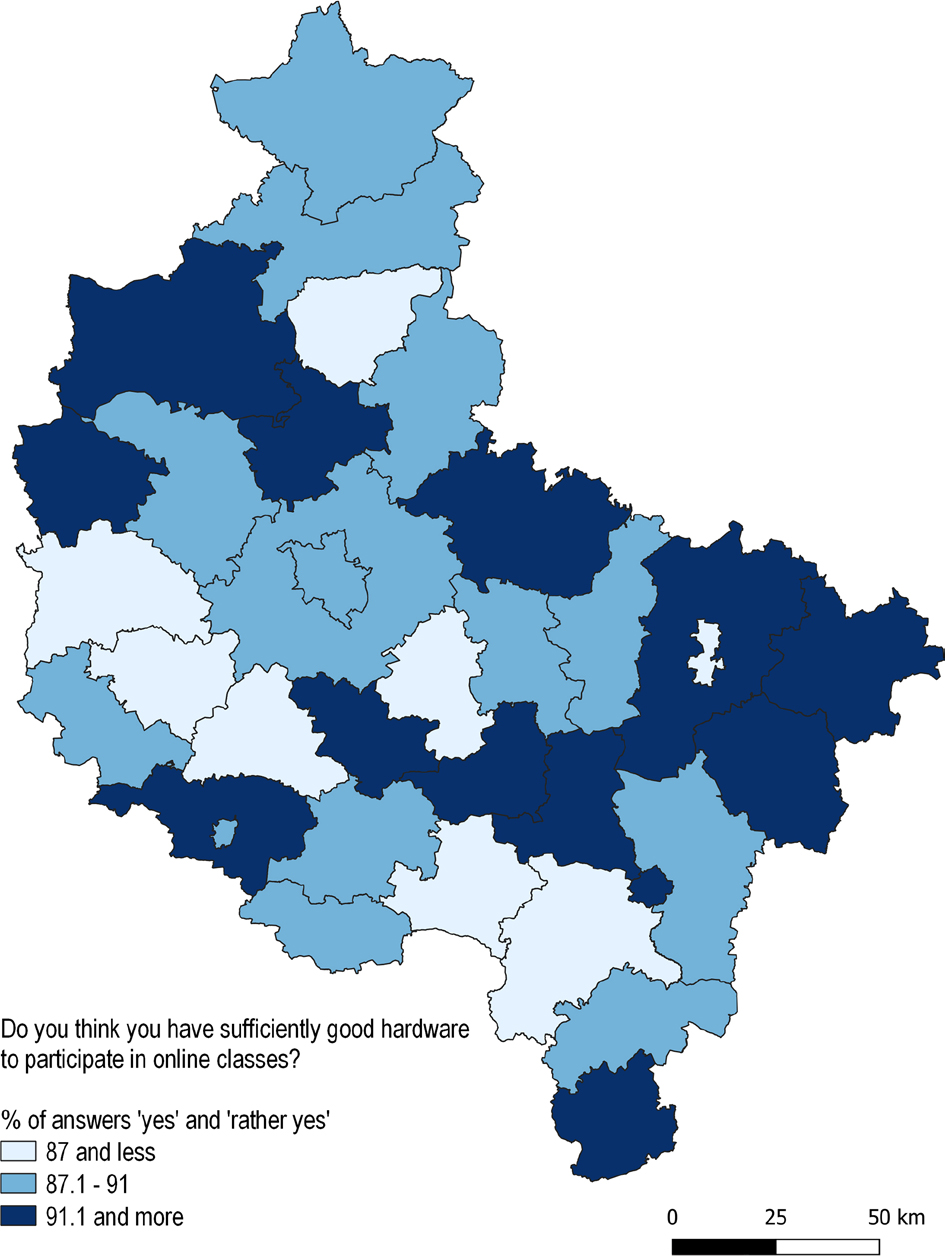
Fig. 2
Sufficiently good hardware to participate in online classes – % of positive answers.
The ability to use school computer equipment at school or borrowed from school was also important. Approximately 55% of students had this opportunity. However, there was a group of 15.4% who did not have this option, and 30.1% of students were unaware of the possibility of using school computer equipment.
Across the poviats of the Wielkopolska region, 100% positive responses were recorded in the poviat of Śrem (Fig. 3). Relatively high positive responses, significantly above the region average, were found in the following poviats: Grodzisk (80.2%), Chodzież (79.4%), Czarnków-Trzcianka (77.8%), Września (77.1%), Wolsztyn (74.2%), Słupca (73.8%), and Jarocin (72.0%). The lowest scores, significantly below the average for the region, were recorded in the following poviats: Kalisz city (19.2%), Środa (22.5%), Poznań (22.6%), Ostrów (26.3%), Wągrowiec (28.8%), Leszno city (32.0%), Kalisz (32.3%).
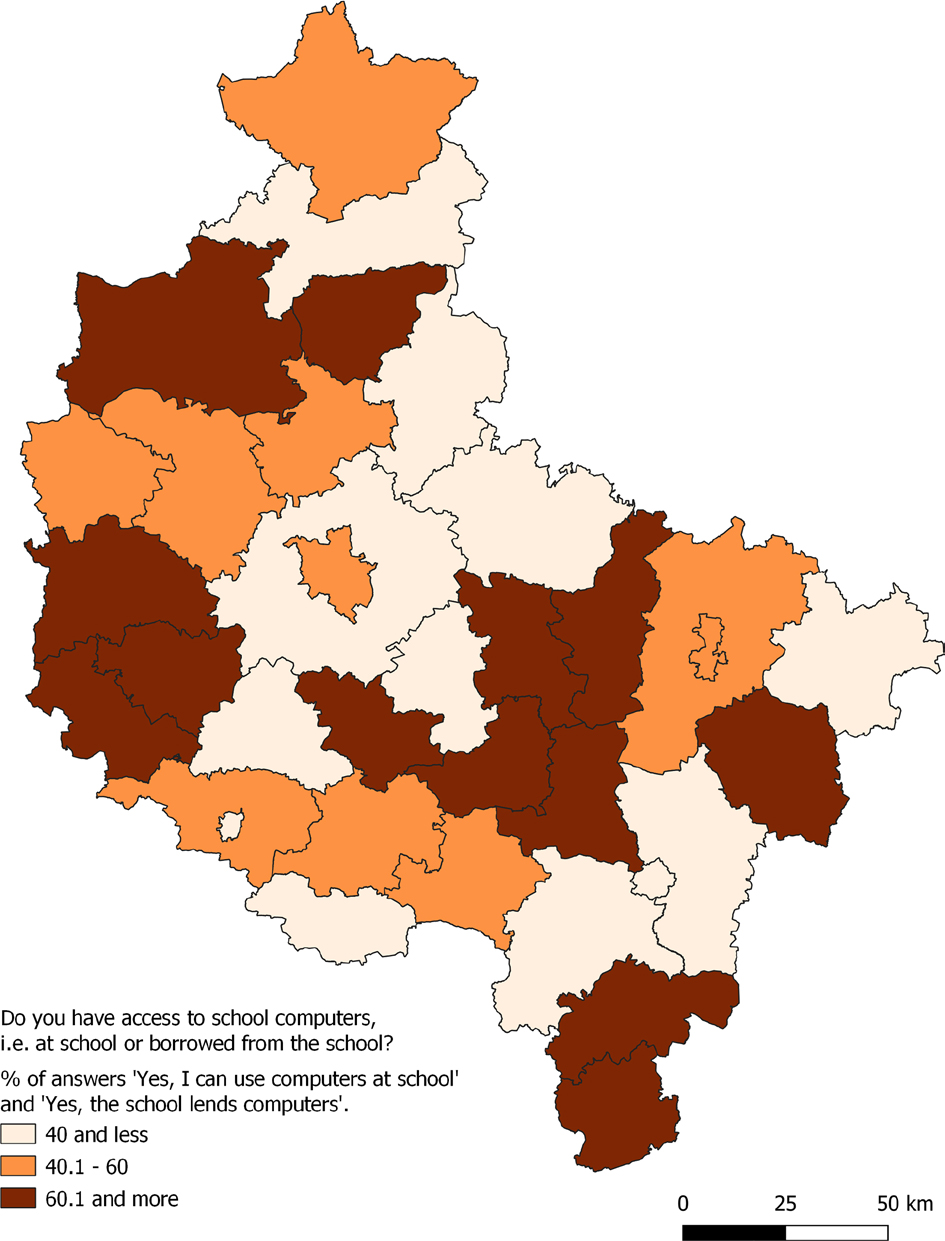
Fig. 3.
Access to school computers – % of positive answers.
Among the possibilities of participating in remote learning, skills in using e-learning platforms for conducting synchronous online lessons between teachers and students are essential – just like the equipment. The most frequently used platform indicated in the surveys was MS Teams. 83.3% of students from the Wielkopolska region assessed their skills as positive (answers ‘very good’ and ‘good’), 9.3% as average, and 7.4% as poor.
All students from two poviats, Czarnków-Trzcianka and Śrem, assessed their skills in using the MS Teams platform 100% positively. High skill assessments, significantly above 90% positive indications, were also noted in several other subregions (Fig. 4): Kalisz city (96.2%), Kalisz (93.9%), Oborniki (92.3%), Kościan (91.8%), Września (91.4%), Rawicz (90.3%). However, in four poviats, less than half of the students positively assessed their MS Teams skills: Leszno (23.5%), Szamotuły (40.0%), Wolsztyn (42.3%), Wągrowiec (45.0%). Also, below the region’s average, positive assessments of MS Teams platform skills were noted among students from eight poviats: Kępno, Turek, Pleszew, Grodzisk, Poznań city, Poznań, Środa, Międzychód.
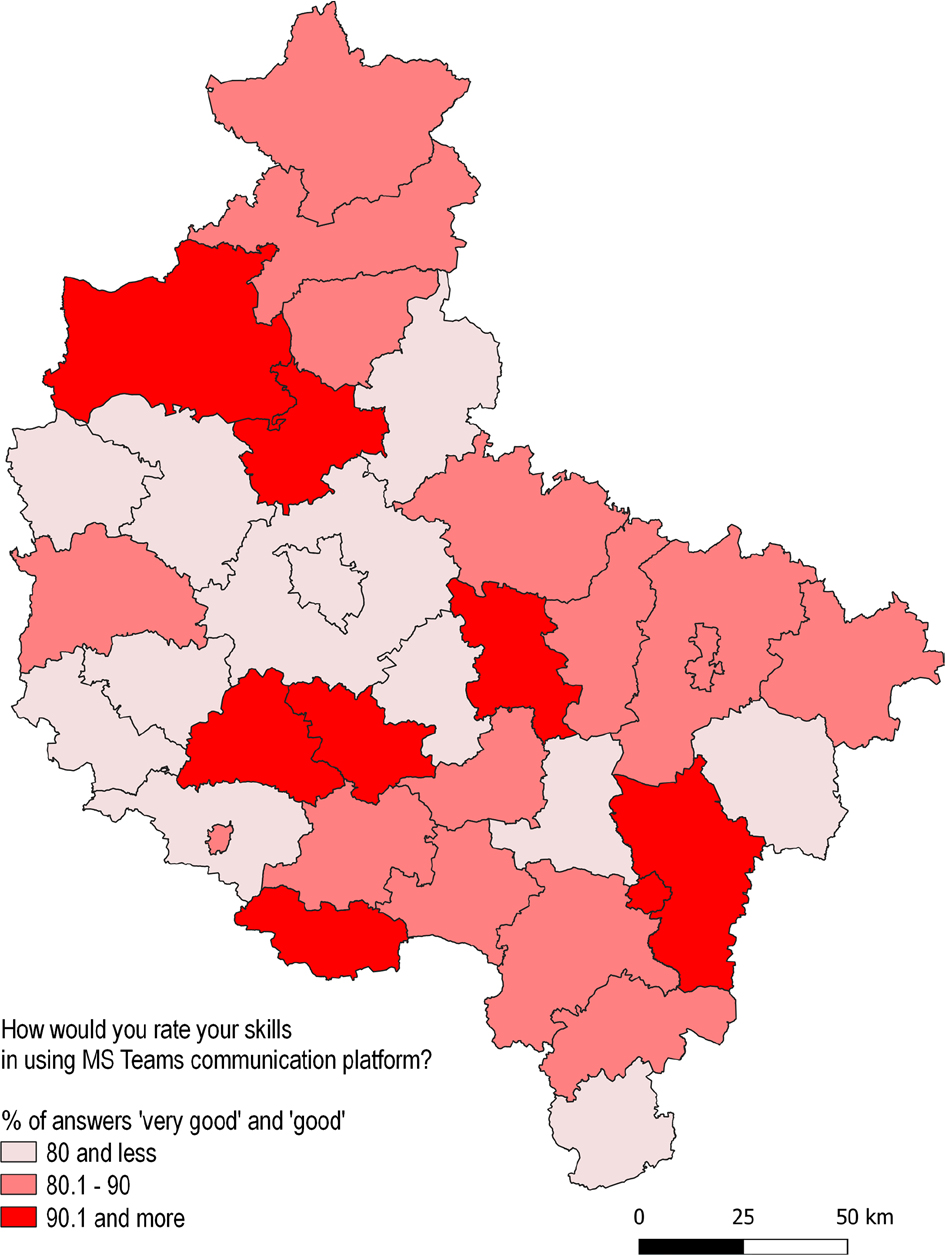
Fig. 4.
Skills in using the MS Teams communication platform – % of positive answers.
An essential condition for participating in online lessons is students’ appropriate home conditions. The vast majority of students, 89.1%, assessed them as appropriate, but every 10th student (10.9% of respondents) assessed them as inappropriate. All students (100%) from the poviats of Czarnków-Trzcianka and Śrem had suitable home conditions for remote learning. This issue was assessed very positively (above 92% of responses) by students from the following poviats (Fig. 5): Pleszew (96.5%), Oborniki (96.3%), Kalisz city (96.2%), Ostrzeszów (95.9%), Konin city (94.6%), Rawicz (94.0%), Piła (93.1%), Kościan (92.8%), Wągrowiec (92.5), Chodzież and Słupca (92.1%). The least positive assessment of their home conditions was given by students from the region’s southern and central poviats: Poznań (80.7%), Gniezno (83.3%), Szamotuły (84.1%), Poznań city (84.3%), Kępno (85.7%), Września (85.9%), Ostrów (86%), Leszno city (86.1%), Gostyń (86.4%).
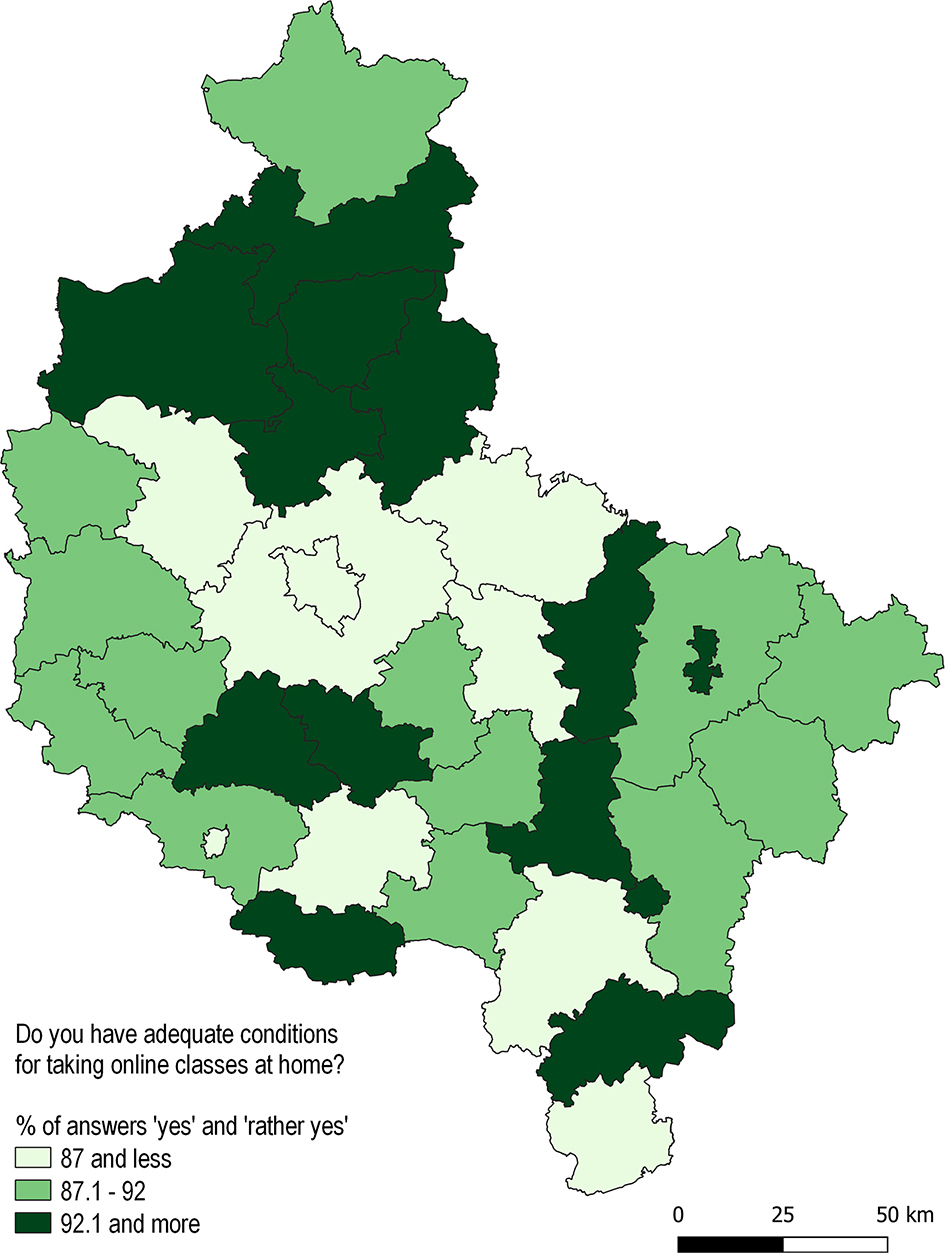
Fig. 5.
Adequate conditions for taking online classes at home – % of positive answers.
Another important issue in the context of remote learning participation was students’ assessment of whether they believed teachers conducted online lessons more effectively than in-class lessons, for example, by being more engaging and using more examples, videos, and online resources. Remote learning opened up numerous opportunities for utilising innovative teaching methods, including the delivery of lesson content directly from the internet or through teacher-prepared demonstrations, presentations, and videos. Overall, 62.5% of students rated online lessons better than in-class lessons. However, 28.8% disagreed. The remaining 8.7% found this question difficult to answer.
At subregional level, the most positive responses were recorded in the following poviats: Gniezno (94.4%), Ostrzeszów (75.3%), Koło (75.0%), Złotów (73.1%), and Krotoszyn (70.3%). The least positive assessment of teachers’ performance in conducting lessons under different conditions was given by students from the following counties: Śrem (0% positive responses), Turek (44.3%), Konin city (46.0%), Poznań city (48.4%), and Leszno city (51.6) (Fig. 6).
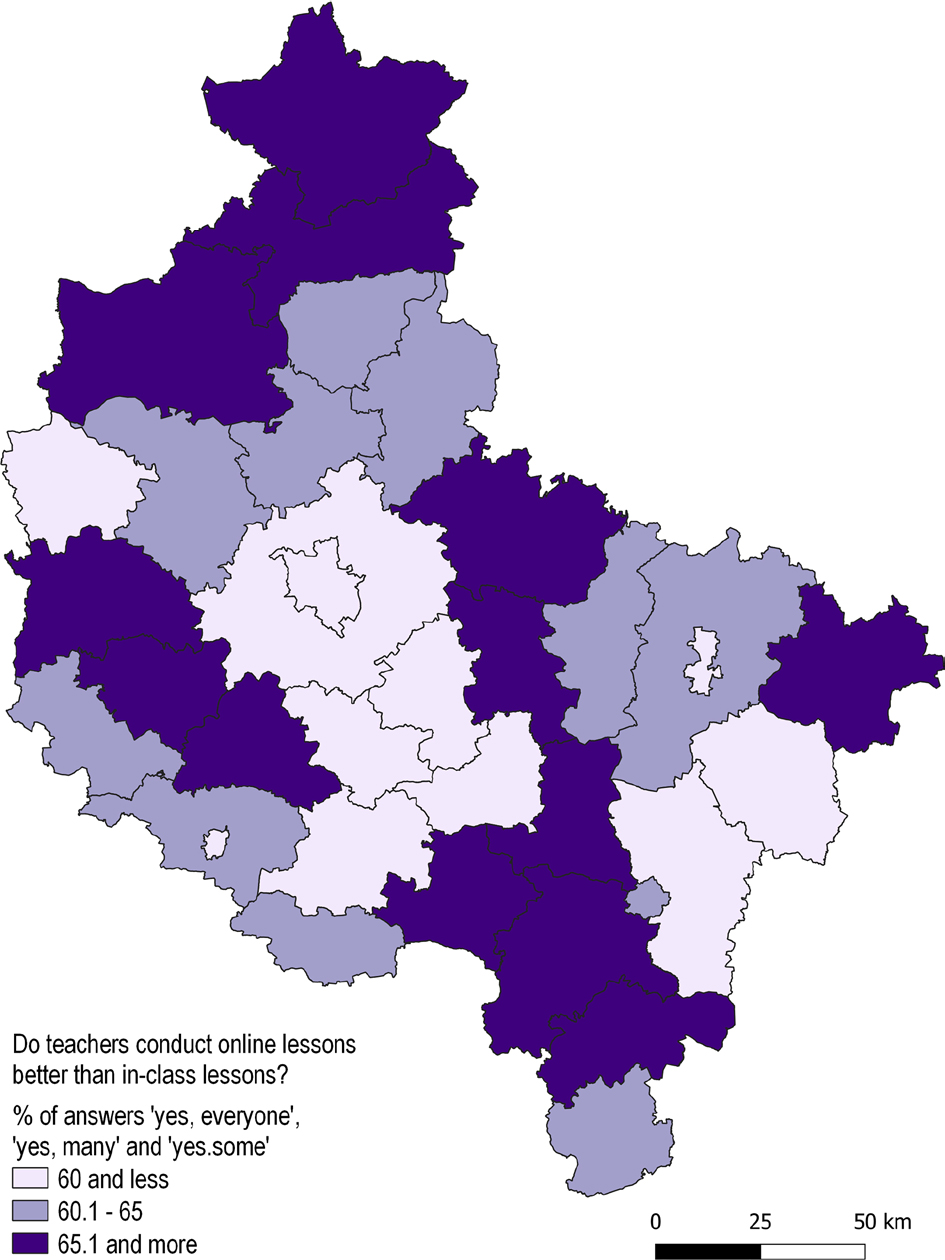
Fig. 6
Better quality of online lessons – % of positive answers.
The synthetic measure of adaptive resilience in the sphere of education on the scale of subregions – poviats of the Wielkopolska region is presented in Figure 7. The highest values of the synthetic measure concerned the following poviats: Czarnków-Trzcianka, Śrem, Oborniki, Ostrzeszów, Pleszew, Słupca, Września, Koło, Złotów, Konin, Rawicz, Międzychód, Kalisz city, and Gniezno. In contrast, the group of subregions characterised by the lowest degree of resilience includes 12 poviats, located mainly in the central-western and southern peripheral part of the region. It should be noted that this group also included three out of four cities with poviat rights, namely Konin city, Leszno city, and Poznań city.
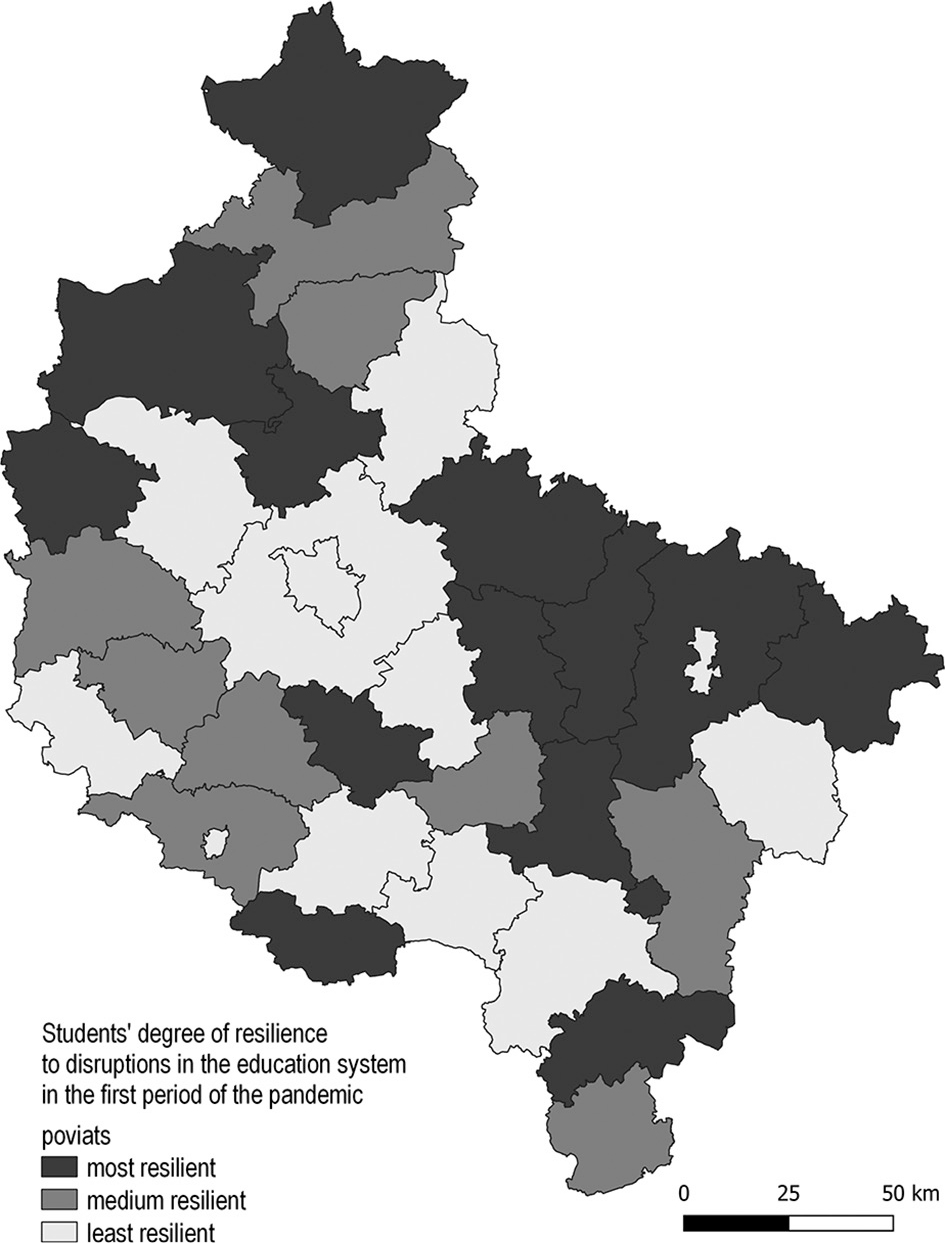
Fig. 7.
Students’ degree of resilience to disruptions in the education system in the first period of the pandemic.
To summarise the results, it should be noted that across the entire Wielkopolska region, most students (over 80%) had good or very good skills in using e-learning platforms. A high percentage of students, nearly 90%, also had adequate computer equipment for remote learning, and an equal number had suitable home environments. Moreover, most students could benefit from school support by borrowing appropriate computer sets for remote learning – across the region, this was 55%. A slightly higher percentage (62.5% of students) across the entire analysed region assessed the quality of remote learning very positively, which also reflects the degree of student adaptation to this new form of teaching.
Furthermore, analysis of the spatial distribution of synthetic adaptability measures of students’ adaptation to new learning conditions in the first period of the pandemic indicates significant variation in the resilience of the education system across subregions (poviats) in the Wielkopolska region. Generally, it can be stated that the highest resilience of the education system characterised rural-urban subregions with predominantly agricultural functions. Only Kalisz city is exceptionally resilient on this map, and thus stands out among other metropolitan poviats (i.e. Poznań city, Leszno city, Konin city), which are characterised by the relatively lowest adaptive resilience in school education, and therefore by the relatively lowest partial indicators contributing to the obtained picture of synthetic measures. Based on this, it can be concluded that in smaller local communities, rather than in metropolitan areas, adaptation to crisis conditions in school education is more effective, indicating a higher degree of resilience. It should be noted, however, that the spatial distribution of the obtained results is quite diverse at the subregional scale and detecting other relationships would require additional correlational studies.
Summary
Discussion
The results of the applied method for analysing the resilience of the school education system, based on the indicators individually selected for the research purpose, allowed us to achieve the main research objective of the article: to assess the degree of resilience of the school system in the Wielkopolska region and its diversity at subregional level. We also identified factors contributing to building the resilience of the school system during the pandemic. The characteristics included in the applied indicators — such as having appropriate computer equipment (either personal or borrowed from school), suitable home conditions, sufficient skills in using e-learning platforms, and the quality of online classes — achieved very high values, demonstrating a high degree of adaptation of the school education system to the conditions of online classes during the pandemic. At the same time, they point to significant factors building the adaptive resilience of the school education system in the analysed region.
A similar approach, taking into account the resources and capital available to individuals and households, was used by Masik (2024) in his study analysing the social resilience of young people during the COVID-19 pandemic in the Gdansk metropolitan region. The results obtained in the study also indicated a high degree of resilience determined by the resources and capital of individuals and households, but also pointed to the important role of social capital. Our research also revealed that the role of social capital was significant, particularly in terms of the active and entrepreneurial attitudes of parents, who could provide good conditions at home for remote learning in the vast majority of cases. Intensive and effective cooperation between parents and schools, and financial support from local authorities in purchasing appropriate computer equipment and providing internet access, also played a significant role. This resulted in schools having great opportunities to support students with appropriate computer equipment, which significantly contributed to increasing the resilience of the education sector. Therefore, the role of social capital and the activation of social networks, emphasised in the cited works by Alizadeh and Sharifi (2021), Antonietti and Boschma (2021), and Masik (2024), brought the expected results in strengthening the resilience of the school education system during the pandemic in the Wielkopolska region. Similar relationships are suggested by studies conducted by Kaya and Eraydin (2012) and Kakderi and Tasopoulou (2017), who indicate that social groups with networks of connections are less vulnerable to crises and, therefore, are characterised by a greater ability to adapt to changing circumstances. The significant role of resources embedded in social networks in building resilience is also emphasised in the works of Champlin et al. (2023) and Schubert et al. (2024).
It should also be highlighted here that the conceptual framework used in this analysis contributed to results that can be quite clearly interpreted in assessing the degree to which the school education system has strengthened its resilience. The adopted evolutionary approach, related to the concept of adaptive resilience, made it possible to identify measures that contributed to the effective adaptation of schools to the pandemic. First, short-term stabilisation was achieved, which meant that teaching processes could continue after the lockdown was announced and in-person classes were suspended (March 2020), allowing the school year to be successfully completed through the implementation of the mandatory curriculum (June 2020). These actions also enabled further development, meaning that teaching processes could continue in the following school year and under the new conditions of the recurring pandemic crisis. On the other hand, the institutional-functional approach allows us to interpret the obtained results in relation to the significant intervention of local governments and the state administration, which, through financial subsidies, contributed to better access to computer equipment and internet connectivity, thus strengthening adaptation measures. Therefore, it can be concluded that both the social and institutional dimensions complement each other in building the resilience of regional systems. Such interpretations of complementary conceptual approaches have already been suggested by the studies of Chmutina et al. (2016) and Masik (2018, 2024).
Conclusions
The results have shown that building a crisis-resilient school education system requires factors such as the availability of appropriate technologies and computer equipment that will enable remote instruction and can lead to stabilisation and effective implementation. Active, grassroots participation from key stakeholders in the primary education system, i.e. parents who can provide appropriate home environments for remote learning, is also essential in this process. Support from local authorities has also proved important, in the form of targeted subsidies for providing schools with appropriate computer equipment (with the option of loaning it to students who lacked it) and subsidies from the Ministry of Education for supplying teachers with appropriate computer equipment and training them (Bogacka et al. 2021). Experience gained during the pandemic allows us to propose new solutions that are useful in counteracting potential future threats and crises of various types. Access to IT infrastructure, including the internet, computer devices, and remote learning platforms, appears to be crucial for the resilience of the school education system. To ensure these conditions, it is essential to prepare the school and local government administration, as their role in organising the remote learning process is of key importance. This involves financial support for access to appropriate computer equipment and internet. Therefore, preventive measures should be based on creating a proper system of targeted financial reserves, but also on increasing internet access. The results indicate that approximately 10% of students (and in some subregions, even over 20%) did not assess their provision of computer infrastructure as sufficient. This primarily reflects the lack of internet access in some peripheral areas of the region (op. cit.).
Based on the results, it is also possible to formulate a recommendation that, when planning teaching processes in the post-pandemic period, the excellent skills acquired by students and teachers, sufficient equipment, and the favourable home conditions that enable students to participate in online classes should be taken into account. On this basis, new scenarios for conducting school classes can be developed, in new forms based on innovative ICT capabilities. A spatial analysis of the transformation of education in the post-pandemic period, given the use of newly acquired digital competences, could be an interesting direction for further research in geography of education. The positive experiences of schools in organising remote learning during the pandemic presented in this study could also serve as a starting point for developing scenarios for adapting education to other types of crises, for example, those related to environmental threats (floods, heatwaves) or military threats. Multidisciplinary research teams could better achieve such a goal.
Limitations
In summary, it should be noted that despite the significant convergence of the presented analysis results with the cited studies, certain interpretative limitations exist. The research results obtained in this study are based solely on students’ perceptions and assessments. Furthermore, the study covers only a single period (February–May 2021), i.e. one phase of the pandemic, and also concerns a selected regional context (the Wielkopolska region in Poland). Because the crisis conditions related to the COVID-19 pandemic varied significantly across countries and regions (World Bank, 2021) and because, as mentioned earlier, spatial context matters, certain limitations in the generalisability of the obtained results should be acknowledged. The presented analysis should therefore be considered a research proposal, introducing a method for assessing regional and subregional social resilience in education.
The issue of limitations is also underlined in the works of Eisenschmidt et al. (2024) and the UNICEF report (2020). Eisenschmidt et al. (2024) point out that the pandemic and its impacts evolved over several years, and crisis conditions varied widely across different countries/systems, which means that context matters. UNICEF report (2020) also underlines that recommendations may need to be adapted to local contexts, and that decision-makers will need to customise and prioritise them.
Acknowledgments
The authors would like to thank the reviewers for their valuable and insightful comments, which significantly improved the quality of this article.
Notes
[1] Contributed by Authors’ contributions
AT: conceptualisation, methodology, investigation, writing – original draft, writing – review & editing; EB: methodology, investigation, visualisation, writing – original draft, writing – review & editing
[2] More information: https://cers.amu.edu.pl/